2027 Can You Earn a Degree Faster at Merrimack College as an Adult Learner?

Co-Founder and Chief Data Scientist
Adult learners with prior college credits or professional experience often face a common challenge: how to leverage that background to shorten degree completion times. At Merrimack College, questions frequently arise around whether their online programs provide enough flexibility and credit recognition to make finishing faster than traditional routes. This is critical for those balancing full-time work and school commitments, as each additional semester can mean lost income or delayed career goals. Recent data shows adult enrollment in flexible programs has grown over 15%, reflecting a demand for accelerated pathways among non-traditional students with real-world obligations.
This article examines how Merrimack College's policies on transfer credits, credit for experience, and modular course structures respond to that demand. It offers adult learners a practical framework to assess if they can truly reduce their time to graduation through Merrimack College's offerings. The goal is to provide clarity on the real-world tradeoffs and outcomes to inform strategic decisions about returning to school.
Key Points About Faster Degree Completion at Merrimack College
- Merrimack College allows transfer of professional experience credits that can significantly shorten degree timelines. Adult learners should verify eligibility to leverage these credits efficiently and reduce time spent on prerequisite courses.
- The online programs offer flexible scheduling tailored for working adults, enabling accelerated course completion but requiring disciplined time management to handle the 72% average graduation rate's implied academic challenges.
- Graduating faster involves a $74,781 tuition investment, with an earnings to debt ratio of 2.80x indicating moderate financial return. Prospective students must assess if early degree completion aligns with their long-term debt service capacity and career earning potential.
Can adult learners at Merrimack College realistically complete their degrees quickly?
Adult learners at Merrimack College can realistically reduce their degree completion time by 6 to 12 months through strategic use of transfer credits and professional certifications. This acceleration often shortens the typical 18 to 24 month timeline, but balancing course overload with personal commitments is essential to avoid burnout.
For example, a working professional who completed prior college coursework and holds recognized certifications may enter credit transfer agreements that cut semesters from their plan. Merrimack's policies allow course overloading within limits each term, supporting motivated students in fast-tracking their studies without compromising academic quality.
Merrimack's average graduation rate of 72% reflects a substantial number of students finishing within expected periods. National research indicates that non-traditional learners who leverage prior learning assessments and flexible scheduling reduce time-to-degree by 20% to 30%, highlighting the value of these options for adult students at Merrimack College.
Completion timelines vary significantly across programs due to curriculum structure and credit requirements. Some degrees demand fixed course sequences that limit acceleration, while others offer flexibility. Students must realistically assess workload tolerance, program demands, and life factors to plan effectively for quicker graduation.
Does Merrimack College have specific admission requirements for adult learners?
Merrimack College does not have admission requirements that are specifically crafted for adult learners, but it does accommodate their unique circumstances through flexible policies on transfer credits and prior learning assessments. For instance, a working professional with years of relevant experience can leverage prior college credits, Advanced Placement (AP) credits, and credits from life experiences to potentially shorten their degree timeline.
This approach aligns with recent trends where a growing share of programs increasingly prioritize demonstrated competencies over traditional academic metrics, reflecting employer demand for practical skills rather than just formal credentials. Admission requirements for adult learners at Merrimack College include several standard criteria that ensure readiness while allowing some flexibility. Below are key admission areas tailored to adult learner considerations:
- High School Completion Credential: Applicants must provide evidence of high school completion or an equivalent credential like a GED. This remains critical for maintaining academic standards despite the varied backgrounds of adult learners.
- Secondary School GPA and Record: Merrimack requires submission of prior academic records. This helps assess foundational preparation but may pose challenges for those who completed schooling long ago.
- Transfer and Prior Learning Credits: The college accepts previous college coursework, AP credits, CLEP exams, and credit recommendations from organizations like the American Council on Education (ACE). These options enable adult learners to translate professional experience and prior learning into academic credit efficiently.
- Admission Test Scores and Competency Demonstrations: While not always mandatory, Merrimack recommends submitting test scores or evidence of competencies, which helps predict academic success and may sometimes shorten program length.
Adult learners considering Merrimack College adult learner admission criteria Massachusetts should carefully strategize which credits and competencies to present. Planning ahead is essential due to the structured admission process and necessary documentation. The college's 74% acceptance rate indicates reasonable opportunities for transfer students equipped with strong credentials. Those interested in quick online degrees may particularly benefit from these policies that integrate prior learning for accelerated degree completion.
Are there executive programs at Merrimack College for mid-career professionals?
Merrimack College offers executive programs specifically designed for mid-career professionals, allowing adult learners to accelerate degree completion through formats like hybrid and weekend intensives. These structures accommodate working adults by maximizing flexibility while maintaining rigorous academic standards.
Unlike traditional online tracks, these executive programs emphasize cohort learning and peer interaction, which is critical for networking and practical knowledge application. Hybrid delivery reduces commuting time, enabling students to balance work and study more effectively-a crucial factor given a 12.5% rise in executive-level enrollment nationwide highlighting growing workforce demand for such options.
For example, a manager working full-time can use the hybrid format to attend weekend sessions, applying real-time professional experiences to coursework. This approach shortens the path to graduation by integrating professional credits, though it requires strategic time management and employer support.
Such executive programs at Merrimack College fit well within the broader trend of accelerated degree options for working adults in Massachusetts. For those curious about the easiest bachelor degree to get online, this pathway offers meaningful acceleration if aligned with career priorities and individual capacity.
How can credit transfers affect the time-to-graduation for adult learners at Merrimack College?
Credit transfers at Merrimack College can substantially shorten an adult learner's path to graduation when those credits align closely with core major requirements. For example, a nursing student transferring completed prerequisite courses can bypass foundational classes, enabling faster progression to clinical rotations and advanced coursework.
This advantage depends on how well transferred credits fit program structures, since credits used only as electives often lessen the overall acceleration. A recent national study reveals that institutions with effective transfer policies reduce time-to-degree by up to 30% for adult learners, a significant improvement with practical implications for workforce reentry and career advancement. The following points highlight key ways credit transfers expedite degree completion at Merrimack College:
- Major Prerequisite Fulfillment: Transferring credits that satisfy specific major prerequisites can eliminate entire course sequences, trimming semesters from the schedule and maintaining a focused academic trajectory.
- Elective Credit Application: Credits applied as electives provide some relief but may not shorten mandatory course loads, thus offering a moderate reduction in time-to-graduation.
- Recognition of ACE and CLEP Credits: Accepting credits recommended by ACE and CLEP exams helps adult learners leverage prior learning, significantly reducing redundant coursework and speeding degree progress.
- Program Sequence Constraints: Sequential course requirements limit how fast some credits accelerate graduation, especially if transferred credits do not match specific course progression rules.
One Merrimack College online nursing graduate shared how transferring her ACE-recommended credits from prior healthcare experience shortened her program by nearly a year. Initially, she hesitated, unsure if those credits would align with Merrimack's clinical prerequisites, but after detailed advisement, she strategically applied them to core courses. This planning relieved time pressures and helped balance work and study demands, ultimately making her degree completion timeline manageable and less stressful.
Can professional certifications and training be converted into credits at Merrimack College?
Merrimack College enables many adult learners to accelerate their degree completion by converting professional certifications and training into academic credits. This process is tailored mostly for non-traditional students who submit clear evidence of workforce credentials that align with college-level outcomes. However, eligibility for credit transfer varies widely depending on program requirements, which may include portfolio reviews or standardized competency exams.
For instance, a student with extensive experience in project management might leverage their Project Management Professional (PMP) certification to bypass certain coursework, but technical or healthcare programs might demand more precise alignment between certifications and curricular outcomes. The practicality of converting training into college credits at Merrimack College hinges on documenting relevant competencies, which can require upfront effort that not all adult learners are prepared to invest.
Examples of certifications commonly accepted for credit conversion include well-known industry credentials that demonstrate mastery of knowledge equivalent to academic courses. Below are some specific types of professional training and certifications evaluated for transfer credits at Merrimack College:
- Project Management Professional (PMP): Recognized globally, this certification validates skills in managing projects from initiation to closure. It often corresponds to upper-level coursework in business and management programs.
- Certified Nursing Assistant (CNA): This credential ensures proficiency in patient care fundamentals and aligns with health sciences curricula, helping students avoid entry-level clinical classes.
- CompTIA A+ for IT professionals: Demonstrates foundational IT skills essential for many technology-oriented degrees, making it eligible for credit that covers basic hardware and software coursework.
- Six Sigma Green Belt: Focuses on process improvement and quality management, relevant to courses in operations, logistics, and business analytics.
- FAA Pilot Certifications: Validates technical knowledge and safety procedures in aviation, often transferable into aviation and aerospace studies.
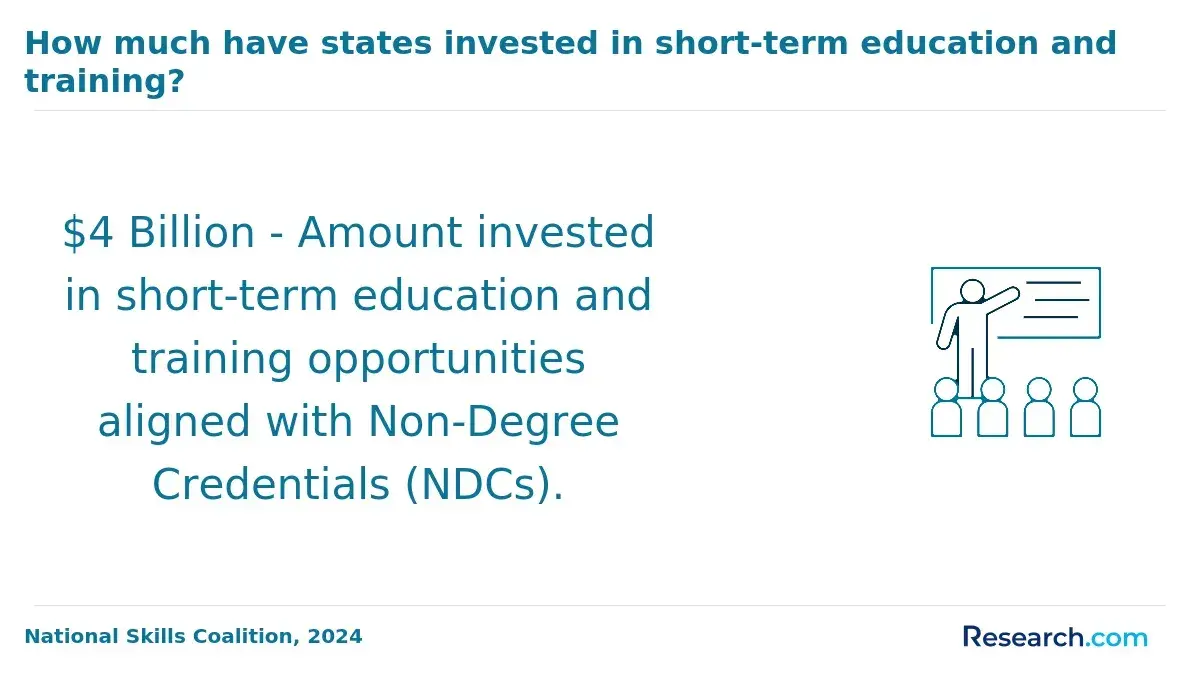
National trends reinforce the growing integration of workforce credentials with higher education. The Credential Engine tracks over 1.5 million certificates, indicating increased recognition of professional learning pathways. This shift benefits career-focused adult learners by minimizing redundant education and enabling faster degree completion.
Adult students weighing options should consider these conversion opportunities carefully, alongside other strategies such as comparing what what is the cheapest online master's degree program fits their financial and scheduling needs best.
Does Merrimack College have competency-based education programs for adult learners?
Merrimack College does not offer formal competency-based education programs for adult learners. The institution relies on traditional and online degree formats that require credit hours and standard assessments. Adult learners hoping to accelerate degree completion must focus on maximizing transfer credits for prior learning and professional experience rather than expecting direct-assessment pathways.
Competency-based degree programs for adult learners at Merrimack College are unavailable, unlike other schools offering models in business administration, IT, or health sciences where students advance by demonstrating mastery. Without such options, learners seeking faster completion should engage academic advising to effectively leverage credit for prior learning and flexible scheduling.
A 2024 study revealed that CBE enrollments in the US grew by 12.7%, indicating rising demand for skill-based, flexible paths. This trend exposes challenges for adult learners at institutions lacking CBE, like Merrimack. For those exploring alternatives, researching online colleges with open enrollment and no application fee may provide expedited degree options unavailable locally or through direct-assessment models.
Does Merrimack College run a continuous school calendar that eliminates summer breaks?
Merrimack College does not operate on a fully continuous school calendar that eliminates summer breaks. Instead, it follows a traditional semester system with optional summer sessions. This structure means adult learners face breaks between fall and spring terms unless they proactively enroll in summer courses to accelerate their progress.
For example, an adult student working full-time may use summer sessions to maintain momentum and reduce overall time to degree. However, summer courses are often limited in availability. Without summer enrollment, learners risk a slowdown in their academic pace due to registration windows and course offerings tied to main semesters.
Research from the National Center for Education Statistics shows continuous multi-term calendars can reduce degree completion times by 15%-20% for adult learners by minimizing enrollment gaps. Merrimack's hybrid model delivers moderate flexibility but falls short of fully continuous models that sustain steady coursework and smoother acceleration potential.
Moreover, some programs at Merrimack College have specific requirements influencing academic term lengths and course sequencing. Adult learners must navigate these factors alongside registration timing, balancing coursework with external commitments to optimize their degree timeline. This calls for strategic planning based on individual program demands.
What are the challenges of faster degree completion for adult learners at Merrimack College?
Accelerating degree completion at Merrimack College as an adult learner often presents tradeoffs that many underestimate, particularly the risk of academic burnout and logistical hurdles that can delay rather than hasten graduation. For instance, an adult learner working full-time and caring for a family might enroll in compressed courses to reduce total semesters but may find the workload overwhelming, risking course withdrawal. A 2024 study highlights that 38% of non-traditional students drop accelerated classes due to stress, underscoring the real impact of condensed schedules.
The following points outline key structural challenges adult learners face and suggest ways to navigate them effectively.
- Academic Burnout and Stress: Accelerated courses demand intense focus and time, often leading to exhaustion. Adult learners should realistically assess their capacity before enrolling and seek support services proactively.
- Inconsistent Credit Transfer Policies: Credit evaluation may be unpredictable, sometimes requiring more coursework than planned. Early and thorough credit review with advisors helps set accurate expectations and avoid delay.
- Balancing Competing Responsibilities: Work, family, and school create unavoidable conflicts. Establishing a clear, manageable schedule and requesting flexible options when available can mitigate overload.
- Financial Aid Complications: Accelerated pacing may disrupt aid eligibility if course loads fluctuate. Careful consultation with financial aid officers ensures compliance and funding continuity.
- Limited Course Offerings and Scheduling: Even flexible programs may not offer required courses every term, leading to wait times. Planning course sequences well in advance is critical to prevent bottlenecks.
- Advising Tailored for Traditional Paths: General advising may overlook accelerated learners' needs, increasing risk of unnecessary credits or delays. Engaging advisors knowledgeable in adult education strategies improves degree planning.
One Merrimack College online graduate shared, "I rushed into taking back-to-back accelerated courses to finish faster, thinking my work experience would cover a lot of credits. But once classes started, balancing my job and my kids became harder than expected. I had to drop a class mid-semester because I was overwhelmed, which delayed my graduation and strained my finances. After that, I met regularly with an advisor who helped me spread out the coursework and check my credits carefully. It felt frustrating to slow down, but that guidance prevented more costly mistakes and kept me on a realistic path." This experience reflects how the desire to accelerate often clashes with complex life demands and institutional limits at Merrimack College.
How can Merrimack College students leverage school resources to fast-track their degree?
Accelerating degree completion at Merrimack College requires strategic use of institutional resources that reduce redundant coursework and optimize credit application. For instance, an adult learner balancing a full-time job can leverage credit evaluations for professional experience combined with personalized advising to select accelerated courses that fit evening or online schedules.
According to recent national research, institutions using proactive advising and comprehensive online resources achieved a 17.6% increase in adult student retention and degree completion speed, highlighting the practical benefit of such supports. Below are key Merrimack College services that help adult learners fast-track their programs while managing competing demands.
- Specialized Academic Advising: Dedicated success coaches provide personalized degree maps focusing on transferring eligible credits and identifying accelerated class options to minimize unnecessary coursework.
- Comprehensive Tutoring Services: Available both online and on campus, tutoring helps address academic challenges promptly, preventing delays and maintaining steady academic progress.
- Professional Experience Credit Evaluations: This service assesses prior work experience for potential academic credit, enabling faster progression by reducing required course loads when applicable.
- Flexible Scheduling Options: Evening and fully online courses allow adult learners to register for more classes while balancing work commitments, supporting sustained momentum toward graduation.
- Degree Completion Planning: Success coaches assist students in realistic workload management, ensuring accelerated pacing does not compromise mastery or professional readiness.
- Online Resource Access: Robust digital platforms provide 24/7 support and learning tools, crucial for adult learners managing variable schedules and maximizing study efficiency.
- Career Services Integration: Aligning course choices with employer expectations helps maintain focus on workforce-relevant skills throughout the accelerated path, balancing speed and substance effectively.
Adult learners can use these combined resources as part of tailored strategies on how to leverage Merrimack College resources for accelerated degree completion. Those seeking to avoid dissertation requirements might explore options like an online PhD no dissertation to further streamline their educational timeline without sacrificing quality or career impact.
What are the career advantages of earning a degree from Merrimack College on a shorter timeline?
Accelerating degree completion at Merrimack College offers measurable career benefits by reducing education costs and enabling quicker workforce re-entry. For instance, a professional aiming to shift into a management role within two years can leverage accelerated credits and flexible scheduling to finish faster and compete sooner for promotions. Recent labor market analysis shows adults with accelerated graduate degrees have employment rates exceeding 85%, confirming this approach meets employer demand for candidates who combine relevant credentials with adaptability.
The following points detail the primary career advantages Merrimack College adult learners can expect from shorter timelines.
- Lower Educational Debt Burden: Completing a degree more rapidly limits tuition expenses and reduces time away from full-time income, which is significant given the median graduate debt at Merrimack College is $27,000. This financial relief can increase disposable income and lower stress related to loan repayment.
- Faster Earnings Growth: Entering the labor market sooner or advancing within an existing role accelerates salary increases tied to degree attainment. The quicker access to promotions improves cumulative lifetime earnings compared to longer-degree pathways.
- Enhanced Employer Perception: Employers value candidates who demonstrate discipline and goal orientation by completing accelerated programs. This suggests strong work ethic and adaptability, traits increasingly prioritized in hiring and promotion decisions.
- Career Mobility and Skill Updating: Accelerated degrees allow professionals to quickly pivot or update skills in response to industry shifts. Merrimack's recognition of prior learning and experience further supports timely credentialing alongside ongoing employment.
- Alignment with Workforce Trends: Data from 2024 workforce studies illustrate robust demand for candidates holding accelerated credentials, reflecting a market preference for efficient, career-focused education paths.
What Graduates Say About Being an Adult Learner at Merrimack College
- Benjamin: "Choosing to enroll in the online program at Merrimack College as an adult learner was a strategic decision for me, especially given my full-time job and family commitments. By maximizing credit transfers from my prior coursework and utilizing the credit-by-exam options, I compressed what might have been a traditional four-year path into under two years. This accelerated timeline not only made sense financially but also enabled me to enter the workforce with a relevant degree more quickly, which directly contributed to a promotion within six months of graduation."
- Corey: "The flexibility of Merrimack College's test-optional policies and the enhanced ability to convert professional experience into academic credits made the admissions process far less stressful than I anticipated. Even though I took advantage of acceleration options, I was cautious not to overload myself and ensured I could balance study with my other obligations. In the end, completing my degree faster did lead to immediate job opportunities, but I found the real value was in how the program respected my pace while still pushing me forward efficiently."
- Tristan: "As someone returning to school after several years in the workforce, Merrimack College's online program offered a practical route that acknowledged my professional background through credit conversion. Navigating the accelerated path required careful planning, especially to align credit transfer evaluations and exam options effectively. While the shorter timeline did accelerate my access to new roles in my field, the most meaningful impact was how the degree solidified my credentials, opening doors to career advancement I hadn't previously considered achievable."
Other Things You Should Know About Merrimack College Degrees
Merrimack College offers asynchronous online courses that provide flexibility in when students complete coursework, but accelerated pacing depends heavily on course availability and the student's ability to manage multiple courses simultaneously. While adult learners can enroll in accelerated sessions, balancing this with work and life commitments may limit realistically how many courses they can handle each term. Prioritizing fewer but intensive courses is practical for maintaining quality learning and avoiding burnout over simply taking every accelerated option available.
Yes, Merrimack College sets credit load caps per term even for online adult learners, usually around 12 to 15 credits, which can restrict rapid accumulation of credits. Pushing beyond recommended course loads risks compromising academic performance and may not align with employer expectations for applying learning effectively in the workplace. As a result, adult learners should focus on a steady but manageable course load paired with strategic use of transfer credits or prior learning assessments instead of attempting maximum course overloads.
While faculty experience can enhance the quality of online learning, it does not significantly impact the overall speed at which adult learners can complete their degrees. The pace largely depends on the learner's course load and time management.
Adult learners looking to finish quickly should prioritize core and prerequisite courses early, as these often have limited offerings and affect eligibility for advanced classes. Electives can typically be scheduled more flexibly, so front-loading required courses reduces the risk of delays due to course availability. This approach also aligns better with workforce demands, ensuring practical skills are acquired promptly, which enhances both degree completion speed and employability outcomes.
References
- Executive education courses from top universities | edX https://www.edx.org/executive-education
- The Adult Learner’s Guide to Online Classes - ReUp Education https://reupeducation.com/blog/the-adult-learners-guide-to-online-classes/
- To jumpstart career, graduate college early https://thesuffolkjournal.com/19193/opinion/to-jumpstart-career-graduate-college-early/
- Why college? A deep dive into adult learners’ journeys https://www.luminafoundation.org/news-and-views/why-college-a-deep-dive-into-adult-learners-journeys/
- Online Competency-Based Degree Programs | University of Phoenix https://www.phoenix.edu/competency-based-degrees.html
- Merrimack College Acceptance Rate | CollegeData https://www.collegedata.com/college-search/Merrimack-College/admission
- Best Advice for Going Back to School as an Adult https://www.straighterline.com/blog/degreecompletion-best-advice-for-adults-going-back-to-college
- Streamline Adult Learner Enrollment: Best Practices Guide - Collegis Education https://collegiseducation.com/insights/streamline-adult-learner-enrollment-best-practices-guide/
- Expand competency-based education to support adult learners https://www.highereddive.com/spons/expand-competency-based-education-to-support-adult-learners/642381/
- Degree Completion Programs | Elmhurst University https://www.elmhurst.edu/academics/adult/