2027 Can You Earn a Degree Faster at Chamberlain University as an Adult Learner?

Co-Founder and Chief Data Scientist
Adult learners balancing work and family often seek faster degree completion through online programs. Chamberlain University's structure may offer credit for prior college coursework and relevant professional experience, potentially reducing required time in school. However, navigating credit transfers and course scheduling demands careful planning to avoid extended timelines that negate acceleration benefits.
Recent data shows adult learners now comprise over 40% of online undergraduate enrollment nationwide, highlighting a growing preference for flexible, time-efficient education models. This trend underscores the importance of understanding how specific policies and program formats at Chamberlain University impact actual time to degree.
This article analyzes these factors and provides practical guidance on accelerating degree completion at Chamberlain University for adult learners with diverse backgrounds.
Key Points About Faster Degree Completion at Chamberlain University
- Transfer credits and relevant professional experience can shorten degree length by allowing adult learners to bypass certain courses, though Chamberlain University's policy caps the maximum transferable credits to help maintain program rigor and accreditation standards.
- The online program structure provides flexible scheduling designed to accommodate adult learners' work and life constraints, enabling potential acceleration of study timelines through asynchronous coursework and shortened term options.
- Graduates see an earnings-to-debt ratio of 4.42x, indicating that completing degrees quickly can improve financial outcomes by reducing overall debt exposure while enhancing income potential in health-related fields.
Can adult learners at Chamberlain University realistically complete their degrees quickly?
Adult learners at Chamberlain University can shorten their degree timeline, but realistic acceleration depends on several factors. With an average graduation rate of 50%, many students face challenges completing degrees faster than the standard schedule. Real-world scenarios show students shaving up to a year off by leveraging transfer credits and year-round courses while balancing personal and professional demands.
Typically, accelerated online programs allow students to complete their degrees in about three years by increasing course loads each semester and attending continuous terms. However, Chamberlain limits how many credits students may take per term, which means pacing must be managed to avoid burnout and ensure academic success.
Chamberlain supports transfer credits from prior learning and professional certifications. This often reduces time-to-degree by up to a full year. Adult learners can also use flexible scheduling options and online course formats to maintain progress while working. These pathways provide clear structural support for acceleration, though individual results vary.
National trends show that non-traditional students combining transfer credits and scheduling flexibility graduate roughly 25% faster than their traditional peers, according to recent research. This variability depends on program requirements and course availability, making personalized planning essential for timely completion at Chamberlain University.
Does Chamberlain University have specific admission requirements for adult learners?
Chamberlain University's admission requirements reflect a nuanced balance between maintaining academic standards and providing flexibility for adult learners. The university does not have exclusive admission criteria specifically for adult students, but it offers policies that adult learners can strategically use to accelerate degree completion.
For example, a working professional with prior college credits and life experience can leverage transfer credits and multiple exam options to minimize redundant classes, thus reducing time and tuition costs.
Below are key admission elements relevant to adult learners evaluating Chamberlain University admission criteria for working professionals:
- Transfer Credits: Chamberlain accepts transfer credits from accredited institutions, including those evaluated by the American Council on Education (ACE). This allows adult learners with prior coursework to apply earned credits, shortening degree paths.
- Life Experience and Exam Credits: Credits earned through CLEP, DSST/DANTES, and Advanced Placement exams are recognized. This acknowledges adults' experiential learning and knowledge, critical for workforce-aligned programs.
- Standardized Assessments: Applicants must submit scores from tests such as Wonderlic or WISC-III, ensuring readiness for nursing program rigors. These cognitive assessments help maintain academic quality while accommodating diverse backgrounds.
- Basic Educational Credentials: A high school diploma or GED is mandatory, along with a recommendation to complete a college-preparatory program. Secondary school GPA is reviewed, but rank and recommendations remain optional.
The growing acceptance of competency-based policies, seen in 68% of universities nationwide, emphasizes the importance of such flexible admissions for adult learners striving for faster degree completion. Thoughtful use of these admission options can reduce time-to-graduation significantly.
For adults balancing work and study, understanding these requirements is vital. When assessing affordable pathways, adults should also consider options at the cheapest online colleges that accept FAFSA in USA to align financial and academic goals.
Are there executive programs at Chamberlain University for mid-career professionals?
Chamberlain University does not offer traditional executive nursing programs for mid-career professionals explicitly branded as such. Instead, it provides flexible nursing degrees and specialty tracks that help working adults earn their degrees faster. For example, a nurse balancing a full-time job can use weekend intensives and hybrid classes to progress without quitting work.
This approach differs from standard online tracks by integrating cohort-based scheduling and options that accelerate degree completion through prior credits or professional experience. A 12% increase in executive-level enrollment in hybrid professional programs reflects employer demand for this adaptability, which Chamberlain leverages to meet practical workforce needs.
Adult learners aiming to accelerate their studies benefit from Chamberlain's structure, which supports transfer credits and professional experience to shorten time in school. However, success requires disciplined time management and upfront planning to navigate these flexible options effectively.
Those seeking an online associates degree can find relevant accelerated pathways here, but executives should weigh how Chamberlain's focus on healthcare aligns with their career goals before enrolling.
How can credit transfers affect the time-to-graduation for adult learners at Chamberlain University?
Credit transfers at Chamberlain University can reduce graduation time significantly when adult learners strategically apply them toward core major requirements. The alignment of transferred credits with essential nursing or healthcare prerequisites often matters more than credits applied solely to electives, which limits acceleration.
For example, a registered nurse returning to school who transfers ACE-recommended credits and CLEP exam results for foundational courses can navigate past introductory subjects, saving valuable semesters.
A 2024 national study found students with effective credit transfers graduate an average of 1.25 semesters earlier, underscoring the tangible advantage of this approach at Chamberlain. However, program-specific sequential requirements may temper these gains if prerequisite courses must still be taken in order.
Key ways credit transfers affect degree speed for adult learners include:
- Bypassing Introductory Courses: Transfer credits often waive general education or entry-level major courses, allowing students to focus directly on advanced subjects crucial for degree progression.
- Shortening Time-to-Degree: Applied credits reduce the total number of required courses, directly decreasing semester loads and enabling faster completion when planned carefully.
- Mitigating Tuition Costs: Fewer classes translate to lower tuition and fees, helping adult learners manage financial and time constraints more effectively while balancing work or family.
- Accelerating Workforce Reentry: Earning a degree sooner allows learners to resume career advancement opportunities promptly, particularly important in healthcare roles where timely certification matters.
Can professional certifications and training be converted into credits at Chamberlain University?
Chamberlain University recognizes the practical value of professional certifications and training by allowing adult learners to convert qualifying experience into academic credits. This approach can significantly reduce time to degree completion, but transfer eligibility varies depending on program requirements and how well the prior learning aligns with course competencies. The need for precise documentation and faculty evaluation means not all certifications automatically translate into credits.
The conversion process reflects a growing trend in adult higher education, where 59% of learners who use Prior Learning Assessment (PLA) complete their degrees faster than those without recognized credits. However, the extent of acceleration depends on the relevance and thoroughness of the submitted credentials, as well as the academic program's additional requirements.
Adult learners should evaluate how credit transfer for professional certifications at Chamberlain University fits with their specific degree goals before assuming a uniform benefit.
Common certifications accepted for credit come from established healthcare roles that map tightly to nursing curricula. Below are examples of typical certifications convertible into credits at Chamberlain University:
- Certified Nursing Assistant (CNA): Provides foundational patient care skills, demonstrating competence in clinical basics that satisfy entry-level nursing coursework requirements.
- Emergency Medical Technician (EMT): Covers critical pre-hospital emergency care knowledge and skills, overlapping with acute care training components within nursing programs.
- Basic Life Support (BLS): Focuses on essential resuscitation techniques relevant to multiple healthcare settings and is often required for clinical certification.
- Advanced Cardiovascular Life Support (ACLS): Represents advanced critical care procedures and decision-making skills, qualifying holders to waive certain specialty course requirements.
- Pediatric Advanced Life Support (PALS): Demonstrates expertise in emergency pediatric care, aligning with pediatrics-related clinical competencies.
These certifications illustrate how adult learners with significant nursing or allied health experience can convert professional training into college credits Chamberlain University offers. Leveraging such credit transfer for professional certifications at Chamberlain University allows students to focus on advanced coursework and graduate faster.
For those weighing options, understanding the specific credit policies and consulting academic advisors early is essential to maximize benefits.
Additionally, prospective students seeking cost-effective pathways to advance their education might explore the cheapest masters online available programs, which can complement credits earned through prior professional experience. A strategic combination of PLA and affordable online options is increasingly central to efficient degree completion among adult learners.
Does Chamberlain University have competency-based education programs for adult learners?
Chamberlain University does not offer formal competency-based education programs for adult learners. Its model lacks direct-assessment degree options that let students advance by mastery rather than time, limiting opportunities for accelerated completion through competency-based tracks. Adults aiming to finish sooner must rely on flexible pacing and maximize transfer credits instead.
For example, a working professional with prior nursing certifications can shorten degree timelines by transferring relevant credits, but must still follow traditional course schedules without competency modules. The absence of competency-based degrees contrasts with a 2024 trend where institutions with such models grew enrollment by 18.7%, showing demand for mastery-driven programs especially among adults balancing careers and studies.
Adult learner flexible competency-based degrees at Chamberlain University remain unavailable, but transfer credits and flexible online or hybrid courses offer alternatives. Those interested in accelerated paths might compare Chamberlain to self-paced colleges that explicitly integrate competency assessments and direct progress, enabling faster degree completion through demonstrated mastery.
Does Chamberlain University run a continuous school calendar that eliminates summer breaks?
Chamberlain University uses a continuous academic calendar that largely eliminates traditional summer breaks. This setup allows students to enroll in accelerated terms throughout the year, enabling steady progress without lengthy interruptions. For example, an adult learner working full-time can register year-round, quickly completing courses to meet employer-driven certification timelines.
This continuous model supports a fast-paced learning rhythm, which suits adult students seeking to finish degrees efficiently. However, the intensity requires managing study-life balance carefully, as limited downtime may increase risk of burnout. Recent education research shows that multi-term calendars improve on-time graduation rates by 27% for adult learners, highlighting the value of continuous enrollment in maintaining momentum.
Online programs often include mandatory or optional summer sessions to enhance flexibility for those balancing work and family responsibilities. These sessions help students avoid course gaps that might delay degree completion, making year-round study practical and tailored to diverse adult needs.
Academic term lengths may vary depending on program requirements, clinical rotations, or transfer credit applicability. Some programs use shorter accelerated terms, while others allow transfer credits or professional experience to reduce total semesters, further speeding time to degree.
What are the challenges of faster degree completion for adult learners at Chamberlain University?
Pursuing an accelerated degree at Chamberlain University presents adult learners with significant obstacles that can hinder both timely completion and effective skill acquisition. For example, imagine a student balancing night shifts at a hospital while enrolled in compressed nursing courses; the intense pace may lead to burnout or missed deadlines. The challenges often intersect, creating a complex dynamic requiring strategic management.
Below is a summary of the primary hurdles adult learners face when attempting faster degree completion at Chamberlain University and actionable approaches to navigate them.
- Accelerated Course Burnout: Intensive pacing increases fatigue and stress, leading to withdrawal or failure. A recent study shows 38.7% of non-traditional accelerated students leave programs due to exhaustion and competing life demands. Managing this requires realistic scheduling and prioritizing rest.
- Restrictive Transfer Credit Policies: Chamberlain limits acceptance of prior coursework and experiential learning. Adult learners often need to repeat foundational classes, extending time-to-degree despite relevant experience. Proactive credit evaluations can minimize redundant credits.
- Financial Aid Disruptions: Faster completion timelines can complicate aid eligibility and disbursement. Data indicates a 22% higher chance of funding gaps among compressed-schedule students. Early coordination with financial advisors helps prevent interruptions.
- Limited Scheduling Flexibility: Rigid course offerings and deadlines may clash with unpredictable work or caregiving hours, forcing unsuitable pacing. Exploring all cohort options and communicating needs with advisors can improve alignment.
- Cognitive Load From Condensed Content: Dense material in short terms may undermine mastery essential for professional readiness. Learners must balance speed with deeper engagement to meet employer expectations for comprehensive skills.
How can Chamberlain University students leverage school resources to fast-track their degree?
Chamberlain University provides concrete institutional resources that adult learners can leverage to accelerate degree completion, though success depends on how effectively each student navigates these supports within practical constraints. For example, a working nurse aiming to complete their Bachelor of Science in Nursing more quickly might rely heavily on degree planning and transfer credit evaluation while balancing job demands.
These resources include specialized advising and academic support designed to optimize course sequencing and credit applicability.
The following list outlines key offerings that adult learners can utilize to fast-track their studies while maintaining steady progress.
- Dedicated Academic Advisors: Advisors specialize in online and nontraditional students, helping to create personalized degree pathways. They identify eligible transfer credits and recommend accelerated course sequences aligned with graduation goals.
- Success Coaches: These professionals provide ongoing motivation and support, helping students manage workload and time effectively, which is critical for balancing accelerated coursework with life and employment responsibilities.
- Fast-Track Credit Reviews: Chamberlain evaluates prior college courses, military training, and professional certifications to award relevant credits. This process can substantially reduce required coursework and time-to-degree.
- Tutoring Services: Targeted tutoring for core subjects addresses knowledge gaps quickly, minimizing delays from repeated classes and fostering confidence to advance without interruption.
- Flexible Online Learning Platform: This allows students to engage with coursework on schedules that accommodate work and family commitments, which is essential for maintaining continuous enrollment at an accelerated pace.
- Retention-Boosting Advising Models: Research shows proactive advising correlates with a 17% higher retention rate for adult learners, helping prevent dropout and ensuring steady academic momentum.
- Career-Focused Guidance: Advisors provide insights on certification requirements and employer expectations, helping students plan realistic timelines that factor in clinical hours and professional demands.
Understanding how Chamberlain University adult learners can accelerate degree completion requires weighing these institutional supports against individual work-life realities. Flexibility and prior credits provide advantage, but many employers expect certain clinical hours and certifications that can set a baseline for time-to-degree.
For those balancing military or professional backgrounds, transfer credit options can be particularly valuable, as noted in colleges for military spouses. This ensures leveraging Chamberlain University resources to fast-track your degree is both a strategic and pragmatic decision.
What are the career advantages of earning a degree from Chamberlain University on a shorter timeline?
Earning a degree from Chamberlain University on a shorter timeline can directly improve an adult learner's competitive position by reducing the time spent out of the workforce and accelerating access to higher-paying roles. For instance, a registered nurse with several years of clinical experience might leverage transfer credits to complete a Bachelor of Science in Nursing faster, positioning herself for managerial roles or specialized certifications sooner than traditional pathways allow.
A recent study from the National Association of Colleges and Employers shows that graduates of accelerated online programs reach employment parity with traditional students within six months, indicating employer confidence in these accelerated credentials. Career advantages extend beyond speed, encompassing financial and professional factors important to adult learners balancing multiple responsibilities.
Below are key outcomes associated with faster degree completion at Chamberlain University.
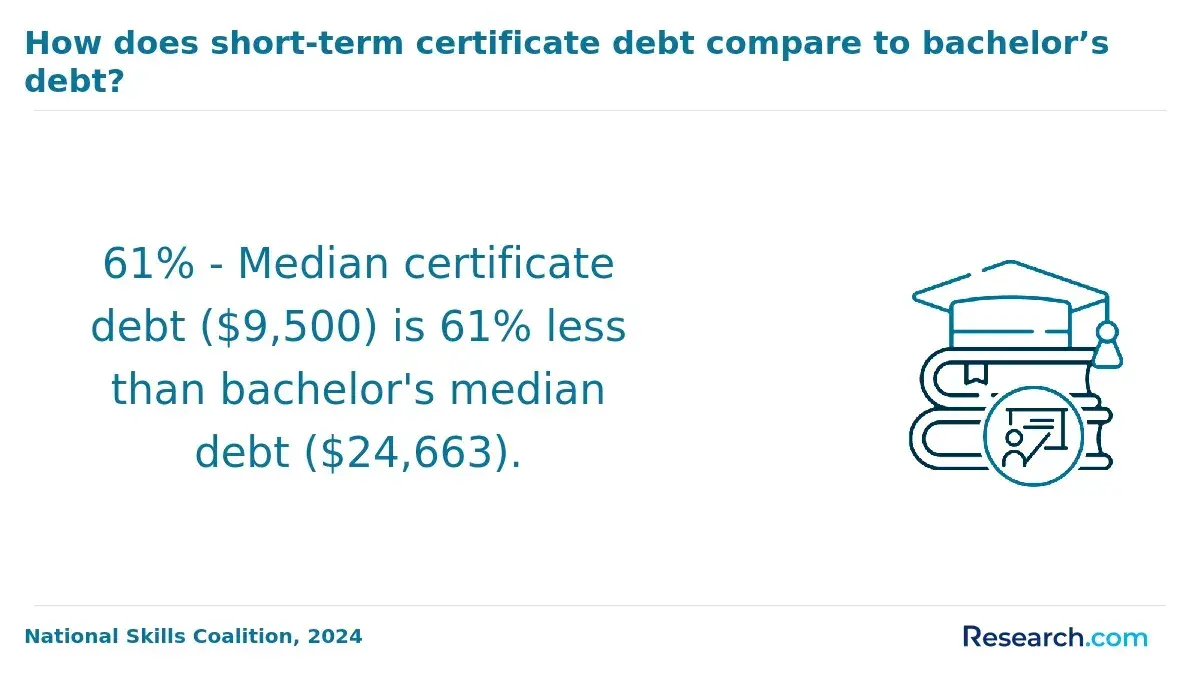
- Reduced Debt Burden: Completing a degree sooner avoids accumulating additional tuition costs and allows learners to enter or return to the workforce earlier, lessening the median debt load, which is reported as $20,919 for graduates. This financial relief enables reinvestment in career development and supports long-term economic stability.
- Earlier Eligibility for Advancement: Accelerated completion grants quicker access to credentials required for promotions, advanced practice roles, or specialized licensure, maximizing salary potential. Employers value this timeliness when assessing candidates for leadership or niche positions.
- Recognition of Prior Learning: Chamberlain's acceptance of transfer credits and professional experience reduces redundant coursework, showcasing learner adaptability and focus. This streamlined path signals dedication to employers who prioritize efficient and practical education.
- Enhanced Workforce Competitiveness: Faster entry into advanced roles supports ongoing career mobility and responsiveness to evolving industry demands. Accelerated graduates demonstrate commitment and readiness that aligns with employer expectations for skill acquisition under time constraints.
- Minimized Opportunity Cost: By shortening academic timelines, learners spend less time away from full earning potential, which is critical for adult learners managing financial and familial obligations alongside education.
What Graduates Say About Being an Adult Learner at Chamberlain University
- John: "Choosing Chamberlain University's online program allowed me to strategically leverage my prior professional experience through their credit-by-exam options, which made a significant difference in shortening my degree timeline. Their test-optional policies relieved a lot of the usual admission stress, enabling me to focus on coursework and complete my degree faster than I initially expected. After graduating, I found that the accelerated pace truly paid off, as I was able to enter the healthcare workforce ahead of many peers, which helped me secure a role with a noticeable salary increase right out of school."
- Colin: "Enrolling at Chamberlain University as an adult learner, I appreciated the flexibility of the online format that let me balance work, family, and school seamlessly. The ability to maximize credit transfers was key in speeding up my program; however, I was cautious and made sure each step aligned with my career goals before accelerating too quickly. In hindsight, while going faster helped, it was the structured approach to earning credits and understanding the workforce's demands that ultimately improved my job prospects after graduation."
- Ian: "My experience at Chamberlain University's online program was very much about making informed choices to get ahead. I carefully navigated the admissions testing options and prioritized converting real-world experience into academic credit, which cut months off my completion time. While the program's flexibility was a major advantage, the real test came post-graduation-in evaluating whether my accelerated path translated into career advancement. Thankfully, I found that entering the workforce sooner allowed me to build practical experience quicker and opened doors to promotions in a way traditional timelines wouldn't have."
Other Things You Should Know About Chamberlain University Degrees
Chamberlain University's online programs offer some accelerated courses but generally require students to follow a structured timeline with fixed session lengths. While you can take more courses per term to finish faster, this increases workload significantly and may affect comprehension and retention. Prioritizing a balance between course load and personal capacity is essential to avoid burnout and ensure quality learning despite accelerated pacing.
For nursing or healthcare-related programs, faster degree completion depends heavily on the availability of clinical placements, which often have rigid schedules. Chamberlain University's online options still require in-person practicum hours, which cannot be compressed beyond provider and regulatory limits. This means time savings from coursework acceleration could be limited if clinical slots are unavailable or overbooked, making early planning and flexibility crucial.
In 2027, Chamberlain University's accelerated programs are designed to help adult learners swiftly complete their degrees without compromising academic quality. Employers generally respect such programs, as they recognize the institution's accreditation and the comprehensive education provided, aligning with industry expectations.
For most adult learners balancing work and life commitments, sequential course completion is recommended to maintain consistent progress and reduce stress. Attempting several courses at once can speed up degree earning but may impair learning quality and time management. Prioritizing sequential learning with occasional overlap during less busy periods optimizes both speed and academic performance.
References
- Will Transfer Credits Impact your College Graduation Date? | Blog https://waves.portagelearning.edu/blog/will-transferring-college-credits-impact-your-graduation-date
- The Pros and Cons of Online Learning https://www.chamberlain.edu/blog/the-pros-and-cons-of-online-learning
- Why Competency-Based Education Is a Great Fit for Adult Learners https://www.d2l.com/blog/why-competency-based-education-is-a-great-fit-for-adult-learners/
- Top 3 challenges in meeting working adult learner needs https://www.highereddive.com/spons/top-3-challenges-in-meeting-working-adult-learner-needs/620817/
- Executive education courses from top universities | edX https://www.edx.org/executive-education
- Chamberlain University https://chamberlain.libcal.com/
- Accelerated & Degree Completion Programs for Adult Learners - Delaware County Community College https://www.dccc.edu/student-support-services/transfer/transfer-resources/accelerated-degree-completion-programs-for-adult-learners/
- To jumpstart career, graduate college early https://thesuffolkjournal.com/19193/opinion/to-jumpstart-career-graduate-college-early/
- Executive Education and Professional Development Programs https://www.bentley.edu/centers/executive-education
- EdAssist | How to fit nursing school into your schedule as an adult learner https://www.brighthorizons.com/resources/blog/edassist/how-to-fit-nursing-school-into-your-schedule-as-an-adult-learner