2027 Logistics Degree Enrollment Trends by Age Group: Traditional Students vs Adult Learners

Co-Founder and Chief Data Scientist
The demand for skilled logistics professionals has surged, driven by a 26% projected employment growth in supply chain management roles through 2030. Traditional students, typically aged 18 to 24, often enroll in full-time logistics degree programs, balancing academic rigor with foundational industry certifications required for entry-level positions.
In contrast, adult learners frequently pursue part-time or accelerated options, influenced by career transitions from manufacturing or transportation sectors seeking advanced technical skills amid credential inflation. These enrollment variations highlight divergent workforce pipelines, revealing how licensing prerequisites and evolving employer expectations shape educational access and inform the profession's future adaptability and resilience.
Key Things to Know About Logistics Degree Enrollment Trends by Age Group
- Enrollment among traditional-age students is declining by 8% annually, indicating a shift toward experiential hiring preferences that challenge degree reliance for entry-level logistics roles.
- Adult learners, representing 40% of logistics enrollees in 2024, face barriers in balancing program demands with work, limiting access to top-tier internships valued by employers.
- The delayed enrollment of older students increases costs and erodes return on investment due to compressed career runway before mid-career advancement stages.
- Key Things to Know About Logistics Degree Enrollment Trends by Age Group Key Things to Know About Logistics Degree Enrollment Trends by Age Group
- Which Age Groups Represent the Largest Share of Logistics Students? Students by Age Group
- Why Do Traditional Students Choose Logistics Degree Programs? Traditional Students
- Why Do Adult Learners Return to School for a Logistics Degree? Adult Learners
- How Do Academic Goals Vary Between Younger and Older Logistics Students? Academic Goals by Age Group
- How Do Financial Concerns Differ Between Traditional Students and Adult Learners? Financial Concerns by Age Group
- What Challenges Do Adult Learners and Traditional Students Face While Earning a Logistics Degree? Student Challenges by Age Group
- How Does Age Affect Logistics Degree Student Retention? Age and Student Retention
- Which Logistics Specializations Are Most Popular Among Adult Learners? Top Specializations for Adult Learners
- How Does Age Affect Job Opportunities for Logistics Graduates? Impact of Age in Job Opportunities
- What Do Current Logistics Enrollment Trends Reveal About Future Demand? What Do Current Logistics Enrollment Trends Reveal About Future Demand?
Which Age Groups Represent the Largest Share of Logistics Students?
Logistics programs attract a diverse range of students from various stages of life, yet enrollment remains concentrated in particular age brackets shaped by factors such as workforce entry timing, financial readiness, and program accessibility. This age distribution reveals systemic patterns tied to career development phases, rather than mere academic preference.
Understanding logistics degree enrollment by age group involves examining how career transitions, education formats, and labor market demands influence participation.
- Ages 18-24: This traditional college-age group accounts for the largest share of logistics students, typically enrolling shortly after high school. Their participation is driven by alignment with initial career planning and access to structured academic programs that facilitate internships and entry-level employment. The ability to engage full-time in education without immediate work responsibilities supports this dominance.
- Ages 25-34: Representing a growing portion of enrollment, adult learners in this range often pursue logistics education to upgrade skills or pivot careers amid evolving supply chain complexities. Their involvement is influenced by balancing work, family obligations, and the preference for flexible learning formats like online or evening classes that accommodate professional demands.
- Ages 35-44: While smaller, this segment increasingly enrolls to meet management-level credentials or specialized knowledge required for leadership roles. Their education choices are pragmatic, focusing on immediate applicability to workplace needs and filling gaps exposed by advancing technology and globalization in logistics.
- Ages 45 and above: This group has the smallest share, often constrained by financial or time limitations and fewer incentives to pursue formal credentials late in their careers. However, some engage for career shifts or to remain competitive as employer expectations rise.
The trajectory from entry-level education toward mid-career professional development underscores a shift in logistics degree enrollment patterns. Adult learners' rising presence reflects the sector's emphasis on combining practical experience with formal credentials for advancement. Employers increasingly value candidates who merge operational know-how with up-to-date academic knowledge, a balance often sought by those beyond traditional college ages.
For logistics students navigating educational choices, these dynamics underscore how age intersects with opportunity and program design, informing a strategic approach to skill acquisition aligned with labor market realities.
Recent data suggest that this stratification mirrors workforce demands more than simple academic interest. Prospective students must weigh how their stage in life affects not only program accessibility but also long-term career prospects and adaptability. For further insights on related workforce trends, see highest paying majors.
Why Do Traditional Students Choose Logistics Degree Programs?
Traditional students pursuing logistics degrees often do so driven by a combination of academic interest in supply chain systems and the perceived signaling value of a specialized credential early in their career journeys. Their enrollment decisions tend to reflect a strategic approach to early career exploration, where blending theoretical knowledge with practical skill development aligns with employer expectations for entry-level roles.
According to National Center for Education Statistics data, approximately 27% of students in logistics programs are recent high school graduates, reflecting the degree's appeal as a clear pathway into stable industries like transportation, warehousing, and e-commerce. For many, logistics programs offer a structured curriculum that supports both foundational business concepts and technical competencies, which complements their goal of establishing a viable professional identity before workforce entry.
Deeper enrollment motivations are shaped by university recruitment strategies and guidance counseling that emphasize logistics as a pragmatic, career-aligned discipline with consistent labor market demand. Exposure to logistics concepts in secondary education or introductory college courses can further influence student choice, particularly when coupled with awareness of stable employment trajectories in supply chain sectors.
Additionally, the influence of peer networks and internship opportunities embedded in logistics curricula enhances the appeal for traditional students seeking early hands-on experience and job market readiness. This interaction between perceived job security, academic pathways, and workforce alignment often leads students to prioritize logistics programs over broader business degrees, highlighting the practical utility and career-focused benefits of logistics degree for college students.
Some of these recruitment and curricular dynamics are similarly leveraged by programs listed among CACREP accredited counseling programs, showing how early professional pathway clarity influences enrollment across fields.
Why Do Adult Learners Return to School for a Logistics Degree?
The decision for adult learners, typically aged 25 and older, to return to school for a logistics degree is largely driven by the need to advance in a field that demands both practical experience and formal credentials. Many seek wage growth or upward mobility within supply chain roles where on-the-job expertise is insufficient without recognized academic qualification. Others pursue logistics degrees as a gateway to transitioning into expanding industry segments or new operational functions influenced by technological shifts.
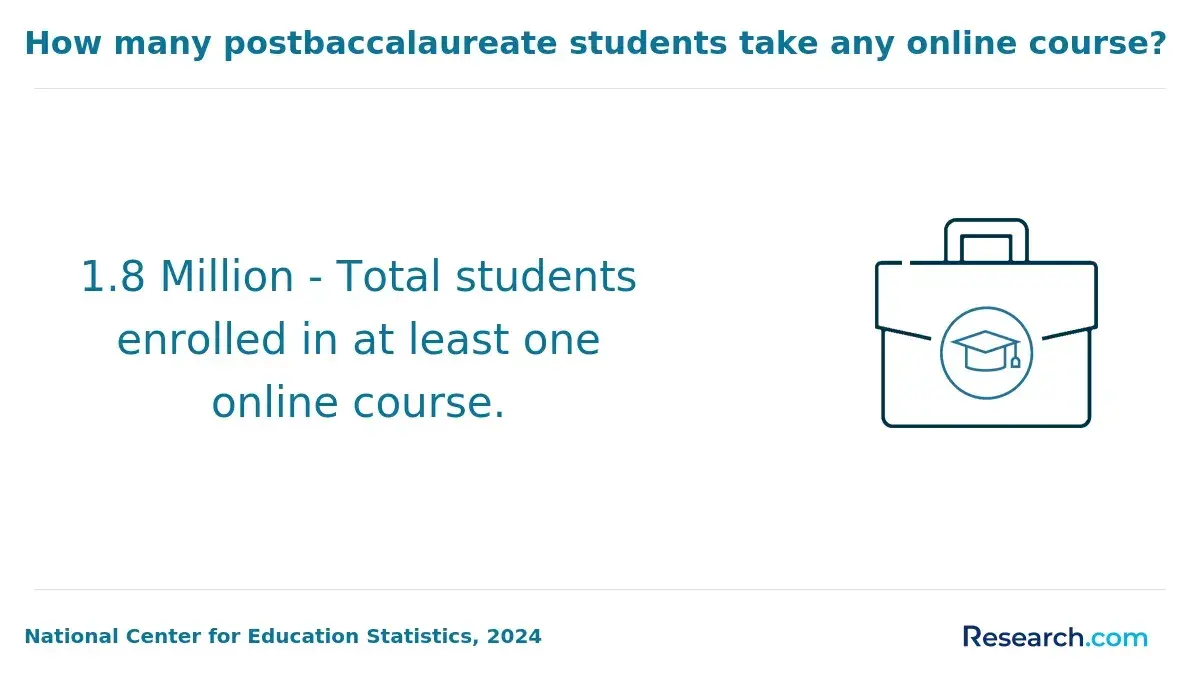
A 2024 report from the National Center for Education Statistics highlights that adult learners now constitute nearly 40% of undergraduate enrollment, reflecting their strategic role in bridging career gaps through targeted education.
Additional factors influencing this educational return include employer tuition reimbursement programs that reduce financial barriers and the proliferation of flexible delivery models such as online and evening courses. These formats accommodate the competing demands of family and work typical of adult learners, facilitating continuous professional upskilling amid evolving employer expectations.
The logistics sector increasingly prioritizes candidates who combine experiential knowledge with competencies in digital tools and supply chain technologies, prompting adult students to update skills that align with automation and data analytics trends. This recalibration responds not only to credential inflation but also to workforce shifts necessitating lifelong learning for sustained employability.
How Do Academic Goals Vary Between Younger and Older Logistics Students?
Younger logistics students often enter programs with the intent to explore a broad array of skills and knowledge foundational to the field, preparing themselves for entry-level roles or further academic pursuits. Their priorities typically include mastering theoretical concepts alongside practical applications, which aligns with many employers' expectations for new graduates who can adapt across diverse supply chain functions. This cohort generally benefits from immersive, full-time study formats that emphasize interdisciplinary approaches such as integrating logistics with business analytics or technology tools.
According to the 2024 National Center for Education Statistics report, these students tend to invest in comprehensive frameworks that allow for long-term career flexibility rather than immediate workplace specialization.
In contrast, adult learners returning to logistics education usually pursue focused competencies that directly translate to current job market needs, such as certifications and skill upgrades critical for professional advancement or sector shifts. Their educational goals are shaped by existing work experience, financial responsibilities, and the necessity for schedule flexibility, prompting them to choose part-time or online study formats.
Roughly 62% of adult logistics students, per the same NCES data, prioritize education explicitly for credential completion or role transition, reflecting an intent to rapidly improve employability and income potential. This pragmatic orientation drives a preference for applied coursework and technology-driven training over broad-based academic exploration.
One adult learner recounts hesitating before applying to a logistics program due to uncertainty about balancing coursework with demanding night shifts and family deadlines. The rolling admissions process required careful timing; submitting an application too early risked overcommitting before aligning work schedules, while delays risked losing spots in preferred courses.
Ultimately, the learner chose to prioritize a flexible online program with staggered start dates, alleviating anxiety about admission timing and allowing for incremental preparation rather than immediate full engagement. This experience underscores how older students' academic goals and decision-making often integrate pragmatic considerations absent for younger students planning full-time enrollment.
How Do Financial Concerns Differ Between Traditional Students and Adult Learners?
Traditional students pursuing a logistics degree generally depend heavily on family support, federal aid, and student loans to finance their education. This demographic, typically aged 18 to 24, faces unique financial concerns centered on upfront tuition costs and the prospect of accumulating long-term debt, often underestimated in its impact. According to a 2024 National Postsecondary Student Aid Study, about 65% of these traditional students rely on federal aid, which aids in covering immediate expenses but contributes to debt burdens after graduation.
These financial challenges are closely intertwined with limited income opportunities during full-time enrollment, reflecting a funding model where students balance educational ambitions against constrained personal resources and deferred earnings, highlighting distinct financial challenges faced by traditional and adult logistics students.
In contrast, adult learners tend to navigate financial considerations shaped by ongoing employment, family obligations, and income stability. Many adult students self-fund their logistics education, partly relying on employer tuition assistance or savings, as emphasized by a 2024 American Council on Education report indicating that approximately 70% of adult learners take this route. Unlike younger students, adults must weigh opportunity costs, including potential lost wages from time away from work and added responsibilities such as mortgages and dependents.
These pressures leave adult learners more sensitive to program flexibility and accelerated formats that reduce disruptions, demanding a nuanced view of how differences in funding options for logistics degree adult learners influence decisions on whether and how to pursue additional credentials.
These contrasting financial profiles significantly influence enrollment patterns and program selection. Adult students often prioritize programs offering practicality and immediate workforce application, sometimes choosing online pathways or accelerated courses to accommodate work-life balance and mitigate income loss. Meanwhile, traditional students may pursue broader learning experiences despite impending debt, reflecting different risk tolerances and long-term career calculations.
Such distinctions underscore the need to evaluate educational pathways not just on cost but on the economic tradeoffs inherent to life stage and workforce participation, reinforcing how financial considerations extend well beyond plain affordability. Prospective logistics students might also explore alternatives like an online MBA no GMAT to complement their financing strategies and career goals.
What Challenges Do Adult Learners and Traditional Students Face While Earning a Logistics Degree?
Traditional students pursuing a logistics degree often confront challenges tied to their stage in the academic lifecycle, including adapting to structured learning environments and developing self-discipline for managing coursework. These students, typically younger and less experienced with professional time management, must balance academic rigor with social integration and identity formation within campus settings.
Adjusting to the demands of higher education while cultivating foundational study habits can strain their ability to maintain steady progress. A 2024 report by the National Center for Education Statistics highlights that 35% of traditional students find managing their academic workload a significant obstacle.
Adult learners face a distinct set of challenges shaped by external responsibilities such as full-time employment and family obligations, which constrain available time and access to campus resources. Their re-engagement with academic environments often requires bridging gaps in formal education or technology skills, even as they leverage workplace experience relevant to logistics practice.
Balancing professional duties alongside study commitments complicates scheduling and can extend degree completion timelines; the Education Data Initiative's 2024 survey found nearly 60% of full-time working adult students cite work-school balance as a major barrier. Financial pressures also differ, with many adults relying on employer tuition assistance or personal funds rather than traditional aid sources.
Educational institutions seeking to serve these diverse populations increasingly tailor support through flexible course delivery, enhanced advising, and targeted resources that reflect these lifecycle-based challenges. Recognizing that adult learners and traditional students navigate fundamentally different operational constraints informs program design, which in turn affects retention and timely completion rates.
This adaptive approach underscores the importance of aligning curricular demands and support structures with the multifaceted realities each student group faces in attaining logistics credentials.
How Does Age Affect Logistics Degree Student Retention?
Younger logistics students often face retention challenges rooted in the transition to higher education's academic demands and fluctuating motivation. Many begin their studies soon after high school without fully formed career objectives, which can dilute their focus and persistence during the critical initial years. These students may benefit from campus resources and peer networks, but the lure of social activities and shifting academic interests frequently distracts them from consistent coursework engagement.
According to the National Center for Education Statistics (2024), retention rates among traditional students in logistics hover around 55%, illustrating how early academic adjustment and incomplete clarity on goals affect persistence.
In contrast, adult learners pursuing logistics degrees show higher average retention rates-about 68%-largely because their studies are directly tied to concrete professional aims. These students often juggle work, family, and financial responsibilities alongside their education, which can constrain their ability to enroll full-time or accelerate completion. Their real-world experience usually enhances engagement but introduces complex time-management challenges that institutions must address through flexible scheduling and targeted support.
This lifecycle pattern reveals that while motivation is stronger, competing obligations require programs to adapt to sustain persistence among older enrollees.
A logistics graduate recalled their decision-making during a rolling admissions process, emphasizing the interplay of timing and preparation linked to age. Though interested in starting immediately, they hesitated after missing early application deadlines and worried about balancing their current job with coursework demands. The flexible admission window eventually allowed them to enroll later, but the delay sparked anxiety about losing momentum.
This experience underscored how adult students often navigate uncertainty and strategic planning before committing, factors institutions should consider when designing retention-focused admissions and support services.
Which Logistics Specializations Are Most Popular Among Adult Learners?
Adult learners pursuing logistics degrees exhibit a clear preference for specializations that offer tangible career benefits aligned with their existing professional experience and immediate workforce needs. Unlike traditional students who may opt for broader or theoretical areas, many adult learners prioritize programs that support career mobility, salary advancement, or transitions into managerial roles.
Data from the U.S. Bureau of Labor Statistics (2024) shows that close to 45% of adult enrollees select specializations tied to supply chain management and transportation systems, reflecting both employer demand and practical skill application in these sectors.
- Supply Chain Management: This specialization attracts adult learners because it builds on managerial experience and offers direct paths to supervisory or strategic roles, which are often accompanied by higher salary potential and leadership responsibilities.
- Transportation Logistics: Its operational focus and integration of technologies like GPS tracking and automated freight systems make it appealing to professionals seeking to update skills and maintain relevance in evolving industries.
- Inventory and Warehouse Management: E-commerce growth drives demand here, and adult learners appreciate the immediate operational impact and skill application that supports logistics efficiency and cost control.
- Procurement and Purchasing: Those with business backgrounds often choose this to leverage vendor relations expertise and enhance cost optimization capabilities within supply chains.
- Logistics Analytics and Technology: This emerging area draws professionals interested in data-driven decision-making, enabling them to transition toward tech-savvy roles emphasizing innovation and efficiency improvements.
These popular logistics concentration areas for adult learners reflect a pragmatic focus on measurable career outcomes and workforce reinvention, rather than purely academic interest. For students weighing educational investments, exploring how these specializations align with individual career goals and current labor market demands can offer clearer guidance. This approach underscores the value of upskilling in fields where operational know-how and technology integration have a direct impact on employer recruitment and retention.
Prospective students also benefit from considering program accessibility and affordability, and resources listing cheapest 1 year online MBA programs can provide additional options for those combining logistics education with business leadership development.
How Does Age Affect Job Opportunities for Logistics Graduates?
Younger logistics graduates often benefit from structured entry points such as internships and early-career roles that serve as established pipelines into the labor market. Employers tend to value recent graduates within the traditional college-age bracket for their readiness to adapt and grow, typically offering clearer paths for advancement due to fewer preconceptions about salary demands or long-term career choices.
This demographic frequently leverages institutional networking opportunities and formal education alignment to secure placements that emphasize foundational skills development. Such hiring patterns reflect broader labor market segmentation where younger entrants access roles designed to build expertise, benefiting from expectations aligned with typical career lifecycle positioning, including established pathways for advancement within logistics degree graduate job prospects by age.
In contrast, logistics graduates aged 30 and above often navigate a different employment landscape shaped by prior work experience and transferable competencies. Adult learners commonly target mid-career roles or specialized positions, capitalizing on skills gained in related fields or leadership potential, although they must also contend with employer biases concerning adaptability and career commitment. According to the 2024 Bureau of Labor Statistics, these older candidates experience on average a 20% longer job search duration, reflecting structural hiring preferences that favor youth for entry roles.
Despite such challenges, relevant certifications and demonstrable project management experience can offset concerns and facilitate upward mobility. To better evaluate program costs alongside career strategies, students may consider exploring insights on how much is criminal justice school, offering comparative perspectives valuable for adult learners assessing career advancement opportunities for adult logistics learners.
What Do Current Logistics Enrollment Trends Reveal About Future Demand?
Current enrollment patterns in logistics degree programs reveal shifts in student priorities and perceived career value, particularly as traditional college-age students make up about 60% of enrollees, while adult learners comprise roughly 40%, according to the National Center for Education Statistics in 2024. This distribution reflects a dual demand: foundational education geared toward younger students and flexible, career-oriented learning for adults balancing work obligations.
The rising interest among adult learners underscores logistics as a field that offers tangible return on investment by enhancing employability and salary potential. These enrollment shifts also suggest growing recognition of logistics as a strategic discipline essential for navigating increasingly complex and digitized supply chains.
Enrollment trends closely align with broader labor market signals such as employer demand for adaptable, tech-savvy professionals capable of leveraging automation and data analytics. As supply chains expand and integrate new technologies, workforce shortages in skilled logistics roles intensify, potentially driving program growth and encouraging institutions to diversify offerings with hybrid or online formats.
This evolving landscape signals that logistics education must continuously adapt to labor market needs, supporting both entry-level preparation and mid-career advancement to sustain the talent pipeline amidst rapid industry transformation.
References
- Online UG/PG/IT Courses | MBA TopUp , DBA | OTHM | SQA Authorized https://www.edubex.com/blog/all-about-logistics-and-supply-chain-management
- 8 logistics trends that will impact warehouse and supply chain efficiency in 2026 | ANASOFT https://www.anasoft.com/en/blog/8-logistics-trends-2026
- Logistics Graduate Career Profile, Logistics Careers | GRB https://www.grb.uk.com/industry-profiles/logistics/
- Career in Supply Chain Management & Logistics: What to study? https://www.study.eu/article/career-in-supply-chain-management-logistics-what-to-study
- The Benefits of College for Adult Learners - ReUp Education https://reupeducation.com/blog/the-benefits-of-college-for-adult-learners/
- Adoption of generative AI will have different effects across jobs in the U.S. logistics workforce https://equitablegrowth.org/adoption-of-generative-ai-will-have-different-effects-across-jobs-in-the-u-s-logistics-workforce/
- Topic: Logistics industry worldwide https://www.statista.com/topics/5691/logistics-industry-worldwide/
- Best Advice for Going Back to School as an Adult https://www.straighterline.com/blog/degreecompletion-best-advice-for-adults-going-back-to-college
- Global Logistics Market Size, Share, Growth & Trends, 2034 https://www.marketdataforecast.com/market-reports/logistics-market
- How Higher Education Institutions Can Address the Needs of Adult Learners https://www.higheredtoday.org/2022/04/18/how-higher-education-institutions-can-address-the-needs-of-adult-learners/
Other Things You Should Know About Logistics
Adult learners often juggle employment and family responsibilities, making rigid on-campus schedules less feasible. Programs offering evening, weekend, or online classes better accommodate their needs, whereas traditional students typically experience fewer scheduling conflicts and benefit more from full-time, daytime instruction. Candidates should prioritize program flexibility aligned with their life situation, as misalignment can increase dropout risk and extend time-to-degree for adult learners.
In 2027, logistics degree enrollment among adult learners has risen, driven by a demand for career changes and skill enhancements. Traditional students continue to enroll steadily, attracted by comprehensive curriculums and entry-level career opportunities. The shift reflects a widening recognition of logistics' critical role in global commerce.
Yes. Adult learners frequently seek programs with established employer connections and practical components that translate directly into career advancement or transitions. While traditional students also benefit from internships and industry exposure, adult learners typically have clearer career goals and limited time, so programs offering credit for prior work experience or streamlined pathways to certifications provide greater value. Choosing a program with strong industry ties often leads to better tangible outcomes for adult learners balancing education with career progression.
Traditional students, often with fewer external commitments, generally manage intensive study loads more effectively, whereas adult learners face competing demands that heighten stress and reduce study time. High workload without sufficient support can disproportionately increase adult learner attrition. Prospective students should assess programs' workload expectations alongside available academic support, with adult learners prioritizing programs known for flexible pacing or supplemental resources to sustain retention and success.