2027 Digital Audiences ROI by Institution Type: Public vs Private vs Nonprofit Online Programs

Co-Founder and Chief Data Scientist
A prospective digital audiences student examining online programs may find two offerings with similar course structures but drastically different tuition and graduation rates. One public university program could boast a 65% graduation rate and moderate debt, while a private alternative might carry higher costs and yield less favorable employment outcomes.
A 2024 study by the National Student Financial Wellness Commission reveals that students enrolled in nonprofit online programs face 12% lower average debt compared to their private counterparts, highlighting the nuanced trade-offs in financial risk and payoff. Understanding how these variables shape career prospects is essential before committing.
This article analyzes the ROI of digital audiences programs by institution type-public, private, and nonprofit-enabling informed comparisons of cost, outcomes, and long-term value.
Key Things to Know About Digital Audiences ROI by Institution Type
- Public institutions typically offer lower total costs but may have longer completion times, resulting in delayed career advancements affecting ROI timing for working adults balancing employment and study.
- Private online programs often provide stronger employer recognition and specialized support services, enhancing career placement; however, this advantage may come with higher debt exposure, requiring careful debt-to-earnings evaluation.
- Nonprofit online programs balance moderate costs and completion outcomes, yet inconsistent accreditation standards can influence employer perceptions and credential value, making institutional reputation critical for long-term ROI.
- Key Things to Know About Digital Audiences ROI by Institution Type Key Things to Know About Digital Audiences ROI by Institution Type
- What Does ROI Mean for a Digital Audiences Program and How Is It Measured? Understanding Digital Audiences Program ROI
- How Do Public, Private, and Nonprofit Online Digital Audiences Programs Differ in Overall Value? Value by Institution Type
- How Do Tuition Costs Affect the ROI of a Digital Audiences Program Across Institution Types? Tuition Costs and ROI
- How Do Graduation Rates Influence Digital Audiences Program ROI? Graduation Rates Impact ROI
- What Role Do Career Outcomes Play in the ROI of a Digital Audiences Degree? Career Outcomes and ROI
- How Does Student Debt Impact the Long-Term ROI of a Digital Audiences Program? Debt vs. Long-Term ROI
- How Do Flexibility and Adult Learner Support Affect Digital Audiences Program Value? Flexibility and Program Value
- How Do Accreditation and Institutional Reputation Influence Digital Audiences ROI? Accreditation and Reputation
- How Does Time-to-Degree Affect the ROI of Public, Private, and Nonprofit Digital Audiences Programs? Time-to-Degree
- How Can You Choose the Best Digital Audiences Program Based on Your ROI Goals? Choosing Programs by ROI
What Does ROI Mean for a Digital Audiences Program and How Is It Measured?
Return on investment for a digital audiences program requires a clear-eyed evaluation of how tuition, fees, and student debt interplay with graduation rates and time-to-degree to shape overall value. For instance, public online institutions often feature lower upfront costs that reduce debt but may have lower completion rates, potentially lengthening the time to credential and increasing opportunity costs.
Conversely, nonprofit online programs have been shown in a 2024 National Center for Education Statistics report to achieve graduation rates about 12% higher on average, which can accelerate entry into the workforce and offset higher tuition through reduced indirect costs.
Measuring the financial benefits of digital audiences education entails looking beyond sticker prices alone to consider institutional support, quality of instruction, and career services that elevate long-term employability. Adult learners with specific career objectives or flexibility needs must weigh whether private institution benefits, such as personalized networking and practical skill development, justify higher debt burdens compared to more affordable public options.
This complexity means that ROI calculations vary widely among applicants and underscores why a lower-cost program does not automatically deliver the strongest lifetime value, especially when factoring in completion likelihood and robust employment outcomes linked to program quality.
Prospective students should integrate data on completion, average debt at graduation, and employment success within targeted industries to inform decisions. Resources like the College Scorecard support this approach, though learners must adapt metrics to their unique contexts and goals. For those exploring related pathways, programs like online MSW programs illustrate how specialized program frameworks can influence ROI through direct career relevance and evolving job market demands.
How Do Public, Private, and Nonprofit Online Digital Audiences Programs Differ in Overall Value?
Public, private, and nonprofit online digital audiences programs differ significantly in balancing cost, quality, and career outcomes, with these distinctions directly impacting students' financial and professional trajectories. Public programs often benefit from state subsidies that reduce tuition, typically resulting in graduates carrying 15-20% less debt, according to the 2024 National Center for Education Statistics data.
However, public offerings generally provide less personalized support and larger class sizes, which can affect degree completion rates and student engagement. Private institutions, by contrast, tend to invest more in individualized services and flexible learning options, which may contribute to stronger early-career job placement but often come at a premium price that can inflate debt burdens.
Nonprofit online programs frequently position themselves between these two, aiming to combine affordability with reputable accreditation and focused career preparation, especially in sectors like digital marketing and communications. This blend can appeal to learners seeking steady mid-career salary growth without incurring the higher debt levels linked to many private programs.
Institutional reputation and accreditation play a crucial role in employer perceptions, with public schools generally offering recognized regional credentials, while private providers leverage niche accreditations that cater to specialized markets, potentially influencing long-term return on investment. Prospective students must weigh these variables against their financial capacity, professional aspirations, and the practical demands of balancing work and study.
A working professional contemplating online digital audiences programs faced uncertainty about paying higher tuition for a private school promising stronger networking and placement support versus enrolling at a lower-cost public university with wider access but fewer tailored resources. She reviewed graduation rates, employer connections, and debt projections, ultimately deciding that a nonprofit program offered the optimal balance of quality instruction, manageable cost, and respected accreditation.
This choice mitigated her concerns over long-term debt while preserving opportunities for career advancement, illustrating how nuanced evaluation of institutional tradeoffs can directly shape both educational experience and financial health.
How Do Tuition Costs Affect the ROI of a Digital Audiences Program Across Institution Types?
Tuition disparities between public, private, and nonprofit online Digital Audiences programs significantly shape the return on investment but require careful evaluation beyond sticker prices. Public institutions tend to offer substantially lower tuition, often 40-60% less than private nonprofits according to 2024 National Center for Education Statistics data, which can reduce upfront costs and shorten the breakeven timeline for students balancing expenses with potential earnings.
Yet, lower tuition does not guarantee a superior ROI. Private nonprofit programs frequently provide larger financial aid packages that mitigate nominally higher costs, while also delivering enhanced career services and potentially higher median earnings that improve long-term financial outcomes for timely graduates.
Decision-makers must also weigh completion rates and program flexibility, as longer time-to-degree inflates total costs and postpones salary growth, eroding value even if tuition is modest. Nonprofit offerings often strike a middle ground with moderate tuition and stronger support structures that accommodate working adults' schedules, which can boost persistence and completion.
However, the increased debt burden seen in some private nonprofit students, coupled with a necessity to leverage institutional resources effectively, highlights that higher costs only pay off when matched by academic quality and labor market relevance. For many, public programs' affordability combined with decent completion rates represents a lower-risk choice, while others with specialized career goals might justify investing more for potentially superior employment outcomes.
The practical implication is that the nominal tuition figure is just one factor in a complex ROI calculation where financial aid, student debt exposure, program completion speed, and post-graduation earnings must be considered in tandem. The Federal Reserve Bank's 2024 education finance report reveals private nonprofit online students tend to borrow more yet achieve somewhat better earnings, underlining that increased upfront cost can be worthwhile but only under specific conditions.
Ultimately, adult learners need to align tuition costs with their personal timelines, support needs, and career goals to determine which type of Digital Audiences program delivers sustainable, practical value over time.
How Do Graduation Rates Influence Digital Audiences Program ROI?
Graduation rates provide a useful but incomplete lens for evaluating the return on investment in online digital audiences programs. While higher completion percentages often reflect effective student support and shorter time-to-degree, which reduce debt burden and accelerate workforce entry, public institutions frequently report rates between 50-60%, reflecting a diverse, often part-time student body balancing education with external responsibilities.
Comparing this to private nonprofit programs, which may exceed 70%, highlights how institutional mission and enrollment flexibility impact persistence challenges and affordability, crucial for cost-conscious adult learners assessing program ROI beyond surface graduation metrics.
A 2024 analysis from the National Center for Education Statistics underscores that graduation rates correlate with program quality and financial outcomes but should be weighed alongside factors such as academic flexibility and career alignment. For example, an engineering online degree from certain institutions may offer tailored pacing and robust support to reduce student debt and improve long-term earnings despite moderate graduation figures.
Many employers prioritize demonstrable skills and completed credentials over prestige alone, so prospective students should consider how graduation rates intersect with debt levels, time-to-degree, and institution type to make informed decisions reflecting their career goals and life circumstances.
What Role Do Career Outcomes Play in the ROI of a Digital Audiences Degree?
Career outcomes significantly shape the return on investment for online digital audiences degrees, with nuanced differences across public, private, and nonprofit institutions influencing practical value beyond sticker price. A 2024 National Center for Education Statistics report highlights that graduates from public online programs in related fields experience employment rates roughly 7% higher within six months post-graduation compared to private counterparts, reflecting stronger employer recognition and industry alignment.
This disparity can affect a student's ability to recover costs and justify tuition debt through quicker integration into relevant roles. Nonprofit programs often deliver value more indirectly, emphasizing skill mastery and graduate education preparation, which may appeal to learners prioritizing long-term professional adaptability over immediate earnings.
When weighing educational investments, it is critical for students to consider how employer perceptions of a program's rigor, the availability of career services, and regional job markets interact with tuition and time-to-degree. A private institution's higher tuition does not inherently guarantee better job placement or employer networks, particularly if their program's relevance to current digital marketing or analytics trends is less evident.
Conversely, public and nonprofit graduates may find enhanced pathways to sustained career growth through practical training and institutional support, impacting ROI not only through salary but through career mobility and credential recognition. These real-world factors underscore that effective decision-making must integrate measurable employment outcomes with long-term career sustainability rather than short-term financial gain alone.
Reflecting this complexity, one graduate who pursued an online digital audiences degree from a nonprofit institution described initial uncertainty about whether the credential would materially improve their prospects within a competitive job market. They noted frustration in trying to quantify ROI solely by salary increases, as promotions within their existing company hinged more on demonstrated skills and internal networking opportunities facilitated by the program.
Over time, they observed expanded responsibilities and valued professional recognition that validated the degree's worth beyond immediate compensation, illustrating that career outcomes often unfold gradually and should factor into educational cost-benefit analyses in multifaceted ways.
How Does Student Debt Impact the Long-Term ROI of a Digital Audiences Program?
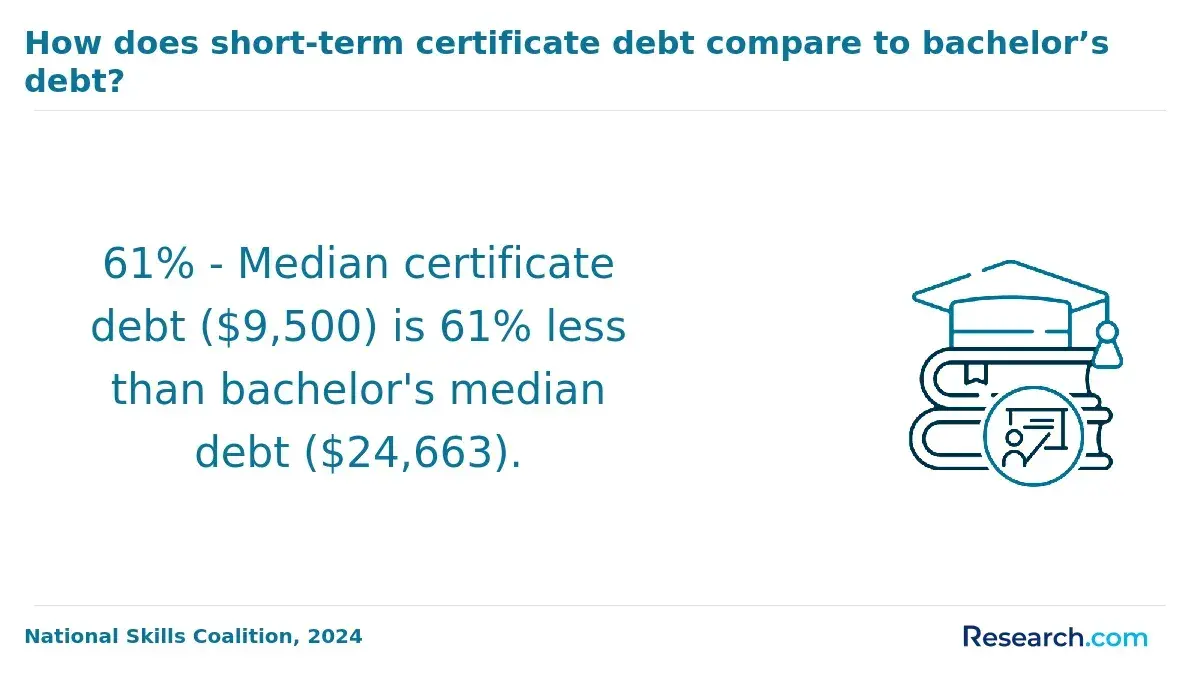
The long-term ROI of a digital audiences program is heavily shaped by the interaction between student debt levels, repayment conditions, and institutional type. Graduates from private institutions often carry nearly 30% higher student loan balances compared to their public counterparts, which can significantly constrain their financial flexibility post-graduation despite potential earning advantages.
For example, a student who borrows heavily at a private institution may face prolonged repayment timelines and higher default risks, especially if program costs outpace actual income gains in the competitive digital audiences labor market. Evaluating debt in relation to realistic career outcomes rather than just tuition sticker prices is essential for understanding true educational value.
Public online programs tend to offer lower tuition, which means reduced borrowing needs and faster repayment cycles, often translating into more favorable debt-to-completion ratios. This is important because a 9% average loan default rate among public institution graduates contrasts with about 15% at private schools, showing a tangible impact on ROI through financial stability after program completion.
Nonprofit options usually fall between these extremes, balancing moderate tuition with varied graduation rates ranging from 50% to 60%. Such completion variability emphasizes that without degree attainment, the student loan impact on long-term ROI for digital audiences programs becomes markedly negative, making financial aid packages and program quality crucial considerations as well.
For those exploring affordable pathways, it is worthwhile to also consider alternatives like the 2 year construction management degree online as part of a broader career-investment strategy.
How Do Flexibility and Adult Learner Support Affect Digital Audiences Program Value?
Programs that integrate flexible scheduling with targeted adult learner support reliably boost both persistence and long-term value for working students navigating digital audiences fields. For example, institutions offering asynchronous coursework paired with limited synchronous engagement allow learners balancing jobs and family to progress without sacrificing retention; a 2024 EDUCAUSE study highlights a 15% retention increase in such models.
However, flexibility often involves tradeoffs: public schools may offer cost-efficient part-time options and transfer-friendly policies but feature more rigid schedules, which can delay completion for adults needing adaptable pacing, while private programs emphasize smaller classes and faculty access often at higher tuition, creating affordability burdens that affect net ROI.
Critical support systems-dedicated advising calibrated to adult schedules, responsive faculty, career services aligned with industry demands, and easily accessible technology-directly influence degree attainment likelihood and job market readiness. According to recent data from the National Student Clearinghouse Research Center, adults with structured academic advising and flexible course choices graduate at a rate 20% higher within six years, underscoring how these elements mitigate opportunity costs and speed time-to-degree.
Yet, strong support alone does not suffice; employers increasingly prioritize credentials linked to relevant skills, making curriculum alignment essential to avoid undermining career prospects despite solid learner services. Prospective students should weigh these operational details alongside institutional type to balance affordability, educational quality, and workforce relevance pragmatically rather than relying on sector reputation alone.
How Do Accreditation and Institutional Reputation Influence Digital Audiences ROI?
Accreditation and institutional reputation directly influence the return on investment for digital audiences programs by affecting transferability, employer recognition, and graduate opportunities. For example, students enrolling in regionally accredited public institutions with established reputations often experience smoother credit transfers and better access to graduate school, translating into higher career flexibility and long-term value.
In contrast, private and nonprofit online programs may offer lower tuition but sometimes lack consistent accreditation or broad employer recognition, exposing students to risks in credential acceptance and career mobility. According to the Council for Higher Education Accreditation, over 85% of employers now prioritize institutional accreditation when assessing online degrees, underscoring the financial and professional implications of this factor.
Beyond accreditation, reputation influences perceptions of educational quality but does not guarantee employability. Employers increasingly emphasize skills and experiential learning over brand prestige, allowing well-structured yet lesser-known programs to compete if they align closely with labor market needs.
However, weaker institutional reputations often correlate with lower graduation rates and diminished student support, which diminish ROI through extended time-to-completion or additional debt. Adult learners must weigh these tradeoffs carefully, balancing cost savings against the potential for credential devaluation, limited professional licensure eligibility, and reduced career services that impact earnings over time.
Evaluating ROI from digital audiences degrees requires integrating accreditation status, institutional credibility, and practical program attributes such as retention rates and transfer policies. While public institutions commonly deliver more predictable outcomes, private and nonprofit offerings can vary widely, making rigorous due diligence essential before incurring debt or committing significant time.
For cost-conscious students and professionals, the interplay between these factors shapes whether a program's investment translates into tangible career and financial returns or becomes a costly detour.
How Does Time-to-Degree Affect the ROI of Public, Private, and Nonprofit Digital Audiences Programs?
Extended time-to-degree in online programs directly influences the return on investment for students, especially when comparing public, private, and nonprofit digital audiences programs. For example, a working adult enrolled part-time at a public institution may face longer completion timelines, often averaging around 5.8 years for bachelor's degrees, resulting in increased tuition exposure and accumulated debt.
This contrasts with private online programs where accelerated pacing often shortens time-to-degree to approximately 4.6 years, reducing opportunity costs but potentially straining students who juggle employment and family responsibilities. Nonprofit programs attempt to balance these factors by offering transfer credit acceptance and accelerated pathways that support affordability and persistence, which are critical for managing the practical tradeoffs adult learners face.
The varying enrollment intensities and program designs significantly impact graduation rates and ROI. Full-time students typically graduate faster but incur higher short-term expenses and lost income, whereas part-time enrollment may maintain income flow but extends debt and delays career impacts. Notably, nonprofit online programs demonstrate higher six-year completion rates compared to public counterparts, illustrating how program support and credit policies can affect persistence and long-term educational value.
Cost-conscious learners, including career changers and transfer students, should weigh these dynamics alongside their career timelines. Prospective students can also consult resources tailored to their academic profiles, such as universities that accept 2.0 GPA, to identify programs aligning with their needs.
Evaluating how time-to-degree impacts return on investment in public, private, and nonprofit digital audiences programs is essential for making informed decisions. The interplay of program length, degree completion likelihood, and institutional support shapes not only financial outcomes but also career trajectory and post-degree opportunities.
Careful consideration of these elements ensures that learners balance speed, affordability, and flexibility without compromising long-term employability or incurring unforeseen costs.
How Can You Choose the Best Digital Audiences Program Based on Your ROI Goals?
Determining the highest ROI in digital audiences programs hinges more on individual priorities than institution type alone. Public programs generally offer affordability with lower total costs and wider credit transfer options, which suits students balancing work, family, and budget constraints.
Private online programs, while often more expensive, may provide accelerated time-to-degree tracks and enhanced learner support, valuable for those seeking quicker labor market entry or career switching. Nonprofit programs tend to strike a balance, with moderate costs and comparatively stronger debt and employment outcomes, reflecting diverse financial and career goals.
Factors such as accreditation, institutional reputation, and graduation rates shape employer perceptions and networking potential, influencing long-term ROI. A working adult weighing upfront expenses against potential post-graduation earnings might prefer private programs despite higher tuition, while another concerned about debt may prioritize public options.
Such tradeoffs also depend on scheduling flexibility and support services' availability, critical for adult learners balancing multiple obligations. These nuances underline the complexity of how to evaluate digital audiences program ROI for public and private institutions, as personal circumstances markedly affect the cost-benefit calculus.
For prospective students comparing cost against career outcomes, especially in fields with evolving demand like digital audiences, understanding specific program characteristics and institution types is crucial. This insight extends to designing an educational path aligned with long-term goals rather than solely institution prestige or price.
Those exploring specialized tracks might consider resources such as the forensic science career page for perspectives on workforce relevance. Choosing the best online digital audiences program based on career outcomes and financial investment demands such a multifaceted, context-aware approach.
References
- The Power of Micro-Influencers: Rethinking Digital Marketing ROI https://jmsr-online.com/article/the-power-of-micro-influencers-rethinking-digital-marketing-roi-405/
- Why ROI Matters for Affordable Online Degree Programs | ACE Blog https://ace.edu/blog/why-roi-matters-for-affordable-online-degree-programs/
- Measuring the ROI of paid advertising campaigns in digital marketing and its effect on business profitability https://growingscience.com/beta/uscm/6765-measuring-the-roi-of-paid-advertising-campaigns-in-digital-marketing-and-its-effect-on-business-profitability.html
- View of Evaluating University Degree Programs Regarding the Effective Use of Public and Private Funding https://www.econjournals.com/index.php/irmm/article/view/3307/pdf
- Digital PR vs Traditional PR: ROI Comparison 2026 | OBA PR https://obapr.com/resources/digital-pr-vs-traditional-pr-complete-roi-comparison-2026/
- What Is Digital Marketing Strategy—and Why ROI Depends on It https://adventuremedia.ai/blog/digital-marketing-strategy-roi-en
Other Things You Should Know About Digital Audiences ROI by Institution Type
Private online programs often emphasize specialized coursework with higher rigor, which can better prepare students for complex digital audiences challenges but may require a heavier time commitment. Conversely, public programs might focus more on broad foundational skills with more flexible pacing, suitable for those balancing work and study. Adult learners seeking immediate workplace applicability should prioritize programs that integrate hands-on projects and current tools, which are not always evenly distributed by institution type. Nonprofits may offer niche content areas but can vary widely in how deeply they embed practical scenarios, so reviewing specific curricula is essential.
Employers tend to prioritize skills and portfolio evidence over institutional prestige in digital audiences roles, so program reputation matters less than demonstrable outcomes. Public universities generally have broader name recognition, which may ease initial screening but does not guarantee skill alignment. Private institutions sometimes offer stronger industry partnerships and internship pipelines, enhancing real-world readiness and thus ROI. For career changers, selecting institutions with explicit connections to digital marketing firms and agencies can provide a tangible advantage despite higher costs.
Programs at public institutions frequently offer more asynchronous classes and extended timelines, easing workload stress for full-time workers, albeit sometimes with less faculty interaction. Private online programs often require a faster pace and greater weekly study hours, which can strain those balancing careers but may accelerate entry into advanced roles. Nonprofit programs vary widely but often focus on cohort models that might increase peer support while adding scheduled commitments. Decision-makers should weigh their current work intensity against how each program structures deadlines and engagement.
Public universities tend to have more established policies and statewide agreements that ease transfer credit acceptance, reducing time to degree completion and improving ROI for transfer students. Private institutions often require stricter evaluations, meaning fewer credits transfer and necessitate more coursework, increasing cost and duration. Nonprofits vary but usually sit between the two. Transfer students prioritizing efficiency and minimal redundancy should lean toward public options or thoroughly verify credit policies upfront to avoid unexpected barriers.