
Build a Portfolio Site That Proves You’re Real in 2026

Co-Founder and Chief Data Scientist
There is a specific moment in 2026 that hiring managers keep describing. They open the applicant tracking system, scroll through three hundred applications for one junior role, and feel a strange vertigo. Every resume is clean. Every cover letter is competent. Every candidate is, apparently, a passionate and results-driven professional excited to thrive in a fast-paced environment. The writing is flawless, which is exactly the problem. When anyone can generate a perfect application in nine seconds, a perfect application stops meaning anything.
This is the quiet crisis underneath the current job market. For most of modern hiring, written materials carried real signal. A sharp cover letter suggested a sharp mind. A tailored resume suggested genuine interest. Generative AI did not break that signal by making writing worse. It broke it by making writing uniformly good, and therefore uniformly indistinguishable. Recruiters now wade through look-alike submissions and grab at any cue that a human actually did the work. The candidates who win are the ones who can prove, quickly and credibly, that they are real. The most reliable proof is a portfolio you built and a place online that you own.
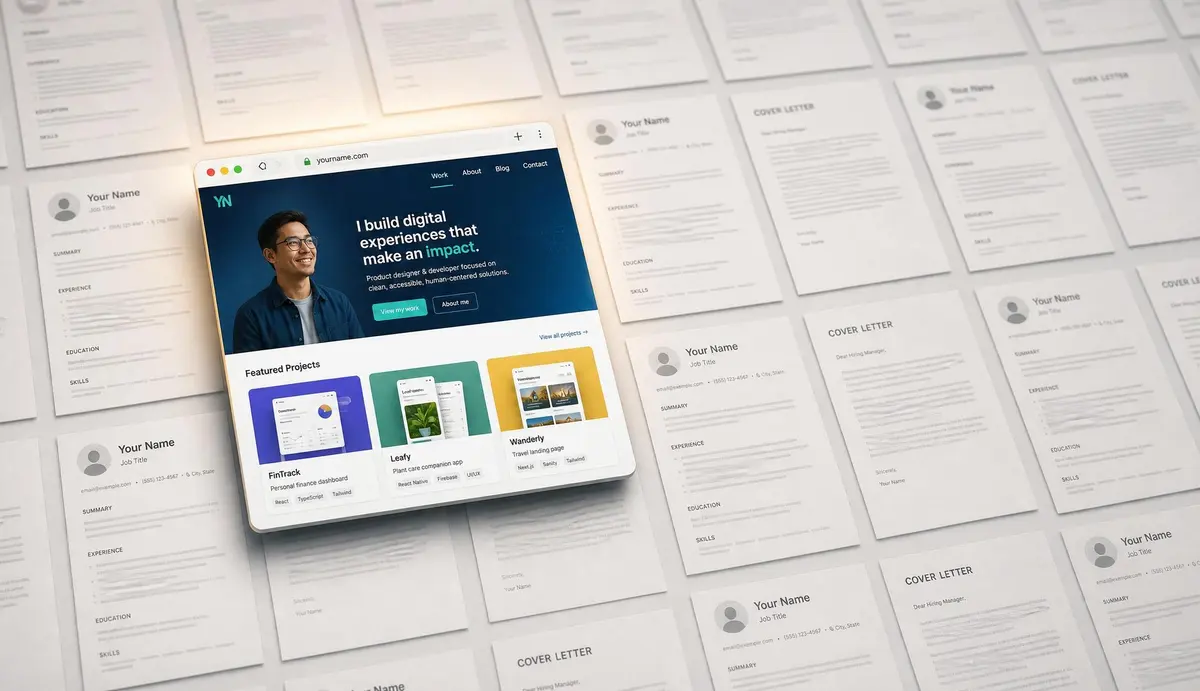
When perfect writing stopped being a signal
Economists have a tidy way of describing what happened. A signal is only valuable when it is costly to fake. A handwritten thank-you note signals effort because it takes effort. A bespoke cover letter signaled judgment because writing one well was hard. The instant that cost collapses, the signal collapses with it. Large language models drove the cost of polished application writing close to zero, and the market responded the way markets do when something becomes free: it flooded.
The volume numbers are staggering. LinkedIn reported job applications rising roughly 45 percent year over year through 2025, with submissions arriving at a pace of about 11,000 per minute at peak. Gartner found that a large share of candidates now use AI somewhere in the application process, and recruiters say the output converges: when applicants ask the same models to tailor a resume to the same job description, employers receive a stack of documents that are, functionally, the same document. A 2025 Greenhouse study reported that 91 percent of recruiters had spotted candidate deception, and that a third of them now spend up to half their week filtering spam and look-alike submissions.
So the signal degrades, and hiring gets less efficient. Employers fall back on weaker, slower, and frankly worse cues: pedigree, referrals, more interviews, and gut feel. None of that is good for a strong but unconnected candidate. The bitter irony is that the tool meant to give everyone leverage handed the advantage straight back to whoever already had a network.
It also changes what a recruiter is even looking for. When every document is competent, competence is no longer the question. The new question is harder and more human: is there a real person here, and can they actually do the thing. That is a question a paragraph of generated prose cannot answer, no matter how well written. It can only be answered with evidence, which is why the entire center of gravity in hiring is sliding from claims toward proof.
A picture helps. Imagine two finalists meeting in the lobby before the last round. They get to talking, compare notes, and slowly realize their cover letters are word for word identical, right down to the heartfelt anecdote about a childhood lemonade stand that taught them “radical customer obsession.” Neither of them has ever run a lemonade stand. They simply share a ghostwriter, and so does everyone else in the building, and the ghostwriter has exactly one personality. It is the professional version of arriving at prom and discovering the entire graduating class is wearing the same beige dress, including the chaperones, including the deejay.
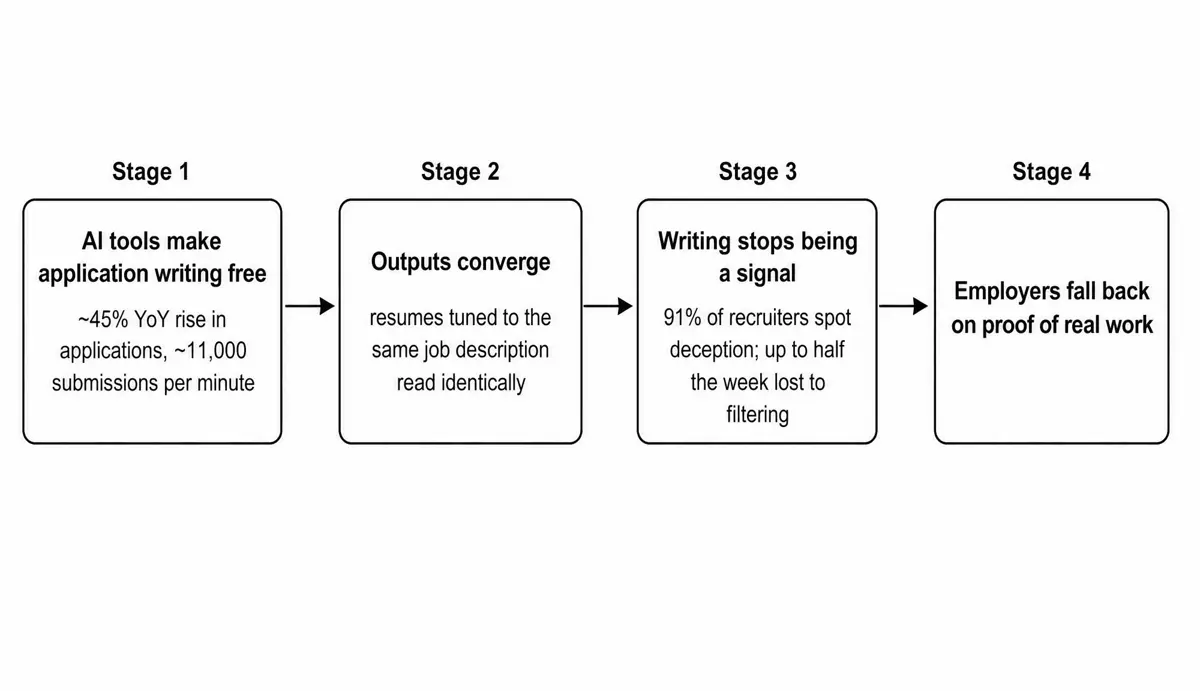
Figure 1. How the application flood turns flawless writing into noise.
Why the squeeze lands hardest on new graduates
If you want to see the crisis in a single chart, look at where new graduates landed. According to the Federal Reserve Bank of New York’s labor market tracker, unemployment for recent college graduates aged 22 to 27 sat at about 5.7 percent in the fourth quarter of 2025, well above the roughly 4.2 percent rate for all workers and more than double the rate for college graduates of every age. Nearly 43 percent of that cohort were underemployed, meaning they were working jobs that do not require their degree, the highest share since the pandemic.
This struggle highlights a growing divide; surveys suggest that roughly 65% of employers report recent graduates lack critical thinking and communication skills, leaving them less prepared for dynamic, professional settings.
Two forces are squeezing at once. First, entry-level postings have fallen sharply, down about 35 percent since early 2023, as AI absorbs the routine work that junior analysts, coordinators, and support staff used to cut their teeth on. The bottom rung of the ladder is the rung most exposed to automation. Second, the experience bar has risen. ZipRecruiter’s 2026 grad report found that graduates with work experience during college were hired at roughly 81.6 percent, against about 40.7 percent for those without: a more than two to one gap. Internships and real projects are no longer nice extras. They are filters.
Put those together and the strategic conclusion almost writes itself. If credentials are common, written applications are commoditized, and employers are starving for evidence of competence, then the scarce, valuable thing is demonstrated work. Not a claim that you can do the job. A thing you made that shows you already did.
The stakes are higher than one slow job search, too. Economists who study early careers have long found that graduating into a weak market is not a temporary dip; the income and seniority gap can follow a cohort for years before it closes. That is the real argument for changing tactics now rather than waiting for the market to soften. The candidates who break through early do not just get a paycheck sooner. They get on a faster track, and the difference compounds. In a year when the front door is jammed, building your own entrance is not a vanity project. It is risk management.
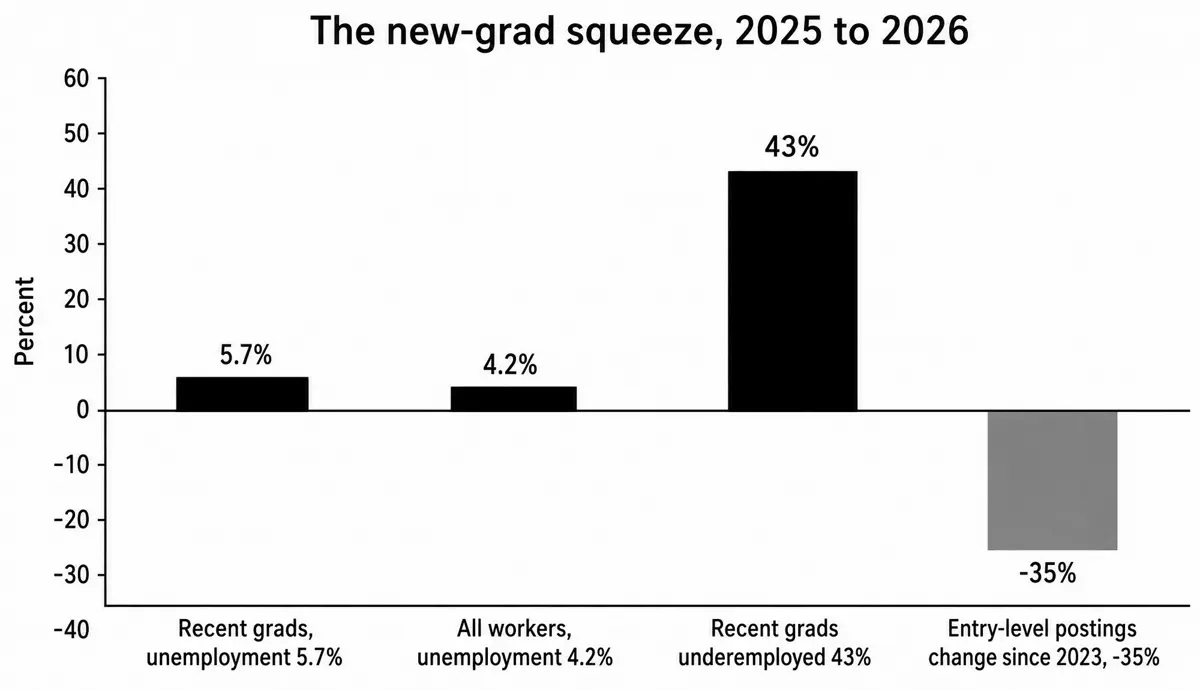
Figure 2. Recent graduates face higher joblessness and widespread underemployment.
What employers reach for when writing fails them
When the words stop being trustworthy, hiring teams chase two things: authenticity and proof. The data is blunt about it. The 2025 AI and the Applicant report from Resume Now found that 78 percent of hiring managers treat personalized, specific details as a sign of genuine interest and fit, while 62 percent say a generic, AI-generated resume with no customization is more likely to be rejected. Personalization is not decoration anymore. It is the screening criterion.
Over 90% of hiring teams prioritize candidates who can show, rather than tell, that they possess the most valuable transferable skills, specifically critical thinking, active listening, and problem-solving.
The catch is that personalization inside a resume is itself easy to fake with a good prompt. That is why the center of gravity is shifting away from the document and toward the artifact. A resume asserts. A portfolio demonstrates. A case study with your real decisions, dead ends, and measurable outcomes is expensive to fabricate precisely because it requires having done the work. The table below lays out why a one-click application and an owned portfolio site send opposite messages.
| Dimension | One-click AI application | Owned portfolio site |
| What it is | A resume and cover letter generated and tuned in minutes | A site you built and host on a domain you control |
| Effort it signals | Low; one click to produce, one click to send | High; choices, iteration, and upkeep are visible |
| How hard to fake | Trivial; the same tools everyone is using | Hard; it requires real artifacts and a track record |
| How a recruiter reads it | Competent and interchangeable | Specific and memorable |
| What it proves | That you can prompt a model | That you can actually do the work |
| Shelf life | Stale the moment the model updates | Compounds as you add new work |
Table 1. Two ways to show up in 2026, and the very different signals they send.
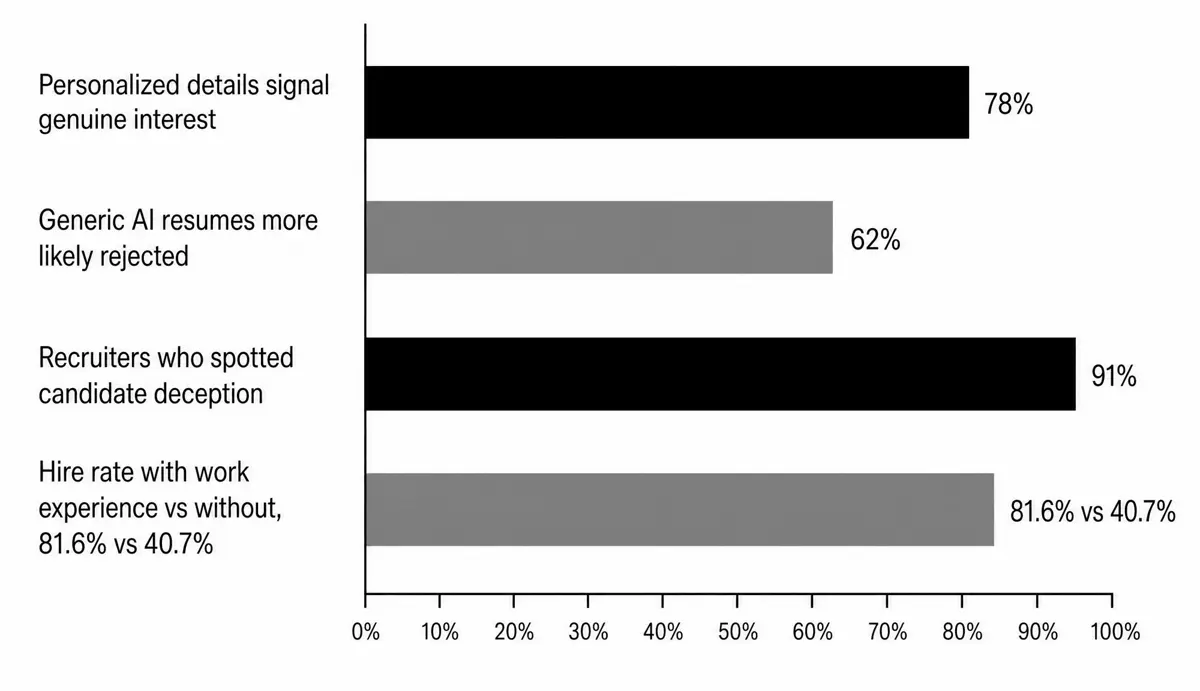
Figure 3. The cues hiring teams trust once writing is unreliable.
Own the home base: a domain and a site you control
Here is a distinction that matters more every month. A profile on a templated platform is a tenant arrangement. You fill in the same fields as a million other people, inside a layout you cannot change, on a URL that belongs to someone else, surrounded by that platform’s advertising and its algorithm. Recruiters have learned to skim those profiles in seconds because every one of them looks the same. An owned site is different in kind. You chose the domain, the structure, and what to foreground. That bundle of choices is itself a signal, because making it took effort that a one-click application cannot replicate.
Registering your own domain also does something subtle and durable: it gives you a permanent, verifiable address that you carry across jobs, platforms, and trends. It is the difference between renting a booth at someone else’s fair and owning the storefront. On the question of why an owned presence reads as authentic in a sea of generated applications, the case is made well by the people who build that infrastructure.
“An application can be generated in seconds, but a home base cannot. When you register your own domain and stand up a real site, you are making a series of choices that a template cannot make for you, and an employer can feel that. The URL is yours, the structure is yours, and the work lives somewhere you control rather than inside a platform that owns the audience. In a market where every document looks identical, owning your corner of the internet is the most honest way to say: this is me, and I did this.” Daniel Yeromka, Chief Executive Officer, HostZealot
None of this requires being a professional web designer. Career guidance increasingly treats an owned portfolio as a core job-search asset rather than a flourish; Research.com’s guide to remote-friendly AI roles notes that a strong portfolio and visible, open contributions meaningfully raise a candidate’s visibility to employers, especially when applications alone are easy to ignore. The site does not need to be elaborate. It needs to be yours, fast, and easy to verify.
Write like a human, because now that is rare
Owning the site solves the container. The words inside it solve the credibility. This is the strange inversion of 2026: because machines now produce competent, generic prose effortlessly, a genuinely human voice has become a scarce and valuable signal. The goal is not to sound impressive. It is to sound like a specific person who made specific decisions, in a way that both a human reader and an automated screener register as real.
Concretely, that means three things. Write project case studies as stories with a problem, a process, and an outcome, including the parts that went wrong and what you changed. Write an about page that says what you actually care about and why, not a paragraph of interchangeable adjectives. And keep the texture of your own thinking, because that texture is exactly what generic AI output sands away. On how to write so the reader can tell a human did it, the case is made by people who study authentic writing for a living.
“The tell of authentic writing is not big vocabulary or perfect grammar; machines have those covered now. It is specificity. Real writers name the actual problem, admit the wrong turn they took, and explain the decision they would defend. When you write a case study, do not describe a flawless arc. Describe the constraint you were given, the trade-off you chose, and the result you can point to. That is the one thing an autogenerated paragraph cannot supply, and it is the thing that makes a reader, and an AI screener, believe a person is behind the page.” Andrew Juma, Chief Executive Officer, CustomWritings
It helps to see the difference on the page. A generated about line reads: “I am a passionate, detail-oriented professional who thrives in collaborative environments and loves solving complex problems.” It could describe literally anyone, which is why a recruiter’s eyes slide right off it. A human line reads: “Last year I rebuilt a checkout flow that was losing us a third of mobile users, and I learned the hard way that the fix was trust, not speed.” One asserts a personality. The other shows a person who did a specific thing and drew a specific lesson. That second sentence is the kind of thing autogenerated text almost never produces, because it requires having been there.
There is early evidence that this human signal is measurable. A 2025 working paper, Signaling in the Age of AI: Evidence from Cover Letters, studies what happens when applicants adopt AI writing tools and whether the human revisions they layer on top still move hiring outcomes. The throughline of this research and the survey data is the same: the draft is cheap, but the judgment you add to it is not, and that judgment is what now carries the signal.
The anatomy of a portfolio that proves you’re real
Pulling it together, a portfolio that survives the look-alike era has a recognizable shape. It is not a gallery of screenshots. It is a small set of pieces engineered to be hard to fake and easy to verify, hosted somewhere you own.
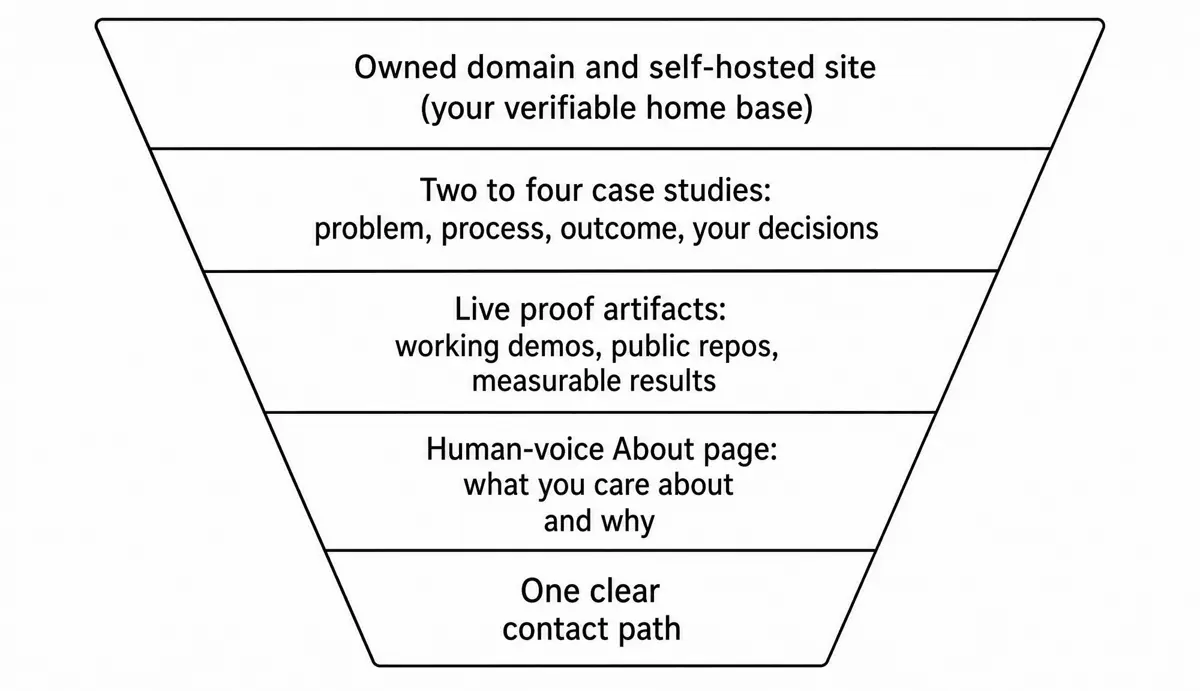
Figure 4. The layers of a portfolio built to be verifiable, not just pretty.
Each layer answers a question a skeptical recruiter is already asking. The owned domain answers, is this a real person who made an effort. The case studies answer, can they actually do the work and explain their thinking. The live artifacts answer, does the work exist outside a claim. The about page answers, who is this, in their own words. And the contact path answers, how do I reach them before the next four hundred applications arrive. For a practical walkthrough of building a portfolio that hiring managers respond to, the short video below is a useful starting point.
A 2026 action plan
If you do nothing else this month, do these five things, in order.
- Register your own domain and stand up a simple, fast site you control. It does not need to be fancy; it needs to be yours.
- Pick two to four pieces of real work and write each as a case study: the problem, what you tried, what you changed, and the outcome you can point to.
- Add live proof wherever possible: a working demo, a public repository, a number that moved. Make the work clickable, not just described.
- Write an about page in your own voice. Say what you care about and why. Cut every adjective that could apply to anyone.
- Link the site at the top of every application, and make the contact path obvious so a busy recruiter can reach you in one click.
The bottom line
The flood of flawless, identical applications is not going away, and trying to out-write a language model is a losing game. The winning move is to change what you are being judged on. Move the proof out of a document anyone can generate and into a portfolio anyone can verify, on a home base you own, written in a voice that is unmistakably yours. In a year when everyone can sound perfect, the rarest and most persuasive thing you can be is real, and a portfolio site is how you prove it.


