2027 Which Screenwriting Degree Careers Have the Lowest Unemployment Risk?

Co-Founder and Chief Data Scientist
Facing uncertain job prospects after earning a screenwriting degree can stall career momentum—especially without targeted specialization or market insight. Screenwriting professionals focusing on entertainment media within major hubs like Los Angeles or New York show a significant advantage, with unemployment rates nearly 25% lower than peers in less centralized markets.
Credentialing through recognized guilds and advanced degrees further reduces job loss risk at all career stages. This article examines the key factors—career specializations, industries, geographic markets, and certifications—that statistically minimize unemployment risk for screenwriting graduates, offering data-driven guidance to navigate an evolving industry landscape with greater stability and foresight.
Key Things to Know About the Screenwriting Degree Careers With the Lowest Unemployment Risk
- Historical data shows lower unemployment for screenwriting careers with graduate education-demand projections indicate 12% growth over ten years, outperforming averages despite automation risks in routine content creation.
- Screenwriting specializations requiring licensure or certification-such as educational media-tend to resist recession-induced layoffs, providing protective employment buffers during economic downturns.
- Geographic markets with established entertainment industries-Los Angeles and New York-offer reduced long-term unemployment due to higher demand and professional networks enhancing job stability for certified practitioners.
What Makes Screenwriting Degree Jobs More or Less Resistant to Unemployment?
Unemployment risk in screenwriting degree careers varies according to distinct categories: structural unemployment arises from permanent industry shifts—such as automation or declining demand—that misalign workers' skills with available jobs. Frictional unemployment is a short-term effect during job transitions. Cyclical unemployment emerges from broader economic downturns reducing demand across sectors. These varied risks influence the long-term stability of screenwriting professionals in different ways.
Key factors derived from Bureau of Labor Statistics (BLS) data, O*NET occupational profiles, and Lightcast labor market analytics determine which screenwriting degree employment resilience factors contribute to lower unemployment risk. These include:
- Occupational Licensing: While screenwriting rarely mandates formal licensing, related media production or content development roles may require certifications that limit job competition and offer layoff protections.
- Employer Concentration: Employment concentrated within few dominant firms elevates unemployment risk due to susceptibility to layoffs; conversely, diversity across film, television, gaming, and digital content offers stability.
- Sector Growth Rate: Expanding industries—such as streaming platforms and interactive media—provide stronger job security by resisting structural and cyclical unemployment.
- Role Replaceability: Automation threatens many jobs, but the creativity inherent in screenwriting is less easily replaced by AI or outsourcing, aiding employment resilience.
Regional labor market impacts on screenwriting job security also play a significant role:
- Degree Level: Advanced degrees or graduate certifications enable access to roles focused on content strategy or creative leadership, reducing vulnerability to unemployment fluctuations.
- Specialization: Niche focuses such as interactive storytelling, documentary writing, or branded content often experience more stable employment than generalist paths.
- Geographic Location: Creative hubs like Los Angeles, New York, or emerging media centers offer increased opportunities, cushioning against localized market shocks.
This framework allows for consistent evaluation of specific screenwriting career paths against factors including historic unemployment rates, automation risk, recession resilience, licensing, location, and credentialing strategies. Prioritizing a screenwriting specialization based on such employment stability data—rather than interest or salary alone—significantly improves career resilience. Prospective students and professionals can also explore the most affordable MSW programs online as part of considering advanced degrees that bolster employment security within creative fields.
Which Screenwriting Career Paths Have the Lowest Historical Unemployment Rates?
Several screenwriting-related career paths consistently demonstrate some of the lowest historical unemployment rates for screenwriting careers, reflecting structural demand factors that shield them from typical labor market volatility. These roles have shown resilience across multiple economic disruptions—such as the 2008-2009 recession, the 2020 COVID-19 pandemic, and the 2022-2024 labor market normalization—highlighting their durable employment stability rather than momentary trends.
- Film and Television Script Editors: Chronic undersupply combined with required technical production knowledge keeps demand stable.
- Industry reliance on strong narrative expertise reduces costly filming revisions.
- Their role in maintaining story continuity and legal compliance protects them during downturns.
- Video Game Narrative Designers: Growth in interactive entertainment fuels low unemployment.
- Demographic shifts favoring younger audiences increase demand resilience.
- High technical complexity and immersive storytelling create entry barriers.
- Advertising Copywriters with a Screenwriting Focus: This hybrid role benefits from consistent corporate marketing spending.
- Brands need fresh scripts regardless of economic cycles.
- Regulatory advertising requirements maintain steady demand.
- Screenwriters for Educational and Instructional Media: Institutional settings provide income consistency.
- Long-term contracts with universities and nonprofits offer stability.
- Rising online learning investments strengthen demand beyond entertainment.
- Script Supervisors in Film and Television Production: Though not conventional writers, their script expertise is vital.
- Roles are indispensably linked to production continuity and legal safeguards.
- Close collaboration within production teams creates protective job networks.
These occupations are among screenwriting career paths with highest job security in the US-yet prospective professionals should combine historical unemployment data with forecasts on automation vulnerability and geographic labor market conditions. Additionally, credentials and graduate education can further reduce long-term unemployment risk. For those deciding on academic concentrations or internships, evaluating the durable labor market forces behind these roles is essential. For a broader perspective on educational investment decisions, consider exploring the best bachelor degrees in related fields to gauge how educational background correlates to economic outcomes.
How Does the Screenwriting Job Market Compare to the National Unemployment Average?
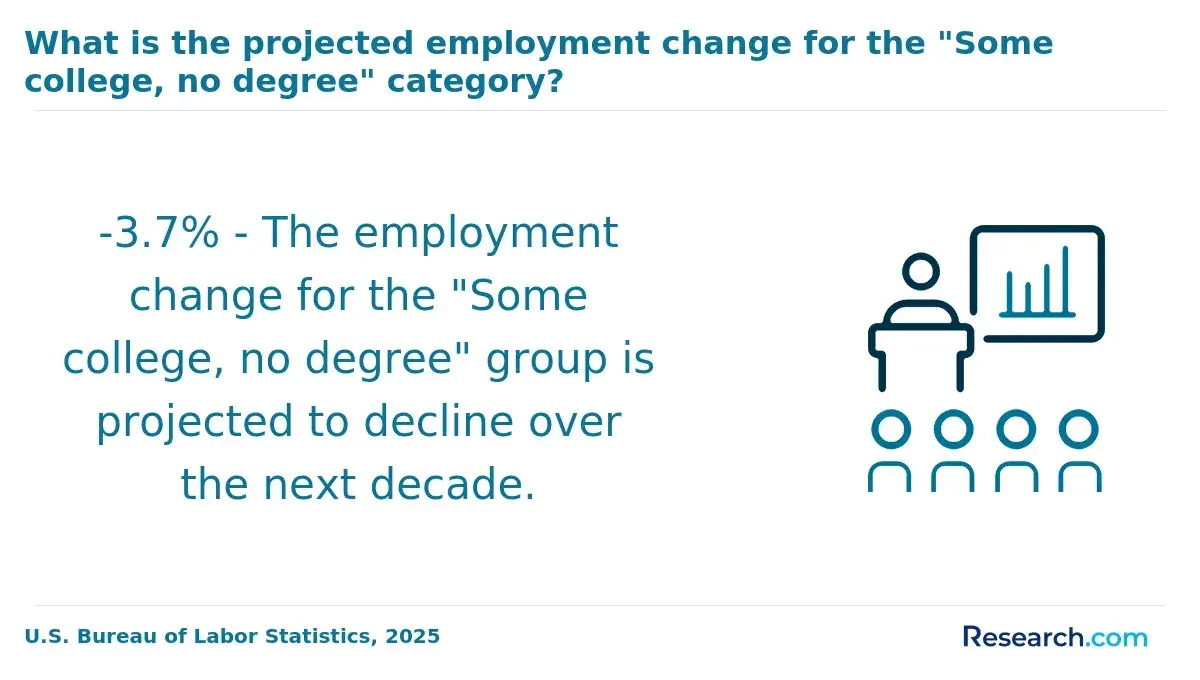
The unemployment rate for college-educated workers averages about 2.5%, while those with screenwriting degrees often see lower rates-around 1.3% in targeted fields. This gap means screenwriting graduates face roughly half the competition when job hunting, equating to shorter search times and more stable income streams. For every 1,000 college-educated individuals looking for work, about 25 are unemployed, but only 13 screenwriting graduates typically find themselves in that position.
Yet, formal unemployment statistics don't capture underemployment-a significant concern for screenwriting grads. Many find themselves in jobs that underutilize their skills, such as roles in general communications or media production, with underemployment rates for creative majors ranging between 15% and 25%. This mismatch impacts income stability, career growth, and resilience against economic shifts.
- Sample Size Sensitivity: Due to the niche nature of screenwriting jobs, annual unemployment figures can swing widely, so evaluating multi-year data is essential to grasp true trends.
- Job Search Duration: Lower unemployment correlates with faster job placement, enabling quicker portfolio development and networking crucial to lasting career success.
- Income Continuity: Stable screenwriting work tends to offer steadier earnings than average, though freelance and contract work introduce income unpredictability.
- Career Trajectory Implications: Even small reductions in unemployment and underemployment enhance long-term negotiating power and reduce career stagnation.
A professional who earned a screenwriting degree reflected on his experience: "Navigating the job market felt like walking a tightrope-sometimes steady, sometimes uncertain. Despite the low unemployment numbers, breaking into the industry meant building relationships carefully and consistently. I found that while formal job openings were limited, internships and small projects were invaluable in bridging income gaps and expanding my network. It wasn't just about landing a job-it was about creating a path through persistence and adaptability."
Employer demand data from sources like Lightcast, LinkedIn Talent Insights, and SHRM highlight several screenwriting career specializations with the highest employer demand—areas shaped by distinct market forces rather than uniform interest across all subfields. This demand is influenced by factors such as technological innovation, demographic changes, regulatory requirements, and persistent practitioner shortages.
- Television Series Writing: Streaming platforms drive sustained growth, requiring writers skilled in episodic storytelling and audience engagement to meet evolving viewer habits.
- Video Game Narrative Design: The booming gaming industry fuels demand for specialists who integrate interactive storytelling with gameplay, reflecting a shortage of qualified creatives combining these skills.
- Film Screenwriting for Diverse Audiences: Emphasis on authentic cultural representation and access to global markets creates ongoing opportunities for writers adept at inclusive storytelling.
- Corporate and Branded Content Writing: Expanding multimedia marketing initiatives increase the need for concise, persuasive narratives tailored to brand strategies and new advertising technologies.
- Educational and Training Scriptwriting: Growth in e-learning and mandated corporate training programs sustains demand for clear, effective instructional scripts.
- Documentary and Nonfiction Scriptwriting: Rising interest in factual storytelling paired with advances in documentary production supports stable opportunities for adaptable writers with research capabilities.
Before committing to a specialization, students should verify these demand indicators against salary surveys, workforce reports, and direct discussions with industry professionals to ensure alignment with their geographic and career objectives. To position themselves effectively in the competitive US job market, aspiring screenwriters should pursue targeted coursework, relevant internships, and certifications—considering skills in interactive media or SEO-as practical preparation to meet the most sought-after screenwriting skills in the US job market. For those exploring related educational paths, options like an online degree psychology may complement narrative insight and enhance storytelling versatility.
Breaking into a stable career can be challenging for screenwriting graduates, especially in an industry known for project-based work and fluctuating demand. However, not all paths carry the same level of risk—some industries provide more consistent opportunities and long-term security than others. By examining where screenwriting skills, graduates can make more strategic career choices. This section explores which industries offer the strongest job stability and why they stand out.
- Entertainment And Media Production: This sector remains a cornerstone for screenwriting graduates because of its diverse revenue sources—advertising, subscriptions, and syndication—that help stabilize employment. Screenwriters here drive the creative vision through script development, character arcs, and dialogue essential to storytelling.
- Advertising And Marketing Communications: With ongoing demand for creative, brand-centric content, this industry recruits screenwriting graduates to write engaging scripts for advertisements and social media campaigns. Their concise, persuasive storytelling is critical to audience engagement.
- Educational Media And E-Learning: Driven by increased investment in online education, this field values screenwriters for transforming complex topics into accessible, narrative-driven lessons. The sector's growth and compliance demands reduce vulnerability to economic shifts.
- Video Game Development: This expanding industry relies on screenwriting expertise to build immersive, interactive stories. Graduates contribute to nonlinear narratives and player-driven dialogue, making their role central to gameplay experience.
Corporate Communications And Internal Media: Offering stability through essential internal messaging and compliance content, this sector employs screenwriting graduates to produce corporate scripts, training videos, and executive communications that require clarity and professionalism.
Focusing exclusively on one industry can lead to exposure from regulatory changes, technology shifts, or regional demand fluctuations. Developing versatile skills—such as multimedia scripting, adaptive storytelling, and tech savviness—can mitigate these risks and enhance long-term employability.
One screenwriting professional I spoke with reflected on her journey after graduation: "Early on, I was drawn to the entertainment sector but quickly realized the importance of diversifying my skills. I faced uncertainties when projects stalled, which pushed me to explore e-learning and corporate media roles. The transition demanded adapting my narrative style to very different audiences, but it ultimately made me more resilient. Having a broader skill set allowed me to navigate layoffs and shifting market demands with greater confidence. Looking back, developing cross-industry competencies was key to sustaining my career."
Public-sector roles for screenwriting degree holders typically exhibit lower unemployment rates compared to the private sector-this results from civil service protections and union safeguards that reduce arbitrary layoffs and support more stable employment.
- Unemployment Rates: Government positions consistently show reduced unemployment relative to private roles, benefiting from structured job security mechanisms.
- Layoff Frequency: Federal and state government jobs face fewer layoffs during economic downturns. Public universities and quasi-governmental institutions also offer better retention, although budget cuts sometimes lead to targeted position eliminations-especially outside core federal agencies.
- Career Tenure: Screenwriting graduates in public service usually enjoy longer tenures, thanks to tenure-like protections and required procedural reviews before job eliminations, insulating them from political shifts and cyclical industry changes.
- Common Role Categories:
- Federal agency roles in screenwriting or communications provide reliable employment, albeit with generally lower starting salaries.
- State and local government positions in media, public relations, and cultural programming maintain steady jobs but are more vulnerable to local budget fluctuations.
- Public universities and research institutions often offer tenure-track or long-term contract opportunities.
- Quasi-governmental organizations, such as public broadcasters, combine some public-sector protections with higher funding-related volatility.
- Compensation and Benefits: Although government roles tend to start with lower pay than private-sector equivalents, they compensate with strong pensions, generous leave, and public service loan forgiveness, often resulting in greater lifetime financial security for risk-averse individuals.
- Risk Versus Reward: While public-sector positions provide increased employment stability, some screenwriting graduates may prefer private-sector roles for higher earning potential despite greater job insecurity-choosing wisely requires evaluating personal tolerance for income variability and career risk.
Licensure is rarely a formal requirement for most screenwriting careers—unlike professions such as healthcare or law, the vast majority of screenwriting roles do not demand a state-issued license or mandated certification. According to data from the U.S. Bureau of Labor Statistics and state occupational licensing databases, no legal credential is necessary to call oneself a screenwriter or work professionally in the field. This lack of mandatory licensure means structural barriers to entry based on licensing are minimal.
However, related credentials—particularly guild memberships such as those from the Writers Guild of America (WGA)—serve as powerful economic gatekeepers. While these affiliations are not formal licenses, they create a restricted labor supply by limiting access to unionized jobs to credentialed members, thus insulating members from economic downturns:
- Restricted Labor Supply: Guild membership reduces the pool of eligible workers, limiting employers' ability to replace credentialed writers with uncredentialed ones during recessions.
- Durable Demand Floor: This exclusivity maintains steadier demand and income stability for credentialed screenwriters even amid slowdowns.
Non-mandatory certifications—from prestigious writing workshops to professional awards—also narrow applicant pools and signal professional competency in competitive markets, lowering unemployment risk for holders.
- Credential Tiers: Screenwriters should distinguish between:
- Strategic Credentialing: Aligning credential acquisition with targeted roles and employers optimizes job security.
- Recent Trend: Applications to WGA membership rose approximately 15% as professionals increasingly seek the protective advantages of guild affiliation.
Geographic location greatly shapes unemployment risk for screenwriting degree graduates due to differences in industry concentration, economic diversity, and labor market size. Metropolitan hubs such as Los Angeles, New York City, and Atlanta lead in demand for screenwriting professionals—maintaining unemployment rates below the national average by several percentage points—because of dense clusters of entertainment studios, production firms, and media companies. These cities represent some of the most stable employment markets for screenwriters nationwide.
Regions with diversified economies—incorporating healthcare innovation corridors, government agencies, technology hubs, or financial services centers—offer more consistent opportunities, especially for graduates specializing in niche scripting fields such as educational or informational content. For example, Washington, D.C., and its suburbs host numerous government and nonprofit organizations commissioning scripts for public information projects, creating less volatile employment prospects compared to entertainment-dominated markets. This variability reflects broader screenwriting degree employment trends by region in the United States.
Conversely, smaller cities or regions with limited creative industry infrastructure usually show greater unemployment risk and longer job search durations for screenwriters. Economic downturns tend to hit these less diversified markets harder, increasing vulnerability. Remote work opportunities introduce a meaningful shift—many screenwriting roles in digital content, freelance consulting, or independent projects offer location flexibility, expanding job market access beyond local constraints. However, roles tied closely to on-site production face stronger geographic limitations, making location a critical factor.
Screenwriting graduates should conduct tailored geographic labor market analyses—combining BLS area-specific employment data, LinkedIn job posting filters by region, and local wage benchmarks—to determine whether staying local, relocating strategically, or pursuing a remote-compatible specialization aligns best with their career goals and risk tolerance. Adding specialized credentials or exploring adjacent fields like UI UX design degree programs can also increase employment stability and geographic flexibility.
- Industry Concentration: Metropolitan hubs with expansive entertainment, media, and government sectors maintain lower unemployment rates for screenwriting graduates.
- Economic Diversification: Regions with mixed economies—healthcare, technology, and government—offer stable screenwriting roles tied to specialized content creation.
- Unemployment Disparity: Smaller or less diversified markets see longer job searches and higher unemployment risk for screenwriting degree holders.
- Remote Work Impact: Remote-eligible screenwriting careers reduce geographic unemployment risk by broadening accessible labor markets.
- Strategic Labor Market Research: Utilizing BLS data, job posting geography filters, and regional salaries supports informed decisions on location and specialization.
- Recent Trend: Remote job postings for screenwriting roles increased by over 25%, signaling growing acceptance of location-independent work.
Careers within screenwriting most vulnerable to automation involve tasks heavily based on routine pattern-matching, standardized content assembly, or simple document editing. According to analyses by the McKinsey Global Institute, Oxford Martin School, and MIT Work of the Future, roles focused on repetitive or formulaic script formatting and preliminary draft generation-especially when relying on templates or rigid genre conventions-face elevated risk of displacement by AI-driven tools and robotic process automation. These technologies efficiently handle large volumes of standardized material with minimal human input, reducing the demand for entry-level or assistant roles centered on these duties.
More specifically, screenwriting job functions showing significant automation susceptibility include:
- Template-Based Drafting: Positions focused on creating scripts within narrow, repeatable frameworks are vulnerable as AI increasingly generates foundational drafts requiring less human revision.
- Routine Content Review and Editing: Tasks involving standardized proofreading, formatting checks, and compliance editing face threats from advanced natural language processing and automated quality control software.
- Script Coverage and Logline Writing: Roles summarizing and evaluating scripts using pattern recognition and formulaic criteria can be partially replaced by machine learning algorithms screening vast submissions rapidly.
- Preliminary Idea Generation: Early-stage brainstorming tied to predictable genre tropes may be supplemented or guided by AI suggestion systems, diminishing original human input.
Conversely, screenwriting careers demanding non-routine creative production, nuanced interpersonal collaboration, ethical judgment, and deep domain expertise face lower automation risk. Genuine storytelling insight, cultural sensitivity, and originality remain difficult for current technologies to replicate authentically, underscoring their enduring value in this domain.
Readers assessing technological disruption risks for screenwriting professionals should expect career shifts emphasizing management of automated systems and integration of AI outputs with human artistry. Building technological fluency and critical evaluation skills for machine-generated content alongside advanced creative judgment will help maintain professional relevance.
Automation risk estimates are probabilistic, not deterministic, and actual adoption depends on variables like employer investment, regulations, technology maturity, and cost-competitiveness, which differ widely across sectors and regions. Continuous skill development and awareness of these external factors are essential when interpreting such data for one's career planning.
For those considering career sustainability, further insights into remuneration and employment stability might be found by exploring SLP salary trends, which illustrate how credentialing and specialization can influence market resilience in comparable creative and communicative professions.
Graduate degrees significantly decrease unemployment risk for screenwriting degree holders-data from Georgetown University Center on Education and the Workforce and BLS statistics reveal that advanced credentials reduce unemployment rates by roughly 1.5 to 3 percentage points compared to those holding only bachelor's degrees in creative fields. This advantage enhances career stability amid economic fluctuations and shifting industry needs.
Several graduate programs offer distinct benefits for screenwriting professionals:
- Professional Master's Degrees: These, especially those qualifying for licensure such as clinical, legal, or engineering-related master's, provide access to more stable, regulated professions beyond conventional screenwriting roles, markedly lowering unemployment.
- Research-Oriented Graduate Programs: Master's and doctoral degrees designed for advanced academic or specialist practice match limited labor supply, reducing unemployment risk by meeting niche expertise demands.
- MBA Programs: MBAs broaden career pathways into management and leadership positions within media and entertainment-segments less vulnerable to unemployment compared to purely creative tracks.
Considering the costs and time involved is essential when choosing graduate education as an unemployment risk strategy. For example:
- Cost and Duration: Professional master's programs typically range from $30,000 to $60,000 and last between 1.5 and 3 years, factoring in both tuition and foregone wages.
- Unemployment Reduction: Graduate degrees can lower unemployment risk by up to 40%, improving long-term income stability.
- Salary Premium: Earners with advanced degrees often secure 20-40% higher salaries in mid to senior careers than those with bachelor's only.
- Opportunity Cost: Time invested in graduate study delays earning but may accelerate subsequent career advancement.
Graduate education, while impactful, is not always the most time- or cost-efficient method to mitigate unemployment risk. Alternatives such as targeted professional certifications, strategic employer selection in growing markets, relocating to regions with lower competition, or specializing in emerging content forms may offer similar stability with fewer resources. Screenwriting professionals should assess these options carefully, aligning credential choices with realistic career goals and evolving labor market dynamics.
Entry-level roles that provide the strongest foundation for long-term career stability in screenwriting are characterized by clear advancement pathways and employment within industries valuing internal promotion. These positions tend to feature robust retention rates and enable skill development that transfers across related creative sectors-reducing job instability risks over time.
- Production Assistant in Film and Television: This position offers direct exposure to day-to-day set operations and essential industry workflows, fostering valuable professional connections. Employers typically promote from within, enabling progression through script coordinator and writer's assistant roles to staff writer within five to seven years. The role's established career ladder supports sustained employment by prioritizing growth over turnover.
- Script Reader or Story Analyst: Starting in content evaluation for production companies or literary agencies builds critical story development expertise prized across multiple media. Advancement often leads to script editor or development executive positions, which are less affected by industry contractions. The role's broad skill applicability allows transitions into publishing and digital media, enhancing job resilience.
- Broadcast and Digital Content Writer: Entry-level writing across news, branded content, and digital platforms benefits from fast-evolving sectors investing heavily in internal talent growth. Early-career tenure usually lasts two to four years before promotion to senior content creation or editorial roles, with major media hubs offering greater career mobility and retention.
- Assistant to a Screenwriter or Showrunner: This role blends administrative duties with creative involvement, helping candidates develop versatile skills and networks critical to career durability. Promotions to junior writing roles often occur within three to five years, especially at organizations with strong mentorship cultures that favor internal staffing.
Choosing employers with solid retention records and investing in geographic markets rich in industry activity-such as Los Angeles, New York, or Austin-significantly improves long-term employment prospects. Early career decisions around role specialization, employer culture, and location collectively contribute to building durable screenwriting careers, buffering against economic shifts and automation-related disruptions over a 10- to 20-year horizon.
What Graduates Say About the Screenwriting Degree Careers With the Lowest Unemployment Risk
- Raphael: "Graduating with a screenwriting degree opened doors I hadn't anticipated-especially in television and streaming services, where demand for fresh content keeps growing steadily. I found that specializing in writing for episodic drama gave me a foothold in markets like Los Angeles and New York, which offer the lowest unemployment risk due to abundant production opportunities. Pursuing credentials through recognized guild workshops was also crucial; they not only honed my skills but significantly boosted my early career chances."
- Russell: "Reflecting on my journey, the screenwriting degree was foundational but what truly shaped my career was choosing to work in advertising and corporate video industries-surprisingly resilient niches less vulnerable to industry downturns. I recommend mid-career professionals earn certifications in digital storytelling and transmedia writing, which kept my employment steady and enhanced my marketability across varied geographic locations. It's been a blend of adaptability and credentialing that sustained my growth through different career stages."
- Theo: "From a professional standpoint, a screenwriting degree can lead to diverse roles across film and interactive media-and it's vital to identify where the job market is most robust. I focused on senior practitioner credentials related to educational content development, which are highly valued in regions with expanding digital education sectors. This strategy lowered my unemployment risk considerably, especially when combined with a willingness to relocate to emerging media hubs outside traditional centers."
Other Things You Should Know About Screenwriting Degrees
The 10-year employment outlook for screenwriting careers with low unemployment risk generally indicates modest yet steady growth. Roles tied to digital content creation-such as writing for streaming platforms and interactive media-are expected to expand due to increasing consumer demand. Conversely, traditional film and television screenwriters face slower growth, making specialization in emerging media vital for long-term job security.
Employers usually expect two polished feature or television scripts, a one-page logline sheet, and a short sample scene that shows dialogue, structure, and formatting. For agency or writer’s room jobs, a spec script and proof of revision based on feedback are often required.
Freelance and self-employed screenwriters typically face higher unemployment risk due to income variability and inconsistent project availability. However, strong networking, along with a diverse portfolio spanning various media formats, can mitigate these risks. Screenwriting graduates prepared to market their versatile skills and manage irregular contracts tend to navigate unemployment challenges more effectively.
- 13 Exciting Career Paths for Screenwriters to Explore https://glcoverage.com/2025/06/23/career-paths-for-screenwriters/
- Screenwriter: Who they are, what they do, and how to become one https://www.ied.edu/profession/screenwriter
- Hollywood Screenwriter: Top 10 Jobs in Screenwriting Industry https://www.yellowbrick.co/blog/screen-writing/hollywood-screenwriter-top-10-jobs-in-screenwriting-industry
- Aspiring screenwriters struggle to break into shrinking industry. 'It shouldn't be this hard' https://www.latimes.com/entertainment-arts/business/story/2025-05-05/aspiring-screenwriters-job-decline-film-tv
- Is Screenwriting a Good Career? https://thesuccessfulscreenwriter.com/is-screenwriting-a-good-career/
- Default Title https://www.wga.org/contracts/enforcement/protect-yourself-against-free-work
- The Hollywood Jobs Most at Risk From AI https://www.hollywoodreporter.com/business/business-news/ai-hollywood-workers-job-cuts-1235811009/
- Fade to Black: Hollywood’s AI-Era Jobs Collapse Is Starting https://theankler.com/p/fade-to-black-hollywoods-ai-era-jobs
- Hollywood writers fear losing work to AI https://www.bbc.co.uk/news/business-66289583
- 25 college degrees that often lead to low-paying jobs https://careers.alot.com/career-paths/useless-college-degrees-that-result-in-minimum-wage-jobs--21817