2027 What to Expect in an Online Global Health Doctorate Program: Courses, Research, Faculty Support, and Final Projects

Co-Founder and Chief Data Scientist
The hardest part of comparing online Global Health doctorate programs is knowing what the work will actually feel like after enrollment. The U. S. Bureau of Labor Statistics projects 29% growth for medical and health services managers from 2023 to 2033, which keeps advanced public health leadership training highly relevant.
This guide is for working professionals, researchers, clinicians, and policy-focused students who want to understand course expectations, research demands, faculty support, and final project requirements before committing time and money to an online doctoral program.
Key Things to Know About Global Health Doctorate Programs
- Most U.S. online Global Health doctorate programs are built around 45 to 72 post-master's credits, with part-time students commonly planning for about three to five years depending on dissertation or applied project pace.
- The biggest workload shift usually happens after core coursework, when students move from structured weekly assignments to independent research, proposal development, ethics review, data collection, analysis, and writing.
- No U.S. agency publishes a 2024 national completion-rate split for online Global Health dissertations versus applied doctoral projects, so students should compare each program's milestone timelines, advisor model, and documented completion support instead of relying on broad averages.
How is the course load structured in an online Global Health doctorate program?
An online Global Health doctorate usually combines public health doctoral coursework, methods training, specialization electives, research seminars, and a final dissertation or practice-based doctoral project. The course load is more predictable during the first phase and less predictable once research begins, because your progress depends on proposal approval, access to data, ethics review, field partners, and advisor feedback.
For planning purposes, students should read the program catalog carefully rather than assuming all "online doctorate" formats work the same way. Current U.S. program catalogs for online and hybrid global-health-related DrPH, PhD, and health sciences doctorates commonly show three broad structures: lockstep cohorts, flexible part-time sequencing, and research-intensive individualized study.
The table below summarizes how course load usually changes across the program. It is useful because many students underestimate the difference between credit load and weekly workload.
| Program phase | Typical academic work | Common credit pattern | What it means for students |
| Foundation and core coursework | Global health systems, epidemiology, biostatistics, research design, health equity, policy, and leadership | Often 6 to 9 credits per term for full-time students; 3 to 6 credits for part-time students | This phase is structured and easier to calendar around work, but readings and data assignments can be heavy. |
| Specialization and methods coursework | Advanced electives, qualitative or quantitative methods, implementation science, evaluation, and topic seminars | Often mixed with early proposal work | This is where students begin narrowing a broad interest into a feasible research question. |
| Doctoral candidacy or comprehensive review | Exams, portfolio review, manuscript review, or proposal defense depending on the program | May not carry many credits, but requires intensive preparation | Low-credit terms can still be demanding because the work is high-stakes and cumulative. |
| Dissertation or applied doctoral project | Independent research, analysis, writing, committee review, and final defense or presentation | Often taken as repeated research, dissertation, or project credits | This phase requires the most self-management and often determines actual time to completion. |
Students working full time should be cautious about taking a maximum course load during the first year. A manageable plan is usually one that leaves room for readings, discussion posts, statistical work, group projects across time zones, and early meetings with potential advisors.
Common pacing mistakes are easy to avoid if you treat the doctorate as a long research project rather than a series of classes. Before enrolling, compare weekly synchronous meeting expectations, residency requirements, term length, and whether courses are offered every term or only once a year.
What courses are covered in an online Global Health doctorate program?
Courses in an online Global Health doctorate are designed to build advanced judgment, not just technical knowledge. Students usually study how disease, policy, economics, environment, migration, food systems, conflict, and health infrastructure interact across populations, with a strong emphasis on using evidence responsibly.
The table below shows common course categories and why they matter in a doctoral-level Global Health curriculum.
| Course category | Examples of topics | Skills students build | Best fit for career goals |
| Global health foundations | Global burden of disease, comparative health systems, health equity, social determinants of health | Systems thinking, contextual analysis, ethical reasoning | Program leadership, policy, nonprofit leadership, global health administration |
| Epidemiology and biostatistics | Study design, outbreak analysis, regression, causal inference, surveillance data | Data interpretation, risk assessment, evidence appraisal | Research, monitoring and evaluation, health analytics, academic roles |
| Research methods | Qualitative methods, mixed methods, implementation science, community-based research | Proposal development, interview design, coding, methodological alignment | Dissertation work, applied evaluation, implementation research |
| Policy and leadership | Health policy analysis, governance, financing, advocacy, organizational change | Strategic communication, policy writing, stakeholder analysis | Executive roles, public agencies, NGOs, consulting |
| Specialized global health electives | Maternal and child health, infectious disease, nutrition, environmental health, humanitarian response | Domain expertise and applied problem framing | Specialized practice, research portfolios, technical advisory roles |
Nutrition-focused global health students may also compare adjacent graduate pathways before committing to a doctorate. For example, a student who wants applied population nutrition skills but not a full doctoral research commitment might first review a cheapest online master's in nutrition option and then decide whether doctoral study is necessary for their long-term goals.
One current trend is the growing presence of data science and AI-assisted research tools in doctoral coursework. Students are increasingly expected to understand machine learning outputs, automated literature screening, geospatial tools, and large public health datasets, but responsible programs also teach limitations such as bias, privacy, transparency, and reproducibility.
What coursework requirements must Global Health doctoral students complete?
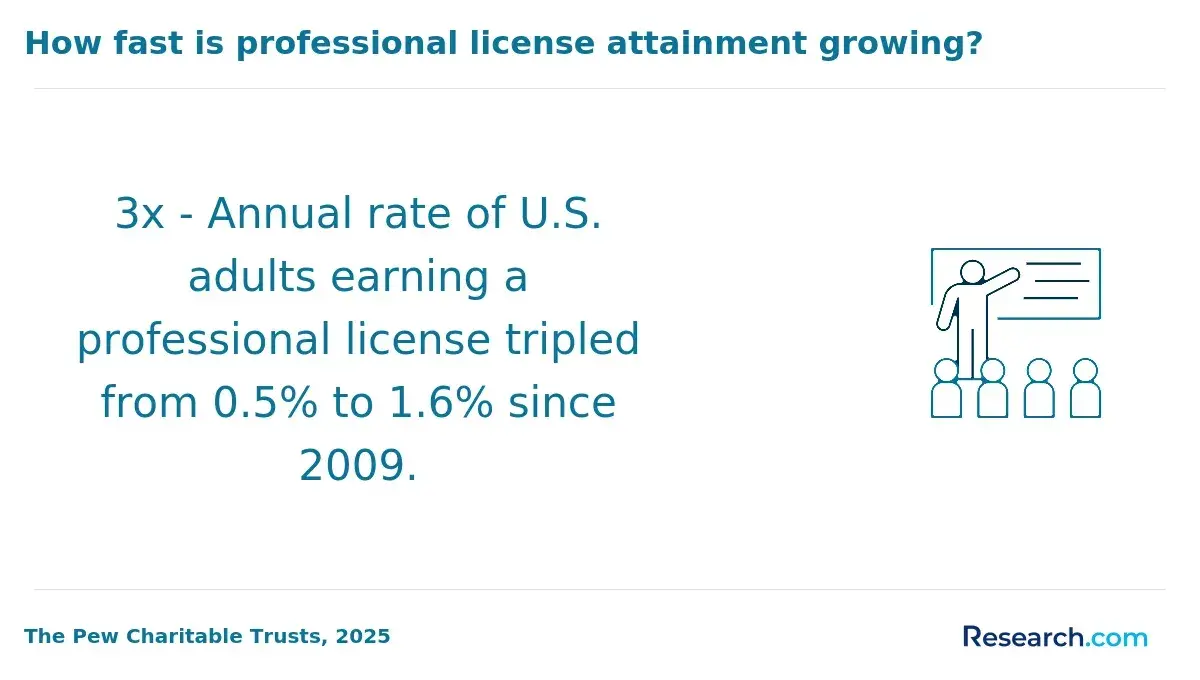
Coursework requirements in an online Global Health doctorate usually include core doctoral courses, research methods, specialization electives, professional development, and a transition-to-candidacy requirement. The exact requirement depends on whether the degree is a PhD, DrPH, DHA with global health concentration, or another health sciences doctorate.
As a practical benchmark, many U.S. online global-health-related doctoral programs publish total credit requirements in the 45 to 72 credit range after a relevant master's degree. This range is useful for comparison, but it is not enough by itself; a 48-credit program with an intensive dissertation sequence can be more demanding than a 60-credit program with a highly structured applied project.
Students should look for these requirements in the academic catalog because they directly affect workload, cost, and time to completion:
- Prerequisite education, such as an MPH, MS, clinical graduate degree, or approved public health foundation coursework.
- Minimum GPA standards for doctoral continuation, which may be higher than the admission GPA.
- Required statistics, epidemiology, and research design courses before proposal approval.
- Residency, immersion, or intensive weekend requirements, even when the program is marketed as online.
- Comprehensive exam, qualifying paper, portfolio, or candidacy review before independent research begins.
- Institutional review board training and approval before collecting human-subjects data.
- Minimum dissertation, doctoral project, practicum, internship, or research credit enrollment while completing the final requirement.
Students interested in food systems, malnutrition, community health education, or public health nutrition should also decide whether they need doctoral preparation or a faster credential first. An accelerated nutrition degree online may be a better stepping stone for learners who still need undergraduate or master's-level preparation before doctoral admission.
A common mistake is assuming that online coursework is mostly asynchronous and self-paced. Many doctoral programs include live seminars, group consulting projects, proposal workshops, oral defenses, or mandatory check-ins, so students should ask how often attendance is required and whether sessions are recorded.
Research work is the center of an online Global Health doctorate. Students are expected to move beyond reading about global health problems and learn how to generate, evaluate, or apply evidence in ways that can support real decisions in policy, practice, systems improvement, or scholarship.
Research expectations vary by degree type. A PhD generally emphasizes original theoretical or empirical contribution, while a DrPH or applied professional doctorate usually emphasizes leadership, implementation, evaluation, and practice impact. Both can be rigorous, but they define "contribution" differently.
The following list outlines the research responsibilities students commonly take on as they progress. These are important because they show why a doctorate requires sustained independence, not just strong grades.
- Identify a focused global health problem that is important, researchable, ethically appropriate, and feasible with available data or partners.
- Review scholarly and practice literature to find what is known, what remains uncertain, and where a doctoral project can contribute.
- Select a methodology, such as quantitative analysis, qualitative interviews, mixed methods, program evaluation, policy analysis, implementation research, or secondary data analysis.
- Develop a proposal that connects the problem, research questions, framework, methods, sampling plan, data sources, limitations, and expected contribution.
- Complete ethics training and institutional review board review when human-subjects data, interviews, identifiable records, or community partners are involved.
- Collect or obtain data, manage files securely, document decisions, and maintain research integrity.
- Analyze findings using appropriate statistical, qualitative, mixed-methods, or evaluation techniques.
- Write and revise chapters, manuscripts, reports, or deliverables based on committee feedback.
Environmental and occupational risks are also becoming more visible in global health research, especially in climate-sensitive disease, disaster preparedness, water quality, and worker safety. Students drawn to those topics may find it useful to compare doctoral research expectations with the applied training found in the best online environmental health and safety programs.
The final project in an online Global Health doctorate is usually either a dissertation or an applied doctoral project. Both require a defensible problem, a clear methodology, committee review, formal writing, and a final oral defense or presentation, but they serve different purposes.
The table below compares the two major final project models. It can help readers choose the path that fits their career direction rather than assuming one is automatically easier.
| Final project type | Main purpose | Typical deliverable | Best fit | Potential drawback |
| Traditional dissertation | Produce original research that contributes to scholarly knowledge | Five-chapter dissertation, three-paper dissertation, or manuscript-based dissertation | Students aiming for research, teaching, policy analysis, or academic-adjacent roles | Can take longer if data access, analysis, or committee feedback is delayed |
| Applied doctoral project | Solve, evaluate, or improve a real public health problem in a practice setting | Program evaluation, implementation plan, policy analysis, quality improvement project, or practice portfolio | Students in leadership, public agencies, NGOs, health systems, or consulting | May depend heavily on employer or partner cooperation |
| Capstone-style portfolio | Demonstrate advanced competencies across several applied products | Portfolio of briefs, analyses, presentations, and reflective synthesis | Practice-focused students in competency-based programs | May be less suitable for students who want a research-intensive academic profile |
Choosing between these tracks should start with your goal. If you want to publish original research, teach at the graduate level, or compete for research roles, a dissertation track may be the stronger fit. If you want to lead programs, evaluate interventions, or influence practice inside an organization, an applied project may align better.
A common mistake is choosing an applied project because it sounds shorter. Applied projects can still be demanding because they require stakeholder access, project management, data quality, organizational permissions, and clear evidence that the work matters beyond a routine workplace task.
The final project is demanding because it removes many of the external structures that make coursework manageable. Instead of weekly deadlines, students must create their own research schedule, coordinate committee feedback, solve methodological problems, and keep writing even when progress is slow.
Students should expect the final project to require consistent weekly work over multiple terms. The most successful students usually treat dissertation or project time as a standing professional obligation, not as extra work to fit in after everything else.
These factors usually determine how difficult the final project becomes:
- Scope of the research question, especially whether it can be answered with available time, data, and methods.
- Advisor and committee responsiveness, including how quickly drafts are reviewed and whether feedback is consistent.
- Data access, particularly for international partners, health systems, government records, or community organizations.
- Human-subjects review requirements, which can add time when interviews, surveys, patient data, or vulnerable populations are involved.
- Student preparation in statistics, qualitative analysis, academic writing, project management, and citation management.
- Life and work constraints, especially for students employed full time or managing family responsibilities.
A practical way to judge demand before enrolling is to ask programs for sample dissertation titles, applied project abstracts, proposal defense timelines, and average time from candidacy to completion. If the program cannot explain how students are guided through the final phase, that is a meaningful red flag.
The final project is usually manageable for students who enter with a focused topic area, a realistic schedule, and a willingness to accept feedback. It becomes much harder when students choose a topic that is too broad, switch methods late, or wait until candidacy to build faculty relationships.
Research progress is evaluated through milestones rather than a single final submission. These checkpoints protect research quality and help students avoid spending months on a topic, method, or data source that the committee will not approve.
Although each school sets its own process, most online Global Health doctorates use a staged evaluation model. The table below shows common milestones and what each one is designed to confirm.
| Milestone | What faculty evaluate | Why it matters | Common delay risk |
| Research interest statement | Topic fit, faculty alignment, feasibility, and relevance to global health | Helps students avoid topics with no advisor match or data pathway | Choosing a topic too broad to complete |
| Literature review or concept paper | Command of the field, gap identification, and use of current evidence | Shows whether the student understands the problem deeply enough | Summarizing sources without building an argument |
| Methods plan | Research design, sampling, variables, instruments, data sources, and analysis plan | Confirms that the question can actually be answered | Selecting methods that exceed the student's training or data access |
| Proposal defense or committee review | Full alignment among problem, questions, framework, methods, ethics, and contribution | Marks readiness to conduct the approved study or project | Submitting before advisor approval |
| Ethics or IRB approval | Participant protections, consent, privacy, risk, and data security | Required before eligible human-subjects research can begin | Underestimating review time or partner documentation needs |
| Final defense or presentation | Quality of findings, interpretation, limitations, contribution, and professional communication | Confirms doctoral-level competence and completion | Weak connection between results and original research questions |
Online students should ask how milestone meetings are conducted. Some programs use live video defenses, some require a campus or residency presentation, and others allow remote committee meetings but still require strict scheduling windows.
A helpful preparation strategy is to build a personal milestone calendar during the first year. Include target dates for choosing an advisor, finishing the literature review, drafting methods, submitting to the committee, applying for IRB approval, analyzing data, and defending the final project.
Faculty support is one of the strongest predictors of whether an online doctoral program feels navigable. In Global Health, faculty guidance matters especially because students often work with complex data, cross-cultural partnerships, ethics requirements, and policy-sensitive topics.
There is no single U.S. national average faculty-to-student ratio for online Global Health doctorates published by federal education datasets, and many programs do not report a doctoral advising ratio separately from overall department staffing. Instead of relying on a generic ratio, students should evaluate how the advising model actually works.
The table below explains the faculty roles students may encounter and what each role usually contributes to the research process.
| Faculty support role | Typical responsibility | What students should ask before enrolling |
| Program director | Oversees curriculum, policies, cohort progress, and doctoral milestones | How are stalled students identified and supported? |
| Academic advisor | Helps with course sequencing, registration, and degree planning | Does the advisor also guide research, or only coursework? |
| Research advisor or chair | Guides topic development, proposal quality, methods alignment, writing, and defense readiness | When are students matched with a chair, and can students request one? |
| Committee member | Provides content, methods, or practice-setting expertise | How many committee members are required, and must one be outside the department? |
| Methods faculty or statistician | Supports quantitative, qualitative, mixed-methods, or evaluation design | Is methods support built into tuition, courses, labs, or separate consulting? |
| Writing or research support staff | Assists with scholarly writing, formatting, library searches, citation tools, and research software | Are services available to online doctoral students in the evenings or across time zones? |
Strong faculty support does not mean the advisor does the project for the student. It means the program provides clear expectations, timely feedback norms, access to research expertise, and a structured path for resolving problems.
Applicants should ask direct questions: How often do doctoral students meet with advisors? What is the expected turnaround time for draft feedback? What happens if a chair goes on leave? Are there research groups or writing groups for online students? These answers tell you more than a marketing page.
In many online Global Health doctorate programs, students can express interest in working with specific faculty members, but advisor assignment is not always guaranteed. Programs must balance student interests with faculty workload, methodological fit, availability, and institutional policies.
You may be able to choose an advisor if the program uses a student-request model, especially after you complete core courses and clarify your research direction. In other programs, the department assigns an initial advisor and later approves a dissertation or project chair once your topic is better defined.
Changing advisors is usually possible, but it should be handled carefully. The process often requires program director approval, a written rationale, and confirmation that another qualified faculty member is available.
Students generally have better outcomes when they approach advisor selection strategically. Use these steps before committing to a faculty match:
- Review recent faculty publications, funded projects, practice partnerships, and methodological expertise.
- Ask whether the faculty member is currently accepting new doctoral advisees.
- Discuss your topic early, but stay open to narrowing or reframing it based on feasibility.
- Clarify communication expectations, including meeting frequency, draft review time, and preferred feedback style.
- Ask current students whether advising is consistent, constructive, and realistic for online learners.
A red flag is a program that encourages applicants to name a research interest but does not show how advisor matching happens. Another red flag is a program with only one faculty member in your topic area, because leave, workload, or departure could affect your progress.
If you need to change advisors, avoid framing it as a personal conflict unless there is a serious issue. It is often more productive to explain the academic reason, such as a methods change, topic shift, or need for different content expertise.
How can students prepare for the research demands of an online Global Health doctorate program?
Students can prepare for an online Global Health doctorate by strengthening research habits before the first course begins. The goal is not to arrive with a finished dissertation idea, but to enter with enough clarity, discipline, and background knowledge to make steady progress.
Start by checking whether your career goal truly requires a doctorate. If you want registered dietitian preparation, clinical nutrition practice, or foundational nutrition credentials, an online dietitian degree pathway may be more appropriate before or instead of doctoral study, depending on licensure and credentialing requirements in your state.
The best preparation plan focuses on research readiness, time management, and fit. These steps can reduce delays later in the program:
- Build a reading routine around peer-reviewed global health journals, policy reports, and systematic reviews in your area of interest.
- Refresh statistics, epidemiology, and research design skills before taking advanced methods courses.
- Learn one citation manager and one data organization workflow before beginning major writing assignments.
- Draft a one-page research interest memo that names the problem, population, setting, possible data sources, and why the topic matters.
- Identify three to five faculty members across programs whose work connects to your interests.
- Ask admissions staff for recent dissertation or project titles to see what students actually complete.
- Talk with current students or alumni about workload, faculty responsiveness, residency demands, and the final project process.
- Create a weekly schedule that reserves protected research time even during coursework-heavy terms.
Students should also prepare for the emotional side of doctoral research. Feedback can be extensive, proposal drafts may be rejected or returned for major revision, and progress may feel slow. That does not mean failure; it is part of doctoral training.
Before enrolling, ask yourself whether the degree is the right investment for your goal. An online Global Health doctorate makes the most sense if you need advanced research, leadership, evaluation, policy, or academic credibility. It may not be the right move if your goal can be reached with a master's degree, certificate, professional license, or shorter applied credential.
Other Things You Should Know About Global Health
Not always. Some programs are fully online, while others require residencies, field experiences, practicums, or optional international components. Always confirm whether travel is required, optional, or replaceable with a local or remote applied setting.
Many students do, but it is easier with part-time enrollment and a predictable weekly schedule. The hardest period is often the dissertation or applied project phase because progress depends on self-directed research, advisor feedback, and data access.
Yes, but the relevant accreditation depends on the degree and school. Public health students often look for CEPH-related accreditation, while health administration or institutional accreditation may matter for other doctoral formats. Employer expectations can vary.
Strong applicants often have a relevant master's degree, public health or health systems experience, research or evaluation exposure, and a focused area of interest. Programs may also value professional leadership, quantitative readiness, and experience working with diverse populations.
- Online PhD in Global Health and Health Systems at EUCLID University https://www.euclid.int/degreecourses.asp
- A team approach to PhD supervision https://wonkhe.com/blogs/a-team-approach-to-phd-supervision/
- Mentorship Opportunities https://womeninglobalhealthresearch.tghn.org/mentorship/
- The DrPH adapts to the changing environment of public health https://sph.tulane.edu/drph-adapts-changing-environment-public-health
- Learning Opportunities at UW https://impsciuw.org/implementation-science/learn/uw-opportunities/
- Doctor of Public Health (DrPH) | Claremont Graduate University https://www.cgu.edu/academics/program/doctor-public-health/
- Recommendations https://orpheus-med.org/recommendations/
- about https://hogreutbildning.se/index.php/hu/article/view/7212/11492