
2027 What to Expect in an Online ESL & TESOL Doctorate Program: Courses, Research, Faculty Support, and Final Projects

Co-Founder and Chief Data Scientist
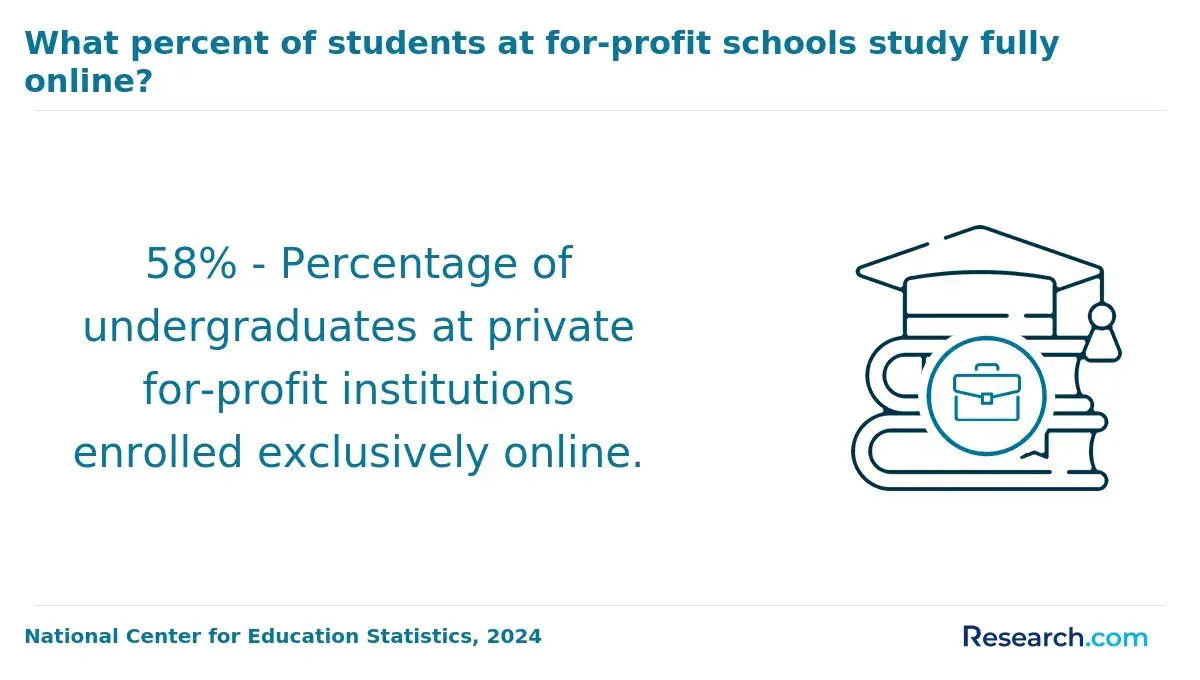
An online ESL & TESOL doctorate can look flexible from the outside, but the real decision is whether you are ready for doctoral-level coursework, sustained research, and a major final project. NCES distance education tables published in 2024 show that most U. S. graduate students now take at least one online course, making format quality more important than ever. This guide is for educators, administrators, curriculum specialists, and language researchers comparing programs. You will learn what courses, research expectations, faculty support, and final project demands typically involve before deciding whether this doctorate fits your goals.
Key Things to Know About ESL & TESOL Doctorate Programs
- Most online ESL & TESOL doctorates require about 45 to 60 post-master's credits, while some education doctorates with TESOL concentrations may require closer to 60 to 90 credits for students entering with less advanced preparation.
- Typical completion time is three to five years for part-time online students, but the final dissertation or applied project can extend the timeline if the topic is too broad, data access is delayed, or faculty feedback cycles are not built into the student's schedule.
- Federal datasets do not separately track ESL & TESOL doctoral completion, dissertation completion, or faculty ratios, so applicants should rely on program-level disclosures, catalog requirements, advisor availability, and recent dissertation or capstone examples when comparing options.
How is the course load structured in an online ESL & TESOL doctorate program?
The course load in an online ESL & TESOL doctorate is usually organized in phases: core doctoral seminars, language and literacy specialization courses, research methods, proposal preparation, and dissertation or applied project credits. The exact structure depends on whether the degree is a PhD, which usually emphasizes original research, or an EdD, which often focuses on applied leadership and practice-based inquiry.
For working educators, the biggest issue is not just the number of credits but the rhythm of deadlines. A three-credit doctoral course may require weekly readings, discussion posts, research memos, annotated bibliographies, data exercises, and long-form writing that gradually prepares students for the final project.
The table below summarizes common credit patterns in U.S. online ESL & TESOL doctorate pathways. Because no national database isolates TESOL doctorates as a separate category, these ranges are best used as a planning benchmark rather than a universal rule.
| Program component | Typical credit range | What it usually means for students |
| Doctoral core | 9 to 18 credits | Foundations in doctoral inquiry, education theory, policy, leadership, or advanced pedagogy |
| ESL, TESOL, bilingual, or language education specialization | 12 to 24 credits | Advanced study of second language acquisition, multilingual learners, assessment, curriculum, and sociolinguistics |
| Research methods and statistics | 9 to 18 credits | Preparation in qualitative, quantitative, mixed methods, research design, ethics, and data analysis |
| Dissertation, capstone, or applied project credits | 9 to 18 credits | Faculty-supervised proposal development, data collection, analysis, writing, defense, and revision |
| Total post-master's requirement | 45 to 60 credits | Common range for students entering with a relevant master's degree |
A manageable schedule for many online doctoral students is one or two courses per term. One course may be realistic during a demanding teaching year, while two courses can work for students with predictable work hours, family support, and strong writing habits. Accelerated pacing can reduce calendar time, but it also compresses reading, research, and advisor feedback into shorter windows.
Before enrolling, ask whether courses are asynchronous, synchronous, cohort-based, or self-paced. Online does not always mean fully flexible; some programs require live evening sessions, summer intensives, virtual residencies, or scheduled research seminars. Ignoring these format details is one of the most common reasons students feel overwhelmed after the first term.
What courses are covered in an online ESL & TESOL doctorate program?
Online ESL & TESOL doctorate courses are designed to move students beyond classroom technique and into advanced analysis of language learning, multilingual education systems, teacher development, and research-based program improvement. In practical terms, students should expect to read scholarly literature, critique research designs, connect theory to practice, and produce writing that can become part of a dissertation or applied project.
Current U.S. program catalogs commonly organize TESOL doctoral coursework around several competency areas. The table below shows the kinds of courses applicants are most likely to see and why each area matters for career planning.
| Course area | Common course examples | Career and research value |
| Second language acquisition | Advanced second language acquisition, language development, multilingual learning theories | Helps students evaluate how learners acquire additional languages across age groups and instructional settings |
| TESOL pedagogy and curriculum | ESL curriculum design, instructional models, content-based language instruction | Supports roles in teacher education, curriculum leadership, and program design |
| Assessment and evaluation | Language assessment, program evaluation, assessment for multilingual learners | Prepares students to critique tests, evaluate ESL programs, and design evidence-based improvement plans |
| Research methods | Qualitative inquiry, quantitative methods, mixed methods, research design | Builds the technical foundation for dissertations, applied studies, and institutional research |
| Sociolinguistics and policy | Language policy, identity and language, bilingual education policy | Connects classroom practice to equity, access, and institutional decision-making |
| Doctoral writing and scholarship | Scholarly writing, literature review seminar, dissertation proposal seminar | Develops the academic writing habits needed to complete long-form research |
Evaluating academic programs—whether reviewing applied business credentials like affordable online project management degrees or specialized education degrees—requires looking closely at course distribution. A strong curriculum should balance theory, applied practice, and research preparation. If a program lists many education leadership courses but only a few TESOL-specific seminars, it may be better suited for administrators than for students who want to specialize deeply in language acquisition or TESOL scholarship.
Applicants should also look for evidence that the curriculum reflects current practice. AI-supported language learning tools, corpus-based analysis, online language assessment, translanguaging pedagogy, trauma-informed instruction, and multilingual learner equity are increasingly relevant topics. A program does not need a separate course for every trend, but faculty research and course assignments should show that students will engage with contemporary issues rather than outdated models only.
What coursework requirements must ESL & TESOL doctoral students complete?
Coursework requirements usually include more than passing individual classes. Doctoral students are expected to build a coherent research identity, demonstrate mastery of theory and methods, and meet program milestones that show readiness for independent scholarship.
The following requirements are common in online ESL & TESOL doctorate programs. They matter because they affect both workload and time to completion.
- Core and specialization coursework: Students complete required doctoral education courses and TESOL-focused seminars, usually with minimum grade requirements set by the graduate school.
- Research sequence: Students complete qualitative, quantitative, or mixed methods courses and may be asked to produce a small pilot study or research design paper.
- Doctoral writing products: Many courses require literature reviews, conceptual frameworks, article critiques, policy analyses, or practitioner inquiry papers that can later support the final project.
- Comprehensive or qualifying assessment: Some programs require exams, portfolios, or synthesis papers before students can move formally into candidacy.
- Residency or intensive participation: Some online programs require virtual residencies, campus visits, summer institutes, or synchronous doctoral seminars for advising, research design, and community building.
- Research ethics approval: Students whose projects involve human participants must complete institutional review board training and receive approval before collecting data.
Residency requirements are one of the most important comparison points. A fully online program may still require scheduled live sessions, while a hybrid doctorate may require short campus residencies. The issue is not whether residency is "good" or "bad"; it is whether the requirement fits your location, work calendar, family responsibilities, and budget.
Applicants should also check whether the program has a lockstep cohort model or a flexible enrollment model, similar to how someone balancing work and school might evaluate a business degree online. Cohorts can provide accountability and peer support, while flexible pacing may help working educators who need to slow down during peak school-year periods. The trade-off is that too much flexibility can make it easier to postpone research milestones.
Research work begins earlier than many applicants expect. In a strong online ESL & TESOL doctorate, students do not wait until the dissertation phase to start thinking like researchers; they develop research questions, review literature, study methods, analyze small datasets, and learn how to connect evidence to language education problems.
The research workload usually grows in stages. Just as students in other advanced fields—such as those pursuing a masters degree in human resource management online—must steadily build strategic analytical skills, doctoral candidates in education progress systematically through their coursework. Early coursework introduces scholarly reading and critique, middle coursework develops design and methods skills, and later milestones require students to defend a focused, feasible study. In TESOL, common research areas include multilingual learner assessment, teacher preparation, language policy, curriculum implementation, adult ESL instruction, digital language learning, and equity in bilingual or English learner programs.
The table below maps typical research expectations to the skills students need. This can help applicants identify whether their professional experience aligns with the kind of inquiry the program supports.
| Research stage | Typical student work | Skills emphasized |
| Early coursework | Article critiques, theory papers, annotated bibliographies | Scholarly reading, synthesis, argument development |
| Methods sequence | Research design papers, data analysis exercises, ethics training | Study design, sampling, validity, reliability, coding, statistics, ethics |
| Topic refinement | Problem statement, literature review, conceptual framework | Scope control, research alignment, gap identification |
| Proposal development | Formal research proposal and committee review | Methodological justification, feasibility planning, academic writing |
| Data collection and analysis | Interviews, observations, surveys, document analysis, assessment data review, or intervention evaluation | Data management, analytic rigor, confidentiality, interpretation |
| Final defense or presentation | Dissertation defense, applied project presentation, or capstone defense | Clear explanation of findings, limitations, implications, and contribution |
AI is also changing how doctoral students work, especially in literature searching, transcription review, language-data organization, and feedback on writing clarity. However, students must follow university policies on AI use, disclose tools when required, protect participant data, and avoid outsourcing analysis or writing that should represent their own scholarship.
A common mistake is choosing a research topic that is personally meaningful but too broad to complete. "Improving outcomes for English learners" is not a doctoral project; a workable topic might examine how a specific professional development model affects teacher use of formative language assessment in one district or program context.
The final project is the culminating evidence that a doctoral student can identify an important TESOL problem, design a rigorous inquiry process, analyze evidence, and communicate findings clearly. In online ESL & TESOL doctorates, the final requirement is usually a traditional dissertation, an applied dissertation, or a practice-based capstone project.
The best option depends on your goals. Students aiming for university faculty roles, research positions, or future publication may prefer a traditional dissertation. Students focused on district leadership, teacher development, curriculum improvement, adult education administration, or nonprofit language programs may find an applied project more aligned with their work.
The table below compares common final project formats. Program names vary, so applicants should read the handbook rather than relying only on labels such as "capstone" or "dissertation."
| Final project type | Main purpose | Best fit | Typical evidence produced |
| Traditional dissertation | Generate original scholarly knowledge | Students interested in research, higher education, publication, or theory development | Original study with literature review, methodology, findings, discussion, and defense |
| Applied dissertation | Study a real problem of practice using doctoral-level methods | Practitioners who want to improve a program, policy, curriculum, or instructional system | Practice-based study with recommendations grounded in data |
| Capstone or improvement project | Design, implement, and evaluate a practical solution | Students in EdD-style programs focused on leadership and measurable organizational improvement | Needs assessment, intervention plan, evaluation findings, and implementation guidance |
Dissertation and applied project completion rates specifically for ESL & TESOL doctoral students are not reported in national public datasets. That limitation matters: applicants should ask each program for recent completion patterns, average time in candidacy, number of students assigned to each advisor, and examples of completed projects within the last few years.
When comparing tracks, avoid assuming that an applied project is easier. It may involve the same level of research design, literature review, ethics approval, data collection, and committee feedback as a dissertation. The difference is usually the purpose and audience, not the seriousness of the work.
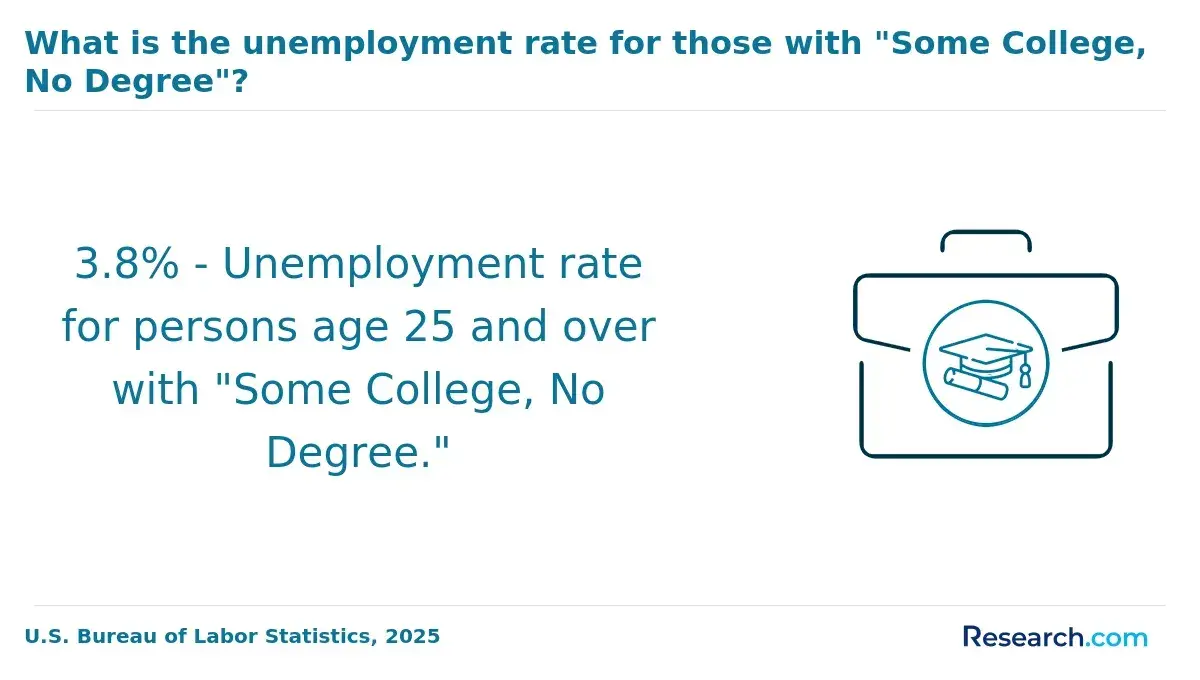
The final project is demanding because it requires long-term independence. Coursework has weekly deadlines and instructor structure; the dissertation or applied project requires the student to create momentum, schedule writing blocks, collect data responsibly, and respond to committee feedback without the same course-based rhythm.
For many working students—whether completing an advanced education doctorate or earning an online administration degree—the most difficult part is sustaining progress after structured coursework ends. A realistic plan often includes weekly writing time, monthly advisor meetings, clear data-access agreements, and a narrow research question. Students who wait until candidacy to build these habits often lose time.
The table below shows common timeline patterns for online doctoral students. These are planning ranges, not guarantees, because program calendars, advisor availability, and project complexity vary widely.
| Phase | Typical timing in a part-time online pathway | Main risk that can delay progress |
| Coursework | Years 1 to 2 or 3 | Taking too many courses while working full time |
| Comprehensive assessment or portfolio | End of coursework or transition to candidacy | Weak synthesis of theory, methods, and TESOL specialization |
| Proposal development | Several months to one year | Research question too broad or methods not aligned with the problem |
| IRB and data access | Several weeks to several months | Delayed site permission, participant recruitment, or ethics approval |
| Data collection and analysis | One or more terms | Overly complex data sources or insufficient analytic preparation |
| Writing, defense, and revisions | One or more terms | Late committee feedback, unclear argument, or incomplete revisions |
Students can reduce risk by selecting a topic that has manageable boundaries. A good doctoral project is important enough to matter but focused enough to finish. For example, studying one ESL writing intervention in a defined adult education program may be more feasible than studying multilingual writing development across multiple states.
The final project may not be the right fit if you want only advanced teaching techniques and do not want to conduct sustained research. In that case, a post-master's certificate, education specialist degree, or targeted graduate coursework may offer a better return on time and effort.
Research progress is evaluated through a series of checkpoints rather than one final judgment. These checkpoints help faculty determine whether the student is ready to move from coursework to independent inquiry and whether the proposed study is ethical, feasible, and academically sound.
Most programs use a sequence of formal and informal evaluations. Understanding these milestones helps students plan backward from the final defense instead of treating the dissertation or project as a separate task that starts after coursework.
- Course-embedded research assignments: Faculty evaluate whether students can synthesize literature, critique research, and connect TESOL problems to evidence.
- Methods performance: Students must demonstrate that they understand research design, data collection, analysis, and ethical treatment of participants.
- Comprehensive exam, portfolio, or qualifying paper: The program verifies that the student can integrate theory, research, and professional practice at a doctoral level.
- Proposal review: The committee evaluates the problem statement, research questions, literature review, methodology, feasibility, and alignment with degree expectations.
- Institutional review board approval: The university confirms that the study protects participants and follows ethical research procedures before data collection begins.
- Progress reviews during candidacy: Advisors or committees review drafts, data analysis, chapter development, and timeline adherence.
- Final defense or presentation: The student explains the study, findings, limitations, implications, and contribution to TESOL practice or scholarship.
A useful way to evaluate a program is to ask how progress is monitored after coursework. Strong programs usually have scheduled dissertation seminars, milestone rubrics, required advisor meetings, or candidacy progress forms. Weak structure can leave online students feeling isolated, especially if they are not part of a cohort.
Attrition data specific to ESL & TESOL doctorates is not publicly available at the national level. Because doctoral attrition often occurs after coursework, applicants should ask programs for candidacy-stage support, leave-of-absence policies, and average time from proposal approval to final defense.
Faculty support is one of the strongest predictors of whether an online doctoral experience feels navigable. In ESL & TESOL programs, faculty members do more than grade assignments; they help students narrow topics, choose methods, understand the field, prepare proposals, interpret findings, and make realistic decisions about scope.
Support usually comes from several roles, not just one advisor. The table below explains who may be involved and what each role typically covers during the research process.
| Faculty or support role | Typical responsibility | What students should ask before enrolling |
| Program director | Explains degree structure, policies, milestones, and course sequencing | How are online students kept on track from admission to final defense? |
| Academic advisor | Helps with enrollment planning, pacing, and requirement tracking | How often do students receive progress reviews? |
| Dissertation or capstone chair | Guides the research topic, proposal, data collection, analysis, writing, and defense | How many doctoral students does a chair typically supervise at one time? |
| Committee members | Provide subject, methodological, or practice-based expertise | Can students choose committee members with TESOL-specific expertise? |
| Methods faculty | Support research design, statistics, qualitative analysis, mixed methods, or program evaluation | Is methods support available after the required courses end? |
| Writing center or doctoral writing coach | Provides feedback on clarity, organization, citation, and scholarly voice | Are writing supports designed for dissertation-stage doctoral students? |
Average faculty-to-student ratios for ESL & TESOL doctoral programs are not published in a standardized national source. That does not mean applicants should ignore the issue. Instead, ask directly about advisor load, response-time expectations, committee assignment timelines, and whether faculty are actively supervising projects in your area of interest.
Red flags include vague advising policies, no clear process for assigning a chair, limited TESOL faculty, and faculty research that does not overlap with your interests. A prestigious university name is not enough if no available faculty member can support your topic.
Many online ESL & TESOL doctorate programs allow students to express advisor preferences, but the process varies. Some assign an initial academic advisor at admission and a dissertation chair later. Others match students with a faculty mentor early based on research interests, professional background, or faculty availability.
Changing advisors may be possible, but it is usually governed by graduate school policy. Valid reasons can include a shift in research topic, faculty leave, retirement, lack of methodological fit, or a working relationship that is no longer productive. The key is to follow the formal process rather than simply stopping communication.
Students can improve advisor fit by taking a deliberate approach early in the program. These steps help prevent avoidable problems later.
- Read faculty profiles before applying and identify at least two faculty members whose research connects to your interests.
- Ask admissions or the program director how dissertation chairs are assigned and whether students can request a specific advisor.
- Use early coursework to test your topic with multiple faculty members rather than committing too quickly.
- Schedule regular meetings once an advisor is assigned and send brief agendas before each meeting.
- Document feedback, decisions, and next steps after advising conversations so expectations stay clear.
- If the relationship is not working, review the handbook and speak with the program director before requesting a change.
A good advisor does not need to study the exact same population or setting as you, but they should understand your research problem, respect your professional context, and be able to guide your methodology. If your topic requires specialized knowledge, a committee member can sometimes fill that gap even when the chair provides broader doctoral supervision.
Do not choose a program assuming you can easily change advisors later. Advisor availability is limited by workload, research fit, sabbaticals, retirements, and program policy. It is safer to enroll only when the program has enough faculty depth to support more than one possible research direction.
How can students prepare for the research demands of an online ESL & TESOL doctorate program?
Students can prepare for the research demands of an online ESL & TESOL doctorate before the first course begins. The best preparation is not trying to write a dissertation early; it is building the habits, topic awareness, and academic systems that make long-term research possible.
The following steps can help future students enter the program with a realistic plan and avoid the mistakes that commonly slow doctoral progress.
- Clarify your career goal first: Decide whether you are pursuing the doctorate for higher education teaching, research, district leadership, curriculum design, policy work, adult education administration, or professional credibility.
- Compare final project formats: Choose a dissertation-heavy program if you want scholarly research training, and consider an applied doctorate if your goal is solving a practice-based TESOL problem in your workplace or field.
- Build a narrow topic list: Write three possible research problems, each tied to a specific learner group, instructional setting, policy issue, or program challenge.
- Refresh research basics: Review qualitative methods, basic statistics, citation management, literature searching, and academic writing before the first term.
- Protect weekly writing time: Reserve recurring blocks for reading, note-taking, and drafting, even during coursework, so writing becomes routine before candidacy.
- Ask programs about support structures: Look for dissertation seminars, methods consulting, writing support, advisor response norms, cohort interaction, and clear milestone tracking.
- Talk to current students or alumni: Ask what surprised them, how often they meet with faculty, how long proposal approval took, and what they wish they had known before enrolling.
- Check residency and synchronous requirements: Confirm travel, live class times, summer institutes, and technology expectations before committing.
Applicants should also think carefully about investment. The doctorate may be worthwhile if it is required or strongly preferred for your target role, such as university teaching, advanced research, district-level leadership, or senior curriculum work. It may be less efficient if your main goal is improving classroom practice quickly and you do not need a doctoral credential.
A practical program shortlist should include more than tuition and rankings. Compare faculty fit, final project format, completion support, research methods depth, online delivery structure, and evidence of recent TESOL-related dissertations or applied projects. Those factors often matter more to completion than the broad reputation of the institution alone.
Other Things You Should Know About ESL & TESOL
Many programs prefer applicants with teaching, curriculum, language education, or leadership experience, but requirements vary. Some EdD programs are designed for practicing educators, while PhD programs may place more emphasis on research readiness and academic preparation.
Accreditation depends on the institution and program, not the online format. Applicants should look for regional institutional accreditation and, when relevant, education-school or educator-preparation approvals. Licensure-related requirements vary by state and should be verified separately.
Some U.S. universities accept international students into online doctoral programs, but eligibility can depend on residency rules, visa status, synchronous meeting times, technology access, and whether campus visits are required. Applicants should confirm policies directly with the university.
The degree can support goals in higher education teaching, teacher education, language program administration, curriculum leadership, district-level multilingual learner services, adult education leadership, policy analysis, and research. Career outcomes depend on experience, location, employer requirements, and the type of doctoral project completed.
- TEFL and TESOL Difference: Choosing Your Best Path | TEFL Institute https://teflinstitute.com/blog/tefl-tesol-difference/
- Research Trends in ESL/ EFL: A systematic investigation of studies in ELT Journal and TESOL Quarterly http://www.jlls.org/index.php/jlls/article/view/4010/0
- Essential Research Methods in Applied Linguistics for Effective Study https://atlasti.com/research-hub/research-method-in-applied-linguistucs
- Practicum in Teaching English Online | 60-Hour TEFL/TESOL Course | Bridge TEFL https://bridge.edu/tefl/courses/specialized/teaching-english-online-practicum
- RESEARCH ON ENGLISH LANGUAGE TEACHING https://tahtamedia.co.id/issj/article/download/920/917/3409
- Online EdD Programs in TESOL and English Language Learning https://www.onlineeddprograms.com/faqs/edd-programs-tesol
- Student, Faculty, and Graduate Teaching Assistant Perceptions of Support Provided by a Graduate Student Writing Centre https://sisaljournal.org/archives/jun21/handford_dobson_liu/
- Research Methodology: Types, Methods and Examples https://www.thesisai.io/blog/research-methodology-types-methods-examples/
- Navigating the ESL Classroom: A Guide to Push-in and Pull-out Strategies - Graduate Programs for Educators https://www.graduateprogram.org/blog/navigating-the-esl-classroom-a-guide-to-push-in-and-pull-out-strategies/


