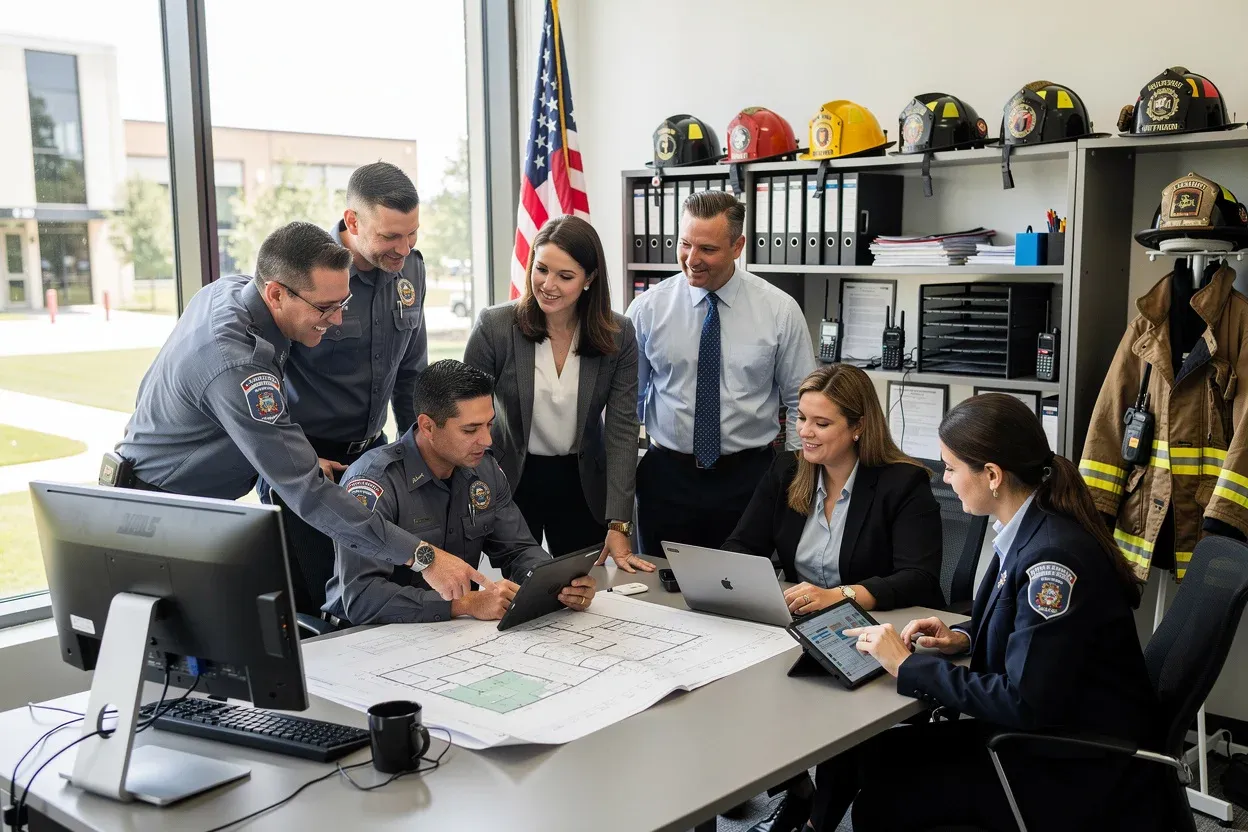
2027 What to Expect in an Online Crisis Management Doctorate Program: Courses, Research, Faculty Support, and Final Projects

Co-Founder and Chief Data Scientist
The hard question is not whether crisis leadership matters; it is whether a doctorate is the right way to build that expertise. NOAA reported that the U. S. experienced a record 28 billion-dollar weather and climate disasters in 2023, underscoring the need for leaders who can plan, communicate, and evaluate response systems. This guide is for working professionals considering an online crisis management doctorate. You will learn how courses, research expectations, faculty support, and final projects are usually structured so you can judge the workload, academic fit, and career relevance before enrolling.
Key Things to Know About Crisis Management Doctorate Programs
- Most online crisis management doctorates are structured as 48 to 60 post-master's credits, with coursework first, then research design, proposal approval, and a dissertation or applied doctoral project.
- Students should expect sustained independent research; national doctoral data published by the National Science Foundation in 2024 shows research doctorates commonly take several years beyond coursework, so project planning matters as much as course grades.
- Public data rarely separates completion rates, attrition, or faculty-to-student ratios specifically for crisis management doctorates, so applicants should ask each program for dissertation completion data, advisor loads, residency rules, and average time to completion.
How is the course load structured in an online Crisis Management doctorate program?
An online crisis management doctorate usually combines leadership theory, emergency management systems, risk analysis, public policy, research methods, and a culminating doctoral project. Many programs are not titled "crisis management" exactly; they may be offered as emergency management, homeland security, public safety, disaster science, organizational leadership, or criminal justice with a crisis-focused research path.
The course load is typically designed for working professionals, but "online" does not mean light. A realistic structure is one or two courses per term during the coursework phase, followed by a more self-directed research phase that requires consistent weekly writing, reading, data collection, and advisor communication. Students coming from public safety, military, healthcare, school safety, nonprofit response, or corporate continuity roles should check whether the schedule supports rotating shifts, deployments, and family obligations.
The table below summarizes the common stages of an online crisis management doctorate. Use it to estimate not only the number of courses, but also when the workload changes from class deadlines to independent research accountability.
| Program stage | Typical academic focus | Common credit pattern | What the workload feels like |
| Core coursework | Crisis leadership, emergency management, policy, organizational risk, ethics | About 18 to 30 credits | Weekly readings, discussion posts, case analyses, and applied papers |
| Research sequence | Qualitative, quantitative, mixed methods, statistics, evaluation design | About 9 to 15 credits | More technical assignments, literature reviews, data exercises, and methodology drafts |
| Specialization or electives | Homeland security, cyber crisis, public health preparedness, disaster resilience, continuity planning | About 6 to 12 credits | Career-focused projects that can help shape a dissertation topic |
| Doctoral project or dissertation credits | Proposal, IRB review, data collection, analysis, defense or presentation | About 9 to 18 credits | Independent work with advisor feedback and milestone deadlines |
For a full-time professional, the biggest decision is pace. One course at a time may protect your job performance and reduce burnout, while two courses per term can shorten the calendar if your work schedule is predictable. If your background is adjacent rather than directly crisis-focused, such as corrections, policing, or courts, reviewing an online criminal justice degree pathway can also clarify whether you need more foundational public safety coursework before doctoral study.
What courses are covered in an online Crisis Management doctorate program?
Courses in an online crisis management doctorate are meant to move students from practitioner experience to evidence-based leadership. Instead of simply learning response procedures, doctoral students examine why systems fail, how agencies coordinate, how risk is communicated, and how policies can be evaluated after a crisis.
The table below shows course areas that commonly appear across U.S. online doctoral programs related to crisis management, emergency management, homeland security, and public safety leadership. Exact titles vary, but these categories help you compare curricula across schools.
| Course area | What students usually study | Why it matters for doctoral-level crisis work |
| Crisis and emergency management theory | Preparedness, mitigation, response, recovery, resilience, interagency systems | Builds the framework for analyzing complex incidents beyond single-agency operations |
| Risk assessment and hazard analysis | Threat identification, vulnerability analysis, risk matrices, continuity planning | Supports defensible planning decisions and research questions tied to measurable risk |
| Leadership and organizational behavior | Decision-making under pressure, command structures, culture, ethics, change management | Connects crisis outcomes to leadership systems rather than individual heroics |
| Public policy and governance | Federalism, emergency powers, homeland security policy, funding systems, equity concerns | Helps students evaluate how rules, resources, and political structures shape crisis response |
| Research methods and statistics | Qualitative interviews, surveys, mixed methods, program evaluation, statistical interpretation | Prepares students to produce original research rather than opinion-based recommendations |
| Communication and stakeholder engagement | Risk communication, media relations, misinformation, public trust, community engagement | Reflects current crisis leadership demands, especially during fast-moving public events |
Current curricula increasingly emphasize applied analytics, community resilience, cybersecurity-related disruptions, public health preparedness, infrastructure protection, and misinformation. AI is also becoming more relevant, not as a replacement for judgment, but as a tool for literature review organization, scenario modeling, coding qualitative data, and monitoring emerging risks. Students should expect programs to set clear rules on AI use, citation, data privacy, and research integrity.
If your interests are more safety, compliance, environmental risk, or workplace hazard prevention than emergency response, comparing crisis management coursework with the best online environmental health and safety programs may help you choose a better-aligned academic route.
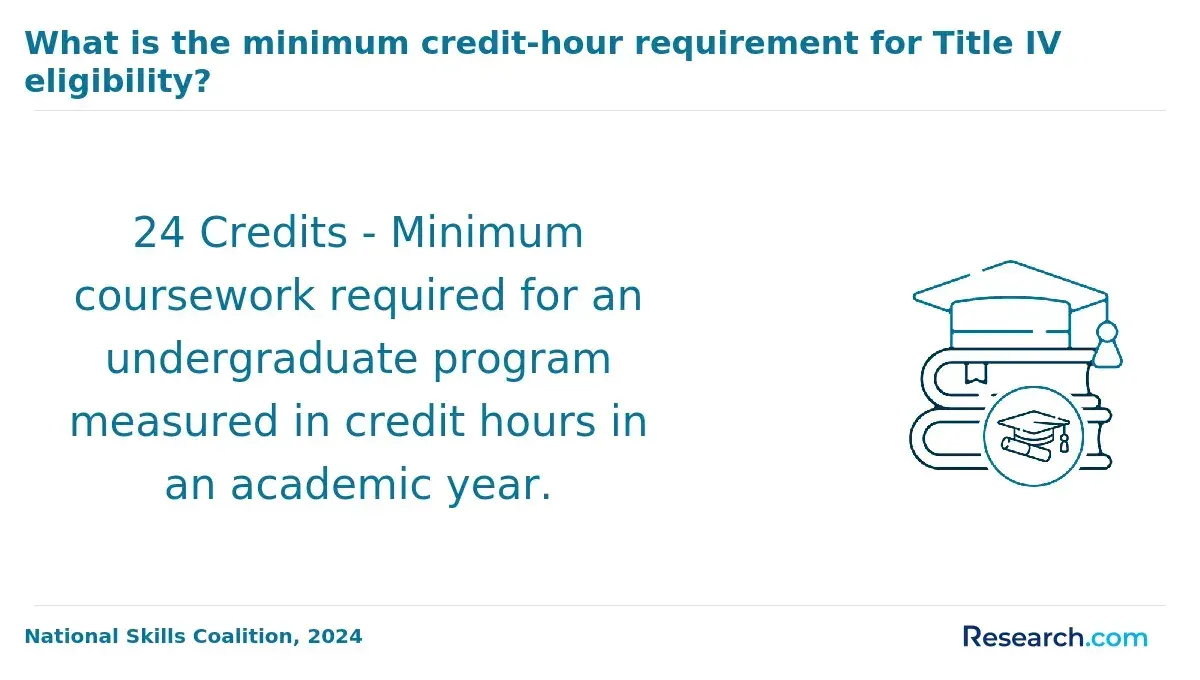
What coursework requirements must Crisis Management doctoral students complete?
Coursework requirements usually include more than passing classes. Doctoral students must demonstrate that they can synthesize research, critique policy, design studies, write at a scholarly level, and apply findings to real crisis management problems. Many programs require a minimum grade in doctoral courses, a residency or intensive experience, a comprehensive exam, or a portfolio before students advance to candidacy.
Before enrolling, review how the school defines satisfactory academic progress. The following requirements are common, and each one affects your timeline and workload differently.
- Core course completion: Students complete required crisis management, leadership, policy, and research courses before moving into advanced project work.
- Research-methods sequence: Students usually complete qualitative and quantitative methods, statistics, or program evaluation courses before submitting a proposal.
- Scholarly writing expectations: Programs often require literature reviews, publishable-style papers, policy briefs, or case analyses using peer-reviewed sources.
- Residency or intensive requirement: Some online programs require short virtual or in-person sessions for advising, research design, networking, or proposal development.
- Comprehensive exam or portfolio: Students may need to show mastery of theory, methods, and specialization content before doctoral candidacy.
- IRB preparation: Students planning research with human participants must complete ethics training and secure approval before collecting data.
One common mistake is comparing programs only by tuition per credit without checking how many dissertation continuation credits, fees, residencies, and extensions may be required. If cost is a major factor, resources that explain the broader criminal justice degree price structure can help you think more carefully about tuition, fees, transfer credits, and hidden expenses in public safety-related programs.
What kind of research work are online Crisis Management doctorate students expected to do?
Research is the central difference between a master's program and a doctorate. In crisis management, doctoral research often examines how organizations prepare for, respond to, recover from, or learn from disruptive events. Topics may involve emergency operations centers, public warning systems, school safety, healthcare surge planning, disaster equity, cyber incidents, nonprofit response networks, public-private coordination, or leadership decision-making.
Students are usually expected to move from a broad concern to a narrow, researchable problem. A topic such as "improving hurricane response" is too broad; a stronger doctoral topic might examine how county emergency managers use after-action reports to revise evacuation plans in coastal communities.
The research responsibilities below tend to build over the whole program. They are important because delays usually happen when students postpone topic development until after coursework.
- Identify a practical crisis management problem that is narrow enough to study with available time, data, and participants.
- Conduct a systematic literature review to show what is already known and where a real research gap remains.
- Select a research design, such as qualitative interviews, survey research, case study analysis, mixed methods, or program evaluation.
- Develop instruments, interview protocols, sampling plans, consent materials, and data protection procedures.
- Complete institutional review board requirements before collecting data from human participants.
- Analyze findings using appropriate methods and connect the results back to crisis management theory, practice, and policy.
Students with prior emergency management experience often have strong practical insight, but they may need to strengthen statistics, research design, and academic writing. Students entering from adjacent areas, including law enforcement or corrections, may benefit from reviewing earlier pathways such as the best online associate degree programs in criminal justice to understand how public safety education builds from operational foundations to doctoral research.
What is the final project requirement like in an online Crisis Management doctorate program?
The final project is usually the longest and most demanding part of an online crisis management doctorate. Depending on the degree type, the capstone may be a traditional dissertation, an applied doctoral project, a dissertation-in-practice, or a policy-focused research project. The names differ, but the purpose is similar: students must produce original, defensible work that addresses a meaningful crisis management problem.
The table below compares common final project models. This is one of the most important program-selection factors because the best option depends on whether your goal is academic research, senior practice leadership, consulting, policy work, or organizational change.
| Final project model | Best fit | Typical output | Main trade-off |
| Traditional dissertation | Students interested in research, teaching, policy analysis, or doctoral-level scholarship | Five-chapter or article-style study with original data or advanced analysis | Can offer strong research depth but may take longer if data access is difficult |
| Applied doctoral project | Practitioners solving a defined organizational or field problem | Program evaluation, intervention design, readiness assessment, or evidence-based implementation plan | Often feels more practice-oriented but still requires rigorous methodology and evidence |
| Dissertation-in-practice | Leaders working inside complex systems such as schools, agencies, hospitals, or local governments | Improvement-focused study connected to a real setting | Useful for workplace impact but may depend on employer cooperation and data access |
| Policy or strategic analysis project | Students focused on governance, public administration, homeland security, or emergency planning | Policy evaluation, gap analysis, strategic plan, or comparative case analysis | May be highly relevant to leadership roles but still needs clear research standards |
Do not assume an applied project is easy. A well-designed applied project still requires a literature base, methods section, evidence collection, analysis, and formal review. The better distinction is purpose: dissertation tracks usually prioritize contribution to scholarship, while applied tracks prioritize evidence-based improvement in a real-world crisis management setting.
How demanding is the final project in an online Crisis Management doctorate program?
The final project is demanding because it shifts responsibility from the instructor to the student. In a course, deadlines and assignments are already defined. In a dissertation or applied project, you must define the problem, defend the design, secure approvals, manage data, revise repeatedly, and keep momentum when there are fewer weekly reminders.
National doctoral data published by the National Science Foundation in 2024 shows that research doctorates across fields often take multiple years beyond initial graduate enrollment. Crisis management doctorates that are professionally oriented may be structured for shorter completion, but the lesson is the same: the research phase expands when students choose topics that are too broad, depend on hard-to-reach participants, or require data they do not control.
These are the most common causes of final-project delays, along with ways to reduce the risk before you reach candidacy.
- Choosing a topic that is too broad: Narrow the topic by population, setting, incident type, agency type, or decision process.
- Depending on unavailable data: Confirm access to records, participants, or organizational permissions before proposal approval.
- Waiting too long to write: Build the literature review throughout coursework instead of starting from scratch after classes end.
- Ignoring methodology fit: Choose the research method that answers the question, not the one that seems easiest.
- Underestimating revisions: Committee feedback is normal; plan time for multiple rounds before proposal and final approval.
- Treating online study as self-paced: Even flexible programs require steady progress, scheduled meetings, and documented milestones.
A manageable final project usually has three features: a narrow problem, reachable data, and a committed advisor. If any of those are missing, the project may become much harder than the coursework.
How is your research progress evaluated throughout an online Crisis Management doctorate program?
Research progress is evaluated through milestones rather than ordinary weekly grades. Programs vary, but students typically move through topic approval, literature review development, methodology approval, proposal defense, IRB clearance, data collection, analysis, final manuscript review, and oral defense or presentation.
The table below shows how progress is commonly checked from the beginning of the program through completion. Use it to ask programs where students most often slow down and what support is available at each point.
| Milestone | What evaluators look for | Common evidence of progress |
| Early topic exploration | A problem that fits crisis management and is feasible for doctoral research | Problem statement, preliminary bibliography, advisor discussion notes |
| Literature review | Understanding of existing research and a clear gap | Annotated bibliography, synthesis matrix, draft literature review |
| Methodology approval | Alignment among research question, design, sample, data source, and analysis plan | Methods chapter, instruments, interview guide, survey draft, analysis plan |
| Proposal defense or review | Readiness to conduct the study ethically and rigorously | Committee-approved proposal and revision record |
| IRB approval | Protection of human participants and appropriate data handling | IRB application, consent forms, recruitment language, approval letter |
| Final defense or presentation | Clear findings, justified conclusions, and useful implications for practice or scholarship | Final manuscript, presentation, committee approval, completed revisions |
Evaluation can feel slower online because feedback may be asynchronous. Strong programs reduce that risk with clear rubrics, milestone calendars, research seminars, writing groups, and documented response-time expectations. Ask whether students receive structured project courses or are moved into open-ended continuation credits after coursework.
How do faculty members support Crisis Management doctorate students in their research?
Faculty support is one of the strongest predictors of whether the online format will feel structured or isolating. In crisis management doctorates, faculty may help students refine topics, choose methods, connect theory to practice, locate data sources, prepare for IRB review, and interpret findings. However, support levels vary widely by program and advisor workload.
No public federal dataset reports an average faculty-to-student ratio specifically for online crisis management doctoral programs. That limitation matters: applicants should not rely on broad university ratios because doctoral advising capacity depends on how many dissertation students each qualified faculty member chairs, not just how many professors are employed by the department.
The table below explains the main faculty roles you may encounter. Understanding these roles helps you ask better questions before enrolling.
| Faculty or support role | What the role usually covers | Question to ask before enrolling |
| Program director | Curriculum structure, policies, sequencing, residency rules, candidacy requirements | How are online doctoral students monitored for progress after coursework? |
| Course instructor | Subject knowledge, assignments, feedback, early research skill development | Do course papers build toward the dissertation or applied project? |
| Faculty advisor or chair | Topic refinement, proposal guidance, methodology alignment, manuscript feedback | How many doctoral students does a typical chair supervise at one time? |
| Committee member | Specialized expertise, methodological review, final project evaluation | Can students choose committee members based on subject and methods expertise? |
| Research or writing support staff | Library searches, citation help, writing coaching, statistics support, formatting review | Are these services included for online doctoral students and available after coursework? |
A red flag is a program that advertises flexibility but cannot explain advising frequency, dissertation-chair assignment, committee formation, or average review time. A strong sign is a program that publishes clear milestone expectations and gives students multiple ways to receive feedback.
Can you choose or change your faculty advisor in an online Crisis Management doctorate program?
Many online crisis management doctorate programs assign an initial advisor when students enter and later assign or approve a dissertation chair once the research topic becomes clearer. Some programs let students request a specific advisor; others match students based on faculty expertise, availability, and methodological fit.
Changing advisors is often possible, but it is not something to treat casually. A change may help if your topic shifts, your advisor lacks the needed methodology background, communication breaks down, or the faculty member leaves the institution. It may also slow progress if the new advisor requests major revisions or interprets program standards differently.
If you are trying to choose or change an advisor, follow a deliberate process rather than relying only on reputation or personality.
- Review faculty profiles for crisis management, emergency management, homeland security, public safety, organizational leadership, disaster research, or policy expertise.
- Compare each faculty member's methods experience with your likely study design, especially if you plan interviews, surveys, mixed methods, or program evaluation.
- Ask how often the advisor meets with doctoral students and what response time is typical for draft feedback.
- Clarify whether the advisor has chaired projects similar to yours and whether they are currently accepting new students.
- If a change is needed, document the academic reason and follow the program's formal process rather than making an informal switch.
The best advisor match is not always the most famous faculty member. It is the person whose expertise, availability, communication style, and methodological background align with your project.
How can students prepare for the research demands of an online Crisis Management doctorate program?
Students can prepare for the research demands of an online crisis management doctorate before the first course begins. The goal is not to arrive with a complete dissertation, but to build habits and background knowledge that make doctoral work less overwhelming.
Start with practical preparation in four areas: time, topic, research skills, and support. These steps can reduce delays during the transition from coursework to independent research.
- Audit your weekly schedule: Identify 12 to 18 realistic study hours per week during coursework and protected writing blocks during the research phase.
- Create a topic inventory: List crisis problems you have observed at work, then narrow each one by setting, population, incident type, and available data.
- Refresh research basics: Review qualitative methods, descriptive statistics, literature search strategies, citation management, and ethical research with human participants.
- Build a reading system: Use a citation manager and organize articles by theory, method, population, findings, and gaps.
- Contact current students or alumni: Ask about advising quality, workload, residency demands, project timelines, and where students commonly get stuck.
- Confirm employer support: If your project may involve workplace data, ask early about permissions, confidentiality rules, and conflicts of interest.
Before committing, ask yourself whether the degree is the right investment for your goal. It may fit if you want to lead complex preparedness systems, evaluate policy, teach, consult, or produce evidence-based improvements in crisis response. It may not be necessary if your goal is a promotion that depends more on certifications, operational experience, or a shorter master's-level credential.
Other Things You Should Know About Crisis Management
Some do, but not all. Requirements may include no residency, virtual residencies, short in-person intensives, or optional campus sessions. Always check whether travel, lodging, and time away from work are required.
A PhD is usually better aligned with academic research and teaching goals. A professional doctorate, such as a DSc, DBA, EdD, or applied doctorate, may fit practitioners who want to solve organizational or policy problems using research.
Many students do, but it requires disciplined scheduling. The coursework phase may be manageable with steady weekly study time, while the dissertation or applied project phase requires longer independent writing and research blocks.
Yes. At minimum, choose an institution with recognized institutional accreditation. Also review whether the program's curriculum, faculty expertise, and research support match your professional goals, since accreditation alone does not guarantee fit.
References
- Department of Disaster and Strategic Risk Management https://ium.edu.so/en/faculty/development-studies/department-of-disaster-and-strategic-risk-management
- 7 Scenarios to Include in Your Crisis Management Training Program https://360learning.com/blog/crisis-management-training-program/
- Crisis Management for Education: A Comprehensive Guide https://bryghtpath.com/crisis-management-for-education/
- A Comprehensive Guide to Ed.D. Dissertations | ACE Blog https://ace.edu/blog/a-comprehensive-guide-to-ed-d-dissertations/
- Online Ph.D. in Crisis Human Services | AcademicEarth.org https://academicearth.org/ph-d-in-crisis-human-services/
- The Role of Simulations in Crisis Management https://www.schoolsims.com/blog/the-role-of-simulations-in-crisis-management/
- Mentoring and Advising https://www.phdcompletion.org/promising-practices/mentoring-and-advising/