2027 What Job Postings Reveal About Data Analytics Careers: Skills, Degrees, and Experience Employers Want

Co-Founder and Chief Data Scientist
How can prospective Data Analytics professionals discern what employers truly seek in today's competitive job market? With the surge in demand for skilled analysts, the landscape of qualifications has shifted rapidly. Recent studies show that nearly 60% of Data Analytics job postings prioritize a blend of technical skills and practical experience over formal degrees alone. As roles like data analyst, business intelligence analyst, and data scientist become more prevalent, understanding the specific competencies and credentials valued by employers is crucial. This article examines job listings to clarify which skills, degrees, and experience levels dominate hiring criteria, offering guidance to better navigate career preparation.
Key Things to Know About Skills, Degrees, and Experience Employers Want
- Employers emphasize proficiency in tools like SQL, Python, and visualization software, reflecting a demand for practical, technical skills alongside theoretical knowledge in data analytics roles.
- Most postings require at least a bachelor's degree in a relevant field; 60% also seek candidates with 2-5 years of applied experience, highlighting the value of both education and real-world practice.
- Analyzing job ads reveals discrepancies between degree titles and role expectations, helping students tailor their learning and internships for clearer career alignment.
What Do Job Postings Say About Data Analytics Careers?
Job postings offer a clear view of what employers expect from candidates pursuing careers in data analytics, consistently highlighting a mix of technical skills, education, and relevant experience. Common requirements include proficiency with tools like SQL and Python, alongside strong analytical thinking and problem-solving abilities. Most employers seek candidates with at least a bachelor's degree in fields such as computer science or statistics, though experience levels vary widely. A notable trend shows that 67% of data analytics job postings require between two and four years of professional experience, emphasizing the importance of proven capability in the field.
Patterns in job postings reveal a steady demand for candidates who combine technical expertise with adaptability and continuous learning. While qualifications are generally consistent, subtle variations appear depending on whether the role leans more toward technical execution or strategic business analysis. Employers also prioritize a balance of formal education and practical experience, reflecting the multifaceted nature of modern data analytics careers. This variation highlights how candidates must tailor their skillsets to meet diverse employer expectations within the field.
What Skills Are Most Requested in Data Analytics Job Postings?
Job postings for data analytics roles highlight a consistent group of technical and analytical skills that employers prioritize. One striking metric shows that over 70% of data analytics job listings require proficiency in Python, emphasizing the language's critical role in the field. These postings reflect the evolving demands and expertise needed to thrive in data analytics positions today.
The most sought-after data analytics skills in job postings break down into key areas, as detailed below.
- Programming Proficiency: Python and SQL are emphasized for data extraction, manipulation, and query tasks. Their versatility and ability to work with large datasets make these languages foundational for almost all data analytics roles.
- Data Visualization: Tools like Tableau and Power BI transform complex information into clear visual narratives. This ability supports organizations in making informed, data-driven decisions by presenting insights in accessible formats.
- Statistical Knowledge: A strong foundation in statistics and understanding of algorithms help analysts interpret data patterns accurately and implement predictive models effectively.
- Critical Thinking: Employers highly value candidates who can analyze data beyond the numbers and draw actionable insights, demonstrating strong problem-solving capabilities throughout the analytical process.
- Cloud and Big Data Technologies: Familiarity with platforms such as AWS, Azure, and Hadoop is increasingly requested due to the growing volume and complexity of datasets businesses handle.
Understanding these skills also helps students choose best majors for the future that align with market demands and employer expectations in data analytics.
What Degrees Do Employers Require for Data Analytics Careers?
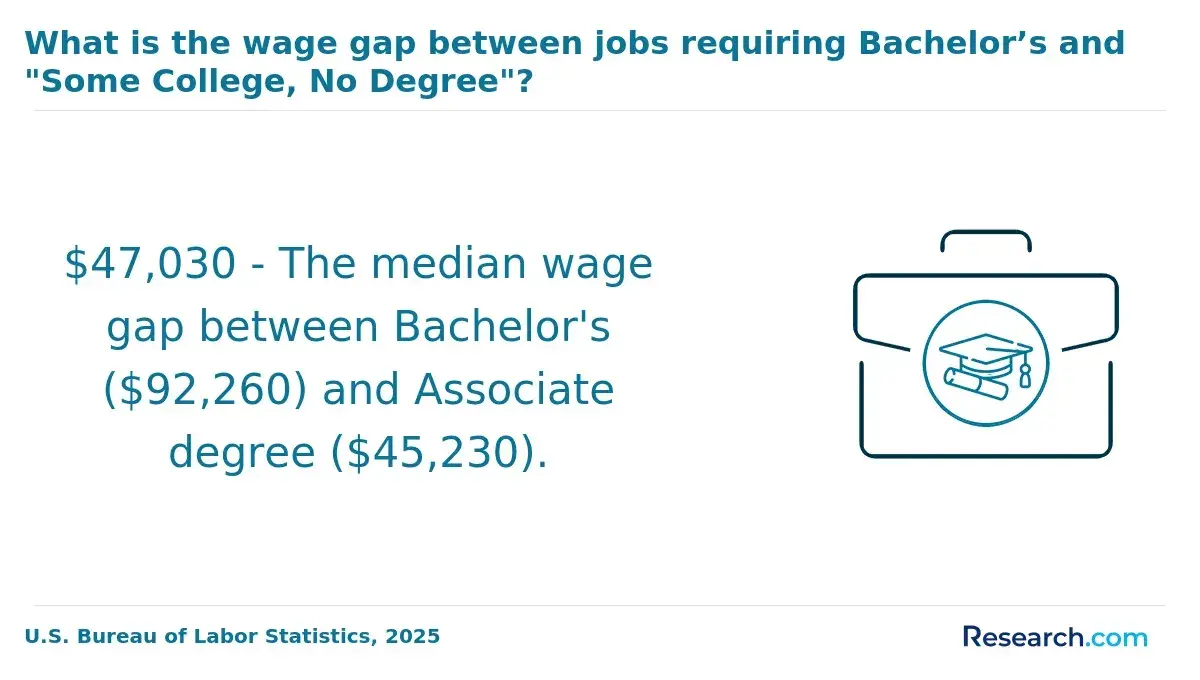
Job postings for data analytics roles generally reflect a baseline preference for candidates with a bachelor's degree, though requirements vary by role complexity and industry demands. More specialized or senior positions often call for advanced degrees, while some sectors prioritize formal education over others. According to a 2023 labor market report, roughly 68% of data analytics job listings require a bachelor's degree, and about 22% prefer or demand graduate-level credentials.
Common trends in degree expectations are highlighted below:
- Bachelor's Degree Foundation: Most entry-level data analytics positions specify a bachelor's degree in fields like statistics, mathematics, computer science, information technology, or business analytics. This level meets the essential technical and quantitative skill demands for foundational roles.
- Graduate Degree Preferences: Advanced or specialized roles-especially those involving machine learning, data architecture, or strategic analytics-often require a master's degree or higher. Master of Science degrees in Data Science or related disciplines are frequently cited.
- Industry Differences: Sectors such as finance, healthcare, and technology tend to emphasize advanced academic qualifications due to regulatory complexity and sophisticated systems. In contrast, startups and smaller companies may offer more latitude, sometimes accepting relevant certifications or equivalent experience instead.
- Alternative Qualifications: Some job postings acknowledge "equivalent experience" or professional certifications as substitutes, but these are usually less common and tend to appear in less traditional settings or earlier career stages.
A graduate with a degree in Data Analytics shared that navigating the job market was a balancing act between meeting standard educational expectations and finding roles open to practical experience. He noted, "Even with a solid academic background, employers often looked closely at how my coursework and projects aligned with their needs. It was challenging to prove that my degree alone was enough without extensive real-world application." He described the application process as sometimes frustrating but ultimately rewarding when positions matched both his education and hands-on capabilities.
Job postings for data analytics roles in the US often specify a range of experience levels depending on the position's seniority and technical focus. Employers rely heavily on experience to evaluate candidates' qualifications and suitability for specific tasks within the field. These requirements vary to match the depth of responsibility and expertise expected.
Below are common experience patterns typically requested in data analytics job listings:
- Entry-Level Roles: These positions usually require minimal or no prior professional experience. They target recent graduates or those new to the field, often accepting candidates with internship experience or less than two years of practical exposure.
- Mid-Level Positions: Job postings commonly ask for three to five years of experience. Employers expect candidates to have analytical skills, project management capability, and the ability to independently solve business challenges.
- Senior Roles: These demand over five years of experience. Candidates should demonstrate leadership, specialized expertise, and a proven history of driving strategic decisions using data.
- Specialized Expertise: Certain roles require experience with specific industries, tools, or methods, adjusting expectations based on technical specialization, such as data engineering or business analytics.
Understanding most affordable online school counseling degrees can support career shifts into these roles, especially for individuals seeking to meet the experience demands in data analytics.
Some sectors are notably receptive to hiring fresh graduates with little or no professional experience in data analytics. This tendency is highlighted by entry-level job postings that prioritize potential and foundational skills over extensive work history. Research shows that roughly 35% of these roles explicitly mention "no experience required," signaling significant opportunities for newcomers.
Below are several industries commonly welcoming fresh data analytics professionals:
- Technology and IT: These fields often recruit recent graduates to support tasks such as data processing and user behavior analysis. Many entry-level roles emphasize hands-on learning within dynamic and innovative settings.
- Healthcare and Pharmaceuticals: The rising use of data in healthcare opens doors for graduates to engage in clinical data evaluation, health informatics, and research assistance, contributing to improved patient outcomes.
- Financial Services: Banks, insurance providers, and fintech companies frequently hire junior data analysts for roles involving risk assessment, compliance checks, and consumer data interpretation, usually offering structured training.
- Retail and E-commerce: This sector values recent graduates for positions focused on customer insights and sales forecasting, emphasizing the management of large data sets to support business recommendations.
- Consulting: Entry-level roles in management and analytics consulting stress problem-solving skills and flexibility, with many opportunities available for those new to the field to work on client-driven projects.
When asked about her experience seeking roles in these industries, a fresh graduate with a data analytics degree reflected on the initial uncertainty and persistence needed during the job search. She mentioned that while the numerous "no experience required" listings offered hope, navigating application processes and interviews was challenging. She appreciated how organizations in technology and consulting were willing to invest in her growth, allowing her to apply classroom knowledge to real-world problems gradually. Despite moments of self-doubt, she felt encouraged by the emphasis on learning potential rather than past work history, which helped build her confidence early in her career.
Certain industries demonstrate greater selectivity when hiring data analytics graduates, often expecting extensive experience, specialized certifications, or advanced technical skills. These heightened requirements are evident in job postings, reflecting the complexity and regulatory demands within these sectors. Notably, a 2023 study found that 62% of healthcare and finance analytics roles request advanced degrees or certifications, compared to only 38% in technology startups or media.
Below are examples of industries where higher qualifications are typically demanded:
- Finance roles frequently seek candidates with multiple years of experience and certifications such as Certified Analytics Professional (CAP). Expertise in predictive modeling, risk analysis, and navigating strict compliance standards is often essential.
- Healthcare demands proficiency in managing sensitive datasets alongside domain-specific credentials like healthcare informatics. Candidates usually must demonstrate 3 to 5 years of relevant experience.
- Manufacturing expects familiarity with specialized analytics software and collaborative work with engineering teams. Experience of at least four years in applied analytics is commonly required.
- Energy sector positions often require analytical skills tailored to operational challenges and regulatory frameworks, with preferences for candidates who have solid technical backgrounds and several years of industry-specific experience.
Employers rely on credentials to assess candidates' qualifications and preparedness for data analytics roles. Academic degrees, certifications, and licenses serve as indicators of a candidate's foundational knowledge, practical expertise, and dedication to the profession, helping employers differentiate among applicants with similar experience.
The following credentials are commonly highlighted in job postings as especially valuable for data analytics careers:
- Bachelor's Degree: Often required in fields such as statistics, computer science, mathematics, or information technology, a bachelor's degree provides essential theoretical foundations and critical thinking skills needed to analyze complex data sets.
- Master's Degree: For more advanced roles, a master's degree in data analytics or related disciplines demonstrates specialized knowledge and deeper expertise that employers highly regard.
- Certified Analytics Professional (CAP): This certification validates a professional's capability to apply analytics techniques and draw actionable insights across diverse industries, making it a versatile credential.
- Google Data Analytics Professional Certificate: Recognized for emphasizing practical skills, this certificate highlights proficiency with widely used analytics tools and processes valued by employers.
Additional credentials in programming languages like Python, R, SQL, and Hadoop, supported by certifications or coursework, are also important. Employers frequently appreciate candidates who complement technical skills with certifications in project management or communication, reflecting a comprehensive skill set.
Salary levels in data analytics roles often reflect a candidate's experience, educational background, and the complexity of the position. Employers typically set compensation ranges that vary by these factors, with more experienced candidates commanding higher salaries. For professionals with over five years of experience, salaries can be up to 30% higher compared to early-career counterparts, indicating the impact of advanced skills and demonstrated expertise. This variation supports the presence of negotiable salaries for data analytics roles, as employers adjust pay to attract candidates with specialized knowledge or advanced degrees.
Experience also influences the degree of salary flexibility shown in job postings, especially when comparing entry-level and senior roles. Entry-level positions usually have narrower, less negotiable pay ranges due to more standardized skill requirements and market rates, while advanced roles often offer wider bands to reflect greater expertise and leadership responsibilities. Employers use these distinctions to calibrate compensation in a competitive market, tailoring offers according to the candidate's value and qualifications. For those interested in furthering their qualifications, exploring scholarships for accounting majors can be a relevant step, especially when considering related data analytics salary adjustments based on experience.
Job postings are a valuable resource for candidates seeking to tailor their resumes effectively to data analytics careers. Careful analysis of these descriptions helps applicants match their skills to data analytics job requirements, which is essential since research shows that up to 75% of resumes are rejected by applicant tracking systems (ATS) due to poor keyword alignment.
To align your resume with employer expectations, consider these strategies:
- Interpret Job Postings: Carefully analyze job descriptions to identify the most critical skills and qualifications employers emphasize, ensuring your resume focuses on these priorities.
- Match Terminology: Use the exact language, tools, and programming languages like Python or SQL found in the posting to improve compatibility with ATS and catch recruiters' attention.
- Highlight Relevant Experience: Emphasize accomplishments and projects directly related to the responsibilities mentioned, such as predictive modeling or business intelligence, to demonstrate your practical expertise.
- Prioritize Qualifications: Showcase degrees and certifications that align with stated requirements or preferred qualifications, which may include credentials such as an AACSB online MBA to strengthen your profile.
- Quantify Achievements: Provide concrete examples and metrics tied to data analytics roles, making your experience tangible and relevant to what employers seek.
Using job postings this way helps your resume speak directly to hiring managers and ATS algorithms, increasing your chances in a competitive market.
Job advertisements offer valuable insights into what employers expect from candidates in data analytics careers. Studying these ads carefully clarifies the specific skills, education, and experience sought in roles, helping applicants better align with job requirements. Research indicates that more than 70% of data analytics job postings explicitly require technical skills, emphasizing their critical role in hiring decisions.
Key aspects to consider when examining job ads include:
- Responsibilities: These sections outline common duties such as data cleaning, visualization, and predictive modeling, providing a glimpse into the daily tasks and projects involved in the position.
- Qualifications: Employers often specify required degrees, typically in statistics, computer science, or related fields, along with certifications in specific tools or methods that support the role.
- Experience Levels: Job ads indicate whether the position targets entry-level, mid-career, or senior professionals, including preferred years of experience and relevant industries or projects.
- Required Skills: Proficiency in programming languages like Python or R, knowledge of data management systems, analytical software, and essential soft skills such as problem-solving and communication are frequently emphasized.
- Educational Pathways: Some postings highlight the benefits of advanced degrees, while others encourage exploring options like pursuing an architect degree online as part of career development in analytical fields.
What Graduates Say About Skills, Degrees, and Experience Employers Want
- Callahan: "As a recent graduate, I found that carefully studying job postings helped me identify entry-level Data analytics positions that matched my academic skills perfectly. The detailed requirements in ads allowed me to tailor my resume and cover letter effectively, which was crucial in landing my first role. I highly recommend fresh graduates spend time analyzing these listings to understand what employers truly value."
- Saul: "Over the years, I have relied heavily on job ads to steer my career advancement in Data analytics. These postings often highlight emerging tools and skills, prompting me to pursue relevant certifications that keep me competitive. Reflecting on my journey, job ads are more than just openings-they're a roadmap for professional growth."
- Adam: "Working as an experienced Data analytics professional, job postings have continuously shaped my understanding of industry trends and expectations. They provide clear insights into how companies value problem-solving and communication skills alongside technical expertise. This awareness helps me position myself strategically when exploring new opportunities."
Other Things You Should Know About Data Analytics Degrees
Job postings often highlight proficiency in tools such as SQL, Python, R, and Excel as essential. Familiarity with data visualization software like Tableau or Power BI is also commonly requested. Employers expect candidates to demonstrate practical experience with these tools to handle large datasets, automate processes, and create meaningful reports.
Many job postings indicate that certifications in data analytics, such as those related to cloud platforms or advanced statistical methods, can enhance a candidate's attractiveness. While a formal degree remains important, certifications signal updated skills and specialized knowledge. This combination helps candidates stand out in competitive hiring environments.
Yes. Many 2027 data analytics postings list SQL as a core requirement, with Python and Tableau or Power BI as common complements. Employers often want candidates who can query databases, clean data, and build dashboards in the same role.
- 5 Industries that Offer Jobs in Data Analytics https://learn.msmu.edu/5-industries-that-offer-jobs-in-data-analytics
- Do You Need a Degree to Be a Data Analyst? (2026 Guide) | BrainStation® https://brainstation.io/career-guides/do-you-need-a-degree-to-be-a-data-analyst
- 7 Data Analytics Careers That Are in High Demand, and How to Stand Out https://www.bentley.edu/news/7-data-analytics-careers-are-high-demand-and-how-stand-out
- What Degree Do You Need to Be a Data Analyst in 2025? – 365 Data Science https://365datascience.com/career-advice/what-degree-do-you-need-to-be-a-data-analyst/
- Top 7 In-Demand Analytics Skills to Become a Data Analyst https://www.infometry.net/blog/analytics-solutions/top-7-in-demand-analytics-skills-to-become-a-data-analyst/
- The Most Valuable Data Analytics Certifications in 2025 - CertLibrary Blog https://www.certlibrary.com/blog/the-most-valuable-data-analytics-certifications-in-2025/
- Exploring Data Analytics Jobs: How Companies Use Data, Data-Driven Decision Making in Engineering, and the Rising Demand for Data Analysts https://www.sdsmt.edu/academics/academic-departments/electrical-engineering-and-computer-science/data-analytics-jobs-guide.html
- 12 Companies Hiring Entry-Level Data Analysts | Built In https://builtin.com/articles/companies-hiring-entry-level-data-analyst
- Assessing Data Science Job Offers and Negotiations – Dataquest https://www.dataquest.io/blog/career-guide-data-science-job-offer-negotation/
- Negotiating the data science job salary. Should you do that? https://data36.com/negotiating-the-data-science-job-salary-how-to/