2027 Is a Data Analytics Degree Better Than Experience Alone? Salary, Hiring, and Career Growth Compared

Co-Founder and Chief Data Scientist
Candidates with a data analytics degree often face a distinct advantage in salary negotiations and hiring consideration compared to those relying solely on experience and self-teaching. While some roles accept hands-on expertise, employers typically prefer degree holders for advanced positions-reflecting a 2025 study showing degree holders earn on average 18% more than experienced non-degree peers. Moreover, entering the industry without a degree may limit access to certain employers and impede long-term career growth.
This article examines salary trends, employment prospects, and advancement opportunities, helping readers determine whether pursuing a data analytics degree aligns with their professional goals.
Key Points About Having Data Analytics Degrees vs Experience Alone
- Degree holders in data analytics earn on average 15% higher salaries than experienced non-degree professionals, reflecting employer preference for formal education in technical roles.
- Job postings requiring a data analytics degree increased by 18%, indicating stronger employment opportunities for candidates with academic credentials compared to those relying solely on experience.
- Promotion rates to leadership roles are 25% higher for degree holders, as employers associate formal education with advanced analytical and managerial skills essential for career growth.
What technical proficiencies can you gain from having Data Analytics degrees vs self-teaching?
Data Analytics degrees provide a structured path to grasp foundational principles and practical applications that professionals often encounter piecemeal on the job. This formal education delivers a cohesive understanding across various technical domains, which can be challenging to replicate solely through experience or self-teaching. The following five critical proficiencies highlight essential technical skills typically gained from degree programs versus acquiring them through work experience alone.
- Statistical inference and hypothesis testing: Degree programs offer in-depth study of statistical frameworks essential for validating data-driven insights. In contrast, self-taught practitioners or those relying only on experience may apply statistics superficially without fully understanding the theoretical underpinnings needed to assess data reliability.
- Machine learning model development: Academic courses systematically teach algorithm design, model evaluation, and tuning, enabling graduates to build robust predictive solutions. Professionals learning on the job often focus on tool usage without the deeper comprehension required to innovate or troubleshoot complex models.
- Complex database querying: Formal curriculum covers structured query language (SQL) and database architecture comprehensively, giving students mastery in managing and optimizing large datasets. Experience-only learners might pick up basic querying but miss best practices and design concepts critical for scalable data management.
- Data visualization and storytelling: Degrees emphasize not just technical visualization skills but also how to communicate insights effectively to stakeholders, combining creativity with data science. On-the-job learning may limit this to tool-specific skills without integrating narrative techniques that drive decision-making.
- Programming proficiency: Degree coursework introduces languages like Python and R in analytics-specific contexts, ensuring fluency in coding and data manipulation. Self-taught individuals might gain language familiarity but often lack comprehensive training in applying programming methods efficiently across diverse analytical workflows.
Integrating these proficiencies through formal education often results in greater confidence managing complex analytical challenges. Research shows that core competencies gained from Data Analytics degrees versus experience translate into higher initial hiring salaries and career growth. For those interested in parallel fields, an MSW degree offers another example of how structured academic programs build essential skills beyond what experience alone can provide.
Are there certifications or licenses that only Data Analytics degree holders can obtain?
Continuing education and obtaining additional credentials can significantly boost a career, even as more employers embrace skills-based hiring. For those considering whether to pursue a degree or rely on experience alone, several certifications and licenses specifically require candidates to hold a formal data analytics degree or related academic background. Below are some key certifications that typically favor or require degree holders:
- Certified Analytics Professional (CAP): This credential validates a wide range of analytics capabilities such as problem framing, data methodology, and deployment of analytic solutions. While not strictly limited to degree holders, CAP often requires formal education in data analytics or related fields, giving degree holders a clear advantage in qualifying.
- Certified Data Management Professional (CDMP): Focused on data governance, data quality, and data policy, this certification expects candidates to possess advanced knowledge usually gained through formal degree programs. Employers often prefer degree holders for this license due to the technical demands involved.
- Health Data Analyst Certification: Tailored for professionals working with healthcare data, this certification demands a strong foundation in both technical analytics and regulatory knowledge, typically acquired through a healthcare-related data analytics degree.
- Advanced Analytics Professional Certificate: Offered by recognized institutions, this certificate often mandates completion of degree-level coursework to enroll. It serves to distinguish formally educated analysts from those who are self-taught.
A survey by the National Analytics Association found that 67% of employers prioritize candidates holding formal analytics degrees for roles requiring professional licenses, underscoring the importance of verified education. This dynamic highlights the relevance of pursuing a data analytics degree exclusive certifications when aiming for career advancement.
For students weighing their options, exploring pathways such as the cheapest online master's in counseling can illustrate the broader availability and value of accredited degree programs. Incorporating a formal education background often opens doors to such professional licenses and enhances long-term employability in data analytics.
Will a degree in Data Analytics make you more employable?
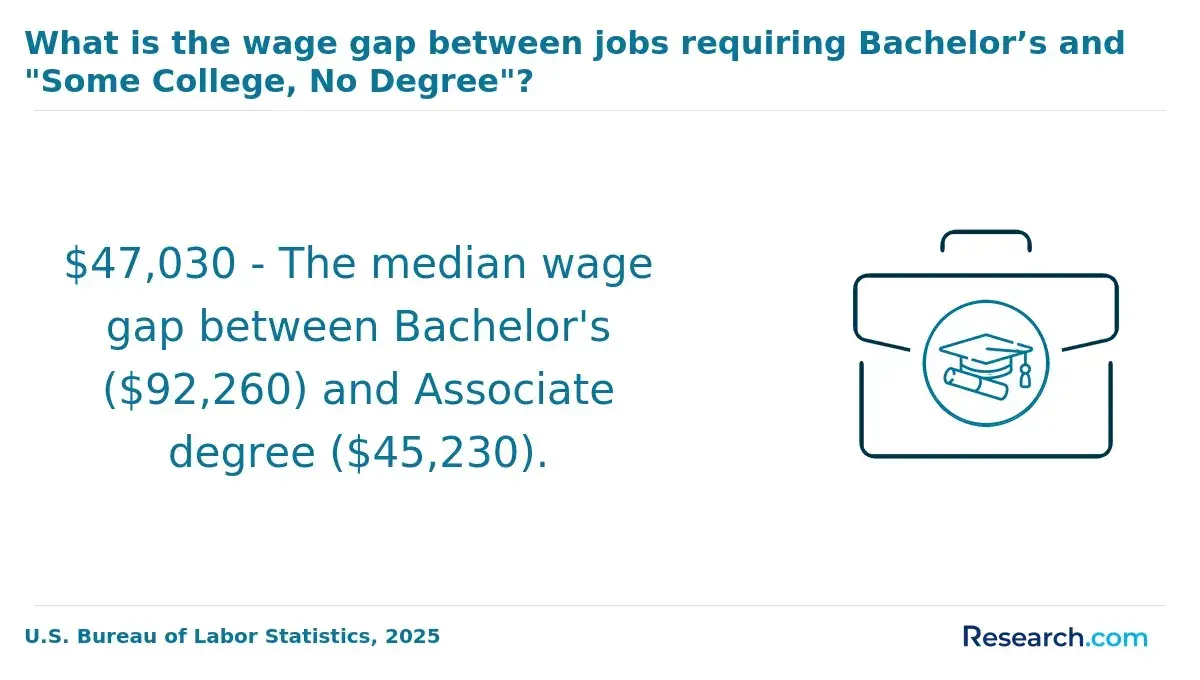
The job market shows a growing preference for candidates with a degree in data analytics, especially in competitive roles where formal credentials signal a solid foundation. While hands-on experience remains highly valued, many employers now require or favor applicants with academic qualifications that demonstrate a deep understanding of key concepts. This trend reflects the increasing expectation for structured education that covers statistical methods, visualization, and machine learning comprehensively.
Factors influencing this preference include access to internships and recruitment programs tied to degree programs, exposure to current industry practices, and the credibility conferred by accredited institutions. Candidates with degrees also benefit from networking opportunities with faculty and professionals that may not be as readily available to self-taught individuals. However, professionals without degrees can still gain recognition through strong portfolios, certifications, and proven skills with essential tools like SQL and Python, reinforcing that practical expertise remains crucial.
Ultimately, whether to pursue a degree depends on individual career goals and circumstances. For those aiming for roles in well-established firms or specialized fields, a degree can streamline entry and advancement. Meanwhile, others may succeed by building experience and skills independently, particularly if they can demonstrate proficiency through projects or certifications. Both paths require dedication and strategic effort to thrive in the evolving data analytics landscape.
One professional who completed an online data analytics bachelor's program shared his perspective. He described feeling overwhelmed initially, juggling coursework with work and family demands, but appreciated the structured curriculum that built his confidence gradually. He noted the challenge of applying theoretical knowledge in real-world settings early on but found that capstone projects and internships played a vital role in bridging that gap. "Having the degree opened doors, but showing what I could do with the tools made the difference," he explained, highlighting the combined value of formal education and practical experience.
Certain jobs in data analytics require candidates to hold a formal degree, while others may prioritize practical skills and job readiness over academic credentials. This difference shapes the employment landscape for those with a data analytics degree versus those relying primarily on experience. Below are some common career options to consider for people with a degree in this field.
- Data Analyst: This role involves interpreting raw data and generating actionable insights through data cleaning, statistical testing, and dashboard creation. Employers usually prefer applicants with a data analytics degree for the strong analytical rigor and foundational knowledge it provides, though candidates with a strong portfolio and certifications can sometimes enter at entry level.
- Business Intelligence Analyst: Focused on using data strategically to improve business decisions, this position blends technical analytics skills with industry-specific knowledge. A formal degree is often required because the role demands both business and technical expertise, but experienced professionals with in-depth knowledge of data tools may bypass the degree prerequisite.
- Data Engineer: Data engineers build and maintain the infrastructure for efficient data storage and retrieval, requiring expertise in databases, ETL pipelines, and cloud services. The technical depth means a data analytics degree or related education is usually mandatory, though some self-taught specialists with proven skills through projects and open-source contributions may secure roles.
- Quantitative Analyst: Common in finance and risk management, these analysts need strong mathematical skills and programming experience. Academic credentials are highly valued to ensure mastery of complex quantitative methods, although exceptional experience complemented by certifications can sometimes offer alternative paths.
- Operations Analyst: Responsible for streamlining company processes by analyzing performance data and suggesting improvements, this role favors candidates with structured analytical training like a data analytics degree. However, those with robust practical experience in process optimization may also qualify in some companies.
When comparing data analytics jobs requiring a degree with those accessible through experience alone, formal education remains a significant advantage in many career paths. According to a recent study, 68% of employers prefer candidates with formal data analytics education for more consistent foundational knowledge. Students interested in expanding their credentials might also explore related advanced studies, such as an MBA no GRE program, which can complement a data analytics degree by enhancing business acumen and leadership skills.
Data analytics degree holders often benefit from structured networking opportunities unavailable to those relying solely on experience or self-teaching. Universities provide access to faculty connections, alumni networks, and organized internships, creating pathways to referral-based hiring. In contrast, non-degree professionals must be more proactive, leveraging platforms like LinkedIn, personal contacts, or industry events to make connections and prove their skills.
Key resources for degree holders include mentorship programs, university-backed career fairs, and recognition from hiring companies, which can accelerate job placement. Those without degrees may depend on their immediate networks or workplace relationships, often facing a steeper climb to gain visibility and credibility. Both groups can access industry conferences and online communities, but the networks tied to formal education typically offer a more direct and trustworthy route to jobs.
The data analytics field strongly favors candidates who bring trusted referrals and verified credentials, making networking crucial for many roles. While self-taught professionals can succeed, building a network equivalent to that of degree graduates generally requires more effort and time. Thus, formal education often provides an advantage by opening doors to established connections and support structures recognized by employers.
A degree in data analytics can open doors to positions that may require formal credentials, often making candidates more suitable for advanced roles. This academic background can increase eligibility for leadership or specialized jobs within the industry. Key reasons why holding a degree influences promotion prospects include:
- Technical validation: A degree confirms mastery of analytical frameworks and complex methodologies, giving employers confidence in a candidate's expertise, which is crucial when considering them for higher responsibilities.
- Professional networks: Academic programs connect students to internship opportunities and industry contacts, offering practical experience and relationships that support career growth beyond what self-study alone might provide.
- Leadership readiness: Degrees often incorporate training in communication and project management, equipping graduates with essential soft skills that enhance their ability to manage teams and lead initiatives effectively.
While experience and results remain valuable, having a formal education in data analytics tends to accelerate promotion chances by validating both technical skills and leadership potential in ways that many employers prioritize for upward mobility.
Professionals holding a data analytics degree generally earn about 20% more than those relying solely on experience or self-teaching. Entry-level salaries for degree holders typically start near $65,000 annually, compared to approximately $54,000 for non-degree professionals. Over time, the income gap widens, as degree holders often access higher-paying senior or specialized roles such as data scientist or analytics manager, reaching salaries over $110,000. Non-degree holders may encounter slower wage growth and potentially a lower income ceiling.
However, improving income potential is attainable for individuals without degrees by acquiring certifications, learning advanced programming languages, or gaining expertise in fields like machine learning and big data. Employers tend to favor candidates with data analytics degrees for leadership roles, which usually come with premium compensation, but demonstrated skills can also advance career growth.
Constantly upskilling is vital for making professionals harder to replace during economic downturns or reorganizations. For those considering further education, exploring affordable master's degrees online can be a practical option to bolster qualifications while continuing to build experience.
The average tuition for a data analytics degree typically ranges from $20,000 to $50,000, depending on the institution and program length. Graduates with this degree often see salary increases of 20-30% compared to peers relying solely on work experience or self-teaching. This improvement in income generally allows degree holders to recover their educational investment within 3 to 5 years through higher wages and quicker career advancement.
Financial aid and scholarships targeted at STEM and analytics students can significantly reduce upfront costs, improving the return on investment (ROI). Students can further maximize ROI by enrolling in accelerated bachelor's or master's programs, shortening the time spent in school. Gaining practical experience through paid internships or cooperative education during study also boosts employability and income potential.
While hands-on experience remains valuable, a data analytics degree provides structured knowledge and credentials increasingly valued by employers in data-driven industries. These advantages help graduates enter the workforce with a competitive edge, making the overall investment in education worthwhile for many pursuing this career path.
As AI and automation rapidly change the data analytics field, job roles become more specialized and dynamic, causing fluctuations in demand and increased competition. Those with degrees in data analytics often have an advantage because their education usually covers a wide range of relevant topics, such as machine learning, data engineering, and ethical implications. This structured foundation equips degree holders to adapt more easily when technologies evolve or economic uncertainties arise. In contrast, professionals relying solely on experience or self-learning might master specific tools but often lack the comprehensive theoretical background needed to remain flexible over time.
Degree holders also benefit from emerging trends like the rising importance of data governance and interpretability, areas less vulnerable to automation. Studies indicate that having a formal data analytics education can reduce the risk of job displacement by about 22% compared to those without a degree, especially during economic downturns or rapid technological shifts. Employers tend to prefer candidates with formal credentials that suggest a broader skill set and an ability to handle the evolving landscape of analytics work.
The opinion of a professional who completed an online data analytics bachelor's program highlights the personal impact of such preparation. He shared that navigating the program while working full-time was stressful, but the coursework gave him confidence to tackle complex challenges that automation could not replace. Reflecting on recent layoffs in his industry, he noted, "Having this degree made me feel more secure because I understood not just the tools but the bigger picture behind data decisions." His experience suggests that formal education not only enhances skills but also offers reassurance amid a volatile job market.
What Graduates Say About Their Data Analytics Degrees
- Camille: "Having a degree in data analytics truly set me apart in the job market. The hands-on experience and real-world projects I completed made me feel prepared and confident from day one. It wasn't just about landing the job; the degree has continually opened doors for promotions and salary growth."
- Samuel: "Looking back, my data analytics degree was a crucial foundation for my career development. It taught me not only technical skills but also how to think critically about data, which employers highly value. The competitive edge I gained has made a significant difference in how quickly I advanced and adapted in this fast-paced industry."
- Adam: "I always recommend pursuing a data analytics degree to anyone serious about entering the field. For me, it was the difference between basic knowledge and professional expertise. This degree helped me secure a better starting position and gave me the tools necessary for ongoing career advancement and salary improvements."
Other Things You Should Know About Data Analytics Degrees
In 2027, a data analytics degree offers structured learning and exposure to cutting-edge tools, theories, and methods. Experience alone provides practical, hands-on skill development. Combining both can enhance adaptability, potentially boosting career prospects and salary.
Employers frequently prioritize problem-solving abilities as a key factor for success in data analytics roles. While formal education can provide a solid framework for approaching problems analytically, demonstrated practical problem-solving through experience is highly regarded. Often, candidates who combine both a data analytics degree and proven problem-solving skills have an advantage in hiring.
No. Certifications such as Google Data Analytics or Microsoft Power BI can help, but many employers still require a bachelor’s degree for analyst roles. A degree signals 120 semester credits, while certifications usually support specific tools and can strengthen a résumé for entry-level hiring.
Yes, self-taught data analysts can attain leadership positions, but it typically requires consistent demonstration of skills, results, and strategic thinking. Formal education may streamline entry into leadership by providing recognized credentials and exposure to management principles. Nonetheless, leadership is often earned through experience, communication ability, and impact rather than education alone.
- Guide to Data Analyst Careers: Skills, Paths, and Salary Insights https://www.investopedia.com/articles/professionals/121515/data-analyst-career-path-qualifications.asp
- Data Analytics Salary and Career Paths | Teach.com https://teach.com/online-ed/short-courses/online-data-science-bootcamp/become-data-analyst/data-analytics-career-salary-outlook/
- The Role of Data and Insight in Enhancing Employability in UK Higher Education Institutions — HE Professional https://heprofessional.co.uk/edition/the-role-of-data-and-insight-in-enhancing-employability-in-uk-higher-education-institutions
- Why Students Choose Data Science Training Over Self Study https://vensterschool.in/blogs/data-science-training-vs-self-learning/
- Data Analyst Job Outlook 2026: Growth, Salaries & Career Guide https://skillifysolutions.com/blogs/data-science/data-analyst-job-outlook/
- Data Science ROI: How to Calculate and Maximize It | DataCamp https://www.datacamp.com/blog/data-science-roi
- Data Analyst Job Outlook 2025: Trends, Salaries, and Skills – 365 Data Science https://365datascience.com/career-advice/data-analyst-job-outlook-2025/
- Leave your comment https://vorecol.com/blogs/blog-the-impact-of-data-analytics-on-career-pathway-planning-168719
- Self-Learning vs Degree: Best Path for Data Analytics https://www.edept.co/blogs/self-learning-vs-degree-best-path-for-data-analytics
- Quantifying the ROI of Data Analytics Initiatives https://datahubanalytics.com/quantifying-the-roi-of-data-analytics-initiatives/