2026 What Can You Do with a Program Management Doctorate? Careers, Salaries, Academic Roles, and Industry Paths

Co-Founder and Chief Data Scientist
A doctorate in Program Management can open doors to executive leadership, applied research, consulting, and teaching, but it is not the right investment for every career goal. The U. S. Bureau of Labor Statistics projects employment for project management specialists to grow 7% from 2023 to 2033, reflecting continued demand for leaders who can coordinate complex work. This guide explains what graduates can do with the degree, which roles may value it, how salaries compare, and how to decide whether an online or hybrid doctorate fits your long-term plan.
Key Things to Know About Online Program Management Doctorate Career Outcomes
- A Program Management doctorate is most useful for professionals targeting senior strategy, portfolio, transformation, consulting, or academic roles rather than entry-level project management jobs.
- BLS May 2024 wage data shows relevant leadership roles vary widely, from a median of $100,750 for project management specialists to $171,200 for computer and information systems managers and $206,680 for chief executives.
- Cost and time should be evaluated carefully: NCES graduate tuition data published in 2024 shows average annual graduate tuition and required fees of $12,596 at public institutions and $29,931 at private nonprofit institutions, before living costs, technology fees, books, or lost work time.
What skills do you gain from Program Management doctorate degrees?
A Program Management doctorate develops skills beyond managing individual projects. The focus is usually on aligning multiple projects, programs, budgets, stakeholders, risks, data systems, and organizational goals so that large initiatives deliver measurable value.
Students who enter these programs often already have project, operations, military, government, engineering, healthcare, IT, or business experience. If you are earlier in your education journey, a project manager bachelor degree is usually a more appropriate starting point than a doctorate.
The table below summarizes the skills a doctoral program can build and how each skill translates into career value. This matters because employers rarely hire based on the word "doctorate" alone; they hire when the credential signals advanced judgment, evidence-based decision-making, and leadership capacity.
| Skill area | What it means in a doctoral program | How it supports career outcomes |
| Program and portfolio governance | Designing oversight systems for multiple related initiatives, budgets, risks, and deliverables | Useful for PMO director, enterprise program director, portfolio executive, and transformation leadership roles |
| Strategic alignment | Connecting programs to business strategy, mission goals, public outcomes, or operational priorities | Helps professionals move from execution roles into senior decision-making roles |
| Applied research | Using qualitative, quantitative, or mixed methods to study organizational problems | Valuable for consulting, internal advisory roles, academic publishing, and evidence-based leadership |
| Risk and complexity management | Evaluating uncertainty across stakeholders, suppliers, regulations, technology, and timelines | Important in healthcare, defense, construction, IT modernization, cybersecurity, and infrastructure programs |
| Change leadership | Leading people through restructuring, digital transformation, adoption barriers, and process redesign | Supports executive roles where technical project control is not enough |
| Data-informed decision-making | Using dashboards, metrics, evaluation models, and performance evidence to guide program choices | Increasingly important as AI and analytics reshape planning, reporting, and resource allocation |
One current trend is the shift from task-based project control toward strategic program leadership. AI tools can now automate scheduling, reporting, risk flagging, and documentation, which means doctoral-level value is less about producing status reports and more about interpreting evidence, managing uncertainty, and guiding complex organizational decisions.
What specializations can you pursue within Program Management doctorate degrees?
Program Management doctorates may be offered as a PhD, Doctor of Business Administration, Doctor of Management, Doctor of Strategic Leadership, Doctor of Project Management, or a related applied doctorate. The exact title matters less than the curriculum, dissertation or capstone model, faculty expertise, accreditation, and fit with your target role.
Specialization choice is one of the biggest career-shaping decisions in a doctoral program. The table below shows common specialization directions and the kinds of outcomes they tend to support.
| Specialization direction | Best fit for | Potential career paths |
| Enterprise program and portfolio management | Professionals who want broad career flexibility across industries | PMO director, portfolio manager, enterprise program leader, strategy execution executive |
| Technology and digital transformation | IT, cybersecurity, software, data, or systems professionals | Digital transformation director, technology program executive, IT portfolio leader, systems modernization consultant |
| Healthcare program leadership | Healthcare administrators, clinical operations leaders, and quality improvement professionals | Healthcare program director, quality and safety executive, population health program leader |
| Government, defense, and acquisition | Public sector, military, contractor, and compliance-focused professionals | Acquisition program leader, federal program manager, defense contractor executive, policy implementation consultant |
| Construction, engineering, and infrastructure | Professionals managing capital projects, facilities, energy, transportation, or engineering programs | Capital program director, infrastructure portfolio leader, engineering program executive |
| Organizational change and leadership | Professionals focused on people, culture, transformation, and adoption | Change management executive, transformation consultant, organizational effectiveness leader |
A broad specialization usually offers more mobility if you may switch industries later. A niche specialization can be stronger if you already work in a regulated or technical field where domain expertise carries real hiring weight, such as defense acquisition, healthcare quality, or enterprise technology transformation.
Students comparing business-oriented alternatives may also look at an MBA operations management online program. An MBA is often better for professionals seeking faster management advancement, while a doctorate is usually better for those pursuing executive authority, consulting credibility, academic work, or original applied research.
Are online Program Management doctorate programs respected by employers?
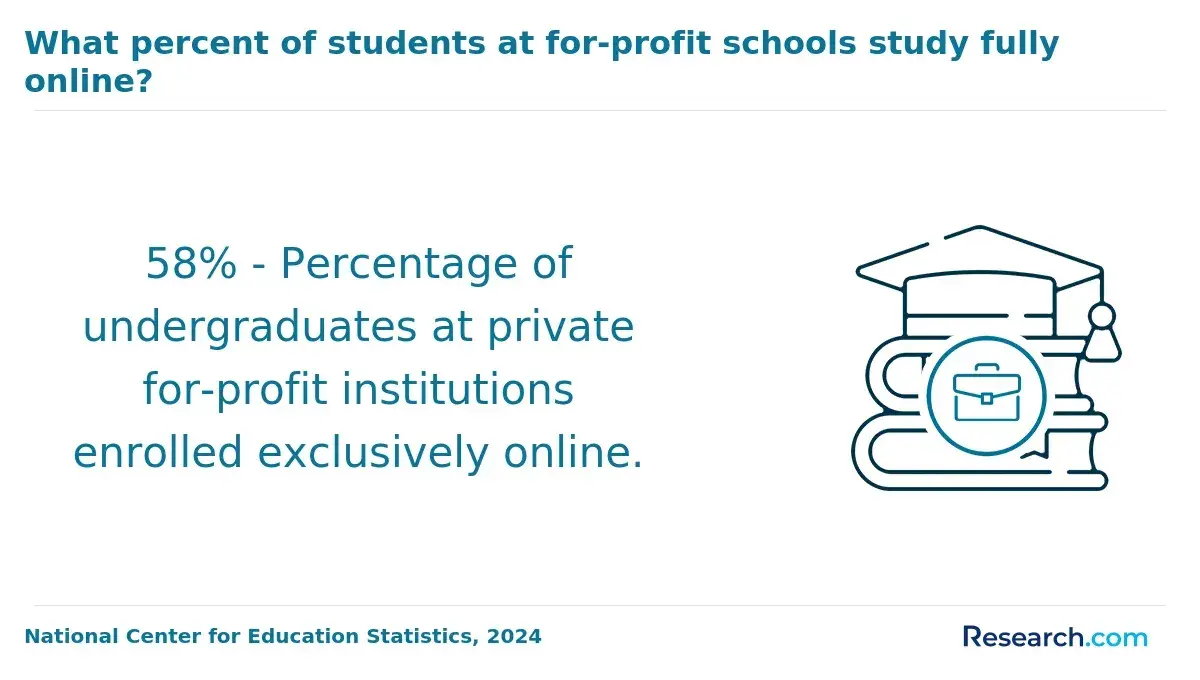
Online Program Management doctorates can be respected by employers when they come from properly accredited institutions and when the graduate can connect the degree to measurable leadership results. Employers tend to care less about whether coursework was online and more about institutional credibility, curriculum rigor, research quality, professional experience, and whether the program required serious doctoral-level work.
Online doctoral education has become more familiar to employers because many working professionals cannot relocate or pause their careers for several years. The strongest online programs usually combine asynchronous coursework with live seminars, research mentoring, residency requirements, applied projects, or dissertation supervision.
Readers considering doctoral study sometimes compare it with a lower-cost or earlier-stage project management degree online. That comparison is useful because a doctorate should not be chosen simply because it is the highest credential; it should solve a specific career problem that a bachelor's or master's degree cannot solve.
Use the comparison below to evaluate whether online or hybrid delivery fits your goals. The format should support your learning style and professional network, not just your schedule.
| Format | Strengths | Limitations | Best fit |
| Fully online | Most flexible for full-time professionals, military personnel, consultants, and parents | May require more self-discipline and intentional networking | Experienced professionals who can apply coursework directly to their workplace |
| Hybrid | Combines flexibility with in-person residencies, faculty access, and peer networking | May add travel costs and scheduling constraints | Students who want stronger cohort relationships or structured research support |
| Campus-based | More direct access to faculty, research groups, teaching opportunities, and campus resources | Less practical for many mid-career professionals | Students targeting full-time academic research, traditional faculty roles, or intensive campus engagement |
The main red flag is a program that markets convenience but provides weak research supervision, unclear dissertation expectations, limited faculty credentials, or vague accreditation information. Before enrolling, verify institutional accreditation through recognized U.S. accreditation channels and ask how doctoral students are supported through proposal development, data collection, writing, and completion.
What industries value professionals with Program Management doctorate degrees?
Program Management doctorate holders are most valued in industries where failure is expensive, programs are complex, and leadership requires more than technical scheduling. These sectors often need professionals who can manage cross-functional work, regulatory pressure, stakeholder conflict, risk, and long implementation timelines.
BLS project management specialist employment is projected to grow 7% from 2023 to 2033, which indicates steady national demand for advanced project and program capability. For doctoral-level professionals, the strongest opportunities are usually not ordinary project coordinator roles but leadership positions overseeing enterprise programs, transformation portfolios, or mission-critical initiatives.
The table below highlights industries where the credential can be especially relevant. Demand depends on your prior experience, certifications, security clearance, technical background, and ability to show results.
| Industry | Why program management expertise matters | Examples of doctoral-level value |
| Information technology and cybersecurity | Large technology programs involve integration, risk, vendors, compliance, and rapid change | Leading digital transformation, cloud migration, enterprise systems, cybersecurity portfolios, or AI governance programs |
| Healthcare | Health systems manage quality improvement, patient safety, regulatory compliance, and operational redesign | Designing evidence-based improvement programs and evaluating outcomes across departments |
| Defense, aerospace, and federal contracting | Programs often involve acquisition rules, high budgets, technical complexity, and long timelines | Managing acquisition portfolios, contractor performance, policy implementation, and mission assurance |
| Construction, infrastructure, and engineering | Capital programs require coordination across design, permitting, procurement, safety, finance, and stakeholders | Overseeing multi-project infrastructure portfolios and risk governance systems |
| Finance, insurance, and enterprise operations | Transformation programs affect compliance, technology, customer systems, and operational resilience | Leading process redesign, merger integration, regulatory change, or enterprise risk programs |
| Higher education, nonprofit, and public agencies | Mission-driven organizations must manage grants, programs, budgets, evaluation, and stakeholder accountability | Directing funded initiatives, public service programs, institutional change, or research-informed evaluation systems |
AI is also changing what "program management" means in these industries. Employers increasingly value leaders who can decide which AI-enabled tools to trust, how to govern automated reporting, how to protect data, and how to keep human stakeholders aligned when technology changes workflows.
What executive or leadership roles can Program Management doctorate degrees qualify you for?
A Program Management doctorate can support executive or senior leadership advancement, especially when paired with substantial professional experience. The degree alone rarely qualifies someone for an executive role; it is most powerful when it strengthens an already credible record of leading people, budgets, strategy, and measurable outcomes.
The table below uses BLS May 2024 wage data for U.S. occupations that commonly overlap with advanced program leadership. These figures describe occupation-level medians, not guaranteed salaries for doctorate holders.
| Role or role family | Relevant BLS median annual wage | How a Program Management doctorate may help |
| Chief executive | $206,680 | Supports strategic credibility for leaders overseeing enterprise transformation, major initiatives, or complex operating units |
| Computer and information systems manager | $171,200 | Useful for technology leaders managing IT portfolios, digital transformation, systems modernization, or AI implementation programs |
| Architectural and engineering manager | $167,740 | Relevant for leaders coordinating engineering, infrastructure, product development, or technical program portfolios |
| Training and development manager | $125,040 | Helpful for leaders designing enterprise learning, change adoption, and capability-building programs |
| General and operations manager | $101,280 | Supports broader operational leadership, process improvement, and cross-functional execution roles |
| Project management specialist | $100,750 | Represents a common occupational base, though doctoral graduates often aim above individual project execution roles |
The best-fitting executive roles usually involve strategy execution rather than pure administration. Examples include vice president of program management, chief transformation officer, enterprise PMO leader, director of strategic initiatives, portfolio governance executive, and senior director of operational excellence.
This path makes sense if you already have leadership experience and want to compete for roles where a doctorate strengthens your authority. It makes less sense if you are hoping the degree will compensate for limited management experience, because employers often prioritize demonstrated leadership results over credentials alone.
Are there academic careers available for Program Management doctorate holders?
Yes, Program Management doctorate holders may pursue academic careers, but the best path depends heavily on the type of doctorate, research record, teaching experience, and institution type. A PhD is usually the most research-oriented route, while a DBA, Doctor of Management, or other applied doctorate may fit practitioner-scholar teaching roles, professional programs, and applied research environments.
BLS reported a median annual wage of $83,980 for postsecondary teachers in May 2024. That figure is useful as a broad benchmark, but academic pay varies significantly by discipline, institution, rank, contract length, tenure status, and whether the role is full-time, adjunct, or administrative.
Academic opportunities can include several different types of work. The list below shows common options and what each typically requires.
- Full-time faculty roles: Often require strong research preparation, teaching experience, publications, and alignment with a school's business, management, leadership, or project management curriculum.
- Adjunct teaching: Often accessible to experienced practitioners with doctorates, especially in online business, leadership, management, or project management programs.
- Program director or academic administrator roles: May combine curriculum oversight, accreditation work, student support, faculty coordination, and industry partnership development.
- Applied research roles: May involve grant-funded evaluation, organizational studies, workforce development, or program effectiveness research.
The trade-off is important: academic work may offer intellectual freedom, teaching impact, and long-term professional identity, but it may pay less than senior corporate leadership or consulting. If your main motivation is compensation, compare academic roles against industry roles before committing to a dissertation topic or doctoral format.
Are there consulting opportunities for Program Management doctorate holders?
Consulting can be one of the most practical uses of a Program Management doctorate, especially for professionals with a strong industry background. Clients often seek consultants who can diagnose complex delivery problems, design governance systems, evaluate programs, and advise executives on transformation risk.
BLS reported a May 2024 median annual wage of $101,190 for management analysts, a category that includes many consulting-related roles. Independent consultants and partners may earn more or less depending on specialization, reputation, client base, billable rates, and business development ability.
Consulting makes the strongest use of the doctorate when the degree supports a clear advisory niche. Common consulting opportunities include the following areas.
- Enterprise PMO design and maturity assessment for organizations that need better oversight of projects, budgets, and benefits realization.
- Digital transformation consulting for companies implementing cloud systems, AI tools, cybersecurity controls, automation, or enterprise platforms.
- Program evaluation consulting for nonprofits, universities, healthcare systems, and government agencies that need evidence of impact.
- Risk, governance, and compliance consulting for regulated industries such as defense, healthcare, finance, and infrastructure.
- Change management consulting for organizations struggling with adoption, stakeholder resistance, restructuring, or workforce capability gaps.
The choice between consulting and a full-time leadership role depends on your risk tolerance and preferred work style. Consulting may offer variety, autonomy, and higher upside, but it also requires selling, networking, proposal writing, and managing inconsistent revenue. A full-time role may provide steadier income, organizational authority, benefits, and deeper ownership of long-term outcomes.
What nonprofit or public sector roles are open to Program Management doctorate holders?
Program Management doctorate holders can also find meaningful opportunities in nonprofit, public sector, and mission-driven work. These roles may not always match corporate compensation, but they can offer strong alignment for professionals who want to lead public programs, improve services, manage grants, or evaluate social impact.
In public and nonprofit settings, the doctorate is most valuable when it helps leaders solve complex implementation problems. That may include coordinating multiple agencies, complying with funder requirements, measuring outcomes, managing community stakeholders, or improving the efficiency of limited resources.
The table below compares common public and nonprofit pathways. Use it to think about fit, because "mission-driven" work can involve very different responsibilities depending on the organization.
| Path | Typical responsibilities | When the doctorate adds value |
| Federal, state, or local program leadership | Overseeing public initiatives, contracts, budgets, reporting, and stakeholder coordination | When programs require evaluation, policy implementation, risk governance, or interagency coordination |
| Nonprofit program executive | Managing service portfolios, grant-funded programs, teams, partners, and outcome reporting | When funders expect evidence of impact and strong accountability systems |
| Public health or healthcare program administration | Coordinating quality, access, population health, prevention, or community health initiatives | When leaders must combine operations, data, regulation, and community engagement |
| Higher education program administration | Managing academic initiatives, workforce programs, research centers, or institutional change projects | When roles require curriculum strategy, assessment, accreditation awareness, and organizational leadership |
| Grant and evaluation leadership | Designing evaluation frameworks, tracking performance metrics, and reporting outcomes | When doctoral research methods directly improve funding competitiveness and program accountability |
This path makes sense if you are motivated by impact, public value, and systems improvement. It may be less ideal if your primary goal is maximizing salary quickly, because many nonprofit and government salary structures are constrained by budgets, pay grades, or grant funding.
How do Program Management doctorate degrees impact long-term earning potential?
A Program Management doctorate may improve long-term earning potential, but the return depends on how strategically the degree is used. It is usually not a short-term salary booster; it is a credential that can strengthen access to higher-responsibility roles, consulting authority, academic options, and executive credibility over time.
BLS education-pay data published in 2024 reported median weekly earnings of $2,109 for workers with a doctoral degree and $1,737 for workers with a master's degree. Annualized, that is approximately $109,668 versus $90,324, but this is an all-field labor market comparison, not a Program Management-specific promise.
Cost is the other side of the ROI equation. NCES graduate tuition data published in 2024 reported average annual graduate tuition and required fees of $12,596 at public institutions and $29,931 at private nonprofit institutions, before expenses such as books, technology fees, residencies, travel, and time away from work.
The table below shows the main factors that shape whether the degree pays off. It is more useful than asking whether the doctorate is "worth it" in general, because ROI depends on career context.
| ROI factor | Why it matters | How to evaluate it |
| Current career level | Mid-career and senior professionals often gain more immediate value than early-career students | Ask whether the doctorate helps you compete for roles you are already close to qualifying for |
| Employer support | Tuition assistance, military benefits, reimbursement, or professional development funding can reduce financial risk | Confirm annual caps, grade requirements, service commitments, and tax implications |
| Target role salary range | Executive, consulting, technical leadership, and academic roles have very different pay structures | Compare real job postings in your region and industry rather than relying only on national medians |
| Program duration | Longer completion time increases tuition exposure and opportunity cost | Ask for median time to completion and dissertation continuation policies |
| Research topic alignment | A dissertation or capstone can become a career asset if it matches your professional niche | Choose a topic that can support consulting, promotion, publication, or organizational impact |
The degree has the strongest earning logic when it helps you move into higher-scope work: larger budgets, more employees, enterprise-level accountability, consulting retainers, or faculty-administrator roles. It has weaker ROI when pursued without a defined career target, when funded entirely with high debt, or when the program's reputation is unlikely to matter in your target labor market.
How can you assess if a doctorate degree in Program Management is aligned with your career goals?
The best way to assess fit is to start with the job you want, then work backward to the credential, format, specialization, cost, and timeline. A Program Management doctorate is usually aligned with your goals if it solves a specific career barrier, such as moving from project execution into enterprise leadership, building consulting authority, qualifying for teaching, or conducting applied research in your field.
Some professionals discover that a doctorate is more education than they need. If speed is the priority, an accelerated project management degree, graduate certificate, MBA, or professional certification may be a better near-term move.
Use the steps below to make a practical decision before applying. These steps are especially important because doctoral programs require sustained motivation, research discipline, and financial planning.
- Define your target outcome first: name the role, sector, salary range, and level of authority you want within the next five to ten years.
- Review actual job postings: look for whether employers request a doctorate, prefer one, or care more about experience, certifications, security clearance, technical expertise, or prior executive responsibility.
- Compare doctorate types: decide whether a PhD, DBA, Doctor of Management, or other applied doctorate best matches your research and career goals.
- Verify accreditation and institutional credibility: confirm the school's accreditation status, doctoral faculty qualifications, and employer recognition in your field.
- Calculate total cost: include tuition, fees, books, residencies, travel, financing costs, and potential income trade-offs.
- Ask about completion support: request data or clear explanations about dissertation advising, milestone timelines, writing support, and continuation fees.
- Choose a specialization strategically: select a concentration that supports your target labor market, not only a topic you personally enjoy.
- Plan how to use the degree before graduation: identify promotion targets, consulting offers, teaching opportunities, publications, conference presentations, or internal transformation projects.
Common mistakes include enrolling without a target career path, assuming all online doctorates carry the same reputation, underestimating the dissertation workload, choosing a niche with limited demand, or expecting the credential alone to create executive opportunities. The safest approach is to treat the doctorate as a career amplifier, not a substitute for experience, relationships, leadership results, or marketable expertise.
A strong program should be able to answer direct questions about outcomes, faculty mentoring, research expectations, technology support, residencies, transfer policies, and total cost. If admissions staff cannot explain these details clearly, consider it a warning sign.
Other Things You Should Know About Program Management
No. A certification usually validates professional knowledge of project management practices, while a doctorate is an advanced academic or professional research degree. Many senior professionals use both: certifications can support practitioner credibility, and the doctorate can support leadership, research, consulting, or teaching goals.
Most doctoral programs require a master's degree, but requirements vary by institution. Some programs may consider applicants with a bachelor's degree and substantial professional experience, though they may require additional graduate coursework.
Many professional doctorates take about three to five years, depending on transfer credits, enrollment pace, dissertation progress, and program structure. Research-heavy PhD pathways may take longer, especially for students balancing full-time work.
It can, but only if the project meets ethical, academic, and confidentiality requirements. A workplace-based dissertation can be valuable when it solves a real organizational problem, but students should confirm data access, approval procedures, and publication limits before committing to the topic.
References
- I've done a PhD: Does that make me a 'project manager?' - PostGradual: The PhD Careers Blog https://phd-careers.co.uk/2023/03/20/ive-done-a-phd-does-that-make-me-a-project-manager/
- PhD or Advanced Degree to Consulting https://managementconsulted.com/phd-or-advanced-degree-to-consulting/
- Preparing for an Industry Role While Pursuing Your PhD | NotedSource https://notedsource.io/resources/blog/preparing-for-an-industry-role-while-pursuing-your-phd/
- Career paths in project management https://gradireland.com/careers-advice/business-consulting-and-management/career-paths-project-management
- A Deep Dive Into Ph.D. Employment Data from NSF https://www.christophertsmith.com/reflections/a-deep-dive-into-phd-employment-data-from-nsf
- Project Management Career Path | AIPM https://aipm.com.au/project-management-career-path/
- What Are the Career Options With a PhD in Business? https://www.ucumberlands.edu/blog/what-jobs-can-you-get-with-a-phd-in-business
- What Can you Do with a Doctorate in Business Administration? | UMGC https://www.umgc.edu/blog/what-can-you-do-with-doctorate-business-administration
- What Can You Do with a PhD in Education https://aituedu.org/what-can-you-do-with-a-phd-in-education/
- Career Opportunities After PhD in Management | Salary & Jobs After PhD https://indirauniversity.edu.in/blogs/career-opportunities-after-phd-in-management