2027 Urban Planning Degree Completion Programs for Working Adults
Audited and Verified:
Our Editorial and Data Verification Process
Research.com uses government datasets, official education statistics and primary institutional information to support its career and degree guides. Our review process checks factual accuracy, occupational definitions, source dates and the requirements associated with the credentials discussed.
How This Article Was Fact-Checked
Our editorial team verifies salary estimates, employment projections, education requirements and program information against original data providers and official organizations. Salary figures are checked against the relevant occupational definitions and reporting periods. Information about licensure, accreditation and required in-person training is reviewed separately.
Fact-checked and verified on:

Co-Founder and Chief Data Scientist
Working adults aiming to complete an urban planning degree often face complex challenges-balancing job demands, family responsibilities, and financial constraints. Many programs lack the flexibility or recognition of prior credits needed for these students to progress efficiently. Accreditation by reputable agencies and transfer credit policies significantly affect career outcomes and eligibility for professional licensure.
Research shows that urban planning graduates earn a median salary of $75,000 annually, with advanced credentials directly impacting promotion potential. This article explores how to evaluate urban planning degree completion programs tailored for working adults-highlighting key features such as scheduling formats, cost considerations, and accreditation to support informed decision-making and career advancement.
Key Things to Know About Urban Planning Degree Completion Programs for Working Adults
- Maximize credit for prior learning by submitting military or professional experience for ACE evaluation-over 60% of Urban Planning transfer students receive at least 30 credits this way.
- Choose programs accredited by Planning Accreditation Board or recognized by licensure boards to ensure employer acceptance and eligibility for certification exams.
- Working adults should explore federal aid, employer tuition assistance, and state grants specifically targeting degree completion to offset costs without full-time enrollment constraints.
What Are Urban Planning Degree Completion Programs, and Who Are They Designed For?
Urban planning degree completion programs offer tailored educational pathways for adults who began college but have not yet earned a bachelor's degree. Unlike traditional four-year or graduate programs, these programs employ accelerated pacing and flexible urban planning degree programs for adult learners, enabling students to finalize credentials more efficiently. They often utilize credit-for-prior-learning policies that recognize previous college work, military training, or professional experience-dramatically shortening time to graduation. These programs are specifically designed for working adults balancing career and family, featuring evening, weekend, or online classes to accommodate diverse schedules.
Such programs primarily serve adults with some college credit but no degree, military veterans benefiting from ACE-credited training programs, mid-career professionals pursuing promotions requiring advanced credentials, and career changers entering the urban planning field. The National Student Clearinghouse, the American Association of State Colleges and Universities (AASCU), and the Lumina Foundation underscore this pathway's growing importance in workforce development and educational access.
Prospective students should weigh program options carefully-maximizing credit for prior learning and ensuring employer and licensure recognition. Accessing financial aid remains critical, especially when exploring options among cheap online colleges that accept FAFSA. Urban planning degree completion programs represent a legitimate, streamlined credentialing path-balancing rigorous academics with adult learners' flexibility needs.
How Do Urban Planning Degree Completion Programs Differ From Traditional On-Campus Degree Programs?
Urban planning degree completion programs offer a markedly different experience than traditional on-campus formats-especially for working adults balancing education with careers and family. Their flexible scheduling benefits of urban planning degree completion programs for working adults include evening, weekend, online, or hybrid classes, paired with a high proportion of asynchronous coursework. This flexibility allows students to access lectures and complete assignments on their own time rather than being tied to fixed class schedules.
- Scheduling Formats: Completion programs prioritize nontraditional hours to accommodate adult learners, in contrast to traditional programs where weekday daytime classes predominate.
- Pacing Options: These programs often offer accelerated cohorts or self-paced enrollment, providing the option for quicker degree completion or extended timelines based on individual needs.
- Residency Requirements: Unlike the significant on-campus residency semesters required by traditional degrees, completion pathways minimize or eliminate residencies-limiting in-person attendance to brief orientations or intensive sessions if needed.
- Structural Accommodations: Features such as rolling or multiple annual start dates and streamlined advising-focused especially on transfer credits and prior learning assessments-help working adults maintain progress without career interruptions.
- Credit Transfer and Prior Learning: Completion programs are flexible in accepting prior college credits, military experience, or professional certificates, often applying more generous evaluation policies than traditional institutions. Veterans with American Council on Education (ACE)-accredited training benefit particularly here.
- Enrollment Trends: Data from the National Center for Education Statistics (NCES) and IPEDS illustrate steady growth in degree completion enrollments over the last decade, while traditional full-time residential programs have shown more static or declining numbers.
While the credential awarded-a Bachelor of Science or Bachelor of Arts in urban planning-is typically identical across formats, the completion program's design intentionally reduces disruption to employment and family life. This creates a distinctly different student experience, one that aligns well with mid-career professionals, veterans, and career changers seeking credential-gated opportunities.
Prospective students should evaluate programs for employer recognition, licensure alignment, and how to maximize credit for prior learning along with available financial aid options. For those interested in counseling-oriented urban planning tracks, exploring CACREP accredited programs may offer additional pathways that complement urban planning skills.
What Prior Credits and Experiences Count Toward a Urban Planning Degree Completion Program?
Urban planning degree completion programs for working adults often accept a range of prior learning and credits, but policies differ widely by institution. Transfer credits typically come from regionally accredited schools-credits from nationally accredited or unaccredited colleges are less likely to transfer. Military veterans benefit when programs honor training credits evaluated via the American Council on Education (ACE) registry, yet some programs may limit or refuse such credits without clear reasons. Professional certifications related to urban planning or connected fields may also earn credit after official review.
- Prior Learning Assessment (PLA): Many programs award credit for documented workplace learning and professional experience, verified through portfolios evaluated according to standards supported by the Council for Adult and Experiential Learning (CAEL). This credit recognition can significantly reduce time and tuition costs.
- Credit-by-Examination: Exams like CLEP and DSST allow adults to earn credit by demonstrating competence in specific subjects, though acceptance varies across programs.
- Transfer Evaluation: Requesting official transcripts and a pre-enrollment credit review is essential to ensure the maximum number of credits apply toward the degree.
- Accreditation and Fairness: Institutions that impose arbitrary credit caps or disregard AACRAO transfer guidelines should be approached cautiously to avoid lost credits and delays.
One professional who completed his urban planning degree shared, "Navigating credit transfer was daunting at first-I collected all my military and certification documents, but some schools rejected my ACE credits without explanation. After persistent follow-up and choosing a program that clearly honored my prior learning, I was able to graduate two semesters early. The PLA portfolio process was intense but worthwhile-it made me realize how much my on-the-job experience truly counted." His story underscores the impact of proactive credit evaluation and selecting programs with transparent transfer policies that respect diverse learning backgrounds.
Minimum GPA requirements for urban planning degree completion programs typically range between 2.0 and 2.5 on a 4.0 scale from previous college work, serving as a key threshold to demonstrate readiness for advanced study. However, some programs offer conditional admission for students with slightly lower GPAs-providing academic supports like tutoring or probationary enrollment to foster success.
Certain adult-focused institutions welcome applicants through open admission policies that prioritize relevant career experience-particularly for military veterans or professionals changing fields-allowing documented achievements to substitute traditional GPA standards. This flexible approach aligns with many programs accredited by regional bodies such as the Higher Learning Commission, which apply holistic review criteria, assessing GPA alongside letters of recommendation, personal essays, and years of applicable work experience to evaluate candidate preparedness.
Returning adult learners with a history of low academic performance often benefit from academic forgiveness or fresh-start policies that reset cumulative GPA calculations after a significant gap in enrollment. Prospective students should request a pre-admission academic evaluation from each program to gain clear insight into eligibility and transfer credit options before investing time in applications.
These GPA criteria for urban planning degree completion programs reflect the diverse pathways designed for working adults pursuing degree completion. To explore options and financing, consider reviewing affordable masters degrees tailored to adult learners balancing career and education goals.
Urban planning degree completion programs offer flexible scheduling options to accommodate adults working 40 or more hours weekly. These include evening cohorts, weekend-intensive classes, fully asynchronous online courses, and hybrid formats mixing online and in-person sessions. Programs typically recommend taking 6 to 9 credits each term to ensure consistent progress without overloading students balancing full-time jobs and personal commitments.
Many programs use a cohort learning model, where students move through core coursework as a set group. This structure enhances accountability and peer support, helping maintain motivation. It also allows students to plan their schedules several months ahead-an essential feature for managing work deadlines and family responsibilities.
Research from the National Student Clearinghouse Research Center demonstrates that working adults in cohort-based completion programs achieve higher persistence and graduation rates than peers in traditional enrollment settings. This evidence underscores how structured cohorts create a reliable and supportive learning environment that boosts student success.
Talking with a practicing professional who completed an urban planning degree highlighted these features' real-world impact. She reflected on juggling demanding work hours and family life while staying engaged with her cohort, which became a valuable support network. The structured schedule meant she could plan months in advance and avoid the stress of last-minute changes. "It wasn't easy," she noted, "but knowing the program was designed around people like me made all the difference in staying on track and finishing strong."
As of 2023, about 65% of adult learners in degree completion programs enroll fully online, while 25% choose hybrid formats that blend virtual and face-to-face learning, according to the NCES Integrated Postsecondary Education Data System. The Online Learning Consortium notes that the COVID-19 pandemic significantly boosted colleges' ability to offer robust online instruction in disciplines including Urban Planning.
- Synchronous Delivery: Live video sessions allow immediate interaction with instructors and peers. This format benefits those who value real-time feedback but may challenge adults managing irregular work schedules or across time zones.
- Asynchronous Delivery: Recorded lectures and self-paced coursework offer flexibility, fitting professionals with complex personal or work commitments. However, this can reduce opportunities for spontaneous engagement.
- Hybrid Models: Combining online coursework with required in-person sessions-such as workshops or residencies-these options suit learners seeking practical experience while retaining some scheduling flexibility, though geographic and timing demands may limit access.
Prospective students should ask enrollment advisors about course scheduling strategies for working adults and the extent of online versus on-campus curriculum delivery to select the format best aligned with their professional goals, learning preferences, and life circumstances.
Completion timelines for urban planning degree completion programs depend heavily on prior academic and experiential credits. Students entering with around 60 prior credits typically expect to finish within two to three years on a part-time schedule. Those transferring 90 credits-often juniors or seniors-may complete their degree in one to two years. Individuals leveraging formal prior learning assessments (PLA), including military training evaluated by ACE, can sometimes graduate in under a year if most requirements are met.
- Credit Transfer and PLA: Transfer credit and PLA are the primary factors speeding up completion. The more credits accepted, the fewer courses required, shortening time-to-degree. However, program and accreditation rules can restrict the number of transferable credits, which can extend timelines.
- Enrollment Status: Full-time enrollment or accelerated courses enable quicker graduation compared to part-time status, though accelerated formats demand higher intensity, which may challenge adults managing work and family.
- Fixed Requirements: Essential components like internships, capstone projects, or fieldwork often have set durations that cannot be shortened, serving as fixed milestones impacting overall completion time regardless of course pace.
- Financial Impact: Accelerating graduation significantly lowers total tuition and reduces opportunity costs from lost income, while enabling earlier access to career advancement and higher salaries-making time-to-completion a critical financial consideration beyond personal convenience.
- Program Transparency: Prospective students should obtain written data from programs detailing average completion times specific to their credit profile rather than relying on marketing claims, which commonly reflect the fastest possible scenarios benefiting only highly credentialed entrants.
Regional accreditation remains the most respected form of institutional accreditation-granted by agencies such as the Higher Learning Commission (HLC), the Middle States Commission on Higher Education, and the Southern Association of Colleges and Schools Commission on Colleges (SACSCOC). Employers, graduate schools, and the federal student aid system widely recognize regional accreditation as the benchmark for academic quality. Adults seeking an accredited urban planning degree completion program benefit because regional accreditation ensures credits are transferable and that credentials hold professional and academic weight.
Agencies like the Distance Education Accrediting Commission (DEAC) provide national accreditation, which is generally regarded as lower status than regional accreditation. Programs with only national accreditation may face significant limitations in credit transferability and can be viewed skeptically by employers and graduate schools. This distinction is crucial for those pursuing urban planning degrees who want to safeguard future education and career opportunities.
Though no single accreditor focuses exclusively on urban planning degrees, related agencies play an important role. For example, ABET accredits engineering and technology programs, ACBSP and AACSB accredit business programs, and CSWE accredits social work degrees. Having relevant programmatic accreditation can enhance licensure eligibility, improve hiring outcomes, and strengthen graduate school admissions for urban planning degree holders.
Beware of degree completion programs from institutions claiming accreditation from unrecognized or solely national agencies. Such credentials risk non-recognition by employers and licensing boards, leading to lost time, money, and stalled career advancement. Prospective students should independently verify accreditation status using the U.S. Department of Education's Database of Accredited Postsecondary Institutions and Programs (DAPIP) rather than relying solely on marketing.
Working adults evaluating degree programs should also consider how credit transfer policies, scheduling formats, and costs align with their goals. For those comparing options, some may find value in resources like the best online business degree guides, as business skills often complement urban planning careers.
Costs for urban planning degree completion programs vary widely based on institution type and credit requirements. Public regional universities typically charge between $300 and $600 per credit hour for in-state students, while private nonprofit institutions range from $600 to $1,200 per credit. For-profit schools may fall within the higher range but often include mandatory fees that add several hundred dollars per term. Beyond tuition and fees, students should budget for technology and materials expenses-generally $200 to $500 annually-and some programs require residencies or intensives, which may add $500 or more in travel and lodging costs. These figures reflect data from NCES and College Scorecard sources to paint a realistic urban planning degree completion program tuition cost picture.
- Tuition Variation: Public, private, and for-profit schools differ significantly in per-credit costs-as much as double between the most and least expensive options.
- Financial Aid Availability: Pell Grants are accessible to part-time adult learners pursuing urban planning degree completion program tuition costs, with amounts varying by enrollment intensity and income level.
- Employer Tuition Reimbursement: Many working adults offset expenses through employer programs-some covering large portions of tuition when coursework aligns with job responsibilities.
- Military and Veteran Benefits: Programs like the GI Bill and MyCAA support educational costs for eligible service members and military spouses, including urban planning degrees.
- Institutional Scholarships: Numerous schools offer scholarships specifically for non-traditional and adult learners, often based on merit, financial need, or professional experience.
- Tax Advantages: The Lifetime Learning Credit provides a tax credit for qualified education expenses; IRS Section 127 allows employer-provided educational assistance to be tax-free up to $5,250 annually-consulting a tax professional is recommended for personalized advice.
- Cost Comparison Strategies: Prospective students should evaluate program costs by factoring in credit transfer opportunities, employer reimbursements, and net tuition after aid-revealing sticker prices rarely reflect actual out-of-pocket expenses.
When researching options, working adults should also explore flexible scheduling formats and programs that accept extensive prior credits to maximize degree completion efficiency. Military veterans may find specific advantages combining ACE-credited training with GI Bill benefits. Additionally, to understand interdisciplinary opportunities-such as those linked to sustainability-some students explore related fields like environmental engineering degree online pathways aligned with their urban planning interests.
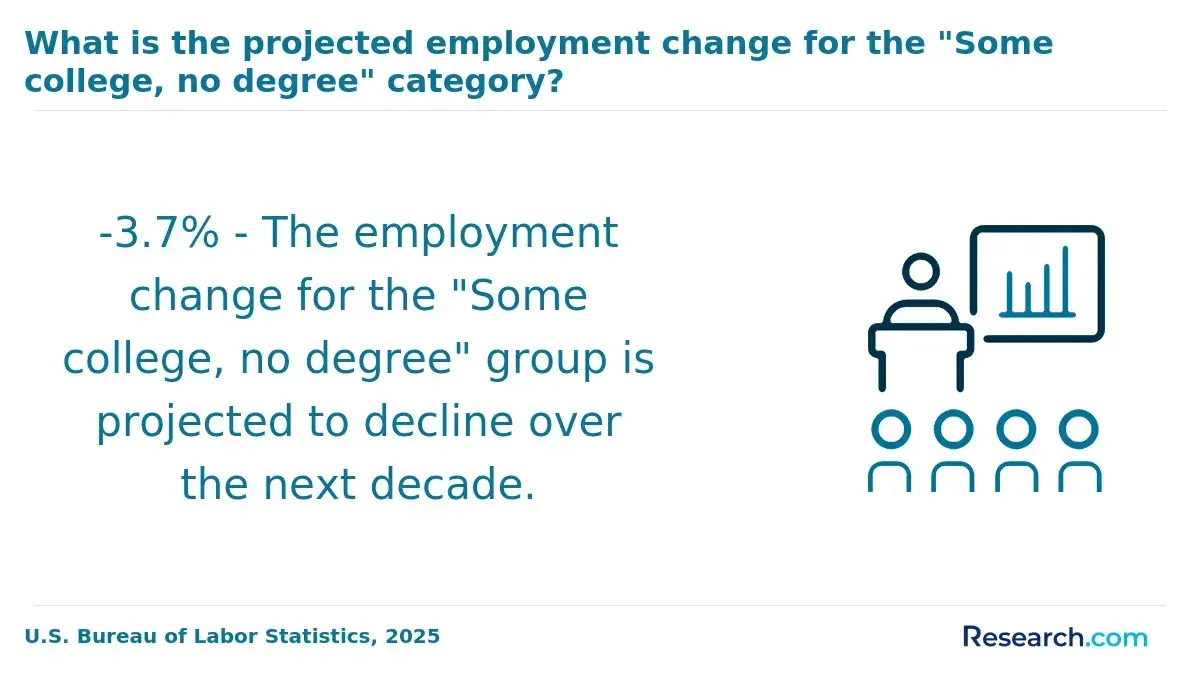
Data from sources like the College Scorecard and the Georgetown University Center on Education and the Workforce reveal that completing a bachelor's degree in urban planning yields a notable earnings advantage-often a 15% to 25% increase compared to those with some college but no degree. Median salaries for urban planning roles frequently exceed $60,000 annually, though figures vary by region and experience.
- Salary Growth: Graduates typically see a marked rise in wages after finishing their degree, positioning them for higher-paying roles.
- Promotion Access: Earning the degree unlocks eligibility for credential-restricted positions such as senior planner, project manager, or policy analyst, which often require a bachelor's as a baseline.
- Experience Integration: Working adults leverage their professional background to secure mid- or senior-level roles immediately after graduation rather than starting at entry level.
- Licensure Preparation: Prospective licensed urban planners must confirm that chosen programs meet relevant accreditation and curriculum standards before enrolling to ensure credential compliance.
- Career Transitions: Completion programs designed for adults changing careers provide tailored curricula to bridge knowledge gaps while earning recognized credentials that employers trust.
Working adults should focus on maximizing credit transfer for prior learning, verifying program accreditation aligned with licensure and employer expectations, and exploring financial aid options available specifically for degree completers. Evaluating programs against these criteria helps ensure the chosen pathway fits their professional aims, financial situation, and life commitments-thereby enhancing career outcomes and reducing time to completion.
Research from SHRM and NACE reveals that employers prioritize an institution's accreditation and the program's official recognition when evaluating degrees-regardless of whether the degree was finished through a completion program or prior learning assessments (PLA). The pathway taken to complete a bachelor's degree in urban planning rarely affects employer perceptions.
- Diploma Presentation: Diplomas from accredited schools for urban planning completion programs do not specify if a degree was earned via traditional or completion pathways. Graduates should list their degree as a standard bachelor's credential without highlighting the completion aspect on resumes or applications.
- Interview Framing: Candidates may choose to emphasize in interviews how completion programs cater specifically to adult learners-with accelerated formats and the integration of professional experience-demonstrating relevance and readiness for urban planning careers.
- Employer Scrutiny: Certain roles, especially federal jobs guided by OPM standards or licensed professions regulated by state boards, may require more detailed verification of a degree's completion method. Individuals in these sectors should confirm acceptability with licensing boards or HR departments prior to enrollment.
- Value in Private Sector: Most private-sector hiring managers in urban planning stress professional expertise, proven skills, and strong references over the degree's completion format, viewing the credential as a solid asset rather than a second-tier alternative.
What Graduates Say About Urban Planning Degree Completion Programs for Working Adults
- Tristan: "Completing the urban planning degree as a working adult was a transformative experience for me-especially because the program's flexible scheduling formats allowed me to balance coursework with my full-time job seamlessly. The clear credit transfer policies meant I didn't have to retake courses I'd already completed, saving me both time and money. Most importantly, the accreditation standards assured me that the credential would be recognized by employers and would genuinely advance my career prospects in a competitive field."
- Jessica: "I found the structural features of the urban planning completion program to be thoughtfully designed for professionals like me-every module felt relevant and immediately applicable in my day-to-day work. Reflecting on the cost considerations, I appreciated that the program was affordable without skimping on quality, making a return on investment feel completely achievable. After graduating, the career outcomes spoke for themselves-I landed a promotion within months and felt prepared to tackle complex urban challenges confidently."
- Christopher: "What struck me most about the urban planning degree completion program was its adherence to rigorous accreditation standards, which provided peace of mind about the program's credibility. The flexible scheduling allowed me to study at night and on weekends, fitting education around my busy life. I also appreciated the generous credit transfer policies that recognized previous coursework-this feature made the path to graduation quicker and less stressful, aligning perfectly with my professional and financial goals."
Other Things You Should Know About Urban Planning Degrees
Urban planning degree completion programs often provide a range of support services tailored to working adults. These include academic advising, tutoring, and career counseling designed to help students balance studies with professional and personal responsibilities. Many programs also offer flexible scheduling options such as evening, weekend, or online classes, as well as technology support for remote learning environments.
Yes, many urban planning degree completion programs are structured to allow earned credits to transfer toward graduate studies, especially if the program is offered by an accredited institution. Students interested in pursuing advanced degrees like a master's in urban planning or related fields should verify articulation agreements between schools to ensure smooth credit transfer. This flexibility helps working adults plan for long-term career advancement without losing prior academic progress.
Urban planning degree completion programs for working adults offer various flexibility options, such as online courses, evening classes, and part-time study plans. These options ensure that professionals can balance their work commitments and academic pursuits efficiently.
Yes. Many urban planning degree completion programs ask applicants to submit a portfolio, writing sample, or résumé that shows planning-related work, especially if they have prior professional experience. Some also require at least 24 to 60 transferable semester credits before admission.
- Top 25 Most Affordable Urban Planning Schools https://urbanplanningdegree.com/top-25-most-affordable-urban-planning-schools/
- Urban Planning Degree https://universitycompare.com/guides/subject/urban-planning-degree
- Career opportunities in the urban and regional planning sector after a Masterâs degree https://www.sciencespo.fr/ecole-urbaine/en/careers/opportunities/urban-regional-planning/
- Online Degree vs. Traditional: Choosing the Right Path https://beal.edu/online-degree-vs-traditional/
- Great Degrees for Urban Design and Urban Planning | LIS https://www.lis.ac.uk/stories/great-degree-for-urban-designer
- Urban planning education - Wikipedia https://en.wikipedia.org/wiki/Urban_planning_education
- Programmes https://www.ub.bw/programmes/engineering-and-technology/architecture-and-planning/bachelor-science-degree-urban-and-regional-planning
- Accredited Courses | Championing the power of planning https://www.rtpi.org.uk/become-a-planner/study-at-university/england/
- Fully Funded Master's Programs in Urban Planning and Regional Planning | ProFellow https://www.profellow.com/fellowships/fully-funded-masters-programs-in-urban-planning-and-regional-planning/
- Urban Planning & Design via distance learning - Diploma Online https://www.bircham.edu/urban-planning-design.html