2027 Shortest Online Data Science Associate Degree Programs: Fast AS, AA, AAS, and Transfer Degree Options

Co-Founder and Chief Data Scientist
Choosing the shortest online data science associate degree is really a trade-off between speed, cost, transfer value, and job readiness. Demand makes the decision timely: the U. S. Bureau of Labor Statistics projects data scientist employment to grow 36% from 2023 to 2033, much faster than average.
This guide is for students who want a faster credential without choosing the wrong degree type. You'll learn how AA, AS, AAS, and transfer programs differ, how accelerated terms affect workload, and how to compare programs before enrolling.
Key Things You Should Know
- The fastest realistic online data science associate degrees are usually 60-credit programs completed in about 12 to 18 months through year-round enrollment, accelerated 5-week to 8-week courses, and accepted transfer or prior-learning credits.
- Cost does not always fall when the timeline shrinks: the College Board reported average public two-year in-district published tuition and fees of $4,050 for 2024-25, but online fees, repeat courses, software, and heavier course loads can change total cost.
- For fast employment, AAS programs usually offer the most technical preparation; for bachelor's transfer, AA, AS, or Associate of Science transfer degrees are often more efficient because they align better with general education and lower-division major requirements.
Which Online Data Science Associate Degree Programs Can Be Completed in the Shortest Time?
The shortest online data science associate degree programs are typically not shorter because they require fewer academic credits. They are faster because they compress the calendar through accelerated sessions, continuous enrollment, generous credit transfer, or a schedule that lets students take multiple courses per term.
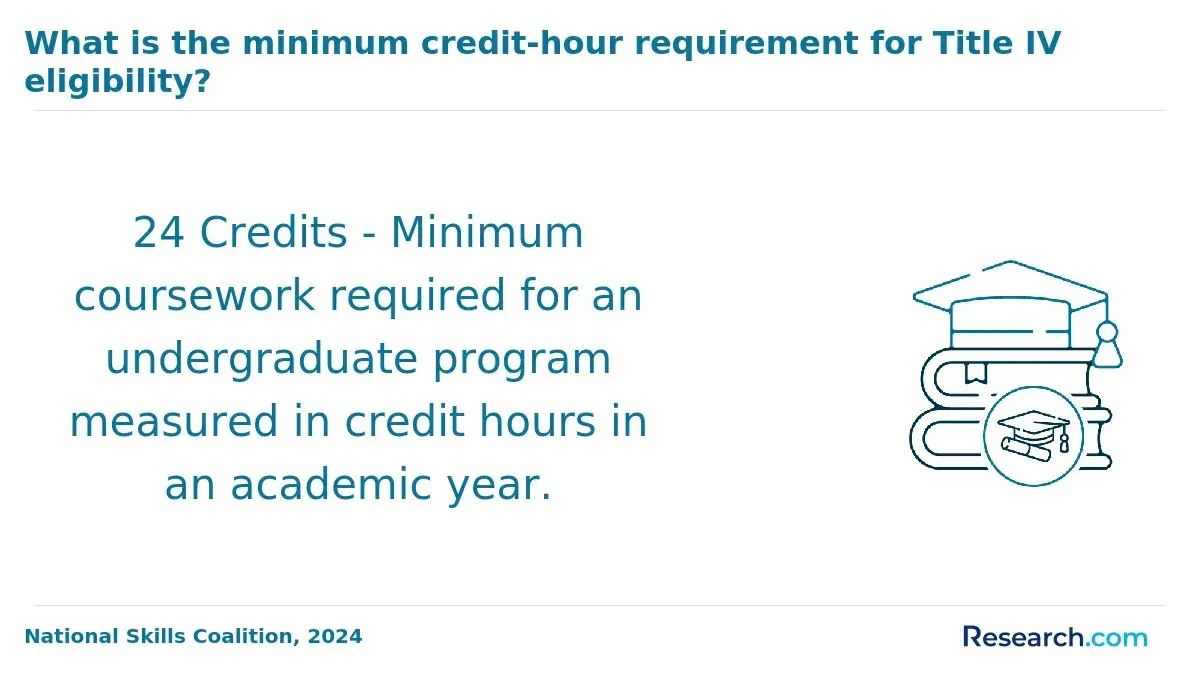
Most associate degrees require about 60 semester credits. A student starting with no credits usually needs four traditional semesters if attending full time, but a motivated student can shorten the calendar by taking summer courses, using 5-week or 8-week sessions, and avoiding gaps between terms. The table below summarizes the fastest common program models and the type of student each one fits best.
| Program model | Typical degree type | Fastest realistic timeline | Best fit | Main caution |
| Year-round full-time online associate degree | AA, AS, AAS, or transfer degree | About 18 months | Students starting with few or no credits who can study continuously | Summer availability and prerequisite sequencing matter |
| Accelerated 5-week or 8-week course format | Often AS, AAS, or applied technology associate degree | About 12 to 18 months if enough courses are offered | Students who can handle intensive weekly workloads | Compressed courses are not easier; they concentrate the same learning into fewer weeks |
| Transfer-credit-heavy completion path | AA, AS, AAS, or transfer degree | Less than 12 months in some cases | Students with previous college, AP, CLEP, military, or workforce learning | Transferred credits must apply to degree requirements, not just appear on the transcript |
| Career-focused applied associate degree | AAS in data analytics, computer information systems, business analytics, or database technology | About 15 to 24 months | Students seeking faster entry-level employment preparation | Some technical credits may not transfer cleanly into a bachelor's degree |
| University-transfer associate pathway | AA, AS, or Associate of Science transfer degree | About 18 to 24 months | Students planning to complete a bachelor's in data science, statistics, analytics, or computer science | Fastest completion is less valuable if courses do not match the receiving university's major requirements |
A fast online data science associate degree is most practical for students who already have strong math readiness, reliable weekly study time, and a clear goal. Students who need developmental math, are new to programming, or work long hours may still graduate successfully, but the shortest advertised timeline may be unrealistic.
Common admissions requirements are usually straightforward: a high school diploma or GED, placement information, transcripts, and sometimes math or English placement. The key is not admission difficulty; it is whether the first-semester math, statistics, spreadsheet, database, or programming courses match your current skill level.
How Do AA, AS, and AAS Online Data Science Associate Degrees Differ in Completion Time?
AA, AS, and AAS degrees can have similar credit totals, but they are built for different outcomes. That difference affects how quickly you can finish, how many prerequisites you may face, and whether credits will support employment or transfer.
The table below compares the major associate degree types used for online data science, data analytics, computer information systems, and transfer-focused pathways. Use it to decide whether speed should be measured by graduation date, job readiness, or bachelor's transfer progress.
| Degree type | Primary purpose | Typical completion pattern | Why it may be faster | Why it may take longer |
| AA | Broad transfer preparation with more general education | Usually 60 credits over four semesters or accelerated year-round terms | General education courses are often offered online in many terms | May include fewer technical data courses, so students may need more bachelor's preparation later |
| AS | Math, science, computer science, statistics, or analytics transfer preparation | Usually 60 to 65 credits depending on math and science sequence | Best match for students planning a data science or computer science bachelor's pathway | Calculus, statistics, or programming prerequisites can slow students who are not placement-ready |
| AAS | Workforce preparation in analytics, databases, business intelligence, or IT | Usually 60 to 65 credits with more technical coursework | Technical courses may directly prepare students for entry-level analyst or data support tasks | Labs, capstones, internships, or limited course rotations may affect pacing |
| Transfer associate degree | Block transfer into a partner bachelor's program | Often designed around state or institutional transfer maps | Can reduce wasted credits if the pathway is honored by the receiving school | Completion may depend on taking courses in a specific order |
Students who want to enter the workforce quickly often benefit from an AAS if it includes Python, SQL, spreadsheets, data visualization, statistics, and database concepts. Students who plan to pursue a bachelor's degree should usually prioritize an AS or formal transfer associate pathway, even if an AAS appears faster on paper.
A common mistake is choosing the degree with the shortest number of months without checking what happens after graduation. If the long-term goal is a bachelor's degree, a "faster" AAS can become slower overall if many applied credits transfer only as electives.
Which Online Data Science Associate Degree Programs Accept the Most Transfer Credits?
Programs that accept the most transfer credits are usually adult-friendly community colleges, online colleges with prior-learning policies, and transfer-oriented associate programs. The most important issue is not how many credits a school accepts in general, but how many credits apply to the associate degree requirements you still need.
The following table explains common credit sources that can shorten an online data science associate degree. Students should ask for a written degree audit before assuming any credit source will reduce time to graduation.
| Credit source | How it can shorten the timeline | Best use in a data science associate degree | What to verify |
| Previous college coursework | May satisfy general education, math, computing, or elective requirements | Students who started college previously or changed majors | Whether credits meet specific requirements instead of only elective slots |
| AP, IB, or dual enrollment | Can reduce introductory courses before enrollment | Recent high school graduates with college-level math, English, or computing credit | Minimum scores, transcript submission rules, and course equivalencies |
| CLEP or DSST exams | May replace selected general education or business courses | Students who can test out of nontechnical requirements | Exam acceptance, score thresholds, and limits on exam credit |
| Military training | May apply to electives, IT, management, or technical requirements | Veterans and active-duty students with documented training | How Joint Services Transcript credits are evaluated |
| Prior learning assessment | May award credit for documented professional learning | Working adults with analytics, IT, database, reporting, or programming experience | Portfolio fees, faculty review timelines, and whether credit applies to the major |
| Industry certifications | May replace selected technical or elective courses | Students with database, cloud, analytics, or IT credentials | Accepted certifications, expiration rules, and exact course matches |
To compare transfer-friendly programs, request the same information from each school before applying. This prevents a school from sounding generous in marketing language while applying only a small portion of your credits to the actual degree plan.
- Ask for the maximum number of credits that can be transferred into the degree.
- Ask how many credits must be completed through the school after transfer, often called residency credits.
- Submit unofficial transcripts for a preliminary review before paying enrollment deposits when possible.
- Request a course-by-course degree audit showing remaining requirements.
- Confirm whether transferred math, statistics, or programming courses are current enough for the major.
The red flag to avoid is assuming "credits accepted" means "months saved." A student may transfer 30 credits but still need two full semesters if a required programming course is offered only in the fall or if statistics is a prerequisite for later analytics courses.
Short courses reduce calendar time, but they do not reduce learning requirements. A 3-credit programming or statistics course taught in 5 weeks can demand a much heavier weekly commitment than the same course taught over a traditional semester.
Students comparing accelerated formats should look beyond the number of weeks per course. Similar pacing questions also appear in an accelerated computer science degree online, where programming-heavy classes can become difficult if compressed too aggressively.
The table below shows how different course lengths affect speed, workload concentration, and course sequencing in an online data science associate degree.
| Course length | How it helps speed | Workload effect | Best for | Risk to watch |
| 5-week courses | Students may complete more course starts during the year | Very intensive weekly reading, coding, assignments, and exams | Students taking one course at a time with strong study routines | Falling behind for one week can affect the entire course |
| 8-week courses | Allows two sessions in a standard semester and often supports year-round completion | Intensive but more manageable than 5-week formats for many students | Working adults who can handle focused deadlines | Taking two technical courses at once can be overwhelming |
| 10-week courses | Shorter than traditional semesters while allowing more time for projects | Moderate acceleration with steadier pacing | Students balancing work, family, and technical learning | May not shorten the overall calendar as much as 5-week or 8-week models |
| 15-week or 16-week courses | Less calendar acceleration | More time for math, programming practice, and feedback | Students new to coding, statistics, or college study | Graduation may take longer without summer or winter courses |
Accelerated terms work best when the school offers required courses frequently. If Introduction to Programming is available every term but Data Visualization is available only once per year, the advertised accelerated calendar may not apply to your degree plan.
Before choosing a compressed format, ask the school these practical questions:
- Are all required data science, statistics, database, and programming courses available online every term?
- Can students take overlapping accelerated courses, or does the program require one course at a time?
- Are prerequisites built into the sequence, and what happens if a student fails or withdraws from one course?
- Are exams proctored online, and are there required meeting times for labs, presentations, or capstones?
- Is tutoring available during evenings or weekends for coding and quantitative courses?
Finishing faster can reduce living costs, commuting costs, and the number of terms in which fees are charged. However, it does not automatically reduce tuition, because many schools charge by credit rather than by month.
For context, the College Board reported average public two-year in-district published tuition and fees of $4,050 for 2024-25. That figure is useful as a benchmark, but online students should compare total cost of completion because technology fees, course materials, out-of-district tuition, and repeated courses can change the final bill.
When comparing prices, list every required cost instead of looking only at tuition per credit. For students comparing computing-related pathways, a guide to the cheapest online computer science degree can also help frame how tuition, fees, and transfer credits affect total affordability across technical programs.
- Published tuition and fees benchmark: $4,050 for average public two-year in-district enrollment in 2024-25.
- Potential additional costs: online course fees, proctoring fees, textbooks, software, hardware, graduation fees, transcript fees, and portfolio assessment fees.
- Potential savings from faster completion: fewer terms enrolled, earlier eligibility for full-time work, and reduced opportunity cost if the degree supports advancement.
- Potential added costs from rushing: course overload fees, repeated courses, lost financial aid eligibility from withdrawals, and paying for credits that do not transfer later.
A fast program is most cost-effective when the student can complete courses successfully on the first attempt and when transfer credits reduce required credits. It may be less cost-effective for students who need a slower pace to master algebra, statistics, Python, SQL, or data visualization.
Financial aid can also be affected by pace. Students should ask the financial aid office how accelerated terms count toward full-time status, satisfactory academic progress, aid disbursement timing, and summer eligibility.
A fast online data science associate degree can require a serious weekly commitment because technical courses involve practice, debugging, projects, and quantitative problem-solving. A common academic planning rule is that each credit hour may require about one hour of instruction and about two hours of outside work per week in a standard term, though compressed courses concentrate that work into fewer weeks.
The table below gives a practical estimate of weekly workload by enrollment pace. Actual time varies by math readiness, programming experience, course design, and whether a student is taking general education or technical courses.
| Enrollment pace | Typical course load | Estimated weekly commitment | Best fit |
| Part-time traditional | 1 to 2 courses | About 9 to 18 hours | Students working full time or building math and coding confidence |
| Full-time traditional | 4 to 5 courses | About 36 to 45 hours | Students treating school like a full-time job |
| Accelerated one-course-at-a-time | One compressed course per session | About 15 to 25 hours for a technical course | Students who prefer focused immersion |
| Accelerated full-time | Multiple compressed courses across sessions | Often 30 or more hours depending on course mix | Students with strong preparation and flexible schedules |
Students should be especially cautious about pairing two demanding technical courses in the same short session. For example, taking Python programming and statistics together in an 8-week format may be manageable for an experienced student but risky for someone new to both subjects.
A realistic weekly plan should include time for these tasks:
- Watching lectures, reading course material, and reviewing examples.
- Completing programming exercises, spreadsheet analysis, SQL assignments, and statistics problems.
- Debugging code and revising projects after feedback.
- Participating in discussion boards, group work, or live online sessions if required.
- Using tutoring, office hours, or peer support before deadlines become urgent.
The common mistake is treating online courses as more flexible than they really are. Online delivery can remove commuting, but it does not remove deadlines, prerequisites, exams, or the time needed to learn technical skills.
Accreditation matters because it affects transfer credit, financial aid eligibility, employer recognition, and the credibility of the degree. For associate degrees in data science or analytics, institutional accreditation is usually the most important baseline; programmatic accreditation is less common than in fields such as nursing or engineering technology.
Students should verify accreditation before comparing speed claims. A very short timeline has little value if the institution is not properly accredited or if credits will not be recognized by the bachelor's program or employer you plan to use later.
- Confirm the institution's accreditor in the U.S. Department of Education's Database of Accredited Postsecondary Institutions and Programs or the Council for Higher Education Accreditation directory.
- Check the school's own accreditation page and confirm that the accreditor name matches the official database listing.
- Ask whether the online program is offered by the same accredited institution that appears on the transcript.
- For transfer goals, ask the receiving bachelor's program whether the associate degree and individual courses will be accepted.
- For employment goals, review whether the curriculum includes job-relevant tools such as SQL, Python, spreadsheets, statistics, databases, and visualization software.
Red flags include vague phrases such as "internationally accredited" without a recognized U.S. accreditor, pressure to enroll before receiving a degree audit, missing consumer information, or refusal to explain how online courses appear on the transcript.
Students should also distinguish accreditation from certification. Data science associate degrees generally do not lead to state licensure, but optional certifications in analytics tools, cloud platforms, databases, or business intelligence software may support employability depending on the role.
The fastest employment-oriented options are usually AAS degrees or applied associate programs in data analytics, computer information systems, business intelligence, database technology, or applied data science. These programs tend to include more technical courses and fewer purely transfer-focused electives.
Students should be realistic about job titles. The BLS reported a median annual wage of $108,020 for data scientists in May 2023, but many data scientist roles prefer or require a bachelor's degree, graduate degree, or substantial experience. An associate degree is more likely to support entry-level data support, reporting, analytics assistant, or IT-adjacent roles. Students aiming for higher-level roles can compare longer pathways through a data scientist degree after completing the associate credential.
The table below connects associate degree types with faster employment possibilities. It does not promise job placement; it shows where the curriculum most directly matches common entry-level responsibilities.
| Degree focus | Fastest-fit entry-level roles | Useful skills to look for | When it makes sense |
| AAS in data analytics | Data analyst assistant, reporting analyst assistant, operations analyst support | Excel, SQL, statistics, dashboards, data cleaning, visualization | Best for students who want job-ready technical coursework quickly |
| AAS in computer information systems | Database support, IT reporting support, systems support analyst | Databases, SQL, scripting, business systems, troubleshooting | Best for students open to IT and analytics hybrid roles |
| AS in data science or analytics | Junior analyst roles in some markets, research assistant support, transfer-ready technical roles | Python, statistics, calculus or quantitative reasoning, databases | Best for students who want both job preparation and bachelor's transfer potential |
| AA or transfer degree with analytics electives | Administrative data support, business reporting assistant, transfer student worker roles | Spreadsheets, communication, basic statistics, business software | Best for students prioritizing low-risk transfer over immediate technical specialization |
To improve speed to employment, students should choose programs with portfolio projects. A hiring manager can evaluate a cleaned dataset, SQL query, dashboard, or Python notebook more easily than a transcript alone.
Students should avoid assuming that the word "data science" in the degree title is enough. The curriculum should show practical work with data collection, data cleaning, database querying, statistics, visualization, and communication of findings.
The most efficient transfer pathways are usually AS degrees, Associate of Science transfer degrees, and formal articulation agreements with public universities. These programs are designed to satisfy lower-division general education and foundational major requirements before the student enters a bachelor's program.
Students planning beyond the bachelor's level should also think ahead. A student who eventually wants an online masters in data science will usually benefit from a transfer pathway that preserves credits and builds a strong foundation in statistics, programming, databases, and mathematics.
The table below shows which associate degree structures usually transfer most efficiently and what students should verify before enrolling.
| Transfer pathway | Efficiency for bachelor's transfer | Best destination majors | What to verify |
| AS in data science or analytics | High when aligned with a receiving university | Data science, analytics, statistics, information systems | Whether math, statistics, programming, and general education courses meet major requirements |
| AS in computer science with data electives | High for technical bachelor's programs | Computer science, data science, software development, analytics | Programming language sequence, calculus requirements, and lab science requirements |
| AA transfer degree with quantitative electives | Moderate to high for broad transfer | Business analytics, information systems, social science analytics | Whether technical prerequisites will still be needed after transfer |
| AAS in applied analytics | Variable | Applied technology, IT management, or bachelor of applied science programs | Whether technical credits transfer as major credits or only electives |
A transfer-efficient degree is not always the shortest associate degree, but it may be the shortest overall route to a bachelor's. Losing 15 credits during transfer can erase any time saved by choosing an accelerated associate program.
Before enrolling, students should request the transfer map from both institutions if possible. The strongest pathway lists exact course numbers, minimum grades, accepted electives, and how the associate degree applies to junior standing.
How Should Students Compare Completion Time, Cost, Transferability, and Career Outcomes for Online Data Science Associate Degrees?
The best online data science associate degree is not simply the one with the shortest calendar. It is the program that gets you to your next goal with the least wasted time, manageable cost, recognized credit, and enough skill development to succeed.
Use the comparison framework below to evaluate programs consistently. This table is designed to help you separate marketing claims from the practical factors that determine whether a fast program is actually a good fit.
| Decision factor | What to compare | Best sign | Red flag |
| Completion time | Required credits, term length, course availability, prerequisites | A written degree plan showing each term through graduation | Only an advertised timeline with no individualized audit |
| Total cost | Tuition, fees, books, technology, transfer credits, repeated-course risk | Clear cost estimate based on remaining credits | Low tuition claim that excludes required fees |
| Transferability | Articulation agreements, course equivalencies, bachelor's major fit | Published transfer pathway or written confirmation from receiving school | Applied credits that transfer only as electives |
| Career preparation | Technical tools, projects, career services, internships or capstones | Portfolio-ready coursework using current analytics tools | Degree title sounds relevant but curriculum lacks SQL, statistics, programming, or visualization |
| Flexibility | Asynchronous classes, tutoring, start dates, proctoring, support hours | Multiple starts and support that matches your schedule | Required live meetings or in-person activities that conflict with work |
| Accreditation | Institutional accreditation and transcript recognition | Accreditation verified in official databases | Unclear accreditor or pressure to enroll quickly |
After narrowing programs, ask each school the same questions. Consistent answers make it easier to compare schools fairly and avoid choosing based on speed claims alone.
- What is the fastest realistic graduation date for my transcript, placement level, and transfer credits?
- Which required courses are not offered every term?
- How many credits will I still need after transfer evaluation?
- Will any courses require live attendance, campus visits, proctored exams, internships, labs, or specific software?
- What is the full estimated cost to complete the degree, including fees and materials?
- Does the degree have a transfer agreement with the bachelor's program I am considering?
- What projects, portfolios, career services, or employer connections support entry-level job searches?
Prioritize speed if you already have credits, strong math and coding readiness, and a clear short-term goal. Avoid prioritizing speed if you need academic rebuilding, plan to transfer into a selective bachelor's program, or would have to overload courses so heavily that grades, learning, or financial aid eligibility are at risk.
Other Things You Should Know About Data Science
Not exactly. Data analytics usually focuses on interpreting existing data to answer business questions, while data science often includes broader work such as modeling, prediction, programming, statistics, and sometimes machine learning.
Many associate programs start with introductory programming, but prior experience helps in accelerated formats. If you have never coded, consider a slower first term or a short noncredit Python or SQL course before enrolling full time.
Students typically need a reliable computer, high-speed internet, spreadsheet software, and the ability to run browser-based or installed tools for Python, SQL, statistics, and visualization. Always check the program's technology requirements before classes begin.
A certificate can be better for learning a specific tool quickly, especially for working adults who already have a degree. An associate degree is usually stronger when you need college credit, transfer options, financial aid eligibility, or a broader foundation.
- AA vs AS Degree: Key Differences You Should Know https://www.edvisorly.com/student-guides/aa-vs-as-degree
- Best Data Science Bachelor's Degrees Online https://www.computerscience.org/degrees/best-online-bachelors-data-science/
- All Data Analytics Associate Degrees - AnalyticsDegrees.org https://www.analyticsdegrees.org/data-analytics/associate/
- 2026 Best Online Data Science Degrees https://www.onlineu.com/degrees/data-science
- 6 Top Accredited Accelerated Data Science Degrees [2026] - Best Shortest and Fastest Data Science Degree https://www.careerherd.com/fastest-accelerated-data-science-degrees/
- Masters in Data Science Admission Requirements 2026 https://admit-lab.com/blog/masters-in-data-science-requirements/
- Online Master's in Data Science Options for Working Adults | Data Analytics Career Entry Research https://eduinsightlab.com/online-masters-data-science-working-adults/
- Data Science https://online.champlain.edu/degrees-certificates/associate-data-science