2027 Return on Investment of an Online Mathematics Bachelor's Degree: Salary vs Cost

Co-Founder and Chief Data Scientist
Consider a professional with an unrelated bachelor's degree who seeks to enter the mathematics field through an online program. The key question is whether investing time and tuition into an online mathematics bachelor's degree will yield a salary gain sufficient to justify the cost.
Recent data show that graduates with a mathematics degree from accredited institutions earn a median annual salary approximately 25% higher than those with general science degrees. This article explores the financial feasibility of returning to school online-comparing tuition expenses against salary prospects-and aims to guide readers in making informed decisions about their educational investments.
Key Things to Know About the Return on Investment of an Online Mathematics Bachelor's Degree
- Online bachelor's degrees in mathematics typically cost 40% less than traditional programs, making tuition more accessible for first-generation students and professionals with limited budgets.
- Graduates earn median salaries around $85,000 annually-25% higher than those with only a high school diploma-reflecting strong financial returns within five years post-graduation.
- Beyond salary, mathematics degrees enhance career progression, provide job security in STEM fields, and offer valuable skills for lifelong professional development and adaptability.
What Is the True Cost of Earning an Online Mathematics Bachelor's Degree From Enrollment to Graduation?
Determining the cost breakdown of online mathematics bachelor's degree in the US involves careful evaluation of both direct and indirect expenses throughout the typical four-year duration. Published tuition, often known as sticker price, can range widely-averaging $15,000 to $40,000 per year depending on public or private status-but many students pay less due to financial aid.
University net price calculators, based on IPEDS and National Center for Education Statistics data, help estimate realistic net prices, which often reduce total tuition by 30 to 50 percent or more.
- Tuition and Fees: This is the largest expense category, including required tuition and technology fees for online course access. After aid, public schools often charge between $6,000 and $12,000 annually, while private institutions may exceed $20,000.
- Course Materials: Textbooks and supplemental online resources typically add $500 to $1,000 yearly. Some programs mitigate this cost by providing digital access bundled with tuition.
- Proctoring and Exam Fees: Many online courses require remote proctoring to uphold integrity. Fees range from $30 to $100 per exam, potentially increasing costs when multiple exams are needed per course.
- Technology Requirements: Investment in reliable internet, a computer, and necessary software tools often totals $1,000 to $2,000 upfront or over the program length.
Accounting for these factors, the overall estimated cost to earn an online mathematics bachelor's degree falls between $40,000 and $80,000 depending on institution type and financial aid. This figure offers a baseline for students-whether first-generation college attendees, working professionals, or career changers-to weigh their investment against salary outcomes and career growth potential. For those seeking affordable options, exploring colleges online that accept FAFSA can be a strategic step to minimize expenses while maintaining quality education.
How Does the Starting Salary for Mathematics Bachelor's Degree Graduates Compare to the Total Cost of the Degree?
The starting salary for graduates holding an online mathematics bachelor's degree varies by career path, yet Bureau of Labor Statistics (BLS) data offers a solid benchmark. Entry-level roles frequently pursued, such as data analyst, actuary, or financial analyst, report median annual salaries between $60,000 and $75,000. When contrasted with the total cost of earning an online mathematics bachelor's degree, this provides valuable insight into financial viability.
Data from the Integrated Postsecondary Education Data System (IPEDS) indicates that the total cost of an online mathematics bachelor's degree ranges from about $15,000 in best-case scenarios with low tuition and maximum financial aid, to $50,000 or more when aid is minimal. Using starting salary for online Mathematics bachelor's degree graduates as a reference, it typically takes between three and ten months of gross income to recoup the degree's cost.
This payback period highlights that even those facing higher tuition costs can recover their investment within a year of full-time employment. Moreover, projected salary growth in mathematics-related fields improves the long-term return on investment, as earnings commonly increase significantly in the first five years after graduation. These gains considerably shorten the effective payback period and support consideration of financial and career goals.
Besides salary gains, the degree also offers broader career benefits like job security and professional development opportunities. For readers comparing options, exploring accelerated psychology degree programs may also be useful for parallel insights into fast-tracked online studies.
- Starting Salary Range: Median entry-level salaries span $60,000 to $75,000 across common mathematics-related roles based on BLS statistics, providing a dependable income baseline.
- Degree Cost Variation: Total online mathematics degree expenses vary from $15,000 to over $50,000 depending on tuition and financial aid, affecting the break-even timeline.
- Payback Period: Typically, graduates require 3 to 10 months of gross starting salary to offset their degree expenses, presenting a financially accessible option.
- Salary Growth Potential: Early career earnings growth in mathematics-related occupations enhances the return on investment beyond initial salary figures.
- Broader Career Benefits: The degree supports ongoing career advancement, increased job security, and professional development opportunities.
What Is the Average Return on Investment (ROI) for an Online Mathematics Bachelor's Degree Over a 10-Year Career?
Return on investment (ROI) in higher education measures the financial gain from a degree by comparing the extra earnings over 10 years with the total cost of the degree. Specifically, for an online mathematics bachelor's degree, ROI considers the difference in cumulative income between degree holders and individuals with just a high school diploma or associate degree in the same field, minus tuition and fees.
Research from Georgetown University Center on Education and the Workforce and PayScale's College ROI Report highlights that bachelor's degrees, especially in STEM fields like mathematics, result in significantly higher lifetime earnings.
The Bureau of Labor Statistics (BLS) indicates the median annual wage for mathematicians is about $100,000. With an estimated 3% yearly increase, total earnings might reach roughly $1.15 million across a decade. By contrast, those with only a high school diploma in similar jobs may earn around $45,000 annually, accumulating close to $520,000 in 10 years. Subtracting the $40,000 average cost for an online mathematics degree, the net additional income or ROI is approximately $590,000 over 10 years, illustrating a strong financial return.
Compared to the national average ROI of roughly $400,000 for all bachelor's degree holders after costs, mathematics degrees clearly stand out due to their higher earning potential and relatively moderate tuition expenses.
- Clear ROI Definition: ROI calculates the 10-year extra income made by degree holders beyond those without such credentials, minus all educational expenses.
- Salary Benchmarks: Median wages near $100,000 for mathematics careers provide a dependable foundation for estimating long-term earnings.
- Cost Factors: Online programs averaging $40,000 in total reduce financial barriers, improving the overall ROI.
- Comparative Advantage: Mathematics graduates enjoy returns well above the average bachelor's degree graduate, confirming this course of study as an effective investment.
A professional who completed an online mathematics bachelor's degree shared how he weighed its cost against the projected ROI before enrolling. He recounted, "I spent months studying salary reports and tuition estimates to ensure the degree aligned with my budget and career goals."
Balancing work and study was challenging-he described moments of self-doubt but valued the flexible schedule of the program. "Knowing the financial benefits outweighed the costs kept me motivated," he explained. This careful planning reassured him that earning this degree would open doors to stable, advanced career opportunities he had been pursuing.
Costs for online mathematics degree programs vary notably among public universities, private nonprofits, and for-profit institutions, affecting both upfront expenses and long-term return on investment. Evaluating tuition alongside graduation rates and employment outcomes is critical for informed decision-making.
- Public Universities: Typically offer the most cost-effective options for in-state students, with annual tuition ranging from $5,000 to $10,000. Many provide flat-rate tuition for online students, leveraging state funding and economies of scale to lower costs while maintaining accessibility.
- Private Nonprofit Institutions: Generally charge between $20,000 and $40,000 per year. These schools often deliver enhanced academic support, smaller class sizes, and robust alumni connections, which can improve career advancement and job security over time.
- For-Profit Colleges: Tuition can be as low as $4,000 to $7,000 annually, appealing to those on tight budgets. However, these programs tend to have lower completion rates and face employer skepticism, factors that may hinder salary growth and reduce the overall value of the degree.
Students seeking the most affordable online mathematics degree tuition comparison should weigh immediate costs against professional benefits. Degrees from accredited public and private nonprofits often yield stronger outcomes despite higher prices. Carefully balancing tuition expenses with graduation success and employer perception ensures better investment returns. For those exploring digital education options, it can be helpful to also review programs like the online cyber security degree to understand broader cost structures and ROI considerations across STEM fields.
Salary growth for individuals with a mathematics bachelor's degree follows a predictable pattern tied closely to experience and career milestones. Early career earnings typically start at a modest level, reflecting entry roles in data analysis, actuarial science, or research support. During the first five years, wages increase steadily as graduates gain foundational skills and relevant certifications.
- Mid-Career Acceleration: Between five and ten years, salary growth often speeds up due to promotions and specialization. Mathematics graduates frequently move into roles like statistician, financial analyst, or software developer, which offer higher pay supported by data from the American Community Survey and PayScale.
- Established Careers: By the 10- to 15-year mark, compensation peaks as professionals take on leadership or expert technical positions. Higher earnings reflect responsibilities in management, strategic initiatives, or niche areas such as cryptography and quantitative finance.
- Late Career Plateau: After 15 years, salary growth usually slows but remains above average. Many transition into senior consulting or advisory roles, leveraging decades of experience to maintain strong income levels.
- Cumulative Earnings Premium: Over 20 to 30 years, the total lifetime earnings gap between mathematics bachelor's holders and non-degree workers can accumulate from several hundred thousand to over a million dollars. This advantage combines higher starting pay with progressive opportunities unique to degree holders.
A professional who built her career following graduation from an online mathematics bachelor's program shared how the journey demanded balancing work, study, and family obligations. She noted, "Initially, managing coursework alongside a full-time job was overwhelming, but the flexible online format allowed me to progress steadily." Over time, she found that applying theoretical concepts directly to job projects accelerated her advancement.
Reflecting on salary growth, she said, "The real value was not just the paycheck bumps but the doors opened by the degree-new roles, leadership chances, and lasting job security." Her experience highlights the often nonlinear but rewarding financial trajectory accessible through disciplined effort and the right educational path.
Choosing the right mathematics credential involves balancing upfront costs with long-term earning potential. While certificates and associate degrees offer affordable pathways into entry-level and technical roles, a bachelor’s degree often provides access to higher-paying careers and stronger advancement opportunities over time. Understanding how salary outcomes compare with educational investment can help students determine which option best aligns with their financial situation, career goals, and timeline for entering the workforce.
- Salary Outcomes:
- Graduates with a bachelor's degree in mathematics tend to earn median salaries between $70,000 and $90,000, depending on their role and geographic area.
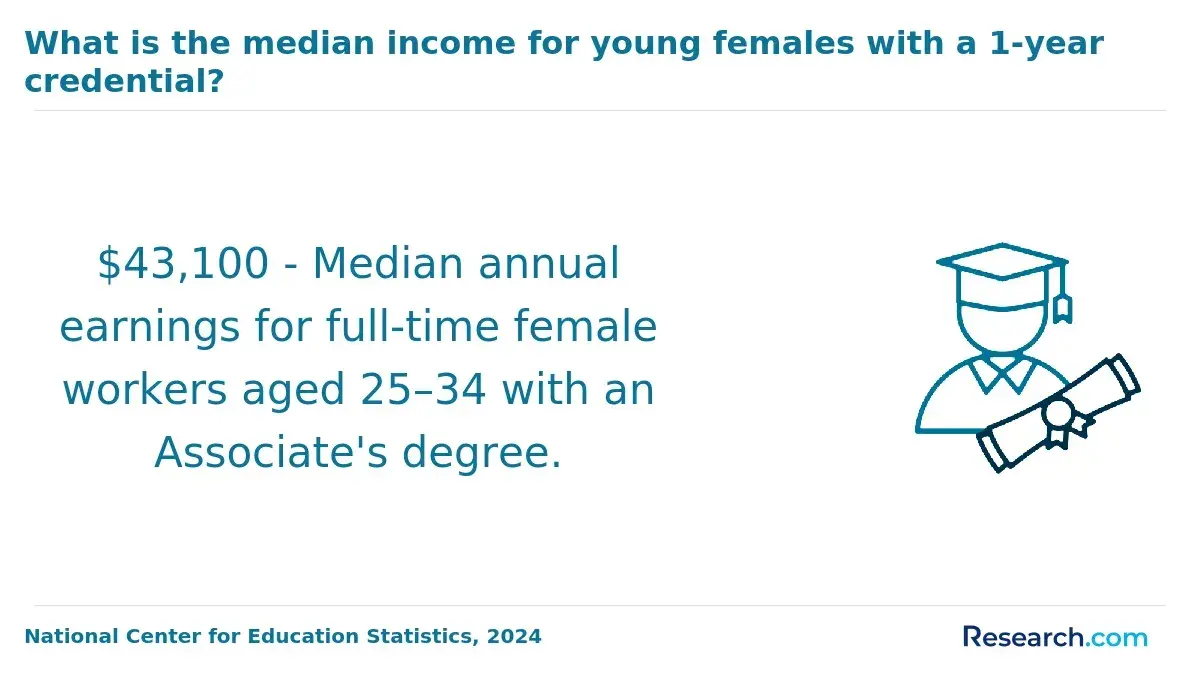
- Those holding associate degrees typically see median earnings around $40,000 to $55,000, often in technical or support roles.
- Certificate holders usually enter the workforce at entry-level positions with median wages from $30,000 to $45,000.
- Cost Comparison: An online bachelor's degree in mathematics generally requires an investment between $20,000 and $40,000 in tuition, considerably more than associate degrees, which usually range from $6,000 to $15,000. Certificates remain the most affordable option, often costing less than $5,000.
- Short-Term Investment: For learners prioritizing quicker job entry with lower upfront expenses, certificates or associate degrees can offer better immediate returns, especially in fields like data analysis, technical support, or other applied roles.
- Long-Term Returns: The bachelor's degree opens pathways to advanced careers such as data scientist, actuarial analyst, or mathematical researcher. These positions generally offer higher earnings potential and increased job stability over time.
- Non-Financial Returns: Beyond compensation, a bachelor's degree in mathematics provides greater opportunities for professional growth, stronger networking connections, and enhanced career advancement possibilities.
- Decision Framework:
- Assess your financial situation-certificates and associate degrees reduce debt and facilitate rapid workforce entry.
- Clarify your career objectives-those with bachelor's degrees often access a wider array of roles with greater pay progression as experience grows.
- Consider the time commitment-a bachelor's degree demands more years of study but typically yields higher lifetime earnings.
Online mathematics bachelor's degrees offer specialized tracks that markedly influence earning potential, supported by data from the Bureau of Labor Statistics (BLS). Choosing the right concentration can significantly improve salary outcomes and shorten the time required to recoup educational expenses.
- Actuarial Science: Careers in risk assessment for insurance, finance, and consulting fields pay median annual wages around $108,000. This specialization requires passing rigorous actuarial certification exams, adding to upfront costs and extending the time before reaching peak earnings.
- Data Science and Analytics: Graduates often fill roles like data analysts or quantitative researchers, earning between $85,000 and $100,000. While no formal licensure is mandatory, ongoing education in programming and machine learning boosts job prospects and may increase expenses.
- Applied Mathematics: Focused on engineering and computational modeling, this track offers median salaries near $80,000. Practical experience is critical, and pursuing graduate certifications may be necessary for advanced roles, influencing total investment.
- Financial Mathematics and Quantitative Finance: Specializing here leads to careers with median wages exceeding $90,000. Certifications such as CFA often require additional costs but provide significant salary premiums and career advancement benefits.
- Statistics: Positions in government, healthcare, and research pay around $88,000 on average. Some roles demand certifying credentials like GStat, increasing initial costs but supporting long-term job security.
Compared to generalist mathematics graduates, specialized degree holders earn between 10% and 35% more depending on the field. Prospective students should carefully weigh the costs of certification and continuing education against expected salary premiums and personal career goals. Evaluating prior experience and desired outcomes helps optimize both financial return and professional development from an online mathematics bachelor's program.
Employer tuition reimbursement programs can dramatically lower the out-of-pocket cost of earning an online mathematics bachelor's degree by covering a substantial portion of tuition expenses. Under IRS Section 127, many employers can provide up to $5,250 per year in tax-free tuition assistance to employees.
This benefit allows working students to reduce payments without increasing their taxable income. According to the Society for Human Resource Management (SHRM), approximately 60% of U.S. employers offer some form of tuition assistance, often structured as partial or full reimbursement based on course completion or grade requirements. Such employer tuition reimbursement benefits for online Mathematics degrees make higher education more accessible to working professionals.
Federal and institutional financial aid further reduce sticker price costs. Federal grants like the Pell Grant require no repayment and can cover several thousand dollars annually depending on financial need. Subsidized federal student loans offer lower interest rates and deferred repayment, easing financial burdens during study.
Colleges also provide institutional scholarships and grants, awarded based on merit or need, which can eliminate major portions of tuition for qualifying students. Combining these funding sources creates a powerful reduction in total expenses.
For example, a student with total online mathematics bachelor's degree tuition of $40,000 over four years could save $21,000 through employer tuition reimbursement capped at $5,250 annually. Adding $6,000 from Pell Grants and $7,000 in institutional scholarships lowers the remaining balance to about $6,000, which can be managed with low-interest federal loans. This synergy of employer benefits and financial aid reduces net costs to roughly 15% of the initial sticker price, making degree completion far more affordable.
Exploring financial aid options to lower online Mathematics bachelor's degree cost is crucial for first-generation college students, career changers, and those on a tight budget. It's also valuable to consider non-financial benefits such as career advancement, job security, and professional development that come with earning a degree. Some students combine these advantages with opportunities available in specialized fields, like the online crypto degree to enhance career prospects alongside a mathematics education.
- Prevalence Of Employer Assistance: Many large employers offer tuition assistance, making this a widely accessible benefit that helps reduce the financial burden of online Mathematics degrees.
- IRS Tax Benefits: Section 127 enables up to $5,250 in tax-free tuition aid annually, increasing the real value of employer reimbursement without taxable income consequences.
- Federal Grants And Loans: Pell Grants and subsidized loans lower both upfront tuition costs and borrowing expenses, improving affordability for eligible students.
- Institutional Scholarships: Targeted scholarships provided by colleges add additional tuition relief on top of federal and employer aid.
- Example Of Net Cost Reduction: Combining employer tuition reimbursement with federal and institutional aid can cut a $40,000 tuition cost to under $6,000, showcasing multi-source funding advantages.
Regional accreditation confirms that an online mathematics program meets broad, rigorous educational standards recognized nationally. This differs from programmatic accreditation, which evaluates specific academic disciplines but is generally narrower in scope. Employers heavily favor degrees from regionally accredited institutions because these credentials signal consistent quality and academic rigor, enhancing graduates' employability and salary potential.
According to the National Association of Colleges and Employers (NACE), hiring managers perceive candidates with regionally accredited degrees as better prepared and more dependable. These graduates often receive higher starting salaries than those from non-accredited or only nationally accredited schools. Lack of proper accreditation can restrict career paths, especially in roles requiring licensure or professional certification in sectors like education, healthcare, and government.
Candidates should consult trusted sources such as the U.S. Department of Education's accreditation database or the Council for Higher Education Accreditation (CHEA) to confirm program credibility before enrolling. Choosing an accredited program supports eligibility for graduate studies and federal jobs, protecting long-term career growth.
- Employability Advantage: Degrees from regionally accredited math programs improve job prospects by signaling superior academic training to employers.
- Licensing and Certification Access: Accreditation determines eligibility for professional exams critical to careers in multiple regulated industries.
- Graduate School Eligibility: Many advanced programs require applicants to hold a degree from a regionally accredited institution to apply.
- Salary Impact: Employers tend to offer higher compensation to graduates from accredited programs due to trust in their skills.
- Financial Aid Qualification: Accredited programs typically allow access to federal financial support, easing the financial burden.
Graduates holding an online bachelor's degree in mathematics can access a broad range of entry-level careers with variable salary prospects shaped by industries, certifications, and internships. These factors influence how quickly graduates recoup their educational investment.
- Data Analyst: Salaries typically range from $55,000 to $70,000. Technology and finance sectors offer top entry pay, especially for candidates proficient in statistical software or programming languages such as Python or R.
- Actuarial Analyst: Starting pay falls between $60,000 and $75,000, with insurance and financial firms paying the most. Early success on actuarial exams notably boosts earning potential.
- Statistical Technician: Median beginning salaries range from $45,000 to $60,000. Positions in government and healthcare tend to provide higher wages within this role.
- Operations Research Analyst: Entry salaries generally lie between $60,000 and $80,000. Defense contractors and large manufacturers usually offer the most competitive starting compensation.
- Financial Analyst: Compensation often starts from $55,000 to $70,000. Finance and consulting industries typically offer superior early-career earnings.
- Mathematics Teacher (Secondary Education): Entry pay commonly ranges from $40,000 to $50,000. Public school roles in certain states may provide loan forgiveness and stable employment.
- Software Developer (Entry-Level With Mathematics Focus): Starting wages range from $65,000 to $80,000. Tech firms, especially those focused on algorithms or machine learning, reward math graduates with coding skills.
- Research Assistant in Quantitative Fields: Salaries typically fall between $45,000 and $60,000. University or government research labs offer opportunities for advancement and certification.
Concentrations in applied mathematics, statistics, and professional certifications or internships in data science and programming help graduates enter higher salary bands, accelerating financial returns and enhancing career trajectories in competitive fields such as technology and finance.
What Graduates Say About the Return on Investment of Their Online Mathematics Bachelor's Degree
- Otto: "Choosing the online mathematics bachelor's degree was a strategic decision based on balancing cost with potential long-term benefits. I appreciated the flexibility it offered, allowing me to work while studying, which softened the financial burden. Beyond the paycheck increase, the program bolstered my problem-solving skills and opened doors to leadership roles I hadn't anticipated."
- Colsen: "Reflecting on my journey, the non-financial returns of the online mathematics degree have been just as valuable as the salary boost. The program provided job security in a competitive market and enhanced my analytical mindset, which employers really value. The ability to learn independently online also taught me discipline and self-motivation-traits that transformed my entire career outlook."
- Isaiah: "Professionally, earning my online mathematics bachelor's degree was a game changer-I quickly moved into more specialized roles with higher responsibilities. I weighed the ROI carefully before enrolling, and the increase in my earning potential has validated the investment many times over. The degree also gave me confidence to tackle complex projects and collaborate with experts across fields."
Other Things You Should Know About Mathematics Degrees
On average, graduates can expect to recoup their tuition investment within five to seven years through higher salaries. The exact timeframe depends on factors such as program cost, geographic location, and job market conditions. Those entering data analysis, actuarial science, or software development sectors often see faster salary growth, accelerating the time needed to recover education expenses.
Yes, many regionally accredited online mathematics bachelor's programs allow transfer into a master’s degree, but the receiving school usually requires at least a 3.0 GPA and recent proof of calculus, linear algebra, and statistics. Graduate departments often review syllabi, not just course titles, before accepting the credits.
Cost-benefit analysis tools help students compare tuition fees, living expenses, and expected salary increases after graduation for different programs. By inputting program costs and estimated post-degree salaries, students can estimate how long it will take to recover their investment. These tools also allow consideration of factors like financial aid, program length, and employment rates to make informed decisions.
- ROI on degrees, certificates https://www.ccdaily.com/2024/10/roi-on-degrees-certificates/
- Cost of Online College vs. Traditional | Champlain College Online https://online.champlain.edu/blog/cost-of-online-education-vs-traditional-education
- Most Affordable Online Mathematics Degree Programs of 2025 - Intelligent https://www.intelligent.com/best-online-math-bachelor-degree/cheapest/
- 10 college majors with the highest ROI for your tuition https://qz.com/highest-roi-college-degrees
- Average Private vs Public College Tuition [2025]: Data Analysis https://educationdata.org/private-vs-public-college-tuition
- Online college courses are popular, why do they still cost so much? https://hechingerreport.org/as-online-higher-education-hits-a-milestone-why-does-it-still-cost-so-much/
- Certificate vs. Degree: Pros, Cons, and Career Outcomes | National University https://www.nu.edu/blog/certificate-vs-degree/
- Does College Pay Off? A Comprehensive Return On Investment Analysis - FREOPP https://freopp.org/whitepapers/does-college-pay-off-a-comprehensive-return-on-investment-analysis/
- Beyond Tuition: The Hidden Costs of Higher Education and How to Plan for Them https://varthana.com/student/financial-planning-for-higher-education
- ROI of Online Degrees in 2025: Cost, Benefits, Career Impact https://www.pwmedharthi.com/blogs/guide/roi-of-online-degrees