2027 Questions to Ask Before Accepting a Cardiac Catheterization Lab Nurse Position
Audited and Verified:
Our Editorial and Data Verification Process
Research.com uses government datasets, official education statistics and primary institutional information to support its career and degree guides. Our review process checks factual accuracy, occupational definitions, source dates and the requirements associated with the credentials discussed.
How This Article Was Fact-Checked
Our editorial team verifies salary estimates, employment projections, education requirements and program information against original data providers and official organizations. Salary figures are checked against the relevant occupational definitions and reporting periods. Information about licensure, accreditation and required in-person training is reviewed separately.
Fact-checked and verified on:

Co-Founder and Chief Data Scientist
A cath lab offer can look attractive until you learn how often you will take call, which procedures you will cover, and when you are expected to work independently. If you are an RN considering a first cath lab position or a move between labs, the details of orientation, staffing, and emergency response matter as much as the job title. This guide explains the role and its preparation requirements, then gives you concrete questions to use when comparing an offer with your experience, schedule, and long-term goals.
Key Things You Should Know
- Ask for the call schedule in writing: Frequency, response-time requirements, call-in pay, and post-call rest can change the value of an offer substantially.
- Confirm how independence is earned: Ask which procedures and roles you will learn, who precepts you, and how the lab documents competency before assigning you to emergency cases.
- Compare pay with the right benchmark: The U.S. Bureau of Labor Statistics reported a $93,600 median annual wage for all registered nurses in May 2024; it does not publish a separate cath lab nurse median.
What does a cardiac catheterization lab nurse do?
Cardiac catheterization labs use imaging and catheter-based techniques to evaluate and treat heart and vascular conditions. Depending on the facility, an RN may assess and prepare patients, administer medications within their scope and facility policy, monitor patients during procedures, document care, respond to complications, and arrange recovery or transfer. Some labs also cover structural heart, electrophysiology, or peripheral vascular procedures; others keep those services separate.
Ask: "Which cases does this team perform, and what will my role be in each one?" A circulating RN, for example, may coordinate medications, documentation, and patient needs, while monitoring or scrub responsibilities may be assigned differently across facilities. Ask whether you will work with dedicated technologists and recovery nurses or rotate through several functions. Your experience in one lab does not automatically establish competency for every assignment in another.
The distinction also matters if you are still exploring careers. Cath lab nursing is an RN role, not an advanced practice specialty; it differs substantially from psychiatric nurse practitioner work. Someone deciding between procedural nursing and graduate-level mental health practice could compare PMHNP education costs and program choices, but that education is not required for a cath lab staff RN position.
What education is required to become a cardiac catheterization lab nurse?
A cath lab nurse generally needs an RN license earned through an eligible prelicensure nursing pathway, such as an ADN or BSN program, followed by the applicable licensing process. A cath lab-specific degree is not ordinarily the entry requirement. Employers instead evaluate the RN's clinical background and provide facility-specific training for procedures, equipment, and emergency workflows.
Ask: "Does this position require a BSN, or is it preferred, and is there a deadline to complete one after hiring?" Get the answer from the job posting or recruiter rather than assuming that another facility's policy applies. If you are not yet an RN, nursing program options for first-time nursing students are a separate decision: confirm that a program prepares you for initial RN licensure and provides required in-person clinical learning. An online course alone cannot replace that preparation.
What licenses and certifications do cardiac catheterization lab nurses need?
An active RN license authorizing practice in the job's state is fundamental. Employers commonly specify Basic Life Support and Advanced Cardiovascular Life Support credentials or require them by a stated point after hire. Requirements for sedation-related training, radiation safety, or specialty credentials vary with the role and facility. A certification does not expand an RN's legal scope or replace documented employer competency.
Ask: "Which credentials must I hold on day one, which will you pay for, and when must I renew them?" Also confirm who verifies your license and whether a multistate license, if you hold one, authorizes practice at this location. Specialty certification may be valuable later, but its awarding organization's eligibility rules and the employer's preferences should be checked separately.
A post-master's FNP certificate prepares for a different advanced practice goal; planning a shorter post-master's FNP pathway should not be confused with obtaining credentials for a cath lab RN job.
If you already hold an RN license, first check the offer's actual degree policy. An ADN-prepared RN may qualify for one cath lab opening while another employer requires a BSN or sets a completion deadline. A BSN can broaden eligibility where employers prefer it, but neither degree substitutes for procedural orientation or relevant clinical judgment.
Ask: "If I accept with an ADN, what is the BSN completion policy, and what tuition assistance is available?" Request the eligibility rules, annual benefit, grade requirements, and repayment terms. Compare the cost and scheduling burden of additional study with the offer's stated requirement - not an assumed promotion or pay increase. An RN considering graduate study later can separately examine master's nursing study after an ADN; an MSN is not needed simply to practice as a cath lab staff nurse.
For someone who is already an RN, the decisive timeline is often the transition into the lab, not another degree. Employers may require prior acute care experience, while some hire nurses into structured specialty training. Orientation length should reflect your background, the lab's case mix, and the roles you must learn; a stated number of weeks alone does not establish readiness.
Ask: "What is the orientation schedule, and what happens if I need more supervised cases?" Find out when call begins, whether you will have a consistent preceptor, how progress is assessed, and who decides that you can take an independent assignment. If the answer is simply "you will learn as you go," request a clearer plan before accepting.
Graduate study is a separate timeline and expense. Comparing accelerated DNP programs is relevant to a later doctoral goal, not a shortcut through cath lab onboarding.
Hospitals may call their specialty onboarding a cath lab training program, but its content is not standardized across employers. Useful preparation connects cardiovascular assessment and hemodynamics with the lab's procedures, medications, imaging-related safety practices, sterile technique, documentation, complication recognition, and emergency teamwork. Classroom sessions and simulation should lead to supervised practice and observed competency - not an automatic independent assignment.
Ask: "May I see the orientation outline and competency checklist?" Look for the cases you will actually cover, opportunities to practice each assigned role, and a process for feedback. If the lab performs infrequent high-acuity procedures, ask how nurses maintain readiness between cases.
Do not mistake a graduate track for specialty onboarding. Even if you are comparing PMHNP education costs and program choices for a future career change, that curriculum serves a different role and will not replace the lab's procedure-specific training.
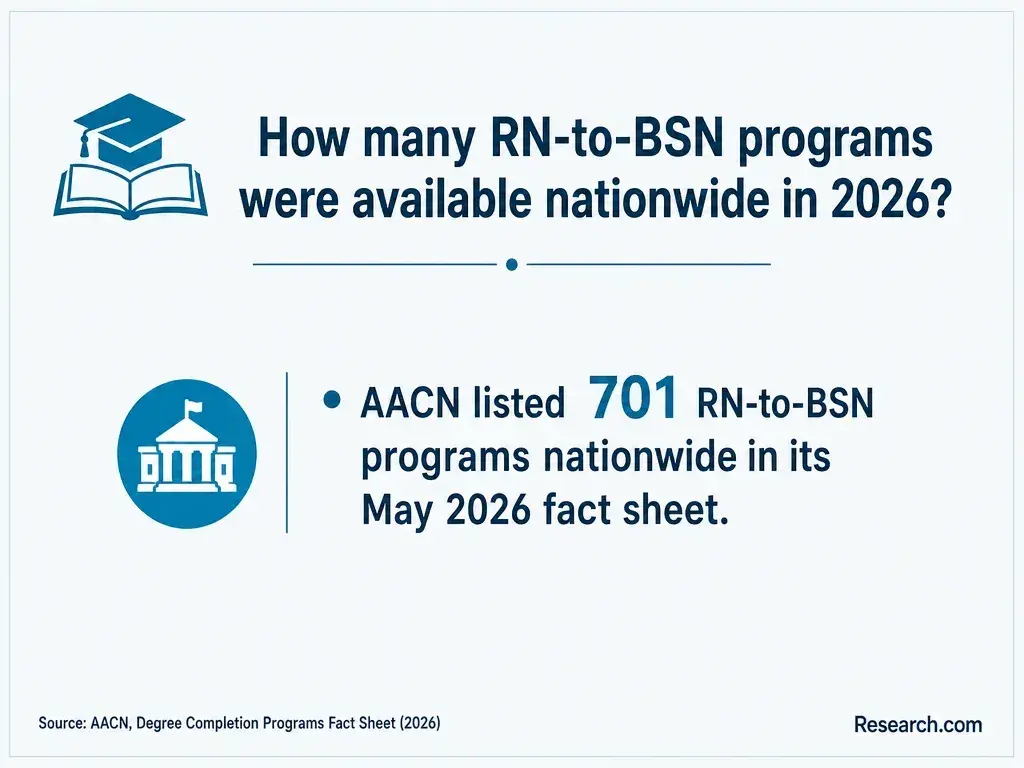
Online coursework can support RN education or continuing learning, but cath lab readiness requires hands-on, supervised work with patients, equipment, and the facility's team. A postlicensure online RN-to-BSN program may help meet an employer's degree policy; it does not independently validate cath lab competency.
Ask: "Which parts of training are online, and which require scheduled on-site attendance?" If you are balancing work or caregiving, request the actual training hours, simulation dates, and call start date. "Online" does not necessarily mean self-paced, and required in-person sessions may conflict with your existing schedule.
Clinical placement support matters in other online nursing pathways too: online FNP programs with preceptor support address graduate advanced practice preparation, not a substitute for employer-supervised cath lab orientation.
Expectations vary. An employer may seek RNs with critical care, emergency, procedural, telemetry, or previous cath lab experience because those settings develop relevant assessment, monitoring, and escalation skills. The transfer is not exact: an experienced ICU nurse may still need substantial time learning procedural flow and assigned lab roles. A new graduate should look for an explicitly supported entry pathway rather than assuming a general orientation will be enough.
Ask: "Which parts of my experience count toward this role, and where will I need supervised practice?" Discuss the patient acuity, typical staffing for routine and emergency cases, access to experienced colleagues, and who responds if a case exceeds your current competence. If the offer depends on independently covering a role you have not performed, clarify that expectation before signing.
Additional academic credentials do not erase this gap. Researching DNP application options by selectivity may make sense for a different long-term objective, but it does not establish readiness to take cath lab call.
There is no single authoritative national median specifically for cath lab nurses. The U.S. Bureau of Labor Statistics reported a $93,600 median annual wage for registered nurses in May 2024, covering RNs across many settings and specialties. It is a context figure, not a prediction of your cath lab offer or take-home pay.
Ask for a written breakdown of the offer. Base rate is only one component; the value of a call-heavy job depends on how standby time and actual call-ins are paid. The following components are worth distinguishing when comparing offers.
| Pay component | What it covers | Why it affects comparisons |
| Base pay | Regular scheduled hours | An annualized figure may assume hours that differ between offers. |
| Standby pay | Time assigned to be available for call | It may be much lower than the rate for hours worked. |
| Call-in pay | Hours actually worked after being called in | Minimum-pay rules and overtime treatment can differ. |
| Differentials and incentives | Eligible nights, weekends, holidays, or other specified shifts | Eligibility and availability may not be guaranteed. |
Confirm scheduled hours, overtime rules, benefits, sign-on bonus conditions, and any repayment clause. Compare the complete package against the time and travel required by call. If you are considering a different career route, affordable online advanced practice nursing routes involve additional education and distinct licensure considerations; an NP salary should not be used to value a cath lab RN offer.
What is the job outlook for cardiac catheterization lab nurses?
BLS does not publish a separate employment projection for cath lab nurses. Its projection for registered nurses was 5% employment growth from 2024 to 2034, across the broader occupation. That supports a general RN labor-market comparison, but it cannot tell you how many openings a particular cardiac program will have or whether its call staffing is sustainable.
Ask: "Why is this position open, and what has turnover been like on this team?" Ask how many RNs are trained to cover call, whether vacancies increase call frequency, and whether the lab is adding services. Request a chance to speak with a current nurse about the usual workweek. Answers about retention and coverage may be more useful to your decision than a national projection.
Career flexibility also depends on the direction you want to move. An RN planning a later switch to psychiatric advanced practice could consider online psychiatric NP master's schedule options, but that is a separate career path, not the expected progression for every cath lab nurse.
Other Things You Should Know About Nursing
Ask what protective equipment, monitoring, training, and exposure-reporting processes the lab uses. If you may need a pregnancy-related accommodation, ask how to discuss it through the employer's occupational health process rather than relying on informal assurances.
Usually not if the assignment expects rapid independent coverage. Review the contract's experience requirements and orientation provisions, and be candid about procedures and roles you have actually performed.
Yes. Request a conversation or shadow opportunity when available. Ask about the work as it is routinely staffed, including communication during emergencies and whether scheduled breaks and post-call rest are workable.
Ask the recruiter or hiring manager to clarify the discrepancy in writing before you accept. Pay terms, call obligations, degree deadlines, and promised training are especially important to resolve before making a decision.
- Radiation Safety in Medical Imaging - StatPearls - NCBI - NIH https://www.ncbi.nlm.nih.gov/books/NBK557499/
- Nursing Practice FAQ - Texas Board of Nursing - Texas.gov https://www.bon.texas.gov/faq_nursing_practice.asp
- Debriefing for Clinical Learning | PSNet https://psnet.ahrq.gov/primer/debriefing-clinical-learning
- Assessment of clinical competence in... - PMC - NIH https://pmc.ncbi.nlm.nih.gov/articles/PMC7668267/
- AORN Guidance Statement: Safe On-Call Practices in Perioperative Practice Settings - ScienceDirect https://www.sciencedirect.com/science/article/pii/S0001209206604730
- Nurse - Explore Healthcare Careers | Mayo Clinic College of Medicine and Science https://college.mayo.edu/academics/explore-health-care-careers/careers-a-z/nurse/
- Cardiac Cath Lab Procedures | matherhospital.org https://www.matherhospital.org/care-treatment/cardiac-cath-lab-procedures/
- What is Nursing? Your Questions Answered | ANA https://www.nursingworld.org/practice-policy/workforce/what-is-nursing/
- Cath/PCI Operations and Procedures | cvexcel.org https://www.cvexcel.org/Documents/CathPCIProcess.aspx