
2027 PhD vs Professional Doctorate in Leadership: Key Differences, Careers, and Salary Outcomes

Co-Founder and Chief Data Scientist
Choosing between a PhD and a professional doctorate in leadership is really a choice between producing new research and solving complex organizational problems. The stakes are high: BLS May 2024 wage data shows median pay above $100,000 for several leadership-adjacent roles, but salary depends more on occupation and sector than degree title.
This guide is for aspiring faculty, executives, consultants, administrators, and senior managers comparing doctoral paths. You will learn how the degrees differ in curriculum, research, cost, time, career fit, salary context, and how to choose the path that best supports your goals.
Key Things You Should Know
- A PhD in leadership is usually best for research, theory-building, and tenure-track academic goals, while a professional doctorate such as an EdD, DBA, or Doctor of Strategic Leadership is typically designed for applied leadership, organizational change, executive practice, or consulting.
- Cost and funding can differ sharply: NCES graduate tuition data released in 2024 shows average annual graduate tuition and required fees of $12,596 at public institutions and $29,931 at private nonprofit institutions, while fully funded PhD options are more common than fully funded professional doctorates.
- Neither doctorate automatically pays more; BLS May 2024 median wages vary by role, with postsecondary teachers at $83,980, management analysts at $101,190, training and development managers at $125,040, and top executives at $105,350.
What Is the Difference Between a PhD and a Professional Doctorate in Leadership?
A PhD in leadership is a research doctorate. It prepares students to create original scholarship about leadership theory, organizational behavior, policy, ethics, change, education, public administration, or management. A professional doctorate in leadership is a practice doctorate. It prepares experienced professionals to apply research to real organizations, improve systems, lead change, and evaluate results.
The distinction matters because employers and universities may interpret the degrees differently. A PhD is often the clearer fit for faculty research positions, while a professional doctorate is often the more direct fit for executives, school and higher education administrators, nonprofit leaders, organizational consultants, and senior managers who want doctoral-level credibility without leaving practice.
The table below summarizes the decision at a practical level. Use it to match each degree type with the work you want to do after graduation.
| Comparison point | PhD in leadership | Professional doctorate in leadership |
| Primary purpose | Generate original research and advance leadership theory | Apply research to leadership problems in organizations |
| Best fit | Aspiring professors, academic researchers, policy researchers, research directors | Executives, administrators, consultants, nonprofit leaders, HR and organizational development leaders |
| Typical degree names | PhD in Leadership, PhD in Organizational Leadership, PhD in Educational Leadership | EdD in Leadership, DBA with leadership concentration, Doctor of Strategic Leadership, Doctor of Organizational Leadership |
| Final project | Dissertation based on original research | Dissertation-in-practice, applied dissertation, consulting project, or capstone |
| Research depth | High emphasis on methodology, theory, publication, and scholarly contribution | Moderate to high emphasis on evidence-based practice, evaluation, and applied inquiry |
| Common format | Full-time, research-intensive, sometimes funded; online options also exist | Part-time, cohort-based, online, or hybrid formats designed for working adults |
A useful shortcut is this: choose the PhD if you want your main output to be research that other scholars use; choose the professional doctorate if you want your main output to be organizational improvement that employers, clients, or communities can use.
How Do PhD and Professional Doctorate Curricula, Research, and Capstone Requirements Differ in Leadership?
Leadership doctoral programs often overlap in topics such as ethics, organizational theory, strategy, diversity, decision-making, and change management. The difference is how students use that knowledge. PhD students usually learn to frame unanswered scholarly questions, while professional doctorate students usually learn to diagnose and solve problems in a real workplace or professional setting.
The curriculum comparison below shows how the same broad field can lead to different academic experiences and final projects:
| Program element | PhD pathway | Professional doctorate pathway |
| Core leadership courses | Leadership theory, organizational theory, research foundations, ethics, policy, systems thinking | Strategic leadership, change leadership, organizational assessment, innovation, team development, ethics |
| Research methods | Advanced quantitative, qualitative, mixed methods, statistics, theory design, scholarly writing | Applied research, program evaluation, improvement science, action research, evidence-based decision-making |
| Residencies or seminars | May include research colloquia, teaching preparation, publication workshops, or dissertation seminars | May include leadership labs, executive residencies, consulting simulations, or practitioner seminars |
| Final requirement | Original dissertation that contributes new knowledge to the field | Applied dissertation, dissertation-in-practice, or capstone addressing a real leadership problem |
| Expected audience | Faculty committees, academic journals, conferences, researchers | Organizational leaders, boards, agencies, clients, communities, professional stakeholders |
Before applying, ask programs to show examples of recent dissertations or capstones. The title of the degree is less important than the type of work students actually complete. A "leadership" doctorate can be highly theoretical at one university and strongly applied at another.
Common mistakes in this area include choosing a PhD because it sounds more prestigious, choosing an applied doctorate because it seems faster, or ignoring the final project until the dissertation stage. A better approach is to review faculty research interests, capstone expectations, methods courses, and completion support before enrolling.
What Are the Admissions Requirements for a PhD vs Professional Doctorate in Leadership?
Admissions requirements vary by university, but PhD programs tend to emphasize research potential, academic fit, and evidence that the applicant can complete original scholarship. Professional doctorate programs tend to emphasize leadership experience, professional impact, and the ability to apply research in a real organization.
Most applicants should compare requirements in four categories: academic preparation, professional background, writing and research readiness, and program fit. The list below explains what to expect and why it matters:
- Prior degree: Many programs require a master's degree, though some PhD programs admit bachelor's-to-doctorate students. Leadership doctorates often prefer a graduate background in education, business, public administration, psychology, organizational development, or a related field.
- GPA expectations: Programs commonly look for strong graduate academic performance. Highly research-oriented PhD programs may scrutinize methodology coursework, thesis experience, or evidence of scholarly writing more closely.
- Work experience: Professional doctorates often expect several years of leadership, management, teaching, military, nonprofit, healthcare, or administrative experience. PhD programs may value experience, but it is usually not a substitute for research fit.
- Statement of purpose: PhD applicants should identify research interests and potential faculty mentors. Professional doctorate applicants should explain the leadership problems they want to solve and the setting where they hope to apply the degree.
- Writing sample: PhD programs may request academic research papers. Professional doctorate programs may accept policy papers, professional reports, analytical essays, or other evidence of advanced writing.
- GRE or GMAT: Many leadership doctorates have moved away from standardized testing, especially online and professional programs, but selective research programs may still require or recommend scores.
The strongest application is not necessarily the one with the most impressive job title. It is the one that shows a clear match between the applicant's goals, the program's design, and the faculty or practitioner expertise available.
How Long Does a PhD vs Professional Doctorate in Leadership Take, and Can You Work While Studying?
A PhD in leadership often takes longer because students complete deeper research training, comprehensive exams, and an original dissertation. A professional doctorate may be structured for working adults and may use a cohort model, applied research sequence, or capstone schedule that keeps students moving through the program.
Typical completion time depends on enrollment status, dissertation progress, transfer credits, and whether the student pauses for work or family obligations. The table below gives a realistic planning range rather than a promise.
| Study format | PhD in leadership | Professional doctorate in leadership |
| Full-time study | Often about 4 to 6 years, depending on dissertation progress and research expectations | Often about 3 to 4 years when the program is highly structured |
| Part-time study | Often 5 to 8 years or more, especially if dissertation work slows | Often 3 to 5 years, especially in cohort-based online or hybrid formats |
| Working while enrolled | Possible, but harder in funded or research-assistantship models that expect campus presence | Common, because many programs are designed around full-time professionals |
| Main delay risk | Dissertation design, data collection, publication expectations, faculty availability | Capstone scope creep, workplace access issues, balancing executive responsibilities |
Fast options exist, but readers should be careful with speed claims. Some accelerated education doctorates may suit experienced professionals with transfer credits and a focused project; others may compress coursework without reducing the time needed for serious applied research. If speed is a major factor, compare options such as 1 year EdD programs online carefully and verify accreditation, credit requirements, and final project expectations.
If you plan to work while studying, ask how often students meet, whether synchronous sessions are required, how dissertation advising works, and how many hours per week successful students typically spend on coursework and research. A manageable program is not simply shorter; it is structured in a way that fits your work calendar and support system.
How Much Does a PhD vs Professional Doctorate in Leadership Cost, and Which Offers Better Funding?
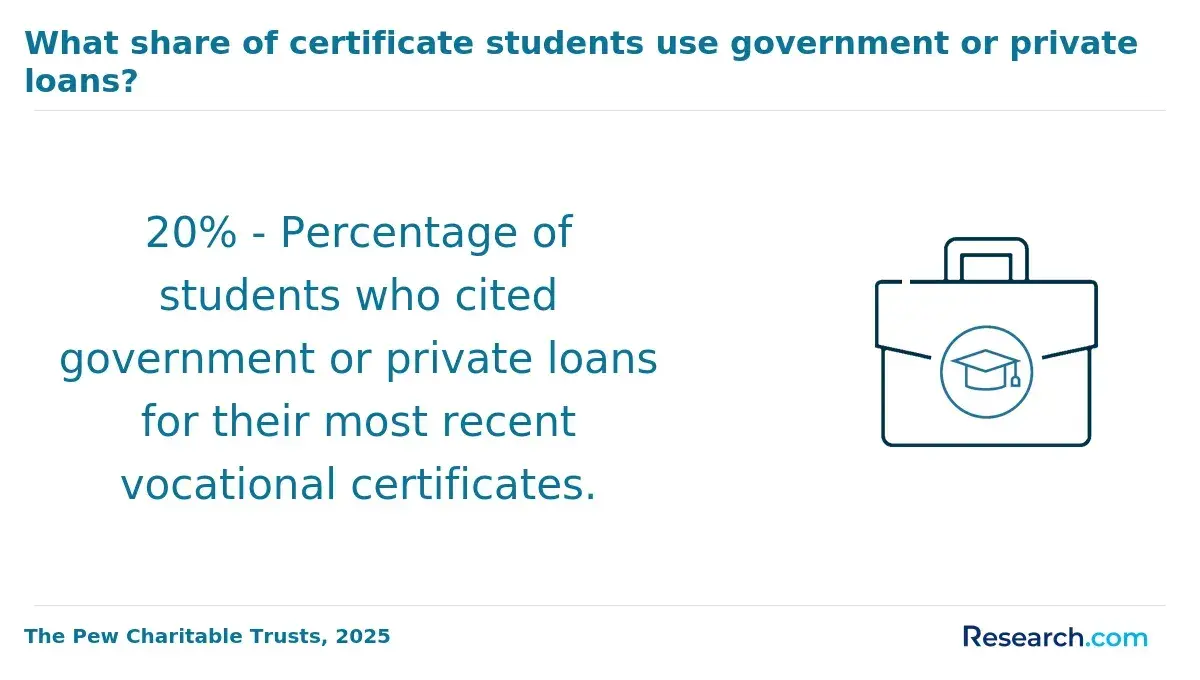
Cost is one of the biggest differences between a PhD and a professional doctorate in leadership. Traditional full-time PhD programs may offer assistantships, tuition remission, stipends, or research funding, especially at research universities. Professional doctorates are more often self-funded through savings, employer tuition benefits, federal loans, or monthly payment plans.
NCES graduate tuition data released in 2024 shows why the institution type matters: average annual graduate tuition and required fees were $12,596 at public institutions and $29,931 at private nonprofit institutions. That figure does not include books, technology fees, travel for residencies, lost income, or interest on borrowed funds, so applicants should calculate the total cost of attendance rather than comparing tuition alone.
The table below shows the main cost and funding trade-offs to evaluate before choosing a program:
| Cost factor | PhD in leadership | Professional doctorate in leadership |
| Tuition structure | May be funded in full-time research programs; online or part-time PhDs may charge per credit | Usually charged per credit or per term, often with fewer full funding options |
| Assistantships | More common, especially for campus-based research or teaching roles | Less common, because students are usually employed professionals |
| Employer support | Possible but less common when the program is not directly tied to current job duties | Often more relevant if the degree supports leadership development or organizational goals |
| Loan exposure | Can be low in funded programs but high in self-funded programs | Can be substantial if tuition is high and employer support is limited |
| Opportunity cost | Higher if full-time study requires leaving the workforce | Lower if the student keeps working, but time pressure can be significant |
Federal borrowing costs also affect ROI. For loans first disbursed in the 2025-2026 award year, graduate Direct Unsubsidized Loans carry a 7.94% fixed interest rate, while Direct PLUS Loans carry an 8.94% fixed interest rate. For a leadership doctorate, this means a lower tuition program is not automatically cheaper if it takes longer, and a higher tuition program is not automatically worse if it preserves income and leads to a realistic promotion path.
Applicants comparing an online format should examine tuition, residency costs, student support, and completion data. A resource on a doctorate in organizational leadership online can be a useful starting point, but the final decision should be based on accreditation, fit, total cost, and career relevance.
What Careers Can You Pursue With a PhD vs Professional Doctorate in Leadership?
Leadership doctorates are flexible because "leadership" is not one occupation. Graduates may work in higher education, business, nonprofit organizations, government, healthcare administration, K-12 systems, consulting, human resources, organizational development, or executive roles. The right doctorate depends on which labor market you want to enter.
The table below connects common career directions with the doctorate type that usually fits best. It is not a rule; it is a practical way to think about alignment.
| Career direction | Common responsibilities | Better-fitting doctorate in many cases |
| Tenure-track professor or academic researcher | Publish research, teach graduate courses, advise students, pursue grants | PhD |
| Higher education administrator | Lead academic departments, student services, enrollment, institutional strategy, assessment | Professional doctorate or PhD, depending on the role |
| Organizational development consultant | Diagnose culture issues, design change initiatives, coach leaders, evaluate interventions | Professional doctorate |
| Executive or senior manager | Set strategy, manage teams, lead transformation, make high-stakes organizational decisions | Professional doctorate, though a PhD may fit research-heavy sectors |
| Policy or leadership researcher | Design studies, analyze systems, write reports, support evidence-based policy | PhD |
| Training and development leader | Build leadership programs, assess learning needs, measure workforce development outcomes | Professional doctorate |
For business-focused readers, a doctorate may not be the only step. Some professionals first strengthen finance, operations, strategy, or management foundations through an online business degree before deciding whether doctoral study is necessary for their target role.
Skills often matter as much as the degree name. Employers may look for evidence that you can lead change, use data, communicate with executives, manage conflict, evaluate programs, and make ethical decisions. A dissertation or capstone can become a strong career asset if it produces a portfolio-worthy solution, publication, consulting framework, or measurable organizational improvement.
Which Pays More: a PhD or Professional Doctorate in Leadership?
Neither a PhD nor a professional doctorate in leadership has a built-in salary advantage. Pay is tied to role, industry, geography, leadership scope, budget responsibility, experience, and whether the position is academic, corporate, public sector, nonprofit, or consulting-based.
BLS May 2024 wage data helps frame realistic salary conversations. Use the table below as occupational context, not as a prediction of what any individual graduate will earn:
| Leadership-related occupation | Median annual wage, BLS May 2024 | How doctorate type may matter |
| Postsecondary teachers | $83,980 | A PhD is often preferred or required for tenure-track research roles; professional doctorates may be accepted in applied fields or practitioner programs. |
| Postsecondary education administrators | $103,960 | Either degree can fit; experience in higher education leadership often carries substantial weight. |
| Management analysts | $101,190 | A professional doctorate can support consulting credibility, while a PhD may help in research-intensive advisory roles. |
| Training and development managers | $125,040 | A professional doctorate can align well with learning strategy, leadership development, and organizational change roles. |
| Top executives | $105,350 | Degree type is usually less important than executive track record, industry, organization size, and measurable results. |
A PhD may pay more when it leads to funded research roles, research administration, consulting based on specialized expertise, or long-term academic advancement. A professional doctorate may pay more when it helps a working professional move into executive leadership, consulting, organizational development, or senior administration without leaving the workforce.
The safest way to estimate salary value is to compare the degree against a specific target role. Look at job postings, alumni outcomes, promotion requirements, and whether current leaders in that field hold doctorates. If the role does not require a doctorate, the degree should offer a clear strategic benefit such as credibility, specialization, network access, or a capstone directly tied to business results.
What Is the Job Outlook for PhD and Professional Doctorate Graduates in Leadership?
The job outlook for leadership doctorate graduates depends on the occupation they pursue. Leadership is a cross-functional credential, so the degree can point toward higher education, management, consulting, organizational development, training, policy, or executive work rather than a single job title.
BLS Employment Projections for 2024-2034, released in 2025, show stronger growth in some leadership-adjacent roles than others. Management analysts are projected to grow 9%, while postsecondary teachers and training and development managers are each projected to grow 7%. This suggests that applied analytical, organizational improvement, and teaching-related skills remain relevant, but competition can still be intense in selective academic and executive markets.
Several current trends should shape your decision. Organizations are using AI tools for analytics, learning design, workforce planning, and decision support, which increases the value of leaders who can evaluate evidence and manage change responsibly. Employers are also scrutinizing credentials more carefully, asking not just whether applicants have a doctorate but whether they can produce measurable results. At the same time, academic faculty roles can be competitive, so PhD applicants should investigate placement records before assuming a tenure-track outcome.
To improve your outlook, choose a program that helps you build evidence of impact. That may mean publishing with faculty, presenting at conferences, completing a workplace capstone, building a consulting portfolio, or using data to solve a real organizational problem.
How Do Accreditation, Licensure, and Employer Recognition Differ for PhD vs Professional Doctorate in Leadership?
Accreditation is essential for both PhD and professional doctorate programs. At a minimum, the institution should hold recognized institutional accreditation. Depending on the field, additional programmatic accreditation may matter, especially in education, business, public administration, counseling-adjacent roles, healthcare administration, or school leadership.
Licensure is more complicated. A leadership doctorate by itself usually does not grant licensure for roles such as school superintendent, principal, psychologist, counselor, nurse executive, or healthcare administrator. State boards and employers may require specific degrees, supervised experience, exams, certifications, or administrator credentials. If your goal is regulated, verify requirements before applying.
Employer recognition depends on context. Universities may strongly prefer a PhD for research faculty roles, while applied programs may accept an EdD or other professional doctorate when the candidate has strong industry expertise. Corporations and nonprofits may care less about the exact doctorate name and more about whether the degree came from a credible institution and produced practical leadership capability.
Before enrolling, ask these questions so you do not confuse a respected degree with the right degree for your goal:
- Is the institution accredited by a recognized accreditor, and is the program accepted by employers in my target field?
- If I need licensure or certification, does this program meet my state's requirements or clearly state that it does not?
- Do graduates obtain the kinds of roles I want, and can the school provide examples beyond marketing claims?
- Who supervises dissertations or capstones, and do their expertise areas match my intended topic?
- Will the degree title be understandable to hiring committees, promotion boards, clients, or academic departments?
Red flags include vague accreditation language, unclear dissertation expectations, no faculty match, limited student support, aggressive claims about guaranteed promotions, and programs that cannot explain how graduates use the degree.
Is a PhD or Professional Doctorate in Leadership Worth It for Your Career Goals?
A leadership doctorate can be worth it when it solves a specific career problem: qualifying for academic roles, increasing credibility as a consultant, preparing for senior administration, building research expertise, or supporting a transition into organizational development or executive leadership. It is less likely to be worth it if the goal is vague, the program is expensive, or the target role does not value doctoral training.
Use the following decision framework to choose the better path. These steps are more reliable than choosing based on prestige or speed alone:
- Start with the role, not the degree: Identify three job titles you want and review requirements, preferred credentials, salary ranges, and common career histories.
- Choose the PhD if research is central: If your goal is publishing, university teaching, policy research, or theory development, prioritize faculty fit, research methods, funding, and placement records.
- Choose the professional doctorate if the application is central: If your goal is organizational change, executive practice, consulting, or applied administration, prioritize flexible format, capstone support, practitioner faculty, and employer relevance.
- Calculate total ROI: Include tuition, fees, loan interest, travel, books, time away from work, employer reimbursement, and realistic salary movement in your target occupation.
- Check completion support: Ask about dissertation timelines, advisor load, cohort persistence, writing support, research access, and what happens if your workplace capstone site changes.
- Avoid credential stacking without strategy: If you lack leadership foundation coursework, a master's or certificate may be a better first step than moving directly into a doctorate.
For some professionals, a doctorate is not the next best move. If you want to strengthen leadership, change management, and organizational development skills before committing to doctoral study, comparing the best organizational development master's programs online may be a more cost-effective step.
The clearest answer is this: choose a PhD in leadership when you want to become a scholar of leadership; choose a professional doctorate when you want to become a more evidence-driven leader, consultant, or change agent. Both can be valuable, but only when the program, cost, format, and final project align with your real career destination.
Other Things You Should Know About Leadership
Yes, a professional doctorate is a doctoral degree, so graduates may generally use the title "Doctor" in academic and professional contexts. In workplace settings, it is wise to use the title clearly and ethically so people do not assume you are a medical doctor or licensed clinician.
No. An EdD is usually an applied professional doctorate focused on improving practice, while a PhD is usually a research doctorate focused on producing original scholarship. Some programs overlap, so always compare the curriculum, faculty, dissertation model, and graduate outcomes.
Sometimes. Professional doctorates may qualify graduates to teach in applied, practitioner-oriented, adjunct, or professional programs. Tenure-track research positions, especially at research universities, more often prefer or require a PhD and a strong publication record.
Ask about accreditation, total cost, funding, average time to completion, dissertation or capstone support, faculty availability, online residency requirements, alumni roles, and whether the program fits your target career. Also ask for examples of recent final projects so you can judge the program's real focus.
References
- Master’s vs PhD: Which Degree Is Right for Your Career Goals? https://theredpen.in/blog/masters-vs-phd-everything-you-need-to-know/
- Educational Leadership: Master’s vs. Doctorate Degree - Graduate Programs for Educators https://www.graduateprogram.org/blog/masters-vs-doctorate-educational-leadership-degree/
- PhD Student Salary Guide (2026) https://www.applykite.com/blog/phd-student-salary
- DrPH vs. PhD — National Association for Doctors of Public Health https://nadrph.org/drphvsphd
- Doctorate vs PhD: Key Differences Explained (2026 Guide) https://zoclearnings.com/blogs/doctorate-vs-phd/
- 13 Highest-Paying Doctoral Degrees in 2026 https://www.edumindslearning.com/blog/highest-paying-doctoral-degrees
- Doctorate Degree Types | Doctorate vs PhD Fully Explained https://applyindex.com/admission-basics/doctorate-degree-types/


