
2027 PhD vs Professional Doctorate in Health Services: Key Differences, Careers, and Salary Outcomes

Co-Founder and Chief Data Scientist
Choosing between a PhD and a professional doctorate in health services is really a choice between creating new evidence and applying evidence to improve care systems. The decision matters because BLS data shows medical and health services managers had a median wage of $117,960 in May 2024, while demand for leadership, analytics, quality, and research expertise continues to grow.
This guide is for healthcare professionals, researchers, administrators, and master's graduates comparing doctoral options. You will learn how each path differs in training, career fit, salary context, funding, and long-term value.
Key Things You Should Know
- A PhD in health services is usually the stronger fit for academic research, tenure-track teaching, policy analysis, and externally funded research roles; a professional doctorate such as a DHA, DHSc, or DrPH is usually designed for applied leadership, quality improvement, health system strategy, and practice-based change.
- Salary depends more on occupation, employer, experience, and industry than on the doctorate name: BLS reported a May 2024 median wage of $117,960 for medical and health services managers, while research and faculty roles follow different labor markets and pay structures.
- PhD programs are more likely to offer assistantships, tuition remission, and stipends, while professional doctorates are more often self-funded or employer-funded; NCES-published data shows average graduate tuition and required fees were $12,596 at public institutions and $29,931 at private nonprofit institutions in 2022-23.
What Is the Difference Between a PhD and a Professional Doctorate in Health Services?
A PhD in health services is a research doctorate. Its purpose is to train scholars who can design studies, analyze complex health system problems, publish original research, teach at the university level, and contribute to health policy, healthcare delivery science, health economics, implementation science, or outcomes research.
A professional doctorate in health services is a practice doctorate. Common examples include the Doctor of Health Administration, Doctor of Health Science, and Doctor of Public Health. These programs are typically built for experienced professionals who want to lead organizations, improve systems, evaluate programs, implement evidence-based interventions, or influence population health practice.
The difference is not that one is "higher" than the other. The better choice depends on what kind of work you want to do after graduation. Use the comparison below to clarify the core distinction before you evaluate schools.
| Comparison point | PhD in Health Services | Professional doctorate in Health Services |
| Primary purpose | Produce original research and new knowledge | Apply research to solve real healthcare and public health problems |
| Best fit | Future researchers, faculty, policy scholars, and research directors | Healthcare executives, clinical leaders, quality directors, consultants, and public health leaders |
| Typical final project | Dissertation based on original research | Applied dissertation, doctoral project, capstone, or practice-based portfolio |
| Learning emphasis | Research methods, theory, statistics, scholarly publication, grants | Leadership, strategy, quality improvement, implementation, finance, evaluation |
| Common work setting | Universities, research institutes, government agencies, policy organizations | Hospitals, health systems, insurers, nonprofits, consulting firms, public agencies |
For many students, the practical question is whether they want to spend their doctoral years building a research agenda or solving an organizational problem. If you want to become a principal investigator or professor, a PhD is usually the cleaner signal. If you want to move into senior health system leadership, a professional doctorate may be more directly aligned.
How Do PhD and Professional Doctorate Curricula, Research, and Capstone Requirements Differ in Health Services?
Both doctoral paths can include advanced coursework in healthcare systems, policy, population health, ethics, and leadership. The major difference is how those courses are used: PhD students learn to generate publishable evidence, while professional doctorate students learn to translate evidence into practice.
The curriculum structure below shows how the two paths usually diverge after foundational doctoral coursework:
| Program component | PhD pathway | Professional doctorate pathway |
| Research methods | Heavy emphasis on quantitative, qualitative, mixed methods, causal inference, and statistical modeling | Applied research, evaluation methods, quality improvement metrics, and decision-making tools |
| Theory | Strong focus on health services theory, organizational theory, policy theory, or social science frameworks | Usually tied to leadership models, change management, implementation, and systems improvement |
| Residency or immersion | May include research seminars, teaching apprenticeships, or lab participation | May include executive residencies, applied intensives, fieldwork, or employer-based projects |
| Final requirement | Original dissertation that contributes new knowledge to the field | Capstone, applied dissertation, doctoral project, or portfolio addressing a real practice problem |
| Output | Peer-reviewed manuscripts, conference presentations, grant proposals, dissertation defense | Implementation plan, program evaluation, quality initiative, policy analysis, executive recommendation, or practice change project |
A PhD dissertation generally asks, "What new knowledge can I contribute?" A professional doctorate capstone generally asks, "What evidence-based solution can I implement or evaluate?" That distinction affects your reading load, faculty mentorship, statistical training, and the kind of professional portfolio you graduate with.
Before choosing a program, ask how students are mentored through the final project. Strong doctoral programs should be able to explain the sequence from coursework to proposal, data collection or project implementation, final defense, and dissemination.
What Are the Admissions Requirements for a PhD vs Professional Doctorate in Health Services?
Admissions requirements overlap, but committees often look for different signals. PhD admissions committees usually prioritize research readiness and faculty fit, while professional doctorate programs often prioritize leadership experience, applied problem-solving, and readiness to complete a major practice project.
Applicants coming from a masters in healthcare administration, public health, nursing, health informatics, business, social science, or a related clinical field may be competitive for either pathway, depending on the program's focus.
Most programs evaluate a mix of academic preparation, professional background, writing ability, and goal alignment. The details vary by school, but the following requirements are common:
- Previous degree: Many programs require a master's degree, although some PhD programs admit exceptional bachelor's-prepared students into longer doctoral tracks.
- Professional experience: Professional doctorates often prefer or require healthcare, public health, clinical, administrative, policy, or leadership experience; PhD programs may value research assistantship, publication, thesis, or analytic experience more heavily.
- Statement of purpose: PhD applicants should identify research interests and potential faculty mentors; professional doctorate applicants should describe a leadership problem, practice interest, or system improvement goal.
- Writing sample: PhD programs may request a research paper or thesis excerpt; professional doctorate programs may accept policy briefs, graduate papers, leadership essays, or applied project examples.
- Recommendations: PhD applicants benefit from letters from researchers or faculty; professional doctorate applicants benefit from letters that document leadership, judgment, and readiness for doctoral-level practice.
One common mistake is applying to a PhD program with only a leadership goal or applying to a professional doctorate with only an academic research goal. Admissions committees look for fit. If your application does not match the program's mission, even strong credentials may not be enough.
How Long Does a PhD vs Professional Doctorate in Health Services Take, and Can You Work While Studying?
Time commitment is one of the biggest practical differences. PhD programs in health services commonly take longer because students move through advanced methods training, comprehensive exams, dissertation proposal development, data collection, analysis, and defense. Professional doctorates are often designed for working adults and may follow a more structured cohort model.
If speed is a priority, compare doctoral options with care rather than assuming the shortest program is the best value. Students still building foundational healthcare administration credentials may also want to review accelerated healthcare programs before committing to a doctorate.
The table below summarizes typical patterns, but individual programs can differ widely by enrollment status, dissertation pace, transfer credits, and whether the student changes topics or advisors:
| Timeline factor | PhD in Health Services | Professional doctorate in Health Services |
| Common study pattern | Often full-time, especially when funded | Often part-time, online, hybrid, or executive-format |
| Typical length | Often about 4 to 7 years, depending on dissertation progress and funding structure | Often about 3 to 5 years, depending on capstone scope and course load |
| Work compatibility | Possible, but full-time funded programs may restrict outside work | Usually more compatible with full-time employment |
| Biggest delay risk | Dissertation design, data access, analysis, publication expectations, advisor changes | Capstone site access, organizational approvals, implementation barriers, workload balance |
Working while studying is usually easier in a professional doctorate because many programs expect students to bring workplace problems into their doctoral projects. In a PhD program, outside work can be harder to manage if the program requires daytime seminars, research assistantships, teaching duties, or campus-based collaboration.
Before enrolling, ask how many students finish on time, how often students extend the dissertation or capstone phase, and whether employment is permitted under assistantship rules. Completion support matters as much as advertised program length.
How Much Does a PhD vs Professional Doctorate in Health Services Cost, and Which Offers Better Funding?
Cost and funding can change the entire value equation. PhD programs, especially campus-based research doctorates, are more likely to offer assistantships, tuition remission, health insurance subsidies, and stipends. Professional doctorates are often tuition-driven programs, although some students receive employer tuition assistance, military benefits, scholarships, or federal loans.
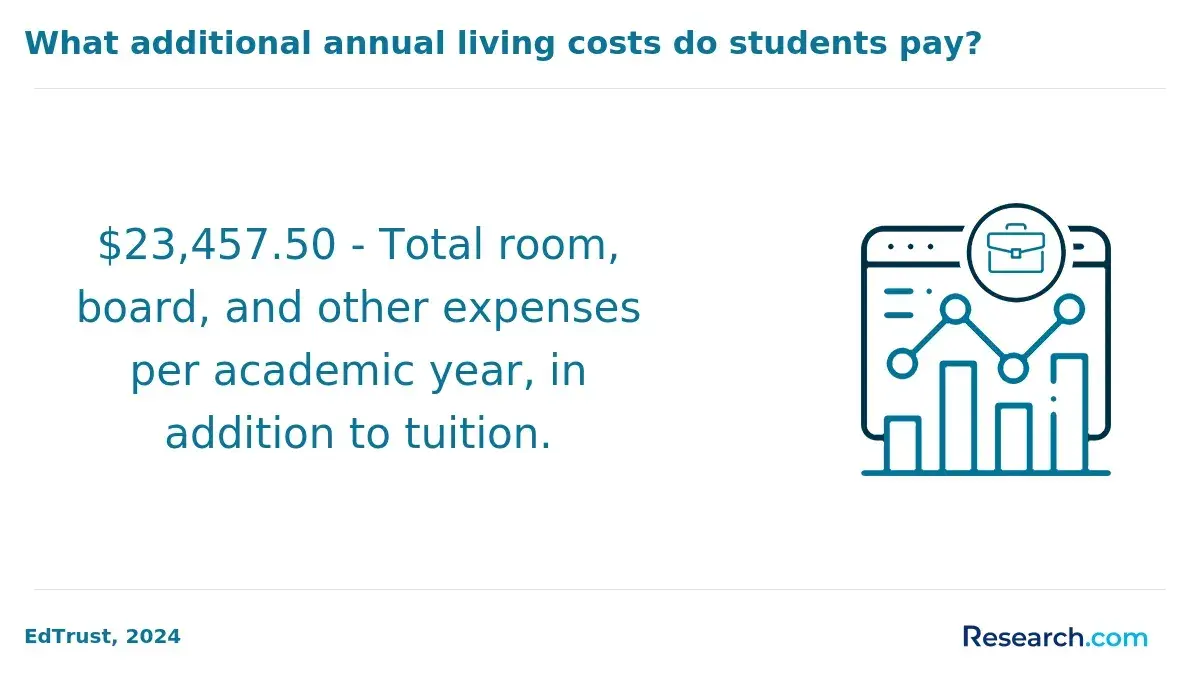
For cost comparison, NCES-published data shows average graduate tuition and required fees of $12,596 at public institutions and $29,931 at private nonprofit institutions in 2022-23. This does not represent the full cost of a doctorate, because living expenses, fees, travel for residencies, lost work time, books, technology, and dissertation or capstone costs can add substantially to the total.
Students comparing affordability should look beyond the per-credit price. If you are still considering lower-cost healthcare administration pathways before doctoral study, resources on the cheapest online healthcare administration degree options can help you understand how program format affects cost.
The table below highlights the main financial trade-offs between the two doctoral routes:
| Cost factor | PhD in Health Services | Professional doctorate in Health Services |
| Tuition structure | May be reduced or waived for funded students | Often charged per credit or by term, especially in online and executive formats |
| Funding availability | More likely to include assistantships, fellowships, grants, or research funding | More likely to rely on self-pay, employer support, scholarships, or loans |
| Opportunity cost | Higher if full-time study reduces earnings for several years | Lower if the student remains employed while studying |
| Travel and residency costs | Often tied to campus attendance or conferences | May include short residencies, intensives, or project-site expenses |
| Financial risk | Unfunded PhD study can be expensive and time-intensive | High tuition can reduce ROI if the degree does not align with advancement goals |
Graduate borrowers should also understand federal loan limits. For the 2024-25 aid year, Direct Unsubsidized Loans for graduate and professional students are capped at $20,500 per academic year, while Grad PLUS Loans can cover the remaining eligible cost of attendance subject to credit requirements. That structure can make doctoral borrowing easy to access but expensive over time.
A practical rule: compare the net cost after grants, employer support, tuition remission, and lost income. A funded PhD can be financially attractive for research careers, while a self-funded professional doctorate can still make sense if it directly supports promotion, executive mobility, consulting income, or a leadership role you are already positioned to pursue.
What Careers Can You Pursue With a PhD vs Professional Doctorate in Health Services?
A PhD and a professional doctorate can both support advanced careers in health services, but they usually open different doors. The PhD is strongest for research-intensive roles, while the professional doctorate is strongest for applied leadership, organizational change, and executive practice.
The career examples below are not guarantees or exclusive tracks. Employers may accept either doctorate depending on the position, but the degree's focus should match the work you want to do every week.
| Career direction | Better-aligned doctorate | Typical responsibilities |
| University faculty in health services, health administration, or public health | PhD | Teach, publish research, mentor students, pursue grants, serve on academic committees |
| Health services researcher | PhD | Design studies, analyze healthcare delivery data, publish findings, evaluate policy or interventions |
| Healthcare executive or senior administrator | Professional doctorate | Lead departments, manage strategy, oversee budgets, improve operations, guide organizational change |
| Quality improvement or patient safety leader | Professional doctorate | Implement evidence-based initiatives, track performance metrics, reduce variation, improve outcomes |
| Public health practice leader | Professional doctorate, especially DrPH | Lead population health programs, coordinate agencies, evaluate interventions, communicate policy recommendations |
| Policy analyst or health policy researcher | Often PhD, depending on the role | Analyze regulations, payment models, access issues, population outcomes, or system performance |
| Healthcare consultant | Either, depending on the niche | Advise organizations on strategy, operations, analytics, compliance, quality, or transformation projects |
Skills matter as much as the credential. PhD graduates should be able to show strong methods, publications, data analysis, and research communication. Professional doctorate graduates should be able to show measurable leadership outcomes, change management, financial literacy, implementation skill, and stakeholder communication.
Health information, analytics, and digital records are also shaping career options. Readers comparing data-centered management roles can use information on health information management salary to see how healthcare data careers differ from broader doctoral-level administration and research paths.
Which Pays More: a PhD or Professional Doctorate in Health Services?
Neither doctorate automatically pays more. Salary outcomes in Health Services are driven by the job title, employer type, region, leadership scope, funding source, and years of experience. A PhD graduate in a research faculty role may earn less than a professional doctorate graduate in an executive role, while a PhD graduate in health economics, consulting, analytics, or policy research may out-earn some applied leadership roles.
BLS reported a May 2024 median annual wage of $117,960 for medical and health services managers. That figure is useful because many professional doctorate graduates target management or executive tracks, but it does not isolate doctorate holders and should not be treated as a predicted salary after graduation.
The table below gives a practical salary-context comparison using common career categories rather than promising degree-based earnings:
| Role category | Typical doctorate alignment | Salary interpretation |
| Medical and health services management | Professional doctorate often aligns well | Pay often rises with organizational size, budget responsibility, executive scope, and experience |
| University faculty | PhD often aligns best | Pay varies by institution type, rank, tenure status, discipline, grant activity, and location |
| Health services research | PhD often aligns best | Pay varies across universities, government, think tanks, research firms, and consulting organizations |
| Public health leadership | DrPH or PhD, depending on the role | Pay depends on agency type, grant funding, supervisory scope, and policy responsibility |
| Healthcare consulting and strategy | Either doctorate can fit | Pay is highly variable and tied to specialization, client base, business development, and sector expertise |
The highest-ROI doctorate is the one that moves you into the role you are actually targeting. If your goal is a tenure-track or principal investigator role, a professional doctorate may not carry the same research signal. If your goal is executive advancement, a PhD may be more research-heavy than necessary unless the role requires analytics, policy, or academic credibility.
What Is the Job Outlook for PhD and Professional Doctorate Graduates in Health Services?
The job outlook for doctoral-level health services graduates is shaped by healthcare spending, aging populations, value-based care, health technology, public health needs, and pressure to improve quality while controlling costs. Doctoral training can help, but the labor market rewards specific capabilities more than degree labels.
BLS projects employment for medical and health services managers to grow 23% from 2024 to 2034, much faster than the average for all occupations. This supports demand for experienced healthcare leaders, but competition for senior roles can still be strong because employers often want a record of measurable results, not only an advanced credential.
Several current trends affect the PhD-versus-professional-doctorate decision:
- AI and analytics are changing health services work: Leaders increasingly need to understand data governance, predictive analytics, automation risk, privacy, and ethical use of AI, while researchers need stronger methods for studying digital health interventions.
- Employers want evidence of implementation skill: Professional doctorate graduates can stand out when their capstone demonstrates measurable quality, cost, access, safety, or workflow improvement.
- Academic research careers remain competitive: PhD students should build publications, grants experience, teaching records, and methodological depth early rather than relying on the doctorate alone.
- Online and hybrid doctorates have expanded access: Flexible formats help working professionals, but students should verify faculty access, dissertation or capstone support, accreditation, and student outcomes.
- Credential stacking is common: Professionals often combine doctoral study with certifications in quality, informatics, project management, compliance, public health, or analytics to signal applied expertise.
The strongest candidates are usually those who can connect doctoral training to a concrete market need: improving care delivery, reducing inequities, managing complex organizations, evaluating policy, implementing technology, or producing rigorous evidence that decision-makers can use.
How Do Accreditation, Licensure, and Employer Recognition Differ for PhD vs Professional Doctorate in Health Services?
Accreditation and employer recognition matter because "doctorate in health services" can describe very different programs. At minimum, the institution should hold recognized institutional accreditation. Beyond that, programmatic accreditation may or may not apply depending on whether the degree is health administration, public health, nursing, rehabilitation, or another specialized field.
For health administration programs, some employers and academic departments may value accreditation from organizations such as CAHME when applicable. For public health doctoral programs, CEPH accreditation can be important. Clinical doctorates may have separate accreditation and licensure rules, but a DHA, DHSc, DrPH, or PhD in health services typically does not by itself grant clinical licensure.
Use the following checks before you apply, especially if your goal involves licensure, faculty hiring, federal employment, promotion, or reimbursement-sensitive clinical work:
- Confirm that the institution is accredited by an accreditor recognized by the U.S. Department of Education or CHEA.
- Check whether programmatic accreditation applies to your specific degree and career goal.
- Ask whether graduates have entered the roles you want, such as tenure-track faculty, research scientist, health system executive, public health director, or quality leader.
- Verify whether the degree meets any state, board, employer, or certification requirements relevant to your profession.
- Review faculty qualifications and confirm that your potential advisor or capstone mentor has expertise in your topic area.
- Ask how online, hybrid, and residency requirements appear on transcripts and whether employers in your target sector view the format favorably.
A red flag is a program that markets the title "doctor" more heavily than its curriculum, faculty, outcomes, accreditation, or student support. Another red flag is vague language about licensure. If a doctorate is not designed to meet a licensing requirement, the school should say so clearly.
Is a PhD or Professional Doctorate in Health Services Worth It for Your Career Goals?
A PhD or professional doctorate in health services can be worth it when the degree is necessary or strongly useful for the role you want, the program's structure fits your life, and the financial commitment is reasonable compared with your expected career path. It is less likely to be worth it if you are pursuing the title without a clear plan for using the training.
Use this decision framework to match the doctorate to your goals:
- Choose a PhD if you want to conduct original research, teach in a research university, publish scholarly work, compete for grants, or become a research leader in health policy, health economics, delivery science, population health, or outcomes research.
- Choose a professional doctorate if you want to lead healthcare organizations, improve systems, evaluate programs, direct quality or safety initiatives, influence public health practice, or solve applied problems while continuing to work.
- Be cautious about a PhD if you do not want intensive research methods, academic writing, dissertation uncertainty, or several years of faculty-led research training.
- Be cautious about a professional doctorate if your goal is a tenure-track research career, because some academic employers strongly prefer a PhD for research faculty appointments.
- Reconsider doctoral study for now if a master's degree, certificate, licensure pathway, leadership experience, or employer-sponsored training would achieve your next career step at lower cost.
Common mistakes include assuming a PhD is automatically more respected, assuming a professional doctorate is easier, comparing salaries without comparing occupations, ignoring accreditation, and focusing only on tuition instead of total cost. A better approach is to start with the job you want, identify the credential employers prefer, calculate the net cost, and then compare programs by outcomes and support.
Before applying, take these practical steps:
- Write down your target role, target setting, and preferred daily work: research, teaching, leadership, consulting, policy, analytics, or operations.
- Review job postings for that role and note whether employers request a PhD, professional doctorate, master's degree, certification, or experience instead.
- Ask programs for completion rates, time-to-degree, funding details, graduate placements, dissertation or capstone examples, and advisor availability.
- Calculate the full cost, including tuition, fees, travel, lost income, loan interest, and time away from advancement opportunities.
- Talk to at least three graduates from each program type and ask how the doctorate affected their actual career mobility.
The bottom line: choose the PhD if your future depends on research credibility and scholarly production. Choose the professional doctorate if your future depends on applying evidence to lead health systems, improve practice, and solve complex organizational problems.
Other Things You Should Know About Health Services
Yes, graduates of both PhD and professional doctorate programs may generally use the title "Doctor" in academic and professional contexts. However, they should avoid implying that they are licensed physicians or clinicians unless they separately hold the required clinical license.
No. A DHA is usually a professional doctorate focused on applied leadership, administration, and health system improvement. A PhD in Health Services is usually a research doctorate focused on generating original scholarship and preparing for research or academic careers.
Not always. Many healthcare administration roles require a bachelor's or master's degree plus experience. A doctorate may be useful for executive leadership, consulting, teaching, research, or specialized strategy roles, but it is not required for every management path.
They can be, if the institution is properly accredited, the curriculum is rigorous, faculty are qualified, and the program has credible outcomes. Employers typically care more about accreditation, relevance, experience, and demonstrated skills than whether every course was completed on campus.
References
- Differences in MD, PhD,. Professional Doctorate | University of Phoenix https://www.phoenix.edu/articles/online-college/differences-between-md-phd-and-professional-doctorate.html
- PhD vs. Professional Doctorate: Is there a difference? https://www.applykite.com/blog/phd-guide-phd-vs-postdoc
- The Financial Perks of Earning a Doctoral Degree https://realprofessors.org/the-financial-benefits-of-earning-a-phd-over-your-lifetime/
- 13 Highest-Paying Doctoral Degrees in 2026 https://www.edumindslearning.com/blog/highest-paying-doctoral-degrees
- DrPH vs. PhD — National Association for Doctors of Public Health https://nadrph.org/drphvsphd


