2027 Online vs On-Campus IT Management Doctorate Programs: Cost, Flexibility, and Employer Perception

Co-Founder and Chief Data Scientist
The real question is not whether an IT Management doctorate can be earned online; it is whether the format fits your budget, schedule, research goals, and career path. NCES distance education data shows that graduate online learning is now mainstream, with more than half of U. S. graduate students taking at least one distance course in recent reporting.
This guide is for IT leaders, systems managers, consultants, faculty hopefuls, and working professionals comparing online and on-campus doctorates. You will learn how cost, flexibility, fieldwork, dissertation support, and employer perception affect the better choice.
Key Things to Know About Online vs On-Campus IT Management Doctorate Programs
- Online IT Management doctorates usually offer the strongest scheduling flexibility, but many still require synchronous seminars, residencies, practicum documentation, or dissertation milestones that limit how "self-paced" they really are.
- Federal data does not isolate IT Management doctorate tuition by delivery format, so the best comparison uses posted tuition, mandatory fees, residency travel, lost wages, and assistantship availability rather than tuition alone.
- Employers generally focus more on accreditation, university reputation, dissertation relevance, leadership experience, and measurable IT outcomes than on whether coursework was completed online or on campus.
What are the key differences between online vs on-campus IT Management doctorate programs?
An online IT Management doctorate delivers most coursework through a learning platform, often with asynchronous modules, live virtual seminars, or short residencies. An on-campus program requires regular in-person attendance and usually places students closer to faculty labs, campus research groups, assistantships, and peer networks.
The best way to compare formats is to look at the student experience, not just the label on the program page. The table below summarizes the differences that most often affect cost, time, and career fit.
| Comparison factor | Online IT Management doctorate | On-campus IT Management doctorate |
| Best fit | Working IT leaders, remote learners, consultants, military students, and professionals who cannot relocate | Students seeking intensive faculty access, assistantships, campus research culture, or academic career preparation |
| Course delivery | Asynchronous, synchronous, or hybrid online coursework | In-person seminars, research meetings, campus events, and scheduled classes |
| Networking | Virtual cohorts, online research groups, residencies, and professional conferences | Daily faculty contact, peer interaction, campus speaker series, and assistantship networks |
| Cost pattern | May reduce relocation and commuting costs, but technology fees and residency travel can add expense | May provide assistantships, but relocation, parking, housing, and opportunity costs can be higher |
| Learning style | Requires independent time management, written communication, and comfort with digital collaboration | Supports structured routines, in-person discussion, and easier access to campus resources |
Students comparing IT Management doctorates often also compare adjacent technology degrees when building a long-term education plan. For example, professionals earlier in the pipeline may start with a cybersecurity degree online before moving into doctoral-level leadership, governance, or information assurance research.
Are online IT Management doctorate programs as rigorous as on-campus programs?
Online IT Management doctorate programs can be just as rigorous as on-campus programs when they share the same accreditation, faculty standards, learning outcomes, research expectations, and dissertation requirements. Format affects delivery; it should not lower doctoral expectations.
Rigor is usually visible in the curriculum. A serious IT Management doctorate should include advanced coursework in organizational technology strategy, research methods, quantitative or qualitative analysis, cybersecurity governance, enterprise systems, data-informed decision-making, and doctoral writing. It should also require sustained original research or an applied doctoral project that addresses a real IT management problem.
Use these checks to judge academic quality before applying:
- Confirm institutional accreditation through a recognized U.S. accreditor and verify that the online track is covered under the same institutional accreditation as the campus program.
- Compare faculty profiles to see whether online doctoral students work with full-time doctoral faculty, not only part-time course facilitators.
- Ask for the dissertation handbook, candidacy requirements, research sequence, and expected committee response times.
- Review whether online students have access to library databases, statistical software, research advising, writing support, and career services.
- Look for transparent completion expectations, residency rules, grading policies, and academic integrity standards.
A common mistake is assuming online means easier. In practice, online doctoral study may feel harder for students who need frequent in-person accountability, because the work is less visible and deadlines require more self-management.
How does scheduling flexibility differ between online and on-campus IT Management doctorate programs?
Scheduling flexibility is usually the biggest advantage of an online IT Management doctorate, but it varies widely. Some programs are fully asynchronous, while others require live evening classes, weekend intensives, scheduled research meetings, or short campus residencies.
The table below compares the scheduling patterns students are most likely to encounter. This matters because a "flexible" format may still conflict with work travel, on-call IT responsibilities, or family schedules.
| Schedule feature | Online format | On-campus format |
| Class meetings | Often asynchronous or evening-based, but some live attendance may be required | Usually fixed weekly class times on campus |
| Pacing | May offer part-time, cohort, or accelerated options | Often cohort-based or term-based with less pacing flexibility |
| Work compatibility | Generally better for full-time professionals | More difficult for students with standard full-time jobs unless classes are evenings or weekends |
| Faculty access | Scheduled through video meetings, email, and virtual office hours | Available through office hours, research meetings, and informal campus contact |
| Risk area | Isolation and procrastination | Commuting burden and schedule rigidity |
Students who want a faster path should ask whether acceleration changes workload rather than just calendar time. An accelerated computer science degree online can be useful to understand how compressed technology programs work, but doctoral acceleration is different because research and dissertation timelines are less predictable.
Before choosing a schedule, map a realistic doctoral week. Include reading, research, writing, statistics practice, group meetings, faculty calls, professional responsibilities, and family obligations. If the weekly plan only works under ideal conditions, the format may not be sustainable.
IT Management doctorates usually do not require clinical fieldwork in the way health or counseling programs do, but many include applied research, organizational case studies, internships, consulting projects, residencies, or workplace-based data collection. The difference is where and how that work is supervised.
Online students often complete applied work in their current workplace or through approved remote partnerships. On-campus students may have easier access to faculty-led research centers, institutional partners, campus IT units, and local industry relationships. Neither format is automatically better; the stronger option is the one with field access that matches your research interests.
Ask admissions and program directors these questions before enrolling:
- Can applied research be completed at my current employer, and what permissions are required?
- Does the program help students secure organizational research sites, or must students find sites independently?
- Are there required residencies, intensives, campus presentations, or in-person defenses?
- What happens if my employer changes, my data access is restricted, or my proposed research site withdraws?
- Does the school's institutional review board support remote, workplace-based, or multi-site technology research?
The biggest red flag is vague fieldwork language. If a program says students will complete "practical research" but cannot explain site approval, data access, supervision, or IRB steps, get clarification before committing tuition money.
The dissertation process is usually more similar than different across online and on-campus IT Management doctorates. Students identify a research problem, complete methodology training, pass candidacy or comprehensive requirements, form a committee, secure research approval, collect and analyze data, and defend the final work.
The format affects support. Online dissertation advising depends heavily on structured virtual meetings, written feedback, milestone tracking, and access to digital research tools. On-campus students may benefit from informal faculty conversations, writing groups, lab meetings, and easier peer accountability.
Use the following sequence to evaluate dissertation support before applying:
- Request the dissertation or doctoral project handbook and read the milestone requirements before you submit an application.
- Ask how committee chairs are assigned and whether students can choose faculty whose expertise matches IT governance, enterprise architecture, cybersecurity leadership, analytics management, or digital transformation.
- Confirm expected feedback timelines for proposals, chapters, revisions, and final defense preparation.
- Ask whether online students can attend dissertation boot camps, research workshops, writing groups, and methodology consultations.
- Review recent dissertation titles to see whether students are completing research similar to the problems you want to study.
One common mistake is choosing a program for convenience without checking dissertation infrastructure. A convenient course schedule will not help if students receive slow feedback, unclear methodology guidance, or limited committee availability during the research phase.
Tuition comparisons are complicated because national datasets generally report graduate tuition by institution type, not by IT Management doctorate format. That means students should treat any "average online vs on-campus" claim cautiously unless it is based on a clearly defined set of programs and current posted tuition.
NCES graduate tuition data published through recent federal reporting is still useful as a benchmark: public institutions generally post lower average graduate tuition and fees than private nonprofit institutions, while private for-profit pricing varies by school and program. For IT Management doctorates, the more practical comparison is the per-credit or per-term price you will actually pay.
The table below shows the cost categories that most often change the real price of an online or on-campus doctorate. Use it to build a side-by-side spreadsheet for every program on your shortlist.
| Tuition or fee item | Online program impact | On-campus program impact |
| Tuition rate | May use a flat online rate; some public schools charge online students the same rate regardless of state residency | Often affected by in-state or out-of-state status at public universities |
| Mandatory fees | May include technology, platform, online student, or distance learning fees | May include campus services, facilities, transportation, recreation, or student activity fees |
| Residency costs | Can include airfare, lodging, meals, and unpaid time off for short in-person sessions | Usually built into regular campus attendance, but relocation may be required |
| Assistantships | Less common in fully online professional doctorates, though some schools provide scholarships or employer partnerships | More common in research-intensive campus programs, especially PhD tracks |
| Books and software | Comparable to on-campus costs, with possible added remote proctoring or software fees | Comparable to online costs, with possible lab or campus technology fees |
If you are price-sensitive, compare doctoral tuition with lower-cost technology pathways to understand opportunity cost. Researching the cheapest online computer science degree can help you benchmark how undergraduate and master's-level technology pricing differs from doctoral-level pricing.
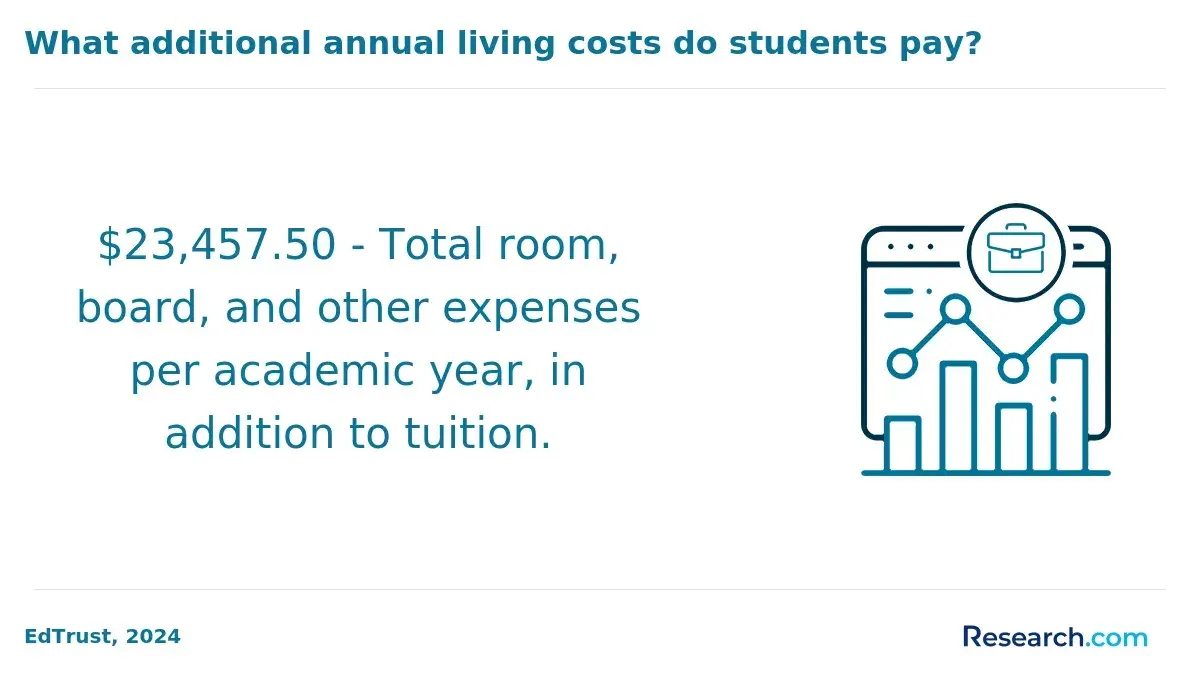
Cost of attendance includes more than tuition. For doctoral students, the biggest hidden costs are often time, travel, reduced work hours, dissertation delays, software, conference attendance, and the number of terms needed to finish after coursework ends.
Online programs can lower relocation and commuting costs, but they are not automatically cheaper. On-campus programs may cost more to attend day to day, yet they may offer assistantships, tuition remission, funded research roles, or stronger access to faculty-sponsored projects. The better financial option depends on net cost, not sticker price.
To estimate your real cost, calculate the following before enrolling:
- Total credits or terms required, including dissertation continuation credits.
- Tuition rate for your residency status, modality, and enrollment pace.
- Mandatory fees, technology fees, graduation fees, and research software costs.
- Travel and lodging for residencies, conferences, campus visits, or dissertation defense.
- Income changes if you reduce hours, leave a job, relocate, or decline promotions during study.
- Financial aid, employer tuition assistance, scholarships, assistantships, and tax considerations.
Student loan data is another caution point. Federal student aid reporting shows graduate and professional students can accumulate substantial debt because they have access to higher borrowing limits than undergraduates. Use borrowing only after modeling monthly repayment under several income scenarios, especially if your goal is academia, public-sector leadership, or consulting work with variable income.
Employer perception has changed as online graduate education has become more common, especially among working professionals in technology. In IT Management, employers usually care less about the classroom format and more about whether the degree comes from an accredited institution, whether the candidate has leadership experience, and whether the dissertation or doctoral project solved a meaningful organizational problem.
BLS data updated in 2024 places the median annual pay for computer and information systems managers at $169,510, reflecting the value employers place on technology leadership roles. A doctorate is not required for many of these positions, so the degree should be tied to a specific goal such as executive leadership, research consulting, higher education teaching, policy work, or advanced organizational transformation.
Employer perception is strongest when online doctoral students can show evidence, not just credentials. Useful proof includes published research, measurable IT governance improvements, cybersecurity risk reduction projects, enterprise systems leadership, analytics strategy, teaching experience, or board-level technology communication.
IT Management also overlaps with healthcare technology, compliance, privacy, and data governance. Professionals in that area may compare doctoral study with a health information management degree online if their career goal is specifically tied to health data systems rather than broader enterprise IT leadership.
Program format can affect job prospects indirectly, but it rarely does so by itself. The stronger drivers are accreditation, institutional reputation, faculty network, dissertation topic, work history, technical leadership skills, publications, conference activity, and how clearly the doctorate supports the target role.
For corporate and public-sector IT leadership, an online doctorate may be an advantage if it lets you keep working while applying research directly to enterprise problems. For tenure-track academic roles, an on-campus PhD or a highly research-intensive doctorate may offer stronger preparation because of teaching assistantships, research apprenticeships, faculty publishing networks, and campus-based scholarly culture.
Consider format by career target:
- Choose online if your priority is executive advancement, consulting credibility, applied research, or completing the degree without leaving a full-time IT leadership role.
- Choose on-campus if your priority is a research faculty career, funded doctoral assistantship, daily scholarly community, or close mentorship in a specific lab or research group.
- Choose hybrid if you want online flexibility but still value residencies, cohort bonding, in-person defenses, and periodic faculty contact.
- Pause your search if you cannot identify how the doctorate will improve your career path beyond adding "Dr." to your name.
A doctorate can be a strong investment when it supports a clear professional outcome. It is a weaker investment if the role you want values certifications, cloud architecture experience, cybersecurity credentials, product leadership, or an MBA more than doctoral research training.
How do you choose between online and on-campus IT Management doctorate programs?
The right choice comes down to fit: your career goal, learning style, budget, location, research interests, and tolerance for independent work. Do not start with "online or campus?" Start with the outcome you want the degree to support.
Use this decision process to narrow your options:
- Define the career outcome first: executive IT leadership, consulting, academia, public policy, research, teaching, or specialized technology governance.
- List nonnegotiables, including accreditation, dissertation topic support, part-time availability, residency limits, tuition ceiling, and employer tuition assistance rules.
- Compare total cost of attendance, not just tuition, using the same assumptions for every program.
- Interview admissions staff, current students, alumni, and potential dissertation faculty before applying.
- Ask employers or mentors in your target field how they evaluate online doctoral credentials from the schools you are considering.
- Review dissertation completion support, not only course delivery, because the dissertation often determines whether students finish.
- Eliminate programs that avoid direct answers about accreditation, faculty access, graduation requirements, dissertation timelines, or fees.
As a final check, choose the format that you can sustain for several years while producing doctoral-level work. Convenience matters, but the best IT Management doctorate format is the one that helps you finish, build credible expertise, and apply research to the career you actually want.
Other Things You Should Know About IT Management
Sometimes, but it depends on the university. Credits, residency rules, cohort sequencing, dissertation chair availability, and tuition policies may differ by format, so ask about transferability before enrolling.
They may, but differences are usually tied to program mission rather than format alone. Many require a master's degree, professional experience, transcripts, references, a statement of purpose, and sometimes a writing sample or interview.
A PhD is usually more research-oriented, a DBA often focuses on business leadership and applied management, and a Doctor of Information Technology typically emphasizes advanced technology practice. The best option depends on whether your goal is research, executive leadership, consulting, or teaching.
The biggest warning sign is lack of transparency. Be cautious if a school will not clearly explain accreditation, total cost, dissertation requirements, faculty qualifications, residency rules, or student support services.
- What Employers Actually Think About Online Degrees https://www.onlineu.com/magazine/what-employers-think-about-online-degrees
- On-Campus vs Online PhD Programs: Which Is Right for You https://mbalondon.org.uk/on-campus-vs-online-phd-programs-which-is-right-for-you/
- What is a graduate degree? Types, benefits, and careers | edX https://www.edx.org/resources/what-is-a-graduate-degree
- Accreditation & Your Online Degree: Know Before You Go https://www.baypath.edu/news/bay-path-university-blogs/post/accreditation-your-online-degree-know-before-you-go/
- European Online University Accreditation Explained - MIA Digital University https://miauniversity.com/european-online-university-accreditation/
- How Much Does a PhD Cost https://aituedu.org/how-much-does-a-phd-cost/
- What Is An Accelerated Doctorate Degree Online? https://www.affordablecollegesonline.org/degrees/best-accelerated-doctorate-phd-programs/
- How Much Does an Online Doctorate Cost? | phds.me https://www.phds.me/online-programs/cost-of-online-doctorate/
- Average Cost of a Doctorate Degree [2026]: Ph.D., Psy.D. & More https://educationdata.org/average-cost-of-a-doctorate-degree
- Benefits of a Master's Degree: Boost Your Earning Power https://beal.edu/benefits-of-a-masters-degree/