2027 Online vs On-Campus Health Services Administration Doctorate Programs: Cost, Flexibility, and Employer Perception

Co-Founder and Chief Data Scientist
The biggest question is not whether a Health Services Administration doctorate can advance your career; it is whether the format fits your budget, schedule, and employer market. The BLS reports a $117,960 median annual wage for medical and health services managers in 2024, with strong projected demand, making format choice financially important.
This guide is for working healthcare professionals, administrators, educators, and policy-focused leaders comparing online and on-campus doctoral study. You will learn how to weigh cost, flexibility, fieldwork, dissertation support, and employer perception so you can choose the format that best matches your goals.
Key Things to Know About Online vs On-Campus Health Services Administration Doctorate Programs
- Online Health Services Administration doctorates usually offer the strongest scheduling flexibility, but many still require synchronous seminars, practicum work, dissertation milestones, or short residencies that must be confirmed before enrollment.
- There is no federal database that reports average Health Services Administration doctoral tuition by online versus on-campus format, so students should compare program-level tuition against NCES 2024 graduate tuition benchmarks: about $12,596 at public institutions and $29,931 at private nonprofit institutions for average graduate tuition and required fees.
- Employers generally focus more on accreditation, institutional reputation, leadership experience, applied research skills, and healthcare outcomes expertise than on whether coursework was online or on campus, especially when the diploma does not identify delivery format.
What are the key differences between online vs on-campus Health Services Administration doctorate programs?
An online Health Services Administration doctorate delivers most coursework through a learning platform, while an on-campus program requires regular physical attendance for classes, research meetings, seminars, and campus-based networking. Both formats may lead to similar credentials, such as a Doctor of Health Administration, PhD in Health Services, or closely related executive doctorate, but the experience can feel very different.
The table below compares the major format differences that affect cost, scheduling, access to faculty, and professional fit. Use it as a first screen before reviewing individual program catalogs.
| Comparison factor | Online doctorate | On-campus doctorate |
| Best fit | Working professionals, executives, military students, rural students, and caregivers who need location flexibility | Students who want in-person faculty access, campus research culture, assistantships, and frequent peer interaction |
| Course delivery | Asynchronous modules, live online seminars, discussion boards, virtual group work, or hybrid intensives | Scheduled classroom meetings, campus seminars, in-person advising, and local research activities |
| Networking | Often national and practice-oriented, with classmates working in varied healthcare settings | Often local or regional, with more informal faculty, alumni, and campus-based networking |
| Residency expectations | May be fully online, low-residency, or hybrid depending on the school | Usually built into the weekly academic calendar through regular campus attendance |
| Common trade-off | More flexibility but greater need for self-direction and proactive faculty contact | More structure but less geographic and scheduling freedom |
A useful way to frame the choice is to ask whether the doctorate is primarily for advancement in your current healthcare leadership track, a move into academia, or a pivot into research, consulting, policy, or executive administration. If you are still comparing earlier graduate pathways, a masters in healthcare administration may also be worth reviewing before committing to doctoral-level time and cost.
Admissions requirements are often similar across formats: a master's degree, professional experience, transcripts, recommendations, a statement of purpose, and sometimes a writing sample or interview. The difference is usually not academic entry criteria; it is whether the format gives you the structure, access, and pace you need to finish.
Are online Health Services Administration doctorate programs as rigorous as on-campus programs?
Online Health Services Administration doctorate programs can be just as rigorous as on-campus programs when they use the same accreditation standards, qualified faculty, doctoral-level research expectations, and formal dissertation or doctoral project requirements. Rigor is not created by a classroom seat; it is created by curriculum depth, faculty oversight, assessment standards, and evidence that students can conduct advanced inquiry into healthcare systems.
The clearest quality signals are program design and institutional accountability. Regional accreditation matters because it affects transferability, federal financial aid eligibility, and employer confidence, while specialized health or public health accreditation may matter for certain academic, policy, or leadership pathways.
When comparing rigor, look beyond the marketing language and verify the academic structure behind the degree. The following checks help separate a serious doctoral program from one that is merely convenient:
- Confirm that the online and on-campus versions, if both exist, use comparable learning outcomes, faculty qualifications, credit requirements, and dissertation or capstone expectations.
- Review the research methods sequence, because doctoral-level work in health services administration should develop competence in evidence appraisal, quantitative or qualitative methods, health policy analysis, finance, quality improvement, and organizational leadership.
- Ask how students receive feedback on writing, statistics, research design, and dissertation proposals, since weak support in these areas is a common cause of doctoral delay.
- Check whether faculty publish or practice in areas aligned with your interests, such as healthcare quality, population health, health informatics, finance, patient safety, workforce management, or policy.
- Request recent completion, time-to-degree, and dissertation milestone data by delivery format if the school offers both online and on-campus tracks.
A major red flag is a program that emphasizes speed while giving little detail about faculty advising, doctoral research support, or assessment standards. Fast completion can be legitimate for experienced professionals, but only when the curriculum still includes advanced research training and a defensible final project.
How does scheduling flexibility differ between online and on-campus Health Services Administration doctorate programs?
Scheduling flexibility is usually the main reason students choose an online Health Services Administration doctorate. However, "online" can mean several different things: fully asynchronous, live online, cohort-based, self-paced within term limits, or hybrid with required campus visits. The difference affects how well the program fits full-time work, executive travel, shift schedules, and family responsibilities.
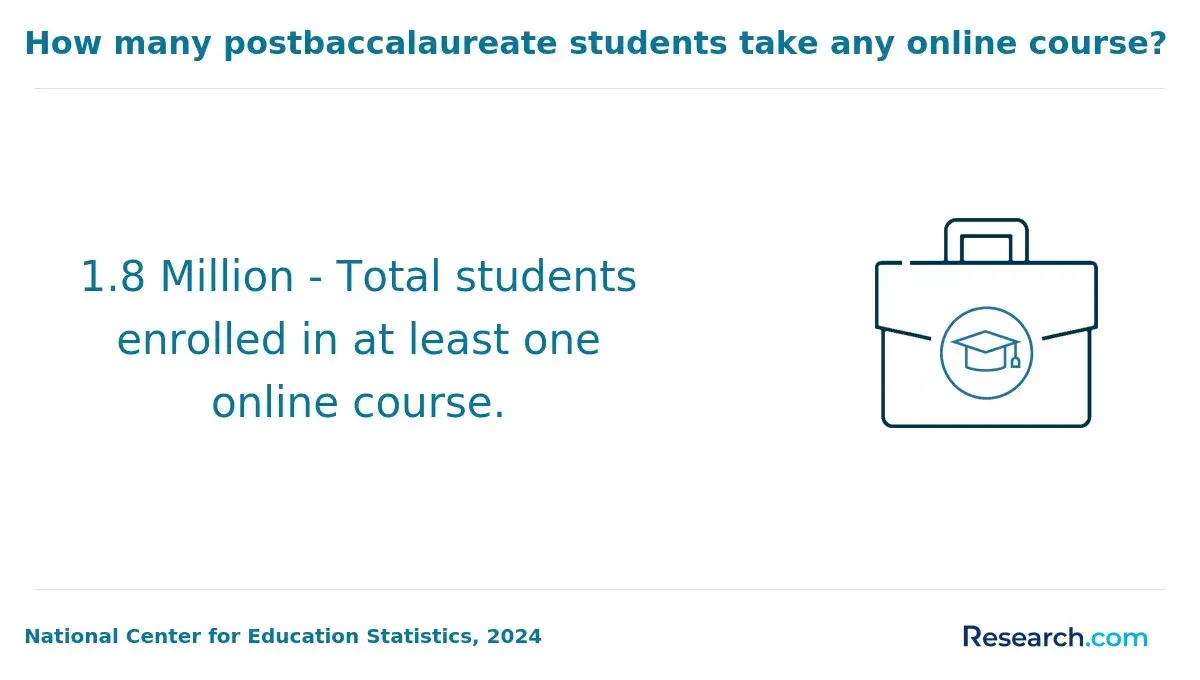
NCES distance education reporting released in recent years shows that online learning is now a normal part of graduate education, not a fringe option. For the reader, the practical takeaway is that flexibility has expanded, but every program still defines attendance, participation, and milestone deadlines differently.
The table below summarizes how common scheduling models affect the student experience. It is especially useful if you work full time or have unpredictable healthcare leadership responsibilities.
| Scheduling model | Typical format | Flexibility level | Best suited for |
| Fully asynchronous online | Recorded lectures, weekly modules, discussion deadlines, independent assignments | High | Professionals with variable schedules who can manage independent study |
| Synchronous online | Live evening or weekend classes through video conferencing | Moderate | Students who want structure without relocating |
| Hybrid or low-residency | Online coursework plus short campus intensives | Moderate | Students who value online access but want periodic in-person networking |
| Traditional on-campus | Weekly campus classes, seminars, advising, and research meetings | Lower | Students near campus or those seeking immersive academic engagement |
| Executive cohort | Lockstep course sequence with scheduled weekends or intensives | Moderate | Experienced leaders who prefer peer cohorts and predictable calendars |
Flexibility can also create hidden pressure. Online doctoral students often underestimate how much independent reading, writing, research planning, and group coordination are required each week. On-campus students may have more built-in structure, but commuting and fixed class times can make the workload harder for professionals in demanding healthcare roles.
If you are comparing shorter or more compressed pathways before a doctorate, reviewing accelerated healthcare programs can help you understand whether faster pacing is realistic for your learning style before choosing a doctoral format.
Fieldwork requirements vary more by program mission than by delivery format. A practice-oriented Doctor of Health Administration may require applied projects, executive practica, organizational assessments, quality improvement work, or leadership-based field experiences. A research-oriented PhD may place more weight on research assistantships, data analysis, teaching, publications, or dissertation research instead of administrative practicum hours.
Online programs often allow students to complete fieldwork in their own region or workplace, subject to approval. On-campus programs may connect students to university-affiliated hospitals, health systems, clinics, public agencies, or research centers near campus.
The table below shows how fieldwork differences usually appear in Health Services Administration doctoral programs. These are common patterns, not universal rules, so students should verify requirements in the catalog and handbook.
| Requirement type | Online format | On-campus format | What to verify |
| Administrative practicum | Often completed locally or at the student's current workplace | Often arranged through campus or regional healthcare partners | Whether your employer can serve as an approved site |
| Applied doctoral project | May use workplace data, quality initiatives, or policy problems | May use campus partnerships, local datasets, or faculty-led initiatives | Data access, privacy approvals, and project scope |
| Research assistantship | Less common, though remote research work may be available | More common where faculty maintain funded research teams | Availability, funding, and expected weekly hours |
| Teaching experience | May involve online course support or virtual teaching observations | May involve classroom teaching, lab support, or graduate assistant roles | Whether teaching is required for academic career goals |
| Residency or intensive | May require short visits for orientation, proposal defense, or seminars | Embedded through recurring campus attendance | Travel cost, timing, and whether attendance is mandatory |
One common mistake is assuming that "online" means "no in-person obligations." Before enrolling, ask for a complete calendar of residencies, intensives, fieldwork approvals, oral defenses, and any travel-based requirements. A low-residency program can still be a strong fit, but only if the travel burden is predictable.
The dissertation process is usually similar in academic expectations across online and on-campus formats: students complete coursework, pass qualifying or comprehensive requirements, develop a proposal, obtain approval, collect or analyze evidence, defend findings, and submit a final dissertation or doctoral project. The biggest difference is how students interact with advisors, committees, peers, and research support services.
Online students often meet with dissertation chairs through video calls, shared documents, virtual research clinics, and remote library consultations. On-campus students may have easier access to informal meetings, research seminars, writing groups, statistics labs, and faculty office hours. Neither model is automatically better; the better format is the one that gives you consistent feedback and accountability.
Before choosing a program, examine the dissertation support structure carefully. These questions are more important than whether the program uses online or campus delivery:
- How is a dissertation chair assigned, and can students choose faculty based on research fit?
- What happens if a dissertation chair leaves, retires, or becomes unavailable?
- Are proposal defense, final defense, and committee meetings allowed virtually?
- Does the program provide structured dissertation courses, writing support, methodology coaching, or statistical consulting?
- What is the typical time from coursework completion to dissertation defense?
- Does the school publish completion or attrition information for doctoral students by format?
A serious warning sign is a program that gives vague answers about dissertation timelines or says students are "independent" without explaining support. Independence is part of doctoral work, but isolation should not be.
Tuition comparisons are not as simple as online versus on-campus. Some universities charge the same doctoral tuition for both formats, some charge a separate online rate, and some add distance learning or technology fees. Public universities may also treat online students differently for in-state and out-of-state pricing.
NCES graduate tuition benchmarks published in 2024 provide useful context even though they do not isolate Health Services Administration doctorate programs by delivery mode. The reported average graduate tuition and required fees were about $12,596 at public institutions and $29,931 at private nonprofit institutions, which means institutional sector can matter as much as delivery format.
The table below shows how tuition components commonly differ. It is meant to help you read tuition pages more accurately, not to replace a program-specific cost estimate.
| Tuition factor | Online doctorate | On-campus doctorate | Why it matters |
| Per-credit tuition | May be flat-rate, online-specific, or the same as campus tuition | May vary by residency status, college, or graduate school | The per-credit rate drives most direct academic cost |
| In-state versus out-of-state pricing | Some online programs charge one rate to all students | Public universities often charge different rates by residency | Nonresident campus tuition can materially increase total cost |
| Program fees | May include technology, distance learning, residency, or platform fees | May include campus, student services, lab, or facilities fees | Fees can narrow or erase the tuition gap |
| Enrollment pace | Part-time options are common, spreading cost over more terms | Full-time enrollment may be encouraged or required in some research tracks | Pace affects annual cash flow and borrowing needs |
| Assistantship offset | Less common in professional online doctorates | More common in research-intensive on-campus PhD programs | Funding can change the real cost more than sticker tuition |
To compare prices fairly, calculate total credits multiplied by tuition, then add mandatory fees, residency travel, dissertation continuation fees, and expected time-to-completion. If affordability is your main concern, a cheapest online healthcare administration degree search can also help you understand how schools structure online pricing across healthcare administration programs before you evaluate doctoral options.
Cost of attendance includes more than tuition. Online students may save on relocation, commuting, parking, and campus housing, but they can still pay technology fees, residency travel, childcare during intensives, and dissertation continuation charges. On-campus students may gain access to assistantships, campus services, faculty networks, and research opportunities, but they often face higher living or commuting costs if they must move near campus.
Federal student loan terms are another cost factor. For graduate students, interest rates and loan fees can change each academic year, so the amount borrowed can cost significantly more over time than the tuition line suggests.
The following cost categories are the ones most likely to change your real comparison between formats. Review them before deciding that one option is cheaper.
- Tuition and required fees: Compare the full program cost, not just the per-credit rate, because doctoral programs may include dissertation, candidacy, continuation, or graduation fees.
- Residency and travel: Online programs with required intensives can add airfare, lodging, meals, ground transportation, and time away from work.
- Lost income: On-campus full-time study may reduce your ability to work, while part-time online study may preserve income but extend the calendar to graduation.
- Assistantships and employer tuition benefits: On-campus research programs may offer assistantships, while working online students may have stronger access to employer tuition support.
- Technology and home study costs: Online students may need upgraded equipment, software, stable broadband, webcam tools, or private workspace.
- Relocation and commuting: Campus students should include rent changes, parking, transit, fuel, and the value of time spent commuting.
A practical mistake is comparing only the advertised tuition rate. A higher-tuition online program may be cheaper overall if it lets you keep a full-time healthcare leadership role, while a lower-tuition campus program may be more affordable if it includes assistantship funding and local living costs are manageable.
If you are still building the academic pathway toward doctoral study, an online masters healthcare management program may provide a lower-commitment way to strengthen leadership credentials before taking on doctoral-level cost.
Most Health Services Administration employers do not evaluate a doctoral credential by delivery format alone. They are more likely to ask whether the institution is accredited, whether the degree is relevant to the role, whether the candidate has measurable leadership experience, and whether the doctoral work produced useful expertise in healthcare systems, finance, quality, operations, informatics, policy, or population health.
Employer perception has also shifted because online graduate education is now common among working professionals. In many cases, transcripts and diplomas do not identify whether the coursework was completed online, although application systems or interviews may ask about program format. The safest assumption is that employers will care less about "online" as a label and more about whether the program has credible standards and produces job-relevant capability.
The table below summarizes how different employer types may interpret doctoral credentials. These are general patterns, and individual hiring committees can vary.
| Employer setting | What they often value | Online format considerations | On-campus format considerations |
| Hospitals and health systems | Leadership record, operational results, quality improvement, finance, compliance, and change management | Often acceptable when paired with strong professional experience | May help through local healthcare partnerships and alumni networks |
| Consulting firms | Analytical skill, client-facing experience, project outcomes, and healthcare strategy expertise | Can be credible if the candidate demonstrates applied research and measurable results | May offer stronger access to faculty-led projects or regional professional networks |
| Government and policy organizations | Policy analysis, data interpretation, program evaluation, and regulatory knowledge | Format is usually secondary to evidence of policy and evaluation skills | Campus research centers may provide useful policy exposure |
| Universities | Research output, teaching experience, publications, dissertation quality, and faculty fit | May be competitive for practitioner faculty roles, especially with strong experience | Often preferred for tenure-track research roles when it includes research assistantships and publications |
| Executive leadership roles | Strategic leadership, board communication, financial stewardship, and organizational outcomes | Useful for experienced leaders who continue working while studying | Useful when campus networks connect directly to executive pipelines |
When in doubt, ask employers in your target setting what they value. A chief operating officer, hiring director, faculty search chair, or healthcare recruiter can give more useful guidance than a generic discussion board.
Program format can affect job prospects indirectly, but it rarely works as a simple online-versus-campus rule. Job outcomes depend more on accreditation, institutional reputation, professional experience, dissertation relevance, leadership achievements, networking, and the credibility of your research or applied project.
BLS data show strong demand for medical and health services managers, with employment projected to grow much faster than the average for all occupations in the current 2024 to 2034 outlook cycle. For doctoral students, that does not mean the degree automatically creates a promotion, but it does show that advanced healthcare leadership expertise sits in a growing labor market.
Format can influence outcomes through the opportunities you can access while enrolled. On-campus programs may provide more direct exposure to research labs, teaching roles, faculty referrals, local healthcare partners, and assistantships. Online programs may allow you to keep building senior-level experience while studying, which can be especially valuable for executive advancement.
Use the following decision lens to connect format with job goals:
- Choose an online doctorate if your priority is promotion within healthcare administration, executive credibility, consulting credibility, or applied leadership while staying employed.
- Choose an on-campus doctorate if your priority is academic research, tenure-track preparation, funded research assistantships, teaching development, or close immersion in a university research environment.
- Consider a hybrid doctorate if you want national flexibility but still value occasional in-person networking, residencies, faculty access, and cohort bonding.
- Be cautious with any format if the program cannot explain graduate outcomes, dissertation support, accreditation status, faculty fit, or how the curriculum maps to your target roles.
Salary outcomes are difficult to compare by format because national wage datasets do not separate online and on-campus Health Services Administration doctorate graduates. Use labor market data as context, but judge return on investment by your current salary, realistic promotion path, employer tuition support, total borrowing, and whether the doctorate is required or merely preferred for your goal.
How do you choose between online and on-campus Health Services Administration doctorate programs?
The best format is the one you are most likely to complete while building the career evidence your target employers value. A strong online program can be a better investment than a poorly supported campus program, and a funded on-campus PhD can be a better choice than a costly online doctorate if your goal is academic research.
Use this step-by-step process to compare programs consistently. It helps you avoid choosing based only on convenience, reputation, or sticker price.
- Define the job outcome first: executive leadership, academic research, teaching, consulting, policy, health system strategy, or applied administration.
- Eliminate programs that lack recognized institutional accreditation or give unclear answers about accreditation, faculty qualifications, or doctoral requirements.
- Compare total cost of attendance, including tuition, fees, travel, lost income, loan costs, and expected time-to-degree.
- Match the schedule to your real weekly life, including work travel, caregiving, clinical or administrative responsibilities, and required live sessions.
- Review dissertation or doctoral project support, including chair assignment, research methods help, writing support, defense format, and completion data.
- Confirm fieldwork, practicum, residency, and in-person requirements before applying, especially if you are considering an online or hybrid program.
- Ask target employers how they view the institution, degree type, and program format for the roles you want.
- Compare funding options, including assistantships, scholarships, employer tuition reimbursement, military benefits, payment plans, and loan eligibility.
- Speak with current students or recent graduates in the same format to understand workload, faculty responsiveness, and hidden costs.
- Choose the program that best aligns with your career goal, learning style, support needs, and financial risk tolerance.
There are also clear warning signs to avoid regardless of delivery format. Be cautious if a program promises unusually fast completion without explaining dissertation requirements, refuses to disclose total costs, lacks transparent faculty information, has unclear residency rules, or cannot describe how students are supported after coursework ends.
If you are not yet sure whether a doctorate is necessary, compare doctoral requirements with master's-level career options first. Many healthcare leadership roles may be accessible with a strong master's degree, experience, and certifications, while doctoral study is more appropriate when your goal requires advanced research, executive-level distinction, or academic credibility.
Other Things You Should Know About Health Services Administration
Sometimes, but doctoral transfer credit is usually limited. Schools may accept recent graduate credits that match their curriculum, but dissertation, residency, research methods, and doctoral seminar requirements are often required in-house.
Some do and some do not. A program may allow virtual defenses but still require orientation, residencies, research intensives, or graduation attendance. Always ask for the full in-person requirement list before enrolling.
Neither is universally better. A DHA is usually more practice-oriented and suited to senior healthcare leadership, while a PhD is usually more research-oriented and better aligned with academic or research-intensive roles.
Not automatically. Accreditation is essential, but you should also compare faculty fit, dissertation support, completion expectations, employer reputation, fieldwork structure, and total cost of attendance before choosing the lowest-priced option.
- Health Administration: Online Degrees and Careers https://www.publichealthonline.org/healthcare-administration/online-degree-programs/
- Best Online Doctorates in Healthcare Administration 2026 https://www.onlineu.com/degrees/doctoral-healthcare-administration
- Online Doctorate in Health Administration https://www.healthadministrationdegrees.com/programs/online-doctorate-in-health-administration/
- Top 25 MPH and Health Administration Programs - MPH Online https://www.mphonline.org/best-mph-health-administration-degrees/
- How Much Does a PhD Cost https://aituedu.org/how-much-does-a-phd-cost/
- Doctor of Health Administration (DHA) | Doctor of Healthcare | University of Phoenix https://www.phoenix.edu/online-healthcare-degrees/health-administration-doctoral-degree.html
- Best Online Doctor of Healthcare Administration Programs https://www.phds.me/online-programs/doctorate-healthcare-administration-dha/
- Campus vs Online vs Hybrid Doctor of Education (EdD) Programs https://www.onlineeddprograms.com/faqs/campus-online-hybrid-edd-programs
- Who Accredits MHA Programs? https://www.mhaonline.com/faq/who-accredits-online-mha-programs
- The Importance of Business School Accreditation https://www.allbusinessschools.com/how-to-get-into-mba-program/accreditation/