
2027 Online vs On-Campus English Language Learning Doctorate Programs: Cost, Flexibility, and Employer Perception

Co-Founder and Chief Data Scientist
The real decision is not whether an English Language Learning doctorate can be completed online; it is whether the format fits your budget, schedule, research goals, and career path. NCES data released in 2024 shows that more than half of graduate students now take at least one distance education course, making format comparison a practical enrollment issue. This guide is for educators, ESL leaders, TESOL professionals, and aspiring faculty who want to compare online and on-campus doctoral options by cost, flexibility, fieldwork, dissertation support, and employer perception before committing.
Key Things to Know About Online vs On-Campus English Language Learning Doctorate Programs
- Online English Language Learning doctorates usually offer stronger schedule flexibility, while on-campus programs usually offer easier access to faculty offices, campus research networks, assistantships, and in-person scholarly communities.
- Federal data released in 2024 reports average graduate tuition and required fees of $12,596 at public institutions and $29,931 at private nonprofit institutions for 2021-22, but it does not separate English Language Learning doctoral tuition by online versus on-campus format.
- Employer perception is usually driven more by accreditation, dissertation quality, research experience, teaching record, and institutional reputation than by delivery format, especially when the transcript and diploma do not label the degree as online.
What are the key differences between online vs on-campus English Language Learning doctorate programs?
An English Language Learning doctorate is typically an EdD or PhD focused on areas such as TESOL, ESL education, bilingual education, multilingual learner policy, second language acquisition, literacy development, applied linguistics, curriculum leadership, or teacher education. The key format question is whether you need a program built around remote participation or one built around campus immersion.
The table below summarizes the differences that most directly affect your day-to-day experience and long-term return on investment.
| Comparison factor | Online English Language Learning doctorate | On-campus English Language Learning doctorate |
| Best fit | Working educators, district leaders, international or rural students, and professionals who cannot relocate | Students seeking campus-based research mentorship, assistantships, teaching apprenticeships, and academic networking |
| Course delivery | Asynchronous, synchronous, or hybrid online seminars | In-person seminars, research meetings, colloquia, and campus events |
| Residency expectations | May be fully online, low-residency, or require periodic campus visits | Regular campus attendance is expected throughout the program |
| Networking style | Built through virtual cohorts, online conferences, professional associations, and local fieldwork | Built through faculty labs, campus teaching roles, dissertation groups, and department events |
| Cost pressure | Often reduces relocation and commuting costs, but may include online fees or travel for residencies | May offer more campus-based assistantships, but can require relocation, parking, housing, and lost work hours |
| Career alignment | Often practical for K-12, adult education, curriculum, policy, and leadership roles | Often advantageous for students targeting tenure-track roles or research-intensive academic careers |
Admissions requirements may be similar across formats: a master's degree, transcripts, writing sample, statement of purpose, recommendations, and sometimes GRE scores or proof of teaching experience. The differences often appear after admission, especially in residency rules, cohort pacing, dissertation support, and access to funded campus roles.
Are online English Language Learning doctorate programs as rigorous as on-campus programs?
Online English Language Learning doctorate programs can be as rigorous as on-campus programs when they use the same faculty standards, learning outcomes, dissertation expectations, accreditation oversight, and research methods sequence. Rigor depends less on the course platform and more on whether students are expected to read deeply, design original research, analyze data, defend findings, and contribute meaningfully to TESOL or multilingual education practice.
A rigorous online program should make academic expectations visible before you apply. When comparing formats, review the following quality signals rather than assuming that online means easier or that campus means stronger.
- Regional accreditation for the institution and clear authorization to offer distance education in your state, if applicable
- Faculty with active research or applied expertise in TESOL, bilingual education, language acquisition, literacy, assessment, or multilingual learner policy
- A required sequence in qualitative, quantitative, or mixed-methods research that supports your dissertation topic
- Transparent dissertation milestones, including proposal approval, IRB review, data collection, analysis, defense, and revision
- Regular access to advisors through scheduled meetings, dissertation seminars, writing groups, or research apprenticeships
- Evidence that online students can present, publish, teach, supervise, or lead projects in ways relevant to their career goals
One common mistake is judging rigor by convenience. A flexible online doctorate may require more self-management than a campus program because there are fewer natural reminders built into the week. Conversely, an on-campus program is not automatically rigorous if students receive weak methodological preparation or little dissertation feedback.
How does scheduling flexibility differ between online and on-campus English Language Learning doctorate programs?
Scheduling flexibility is often the main reason English Language Learning professionals compare online and on-campus doctoral programs. Many applicants are full-time teachers, instructional coaches, curriculum specialists, school leaders, or adult education administrators who need to continue working while studying.
The table below shows how schedule design affects workload, pacing, and predictability.
| Format feature | Online format | On-campus format |
| Weekly class meetings | May be asynchronous, evening-based, weekend-based, or live online | Usually scheduled at fixed campus times, often during daytime or early evening hours |
| Pacing | Often cohort-based, part-time, or accelerated depending on the school | Often tied to semester schedules and departmental course rotation |
| Work compatibility | Usually easier for full-time educators who need to keep their current job | May be harder unless the student has flexible employment, leave time, or an assistantship |
| Peer interaction | Requires intentional participation in discussion boards, video meetings, and cohort projects | More spontaneous interaction through seminars, offices, campus events, and research groups |
| Time-management risk | High if the student underestimates reading, writing, and dissertation planning time | High if commuting, fixed class times, or campus obligations conflict with work or family duties |
Some online EdD programs are designed for faster completion, but speed should not be the only factor. If you are comparing accelerated options, review curriculum depth, dissertation pacing, and support carefully; lists of 1 year EdD programs online can help you understand how compressed formats are structured and what trade-offs to examine.
Before choosing a format, map a realistic doctoral week. Include class time, reading, writing, research, advisor meetings, fieldwork, data analysis, and recovery time. If your calendar cannot absorb 15 to 25 focused hours in demanding terms, even a flexible online format may become difficult to sustain.
Fieldwork in English Language Learning doctoral programs may involve classroom observation, teacher interviews, curriculum evaluation, language assessment analysis, professional development design, program evaluation, policy review, or applied research with multilingual learners. The requirement is usually tied to the dissertation or capstone rather than a generic practicum.
Online and on-campus students may complete similar fieldwork, but the logistics differ. The table below explains what you should verify before enrolling.
| Fieldwork issue | Online doctoral students | On-campus doctoral students |
| Field site | Often completed in the student's local school, district, adult education program, nonprofit, or workplace | Often completed through campus partnerships, local schools, research sites, or faculty projects |
| Supervision | May rely on virtual supervision, local site permissions, video meetings, and remote documentation | May include more direct faculty contact, campus-based observation, or research team oversight |
| Residency connection | Some programs require short campus residencies for research design, proposal defense, or cohort workshops | Campus presence is already built into the program structure |
| Employer coordination | Important if the student plans to collect data at their own workplace | Important if the student depends on university-affiliated field sites |
| Risk to confirm | Whether the program approves out-of-state field sites and supports IRB documentation remotely | Whether campus location limits access to the ELL populations or research settings the student wants to study |
The biggest mistake is assuming "online" means "no in-person work." A program may advertise online coursework while still requiring campus residencies, local clinical documentation, in-person data collection, or live dissertation defenses. Ask admissions for the full attendance calendar before you apply.
The dissertation process is one of the most important differences to investigate because it is where many doctoral students slow down. In both online and on-campus English Language Learning doctorates, students usually move from coursework to comprehensive exams or portfolio review, then to proposal development, IRB approval, data collection, analysis, writing, and defense.
The difference is usually not the final product; it is the support system around the product. Online students need strong remote advising, clear milestone tracking, writing support, and accessible research-methods help. On-campus students may benefit from informal faculty access, dissertation groups, and research centers, but they still need structure and accountability.
Use this sequence to compare dissertation support before committing to any format.
- Ask whether online and on-campus students follow the same dissertation handbook, defense standards, committee rules, and research ethics process.
- Request a sample dissertation timeline showing when students select chairs, form committees, submit proposals, complete IRB review, and defend.
- Confirm how often doctoral advisors are expected to meet with students and whether meetings are guaranteed, optional, or student-initiated.
- Review recent dissertation titles to see whether faculty supervise topics related to multilingual learners, TESOL, bilingual education, language assessment, teacher preparation, or ELL policy.
- Ask how the program supports students who fall behind during the dissertation phase, including writing retreats, methodologists, statistics support, or continuation seminars.
A useful rule is to choose the format that gives you the strongest dissertation conditions, not simply the most convenient coursework. If your goal is a faculty or research role, an on-campus PhD with research apprenticeships may offer advantages. If your goal is district leadership or applied program evaluation, a well-supported online EdD may be more practical.
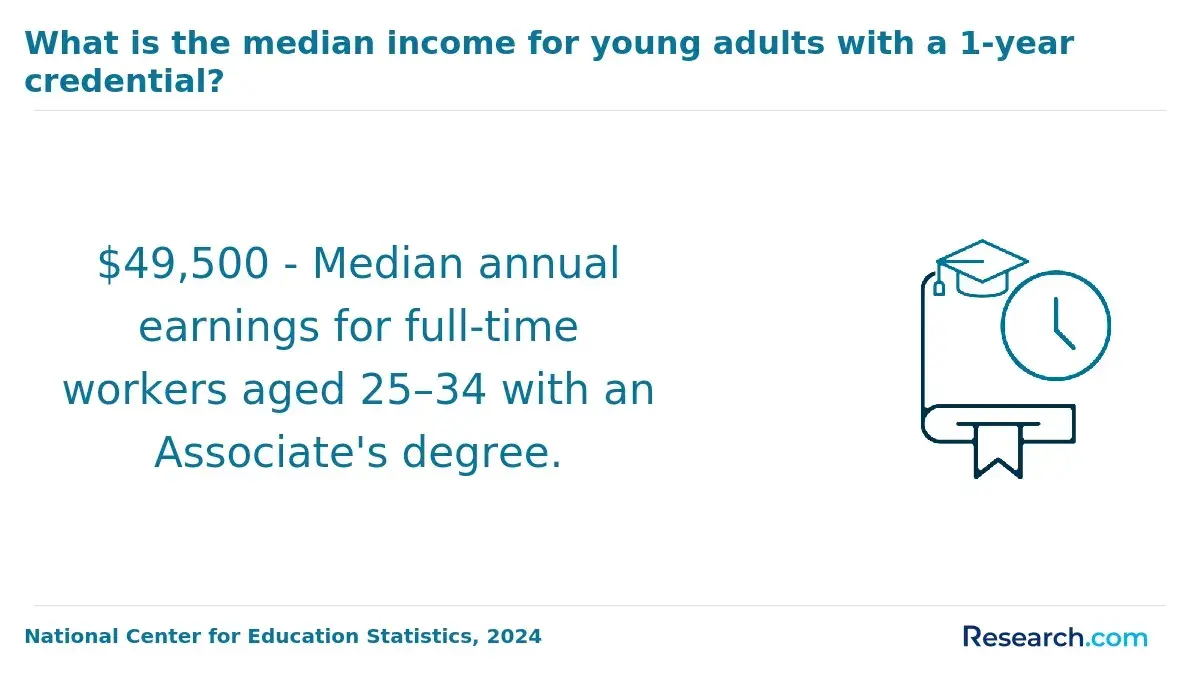
Tuition comparisons are challenging because national databases do not isolate English Language Learning doctoral tuition by delivery format. The most reliable federal benchmark is institution-level graduate pricing: NCES data released in 2024 reports average graduate tuition and required fees of $12,596 at public institutions and $29,931 at private nonprofit institutions for 2021-22. That benchmark is useful, but it does not prove that online tuition is lower or higher for a specific doctorate.
Instead of assuming one format is cheaper, compare the exact tuition model. Many universities use one of the following approaches.
- Same per-credit tuition for online and on-campus students in the same doctoral program
- Separate online tuition rate that may be lower, equal to, or higher than the campus rate
- Flat-rate cohort pricing for a full online EdD sequence
- Public university in-state and out-of-state pricing that may or may not apply to online students
- Additional online course fees, technology fees, dissertation continuation fees, or residency fees
If affordability is a top concern, compare total program tuition rather than only per-credit price. Resources on the cheapest online EdD programs can help you see how schools present credits, fees, and total estimated tuition across online education doctorates.
For a true side-by-side comparison, multiply required credits by the per-credit rate, then add mandatory fees, residency travel, dissertation continuation charges, books, and estimated lost income. A lower tuition rate can lose its advantage if the program requires multiple unpaid residencies or if courses are offered so infrequently that you need extra semesters to finish.
Cost of attendance goes beyond tuition. For English Language Learning doctoral students, the largest differences between online and on-campus study often come from relocation, commuting, lost work time, assistantship access, residency travel, and the ability to keep employer benefits while enrolled.
The table below separates tuition from other costs that can change the real affordability of each format.
| Cost category | Online doctorate considerations | On-campus doctorate considerations |
| Tuition and fees | May use online rate, cohort rate, or same rate as campus program | May vary by residency status, institution type, and credit load |
| Housing and relocation | Usually lower if the student remains in their current home and job market | May be substantial if the student must move near campus |
| Commuting and parking | Usually limited, except for residencies or fieldwork visits | Can be recurring throughout the academic year |
| Technology | Requires reliable computer, webcam, software, internet, and sometimes proctoring tools | Still required, but campus labs and libraries may offset some access needs |
| Residency travel | Possible airfare, lodging, meals, childcare, and unpaid leave for short campus sessions | Usually built into the local cost of attendance if the student lives near campus |
| Assistantships | May be limited or unavailable for remote students, depending on the university | Often more accessible through teaching, research, or administrative roles |
| Opportunity cost | Often lower for students who keep full-time employment | Can be higher if the student reduces work hours or leaves a job to attend full time |
Federal sources do not publish average student loan debt specifically for English Language Learning doctoral graduates by online versus on-campus format. Use College Scorecard, school financial aid disclosures, and program-level debt information where available, but interpret the numbers carefully because they may combine multiple education doctorate concentrations.
A practical way to compare affordability is to build a three-year or four-year budget for each option. Include direct costs, indirect costs, income changes, employer tuition reimbursement, assistantship stipends, and the cost of taking longer than planned. For many working educators, the ability to stay employed can outweigh a modest tuition difference.
Most English Language Learning employers do not evaluate a doctoral credential by format alone. They usually care more about whether the institution is accredited, whether the program is academically credible, whether the graduate can lead instruction or research, and whether the dissertation or capstone demonstrates useful expertise.
Employer perception varies by role. A district hiring for multilingual learner leadership may value a practitioner-focused dissertation, policy experience, and demonstrated program improvement. A university hiring for a tenure-track applied linguistics or TESOL faculty role may place more weight on publications, research methods, conference presentations, teaching record, and fit with departmental needs.
Before enrolling, ask how the credential will be represented. Important details include whether the diploma lists the format, whether transcripts distinguish online sections, and whether online and campus students complete the same curriculum. Many institutions do not label the delivery mode on the diploma, but policies vary by school.
Use these questions to test employer fit before you apply.
- Do job postings in your target role require a doctorate, or would a master's degree plus leadership experience be enough?
- Do employers specify EdD, PhD, TESOL, applied linguistics, bilingual education, curriculum, leadership, or a related field?
- Will the program help you produce evidence employers can evaluate, such as publications, presentations, curriculum projects, program evaluations, or supervised teaching?
- Can alumni from the format you are considering be found in roles similar to the one you want?
- Will your dissertation topic align with real employer needs, such as multilingual learner outcomes, assessment equity, teacher preparation, literacy, or program compliance?
A red flag is any program that markets the doctorate mainly as a title rather than as preparation for research, leadership, or advanced practice. Employers may be flexible about online learning, but they still expect doctoral-level evidence of expertise.
Program format can affect job prospects indirectly, but it usually does not determine them by itself. The bigger factors are the type of doctorate, research preparation, dissertation topic, teaching experience, professional network, publications, leadership record, and how closely the program matches your target role.
BLS data published in 2024 places the median pay for postsecondary teachers at $84,380 using May 2023 wage data, with projected employment growth of 8% from 2023 to 2033. That matters because some English Language Learning doctorate graduates pursue faculty roles, but those positions often require more than the credential itself, especially research output and teaching experience.
The table below shows how career alignment may differ by goal rather than by format alone.
| Career goal | Online format may fit when | On-campus format may fit when |
| K-12 multilingual learner leadership | You want to keep your district role while studying and use your workplace for applied research | You can relocate or study locally and want campus-based policy or leadership networks |
| TESOL or adult education administration | You need flexible scheduling and want to apply research directly to current programs | You want access to local partnerships, faculty projects, or supervised teaching opportunities |
| Higher education faculty | You can build publications, teaching experience, and research mentorship remotely | You want stronger access to teaching assistantships, research groups, colloquia, and faculty networks |
| Instructional design or curriculum leadership | You want to connect language learning expertise with online learning, assessment, and curriculum design | You want intensive campus collaboration with faculty, labs, or instructional technology units |
| Research or policy analysis | You have access to strong data sites and remote methodological support | You need close faculty mentorship, grant-funded research, or campus research infrastructure |
Some professionals discover that a doctorate is not the most direct next step. If your goal is digital curriculum, language-learning technology, or training design rather than doctoral research, reviewing the best online instructional design master's programs may reveal a shorter and more targeted path.
The safest way to evaluate job prospects is to reverse-engineer your target job. Collect 10 to 15 postings, identify required credentials and preferred experiences, then compare whether online or on-campus programs give you better access to those experiences.
How do you choose between online and on-campus English Language Learning doctorate programs?
Choosing between online and on-campus English Language Learning doctorate programs should start with your goal, not the delivery mode. A strong format match is the one that helps you finish, supports your dissertation, fits your finances, and gives you credible evidence for the role you want next.
Use this decision process to build a shortlist and avoid choosing based on convenience alone.
- Define the job you want after the doctorate, such as faculty member, district ELL director, TESOL administrator, curriculum leader, researcher, or policy specialist.
- Decide whether an EdD or PhD better fits that goal; EdD programs often emphasize applied leadership, while PhD programs often emphasize original research and academic preparation.
- Compare accreditation, faculty fit, dissertation topics, research methods training, and graduate outcomes before comparing tuition.
- List all required in-person obligations, including residencies, orientations, defenses, fieldwork, intensives, and campus interviews.
- Calculate total cost of attendance, including tuition, fees, travel, relocation, work reduction, childcare, technology, and dissertation continuation charges.
- Ask whether online students have the same access to advising, library services, research software, career support, writing help, and alumni networks.
- Check whether assistantships, fellowships, tuition discounts, or employer reimbursement are available to students in your preferred format.
- Speak with current students or alumni from the exact format you are considering, not just the general department.
If you already hold an Education Specialist credential, compare bridge options carefully because they may reduce duplicated coursework. A review of EDS to EdD programs can help you understand how advanced standing may affect time, cost, and format choice.
Watch for warning signs regardless of format. Be cautious if a program lacks regional accreditation, cannot explain dissertation support, hides residency requirements, provides vague tuition estimates, has little faculty expertise in English Language Learning, or promises career outcomes that no school can guarantee.
Online is usually the better fit if you need to keep working, cannot relocate, have a clear applied research setting, and are disciplined enough to manage independent doctoral work. On-campus is usually the better fit if you want daily academic immersion, stronger access to assistantships, close research mentorship, and a campus network for faculty or research-intensive roles.
Other Things You Should Know About English Language Learning
Sometimes. Many doctoral programs require a master's degree and relevant professional experience, but not always a teaching license. Licensure requirements depend on the program focus, state rules, and whether the degree is tied to K-12 leadership or classroom practice.
Many students take about three to six years, depending on credit load, transfer credits, dissertation progress, and whether they enroll full time or part time. The dissertation phase is often the biggest source of timeline variation.
A PhD is usually stronger for research-intensive faculty or scholarly roles, while an EdD often fits applied leadership, district administration, curriculum, and program improvement. The better choice depends on the work you want to do after graduation.
No. Rankings can be a starting point, but your final decision should weigh accreditation, faculty fit, dissertation support, cost, schedule, fieldwork access, and alignment with your target job. A lower-ranked program may be a better fit if it supports your specific goals.
- How to Get a Doctorate Degree in Education: A Complete Guide https://henryharvin.ae/blog/doctorate-degree-in-education/
- Online vs Offline English Learning Classes – Choose the Best Course https://www.oxfordinternationalenglish.com/online-vs-offline-english-courses-compare-benefits/
- Online vs In-Person English Learning: What the Studies Show https://kensingtonenglish.co.uk/blog-online-vs-in-person
- Employers' Perceptions of Online University Degrees and ... https://journals.um.si/index.php/oe/article/view/2425/2054
- What Makes an Accredited Online University Different from the Rest? https://www.ieac.org.uk/99-What-Makes-an-Accredited-Online-University-Different-from-the-Rest-blog.php
- College Graduation Rates and How ACE Compares | ACE Blog https://ace.edu/blog/college-graduation-rates-and-how-ace-compares/
- 2025 Most Affordable Online Master's Programs https://www.onlineu.com/most-affordable-colleges/masters-degrees
- Exploring PhD Completion Rates: How Many Finish on Time? https://wallyboston.com/phd-completion-rates/
- Online Classes or On Campus: Which is Right for You? - Graduate Programs for Educators https://www.graduateprogram.org/blog/online-classes-or-on-campus-which-is-right-for-you/
- How Much Does a PhD Cost https://aituedu.org/how-much-does-a-phd-cost/


