
2027 Online vs On-Campus Artificial Intelligence Doctorate Programs: Cost, Flexibility, and Employer Perception

Co-Founder and Chief Data Scientist
The real decision is not whether Artificial Intelligence is important; it is whether an online or on-campus doctorate gives you the best return for your goals. The U. S. Bureau of Labor Statistics projects 26% growth for computer and information research scientists from 2023 to 2033, far faster than average, making doctoral-level AI training timely but expensive. This guide is for working professionals, researchers, and career changers comparing formats. You will learn how to weigh tuition, total cost, scheduling, dissertation support, fieldwork, and employer perception so you can choose the format that fits your budget, lifestyle, and career path.
Key Things to Know About Online vs On-Campus Artificial Intelligence Doctorate Programs
- Online AI doctorates usually offer the strongest scheduling flexibility, but they are not automatically cheaper; students must compare per-credit tuition, technology fees, residency travel, lost income, and dissertation extension costs.
- On-campus AI doctorates tend to provide easier access to labs, funded assistantships, faculty research groups, and peer networking, which can matter for academic, research scientist, and R&D careers.
- Employers increasingly focus on accreditation, research output, technical portfolio, dissertation quality, and institutional reputation; BLS data shows strong demand for advanced computing researchers, but no format guarantees hiring or salary outcomes.
What are the key differences between online vs on-campus Artificial Intelligence doctorate programs?
Online and on-campus Artificial Intelligence doctorate programs can lead to similar credentials, but the learning experience is different. "Online" usually means coursework is delivered through a learning management system, while "on-campus" means regular in-person attendance for seminars, lab meetings, research supervision, and department activities.
Many AI doctorates are technically PhD programs in computer science, information technology, data science, engineering, or computational sciences with an AI, machine learning, robotics, or intelligent systems focus.
The table below summarizes the most practical differences to compare before you apply. Use it to separate format issues from program-quality issues, because a strong online program can be more useful than a weak on-campus program, and the reverse is also true.
| Comparison factor | Online AI doctorate | On-campus AI doctorate | Why it matters |
| Course delivery | Asynchronous, synchronous, or hybrid online classes | In-person seminars, labs, colloquia, and research meetings | Determines how predictable your weekly schedule will be |
| Research access | Often remote, project-based, or tied to your workplace data and systems | Usually closer to faculty labs, computing clusters, robotics spaces, and funded projects | Matters if your goals require lab-based experimentation or faculty-led research groups |
| Networking | Virtual cohorts, online faculty meetings, occasional residencies | Daily access to faculty, doctoral peers, visiting scholars, and campus events | Important for academic roles, research collaborations, and postdoctoral opportunities |
| Flexibility | Typically better for full-time workers and students outside commuting range | Typically better for students who can relocate or study full time | Affects persistence, stress, and time to completion |
| Funding access | May have fewer assistantships, though some programs offer fellowships or employer partnerships | More likely to offer teaching assistantships, research assistantships, or tuition remission | Can change the real cost more than tuition rate alone |
| Employer perception | Strongest when regionally accredited, research-intensive, and transparent about delivery | Often familiar to research employers, especially if tied to a known lab or university | Employers usually evaluate evidence of capability, not format alone |
For students still deciding whether doctoral study is the right level of investment, comparing broader AI degrees online can help clarify whether a master's, professional doctorate, or PhD is the better next step.
Are online Artificial Intelligence doctorate programs as rigorous as on-campus programs?
Online Artificial Intelligence doctorate programs can be as rigorous as on-campus programs when they use the same faculty standards, doctoral-level research expectations, comprehensive exams, dissertation requirements, and institutional accreditation.
Rigor is not determined by the delivery format alone. It is determined by admissions selectivity, research supervision, methodological depth, publication expectations, access to computing resources, and the quality of dissertation review.
A useful way to judge rigor is to look at what students must produce, not only where they attend class. Strong programs in either format should require advanced work in areas such as machine learning, deep learning, natural language processing, computer vision, optimization, responsible AI, statistical modeling, research design, and dissertation methodology.
Before assuming an online doctorate is easier or an on-campus doctorate is automatically stronger, examine these quality signals carefully:
- Regional accreditation and, when relevant, ABET accreditation for related computing or engineering programs at the institution
- Faculty with active publications, grants, patents, or applied AI research in areas matching your dissertation interests
- Clear dissertation milestones, including proposal defense, research ethics review, data management expectations, and final defense
- Access to software, cloud computing, secure data environments, or specialized hardware needed for AI research
- Transparent policies for comprehensive exams, academic progress, advisor changes, and dissertation extensions
- Evidence that doctoral students present at conferences, publish papers, contribute to research groups, or complete applied research projects
One red flag is a program that markets flexibility but says little about dissertation supervision, faculty research expertise, or doctoral outcomes. Another is a program that treats AI as a buzzword while offering limited advanced coursework in mathematics, algorithms, statistics, and research methods.
How does scheduling flexibility differ between online and on-campus Artificial Intelligence doctorate programs?
Scheduling flexibility is often the biggest reason students compare online and on-campus AI doctorates. Online formats are usually better for students who need to keep a full-time job, manage caregiving responsibilities, or avoid relocation. On-campus formats are usually better for students who want a structured research environment and can commit to scheduled seminars, lab work, teaching, and faculty meetings.
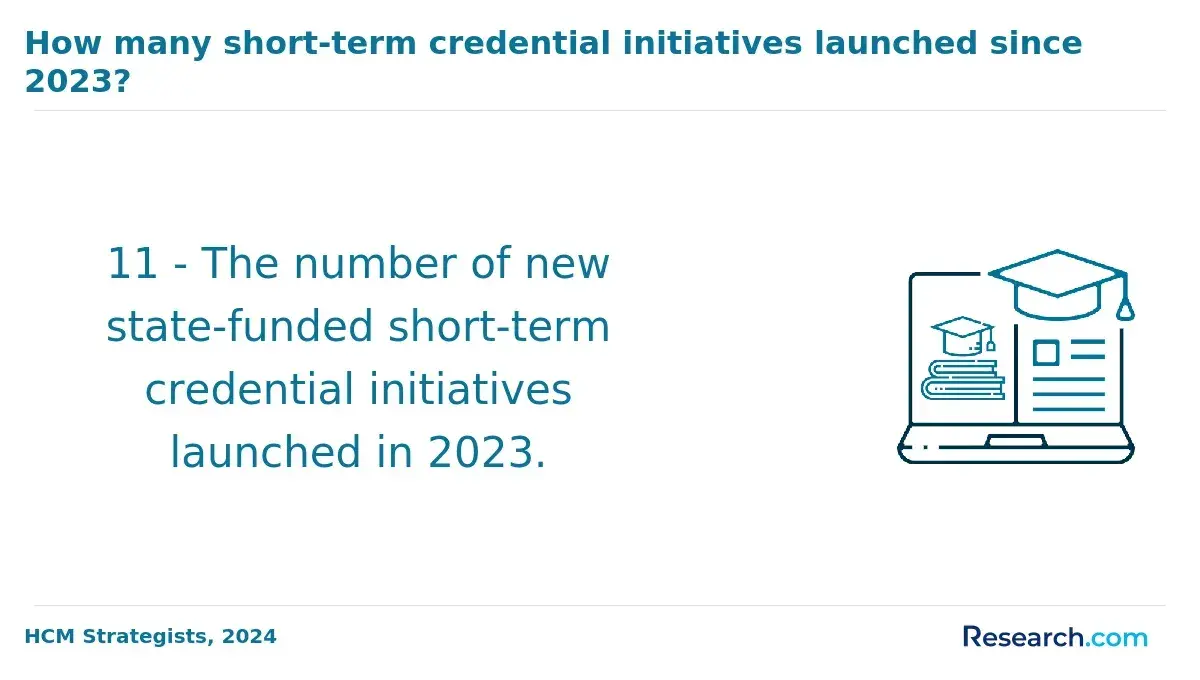
Federal postsecondary data released through NCES in 2024 continued to show that distance education remains a major part of graduate enrollment in the United States.
For prospective AI doctoral students, that trend means online and hybrid formats are no longer unusual, but it also means students must compare the details because "online" can mean very different things from one university to another.
The table below shows how common scheduling models differ. This matters because a program advertised as online may still require live class attendance, weekend residencies, or fixed dissertation meetings.
| Format type | Typical scheduling pattern | Best fit | Main caution |
| Fully asynchronous online | Recorded lectures, weekly deadlines, independent research meetings | Working professionals across time zones | Requires strong self-management and fast communication with advisors |
| Synchronous online | Live evening or weekend sessions with remote participation | Students who want structure without commuting | Work travel, caregiving, and time zones can create conflicts |
| Hybrid online | Online coursework with required campus visits or residencies | Students who want flexibility plus periodic face-to-face research support | Travel costs and time away from work can be significant |
| Traditional on-campus | Daytime seminars, lab meetings, office hours, and research obligations | Full-time doctoral students and funded research assistants | Less compatible with standard full-time employment |
| Cohort-based executive doctorate | Lockstep schedule, online modules, and intensive residencies | Senior professionals seeking applied doctoral research | Less flexibility to slow down or change course sequence |
To compare schedules realistically, ask admissions for a sample two-year course plan and a typical dissertation timeline. A common mistake is assuming online study is self-paced. Many doctoral courses have weekly deliverables, group research tasks, coding assignments, and required advisor meetings.
Fieldwork in an Artificial Intelligence doctorate usually does not look like clinical placement in health or counseling programs. It more often involves research practicums, applied industry projects, data collection, lab experimentation, human-subjects review, model evaluation, system deployment, or work with organizational datasets. The format affects where and how those activities happen.
Online students may be allowed to use workplace problems, public datasets, cloud-based tools, or remote research collaborations. On-campus students may be more likely to work in university labs, federally funded research centers, robotics facilities, or faculty-led projects. Neither route is automatically better; the right choice depends on the kind of AI research you want to do.
The table below compares fieldwork-related requirements that can influence both cost and feasibility. Confirm each item before enrolling, especially if you are choosing an online program because you cannot travel often.
| Requirement | Online programs | On-campus programs | Decision point |
| Residencies | May be fully remote or require short campus visits | Usually built into regular attendance | Ask how many in-person days are required before candidacy and during dissertation |
| Research lab access | May rely on virtual labs, cloud platforms, or workplace systems | Often easier to access campus labs and equipment | Important for robotics, hardware, edge AI, and experimental systems research |
| Human-subjects review | Usually handled through the same institutional review board | Usually handled through the same institutional review board | Format should not weaken ethics requirements |
| Industry collaboration | Often easier if the student is employed in a data-rich organization | Often tied to faculty partnerships, grants, or local industry networks | Consider where your dissertation data will come from |
| Conference participation | May require separate travel budgeting | May be supported through department funds or advisor grants | Presentation opportunities can strengthen research visibility |
Students comparing AI, data science, and analytics pathways should also distinguish doctoral fieldwork from master's-level applied projects. A data analytics master's degree may be enough for some applied analytics leadership roles, while a doctorate is more appropriate for original research, advanced technical leadership, or academic ambitions.
The dissertation is where the biggest practical difference between online and on-campus AI doctorates often appears. Coursework may be comparable across formats, but dissertation success depends heavily on advisor access, research infrastructure, feedback speed, peer support, and the program's ability to keep students moving through proposal, candidacy, data collection, analysis, writing, defense, and revision.
The National Science Foundation's Survey of Earned Doctorates, released in 2024 for recent doctorate recipients, shows that research doctorates in computing-related fields commonly take multiple years beyond coursework to complete. For readers, the takeaway is simple: the dissertation phase is not a side task. It is the central risk point for time, cost, and motivation in either format.
Use the following steps to evaluate dissertation support before you apply. These questions are especially important in online programs, where students may have fewer informal hallway conversations with faculty and peers.
- Identify at least three faculty members whose current research overlaps with your intended AI topic.
- Ask how students are matched with dissertation chairs and what happens if an advisor leaves the university.
- Request the required dissertation milestones, including proposal defense, candidacy rules, research ethics review, and final defense format.
- Ask whether online students can join research groups, reading groups, lab meetings, or grant-funded projects remotely.
- Confirm whether the final defense can be completed online or requires campus attendance.
- Ask for program-level completion, attrition, and average time-to-degree data for doctoral students, ideally separated by format.
A common mistake is choosing a format based on coursework convenience while ignoring dissertation fit. If your research requires specialized hardware, secure data access, or close collaboration with a faculty lab, on-campus study may be more practical.
If your research is tied to your employer's AI systems or large public datasets, an online format may support the project well, provided the program has strong remote supervision.
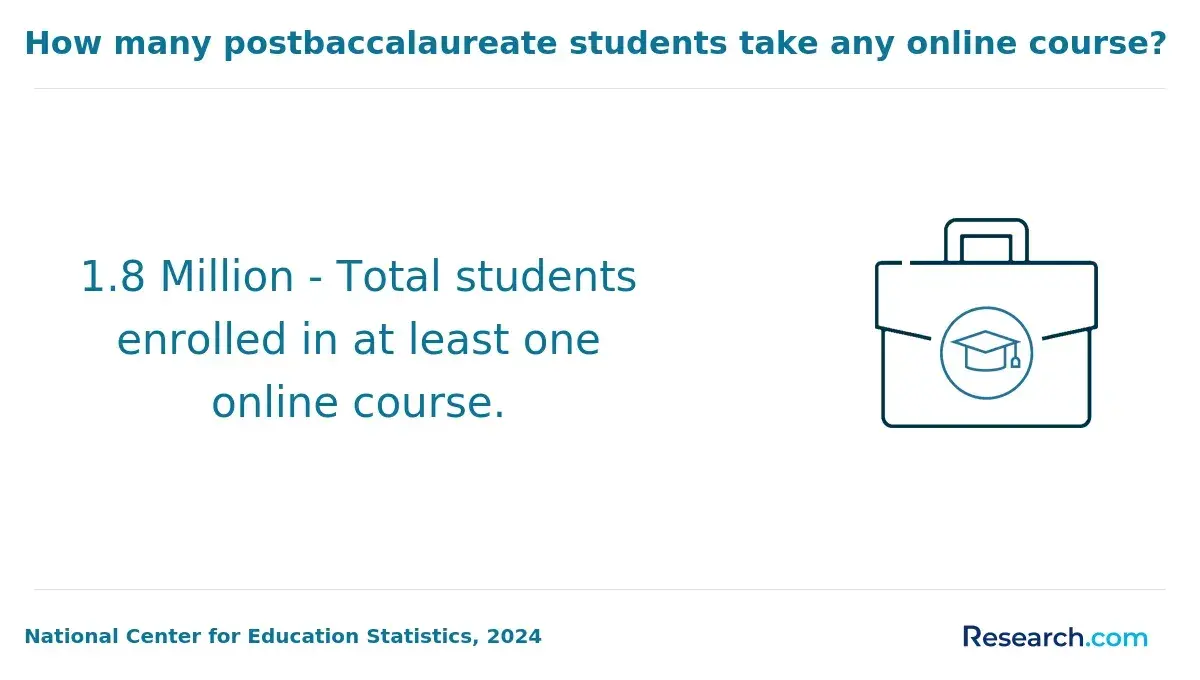
Tuition comparisons are tricky because there is no single national "AI doctorate tuition" rate. Many programs are housed under computer science, engineering, information technology, data science, or applied computing departments. Some charge per credit, others charge flat semester tuition, and funded PhD students may pay little or no tuition because of assistantships or fellowships.
Published U.S. doctoral tuition schedules for recent academic years show that online programs often use a per-credit model, while on-campus research doctorates may use resident and nonresident graduate tuition. The most useful comparison is not sticker price alone; it is net tuition after assistantships, employer tuition benefits, scholarships, and required fees.
The table below shows the cost categories students should compare side by side. It is designed to prevent the common mistake of comparing only tuition while overlooking fees and funding differences.
| Cost item | Online AI doctorate | On-campus AI doctorate | How to compare |
| Tuition model | Often per credit with the same rate for in-state and out-of-state students | Often semester-based or per credit with resident and nonresident rates | Calculate total required credits, not just the first-year rate |
| Assistantships | Less common, but available at some universities | More common in research-intensive PhD programs | Ask whether funding is guaranteed, competitive, or unavailable |
| Technology fees | Common and sometimes charged each term | May be lower or bundled with campus fees | Include required software, platforms, and proctoring fees |
| Residency costs | Possible travel, lodging, and missed work for required visits | Usually replaced by local living and commuting costs | Estimate travel for every required residency or defense |
| Dissertation continuation | May include per-term dissertation or continuation fees | May include per-term dissertation or research credits | Model costs if the dissertation takes one or two extra terms |
Because AI-specific tuition benchmarks are not reported in federal datasets, applicants should build their own apples-to-apples worksheet using each school's current tuition page. Include required credits, annual fee increases if disclosed, residency expenses, and the likelihood of funding. If a program refuses to explain total estimated tuition through dissertation completion, treat that as a warning sign.
Employer Confidence in Online vs. In-Person Degree Skills, Global 2024

Cost of attendance is broader than tuition. It includes fees, books, software, computing resources, travel, housing, transportation, health insurance, loan interest, and lost income. For doctoral students, the hidden cost is often time: an extra dissertation year can add continuation fees and delay career or salary progression.
Recent Federal Student Aid portfolio data shows that graduate and professional borrowers carry a large share of U.S. student loan balances, which matters because doctoral study can add debt on top of prior undergraduate or master's borrowing. For AI students, the key lesson is to estimate total borrowing under realistic completion timelines rather than assuming the best-case plan.
The table below compares common cost-of-attendance pressures by format. Use it to identify which expenses are likely to affect you personally, because the cheaper format on paper may not be cheaper for your life situation.
| Cost component | Online student risk | On-campus student risk | Practical interpretation |
| Housing | Usually no relocation required | May require relocation near campus | On-campus study can become expensive in high-cost metro areas |
| Income interruption | Often lower if the student remains employed | Can be high if the student leaves full-time work | Lost income can exceed tuition differences |
| Travel | Residencies, campus intensives, conferences, and defense travel | Daily commuting, parking, conferences, and research travel | Online students should budget for every required in-person event |
| Computing resources | Cloud credits, GPU access, software, and home equipment may be needed | Campus clusters may reduce some costs, depending on access rules | AI research can require more than a standard laptop |
| Health insurance and fees | Varies by enrollment status and employer coverage | Often bundled into full-time graduate student cost of attendance | Compare required university fees, not just optional services |
| Dissertation delays | Continuation fees while working independently | Continuation fees plus possible relocation or funding limits | Ask how long funding lasts and what happens after it ends |
A financially careful applicant should calculate three scenarios: best case, expected case, and delayed dissertation case. If the expected case depends on receiving an assistantship, employer reimbursement, or promotion that is not confirmed, treat that funding as uncertain until it is in writing.
Artificial Intelligence employers usually care less about whether a doctorate was online or on campus than about whether the degree is credible and whether the graduate can produce high-level work.
For research scientist, applied scientist, machine learning engineer, AI architect, and faculty roles, employers look for evidence: dissertation quality, publications, patents, open-source contributions, peer-reviewed presentations, technical interviews, and the ability to explain complex models responsibly.
Labor-market signals support the value of advanced AI and computing expertise. The BLS listed the median annual pay for computer and information research scientists at $145,080 in its May 2023 wage data, with the outlook updated for the 2023 to 2033 period.
This does not mean every AI doctorate graduate will earn that amount, but it shows that the labor market places a high value on advanced computing research skills.
Employer perception is strongest when an online doctorate meets the same standards as the on-campus version. Before enrolling, evaluate the credential the way a hiring committee or technical recruiter might evaluate it:
- The institution is regionally accredited and clearly identifies the doctorate level, field, and degree type.
- The program does not hide the online format, but it also does not lower research or dissertation expectations.
- The faculty have visible AI, machine learning, data science, robotics, or computing research credentials.
- The student can demonstrate work through a dissertation, publications, conference presentations, code repositories, patents, technical reports, or deployed systems.
- The curriculum includes rigorous mathematics, statistics, algorithms, ethics, research methods, and domain-specific AI applications.
Students exploring earlier academic pathways can use an artificial intelligence major overview to understand how bachelor's- and master's-level roles differ from doctorate-level research and leadership opportunities.
Program format can affect job prospects indirectly, but it usually does not do so by label alone. The bigger issue is what each format helps you build: research depth, faculty mentorship, professional network, publications, teaching experience, industry collaborations, and technical credibility.
On-campus programs may offer more natural access to research groups and academic networks. Online programs may help experienced professionals complete doctoral research without leaving industry.
For academic and tenure-track roles, on-campus research intensity, teaching experience, advisor reputation, and publication record may carry substantial weight. For industry R&D and applied AI leadership, employers may focus more on technical problem-solving, model development, domain expertise, communication, and evidence that the dissertation addressed a meaningful problem.
The following career-fit guidance can help you decide whether format is likely to matter in your target path. Use it as a starting point, then verify expectations by reviewing job postings and speaking with hiring managers in your field.
- Choose an on-campus doctorate if your goal is a faculty role, postdoctoral research, lab-intensive AI research, robotics experimentation, or close participation in grant-funded projects.
- Choose an online doctorate if your goal is applied AI leadership, senior technical consulting, industry research tied to your current job, or advancement without relocation.
- Consider a hybrid doctorate if you want the flexibility of online coursework but still need periodic in-person research mentoring, networking, or dissertation support.
- Pause before enrolling if your goal can be reached with a master's degree, professional certificate, employer-sponsored training, or a focused research portfolio.
If your target role is closer to data science than AI research, comparing a data scientist degree may reveal a less expensive or faster path. A doctorate is most defensible when the role requires original research, advanced technical authority, or academic-level expertise.
How do you choose between online and on-campus Artificial Intelligence doctorate programs?
The best format is the one that aligns with your career goal, research topic, funding plan, learning style, and life constraints. Do not choose online only because it sounds convenient, and do not choose on-campus only because it sounds prestigious. A strong decision comes from comparing the actual program, not the label.
Use this step-by-step process to build a shortlist. It will help you compare online, hybrid, and on-campus AI doctorate programs on the factors that most often affect completion and return on investment.
- Define your target outcome: faculty role, research scientist role, AI leadership, consulting, policy, entrepreneurship, or personal scholarly goal.
- List dissertation topics you could realistically pursue, then identify programs with faculty who match those topics.
- Compare total cost of attendance, including tuition, fees, travel, software, housing, lost income, and dissertation continuation costs.
- Ask for funding details in writing, including assistantship availability, tuition remission, employer billing options, and scholarship renewal rules.
- Confirm delivery requirements, including synchronous meetings, residencies, lab visits, campus intensives, and defense format.
- Review doctoral outcomes such as completion, attrition, time to degree, placement examples, publications, and alumni roles.
- Evaluate support quality by asking how often students meet advisors, how dissertation delays are handled, and whether online students join research groups.
- Test employer perception by showing the program to a mentor, hiring manager, recruiter, or faculty member in your target field.
Several red flags should make you slow down regardless of format. Be cautious if a program promises fast completion without explaining dissertation expectations, lacks faculty depth in AI, provides vague tuition information, cannot describe research resources, or avoids questions about doctoral completion rates. Also be careful with programs that emphasize convenience more than scholarly rigor.
A practical final test is this: if you removed the delivery format from the brochure, would the program still look academically strong, financially realistic, and relevant to your intended career? If yes, the format may be workable. If no, convenience or campus reputation alone is not enough to justify the investment.
Other Things You Should Know About Artificial Intelligence
Usually, diplomas list the degree and institution, not the delivery format, but policies vary by university. Ask the registrar how the degree, transcript, and concentration will appear before enrolling.
Some can, but visa eligibility, residency rules, export-control restrictions, and access to certain datasets or research projects may vary. International applicants should confirm requirements directly with the university's international admissions office.
No. A PhD usually emphasizes original scholarly research and may be preferred for faculty or research scientist roles. A professional doctorate is often more applied and may fit senior industry, consulting, or technology leadership goals.
Many students should plan for several years of coursework, exams, proposal development, research, and dissertation writing. Full-time on-campus students may move faster with funding and lab access, while part-time online students may need more calendar time because they often continue working.
- Online Doctorate vs Traditional PhD: 7 Reasons to Choose Online in 2026 https://tmguni.com/top-7-reasons-to-choose-an-online-doctorate-over-a-traditional-on-campus-phd-in-2026/
- AI in Education: Navigating Fears, Embracing Possibilities, and Charting a Path Forward https://news.ruforum.org/ai-in-education-navigating-fears-embracing-possibilities-and-charting-a-path-forward/
- Funding your Degree https://gradsense.org/funding-your-degree/
- PhD in Technology - Artificial Intelligence and Machine Learning Specialization https://walshcollege.edu/programs/phd-technology-artificial-intelligence-and-machine-learning/
- 11 Top AI PhD Programs: Acceptance Rates & Funding Revealed - AI Degree Center https://aidegreecenter.org/phd-programs/
- What Global Employers Really Think About Online Degrees https://edutech.global/global-employer-view-on-online-degrees/
- Most Affordable Online Master's in AI for 2026 https://aidegreeprograms.org/rankings/affordable-online-ai-masters/
- How long should a PhD take today - Swiss School of Business Research https://ssbr-edu.ch/how-long-should-a-phd-take-today/
- Online vs Campus Artificial Intelligence Degree Programs: Complete Comparison https://hakia.com/compare/artificial-intelligence-online-vs-campus/
- How AI-powered mentors provide a transformative educational journey - BSBI https://www.berlinsbi.com/blog/how-ai-powered-mentors-provide-a-transformative-educational-journey


