
2027 Online Public Safety Master's Programs With No Application Fee

Co-Founder and Chief Data Scientist
An application fee can make it harder to compare several online public safety master's programs, particularly when admission is uncertain. No-fee options exist, while military-affiliated applicants, alumni, and applicants with documented financial need may qualify for waivers elsewhere. The $220 GRE General Test fee listed by ETS for U.S. test takers illustrates how application-related costs can add up before tuition begins. This guide helps budget-conscious public safety professionals identify credible no-fee programs, verify waiver policies, and compare the long-term value of each degree.
Key Things to Know About Public Safety Master's Programs with No Application Fee
- Online public safety-related master's programs at institutions such as American Public University, Columbia Southern University, National University, Purdue Global, and Wilmington University may advertise $0 application fees, but applicants should confirm the policy for their exact degree and start term before applying.
- There is no single U.S. average application fee for public safety master's programs; posted graduate fees commonly fall between roughly $35 and $100, so applying to four paid programs can add $140 to $400 before transcript, testing, or credential-evaluation costs.
- A $0 application fee does not signal easier admission or lower total cost: compare accreditation, tuition, employer relevance, transfer rules, concentration options, and required practicum or residency expenses.
How much do application fees typically cost for Public Safety master's programs?
There is no national, public-safety-specific application-fee average because universities set their own graduate admissions charges and may change them by campus, program, or term. In practice, many U.S. graduate applications charge approximately $35 to $100, while some institutions charge more for centralized graduate admissions processing.
The financial impact depends on how broadly a student applies. A candidate who applies to five programs with a $60 fee would spend $300 on application charges alone. That makes no-fee programs especially useful for professionals exploring several concentrations, such as emergency management, homeland security, criminal justice administration, or public administration.
The application fee is only one part of the pre-enrollment budget. The following cost categories help applicants avoid treating a waived fee as a complete cost waiver.
| Application-related expense | Typical payer | Why it matters |
| Application fee | Applicant unless waived | Usually nonrefundable and due when the application is submitted. |
| Official transcripts | Applicant | Prior institutions may charge for secure electronic or mailed records. |
| Graduate test score report | Applicant if required | Some programs are test-optional, but a required score can add testing and reporting costs. |
| International credential evaluation | International applicant | May be required when a school cannot directly evaluate a foreign academic record. |
| Background check or clearance | Applicant in some programs | May apply when coursework includes fieldwork, agency access, or professional placement. |
Applicants should ask whether a fee waiver must be approved before submission. Paying first and requesting reimbursement later is a common mistake; many schools do not refund application fees.
What does the application fee typically cover for Public Safety master's programs?
An application fee typically supports the administrative work of receiving, routing, and reviewing an admissions file. It is not a deposit toward tuition, does not reserve a seat, and generally does not purchase individualized admissions counseling.
At a centralized university, the charge may help fund document processing, application-platform licensing, transcript matching, graduate-school review, communications, and record retention. Programs that operate without a fee may absorb these costs through their enrollment budget or use a streamlined online application process.
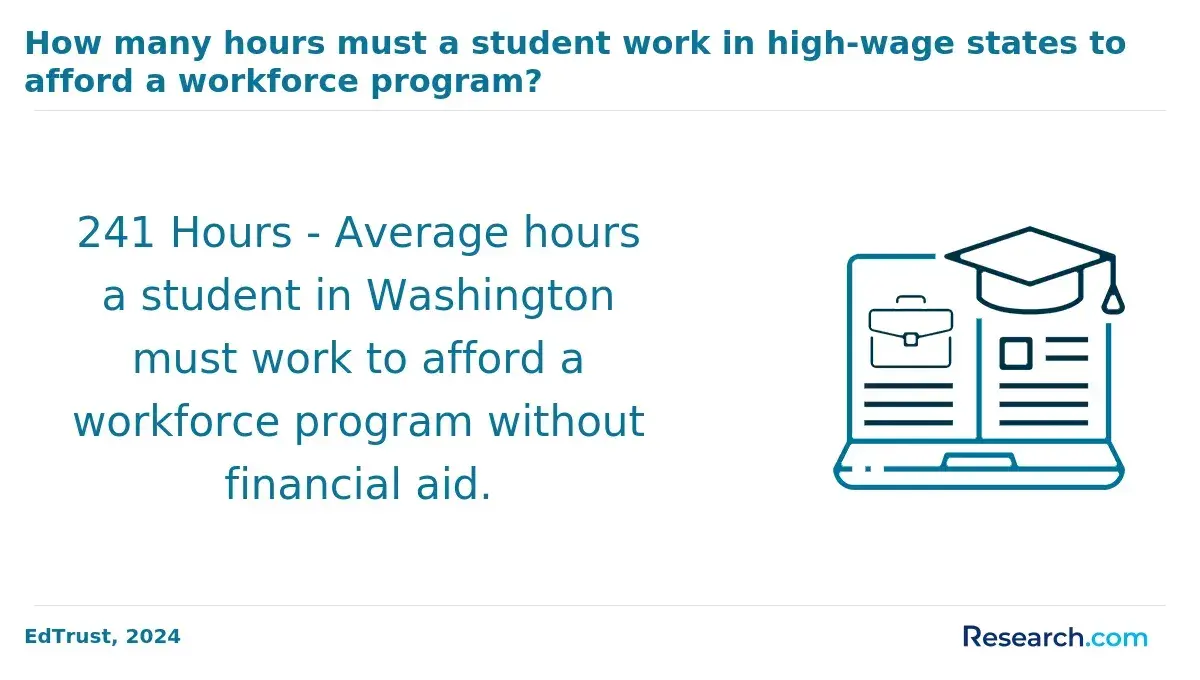
Applicants should distinguish an application fee from other charges that can appear later in the enrollment process. A school may waive the application fee while still requiring a tuition deposit after admission, course-material charges, technology fees, or a graduation fee. Students comparing graduate education costs across fields, including PsyD programs, should evaluate the complete published cost of attendance rather than a single admissions charge.
Which online Public Safety master's programs have no application fees?
Several online-focused institutions have historically promoted graduate applications without an application fee for relevant public safety fields. Public safety is not always the degree title; equivalent programs may be labeled emergency management, homeland security, criminal justice, public administration, or emergency services management.
This comparison identifies examples worth investigating, not a guarantee of a current policy. Degree availability, state authorization, eligibility requirements, and fee rules can change. Confirm the fee on the institution's official application page and save a copy of the policy before submitting.
| Institution | Relevant online graduate program examples | Application-fee position to verify | Best fit to investigate |
| American Public University | Emergency and disaster management; homeland security; criminal justice | Commonly promotes no application fee | Working public safety, military, and government professionals seeking flexible online terms. |
| Columbia Southern University | Homeland security; criminal justice administration; emergency services management | Commonly promotes no application fee | Applicants seeking career-focused administration and leadership coursework. |
| National University | Homeland security and emergency management | Commonly promotes no application fee | Students who prefer frequent online course starts and an accelerated format. |
| Purdue Global | Criminal justice and public administration-related graduate pathways | Commonly promotes no application fee | Adult learners looking for a large online university with multiple support services. |
| Wilmington University | Administration of justice; homeland security | Commonly promotes no application fee | Applicants seeking a regionally accredited private nonprofit university option. |
Do not limit a search to programs named "public safety." A related degree may better match an intended role. For example, professionals whose goal is community outreach, case management, or nonprofit leadership may also compare a human services degree pathway before committing to a security- or enforcement-centered curriculum.
To find additional options, search each school's graduate catalog for "application fee," "fee waiver," and the exact degree name. Then contact admissions with a concise written question: "Is there a fee for the online master's application for my intended term, and are any separate graduate-school or program charges required?"
Why do some Public Safety master's programs forego application fees entirely?
Schools may eliminate application fees to reduce barriers for adult learners and widen the applicant pool. Online programs compete for experienced professionals who may be comparing several institutions while balancing agency schedules, military obligations, and family responsibilities. A straightforward $0 policy can remove a small but immediate reason to abandon an application.
Fee-free admissions can also be an enrollment strategy. Institutions may recover processing costs through operating budgets, use automated document workflows, or prioritize higher inquiry-to-application conversion. That business decision says little by itself about instructional quality, faculty experience, or admissions selectivity.
Public, private nonprofit, and private for-profit institutions can all offer no-fee applications. Institution type alone does not determine affordability or return on investment. A lower tuition rate, employer tuition assistance, in-state eligibility, transfer credit policy, and required credits usually matter far more than the initial application charge. Applicants evaluating alternatives in technical leadership or infrastructure agencies can also compare a cheap online engineering degree if it better fits their career objective.
Are no-fee Public Safety master's programs less competitive than others?
No. A no-fee application policy is an admissions-access decision, not an admissions standard. A program can remove the application charge and still require a bachelor's degree from an accredited institution, a minimum GPA, professional experience, recommendations, a statement of purpose, or prerequisite coursework.
Competitiveness should be assessed using evidence tied to the specific program. Ask about the profile of recently admitted students, whether work experience is expected, how transfer credit is evaluated, and whether the program has a cohort cap. Schools may not publish acceptance rates for individual online public safety master's programs, so an applicant should not infer selectivity from the fee policy.
Applicants researching online public health masters programs easy to get into should likewise look beyond application fees and examine the actual admissions requirements and recent student profiles.
Use these signals to judge whether a program deserves serious consideration:
- Institutional and programmatic accreditation appropriate to the degree and career goal.
- A curriculum that includes the policy, leadership, emergency-management, intelligence, or justice content needed for the applicant's target role.
- Faculty with relevant academic and practitioner experience, along with transparent course outcomes and student-support information.
- Clear admissions requirements rather than vague promises of automatic acceptance or guaranteed career results.
A paid program can still be worth applying to when it has distinctive employer recognition, specialized coursework, a useful regional network, or an accreditation feature that materially supports the student's goal. Applicants should not skip a strong program solely because of a manageable fee; instead, request a waiver before deciding it is unaffordable.
Do military members get fee waivers for Public Safety master's programs?
Many universities offer application-fee waivers to active-duty service members, veterans, military spouses, reservists, or applicants using military education benefits, but the policy is institution-specific. A waiver for undergraduate admission does not automatically apply to a graduate public safety program, and some schools use different rules for online divisions.
Military applicants should contact graduate admissions before starting the application and ask whether the school requires proof of status, such as a military ID, orders, a DD Form 214, or a veterans-benefits document. Do not upload sensitive records unless the university provides a secure method and specifically requests them.
Military-friendly scheduling can be as important as the waiver. Confirm whether the program has asynchronous coursework, deployment-related leave procedures, transfer-credit review, and support for employer or military tuition benefits. These factors can affect completion time and total out-of-pocket cost more than avoiding one application fee.
Do alumni receive fee waivers when applying to Public Safety master's programs?
Some universities waive application fees for their own graduates, but alumni treatment varies widely. The benefit may apply only to degree-holding alumni, only to applications submitted through a designated portal, or only during certain recruitment periods. Former students should not assume that holding a certificate or taking a single course creates alumni eligibility.
Before applying, ask the alumni office or graduate admissions team to confirm the applicant category, eligible program, waiver code or form, and deadline. Written confirmation is useful because online programs can have separate admissions systems from a university's main campus.
An alumni waiver can make sense when the institution's curriculum clearly supports the next career step. For example, an officer interested in intelligence analysis or federal investigative work should compare the course content and role requirements with realistic career information, including the factors that shape a criminal profiler salary, rather than selecting an alma mater solely for its waived fee.
Can financial need qualify applicants for Public Safety master's program fee waivers?
Financial need can qualify an applicant for a fee waiver at some universities, particularly those that use centralized graduate admissions. Eligibility rules vary: a school may consider participation in a qualifying public-assistance program, recent unemployment, a low-income threshold, participation in an access program, or demonstrated hardship.
Need-based waivers are less predictable than applying to a program with a standing $0 fee because they often require review and advance approval. Applicants should plan early rather than waiting until the application deadline, when an incomplete waiver request can delay submission.
A complete request usually includes only the evidence the school specifically asks for. Common categories include the following:
- A completed university fee-waiver form or an email request sent to the designated graduate admissions office.
- Documentation of a qualifying assistance program, unemployment status, or other financial circumstance named in the policy.
- A brief explanation of need when the school requests a statement.
- Proof of participation in an approved college-access, service, or pipeline program when applicable.
Applicants should redact account numbers and other unnecessary personal information. If the waiver is denied, ask whether the decision can be reviewed, whether a future fee-waiver event is scheduled, and whether the program has an alternative no-fee application route.
Are fee waivers available for international applicants to Public Safety master's programs?
International applicants may be eligible for fee waivers, but they should expect narrower options than domestic applicants because many need-based policies are linked to U.S. aid programs or domestic applicant categories. Some universities extend waivers to all applicants during recruitment events; others consider case-by-case hardship requests.
International students should ask admissions whether a waiver is available before paying, whether it applies to online study from their location, and whether a credential evaluation or English-proficiency score creates separate costs. A waived application fee does not remove requirements related to transcript translation, degree equivalency, identity verification, English proficiency, or immigration documentation for students who will study in the United States.
Applicants should also verify whether the online program can serve students in their country and whether the degree meets their intended employer or professional-recognition requirements. A no-fee application has little value if the institution cannot enroll the student where they live.
What should applicants consider when choosing Public Safety master's programs with no application fee?
The best no-fee online public safety master's program is the one that advances a defined career goal at a sustainable total cost. It is worth prioritizing $0 applications when an applicant is early in the search, needs to compare several viable programs, or would otherwise limit applications because of upfront costs. It is less important when a paid program offers a materially stronger fit, specialized concentration, or employer-recognized credential.
Compare programs on a full-cost and career-fit basis. The table highlights the questions that matter most before applying.
| Comparison factor | Question to ask | Why it affects the decision |
| Total tuition and mandatory fees | What is the estimated total cost for all required credits? | A $0 application fee may be insignificant beside higher per-credit tuition or mandatory charges. |
| Curriculum and concentration | Does the program emphasize emergency management, homeland security, justice administration, leadership, or policy? | The degree title alone may not show whether coursework fits the intended role. |
| Accreditation and recognition | Is the institution appropriately accredited, and does my employer value this program? | Recognition can influence tuition-assistance approval, transfer options, and career relevance. |
| Online delivery | Are classes asynchronous, and are there any required campus visits, simulations, or field experiences? | Format affects scheduling, travel costs, and feasibility for shift workers. |
| Admissions and waiver terms | Is the fee permanently $0, or does a waiver need approval before submission? | Clear terms prevent missed deadlines and nonrefundable charges. |
| Career return | Which positions, promotion pathways, or employer requirements does the degree support? | A degree is a stronger investment when it connects to a realistic professional objective. |
Follow a deliberate application sequence:
- Define the role you want after graduation and identify the concentration or skills it requires.
- Create a short list of accredited online programs that meet your location, schedule, and budget needs.
- Verify the exact application fee and waiver procedure in writing for each program and term.
- Calculate tuition, mandatory fees, books, travel, and any testing or transcript costs before applying.
- Apply first to strong no-fee matches, then use approved waivers or pay fees only for paid programs with a clear advantage.
Common mistakes include choosing solely on the absence of a fee, overlooking state authorization, assuming every military or alumni applicant qualifies automatically, and submitting a waiver request after payment. A low-cost application is useful, but the degree's curriculum, credibility, flexibility, and total price determine its real value.
Other Things You Should Know About Public Safety
Many online programs are test-optional or do not require the GRE, especially for applicants with professional experience. Check the exact program page because test requirements can differ by concentration and applicant academic history.
Many programs are designed for approximately 30 to 36 credits and can often be completed in about 18 to 24 months of part-time study. Actual timing depends on transfer credit, course availability, enrollment pace, and any capstone requirements.
Usually not by itself. Police licensing and peace-officer standards are set by state or local authorities and commonly require academy training, background checks, fitness standards, and agency hiring processes. The degree may support advancement or specialized roles but does not replace required licensure steps.
Applying to multiple well-matched no-fee programs can be sensible because it expands options without increasing application-fee costs. Limit the list to programs you would realistically attend, and tailor every statement, résumé, and recommendation request to the program's admissions requirements.
References
- Grow Your Career with an Online Master's in Public Safety Leadership | UMGC https://www.umgc.edu/blog/grow-career-online-masters-public-safety-leadership
- Public Safety (MS) Competency-Based https://www.etamu.edu/programs/public-safety-ms-competency-based/
- Educational Partnerships https://www.sheriffs.org/about-nsa/partners/educational-partnerships/
- Military-friendly Online Master's Programs for Service Members https://www.onlinemastersdegrees.org/features/military-friendly-programs/


