
2027 Online Public Safety Degree Programs With No Letters of Recommendation Required

Co-Founder and Chief Data Scientist
Applicants returning to school often lack recent professors or supervisors who can provide recommendation letters. Online public safety degrees can offer a more streamlined route while still requiring evidence of academic readiness.
The National Center for Education Statistics reported that more than half of U.S. undergraduates took at least one distance education course in fall 2022, underscoring how common online learning has become. This guide helps prospective students identify no-recommendation programs, understand replacement requirements, verify quality, compare costs, and choose an option that supports their public safety career goals.
Key Things You Should Know
- "No letters of recommendation required" means recommendation letters are not part of the standard application for that specific program; it does not mean transcripts, minimum GPA standards, identity verification, essays, or prerequisite courses are waived.
- Legitimate online public safety options may include public safety administration, emergency management, homeland security, criminal justice, fire science, and related undergraduate pathways; institutional accreditation matters more than whether a school requests references.
- For cost context, College Board reported average published tuition and fees of $11,610 at public four-year in-state institutions and $43,350 at private nonprofit four-year institutions for 2024-25, although online public safety tuition can differ substantially by residency, transfer credits, and fees.
Which Online Public Safety Degree Programs Require No Letters of Recommendation?
Many online undergraduate programs use streamlined admissions and do not routinely request recommendation letters. This is most common in degree-completion, adult-focused, and open-access-oriented programs, where admissions teams rely more heavily on official transcripts and prior college work.
Requirements can change by degree level, concentration, applicant type, and term, so applicants should confirm the requirement on the program's current application checklist before paying an application fee.
The examples below illustrate public safety and public-safety-adjacent online bachelor's pathways that commonly publish admissions processes without recommendation letters. They are not a ranking, and a school's absence of a recommendation requirement should be verified directly for the exact program and start date:
| Online program example | Related public safety focus | Materials commonly emphasized instead of recommendations | Important verification point |
| University of Maryland Global Campus Bachelor's programs in emergency management-related study | Emergency planning, resilience, incident coordination | Application and official academic records | Confirm whether placement, transfer, or military-credit documents are needed |
| Liberty University Online B.S. in Public Safety Administration | Public safety leadership and administration | Application, prior-school records, and eligibility review | Check concentration-specific requirements and transfer rules |
| Columbia Southern University B.S. in Homeland Security | Homeland security, preparedness, and risk management | Application and transcripts or other academic documentation | Verify course-transfer evaluation policies before enrolling |
| Southern New Hampshire University online B.S. in Criminal Justice | Law enforcement, corrections, and justice administration | Application and transcripts | Determine whether the curriculum matches a public safety administration goal |
Students should also consider adjacent programs when their intended role is not limited to policing or emergency response. For example, an associates degree can be a practical entry point for students who need foundational credits before pursuing a bachelor's degree in emergency management, criminal justice, fire science, or public safety administration.
A school should state "no letters of recommendation required" or omit them from its mandatory application materials. A program is not necessarily a no-recommendation program when it says letters are "optional," "encouraged," or "required for applicants below a GPA threshold."
Those distinctions matter because optional letters can still strengthen some applications, while conditional waivers can disappear if an applicant does not meet stated academic criteria.
What Are the Admission Requirements for Online Public Safety Degree Programs With No Recommendation Letters?
Removing recommendations usually simplifies one part of the application rather than eliminating admissions standards. Undergraduate applicants commonly submit an application, official high school or college transcripts, and proof of graduation or an equivalent credential.
Transfer students may need transcripts from every postsecondary institution attended, even if they do not intend to transfer credit from each one.
The following comparison shows what applicants may encounter in place of reference letters. Exact GPA thresholds, test policies, and documentation vary by institution:
| Applicant type | Common required materials | Possible additional review items |
| First-time undergraduate | Application, high school transcript or GED-equivalent record, proof of graduation | Minimum GPA, placement assessment, immunization or identity records where applicable |
| Transfer student | Application and official transcripts from prior colleges | Course descriptions, military training records, conduct disclosure, minimum transferable GPA |
| Working adult returning to college | Application and available academic records | Resume, employment verification, professional training documentation, prior-learning review |
| Graduate applicant | Application, bachelor's transcript, and degree verification | Resume, statement of purpose, relevant work experience, writing sample, or prerequisite coursework |
Graduate-level public safety, emergency management, homeland security, and public administration programs are more likely than bachelor's programs to request a résumé and statement of purpose.
Some may waive the GRE but still expect applicants to explain their professional goals and demonstrate readiness for graduate writing and research. Applicants exploring other streamlined graduate admissions models can compare how an MBA without GMAT requirement may still use transcripts, work history, and essays to assess preparation.
Before applying, request confirmation in writing from admissions that letters are not required for your degree, concentration, and applicant category. Save the response and a copy of the published checklist; this reduces the risk of discovering an extra requirement after the application has been submitted.
Are Online Public Safety Programs With No Letters of Recommendation Easier to Get Into?
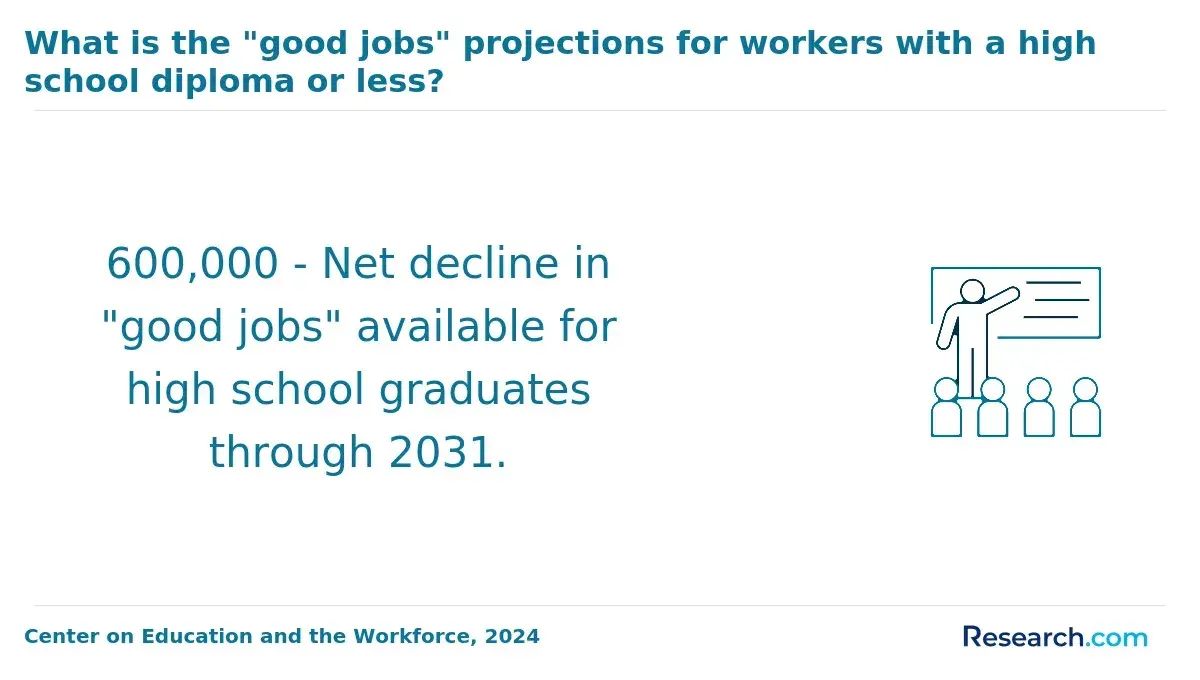
Not necessarily. A no-recommendation policy reduces the administrative burden of finding referees, but it does not reveal a program's academic quality, acceptance rate, or likelihood of admission. Schools can maintain selective standards through GPA requirements, prerequisite coursework, transfer-credit limits, writing assessments, and holistic review of professional experience.
The policy is especially useful for working adults, military-affiliated learners, career changers, and applicants whose former instructors are difficult to contact. It may be less suitable for applicants to highly competitive graduate programs where faculty recommendations help demonstrate research ability, leadership, or advanced analytical skills.
Career outcomes should also guide the decision. Public safety graduates may work in emergency management, dispatch operations, community preparedness, corrections, law enforcement administration, security management, fire service administration, or government continuity planning.
The U.S. Bureau of Labor Statistics reported a median annual wage of $86,130 for emergency management directors in May 2023; however, this role typically requires substantial emergency-response, government, or administrative experience in addition to education. A bachelor's degree can support preparation for entry-level or advancement opportunities, but it does not independently qualify a graduate for every position.
A common mistake is treating simplified admissions as proof that a program is easier or lower quality. Instead, compare curriculum rigor, faculty credentials, field-based learning, graduation requirements, employer relevance, and institutional accreditation. A program with a transparent admissions process can still be academically demanding.
What Do Online Public Safety Programs Evaluate Instead of Letters of Recommendation?
Without recommendation letters, admissions staff need other evidence that an applicant can complete college-level work and contribute responsibly in a field connected to public service, risk management, and community safety. The strongest applications provide complete, consistent records and explain any gaps directly when the school offers space to do so.
Programs commonly evaluate the following materials in combination rather than relying on a single item:
- Academic transcripts: These show completed coursework, cumulative GPA, academic trends, and whether the applicant meets prerequisite requirements.
- Personal statement or admissions essay: This may assess writing ability, career direction, public service interests, and readiness for online study.
- Résumé or employment history: Relevant experience may include emergency services, military service, security, dispatch, corrections, health and safety, government, or nonprofit work.
- Professional training: Schools may evaluate FEMA courses, academy training, fire service credentials, incident command coursework, or employer-sponsored education for possible credit or readiness evidence.
- Standardized tests or placement measures: Many schools have test-optional policies, but some use placement tools to determine course support needs.
Applicants should not inflate job titles or claim certifications they cannot document. In public safety fields, background checks, professional conduct expectations, and agency hiring standards can be rigorous.
A concise, accurate résumé and a focused statement explaining relevant skills - communication, ethical judgment, situational awareness, reporting, teamwork, and crisis coordination - are more useful than generic claims of leadership.
Applicants who have a lower GPA should look for schools that explain their conditional or holistic review process. They should also ask whether recent coursework, documented professional training, or a personal statement can provide useful context. This is more productive than assuming that no recommendation letters means GPA will not matter.
How Can You Tell if an Online Public Safety Degree With No Recommendation Requirement Is Accredited and Legitimate?
Start with institutional accreditation. In the United States, a legitimate college should be accredited by an agency recognized by the U.S. Department of Education or the Council for Higher Education Accreditation. Institutional accreditation supports credit transferability, federal financial-aid eligibility, and employer confidence, although it never guarantees that another school or employer will accept credits or credentials.
Public safety is a broad academic category, so specialized accreditation is less uniform than it is in fields such as nursing or engineering. Emergency management, criminal justice, homeland security, and public safety administration programs may instead demonstrate quality through transparent curriculum, qualified faculty, relevant partnerships, and alignment with professional standards.
Use the following checks before submitting an application or making a deposit:
- Search the institution in the U.S. Department of Education's Database of Accredited Postsecondary Institutions and Programs, then confirm that the listed accreditor and institutional name match the school's website.
- Read the program curriculum and identify whether it covers relevant subjects such as emergency planning, incident command, public policy, ethics, risk assessment, communications, law, or organizational leadership.
- Review faculty biographies for experience in emergency management, public administration, law enforcement, fire service, security, government, or related research.
- Ask whether online students receive the same diploma as campus students and whether the transcript distinguishes delivery format.
- Confirm whether a desired job requires a separate academy, background investigation, certification, physical standard, security clearance, or state-specific license.
Red flags include vague accreditation claims, pressure to enroll immediately, unclear total tuition, guarantees of employment or licensure, and a refusal to provide catalog policies in writing. A no-recommendation application is not a red flag by itself; unclear academic standards and unverifiable institutional claims are the larger concerns.
How Much Do Online Public Safety Degree Programs With No Letters of Recommendation Cost?
Admission requirements do not determine tuition. Online public safety programs may charge per credit, per course, per term, or at an in-state, out-of-state, military, or flat online rate. The most meaningful comparison is the estimated total cost to completion after transfer credit, required fees, books, technology, and any residency or experiential-learning expenses.
For broad U.S. context, College Board's 2024-25 published tuition and fee averages were $11,610 for public four-year in-state students and $43,350 for private nonprofit four-year students.
These figures are not online public safety price quotes, but they show why students should compare net cost rather than assume an online program is automatically inexpensive.
The cost categories below can change the final amount substantially:
| Cost factor | Why it matters for online public safety students |
| Per-credit tuition | A lower advertised rate may still lead to a higher total if few prior credits transfer. |
| Institutional and technology fees | Online learning platforms, graduation fees, proctoring, and student services may be billed separately. |
| Residency classification | Public institutions may offer different rates for in-state, out-of-state, military, or fully online students. |
| Transfer and prior-learning credit | Accepted credits can reduce both tuition and completion time, subject to residency-credit requirements. |
| Required professional activities | Some courses may involve local observation, training, travel, background screening, or certification expenses. |
Ask each school for a written cost estimate based on your expected transfer credits and attendance pattern. Students comparing graduate school expenses across helping professions may also find context in the most affordable online MSW programs, though social work and public safety have different curricula, licensing rules, and practicum expectations.
Do not choose solely on the lowest per-credit figure. Compare whether courses are offered predictably, whether required classes are included in the estimate, and whether the degree supports the job path you want. A lower-cost program can be a poor value if it does not offer the needed concentration or transferable credits.
Can You Get Financial Aid for an Online Public Safety Degree With Streamlined Admissions?
Yes. A streamlined admissions policy does not prevent a student from seeking federal, state, institutional, military, or employer-based aid. To qualify for federal student aid, students generally must enroll in an eligible program at an eligible institution and meet applicable citizenship, academic-progress, and enrollment requirements. Recommendation letters are not a federal aid requirement.
The Free Application for Federal Student Aid is the starting point for most need-based federal aid, including Pell Grants, Direct Loans, and work-study eligibility where available. Aid packages depend on the student's financial information, program cost, enrollment intensity, and school policies; online students should verify whether they must attend at least half time for particular aid types.
Before accepting aid, compare the package rather than focusing only on the total offered. The following questions help reveal actual affordability:
- Which awards are grants or scholarships that do not generally need repayment, and which are loans?
- Does the award assume full-time enrollment, and what changes if you take one course at a time?
- Are institutional scholarships available to online or transfer students?
- Will employer tuition assistance, veterans' education benefits, or military tuition rates reduce the amount you need to borrow?
- What is the school's estimated annual cost after all mandatory fees and expected transfer credits?
Students should also examine likely earnings and advancement opportunities before borrowing heavily. Public safety careers vary widely by employer, location, shift requirements, prior experience, and credentials.
Readers evaluating education through an earnings lens can review broader comparisons of highest paying college majors, while remembering that major-level salary comparisons cannot predict an individual public safety outcome.
How Long Does an Online Public Safety Degree With No Letters of Recommendation Take to Complete?
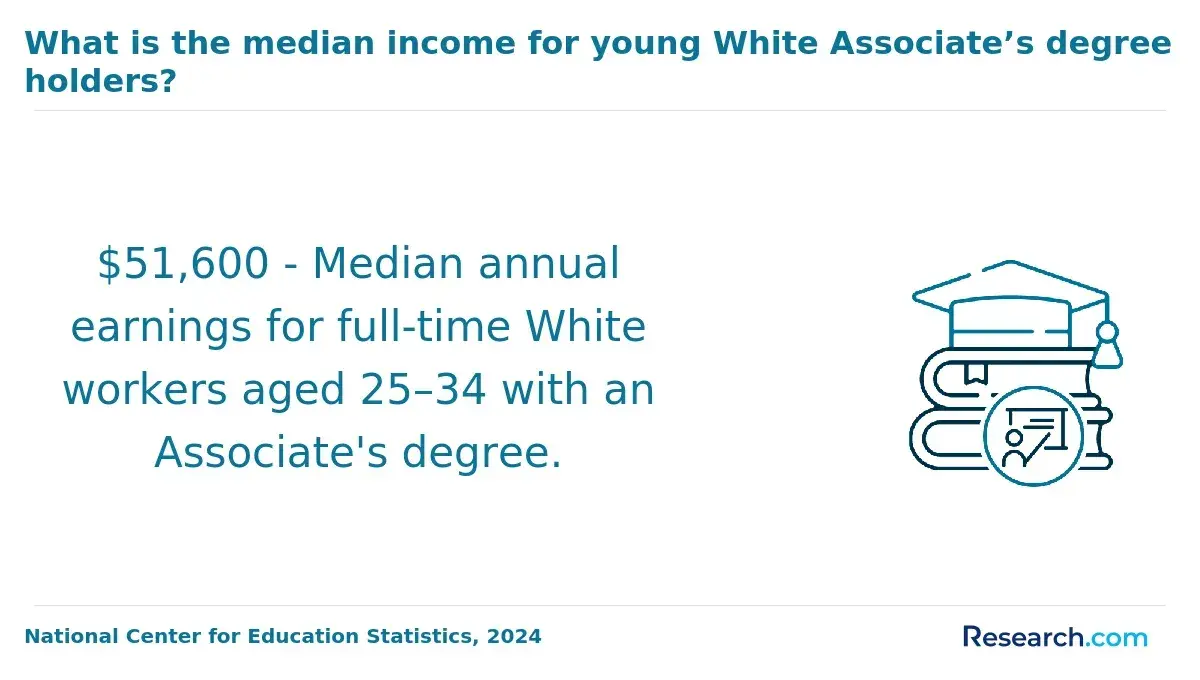
Completion time depends on degree level, transfer credit, course load, prerequisite completion, and whether required courses are available every term. A typical associate degree requires about 60 credits, while a typical bachelor's degree requires about 120 credits.
A full-time student may finish a bachelor's program in roughly four years, but transfer students and accelerated online learners may complete sooner; part-time working adults often take longer.
No-recommendation admissions can shorten the application process because applicants do not need to wait for referees, but it does not shorten degree requirements. Programs may use eight-week, 10-week, or 16-week terms, and accelerated terms require consistent weekly time for readings, writing, discussion, group work, and assessments.
Use this planning comparison to estimate a realistic path:
| Program pathway | Typical credit expectation | Timeline considerations |
| Associate degree | About 60 credits | Can provide foundational education or a transfer route to a bachelor's program |
| Bachelor's degree with no transfer credit | About 120 credits | Usually requires general education, major courses, and possible electives or capstone work |
| Bachelor's degree with transfer credit | Varies after evaluation | Time can decrease if prior coursework meets institutional and major requirements |
| Master's degree | Often 30 to 36 credits | May require a capstone, applied project, or research course and can be completed part time |
Ask for a degree map that shows required courses by term, not just the minimum number of credits. This helps reveal bottlenecks such as capstones offered once per year.
For another example of how program format can affect graduate-school planning, review the reported average cost of MLIS degree US; costs and curricula differ, but comparing total credits and pacing can help students evaluate time commitments.
Can You Transfer Credits Into an Online Public Safety Degree Program With No Recommendation Letters?
Often, yes. Transfer policies are separate from recommendation-letter policies. Many online institutions review prior college coursework after admission or during application review, but they may limit the number of credits accepted, require minimum grades, exclude older technical courses, or require that a portion of the degree be completed at the institution.
Potentially transferable learning can include general education courses, criminal justice or emergency management coursework, military education, public safety academy training, and recognized professional learning.
Acceptance is never automatic. The receiving institution decides whether a course applies to general education, an elective, or a major requirement.
Students can improve their transfer outcome by taking a few careful steps before enrolling:
- Send official transcripts from every college attended and request an individualized transfer evaluation.
- Compare transferred courses against the degree plan, especially statistics, writing, ethics, public administration, law, and emergency management requirements.
- Ask whether documented military training, FEMA coursework, academy instruction, or prior-learning assessment can earn academic credit.
- Confirm the maximum transfer-credit limit and the minimum number of credits that must be completed through the new school.
- Get the transfer evaluation and any promised credit awards in writing before committing to tuition or loans.
A common mistake is assuming that a school's general transfer-friendly marketing applies to every public safety concentration. Major-specific requirements may still require students to repeat courses or complete upper-division credits at the new institution.
How Should You Compare Online Public Safety Degree Programs That Do Not Require Letters of Recommendation?
Compare programs as career investments, not simply as easy applications. The best option depends on whether you want preparation for emergency management, administrative leadership, homeland security, criminal justice, fire service, security operations, or a related role.
Some jobs also require employer training, academy completion, certification, background screening, or state-specific eligibility beyond a degree.
This comparison framework focuses on factors that affect legitimacy, fit, and value:
| Comparison factor | What to examine | Why it affects your decision |
| Accreditation | Recognized institutional accreditor and current standing | Supports eligibility for aid and improves confidence in degree legitimacy |
| Curriculum fit | Required courses, concentrations, capstone, and elective options | Shows whether the degree prepares you for your intended public safety area |
| Admissions transparency | Published list of required documents and GPA standards | Confirms that recommendation letters are truly not required for your application type |
| Total cost | Tuition, fees, books, transfer-credit impact, and aid package | Helps prevent borrowing based on an incomplete advertised price |
| Online delivery | Live sessions, asynchronous coursework, exams, group projects, and local requirements | Determines whether the format works with employment and family obligations |
| Career alignment | Faculty expertise, applied projects, internships, and employer relevance | Connects coursework to the skills expected in target roles |
Contact admissions and ask targeted questions before applying. Confirm whether letters are required for your exact degree and start term, what materials replace them, whether online learners have any in-person obligations, how many credits are likely to transfer, and what the estimated total cost will be after aid.
Students who want public safety leadership roles should prioritize programs that build writing, policy analysis, emergency planning, data interpretation, communication, ethical decision-making, and organizational management skills.
These capabilities remain useful across government agencies, nonprofits, hospitals, campuses, private security organizations, and emergency-services settings. Choose a no-recommendation program when the format and admissions process remove an unnecessary barrier - not when it is the only feature that appears attractive.
Other Things You Should Know About Public Safety
Many undergraduate online programs do not require interviews, particularly those with streamlined admissions. Some graduate programs or competitive concentrations may use an interview to assess professional goals, communication skills, and career fit. Check the application checklist for the specific degree rather than relying on the institution's general admissions page.
Usually, yes. Adult-focused online programs commonly admit returning students and may place more weight on transcripts, work history, and documented training than on recent academic references. If older records are difficult to obtain, contact the registrar offices and the prospective school's admissions team early to identify acceptable alternatives.
Not by itself. Police, firefighter, corrections, emergency medical, and security positions may have separate agency hiring standards, physical requirements, background checks, academy training, certification rules, or state and local regulations. A degree can support knowledge and advancement, but applicants should verify requirements with the hiring agency.
Review the degree-specific admissions page, application portal checklist, and current academic catalog. Then email or call admissions and ask for written confirmation based on your degree level, concentration, transfer status, and intended start term. "Optional" and "waived" are different from "not required," so ask the school to clarify the exact policy.
References
- Careers at DeKalb County https://dekalbcountyga.gov/departments/human-resources/careers
- St. Petersburg College https://www.spcollege.edu/future-students/degrees-training/public-safety-public-policy-and-legal-studies/public-safety/public-safety-administration-bas-degree
- Officer Applications https://www.gocoastguard.com/get-started/officer-applications
- Data Sources for Post-Graduation Outcomes https://www.airweb.org/article/2021/09/30/data-sources-for-post-graduation-outcomes
- Financial Aid For Online Colleges https://www.affordablecollegesonline.org/financial-aid/financial-aid-for-online-colleges/
- Grow Your Career with an Online Master's in Public Safety Leadership | UMGC https://www.umgc.edu/blog/grow-career-online-masters-public-safety-leadership
- ASSP Foundation https://foundation.assp.org/academic-scholarships/
- 15 Best Online Bachelor's In Criminal Justice https://www.criminaljusticedegreeschools.com/rankings/best-online-bachelors/
- No Letters of Recommendation? Find Flexible Colleges Today https://www.educationconnection.com/resources/colleges-with-no-letters-of-recommendation-required/


