2027 Online Nurse Educator Master's Curriculum Breakdown: Core Courses & Specializations

Co-Founder and Chief Data Scientist
Curriculum design in online nurse educator master's programs critically shapes employability and professional adaptability within a shifting healthcare training landscape. Employers increasingly prioritize candidates whose coursework aligns with certification standards and emerging pedagogical technologies, underscoring specialization choices as strategic career investments. However, overly narrow focus risks limiting opportunities across diverse educational settings, while course sequencing can impose workload challenges that impede continuous professional engagement.
Balancing foundational theory with applied teaching competencies remains a persistent tension, magnified by rapid shifts in workforce needs documented in 2024 nursing education analyses. This article examines how curriculum structure, core courses, and specializations collectively influence career positioning and long-term viability in nurse educator roles.
Key Things to Know About Online Nurse Educator Master's Curriculum
- Core courses emphasize both pedagogical theory and clinical expertise, creating a tradeoff where deeper specialization may limit exposure to broader teaching methodologies, affecting adaptability to diverse educational settings.
- Employers increasingly prioritize candidates with curriculum design skills and interprofessional collaboration experience, signaling a shift from solely clinical proficiency toward integrated healthcare education roles.
- Data from 2024 shows 38% of students opt for micro-credentialing within specializations, reflecting timing and cost pressures that drive modular learning paths rather than comprehensive degree completion.
What core courses are included in an online nurse educator master's program?
Core coursework in an online nurse educator master's program functions as a pivotal framework for developing the multifaceted skills required in clinical teaching and academic leadership. Rather than merely fulfilling academic prerequisites, these courses demand a balance of theoretical proficiency and practical application, which directly influences students' capacity to meet employer expectations for educational rigor and learner outcomes.
This structure also requires careful sequencing; the intensive workload and specialized content are designed to progressively build expertise that supports advanced specialization options and leadership readiness within nursing education.
- Advanced Nursing Practice: This course maintains a crucial link between clinical proficiency and teaching competence, ensuring that nurse educator candidates continue to demonstrate current expertise in patient care while integrating pedagogical approaches. It underpins credibility in academic settings, where practical knowledge remains vital for effective instruction and learner engagement.
- Instructional Design and Technology: Reflecting the increasing shift toward digital and blended learning, this course equips students with skills to develop, deliver, and assess virtual learning experiences. Mastery here is essential as employers expect educators to leverage technology for adaptive, interactive instruction tailored to diverse learner environments.
- Assessment and Evaluation Methodologies: Given the demand for evidence-based education, this coursework trains nurse educators to design assessment tools that accurately measure learning outcomes and use data-driven feedback to refine curricula. This analytic skill set is a non-negotiable competency for meeting accreditation standards and sustaining program quality.
- Leadership and Management in Nursing Education: Approximately 40% of nurse educators in academic settings are involved in or aspire to leadership roles, according to a 2024 report by the American Association of Colleges of Nursing (AACN). This course develops administrative, mentoring, and conflict resolution capabilities, which are crucial for career advancement and effective program administration within complex healthcare education systems.
- Ethics in Nursing Education: This course addresses the nuanced ethical challenges in clinical teaching environments, emphasizing patient advocacy, professional integrity, and regulatory compliance. These considerations are foundational for nurse educators who must navigate moral dilemmas while fostering a culture of ethical practice among future nurses.
- Research Methods and Evidence-Based Practices: Many online nurse educator master's core courses curriculum include this to prepare students for scholarly inquiry and continuous improvement of teaching strategies. It empowers educators to contribute to professional knowledge and adapt instructional techniques based on emerging evidence, meeting the growing expectation for faculty to engage in educational research.
Working professionals and career changers often evaluate such course structures with regard to workload intensity and the alignment of these essential courses in nurse educator master's programs with real-world competencies. Selecting programs offering thoughtfully sequenced content that integrates clinical excellence, digital proficiency, evaluative rigor, and leadership prepares graduates not just for entry-level teaching but for sustained impact in nursing education.
For those also considering clinical practice education pathways, a useful resource comparing affordability and program specifics is available through online MSN FNP programs.
What specializations are available in online nurse educator master's programs?
Choosing a specialization within online nurse educator master's programs is a strategic decision that directly impacts employability, skill acquisition, and career trajectory. Specializations determine not only the depth of expertise but also the practical demands and job market alignment, influencing competitive positioning and workload complexity for students balancing professional and academic responsibilities.
- Curriculum Development and Instructional Design focuses on creating effective educational programs and integrating technology-enhanced learning platforms. This specialization hones skills in instructional strategies and digital tools-areas increasingly essential as hybrid and fully online nursing education expand post-pandemic.
- Clinical Education prepares students to supervise clinical placements through hands-on leadership and assessment capabilities. Employers favor this track for its strong connection to real-world nursing practice, despite additional internship requirements that can intensify students' fieldwork obligations.
- Leadership and Administration equips nurse educators for roles beyond teaching, including academic program management and policy development. This path suits those targeting administrative responsibilities within integrated health systems but may reduce direct instructional time, shifting focus to organizational skills.
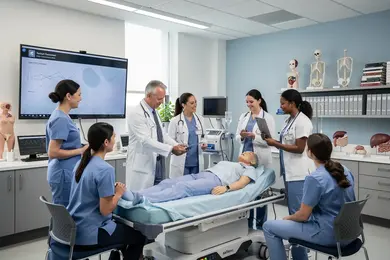
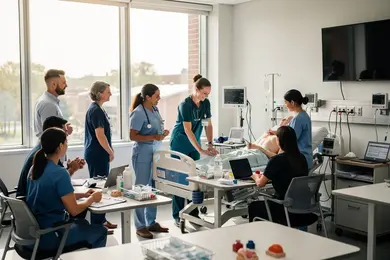
- Simulation Education trains educators in the application of high-fidelity clinical simulations, a specialty that 60% of nursing schools reportedly expanded in 2024 according to the National League for Nursing. This reflects increasing demand for immersive, risk-free clinical training tools, although it requires mastery of specialized technology and scenario design.
Each specialization involves tradeoffs between practical engagement and career flexibility. Prospective nurse educators must weigh internship intensity, certification requirements, and alignment with institutional demands when selecting their focus to optimize long-term employability and professional relevance.
Can students choose electives outside their specialization?
Elective selection within online nurse educator master's programs is often tightly governed by curriculum design and institutional policy, which typically prioritize a structured pathway to ensure competence in a chosen specialty. Many programs enforce sequencing rules that require students to complete core courses and specialization prerequisites before being allowed to enroll in electives outside their focus area.
Approval by academic advisors is commonly necessary, limiting choices to ensure alignment with learning outcomes and available course capacity. According to 2024 data from the National Center for Education Statistics, around 38% of nursing master's programs permit a small number of cross-specialization electives, generally capped at one or two courses to maintain program coherence and depth.
Choosing electives beyond one's specialization carries practical consequences that extend beyond academic curiosity. While interdisciplinary coursework can expand skill sets, such as incorporating healthcare administration or informatics, these decisions may increase total program length or complicate scheduling, potentially delaying graduation.
Employers in nurse educator roles historically emphasize mastery within the specialty and practical teaching competencies over a broad but shallow academic portfolio, making elective decisions a strategic balancing act between diversification and depth. For example, a nurse educator focusing on clinical instruction who opts for additional electives in unrelated areas might gain administrative insights but risk insufficient preparation for direct instructional responsibilities, affecting job readiness and early career advancement.
One nurse educator student recounted navigating the rolling admissions timeline while uncertain about elective availability. Faced with limited information on cross-specialization options, she hesitated to finalize her application, concerned that selecting electives too early might restrict flexibility if scheduling conflicts arose later.
After weeks of back-and-forth with the academic advisor's office, she ultimately accepted a course load narrowly focused on her specialization to avoid delays, later reflecting that this cautious approach helped her maintain steady progress despite initial uncertainty about elective choices.
How are online nurse educator master's courses delivered?
Online nurse educator master's courses predominantly utilize asynchronous learning platforms that enable students to engage with recorded lectures, readings, and assignments flexibly. However, many programs layer in synchronous elements like scheduled webinars and live discussions to enhance dialogue and clarify complex educational theories.
Combining these formats creates a hybrid participation model that balances accessibility with essential student-faculty interaction. According to a 2024 report by the National Center for Education Statistics, over 85% of graduate nursing programs incorporate such asynchronous methods to accommodate varied learner schedules, reflecting a broad shift toward flexibility in nurse educator master's course delivery methods.
This flexible online nurse educator master's program format demands disciplined time management and consistent self-motivation, particularly for working professionals managing clinical and personal commitments. Synchronous components necessitate occasional real-time participation, which can challenge learners balancing irregular shifts or caregiving responsibilities.
Delivery structure therefore directly influences how students regulate their study pace, maintaining engagement without face-to-face accountability. For example, a nurse educator candidate juggling patient care may find asynchronous study ideal for knowledge acquisition, but still benefit from live sessions to deepen understanding of curriculum design and teaching techniques.
The tradeoffs between flexibility and interaction shape skill development outcomes; programs that combine modular, multimedia content with both synchronous and asynchronous activities tend to support stronger practical integration, such as in capstone projects or teaching practicums. Practical components like clinical practicums often require local in-person arrangements, underscoring that purely virtual formats may limit experiential learning.
Students evaluating online options should weigh how delivery modes affect not only workload and engagement but also their readiness to meet employer expectations in advanced educational roles. Those considering pathways like the RN to BSN online transition can find parallels in how flexible course delivery models impact progression and career relevance.
Which core classes are considered the most challenging?
Within online nurse educator master's programs, core courses such as curriculum design and educational research methodologies consistently demand the highest level of cognitive and technical engagement. These classes require students to integrate nursing expertise with instructional theory and statistical analysis, bridging clinical knowledge and educational science in ways that challenge even experienced nurses.
The complexity arises not merely from theoretical content but also from workload intensity and the need to apply quantitative methods in academic contexts unfamiliar to many students. According to a 2024 survey by the National League for Nursing, 62% of graduate students in nurse educator tracks identified research and statistics courses as the most difficult components of their programs, reflecting the steep learning curve in mastering data-driven evaluation alongside pedagogical skills.
The difficulty of these foundational courses has direct consequences for student progression and alignment with career goals. Struggles with research-focused coursework often extend program timelines and may deter specialization in education-heavy roles where evidence-based teaching proficiency is essential. Conversely, success in these areas signals readiness to meet employer expectations in academia and clinical education settings demanding accountability and instructional effectiveness.
For working professionals balancing multiple responsibilities, the cognitive load and time commitment required for these courses can create tradeoffs impacting work-life balance and overall degree completion, underscoring the need for strategic planning and realistic self-assessment when selecting educational pathways.
One nurse educator student recalled hesitating during the rolling admissions process, uncertain whether to apply immediately or refine her application after gaining more relevant experience. She ultimately submitted under time pressure, realizing that early acceptance could provide access to foundational coursework before she felt fully prepared.
This decision introduced tension between the urgency of maintaining momentum and the apprehension about confronting demanding curriculum components without extensive prior exposure, illustrating the nuanced admissions timing considerations that prospective students often face.
Do online nurse educator master's programs require internships or practicums?
Internships or practicums are a core experiential learning component in most online nurse educator master's programs, but their implementation varies widely by institution. Approximately 78% of programs require a clinical or educational practicum, reflecting accreditation and employer expectations that emphasize hands-on instructional experience.
In some cases, these requirements are embedded as formal internships at healthcare or academic sites, whereas others integrate practice hours through project-based work or virtual simulations, though these alternatives are less common and typically offered by about 22% of programs. This mix addresses clinical practicum requirements for nurse educator master's programs by balancing logistical challenges with the necessity of applied teaching practice.
The real-world implications of these practicum requirements are significant, especially for working professionals or career changers managing employment and personal commitments alongside coursework. Students often must arrange placements locally, which can limit options depending on concentration or regional availability, potentially extending time-to-completion.
Practical engagement during internships also enhances job readiness by building direct instructional competencies and professional networks-advantages that less immersive online alternatives may lack. Given these factors, prospective students must critically evaluate how nurse educator internship obligations in online graduate studies align with their schedules and career objectives, especially as evidenced by data from the 2024 Nursing Education Outcomes Report.
Those exploring allied fields might compare program flexibility to options available in other disciplines such as exercise science degrees, where experiential components vary in form and intensity.
Which courses are required for professional certification exams?
Online nurse educator master's programs commonly design their required coursework to closely mirror the competency frameworks established by certification bodies such as the National League for Nursing. This alignment ensures that core subjects-like curriculum development, instructional strategies, and assessment methods-correspond directly to the specific content areas tested on certification exams.
Programs often incorporate leadership skills and emerging educational technologies, reflecting evolving professional standards and accrediting requirements. This strategic curriculum mapping not only secures candidate eligibility but also promotes mastery of both theoretical foundations and applied pedagogical practices essential for certification success.
The impact of curricular choices on certification readiness and career trajectory can be significant. For instance, omitting key courses in evaluation techniques or simulation pedagogy may delay a candidate's eligibility for certification examination or necessitate supplementary training, adding time and cost burdens.
One practical scenario involves a working nurse educator who completes a program lacking rigorous focus on evidence-based teaching; this gap can manifest as lower exam pass rates and reduced competitiveness in hiring processes where validated pedagogy skills are prioritized.
Research from the National League for Nursing highlights that programs explicitly aligned with exam blueprints produce a 15% higher first-time pass rate, underscoring how curriculum fidelity to certification requirements translates into measurable advantages in credential attainment and professional advancement.
Do specialization requirements extend graduation timelines?
Specialization requirements in online Nurse Educator master's programs are often embedded within structured curriculum pathways that include fixed sequences of core and concentration-specific courses, limiting flexibility in course selection and timing. These requirements frequently entail targeted practicum hours, advanced research components, or capstone projects tied to the specialization, which may not be interchangeable with other credits.
Depending on program design and student pacing, these factors can either maintain the standard two-year timeline when well-integrated or extend it due to the need to complete additional specialized credits or practica that follow strict prerequisite chains.
In practice, these specialization tracks can introduce scheduling bottlenecks, especially when elective substitution options are limited and certain required courses are offered infrequently or in fixed terms only.
For example, a student choosing a clinical simulation specialization might face delayed access to essential practicum placements, requiring a reduction in course load and adding one or two semesters beyond the traditional program length.
According to recent data from the National Center for Education Statistics, approximately 38% of graduate students pursuing specialized Nurse Educator tracks encounter graduation delays of this nature. This extension has tangible consequences for working professionals balancing employment, as longer enrollment can affect financial planning and delay workforce reentry or advancement within education and healthcare systems.
How do nurse educator specializations affect career opportunities?
Specializations within nurse educator master's programs act as distinct signals to employers, indicating a candidate's depth of technical skills, focused coursework, and applied project experience relevant to specific educational or clinical training needs.
Recruiters interpreting these credentials often align hiring pipelines to areas such as simulation technology, curriculum development, or leadership in nursing pedagogy, using specialization as a proxy for readiness in those domains.
This targeted expertise can refine job market positioning beyond a generic nurse educator credential, affecting initial consideration and fit for faculty roles or training leadership. According to a 2024 report from the American Association of Colleges of Nursing, nurse educators holding advanced certifications in specialized areas are 35% more likely to secure faculty roles in research-intensive nursing programs and lead innovative training projects, underscoring how specialization impacts the competitive hiring landscape and career opportunities with nurse educator advanced certifications.
However, choosing a specialization can also narrow eligibility for entry-level roles outside that technical focus, potentially complicating lateral moves across different sectors within nursing education. For example, an educator specializing in virtual simulation and telehealth training may face challenges transitioning into community health education or administrative leadership without additional credentials or experience.
This tradeoff means that working professionals and career changers must balance immediate employability with long-term flexibility, carefully considering regional demand and personal strengths. Prospective students exploring curriculum structure should compare these factors alongside options like accelerated speech pathology programs online, which similarly emphasize specialized skills aligned with distinct job markets.
How should students compare online nurse educator master's curriculum?
Comparing online nurse educator master's curricula involves evaluating intentional tradeoffs in program design rather than simple preferences. Variations in curriculum sequencing, specialization depth, and experiential learning integration significantly affect outcomes like job readiness, certification alignment, and the feasibility of balancing coursework with professional commitments within a practical timeframe.
Core Course Composition and Sequence. Analyze how foundational theory, pedagogical skills, and clinical practice are distributed and sequenced. A balanced curriculum that scaffolds these elements can improve both conceptual understanding and practical teaching competence, impacting employability and ease of knowledge transfer.
Specialization Depth and Relevance. Look for concentration options aligned with evolving educational technologies and healthcare trends, such as simulation-based learning or curriculum leadership. Specializations that reflect current employer demands add strategic value beyond generic electives.
Elective Flexibility Versus Structure. Programs vary between offering broad electives and tightly integrated specialization pathways. Consider how much curricular freedom you want, balanced against the advantage of focused skill development within recognized nurse educator career trajectories.
Integration of Practicum or Residency Experiences. Assess how experiential components, including practicum placements or simulated residencies, are embedded within online formats. These experiences critically influence real-world readiness and networking opportunities, which are often decisive for new nurse educators.
Certification Alignment and Outcomes. Curricula explicitly aligned with nationally recognized certification exam standards can enhance certification success rates. According to a 2024 National League for Nursing survey, 68% of nurse educator graduates secured improved teaching roles within a year, underscoring the impact of outcome-focused curriculum design.
Delivery Format and Workload Scheduling. Review how courses are structured over program duration and whether pacing accommodates working professionals. Programs with thoughtfully designed progression sequencing reduce burnout risk and support timely completion.
Contextual Fit Within Healthcare Education Fields. Since many nurse educators pursue interdisciplinary roles or advanced teaching careers, comparing nurse educator curricula alongside related fields-such as speech-language pathology graduate programs by state can offer additional perspective on specialization and workload tradeoffs.
What Graduates Say About Online Nurse Educator Master's Curriculum
- Tristan: "Completing the nurse educator master's core courses helped me realize that many employers value hands-on teaching experience and robust portfolios over just licensure. I strategically completed several internships during the program, which made a notable difference when I applied for academic roles. While the salary bump wasn't huge initially, the flexibility and remote teaching opportunities have really opened doors I hadn't considered before."
- Jesiah: "After graduating, I found the transition into full-time nurse educator work to be more competitive than anticipated, especially without additional certifications. It became clear that advanced credentials or specialized clinical experience were often preferred, even though the master's program covered comprehensive teaching methods. I've accepted more adjunct and part-time positions for now, which keeps me active in the field while I plan my next steps toward licensure-related advancement."
- Christopher: "The nurse educator specialization offered practical insights that proved useful when I pivoted my career from bedside nursing to academia. However, I quickly learned that many hiring committees prioritize formal teaching portfolios and documented internship experiences, especially for remote roles. While navigating job offers, I was cautious about contracts that limited salary growth, so I focused on roles that provided practical experience and mentorship leading to eventual licensure."
Other Things You Should Know About Nurse Educator Degrees
Working professionals should use a blend of time management and strategic planning to balance core and specialization courses in a 2027 online Nurse Educator Master's program. Prioritizing flexibility and using available resources, such as faculty support and online study tools, can help effectively manage both demands.
Many online nurse educator master's programs structure courses sequentially, starting with core courses to build a solid knowledge base before moving to specialization content. This approach ensures conceptual readiness but can extend time to completion if you must wait for prerequisites. Choosing a program with integrated or overlapping coursework allows for simultaneous progression, accelerating graduation but demanding stronger multitasking and adaptability to switch between general and specialized content rapidly.
Employers typically prioritize mastery of core nurse educator competencies such as clinical teaching methods and curriculum development over niche specialization areas, especially in academic or clinical settings demanding broad instructional skills. While specializations can differentiate candidates, insufficient depth in core skills often limits job eligibility. Candidates should ensure their specialization adds strategic value rather than purely academic interest, as employers seek well-rounded educators who can fulfill varied institutional needs.
Choosing depth in specialization often benefits students targeting narrowly defined roles, such as simulation technology or leadership training, where employer expectations demand expertise. Conversely, those aiming for flexible career paths or academic positions may benefit from broader coursework across multiple relevant domains. Evaluate long-term goals and labor market demand: specialization depth enhances immediate marketability in specific niches but can restrict adaptability, whereas breadth fosters versatile teaching capabilities but may dilute expertise.
References
- MSN Nurse Educator - Online Program | Worcester State University https://online.worcester.edu/programs/nursing/msn-educator/
- Online Nurse Educator Master’s Degree (MSN) - Purdue University Northwest https://www.pnw.edu/program-finder/nursing-online-msn-concentration-nurse-educator-masters-degree/
- Online MSN Nursing Education | Nurse Educator Program | SHU https://onlineprograms.sacredheart.edu/programs/masters-nursing/nursing-education-specialization/
- Career Paths in MSN https://www.allnursingschools.com/msn/career-paths/
- Master's Education https://www.aacnnursing.org/students/nursing-education-pathways/masters-education
- CNE® https://www.nln.org/certification/Certification-for-Nurse-Educators/cne
- Online Master in Nurse Educator (MSN) Degree | South University https://www.southuniversity.edu/online/degrees-programs/nursing/nurse-educator-msn
- Masters in Nursing, Nurse Educator Specialization https://www.chamberlain.edu/academics/nursing-school/graduate-programs/msn-nurse-educator
- Master of Science in Nursing: Nurse Educator Specialization https://catalog.worcester.edu/graduate/programs/msn-educator-specialization/
- Nurse Educator Specialization (Online) | Worcester State University https://www.worcester.edu/programs/nurse-educator-specialization/