2027 Online Medical Assisting Degree Programs That Accept 60, 75, or 90 Transfer Credits

Co-Founder and Chief Data Scientist
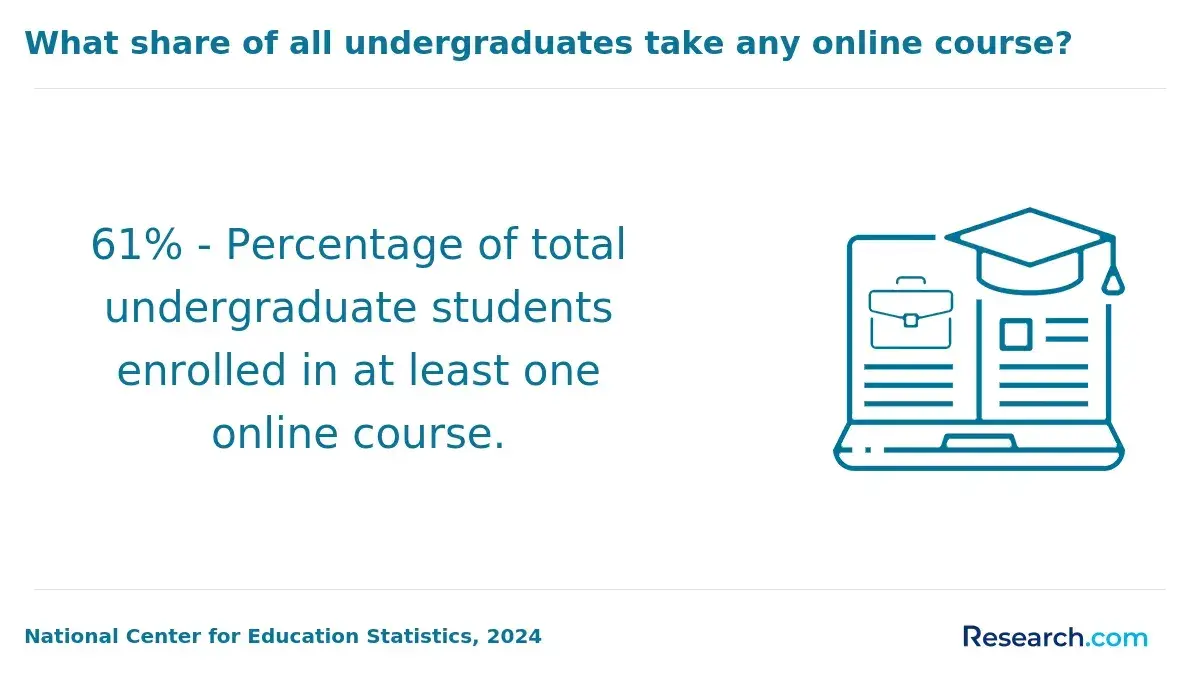
Transfer students often ask a practical question: if an online medical assisting degree accepts 60, 75, or 90 credits, how much school is actually left? The answer depends on degree level, course fit, residency rules, and whether credits apply to the major. NCES data released in 2024 showed that more than half of U.S. college students took at least one distance education course, making online completion paths increasingly relevant. This guide is for medical assistants, allied health students, and degree-completion learners who want to compare time, cost, and remaining requirements before enrolling.
Key Things You Should Know
- For a 120-credit bachelor's degree, 60 accepted credits usually leave about 60 credits, 75 accepted credits leave about 45 credits, and 90 accepted credits leave about 30 credits, but only credits that satisfy general education, major, elective, and residency requirements reduce the degree.
- Associate-level online medical assisting programs are often around 60 credits total, so transferring 60 credits may not mean you are finished; clinical, lab, externship, accreditation, or program-specific courses may still be required.
- Before choosing the program with the highest transfer maximum, verify institutional accreditation, CAAHEP or ABHES relevance for medical assisting credentials, minimum grade rules, upper-division requirements, and the school's official transfer evaluation.
How Many Transfer Credits Can You Apply Toward an Online Medical Assisting Degree?
An online medical assisting degree may refer to a medical assisting associate degree, an allied health associate degree, or a bachelor's degree-completion program in health sciences, healthcare administration, or allied health that accepts prior medical assisting coursework. "Accepts 60, 75, or 90 credits" means the school may post those credits to your record; "applies toward the degree" means those credits satisfy specific requirements in your degree audit.
The distinction matters because a school can accept many credits as electives while still requiring you to complete core medical assisting, science, externship, or upper-division courses. This is especially common when students transfer from a certificate, diploma, community college AAS, military medical training, or an older allied health program.
The table below shows how the same transfer-credit number can create different outcomes depending on the degree type. Use it as a planning estimate, not as a substitute for an official degree audit.
| Transfer-credit scenario | Typical degree context | Approximate credits remaining | What to verify before assuming the timeline |
| 60 transfer credits | Often fits a bachelor's degree-completion path after an associate degree | About 60 credits in a 120-credit bachelor's program | Whether lower-division credits satisfy general education and prerequisite requirements |
| 75 transfer credits | May fit students with an associate degree plus extra college, exams, or allied health coursework | About 45 credits in a 120-credit bachelor's program | Whether the extra 15 credits apply to the major or only count as electives |
| 90 transfer credits | Common maximum for transfer-friendly bachelor's programs with a 30-credit residency rule | About 30 credits in a 120-credit bachelor's program | Whether at least 30 credits, and sometimes more, must be completed at the granting institution |
| 60 credits into an associate degree | Less common as a completion shortcut because many associate programs are about 60 credits total | Varies widely | Whether the school still requires program-specific medical assisting labs, clinicals, and externship hours |
The labor-market context is also important. The U.S. Bureau of Labor Statistics reported a May 2024 median pay of $44,200 for medical assistants and projected employment growth of 15% from 2023 to 2033. That does not mean a degree automatically changes earnings, but it explains why many working medical assistants compare degree-completion options that could support advancement into care coordination, office management, billing, supervision, or further healthcare study.
Which Online Medical Assisting Degree Programs Accept 60, 75, or 90 Transfer Credits?
The programs most likely to accept 60, 75, or 90 transfer credits are not always titled "medical assisting." Many are online bachelor's completion programs in health sciences, allied health, healthcare management, or health administration that allow medical assisting coursework to transfer as lower-division, elective, or professional credit. Students who need maximum schedule flexibility may also compare self paced online college options, but self-paced format should not replace a careful transfer review.
The table below summarizes the program categories that usually matter most for medical assisting transfer students. It focuses on how the degree structure affects transfer-credit usefulness.
| Program category | Typical transfer-credit range | Best fit | Main caution |
| Online associate degree in medical assisting | Often limited by program curriculum, clinical requirements, and institutional residency rules | Students who need an entry-level medical assisting credential and have closely matching prior coursework | Even accepted credits may not replace externship, lab, or competency-based requirements |
| Online AAS or AS in allied health | Often friendly to prior certificate, diploma, or healthcare credits | Medical assistants with vocational or community college credits who want an associate credential | Some credits may apply only as electives, leaving science or general education gaps |
| Online bachelor's in health sciences or allied health | Commonly up to 75 or 90 credits, depending on school policy | Students who already have 60+ credits and want a degree-completion route | Upper-division major courses usually must be completed at the bachelor's institution |
| Online bachelor's in healthcare administration or healthcare management | Often up to 90 credits in transfer-friendly programs | Medical assistants interested in office leadership, operations, billing, or management roles | Clinical medical assisting credits may not satisfy business, finance, compliance, or management core courses |
| Competency-based or adult degree-completion program | May accept large blocks of prior college and alternative credit | Experienced working adults who can move quickly through familiar material | Subscription pricing only saves money if you complete courses efficiently |
A practical way to compare programs is to ask which one leaves the fewest required credits, not which one advertises the highest transfer cap. A program that accepts 90 credits but applies only 72 to your degree may be slower than a program that accepts 75 credits and applies all 75 to graduation requirements.
How Can You Tell Whether Transfer Credits Will Actually Apply Toward Your Medical Assisting Degree?
You can tell whether credits will actually apply by requesting an official or preliminary transfer evaluation and reading the resulting degree audit line by line. The audit should show which courses satisfy general education, major, concentration, elective, residency, and upper-division requirements.
Use the following process before you commit to a school, pay an enrollment deposit, or register for classes. These steps help prevent the most common transfer-credit mistake: assuming "accepted" means "useful."
- Collect official transcripts from every college, technical school, military education record, and exam provider you want reviewed.
- Ask the admissions or transfer office for the maximum transferable credits and the minimum grade required for transfer, such as C or higher.
- Request a degree-specific evaluation for the exact online medical assisting, allied health, health sciences, or healthcare administration program you plan to enter.
- Compare accepted credits with applied credits and identify credits that transfer only as free electives.
- Ask which remaining courses are offered online, which require proctored exams, and whether any clinical, lab, or externship component must be completed in person.
- Confirm the total remaining credits, tuition per credit, fees, expected course sequence, and earliest realistic graduation term in writing.
Red flags include vague promises such as "most credits transfer," pressure to enroll before an evaluation, refusal to review syllabi for major courses, or a degree plan that does not show how your credits apply. If a school cannot clearly explain what remains after transfer, you cannot reliably estimate cost or time.
What Types of Previous College Credits Can Transfer Into an Online Medical Assisting Degree?
Previous college credits can transfer from many sources, but the receiving institution decides whether each credit is college-level, accredited, equivalent, current, and relevant to the degree. Medical assisting students often bring a mix of general education, anatomy and physiology, medical terminology, pharmacology, administrative procedures, billing, coding, and clinical skills courses.
Students considering a broader administrative career may compare an online health administration degree because those programs may accept healthcare-related credits while building management, finance, compliance, and operations skills.
The table below explains common transfer-credit sources and how they may fit into an online degree plan:
| Credit source | How it may transfer | What can limit its use |
| Regionally accredited community college courses | Often apply to general education, lower-division major requirements, or electives | Course mismatch, low grades, quarter-credit conversion, or duplicate content |
| Medical assisting certificate or diploma coursework | May apply as professional, technical, or elective credit | Non-college credit format, lack of institutional accreditation, or limited bachelor's applicability |
| AAS medical assisting degree credits | Often helpful for allied health or health sciences completion programs | Some technical courses may not meet general education or upper-division requirements |
| Science courses such as anatomy and physiology | May satisfy prerequisites or health science requirements | Age limits, missing lab components, or course-level differences |
| Business, communication, psychology, and math courses | May satisfy general education or healthcare administration requirements | Minimum grade rules or lack of equivalency to the receiving school's curriculum |
| National exam, military, or prior learning credit | May count as elective, technical, or degree-completion credit | School-specific limits, documentation requirements, and residency restrictions |
To avoid losing useful credits, save old syllabi, course descriptions, catalog pages, lab descriptions, clock-hour documentation, and certification records. These documents can help an evaluator determine whether a previous medical assisting course is equivalent to a required course rather than only an elective.
How Do Residency and Upper-Division Requirements Affect Medical Assisting Transfer Students?
Residency requirements are the credits you must complete at the school awarding the degree. Upper-division requirements are junior- and senior-level courses, usually numbered 300 or 400, that bachelor's students must complete to show advanced learning in the major. These rules explain why a 90-credit transfer maximum often still leaves at least 30 credits to complete.
The table below shows how residency and upper-division rules can change the value of your transfer credits even when the published maximum looks generous:
| Requirement type | Common effect on transfer students | Why it matters |
| Institutional residency | Requires a minimum number of credits at the degree-granting school | A 90-credit transfer cap in a 120-credit program usually still leaves 30 credits |
| Major residency | Requires some major courses to be taken at the school | Transferred medical assisting courses may not replace advanced health science or administration courses |
| Upper-division minimum | Requires a set number of 300- or 400-level credits | Community college credits usually transfer as lower-division credits |
| Capstone requirement | Requires a final project, practicum, or integrative course at the school | Capstones are rarely waived by transfer credit |
| Clinical or externship requirement | Requires supervised practice or competency documentation | Prior work experience may not automatically replace accredited program requirements |
The key trade-off is speed versus program fit. A school with a lower transfer maximum may still be better if it applies more credits directly to the major, offers the remaining courses online in a predictable sequence, and does not require you to retake content you have already mastered.
How Does the Transfer Credit Evaluation Process Work for an Online Medical Assisting Degree?
The transfer credit evaluation process usually starts during admissions and ends when the registrar or academic department posts your official degree audit. Some schools provide an unofficial estimate first, but you should not treat it as final until all official transcripts and supporting documents have been reviewed.
Follow this sequence to compare programs accurately. It gives you a repeatable method for judging whether a 60-, 75-, or 90-credit transfer offer is truly efficient.
- Apply or request a formal pre-admission transfer review, depending on the school's policy.
- Send official transcripts from every institution, including colleges where you withdrew or earned only a few credits.
- Submit course syllabi for medical assisting, lab science, coding, pharmacology, or clinical courses that may not have obvious equivalents.
- Ask whether credits are evaluated by the registrar only or by the academic department as well.
- Review the degree audit for unmet general education, major, elective, residency, upper-division, and capstone requirements.
- Request clarification in writing for credits that transferred as electives but appear similar to required courses.
- Compare final degree plans from at least two schools using remaining credits, tuition, fees, course availability, and expected graduation term.
One common mistake is comparing only the number of credits accepted. A better comparison is the number of credits left after transfer, the required course sequence, and whether those courses are offered often enough for you to finish on your intended schedule.
How Long Does It Take to Finish an Online Medical Assisting Degree With 60, 75, or 90 Transfer Credits?
Completion time depends on remaining credits, course availability, term length, pacing, and whether you attend full time or part time. A working medical assistant taking 6 credits per term may need much longer than a full-time student taking 12 to 15 credits, even with the same transfer-credit award.
The table below gives broad planning ranges for a 120-credit online bachelor's completion pathway. Your actual timeline may change if the program has prerequisites, a capstone sequence, clinical requirements, or limited course rotations.
| Credits transferred | Approximate credits remaining | Possible full-time timeline | Possible part-time timeline | Planning note |
| 60 credits | 60 credits | About 2 academic years | Often 3 or more years | Works well for associate-degree holders who still need upper-division coursework |
| 75 credits | 45 credits | About 1.5 academic years | Often 2 to 3 years | Useful if the extra credits apply to degree requirements rather than electives only |
| 90 credits | 30 credits | About 1 academic year | Often 18 to 24 months | Often the fastest route if residency, major, and upper-division rules are already satisfied |
Some students are not trying to stay in medical assisting long-term. If your goal is a clinical nursing pathway, compare transfer policies carefully with bridge options such as medical assistant to LPN programs, because nursing prerequisites, clinical placement, and state approval rules can be very different from degree-completion requirements.
For the fastest realistic plan, ask the school to map your remaining courses by term. A 30-credit remainder is not always a one-year path if required courses are offered only once per year or must be completed in a strict sequence.
How Much Can Transfer Credits Reduce the Cost of an Online Medical Assisting Degree?
Transfer credits can reduce cost by lowering the number of credits you must buy from the new school. The savings are clearest in per-credit tuition programs; they are less predictable in subscription, flat-rate, or competency-based programs where speed of completion affects total cost.
College Board's 2024 Trends in College Pricing reported average published tuition and fees of $11,610 for in-state students at public four-year institutions and $43,350 at private nonprofit four-year institutions for the 2024-25 academic year. Those figures are not medical assisting-specific, but they show why transfer students should calculate remaining tuition before choosing a school.
The table below uses a simple per-credit formula to show how transfer credits may affect tuition exposure. The example is illustrative: multiply your school's tuition per credit by the credits still required for your actual degree plan.
| Scenario in a 120-credit degree | Credits remaining | Formula at $350 per credit | Illustrative remaining tuition before fees |
| 60 credits transferred | 60 credits | 60 × $350 | $21,000 |
| 75 credits transferred | 45 credits | 45 × $350 | $15,750 |
| 90 credits transferred | 30 credits | 30 × $350 | $10,500 |
Cost comparisons should include more than tuition. Before enrolling, confirm the full price components that may remain after transfer.
- Per-credit tuition for all remaining courses, including upper-division courses that may cost more
- Technology, online learning, graduation, transcript, background check, immunization, or clinical placement fees
- Textbooks, courseware, uniforms, software, or exam-proctoring costs
- Certification exam preparation or eligibility costs, if the program is designed around a medical assisting credential
- Financial aid rules, including satisfactory academic progress and limits on aid for repeated coursework
Students planning a long healthcare education pathway should also think beyond the immediate degree. For example, someone who later wants advanced nursing education may eventually compare options such as the cheapest DNP programs, but the first priority is choosing a current program that applies the most usable credits without creating unnecessary debt.
Can Prior Learning, Military Training, Exams, or Certifications Count Toward an Online Medical Assisting Degree?
Prior learning, military training, standardized exams, workplace training, and certifications can sometimes count toward an online medical assisting or allied health degree. However, schools differ widely in how they award these credits, and alternative credit may be capped separately from traditional transfer credit.
Alternative credit is most useful when it fills electives, lower-division professional requirements, or general education gaps. It is less likely to replace upper-division major courses, capstones, accredited externships, or courses tied to certification eligibility.
Ask the school how it evaluates each possible credit source before assuming it will reduce your remaining degree requirements. The list below highlights the documentation you may need:
- Military medical training: Joint Services Transcript, ACE credit recommendations, and course descriptions
- Standardized exams: CLEP, DSST, AP, IB, or other score reports accepted under the school's policy
- Professional certifications: current or expired credential records, exam documentation, and certifying organization details
- Prior learning assessment: portfolio, employer verification, training records, skills documentation, and faculty review
- Workplace training: clock hours, competencies, instructor qualifications, and proof that training was college-level
Medical assistants who later pursue advanced mental health or nursing pathways should note that certificate and graduate programs have different admission standards. For example, PMHNP certificate programs generally require prior nursing education and licensure rather than medical assisting credit alone.
Do Older College Credits Expire When Transferring Into an Online Medical Assisting Degree?
Older college credits do not automatically expire, but some programs place time limits on courses that involve fast-changing knowledge, safety standards, technology, or clinical competencies. General education courses such as English composition, public speaking, history, or humanities often remain transferable longer than anatomy, pharmacology, coding, billing software, or clinical procedures.
The table below shows where older credits are usually safer and where they may face closer review. Always confirm the policy for the specific degree and catalog year you will enter.
| Older credit type | Typical transfer outlook | Why the school may review it closely |
| English, humanities, social science, and general electives | Often transferable if earned at an accepted institution with a passing transfer grade | Usually less affected by changes in clinical practice or technology |
| College algebra, statistics, or quantitative reasoning | Often transferable, but program requirements vary | Some health programs require a recent statistics or math course |
| Anatomy and physiology, microbiology, or pharmacology | May face a recency limit in some programs | Programs may want current science knowledge for clinical or allied health progression |
| Medical billing, coding, EHR, or office systems | May transfer as elective credit if outdated | Technology, coding systems, compliance rules, and software change over time |
| Clinical medical assisting skills | May require documentation, validation, or retaking | Programs may need current competency evidence for patient safety and accreditation |
If you have older credits, do not self-reject them. Submit everything for evaluation, then ask whether a challenge exam, portfolio, competency validation, or updated course can preserve the most value from your previous education.
Other Things You Should Know About Medical Assisting
Some coursework may be fully online, but medical assisting programs that include clinical skill development or an externship may require in-person placement. Degree-completion programs in health sciences or healthcare administration are more likely to be fully online because they are not always designed as entry-level clinical training programs.
It can. Certification eligibility may depend on whether the program meets the requirements of the certifying organization and whether it is accredited or recognized in the required way. Ask the school which certifications its graduates may qualify for and whether transfer students have any additional requirements.
Usually no. Many medical assistant roles require a postsecondary certificate, diploma, associate degree, or employer-recognized training. A bachelor's degree may be more relevant for students seeking advancement into healthcare administration, care coordination, supervision, public health, or preparation for further education.
Not automatically. A lower tuition rate is helpful only if the program applies your credits efficiently, offers the remaining courses on your schedule, has appropriate accreditation, and supports your career goal. Compare total remaining cost, not just advertised tuition or maximum transfer credits.
References
- Medical Assistant https://www.century.edu/programs/medical-assistant/
- Medical Assisting https://mccollege.edu/medical-assisting-dma/
- Medical Assisting Program - City Colleges of Chicago https://www.ccc.edu/malcolm-x/departments/medical-assisting-program/
- Medical Assistant Associate’s Degree | Platt College https://plattcollege.edu/programs/school-of-medical-sciences/medical-assisting/
- Online Associate in Medical Assisting (AS) Degree | South University https://www.southuniversity.edu/online/degrees-programs/healthcare/medical-assisting-as
- Medical Assistant Program https://cod.edu/academics/areas/medical-assistant/index.html
- Become a Certified Medical Assistant Online in 3 Months – NHA-Accredited Program https://www.clinicalskillsinstitute.com/
- The 14 Best Online Medical Assistant Programs https://www.onlinecolleges.net/rankings/best-online-medical-assistant-degree-programs/