2027 Online Media Communication Master's Programs With University Scholarships: Awards, Eligibility & Tuition After Aid

Co-Founder and Chief Data Scientist
University scholarships can reduce the price of an online Media Communication master's, but awards, deadlines, enrollment rules, and renewal terms differ sharply by school. NCES reports that average graduate tuition and required fees were $20,513 at public institutions and $28,920 at private nonprofit institutions in 2022-23.
This guide helps prospective students compare scholarship-friendly programs, estimate tuition after aid, understand eligibility, and build a funding plan that limits borrowing without overlooking employer or federal options.
Key Things to Know About Media Communication Master's Programs with Scholarships
- Online Media Communication students may qualify for institutional merit awards, need-based grants, federal Direct Unsubsidized Loans of up to $20,500 per academic year, and employer tuition support; eligibility is determined by each funding source.
- As a broad benchmark, 2022-23 average graduate tuition and required fees were $20,513 at public institutions and $28,920 at private nonprofit institutions, so even a partial scholarship can materially change borrowing needs.
- Prioritize programs that confirm in writing whether online students are eligible, whether awards renew, which charges are covered, and whether scholarships can be combined with grants, tuition reimbursement, or federal aid.
What online Media Communication master's programs offer university scholarships?
Online programs are often housed in communication, journalism, strategic communication, integrated marketing communication, or digital media departments. Scholarship availability is not uniform: some schools automatically review admitted students for merit funding, while others require a separate application or restrict particular awards to campus-based students.
The programs below are examples of online or primarily online communication-related master's options where applicants should ask the university financial aid office and program admissions team about institution-administered scholarships. A listed school should not be treated as a promise that a particular award is available to every online student.
| University and relevant online program area | University funding route to investigate | Best question to ask before applying |
| University of Florida online communication and media-related graduate study | Graduate scholarships, departmental awards, and financial aid | Are distance students eligible for the same college or department scholarships as campus students? |
| West Virginia University online integrated marketing communications | College, graduate, and donor-funded scholarship opportunities | Is a separate scholarship application required after admission? |
| University of Denver online communication management study | University College scholarships and graduate financial aid | Can merit aid be applied to fully online enrollment and is it renewable? |
| Syracuse University online communications-related graduate study | Admissions-based merit review and school-specific funding | Which awards are available to part-time online students, if any? |
Start with schools that publish online tuition, required fees, and scholarship conditions together. If your career goal is broader management or marketing leadership, comparing an affordable online MBA can also help you decide whether a communication-focused curriculum justifies a higher net cost.
Choose a program for fit first: curriculum, faculty access, schedule, career relevance, and total price after confirmed aid matter more than a large advertised scholarship with unclear restrictions. Ask for the award terms in writing before paying an enrollment deposit.
What is the average tuition for Media Communication master's programs before aid?
There is no single national tuition average for Media Communication master's programs because universities classify these degrees differently and price online study by credit, term, or flat program rate. The most useful national benchmark is NCES's 2022-23 average graduate tuition and required fees: $20,513 at public institutions and $28,920 at private nonprofit institutions. These are institution-wide averages, not prices for a specific communication program.
Use the benchmark as a starting point, then calculate each program's published cost using its required credits. Tuition alone is not your net price; technology fees, course materials, residencies, graduation fees, and any differential online charges can change the amount you finance.
| Cost item | How to calculate it | Why it matters after aid |
| Tuition | Required credits multiplied by the per-credit rate, or the stated program rate | Many awards apply only to tuition, not other charges. |
| Mandatory fees | Add online, technology, registration, and graduation fees | These may remain out-of-pocket even with a tuition scholarship. |
| Scholarships and grants | Subtract confirmed gift aid | Gift aid reduces the amount that may need to be borrowed. |
| Employer assistance | Subtract the reimbursable amount and account for payment timing | Reimbursement may arrive after you pay the university. |
| Loans and personal payment | Cover the remaining balance only after gift aid and benefits | This is the portion that creates repayment risk or immediate cash needs. |
A lower sticker price is usually valuable, but compare completion requirements as well. A program with fewer required credits, predictable tuition, and a modest renewable award may be easier to budget than a cheaper per-credit option with uncovered fees or uncertain annual increases. Students considering a technical pivot can use the cheapest online computer science degree comparison as a separate benchmark for evaluating cross-field cost and career goals.
What types of financial aid and scholarships are available for Media Communication master's programs?
Funding generally falls into gift aid, employment-related support, and borrowing. Gift aid is preferable because it usually does not require repayment, but it can be limited, competitive, taxable in some circumstances, or tied to academic performance. Graduate students should complete the FAFSA when eligible because it can be required for federal aid and some institutional need assessments.
The following comparison shows what each source commonly does and when it is most useful.
| Funding type | Typical basis | Best use | Important limitation |
| University merit scholarship | Academic record, professional achievements, portfolio, leadership, or admissions strength | Applicants with strong grades and relevant media, marketing, journalism, or communication experience | May be limited to new students, full-time enrollment, or a specific term. |
| Need-based institutional grant | Financial need, often informed by FAFSA or institutional forms | Students whose documented resources do not cover the cost of attendance | Graduate need grants are less universal than undergraduate grants. |
| Departmental or donor scholarship | Program fit, concentration, identity, service, or career interest | Students who meet a narrowly defined donor criterion | Deadlines and separate essays are common. |
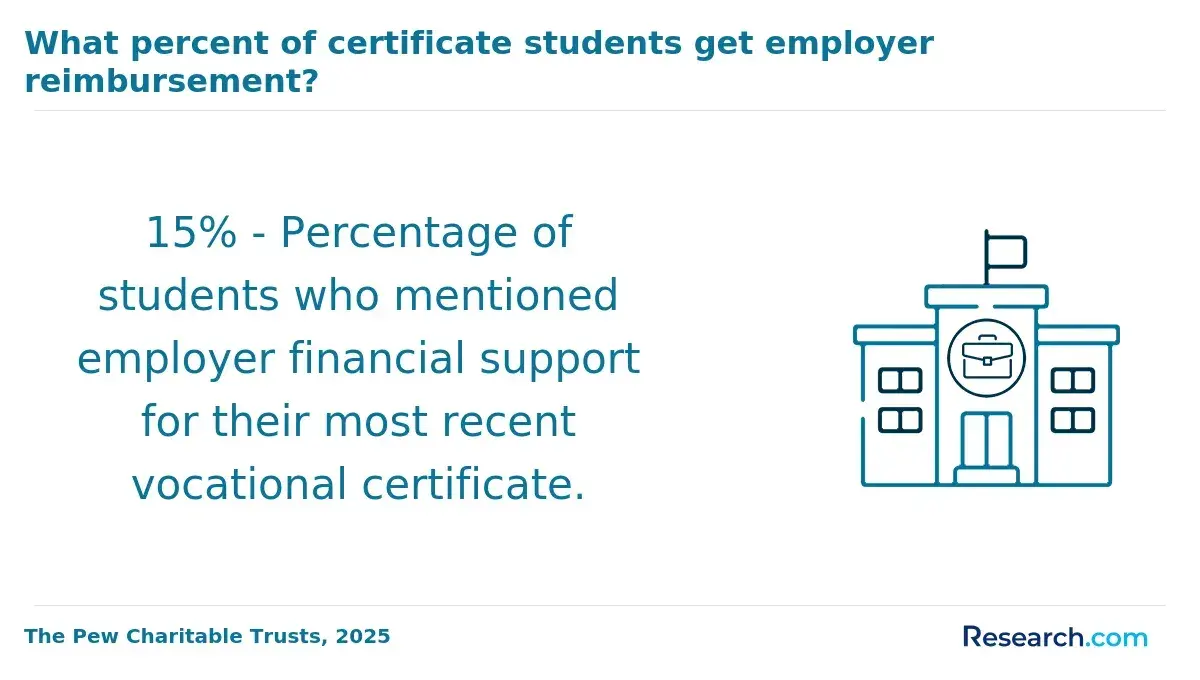
| Employer tuition assistance | Employment status and employer policy | Working professionals whose degree supports their current role | May require repayment if the employee leaves early. |
| Federal Direct Unsubsidized Loan | FAFSA eligibility and enrollment | Students with a remaining, necessary funding gap | Interest accrues and the annual graduate limit is generally $20,500. |
Employer support may be especially practical for communications professionals building skills in audience research, content strategy, public relations, or digital analytics. Before choosing a university award over workplace assistance, compare the award's renewal conditions with your employer's grade, service, and reimbursement requirements. Professionals seeking a clinical career change should review program-specific affordability separately, including online MFT programs, because licensing-oriented degrees often have different residency and placement costs.
How much do Media Communication master's scholarships typically cover?
Media Communication master's scholarships can range from a small one-time credit to a substantial tuition award, but universities do not use a common coverage scale. The award letter - not an admissions email, marketing page, or verbal estimate - controls the amount, term, renewal rules, and charges covered.
Graduate students may also use federal borrowing when scholarships leave a gap. The annual Direct Unsubsidized Loan limit for eligible graduate and professional students is generally $20,500, which illustrates why a scholarship that covers only part of tuition may still leave meaningful costs for a multi-term degree.
Review award language using these coverage categories before treating a scholarship as part of your budget.
- Fixed award: A stated amount deducted from tuition for one term, one academic year, or the full program; confirm whether it is divided across terms.
- Percentage tuition award: A reduction based on eligible tuition charges; it may exclude fees, books, travel, and optional courses.
- Full-tuition scholarship: Usually covers tuition only unless the written terms expressly include fees and other cost-of-attendance items.
- Stackable award: Can be combined with outside scholarships or employer benefits, subject to the university's total-aid and billing rules.
A partial renewable scholarship may be the better choice when its terms are transparent and the remaining balance is manageable. A larger nonrenewable award can be less valuable if later terms require heavy borrowing. Request a term-by-term net-cost estimate that shows the scholarship applied to each billing period.
Who is eligible for Media Communication master's scholarships?
Eligibility depends on the award rather than the degree title. Universities commonly consider admission status, academic achievement, financial need, residency, enrollment intensity, program modality, and evidence that the applicant's goals match the scholarship's purpose. Online students should never assume that "graduate students" includes distance learners.
These eligibility patterns can help you decide where to spend application time.
| Scholarship basis | Common evidence | Who should prioritize it |
| Merit | Undergraduate transcript, résumé, recommendations, statement, portfolio, professional accomplishments | Applicants with a strong academic record or clear communication-sector achievements |
| Need | FAFSA or institution-specific financial information | Eligible students with a documented funding gap |
| Program or concentration | Admission to the relevant communication, digital media, strategic communication, or marketing track | Applicants whose specialization matches the donor's stated purpose |
| Service or identity-based donor criteria | Essay and documentation specified by the award | Students who clearly meet every stated criterion |
| Employer partnership | Proof of employment with an eligible organization | Professionals whose employer is a university partner |
Applicants with lower undergraduate grades should still pursue need-based, employer, and mission-specific awards instead of assuming they have no options. They can strengthen a merit case with recent professional results, a polished portfolio, and a focused statement. Do not misrepresent financial circumstances, employment, residency, or identity qualifications; inaccurate information can lead to award cancellation.
Career-change applicants should also distinguish academic funding from occupational requirements. For example, compensation research such as this discussion of SLP salary may inform a separate career decision, but it does not establish scholarship eligibility for a Media Communication program.
What is the application process for Media Communication master's scholarships?
The application process usually begins before or alongside program admission. Some institutions automatically consider applicants after admission, but many donor-funded awards require a separate portal, essay, recommendations, or FAFSA. Missing a priority deadline can remove an otherwise qualified applicant from consideration.
Use this sequence to create a complete, trackable application rather than applying only to the largest advertised award.
- Build a shortlist of accredited programs and request written confirmation that online Media Communication students may receive each scholarship.
- Record admissions, FAFSA, scholarship, and employer reimbursement deadlines in one calendar, including time-zone details and document lead times.
- Prepare a current résumé, transcripts, concise career-goal statement, work samples or portfolio when relevant, and recommenders who can address your communication impact.
- Submit the admissions application and FAFSA, if eligible, early enough for institutional review; complete every separate scholarship form.
- Compare written aid offers by total tuition, covered charges, renewal conditions, disbursement timing, and remaining amount to pay or borrow.
- Ask for reconsideration only when you can provide material new information, such as a competing written offer, changed financial circumstances, or documented employer support.
Common mistakes include assuming admission automatically triggers all scholarship reviews, reusing a generic essay that does not address donor criteria, and accepting an offer without reading its renewal language. Keep copies of submissions and award notices; they make follow-up with financial aid offices faster and more precise.
Do online Media Communication students qualify for the same aid as on-campus students?
Sometimes, but not automatically. Federal student aid eligibility is generally based on the student and the institution's eligible program rather than whether coursework is online. Institutional scholarships can be more restrictive because donors, colleges, and graduate divisions may set separate rules for online, hybrid, part-time, or non-degree enrollment.
Ask the same questions at every university before comparing award letters.
- Is the program eligible for federal aid and does online enrollment count toward the required enrollment status?
- Are fully online students eligible for institutional merit scholarships, departmental awards, and graduate assistantships?
- Does the award require full-time enrollment, campus residency, attendance at an in-person event, or a course load unavailable in the online format?
- Will fees, required immersion travel, software, and course materials be covered or remain separate charges?
Online students may have fewer access points to assistantships, particularly when assistant work requires campus presence. That does not make online study a poor financial choice: a working professional may offset a smaller scholarship through employer assistance and continued earnings. Compare the full financial picture rather than scholarship size alone.
Can Media Communication master's students combine multiple scholarships and grants?
Many students can combine university scholarships, outside awards, employer benefits, and federal aid, but stacking is governed by each university's packaging rules. A school may reduce a loan first when new gift aid arrives, which is usually favorable, but it may also adjust institutional assistance when total resources exceed allowable costs.
Combining awards makes the most sense when the terms are compatible and the timing does not create a billing problem. Review the trade-offs before counting every award toward the same balance.
| Combination | Potential advantage | Question to confirm |
| University merit scholarship plus outside scholarship | Can reduce tuition and the amount borrowed | Must outside awards be reported, and which aid is reduced if total aid is adjusted? |
| University scholarship plus employer reimbursement | Preserves more personal cash when both apply | Does the employer reimburse net tuition after scholarships or the original billed amount? |
| Grant or scholarship plus federal loans | Loans can fill only the remaining eligible gap | Will late scholarship disbursement reduce loan eligibility or create a refund? |
| Multiple university awards | May create a stronger tuition reduction | Are awards explicitly stackable, and are there priority rules? |
Report outside awards promptly and ask the financial aid office to explain any revision in writing. Do not decline loans or commit personal funds until you understand when every scholarship will disburse and whether an employer requires you to remain employed after reimbursement.
What are the requirements to maintain scholarship status in Media Communication master's programs?
Renewal requirements are often stricter than initial admission requirements. A scholarship may require continuous enrollment, a minimum graduate GPA, satisfactory academic progress, full-time status, completion within a defined period, or compliance with conduct rules. The exact standard appears in the award notice, catalog, or scholarship agreement.
Protect renewal eligibility by monitoring these recurring obligations throughout the program.
- Meet the stated GPA and satisfactory academic progress standard; do not assume the general graduation GPA is the scholarship renewal threshold.
- Enroll in the required number of credits each term and obtain approval before reducing, pausing, or withdrawing from courses.
- Complete any renewal form, FAFSA, progress report, donor thank-you letter, or scholarship portal update by its deadline.
- Tell the financial aid office promptly about outside awards, employer payments, program changes, or changes in residency and enrollment.
- Keep copies of the original award terms and each subsequent renewal notice because conditions can differ by award year.
If a work, caregiving, health, or academic issue may affect enrollment, contact the scholarship administrator before making a schedule change. Some schools have appeal or reinstatement processes, but approval is discretionary and should not be assumed.
What tips can help Media Communication master's students secure more scholarship funding?
Strong scholarship strategy is less about submitting the most applications and more about targeting awards where your evidence directly fits the selection criteria. Applicants with professional experience should translate job duties into outcomes: audience growth, campaign performance, stakeholder communication, community impact, editorial work, analytics, or leadership.
Take these practical steps to improve both the quantity and quality of your funding applications.
- Apply to programs early enough to meet their priority scholarship deadline, even if the general admissions deadline is later.
- Create one evidence file with transcripts, résumé, portfolio links, work samples, certifications, recommendation contacts, and quantified accomplishments.
- Customize every essay to connect your Media Communication concentration, career plan, and experience to the award's stated purpose.
- Ask recommenders early and provide a short brief describing the scholarship, your goals, and examples they could substantiate.
- Request a complete cost-of-attendance and net-price explanation from each financial aid office, including fees and online-specific charges.
- Ask your employer about tuition assistance, direct billing, partnership discounts, and any service commitment before choosing a financing plan.
- Apply for several compatible smaller awards rather than relying on one competitive full-tuition opportunity.
Do not choose a school solely because it offers a scholarship headline. The best value is the program that supports your communication career goals at a manageable net cost, with credible renewal terms and borrowing you can realistically repay. If you are comparing applied professional fields, an online construction management degree may offer a useful example of why program length, work compatibility, and total costs should be evaluated together.
Other Things You Should Know About Media Communication
Apply as early as the university permits. Some scholarships require admission first, while others allow a concurrent application. Review priority deadlines because scholarship consideration can close before general admissions close.
Scholarships used for qualified tuition and required course-related expenses may be treated differently from funds used for living expenses or other nonqualified costs. Tax treatment depends on individual circumstances, so keep award and billing records and consult a qualified tax professional when needed.
Some universities offer institutional scholarships to international students, but federal student aid is generally limited to eligible noncitizens. Ask the program whether its specific award accepts international applicants and whether online study affects eligibility.
Ask the financial aid office for a written cost breakdown, inquire about unadvertised departmental or donor awards, explore employer assistance and outside scholarships, and compare offers from other admitted programs. Borrow only after identifying gift aid and payment options.
References
- Admissions Requirements for Master's in Communication Programs (Campus, Online) https://www.mastersincommunications.com/faqs/admissions-requirements
- Graduate Scholarships and Resources for Communications Students https://www.onlinemastersdegrees.org/student-resources/communications/
- Scholarships for Online Grad School | OEDb.org https://www.oedb.org/graduate-scholarship/
- Fully Funded Master's Programs in Communications and Journalism | ProFellow https://www.profellow.com/fellowships/fully-funded-masters-programs-in-communications-and-journalism/
- 2025 Most Affordable Online Master's in Communications https://www.onlineu.com/most-affordable-colleges/communications-masters-degrees
- Which Colleges Offer an Online Communications Master's? https://www.gograd.org/online-masters-programs/best-communications-degrees/
- Top 30 Master's Degree Scholarships to Apply for in March 2026 https://bold.org/scholarships/by-year/masters-degree-scholarships/