2027 Online Learning Design Doctorate Programs With Rolling Admissions: Deadlines, Start Dates, and Application Tips

Co-Founder and Chief Data Scientist
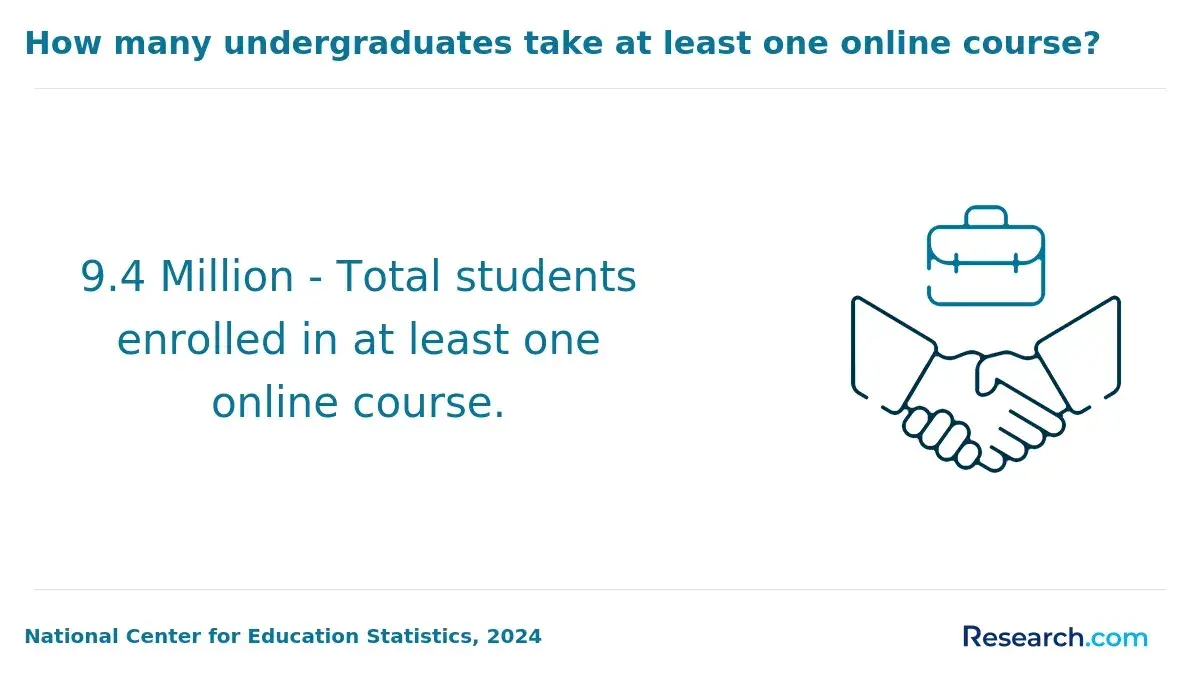
Choosing an online learning design doctorate with rolling admissions can shorten the wait between deciding to apply and starting doctoral study. It matters because online graduate education is now mainstream: NCES data released in 2024 show that more than half of U.S. postsecondary students took at least one distance education course in fall 2022.
This guide is for working educators, instructional designers, trainers, and academic leaders comparing flexible doctoral options. You will learn how rolling deadlines, start dates, aid timing, and application strategy affect the smartest enrollment decision.
Key Things You Should Know
- Rolling admissions usually means applications are reviewed continuously until a cohort, term, or priority deadline fills; it does not mean applicants can submit materials anytime without consequences.
- Many online learning design doctorates offer multiple annual starts, but financial aid, assistantships, dissertation sequence timing, and course availability may still favor applying 3 to 6 months early.
- BLS data released in 2024 reported a May 2023 median annual wage of $74,620 for instructional coordinators, making cost, time-to-completion, and career alignment central to the doctorate ROI decision.
How Does Rolling Admission Work for Online Learning Design Doctorate Programs?
Rolling admission means a program reviews applications as they arrive instead of waiting for one fixed annual deadline. For online learning design doctorate programs, this model is common because many students are working professionals who need flexible timing around school calendars, training cycles, family responsibilities, and employer tuition reimbursement windows.
In learning design, doctoral programs may use titles such as EdD in Instructional Design, EdD in Learning Technologies, PhD in Education with a learning design concentration, or Doctor of Education in Curriculum and Instruction with instructional technology coursework. The admissions model matters because doctoral study is not only about getting accepted; it also affects when you join a cohort, when research courses begin, and how soon you can access faculty advising.
The table below compares rolling admission with traditional deadline-based admission so you can see the practical differences before building an application timeline.
| Admissions model | How applications are reviewed | Best fit | Main trade-off |
| Rolling admission | Reviewed as completed applications arrive, often until seats are filled or a term closes | Working professionals who need multiple start-date options | Later applicants may face fewer seats, fewer course choices, or tighter aid timing |
| Priority rolling admission | Reviewed continuously, but applicants who apply by an early date receive first consideration | Students seeking scholarships, preferred start dates, or early advising | Missing the priority date may reduce options even if admission remains open |
| Fixed-deadline admission | Reviewed after one stated deadline, often for a single cohort | Applicants comparing highly structured or research-intensive doctoral cohorts | Less flexibility if work or life circumstances change |
Rolling admission is useful when you are ready to move quickly, but it can be risky if you assume flexibility replaces planning. The strongest applicants still treat the earliest priority date as the real deadline, especially when they need financial aid packaging, transfer credit review, employer approval, or time to choose between offers.
When Are the Best Start Dates for Online Learning Design Doctorate Programs?
The best start date depends on the program's academic calendar and your personal constraints. Online learning design doctorates often begin in fall, spring, and summer terms, while some accelerated or practitioner-focused EdD programs may use 8-week sessions or several entry points per year.
Use the next table to compare common start-date patterns. The goal is not to pick the soonest date automatically, but to choose the start that gives you enough time to apply well, arrange funding, and enter the right course sequence.
| Start-date pattern | Typical timing | Why it can work well | What to check first |
| Fall start | August or September | Often aligns with full-year course sequencing, new cohorts, and campus-wide support services | Whether scholarship or assistantship deadlines close months earlier |
| Spring start | January or early February | Good for educators who need fall to finish applications or secure employer approval | Whether required research or foundation courses are offered in the spring entry term |
| Summer start | May, June, or July | Useful for K-12 educators, higher education staff, and trainers with lighter summer workloads | Whether summer courses are compressed and whether financial aid covers the term |
| Multiple session starts | Every 6 to 10 weeks in some online formats | Helpful for applicants who want to begin soon after admission | Whether the doctorate uses a true cohort model or self-paced course rotation |
An earlier start date can be attractive, but speed should not override fit. Some applicants comparing accelerated paths may also want to review 1 year EdD programs online to understand how fast-track claims relate to dissertation expectations, transfer credits, and professional workload.
As a rule, fall is often the safest option for students who want the broadest course availability, while spring or summer can work well for applicants who already have transcripts, recommendations, and funding ready. If a program has rolling admissions but only one doctoral research sequence per year, the official start date may be less important than the semester when the sequence actually begins.
How Do Rolling Admissions Affect Application Deadlines for Online Learning Design Doctorates?
Rolling admissions change the way deadlines function. Instead of one hard deadline, you may see several dates: a priority deadline, a regular deadline, a final document deadline, a financial aid deadline, and a start-date cutoff. Missing one of these does not always end your application, but it may change the term you can enter or the funding available.
The most common mistake is reading "applications accepted year-round" as "there is no deadline." In doctoral programs, seats, faculty advising capacity, and course sections are limited. Once the program fills a cohort or closes registration, you may need to wait for the next start date even if the online application portal remains open.
Applicants should distinguish the main deadline types before submitting materials. These dates often operate differently, even within the same school.
| Deadline type | What it controls | Why it matters |
| Priority application deadline | Early review, scholarship consideration, or preferred cohort placement | Applying by this date may improve access to limited options, though it does not guarantee admission |
| Final application deadline | Last day to submit the application for a specific start term | Applications after this date may roll to the next available term |
| Document deadline | Last day for transcripts, recommendations, test scores if required, or credential evaluations | An incomplete file may not be reviewed even if the main application was submitted |
| Registration or enrollment deadline | Last day to accept admission, pay a deposit if required, or register for courses | Missing it can delay enrollment after admission |
| Financial aid deadline | FAFSA processing, institutional aid, scholarships, or employer reimbursement timing | A student may be admitted but still lack finalized funding for the desired start date |
Rolling admission is better than a fixed deadline when you need flexibility and can submit a strong file early. A traditional deadline may be better if you want a more predictable cohort comparison process, more time to prepare a research proposal, or a program that only admits students when faculty mentors are matched in advance.
Most applicants should begin preparing 4 to 6 months before the desired start date and submit the complete application 3 to 4 months early. That window gives enough time for transcript processing, recommendation letters, admissions review, financial aid, transfer credit evaluation, and employer reimbursement approval.
A shorter timeline can work if the program has frequent starts and minimal documentation requirements, but doctoral applications are rarely strengthened by rushing. Faculty reviewers often look for evidence that applicants understand research, professional practice, and the demands of dissertation or capstone work.
The sequence below offers a practical timeline for rolling-admissions applicants who want to reduce delays and avoid incomplete-file problems.
- Six months before the target start date, identify 3 to 5 programs and verify whether each has true rolling review, priority deadlines, or term-based cutoffs.
- Five months before the start date, request official transcripts and ask recommenders whether they can write detailed letters tied to doctoral-level work.
- Four months before the start date, draft the statement of purpose, resume, and writing sample around learning design experience, research interests, and career goals.
- Three months before the start date, submit the complete application and confirm that every document has been received by the admissions office.
- Two months before the start date, compare admission offers, total cost, course sequence, transfer credit decisions, and any residency or orientation requirements.
- One month before the start date, finalize financial aid, employer reimbursement paperwork, technology requirements, and weekly study schedule.
If you are applying less than 8 weeks before a term begins, ask admissions whether a late application can still enter the intended cohort. Some schools can review quickly, but doctoral onboarding, financial aid, and course registration may not move at the same speed.
Admissions requirements for online learning design doctorate programs usually focus on graduate readiness, professional experience, academic writing, and alignment with the program's research or practice focus.
Most applicants hold a master's degree in education, instructional design, curriculum, educational technology, organizational learning, training and development, higher education, or a related field.
The most important materials are not always the longest ones. A concise statement of purpose that clearly connects your experience to doctoral goals can carry more weight than a generic essay filled with broad interest in technology and education.
The table below summarizes common requirements and what admissions committees are typically trying to evaluate.
| Requirement | What it usually shows | What can create delays |
| Master's degree transcript | Graduate-level academic preparation and prerequisite background | Unposted degrees, missing institutions, or low graduate GPA that requires explanation |
| Statement of purpose | Fit with learning design, instructional technology, research interests, and professional goals | Writing that is too generic or unrelated to the program's specialization |
| Professional resume | Experience in teaching, training, curriculum, instructional design, leadership, or technology implementation | Job descriptions that list duties without showing impact or project scope |
| Recommendation letters | Evidence of scholarly potential, leadership, collaboration, and persistence | Late letters or recommenders who cannot speak to doctoral readiness |
| Writing sample | Academic writing, argumentation, citation habits, and research familiarity | Submitting workplace materials that do not demonstrate scholarly writing |
| Interview | Communication skills, motivation, availability, and fit with faculty or cohort expectations | Unclear answers about time commitment or research direction |
Accreditation also matters. For most learning design doctorates, regional institutional accreditation is the baseline to verify. Programmatic accreditation may matter more in licensure-oriented fields.
For example, applicants considering pupil-services or school-based psychology careers should compare doctoral education options with school psychology programs online accredited by NASP, because those pathways have different professional standards and state-level implications.
Applicants should also confirm whether the program requires a dissertation, applied doctoral project, capstone, residency, synchronous sessions, or campus visits. "Online" does not always mean fully asynchronous, and a required summer residency can affect travel cost, work leave, and family planning.
A strong online learning design doctorate application shows more than interest in education technology. It demonstrates that you can identify learning problems, design evidence-informed solutions, evaluate outcomes, write at a doctoral level, and contribute to a professional community.
Current trends make this especially important. Employers and universities are paying closer attention to AI-assisted learning design, accessibility, data-informed course improvement, and measurable learning outcomes. Applicants who can discuss these issues thoughtfully often present a clearer professional identity than those who simply say they want to "use technology in education."
Use the following strategies to strengthen your application before submitting it to a rolling-admissions program.
- Connect your goals to a specific learning design problem, such as online learner engagement, faculty development, workplace training evaluation, accessibility, curriculum redesign, or AI-supported instruction.
- Show evidence of impact in your resume by describing course builds, training programs, LMS implementations, learner data projects, assessment redesigns, or leadership responsibilities.
- Choose recommenders who can describe your analytical ability, writing skills, follow-through, and capacity for independent doctoral work.
- Use the statement of purpose to explain why the doctorate is necessary for your next step rather than simply repeating your resume.
- Prepare a writing sample that demonstrates organized argument, research use, citation accuracy, and revision quality.
- Ask admissions how faculty advising works before applying, especially if you already have a dissertation or applied research topic in mind.
Avoid red flags such as submitting a recycled personal statement, ignoring program specialization, listing AI tools without discussing ethics or learning outcomes, or choosing a program only because it has the next available start date. Rolling admission rewards readiness, not haste.
Rolling admissions can help students start sooner, but financial aid does not always roll at the same pace. Federal aid, institutional scholarships, employer reimbursement, military benefits, payment plans, and assistantships may each follow separate calendars. This is one of the biggest reasons to apply earlier than the final admissions cutoff.
Cost also deserves careful comparison. NCES data released in 2024 show that graduate tuition and required fees vary substantially by institution sector, which means applicants should compare total program cost, not just the per-credit rate. For online doctorates, total cost may include technology fees, dissertation continuation credits, residency travel, books, graduation fees, and extra semesters if the dissertation takes longer than expected.
Graduate students should also remember that federal Direct Unsubsidized Loans are limited to $20,500 per academic year for eligible graduate and professional students. If a program's annual cost exceeds that amount, applicants may need savings, employer funding, scholarships, payment plans, or credit-based PLUS loans.
Before committing to a start date, review these funding questions with the school's financial aid and billing offices.
- Does the program have a priority scholarship deadline that is earlier than the rolling admissions deadline?
- Will federal aid be available for the summer term if you choose a summer start?
- Are dissertation, capstone, or continuation credits billed at the same tuition rate as coursework?
- Does the school charge online, technology, residency, or program fees in addition to tuition?
- Can employer tuition reimbursement be applied before payment is due, or must you pay first and wait for reimbursement?
- If you defer to a later start date, will your scholarship, aid package, or tuition rate change?
Students prioritizing cost should compare flexible-admission programs with the cheapest online EdD programs, but affordability should be weighed alongside accreditation, completion support, faculty fit, and whether the curriculum matches your career goal.
Rolling admissions can make enrollment feel more flexible, but program availability is still limited by course sequencing, faculty workload, cohort size, and dissertation advising capacity. The fact that a school accepts applications continuously does not mean every concentration, elective, or research seminar is available every term.
This matters in learning design doctorates because curriculum often builds in sequence. Foundational courses may lead into research methods, design theory, evaluation, leadership, specialization electives, comprehensive exams, proposal development, and dissertation or capstone work. Entering at the wrong point may delay key milestones even if the admissions process is fast.
The table below shows how rolling admission can affect enrollment logistics after admission.
| Enrollment factor | Possible effect in rolling-admissions programs | Why applicants should verify it |
| Cohort size | Seats may fill before the final deadline | Late applicants may be admitted for a later term |
| Course rotation | Required courses may not run every session | A later start may extend the completion timeline |
| Faculty advising | Advisors may have limited capacity for new doctoral students | Research fit can matter even in professionally focused EdD programs |
| Elective availability | Specialized courses may rotate annually or based on enrollment | Students with narrow interests should confirm timing before enrolling |
| Residency or orientation | Required events may be tied to specific terms | Travel and scheduling can affect the practical start date |
Ask admissions whether you are being admitted to a specific cohort, a general term, or an open enrollment model. If the answer is unclear, request a sample degree plan showing exactly when required courses are offered for your intended start date.
Rolling admissions fit some student timelines very well and create problems for others. The key question is whether flexibility helps you make a stronger decision or tempts you to start before your goals, funding, and schedule are ready.
For working instructional designers, faculty developers, teachers, corporate trainers, and education leaders, rolling admission can align doctoral study with promotion cycles, district calendars, contract renewals, or employer tuition benefits. For applicants who need a highly structured research mentorship process, a fixed annual cohort may be more predictable.
The table below connects common student profiles with the admissions approach that may fit best.
| Student profile | Rolling admissions may fit when | A fixed deadline may fit better when |
| Full-time working professional | You need several start options and can study part time | Your job schedule requires a predictable annual planning cycle |
| K-12 educator | You want to use summer or school breaks to begin coursework | You need district approval or tuition reimbursement on a fixed schedule |
| Higher education staff member | You want to align enrollment with employee tuition benefits | You need a program with a structured research cohort and annual intake |
| Career changer | You already have strong learning design experience and a clear goal | You need foundational preparation before doctoral-level specialization |
| Aspiring researcher | You have identified faculty fit and research direction before applying | You need a competitive PhD model with full cohort review and funding consideration |
Applicants who are not ready for doctoral research, leadership, or dissertation work may be better served by a master's pathway first. Comparing the best online instructional design master's programs can help career changers build portfolio evidence, design skills, and academic confidence before committing to a doctorate.
Rolling admissions make the most sense when you already know why the doctorate is necessary for your next career step. If your goal is still vague, a later start date may be more valuable than an earlier one.
How Should Students Choose and Apply to Online Learning Design Doctorate Programs With Rolling Admissions?
The best way to choose an online learning design doctorate with rolling admissions is to compare timing, quality, cost, and career value together. A convenient start date is helpful only if the program also has credible accreditation, relevant curriculum, strong advising, transparent costs, and outcomes that match your goals.
Use a structured process rather than applying to the first program with an open portal. The steps below help you move from broad search to confident enrollment decision.
- Define the outcome you want, such as instructional design leadership, higher education faculty development, corporate learning strategy, curriculum leadership, research, or education technology administration.
- Confirm institutional accreditation and review whether the program is an EdD, PhD, or another doctorate with different research expectations.
- Verify rolling admissions directly on the program page and with admissions, including priority dates, final document deadlines, and start-term cutoffs.
- Request a degree plan for your intended start date so you can see course sequencing, residency requirements, dissertation milestones, and expected completion time.
- Compare total cost, including tuition, fees, books, residency travel, continuation credits, and likely time in dissertation or capstone enrollment.
- Ask how many students enter each cohort, how faculty advisors are assigned, and whether your area of interest has current faculty support.
- Submit applications early enough to receive admission and financial aid decisions before you must accept, defer, or decline another offer.
When speaking with admissions advisors, ask specific questions rather than broad ones. For example, "If I apply by this date, can I still start in the summer cohort?" is more useful than "Do you have rolling admissions?" You should also ask whether late applicants enter the same course sequence as early applicants or are placed into a modified plan.
The strongest decision balances flexibility with evidence. Choose the program that gives you a realistic timeline, a clear funding plan, strong academic fit, and enough support to complete the doctorate, not merely the one that lets you begin first.
Other Things You Should Know About Learning Design Programs
Learning design is the broad practice of creating effective learning experiences. Instructional design usually focuses on designing courses, training, assessments, and learning materials. Educational technology emphasizes tools, systems, media, and digital environments that support teaching and learning.
Many do, but not all use the same model. Some EdD programs require an applied dissertation or doctoral project, while PhD programs usually emphasize original research. Applicants should review the final doctoral requirement before choosing a program.
Usually, a learning design doctorate is not designed as a licensure pathway by itself. Licensure depends on the profession and state rules. Students seeking administrator, teacher, psychologist, or specialist credentials should verify requirements with the state licensing authority before enrolling.
An online doctorate can be respected when it comes from an accredited institution, has rigorous coursework, credible faculty, and relevant doctoral requirements. Employers are more likely to focus on accreditation, skills, experience, research quality, and leadership outcomes than on format alone.
- Rolling Admissions Explained: How It Works and When You Should Apply https://riseglobaleducation.com/blogs/rolling-admissions-explained-how-it-works-and-when-you-should-apply
- Rolling Admissions Guide: What, When, Why? https://www.ivywise.com/blog/what-does-rolling-admissions-mean/
- 2025 Most Affordable Online Doctorates in Education https://www.onlineu.com/most-affordable-colleges/education-doctoral-degrees
- 10 Ways to Increase Your Chances of Getting into Graduate School https://paloaltou.edu/resources/business-of-practice-blog/getting-into-graduate-school
- 25 Best Online EdD Programs of 2025 https://www.eddprograms.org/schools/best-online-doctor-of-education-programs/
- Tips for Applying to Doctoral Programs | AASL Knowledge Quest https://knowledgequest.aasl.org/tips-for-applying-to-doctoral-programs/
- What Is Rolling Admission? How It Works and What to Expect | McMillan Education https://www.mcmillaneducation.com/blog/what-is-rolling-admission/
- Landing the Grad Student: The Critical Role of Admissions Efficiency https://www.ruffalonl.com/blog/graduate-online-enrollment/landing-the-grad-student-the-critical-role-of-admissions-efficiency/