2027 Online Information Security Doctorate vs Master's Degree: Cost, Salary, Career Outcomes, and ROI

Co-Founder and Chief Data Scientist
Choosing between an online information security doctorate and a master's degree is a high-stakes ROI decision, not just an academic one. BLS data shows median weekly earnings were $1,840 for master's degree holders and $2,278 for doctoral degree holders in 2024, but that gap does not automatically offset extra tuition, time, or debt.
This guide is for cybersecurity, IT, risk, and security professionals comparing graduate paths. You will learn how costs, salaries, career access, funding, opportunity cost, and long-term value differ so you can choose the credential that fits your goals.
Key Things You Should Know
- A master's degree usually offers the faster and lower-cost path into senior security, cloud security, risk, and management roles, while a doctorate is most valuable for research leadership, executive specialization, university teaching, policy work, or high-level consulting.
- Salary upside depends more on role, experience, clearance, industry, certifications, and management scope than on degree level alone; BLS reported a 2024 median pay of $124,910 for information security analysts and strong projected demand, making the master's route financially competitive for many professionals.
- The doctorate can have weaker short-term ROI if it adds several years of tuition and study without a clear salary premium, but it can pay off when it is funded, employer-supported, aligned with a doctoral-level career target, or used to move into research, academia, executive cyber strategy, or specialized advisory work.
What Are the Key Differences Between an Online Information Security Doctorate and Master's Degree?
An online information security master's degree is typically a career-advancement credential. It helps working professionals build deeper skills in secure systems, incident response, governance, cloud security, cyber risk, digital forensics, and leadership. An online doctorate goes further: it asks students to create, test, or apply advanced knowledge through a dissertation, applied doctoral project, or high-level research agenda.
The key difference is not simply "more advanced." It is the purpose of the credential. A master's degree is usually designed to help you qualify for better practitioner and management roles. A doctorate is designed for people who need research authority, senior strategic credibility, or academic qualifications. If you are still comparing broader entry and mid-career pathways, a cybersecurity degree online can also help you understand how degree level affects cost and career fit before committing to doctoral study.
The table below summarizes the practical differences that matter most when comparing the two paths. Use it to clarify whether you need a faster workforce credential or a deeper specialization with a longer payoff horizon.
| Comparison point | Online master's in information security | Online doctorate in information security |
| Primary purpose | Career advancement, technical specialization, management readiness | Research, executive-level expertise, academic teaching, applied innovation, policy influence |
| Typical academic level | Graduate coursework with projects, labs, capstones, or applied research | Advanced seminars plus dissertation, applied research, or doctoral project |
| Best fit | Security analysts, engineers, IT managers, compliance professionals, and career changers with technical experience | Senior practitioners, researchers, executives, faculty candidates, consultants, and policy specialists |
| Admissions emphasis | Bachelor's degree, GPA, resume, prerequisites, professional experience, sometimes certifications | Master's degree or strong graduate preparation, research interests, writing sample, professional experience, faculty fit |
| ROI pattern | Often faster because completion time and tuition are lower | Often longer because direct cost and opportunity cost are higher |
| Career signal | Shows advanced practitioner competence | Shows authority to conduct or lead advanced inquiry, strategy, or institutional change |
Common mistake: assuming the doctorate is always the "better" version of the master's. It is better only when the jobs you want actually reward doctoral-level research, leadership, or academic credibility. If your target role is security architect, security manager, cloud security engineer, or governance lead, a master's plus certifications may be enough.
How Much Does an Online Information Security Doctorate Cost Compared With a Master's Degree?
An online information security doctorate usually costs more than a master's degree because it requires more credits, more terms of enrollment, more faculty supervision, and often a dissertation or doctoral project. The most accurate way to compare programs is to calculate total cost of attendance, not just tuition per credit.
Because schools price online graduate programs differently, avoid relying on one advertised tuition figure. Instead, ask each program for a full cost sheet that includes technology fees, residency fees, dissertation continuation fees, textbooks, exam fees, and any required travel.
The table below shows how the cost comparison usually works. The illustrative tuition example uses $900 per credit only to show the math; replace it with the school's actual published rate before making a decision.
| Cost factor | Online master's degree | Online doctorate | Why it matters for ROI |
| Credit load | Often around 30 to 36 credits | Often substantially more, especially after the master's level | More credits increase tuition before the degree produces any return |
| Illustrative tuition at $900 per credit | 30 credits would equal $27,000 before fees | 60 credits would equal $54,000 before fees | A doctorate may require a larger salary gain to break even |
| Fees | Technology, lab, graduation, and course fees | Technology, research, dissertation, residency, continuation, and graduation fees | Doctoral fees can continue after coursework is finished |
| Books and software | Moderate, depending on labs and security tools | Moderate to high, especially for research software, datasets, or specialized tools | Small recurring costs can become meaningful across several years |
| Travel | Usually none or limited | Possible residencies, defenses, conferences, or research meetings | Online does not always mean fully travel-free |
| Time-related cost | Lower because the program is shorter | Higher because doctoral work can extend for years | Time affects promotion timing, workload, stress, and opportunity cost |
To compare costs fairly, follow a consistent calculation method. This prevents the most common error: comparing one school's tuition-only estimate with another school's full cost estimate.
- Multiply tuition per credit by the required number of credits.
- Add mandatory online, technology, program, graduation, lab, and student service fees.
- Add any residency, dissertation, continuation, or research supervision fees.
- Estimate books, software, certification exam preparation, and equipment costs.
- Subtract grants, scholarships, employer tuition assistance, military benefits, and tuition discounts.
- Estimate interest if you will borrow, especially if you expect to use graduate PLUS loans.
A doctorate is not automatically too expensive, but it needs a clearer business case. If a master's gets you to the same promotion band, the lower-cost credential may produce better ROI. If the doctorate unlocks funded study, a faculty role, a chief information security officer pathway, or premium consulting credibility, the higher cost may be easier to justify.
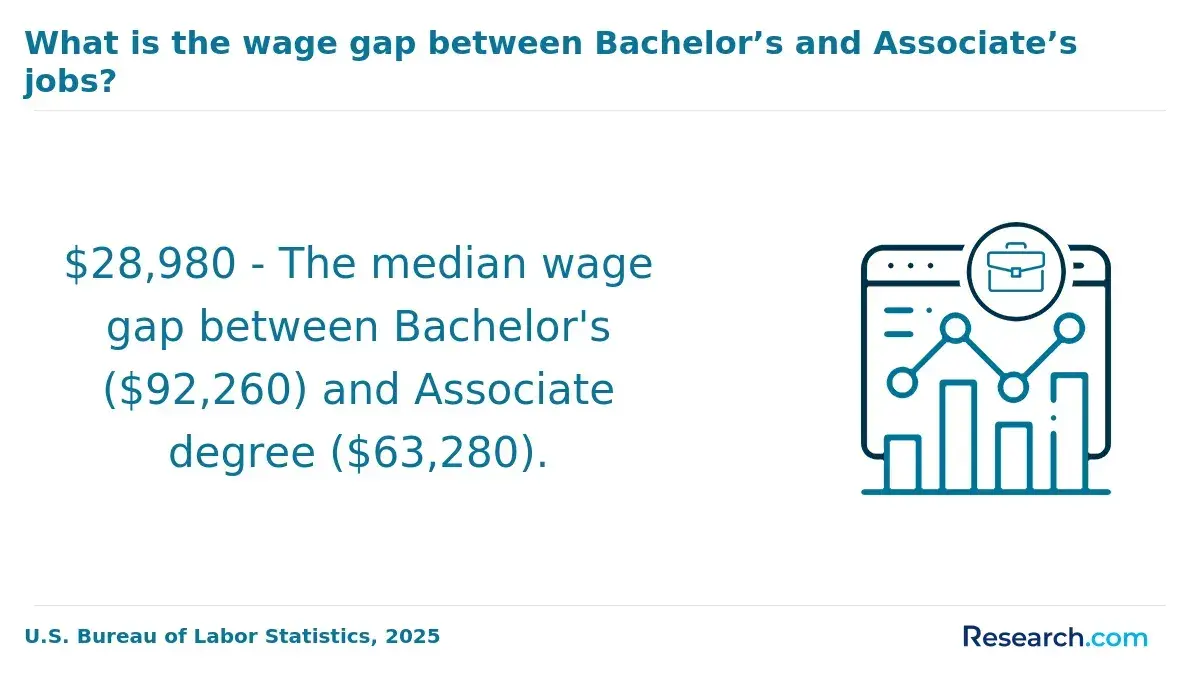
How Long Does a Information Security Doctorate Take Compared With a Master's Degree?
A master's degree in information security is usually the shorter path, especially for working adults who want a near-term career move. Many online master's students finish in roughly two years, although accelerated formats can be shorter and part-time formats can take longer.
An online doctorate usually takes several additional years because doctoral students must complete advanced coursework, pass milestones, develop a research proposal, conduct original or applied research, and defend a dissertation or doctoral project. The timeline is less predictable than a master's program because research progress depends on topic scope, data access, committee feedback, and the student's available time.
The table below compares the time commitments that matter most. These differences affect not only graduation date, but also when you can pursue promotions, change employers, or increase consulting rates.
| Timeline factor | Online master's degree | Online doctorate |
| Typical completion pattern | Shorter and more structured | Longer and more variable |
| Coursework | Most of the program | Only one phase of the program |
| Capstone or thesis | Usually limited in scope | Dissertation or doctoral project is central |
| Part-time feasibility | Strong fit for working professionals | Possible, but requires sustained research discipline |
| Main delay risk | Course sequencing or workload conflicts | Proposal approval, data collection, writing, committee review, and defense scheduling |
Before choosing a doctorate, ask the program for median time to completion, dissertation support structure, course availability, leave-of-absence policies, and whether students pay continuation fees after finishing coursework. These details often matter more than the advertised "minimum completion time."
Common mistake: planning around the fastest possible timeline. A master's timeline is usually easier to forecast. A doctorate should be planned with a realistic buffer, especially if you work full time, manage incident response responsibilities, travel for work, or have family obligations.
Information security salaries are shaped by job function, seniority, industry, location, clearance requirements, certifications, leadership scope, and business impact. A doctorate can raise credibility in research, executive, academic, and consulting contexts, but many high-paying cybersecurity jobs do not require one.
BLS wage data provides useful context for the U.S. labor market. It does not isolate online degree graduates, but it shows the salary environment for roles commonly associated with advanced information security education.
| Role category | Relevant BLS role | 2024 median pay | How degree level may matter |
| Security practitioner | Information security analyst | $124,910 | A master's can strengthen advancement into senior analyst, engineer, architect, or manager roles; a doctorate is rarely required for standard analyst roles |
| Technology leadership | Computer and information systems manager | $171,200 | Leadership experience usually matters more than degree level, though a doctorate may help in strategy-heavy or research-oriented executive roles |
| Research and advanced computing | Computer and information research scientist | $140,910 | Doctoral preparation can be more relevant where the job involves original research, advanced systems design, or academic research |
The salary takeaway is straightforward: the master's degree often offers a strong salary-to-cost ratio for experienced security professionals, while the doctorate is more targeted. It may improve earning power when paired with senior leadership, patents, funded research, high-end consulting, government policy work, or faculty positions, but it should not be treated as an automatic raise.
AI is also changing the skill mix. Security teams increasingly need professionals who can evaluate automated detection, adversarial AI, data governance, and model risk. If your long-term plan blends security with intelligent systems, reviewing career pathways for an artificial intelligence major can help you compare whether AI specialization, rather than a security doctorate alone, better supports your salary goals.
When comparing salary outcomes, do not ask only, "Which degree pays more?" Ask a more useful question: "Which credential changes the roles I can realistically obtain within the next three to five years?" For many professionals, experience plus a master's and certifications may be more financially efficient than spending years in doctoral study.
A master's degree can unlock or strengthen access to senior practitioner and management roles. A doctorate can open narrower but higher-authority paths in research, academia, executive strategy, policy, and specialized consulting. The right choice depends on whether your career target rewards advanced practice or original expertise.
The table below compares the career outcomes most often associated with each degree level. It is not a rulebook; employers vary, and experience can outweigh credentials in many cybersecurity hiring decisions.
| Career path | Master's degree fit | Doctorate fit | Typical responsibilities |
| Security architect | Strong | Optional | Designing secure systems, reviewing architecture, setting technical standards |
| Cybersecurity manager | Strong | Optional | Managing teams, budgets, incident response, compliance, and security operations |
| Governance, risk, and compliance leader | Strong | Optional to strong for policy-heavy roles | Aligning security controls with regulations, audits, enterprise risk, and board reporting |
| Security researcher | Moderate | Strong | Studying threats, vulnerabilities, cryptography, secure systems, or human factors |
| University faculty | Limited for tenure-track roles | Strong | Teaching, publishing, advising students, and building research agendas |
| Executive cyber strategist | Strong with experience | Strong when paired with leadership record | Guiding enterprise security strategy, resilience, investment, and policy |
| Independent consultant | Strong | Strong for premium expert positioning | Advising clients, conducting assessments, writing expert reports, and leading transformation projects |
A doctorate may be especially helpful when your career depends on recognized expertise, not just employability. Examples include leading a cyber research lab, teaching full time at a university, advising government agencies, publishing in technical security areas, or serving as an expert witness.
A master's degree may be the better stopping point if your goal is to move into security leadership quickly. Many employers prefer candidates who combine graduate study with certifications, hands-on cloud security experience, identity and access management expertise, threat detection skills, and a record of reducing organizational risk.
Common mistake: choosing a doctorate because it sounds prestigious, then applying for roles where employers mainly screen for experience, certifications, technical assessments, and leadership history. Before enrolling, review job postings for your target roles and count how often a doctorate is required, preferred, or not mentioned.
For many working information security professionals, the master's degree has the better short- to mid-term ROI because it is faster, cheaper, and aligned with a broad set of high-paying security and management roles. The doctorate can have better long-term ROI only when it leads to outcomes the master's would not reasonably provide.
ROI should include more than salary. It should account for direct cost, time to completion, debt interest, promotions delayed or accelerated, career flexibility, employer funding, research value, consulting credibility, and personal goals.
The table below gives a practical ROI lens. Use it to identify which degree is more likely to produce value for your specific career plan.
| ROI factor | Master's advantage | Doctorate advantage | Best interpretation |
| Direct tuition cost | Usually lower | Usually higher | Master's programs require a smaller salary gain to break even |
| Time to labor-market benefit | Faster | Slower | A shorter program may let you pursue promotions sooner |
| Career breadth | Broad fit across practitioner and management roles | Narrower but deeper fit | The master's is often more versatile for employer hiring screens |
| Academic and research access | Limited | Strong | The doctorate is often necessary for research-heavy and faculty roles |
| Executive credibility | Strong when paired with experience | Potentially stronger in strategy, policy, and advisory contexts | The doctorate helps most when your audience values expert authority |
| Risk of overeducation | Lower | Higher for practitioner-only goals | A doctorate can be financially inefficient if the target job does not reward it |
A simple break-even calculation can prevent emotional decision-making. Estimate the added cost of the doctorate compared with the master's, then divide it by the realistic annual earnings difference you expect from roles that actually prefer a doctorate. If the result is longer than your likely career horizon in that role, the doctorate may be a weak financial choice.
Use this step-by-step approach before committing to either program:
- Choose three target roles you want after graduation.
- Review current job postings and note whether they require, prefer, or ignore a doctorate.
- Compare total program cost after scholarships and employer funding.
- Estimate the earliest realistic promotion or job-change date for each degree.
- Calculate the expected salary difference conservatively, not optimistically.
- Factor in stress, workload, family time, and the risk of delaying career moves.
The better ROI is the degree that changes your realistic options at a reasonable cost. For a practitioner moving into senior security leadership, that is often the master's. For a researcher, professor, policy expert, or high-level consultant, it may be the doctorate.
Opportunity cost is the value of what you give up while completing a degree. For online students, it often includes time spent away from certifications, consulting, overtime, leadership projects, job searching, family responsibilities, and professional networking. It may be lower than for campus students because online programs allow continued employment, but it is never zero.
The doctorate usually carries a higher opportunity cost because it lasts longer and requires deeper independent work. Even if you remain employed, doctoral study can reduce your capacity to take on stretch assignments, travel, speak at conferences, or pursue side consulting.
The table below shows where opportunity cost usually appears. These factors are easy to overlook because they do not always show up on a tuition bill.
| Opportunity cost area | Master's degree impact | Doctorate impact |
| Promotion timing | May support promotion sooner | May delay promotion if workload limits performance or mobility |
| Certification progress | Often easier to combine with certifications | Harder if dissertation work consumes study time |
| Job mobility | Shorter commitment can make switching employers easier | Research timeline may reduce flexibility |
| Consulting income | Less likely to interfere long term | May reduce availability until the dissertation or project is complete |
| Personal bandwidth | Demanding but usually time-limited | Can be intense for several years |
Opportunity cost can make the doctorate less attractive even when tuition is affordable. For example, if a master's lets you move into a security management role earlier, the earlier salary growth and leadership experience may matter more than the doctorate's prestige.
To avoid underestimating opportunity cost, ask yourself these questions before enrolling:
- Will this program reduce my ability to pursue promotions, leadership projects, or employer-sponsored certifications?
- Can I keep working at a high level during peak academic periods?
- Does my employer value the degree enough to adjust my role, title, or compensation after completion?
- Will the doctorate open roles I cannot reach through a master's, certifications, publications, or experience?
- Am I prepared for a multi-year research commitment if the salary payoff is uncertain?
The safest decision is to compare degree value against your next concrete career move, not an abstract future title. If the doctorate does not improve your next two or three career steps, waiting may be smarter than enrolling immediately.
Financial aid and debt can change the ROI comparison dramatically. A funded or employer-supported doctorate may be more attractive than a self-funded doctorate, while a high-debt master's degree can lose its ROI advantage if the program is overpriced or poorly aligned with your career goals.
Federal loan terms matter because graduate students often borrow at higher rates than undergraduates. For the 2024-25 award year, federal Direct Unsubsidized Loans for graduate students carried an 8.08% fixed interest rate, while Direct PLUS Loans carried a 9.08% fixed interest rate. Those rates mean borrowing can significantly increase total repayment cost, especially for longer doctoral programs.
The table below compares common funding sources. The most valuable aid is usually money you do not have to repay, followed by employer funding that does not require unreasonable work commitments.
| Funding source | Master's degree relevance | Doctorate relevance | ROI impact |
| Employer tuition assistance | Common for job-aligned programs | Possible, especially for leadership or research-relevant roles | Improves ROI if it does not lock you into a low-growth role |
| Scholarships and grants | Helpful but often limited | Helpful, especially if renewable | Reduces break-even salary needed after graduation |
| Assistantships or fellowships | Less common in online professional master's programs | More relevant for research doctorates, though online availability varies | Can make a doctorate financially viable |
| Federal loans | May cover remaining cost | May be used for longer periods | Interest can weaken ROI if salary gains are modest |
| Military and veteran benefits | Can substantially reduce net cost | Can substantially reduce net cost | May shift the decision toward the degree with better career fit |
Ask financial aid offices and employers direct questions before you enroll. The answers can reveal whether the advertised degree price reflects your real net cost.
- What is the total cost of attendance for the full degree, not just the first year?
- Are tuition rates locked, or can they increase before I graduate?
- Are dissertation, continuation, residency, or technology fees charged separately?
- Which scholarships are renewable, and what GPA or enrollment status is required?
- Does employer funding require repayment if I leave the organization?
- Will the program qualify for federal aid if I enroll part time?
Common mistake: borrowing for the most expensive credential before confirming that the target career requires it. Debt does not make a doctorate bad, but it raises the salary premium needed to justify the degree. If the same role is reachable with a master's, the lower-debt path is often more resilient.
Not all doctorates serve the same purpose. In information security, the biggest distinction is usually between professional doctorates and research doctorates. Both can be legitimate, but they support different outcomes and should be compared against a master's degree in different ways.
A professional doctorate is typically designed for experienced practitioners who want to solve applied problems in organizations. A research doctorate, such as a PhD, is typically designed for people who want to produce original research, teach at the university level, or contribute to theory, methods, or advanced technical knowledge. Students considering cross-disciplinary research in automation, cyber-physical systems, or intelligent security tools may also compare information security options with an online PhD in artificial intelligence USA to see which research environment better fits their goals.
The table below compares professional doctorates, research doctorates, and master's degrees. This helps prevent a common mistake: choosing "a doctorate" without checking whether the doctorate type matches the career outcome.
| Credential type | Best for | Research expectation | How it compares with a master's |
| Master's in information security | Practitioners, managers, analysts, engineers, and career changers with technical goals | Applied projects, capstone, or limited thesis work | Usually faster and more directly tied to workforce advancement |
| Professional doctorate | Senior practitioners, executives, consultants, and organizational change leaders | Applied doctoral project or practice-focused research | Useful when advanced credibility and problem-solving authority matter |
| Research doctorate | Faculty candidates, researchers, lab leaders, and advanced technical specialists | Original dissertation research | Most valuable when the job requires scholarly research or academic qualifications |
Accreditation and institutional quality matter at every level. Look for regional institutional accreditation, clear faculty qualifications, transparent curriculum, strong student support, and credible outcomes. For technical programs, also review whether the curriculum covers current areas such as cloud security, secure software, identity, privacy, risk, digital forensics, cryptography, and AI-enabled threats.
Admissions also differ. Master's programs often focus on readiness for graduate coursework. Doctoral programs look more closely at research fit, writing ability, professional maturity, and whether faculty can support your topic. A strong doctoral applicant should be able to explain not only why they want the degree, but what problem they want to study and why it matters.
When Is a Information Security Doctorate Worth It Instead of a Master's Degree?
An information security doctorate is worth choosing over a master's degree when the doctorate clearly supports a career outcome that the master's cannot reasonably deliver. It is not worth it simply because it is the highest credential.
A doctorate may be the better choice if several of the following conditions apply. These indicators suggest that the extra cost and time may produce real career value.
- You want a tenure-track or research-focused faculty role where a doctorate is commonly expected.
- You plan to lead advanced cybersecurity research, publish, or develop original methods, frameworks, or tools.
- You are targeting executive, policy, or consulting roles where doctoral-level authority improves credibility.
- Your employer, military benefits, fellowship, or scholarship will cover a meaningful share of the cost.
- Your dissertation or applied project connects directly to a problem your industry values.
- You already have substantial information security experience, so the doctorate adds authority rather than replacing practical skill.
A master's degree may be the better choice if your goals are broader, faster, or more practitioner-focused. In many security careers, a master's combined with experience and targeted credentials can produce stronger ROI than doctoral study.
- You want to become a security manager, architect, cloud security lead, incident response manager, or governance leader.
- You need a graduate credential to qualify for promotions, but the job postings you want do not mention a doctorate.
- You want to minimize debt and move into higher-paying roles sooner.
- You are still building hands-on technical experience.
- You are unsure whether you enjoy research, academic writing, or multi-year independent projects.
- You can meet your goals with a master's plus certifications, portfolio work, or a focused cyber security course.
Before deciding, compare actual job postings, talk to people already in your target roles, and ask programs for completion rates, student support, total cost, and career outcomes. The best degree is the one that moves you toward a specific role at a cost and timeline you can defend.
The simplest rule is this: choose the master's if you need advanced employability and faster ROI; choose the doctorate if you need research authority, academic access, or specialized strategic credibility that a master's will not provide.
Other Things You Should Know About Information Security
Many employers respect online graduate degrees when the school is properly accredited, the curriculum is rigorous, and the candidate can demonstrate relevant skills. Employer perception usually depends more on institutional credibility, experience, certifications, and interview performance than on whether the coursework was online.
It depends on your role. Certifications may provide faster proof of specific skills, while a graduate degree offers broader academic depth. Many professionals earn certifications before or during a master's program, then consider a doctorate only after they have a clear research, leadership, or academic goal.
Yes, many professionals complete a master's first and apply to doctoral programs later. This can be a smart approach because the master's helps test your interest in graduate-level security work while giving you a useful credential even if you decide not to pursue a doctorate.
No. A doctorate can strengthen expertise and credibility, but cybersecurity employers still value hands-on experience with systems, risk, incidents, governance, cloud platforms, and leadership. For many roles, experience remains essential even with an advanced degree.
- CISSP vs Master’s Degree: Which One to Choose in 2026? https://www.knowledgehut.com/blog/security/cissp-vs-masters-degree
- Best Online Cybersecurity PhD and Doctorate Programs for 2026 https://cybersecurityguide.org/online/phd-in-cybersecurity/
- Online Degree ROI in 2026: Which Programs Actually Pay Off https://www.globalminds-education.com/blog/online-degree-roi-2026/
- Doctoral Degrees in Cybersecurity | CyberDegrees.org https://www.cyberdegrees.org/listings/doctoral-degrees/
- Top 15 Best Online PhD Cybersecurity Programs (2025) - Programs.com https://programs.com/programs/online-phd-programs/
- Getting a Ph.D. in Cyber Security – Everything You Need to Know | Cyber Security Jobs https://www.cybersecurityjobs.com/phd-cyber-security/
- Average Cost of a Master's Degree: 2025 Analysis https://educationdata.org/average-cost-of-a-masters-degree
- How Long Does It Take to Get a PhD After a Master's Degree? https://streamlinedai.app/blog/how-long-phd-after-masters
- Cyber Security doctorate - Study in UK https://www.globalgroupofeducation.com/course/cyber-security/doctorate
- Master’s vs. Ph.D. in IT: Which Degree Should You Pursue? https://www.ucumberlands.edu/blog/masters-vs-phd-it-which-degree-to-pursue