
2027 Online Information Security Associate Degree Programs That Do Not Require SAT or ACT Scores

Co-Founder and Chief Data Scientist
Many students interested in information security are ready to build technical skills but do not have SAT or ACT scores they want to submit. That is less of a barrier than it used to be, especially at community colleges and online-focused institutions.
The timing is also strong: the U. S. Bureau of Labor Statistics projects 29% growth for information security analysts from 2024 to 2034. This guide explains how no-test admissions work, what schools may review instead, and how recent graduates, high school students, and adult learners can apply with confidence.
Key Things to Know About Information Security Associate Degrees Without Testing Requirements
- Online information security associate programs are often test-optional, test-free, or open admission, meaning SAT/ACT scores are usually less important than a high school diploma, GED, transcript, placement readiness, and basic technology preparation.
- A typical associate degree is about 60 credits and commonly takes two years full time, while online formats may offer part-time, accelerated, or rolling-start options for students balancing school, work, and family responsibilities.
- The credential can support entry-level IT and cybersecurity pathways, but it is not a job guarantee; BLS data lists $124,910 as the 2024 median annual wage for information security analysts, a role that often requires additional experience, certifications, or a bachelor's degree.
Are test-optional or test-free programs common for online Information Security associate degrees?
Test-optional and test-free admission is common enough that students should not assume they must retake the SAT or ACT before applying to an online information security associate degree. The trend is strongest among community colleges, public two-year colleges, and online universities serving adult or transfer-focused learners.
For this degree level, the most important distinction is policy type. A test-optional program lets you submit SAT or ACT scores if they help your application, while a test-free or test-blind program does not use those scores in admission decisions. An open-admission college generally admits applicants who meet basic eligibility rules, such as having a high school diploma, GED, or equivalent, though some programs may still require placement, advising, prerequisites, or technology readiness steps.
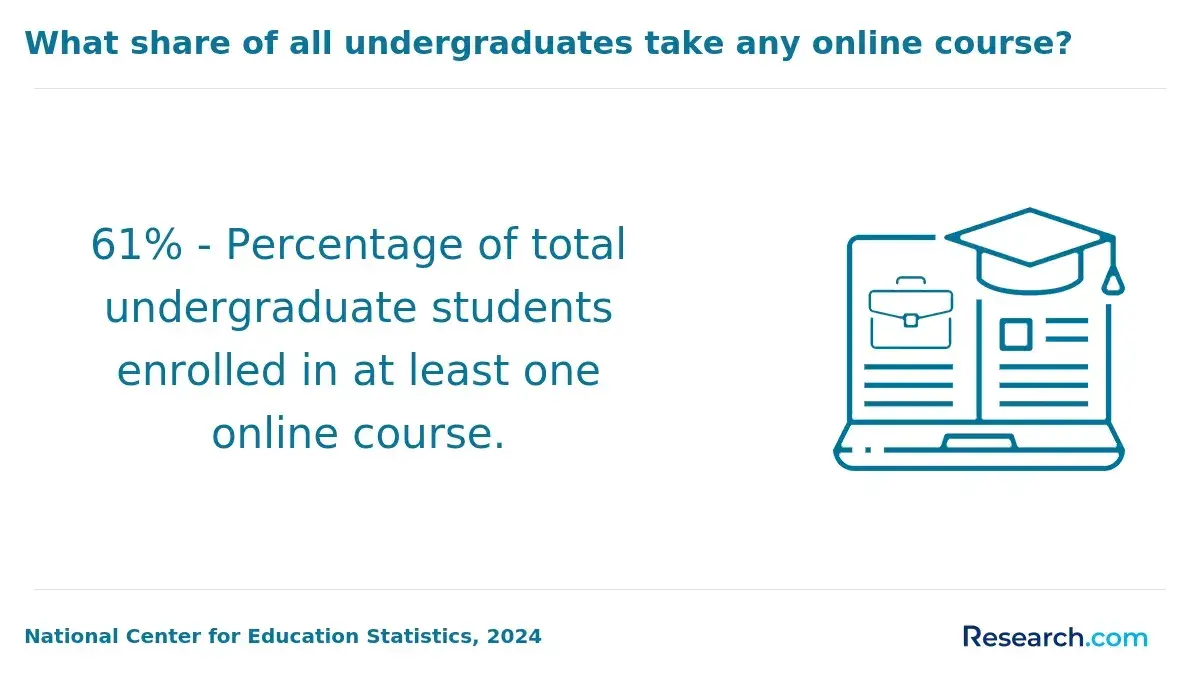
NCES distance education data reported in 2024 shows that more than half of U.S. undergraduates took at least one distance education course in fall 2022. That matters because online associate pathways are no longer unusual add-ons; they are part of mainstream undergraduate enrollment, including technical fields such as cybersecurity, networking, and information assurance.
The practical takeaway is simple: applying without SAT or ACT scores is realistic, but it does not mean every program will ignore academic readiness. Schools still need to know whether you can handle college-level reading, writing, math, and computing courses. If your transcript has weak grades in algebra, English, or technology-related classes, you may be admitted but placed into support courses before taking more advanced security classes.
What are the best online Information Security associate programs without testing requirements?
The best online information security associate programs without testing requirements are usually regionally accredited, transparent about admissions, and clear about how online labs, transfer credits, and industry certification preparation work. Many schools use program names such as cybersecurity, cyber defense, information assurance, network security, or information security, so search beyond one exact title.
Students comparing a lower-cost associate option with a longer cybersecurity degree online should pay close attention to transfer pathways. A strong associate program can be a practical first credential, but only if its credits fit your next step.
The table below highlights examples of U.S. online or online-friendly associate options that publish no-SAT/ACT, test-optional, or open-admission pathways. Policies can change, so use this as a shortlist and verify the current catalog before applying.
| School | Relevant associate program | SAT/ACT approach | Best fit | Decision note |
| Southern New Hampshire University | Associate of Science in Cyber Security | No SAT or ACT required for undergraduate admission | Students who want a fully online, transfer-oriented private nonprofit option | Good to compare if you may continue into a bachelor's program at the same institution |
| Purdue Global | Associate of Applied Science in Cybersecurity | Standardized test scores are generally not required for most undergraduate applicants | Adult learners and working students seeking flexible online terms | Ask how prior learning, military training, or transfer credit may reduce time to completion |
| Ivy Tech Community College | Cyber Security/Information Assurance associate pathways | Open-admission community college model; placement may be required | Indiana students seeking affordability and transfer options | Confirm which courses are available online and whether any proctored labs or local requirements apply |
| Wake Technical Community College | Associate in Applied Science in Cybersecurity | Open-door admission structure; placement and program advising may apply | North Carolina students wanting a public community college route | Check residency, online availability, and transfer agreements before enrolling |
| Columbus State Community College | Cybersecurity associate-level study | Open-admission public community college approach; placement may apply | Students seeking a public two-year option with workforce alignment | Review whether the program is fully online or blended in the term you plan to start |
A "best" program is not just the one with the most recognizable name. For a student without test scores, the better choice is often the school that clearly explains placement, offers support in math and programming, provides virtual labs, and has a clean transfer route into a bachelor's program if that is part of the plan.
How do colleges handle no-test-score admission for Information Security associate programs?
Colleges that do not require SAT or ACT scores still evaluate whether you are ready for college-level work. In information security, that review usually focuses on academic basics, identity and residency documents, and your ability to start technical coursework without being overwhelmed.
The table below summarizes common requirements you may see when applying without test scores. It helps you separate true admission requirements from optional materials that may strengthen your file.
| Requirement | How it is used | Why it matters for information security students |
| High school diploma, GED, or equivalent | Confirms basic eligibility for undergraduate admission | Most associate programs need proof that you completed secondary education |
| Official transcript | Shows grades, completed courses, and graduation status | Math, English, and computer-related courses can influence placement |
| Placement assessment or multiple-measures review | Determines starting level in English, math, or reading | Security coursework often depends on technical reading, logic, and problem solving |
| Application form and fee or fee waiver | Creates your student record and admission file | Missing administrative steps can delay enrollment even at open-admission colleges |
| Program advising | Maps first-term courses and prerequisites | Advising helps avoid taking security classes before networking or operating system basics |
| Technology access confirmation | May verify that you can complete online coursework | Cybersecurity courses may require reliable internet, webcam access, virtualization software, or lab platforms |
Holistic review at the associate level is usually less selective than at highly competitive bachelor's programs. Still, no-test admission is not the same as no review. If your record shows gaps, schools may admit you with developmental courses, tutoring, first-year seminars, or a limited first-term schedule.
Yes, placement tests can often be used instead of SAT or ACT scores, but they serve a different purpose. SAT and ACT scores are usually admissions indicators, while placement tests determine where you should begin in math, English, reading, or sometimes computing.
Placement is especially relevant in information security because early courses may assume comfort with technical documentation, command-line tools, basic algebraic reasoning, and troubleshooting. If you place below college level, you may still be admitted, but your first semester could include foundational courses before cybersecurity-specific classes.
Before taking a placement assessment, use a short preparation plan so the score reflects your current ability rather than test anxiety or rustiness. These steps can help you start in the right course level:
- Ask the admissions or testing office which placement system is used and which subjects are required for your specific information security program.
- Review algebra basics, reading comprehension, grammar, and computer literacy instead of studying unrelated SAT or ACT strategies.
- Check whether your high school GPA, prior college credit, AP work, dual enrollment, military training, or previous placement scores can exempt you.
- Take official practice modules if the college provides them, then schedule the test early enough to retest if allowed.
- Meet with an advisor after results are posted so you understand how placement affects your first-term cybersecurity, networking, and general education courses.
If you want to strengthen your technical base before placement or enrollment, a focused cyber security course can help you confirm interest in the field and build vocabulary for early classes. Do not assume, however, that a certificate automatically replaces college placement rules.
Work experience can strengthen an application, but it usually does not replace basic undergraduate eligibility. For most online information security associate programs, you still need a high school diploma, GED, or recognized equivalent even if you have IT, military, help desk, coding, or self-taught cybersecurity experience.
Where experience can help is in placement, advising, credit evaluation, and course confidence. Adult learners who have worked with networks, operating systems, customer support, or compliance may be able to ask about prior learning assessment, credit for certifications, or course substitutions. These options vary widely by school and are never automatic.
Use work experience strategically when it shows readiness for technical study. Admissions and advising teams are more likely to find it useful when you can document it clearly:
- List job duties that connect to security, such as account administration, troubleshooting, ticketing systems, networking, compliance checks, or device management.
- Provide proof of completed employer training, military technical training, apprenticeships, or industry-recognized certifications.
- Ask whether the school reviews CompTIA, Cisco, Microsoft, AWS, or other credentials for transfer credit or course waivers.
- Explain gaps in your transcript without overstating experience as a substitute for required academic records.
- Confirm whether credit for prior learning affects financial aid status, full-time enrollment, or transfer plans.
This route makes the most sense for applicants who have practical IT exposure but weak or missing test scores. It makes less sense if you are hoping experience will let you skip math, writing, or foundational networking requirements that the program considers essential.
Some test-optional information security associate programs have no minimum GPA beyond high school completion, while others use GPA for placement exemptions, scholarship review, honors pathways, or selective program entry. Open admission does not always mean every course sequence is open from day one.
The table below shows how GPA is commonly used when SAT or ACT scores are absent. It is not a universal rule, but it can help you predict what admissions staff may ask for next.
| Applicant GPA situation | Likely admission impact | What it may mean for first-term planning |
| Strong GPA with college-prep coursework | May support direct placement or fewer readiness concerns | You may be able to begin general education and introductory IT courses right away |
| Average GPA with mixed grades | Usually acceptable at many open-admission or test-optional schools | Placement review may determine whether you need support in math or English |
| Low GPA or missing academic records | May require extra documentation, advising, or conditional steps | You may need developmental coursework or a lighter first schedule |
| GED or homeschool background | Often accepted if documentation meets school rules | Placement testing may carry more weight because there is less traditional transcript data |
If your GPA is weak, applying without test scores can still be reasonable, especially at open-admission colleges. The smarter question is whether you are ready to succeed in the first semester. Retaking the SAT or ACT is rarely the most efficient fix for an associate program unless a specific school, scholarship, or placement rule makes scores useful.
Students with time before applying can improve readiness by taking a math refresher, completing a basic computing course, earning strong senior-year grades, or enrolling in dual-credit general education courses. These actions are usually more directly connected to success in an information security associate program than a last-minute standardized test score.
Admissions interviews are uncommon for open-admission and many test-optional online information security associate programs. However, some schools require advising appointments, enrollment coaching calls, orientation sessions, or program planning meetings that may feel like interviews even though they are not selective admissions screens.
The purpose is usually to confirm your goals, course schedule, technology access, and readiness for online learning. Online programs need students to understand deadlines, proctored assessments, lab tools, and communication expectations before classes begin.
If a school schedules an interview or advising call, prepare for practical questions rather than trying to "perform" like a competitive applicant. You should be ready to discuss:
- Why you are interested in information security, cybersecurity, networking, or digital forensics.
- Whether you plan to study full time or part time and how many hours per week you can realistically commit.
- What computer, internet, webcam, and software access you have for online labs and exams.
- Whether you need support in math, writing, time management, or basic computing before taking technical courses.
- Whether your goal is immediate entry-level employment, transfer to a bachelor's program, industry certification preparation, or career change.
A red flag is any program that uses a rushed call to pressure you into enrolling before you understand cost, accreditation, transferability, and placement requirements. A legitimate admissions conversation should help you make a better decision, not push you past unanswered questions.
When comparing test-optional online information security associate degree programs, focus on fit rather than the absence of SAT or ACT requirements alone. A no-test policy gets you into the admissions conversation; program quality determines whether the degree is likely to support your next step.
Start by checking accreditation, curriculum, lab access, transfer pathways, and total cost. Then evaluate whether the program matches your background. A recent high school graduate with limited IT experience may need strong tutoring and structured first-year advising, while an adult learner with help desk experience may value prior learning credit and flexible terms.
Use the following criteria to compare programs in a way that connects admissions, learning, and career outcomes:
- Accreditation: Confirm institutional accreditation through a recognized accreditor because it affects transfer credit, financial aid eligibility, and employer recognition.
- Curriculum depth: Look for networking, operating systems, scripting, cloud basics, security principles, incident response, and ethical/legal content, not just broad computer literacy.
- Hands-on labs: Ask whether online students use virtual labs, simulations, cloud environments, or remote lab access for practical security exercises.
- Certification alignment: Check whether courses prepare students for entry-level credentials such as CompTIA A+, Network+, or Security+, while remembering that exams are separate from the degree.
- Transfer agreements: If you may pursue a bachelor's degree, confirm which credits transfer and whether the associate is applied, transfer-focused, or career-focused.
- Student support: Prioritize tutoring, academic advising, career services, library access, online technical support, and disability accommodations.
- Total cost: Compare tuition, fees, books, exam vouchers, technology requirements, proctoring charges, and the cost of repeating courses if you are underprepared.
- Career alignment: Match the program to realistic entry points such as help desk, junior systems support, security operations support, or network technician roles.
Information security also overlaps with data, automation, and AI-driven threat detection. If you are comparing security with adjacent pathways, reviewing what an artificial intelligence major involves can help you decide whether your long-term interests lean more toward cyber defense, software, analytics, or machine learning.
Common mistakes include choosing the cheapest program without checking transfer value, assuming "online" means self-paced, ignoring math placement, and enrolling in a program that prepares for general IT rather than security-specific work. The best program is the one you can afford, complete, and build on.
Application deadlines vary widely because online information security associate programs are offered by different types of institutions. Community colleges may have open or rolling admission with term-based registration deadlines, while online universities may offer multiple start dates throughout the year.
The table below summarizes common timing patterns. Use it to plan backward from your intended start date, especially if you need transcripts, placement testing, financial aid, or transfer credit evaluation.
| Program format | Common deadline pattern | What to watch closely |
| Community college semester model | Applications may remain open near the start of term, but registration and payment deadlines come earlier | Placement, advising, and course availability can become bottlenecks |
| Online university with multiple terms | Rolling admission or frequent start dates may be available | Transcript evaluation and financial aid packaging may take longer than the application itself |
| Cohort-based technical program | Deadlines may be fixed for each cohort | Late applicants may wait until the next cohort even if admitted to the college |
| Selective or capacity-limited program track | Program application may have a separate deadline after general college admission | Cybersecurity labs, faculty capacity, or prerequisite sequences may limit entry timing |
A good rule is to begin at least eight to twelve weeks before your target start date, even if the school advertises rolling admission. That gives you time to send official transcripts, finish placement, compare financial aid, request accommodations if needed, and avoid being forced into leftover course sections.
Do not wait until the final application week if you are applying without SAT or ACT scores and have academic gaps. No-test applicants may need extra advising or placement steps, and those steps can affect whether you start in cybersecurity coursework immediately or begin with prerequisites.
How can you prepare to apply for Information Security associate programs if you don't have SAT/ACT scores?
Applying without SAT or ACT scores is manageable if you replace those scores with evidence of readiness. The goal is not to "hide" missing tests; it is to show that you can start college-level online work and progress through technical courses.
Use this preparation sequence before submitting applications. It is designed for students who want a realistic, low-stress path into an information security associate program:
- Make a list of five to eight regionally accredited online or online-friendly programs that explicitly say SAT/ACT scores are optional, not required, or not used.
- Request official high school, GED, homeschool, dual-enrollment, military, or prior college records early so missing documents do not delay admission.
- Check each program's placement policy and ask whether GPA, prior coursework, or college credits can exempt you from placement tests.
- Review the first-semester curriculum and identify prerequisites in math, English, computing, networking, or student success courses.
- Prepare a short explanation of your goal, such as transfer to a bachelor's program, entry-level IT support, cybersecurity operations, or career change.
- Estimate total cost beyond tuition, including fees, books, certification exams, lab software, webcam or laptop requirements, and internet access.
- Ask admissions advisors direct questions about online labs, tutoring, transfer agreements, credit for prior learning, and what happens if you place below college level.
- Submit FAFSA and scholarship materials early if you plan to use financial aid, because admission and aid timelines are separate.
- Choose a first-term schedule that matches your actual time availability instead of overloading to finish faster.
If you are thinking far beyond an associate degree, keep your records organized from the beginning. Advanced pathways, including an online PhD in artificial intelligence USA, have very different expectations, but strong transcripts, documented projects, and steady academic progress start with the choices you make now.
The biggest avoidable error is applying to only one school because it says "no SAT required." Apply to programs that fit your budget, support needs, transfer goals, and readiness level. A test-optional policy is valuable, but it should be one factor in a broader decision about whether the degree is the right investment for your goal.
Other Things You Should Know About Information Security
No. Diplomas and transcripts generally show the school, credential, major or program, courses, credits, grades, and completion date. They do not state whether you submitted standardized test scores for admission.
Possibly, if the institution is eligible for federal student aid and you meet FAFSA and enrollment requirements. Always confirm accreditation, aid eligibility, satisfactory academic progress rules, and whether your program is aid-eligible before enrolling.
It can, but transfer is not automatic. Transfer-focused associate degrees usually move more smoothly than applied degrees, so ask for written transfer guides, articulation agreements, and course-by-course transfer information.
Certifications can strengthen entry-level IT and cybersecurity applications, especially when paired with hands-on labs or work experience. However, certification exams cost extra and should be chosen based on your target role, not simply because they are popular.
- Guide to Cybersecurity Bachelor's Degrees | Cyberdegrees.org https://www.cyberdegrees.org/listings/bachelors-degrees/
- 2025 Most Affordable Online Cybersecurity Degrees https://www.onlineu.com/most-affordable-colleges/cybersecurity-degrees
- 25 Best Online Cybersecurity Bachelor’s Degree Programs https://programs.com/programs/online-bs-cybersecurity/
- Cybersecurity Associate Degree and Certificate Program - Cybersecurity Programs https://www.cybersecurityeducationguides.org/cybersecurity-associates-degrees-and-certificates/
- Degrees & Education in Cybersecurity | All Criminal Justice Schools https://www.allcriminaljusticeschools.com/cybersecurity/degree-guide/
- 9 Best Online Associate's in Cybersecurity Degree Programs https://legalcareerpath.com/online-associates-in-cybersecurity-degree-programs/
- Cyber Security Associate Degree | Associate of Science | University of Phoenix https://www.phoenix.edu/online-information-technology-degrees/cybersecurity-associates-degree.html


