2027 Online Homeland Security Master's Programs With No Letters of Recommendation

Co-Founder and Chief Data Scientist
Not having professors or supervisors available to recommend you should not automatically stop your graduate-school plans. Some online Homeland Security master's programs use transcript-, résumé-, and statement-based admissions rather than recommendation letters.
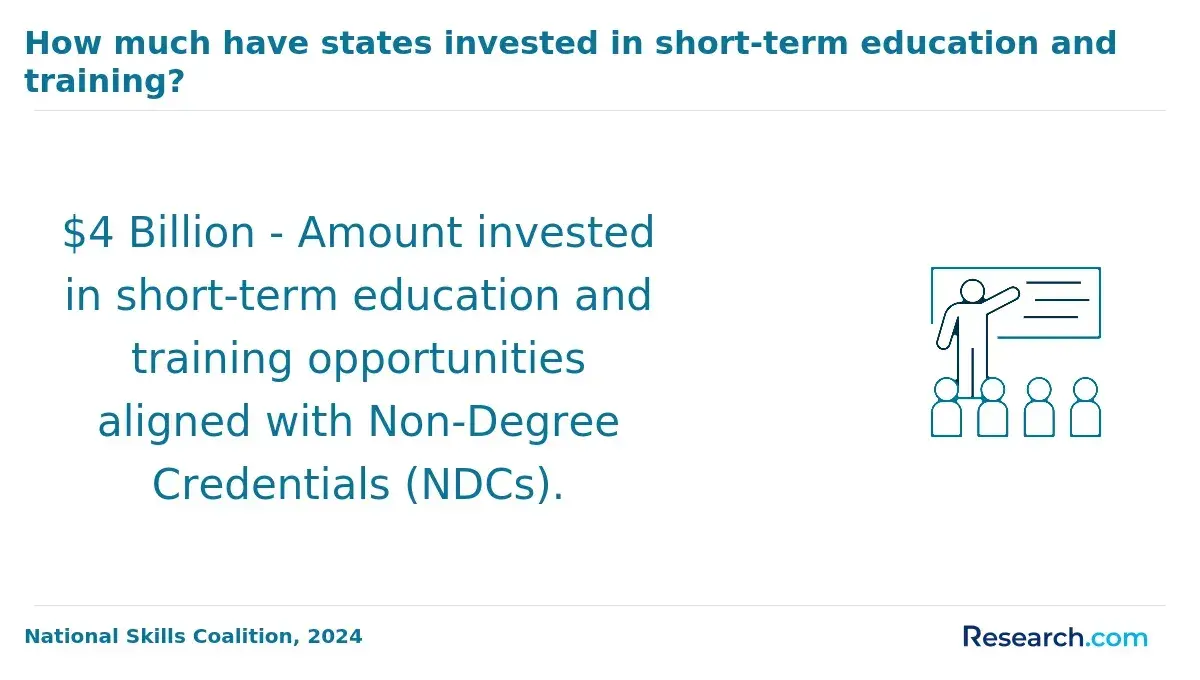
This matters as graduate education serves a large adult learner population. NCES reported about 3.2 million U.S. postbaccalaureate students in fall 2023. This guide identifies no-letter options, explains how to verify each policy, and shows how to present credible evidence of readiness for security, emergency management, intelligence, and public-safety work.
Key Things to Know About Homeland Security Master's Programs with No Letters of Recommendation
- Online Homeland Security-related master's programs can admit qualified applicants without recommendation letters, but requirements vary by institution, degree concentration, and applicant type; verify the current graduate catalog before applying.
- There is no reliable national dataset showing the exact share of Homeland Security master's programs that require references or publish acceptance rates, so school-by-school verification is more useful than broad admissions claims.
- A strong transcript, targeted résumé, professional certifications, writing sample, and specific personal statement can substitute for the evidence a letter would normally provide.
What purpose do letters of recommendation serve in Homeland Security admissions?
Letters of recommendation traditionally give admissions reviewers outside confirmation that an applicant can succeed in graduate-level work. In Homeland Security, a useful letter may address judgment, ethical conduct, communication, leadership, analytical ability, reliability under pressure, and experience handling sensitive or operationally important work.
A recommendation is most valuable when the writer has directly observed the applicant. A generic letter from a senior person who barely knows you is usually less persuasive than a detailed assessment from a supervisor, instructor, military leader, emergency-management coordinator, or public-safety mentor.
The following comparison shows what a thoughtful letter can help a program assess and what applicants should demonstrate elsewhere when letters are not part of the file.
| Admissions concern | What a recommendation may show | Useful non-letter evidence |
| Academic readiness | Research, writing, and analytical strengths | Transcript, graded writing sample, relevant coursework |
| Professional judgment | Ethical decision-making and discretion | Detailed résumé, accomplishment statements, certifications |
| Leadership and teamwork | How the applicant works with others | Project descriptions, supervisory experience, awards |
| Career fit | Commitment to security or public-service goals | Purpose statement tied to a defined career objective |
A letter is therefore an evidence tool, not a measure of your potential by itself. Programs that waive letters generally still need enough evidence to determine whether you can complete research, policy analysis, writing-intensive assignments, and collaborative work.
Does missing a letter of recommendation hurt your admission odds for Homeland Security programs?
Missing a letter does not hurt your odds at a program that explicitly does not require one. The school has designed its review process around other materials, so submitting an unsolicited letter may not be possible or useful. What can hurt is leaving the rest of the application thin, inconsistent, or unrelated to the degree's learning outcomes.
At programs where letters are required, omitting one can make an application incomplete and prevent review. A waiver may be available in limited circumstances, but applicants should never assume a waiver is automatic. Ask the graduate admissions office whether the requirement is mandatory, optional, conditionally waived, or different for military, international, transfer, or alumni applicants.
Published acceptance rates are uncommon for specialized Homeland Security master's programs, and a school-wide graduate acceptance rate would not reliably predict admission to a particular online concentration. Use the stated minimum GPA, prerequisite expectations, required writing materials, and admissions deadlines instead of treating a no-letter policy as evidence that admission will be easy.
For career changers, a no-letter pathway can be especially practical when prior faculty relationships are old or professional references are unavailable. Applicants with weak grades, limited writing experience, or a major academic gap may still benefit from obtaining a strong optional reference if the program accepts one.
Are there Homeland Security graduate programs that don't require letters of recommendation?
Several institutions offer online master's degrees in Homeland Security or closely related areas such as emergency management, national security, intelligence, public safety, and security studies without listing recommendation letters as a standard graduate-admission item. Requirements can change by term, however, and a similarly named program may have a different policy.
Do not equate "no letters required" with "no standards." A legitimate program may still require an accredited bachelor's degree, official transcripts, a minimum cumulative GPA, identity or residency documentation, a résumé, a statement of purpose, or foundation coursework.
When reviewing options, distinguish among these policies:
- Not required: The application can be complete without recommendations.
- Optional: Letters may strengthen a file but are not mandatory.
- Waived: A normally required item is removed for a particular applicant group or term.
- Required: The file is incomplete until the specified number of letters arrives.
Verify the policy in the graduate catalog and application checklist, not only on a marketing page. Also confirm institutional accreditation, course delivery format, total credits, tuition and fee disclosures, transfer-credit rules, and whether the curriculum supports your intended role.
People considering management-oriented alternatives can also compare admissions expectations for the most affordable online MBA, although an MBA serves different career goals than a security-focused degree.
What are some online Homeland Security master's programs that don't require letters of recommendation?
The programs below are examples of online, homeland-security-related graduate options whose publicly available admissions information has indicated that recommendation letters are not a standard requirement. Because application portals and catalog rules change, contact each school and save the written response before paying an application fee.
| Institution and online program | Related focus | Recommendation-letter position to verify | Application review point |
| University of Maryland Global Campus - Master of Science in Homeland Security Management | Homeland security policy, management, and preparedness | Graduate admissions materials have not generally listed recommendations as a standard requirement | Confirm degree-specific transcript and writing requirements |
| American Military University - Master of Arts in Homeland Security | Security policy, intelligence, emergency planning, and public safety | Admissions materials have generally emphasized transcripts rather than recommendation letters | Confirm any requirements based on prior degree type or status |
| Colorado Technical University - Master of Science in Homeland Security | Security operations, emergency preparedness, and leadership | Graduate application materials have generally not listed letters as a standard item | Verify current graduate admission and GPA standards |
| Excelsior University - Master of Science in National Security | National security, intelligence, and policy analysis | Check the current program-specific checklist for any reference requirement | Review whether the degree title and curriculum fit Homeland Security hiring goals |
These examples should be treated as a starting list rather than a guarantee of eligibility or a ranking. A Homeland Security management program may fit an emergency-management professional, while a national-security program may better fit someone seeking policy, intelligence, defense, or risk-analysis coursework.
Before applying, use this short verification process:
- Open the current program page, graduate catalog, and application checklist for the same start term.
- Search each source for "recommendation," "reference," "admission requirements," and "supporting documents."
- Email admissions a direct question: "Are recommendation letters required, optional, or waived for this specific online master's program and my entry term?"
- Ask whether submitting an optional professional reference would be reviewed or ignored.
- Compare the response with accreditation, course content, costs, and career relevance before enrolling.
If your goal is broader organizational leadership rather than public safety or security specialization, a business administration degree online may be another path to evaluate; it is not a substitute for specialized homeland-security training.
Why are more Homeland Security programs moving away from requiring recommendation letters?
Programs may reduce reliance on recommendation letters because online graduate applicants are often experienced working adults, veterans, public servants, and career changers whose former instructors may no longer know their current abilities. Transcript records, employment history, and applicant-authored materials can sometimes provide more current evidence than an old academic reference.
Graduate enrollment patterns also make flexible admissions practical. NCES's fall 2023 postbaccalaureate enrollment figure of roughly 3.2 million students reflects a substantial U.S. graduate population with varied educational timelines. For an applicant who finished college years ago, an admissions process based solely on faculty access can create a barrier unrelated to present professional capability.
Schools may also seek more consistent evaluation. Letters differ widely in specificity, candor, formatting, and the recommender's familiarity with the applicant. A structured review of GPA trends, prerequisite performance, résumé evidence, and a purpose statement can make it easier to compare applicants using common criteria.
This shift has limits. Letters remain useful for research-intensive programs, competitive scholarships, fellowships, assistantships, and applicants whose transcript does not fully show their capacity. A program removing the requirement is making a different assessment choice; it is not necessarily lowering academic expectations.
Applicants who want to complete a degree quickly should compare scheduling, transfer rules, and course sequencing rather than choosing solely on admissions convenience. Similar planning is useful when evaluating the fastest online business degree, although the subject matter and professional outcomes differ from Homeland Security.
What documents do Homeland Security master's programs accept in place of letters of recommendation?
When letters are not required, programs commonly rely on documents that show academic preparation, professional maturity, and fit with the curriculum. The best replacement is not one document; it is a coherent file in which each item supports the same career story.
This table identifies common alternative materials and the admissions question each can help answer.
| Document | What it can demonstrate | Best use |
| Official transcript | Degree completion, GPA, academic trends, relevant coursework | Show preparation in criminal justice, public administration, cybersecurity, policy, analytics, or emergency management |
| Professional résumé | Progression, leadership, operational experience, certifications | Quantify scope, such as team size, training delivered, projects managed, or procedures improved |
| Statement of purpose | Career direction, writing ability, program fit | Connect past experience to specific coursework and a realistic post-degree goal |
| Writing sample | Research, argumentation, source use, and clarity | Submit only when requested and use work that does not disclose restricted information |
| Professional certification or training record | Current field knowledge and continuing education | Include relevant emergency-management, incident-command, security, intelligence, or risk credentials |
| Portfolio or work product | Applied analysis and project outcomes | Use redacted, authorized materials only and explain your individual contribution |
A personal statement should not become an autobiography. It should explain why you are pursuing graduate study now, what problem area interests you, how your experience prepared you, and why the selected program is a sensible next step. If a low GPA or employment gap needs context, address it briefly, factually, and with evidence of more recent readiness.
Career changers sometimes need to show transferable skills more explicitly. For example, client assessment, crisis communication, ethics, and documentation may be relevant for someone moving from human services.
An online counseling degree is a distinct professional pathway, but its comparison can help clarify whether your goals are behavioral-health practice or security and emergency preparedness.
Can you get into reputable Homeland Security programs without a recommendation?
You can enter a reputable program without a recommendation if the institution openly uses that admissions model and you satisfy its other standards. Program quality should be judged by the institution's accreditation, transparent curriculum, qualified faculty, academic support, financial disclosures, student services, and relevance to your intended career - not by one application requirement.
For Homeland Security careers, match the degree to the hiring environment. Federal agencies, state and local emergency-management offices, law enforcement organizations, contractors, nonprofits, and private-sector risk teams may value different combinations of education, experience, clearance eligibility, technical expertise, and location.
A master's degree can strengthen preparation, but it does not guarantee employment, a security clearance, professional licensure, or a particular salary.
Watch for the following red flags before deciding that a no-letter program is worth the investment:
- Unclear institutional accreditation or vague claims that do not identify the accrediting body.
- No published curriculum, faculty information, graduation requirements, or total-cost estimate.
- Pressure to enroll immediately without time to review transfer credits, refund policies, and financial-aid implications.
- A degree title that sounds career-specific but contains little coursework in policy, risk, intelligence, emergency management, security operations, or research methods.
- Promises of guaranteed jobs, promotions, clearances, or salaries.
A no-letter option is often a good fit for applicants with solid transcripts and documented professional experience. It may be a poor fit if you need a highly research-oriented program, funded assistantship, or a school where a strong faculty advocate could materially strengthen an otherwise borderline academic record.
How can you strengthen your Homeland Security master's application without recommendation letters?
Without recommendations, every required item carries more weight. Your goal is to make it easy for reviewers to see evidence of graduate readiness without having to infer it from job titles alone.
Use these steps to build a stronger, internally consistent application:
- Tailor the résumé to the program by emphasizing security, incident response, policy, compliance, investigations, continuity planning, analytics, leadership, military service, or public-service responsibilities.
- Write a focused statement that names a specific professional goal and connects it to courses, concentrations, capstones, or experiential components offered by the program.
- Explain accomplishments with scope and outcomes, such as developing a continuity plan, coordinating an exercise, training staff, analyzing risks, or improving a reporting process.
- Use current evidence to offset old academic records, including recent professional training, certifications, college courses, or substantial writing-intensive work.
- Proofread for accuracy, especially dates, employer names, degree titles, and consistency between your résumé and statement.
- Submit early enough to correct a transcript delay or portal issue before the deadline.
Do not submit confidential incident reports, law-enforcement records, classified information, protected personal data, or employer-owned work product without explicit authorization. A carefully described and redacted project is safer and more professional than a sensitive document that creates an ethics concern.
Also avoid applying only to schools that skip letters. Build a balanced list based on curriculum, affordability, scheduling, transfer policies, and career fit. For applicants considering legal-support or compliance-adjacent work, reviewing typical paralegal salary information can help distinguish that occupation from Homeland Security policy and operations roles.
Where can you get recommendation letters if your target Homeland Security program requires it?
If your preferred program requires recommendations, seek people who can provide specific, credible examples rather than people with the most impressive titles. A recommender should be able to explain your work quality, accountability, communication, analytical ability, and suitability for advanced study.
Appropriate sources depend on your background:
- A current or former supervisor who has evaluated your performance and understands your professional responsibilities.
- A professor, adviser, or thesis supervisor who can discuss your writing, research, and academic discipline.
- A military supervisor, command leader, or training officer who can speak to leadership, planning, and decision-making.
- A public-safety, emergency-management, security, or nonprofit project leader who directly observed your contribution.
- A professional mentor or client contact only when the relationship involved sustained, first-hand observation of your work.
Request the letter at least three to four weeks before the deadline when possible. Give the recommender your résumé, unofficial transcript, purpose-statement draft, program description, deadline, submission instructions, and two or three accomplishments they may wish to address. Ask whether they can write a strong letter; a hesitant response is a reason to ask someone else.
Do not draft a letter for a recommender to sign unless the school and recommender specifically permit that arrangement. It can produce an impersonal letter and raises authenticity concerns. A short, respectful follow-up one week before the deadline is reasonable; repeated messages are not.
Can you still apply to Homeland Security programs if you're unable to get a recommendation letter?
You can still apply if you cannot obtain a recommendation letter, but the best route depends on the policy. Apply directly to programs that do not require letters. For programs with optional letters, submit the strongest available application and include a reference only if it adds meaningful, firsthand evidence. For required-letter programs, contact admissions before submitting to ask about a waiver, an alternative evaluator, or a later deadline.
When contacting admissions, be concise and professional. State that you meet the academic and professional requirements, explain the practical barrier without oversharing, and ask a specific policy question.
For example: "I have been out of school for several years and cannot obtain academic references. Will the program accept a professional supervisor reference, a writing sample, or a waiver request in place of the required academic letters?"
Do not simply leave the requirement blank or assume that a personal explanation guarantees an exception. Common mistakes include waiting until the final week, asking a distant acquaintance for a vague letter, uploading materials the school did not request, and selecting a program only because it has fewer application items.
If a waiver is denied, choose between waiting for a stronger recommender, applying to a different program whose policy fits your circumstances, or improving the evidence that will support a later application. The right choice depends on whether the target program's curriculum, cost, accreditation, and career alignment justify the delay.
Other Things You Should Know About Homeland Security Programs
Many online programs have test-optional or no-GRE admissions, but this is separate from recommendation-letter policy. Check the current application checklist because GPA, prerequisite, or writing requirements may still apply.
Sometimes. Working professionals should ask whether the program accepts supervisor or military leadership references. A professional reference is strongest when it directly addresses analytical writing, judgment, leadership, and readiness for graduate work.
Many programs are designed for roughly 30 to 36 credits, often completed in about 18 to 24 months part time or faster with continuous enrollment. Actual timing depends on transfer credit, course availability, work schedule, and capstone requirements.
No. Homeland Security is broader and can include terrorism prevention, intelligence, border and transportation security, cybersecurity policy, critical infrastructure, and public safety. Emergency management concentrates more directly on mitigation, preparedness, response, and recovery. Review course titles to ensure the program matches your intended field.
References
- Long Island University https://liu.edu/Riverhead/academics/MS-homeland-security-management
- 10 Best Online Master's in Homeland Security Programs https://legalcareerpath.com/masters-in-homeland-security-programs/
- 2025 Most Affordable Online Master's Degrees in Homeland Security https://www.onlineu.com/most-affordable-colleges/homeland-security-masters-degrees
- Homeland Security Requirements (Degrees, Jobs & Salary) https://www.allcriminaljusticeschools.com/federal-law-enforcement/homeland-security/
- Master of Science inEmergency Management and Homeland Security Online or On Campus https://www.albany.edu/cehc/programs/ms-emergency-management-homeland-security
- Homeland Security Degree Online | Find Top Programs & Information https://www.firescience.org/homeland-security-degree-programs-online/
- Degrees: Master of Professional Studies in Homeland Security Studies https://sopa.tulane.edu/degrees-programs/masters-degrees/master-professional-studies-homeland-security-studies
- Top Online Master's Degree Programs in Homeland Security for 2025 https://www.onlinemastersdegrees.org/best-programs/homeland-security/