2027 Online Homeland Security Master's Programs With University Scholarships: Awards, Eligibility & Tuition After Aid

Co-Founder and Chief Data Scientist
Online Homeland Security master's students often discover that advertised tuition is only the starting price, while scholarship rules can determine whether a program is financially workable. Federal Direct Unsubsidized Loans for graduate students are capped at $20,500 per academic year, making university awards, employer benefits, and grants important for many learners. This guide is for public-safety professionals, military-affiliated learners, career changers, and working adults comparing online programs. It explains where to look for scholarships, what awards may cover, how eligibility works, and how to build a realistic tuition-after-aid plan.
Key Things to Know About Homeland Security Master's Programs with Scholarships
- Online Homeland Security master's students can often pursue institution-wide merit, need-based, military-affiliated, alumni, and departmental awards, but a scholarship available to a university student is not automatically available to every online program.
- Graduate tuition can exceed the $20,500 annual federal Direct Unsubsidized Loan limit, so compare the full program price, mandatory fees, award renewal terms, and employer assistance before borrowing.
- The strongest funding strategy is usually stacking compatible aid: submit the FAFSA when eligible, apply for university scholarships early, ask about employer reimbursement, and confirm whether online enrollment meets each award's rules.
What online Homeland Security master's programs offer university scholarships?
Few universities publish a scholarship reserved exclusively for an online Homeland Security master's. More commonly, eligible students in these programs compete for graduate-school, college-wide, donor-funded, military, or public-service scholarships. The most useful comparison is therefore not simply whether a school says it offers scholarships, but whether the specific online program accepts those awards.
The following examples illustrate common university pathways. Availability, amounts, deadlines, residency rules, and online eligibility can change by term, so applicants should obtain written confirmation from the financial-aid office before counting an award in their budget.
| University and online program example | University scholarship pathway to investigate | Important question to ask |
| University of Maryland Global Campus, M.S. in Management: Homeland Security Management | Institutional scholarships and military-affiliated funding opportunities | Is the award open to graduate students enrolled fully online, and is it renewable? |
| Arizona State University Online, M.S. in Emergency Management and Homeland Security | Graduate, college, donor, and external scholarship search options | Does the scholarship require campus attendance, Arizona residency, or full-time enrollment? |
| Tulane University School of Professional Advancement, M.P.S. in Homeland Security Studies | Professional-studies and university aid opportunities | Can online professional-program students receive institutional merit aid? |
| National University, M.S. in Homeland Security and Emergency Management | Institutional awards and military/veteran education benefits | Are scholarships applied per course, per term, or to the full degree? |
Prioritize schools that give a clear written answer on four items: online eligibility, award amount, renewal conditions, and whether the scholarship can be combined with military or employer benefits. A school with a smaller nominal scholarship can still be the better value if its total tuition and fees are lower.
What is the average tuition for Homeland Security master's programs before aid?
There is no single national tuition average for Homeland Security master's programs because programs may be housed in public administration, emergency management, criminal justice, security studies, or management departments. A practical benchmark is the College Board's 2024-25 published average graduate tuition and fees at public four-year institutions: $12,596 for in-state students. This is a broad institutional benchmark, not a Homeland Security program price, and online programs may charge a separate per-credit rate.
Use the program's required credits and mandatory charges to estimate the cost before aid. A 30-credit program charging $700 per credit has tuition of $21,000 before fees; that number is more decision-useful than a university-wide average. Out-of-state public tuition, private nonprofit tuition, technology fees, graduation fees, books, travel for residencies, and course materials can materially change the total.
Compare each offer using the same cost categories rather than comparing tuition alone.
| Cost item | What to verify | Why it affects net cost |
| Per-credit tuition | Rate for the online Homeland Security curriculum | Some online rates differ from campus rates |
| Required credits | Whether electives, capstone, and prerequisites add credits | More credits increase the tuition base |
| Institutional fees | Online learning, technology, student-service, and graduation fees | Scholarships may not cover all fees |
| Transfer credit | Whether prior graduate work can transfer | Accepted credit can reduce the number of courses billed |
| Financing terms | Whether awards apply before or after employer reimbursement | Coordination rules can reduce or preserve your award |
Professionals comparing Homeland Security training with broader management education may also review a most affordable online MBA option. It can make sense for leadership or operations goals, but it is not a substitute for a security-focused curriculum when specialized emergency-management or intelligence coursework is the priority.
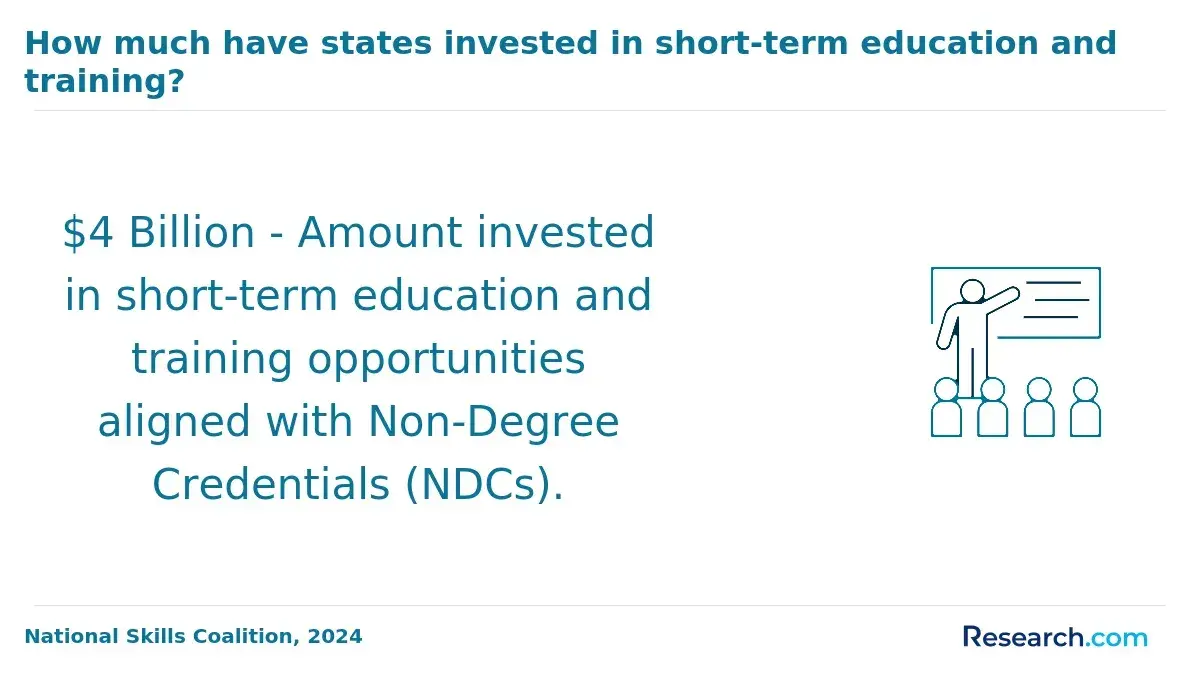
What types of financial aid and scholarships are available for Homeland Security master's programs?
Funding usually comes from several sources rather than one full scholarship. Scholarships generally do not require repayment; grants also generally do not require repayment but often depend on financial need or a defined public-service category. Loans must be repaid, and employer assistance may create work-continuation or grade requirements.
These are the main aid categories to investigate and the situations where each is most useful.
| Aid type | Typical basis | Best fit | Key limitation |
| University merit scholarship | Academic record, leadership, professional accomplishments, or admissions strength | Applicants with strong grades or public-safety experience | May be competitive and limited to new students |
| Need-based grant or scholarship | Financial need, often determined through FAFSA or institutional review | Eligible U.S. citizens and qualifying noncitizens with demonstrated need | Graduate grant availability is often limited |
| Military and veteran education benefits | Service status, eligibility record, and approved enrollment | Veterans, service members, spouses, and dependents where eligible | Benefit coordination and program approval matter |
| Employer tuition assistance | Employment and job relevance | Working professionals in government, emergency management, security, or healthcare | May require repayment if employment ends early |
| Federal Direct Unsubsidized Loan | FAFSA and eligible enrollment | Students filling a remaining funding gap | Annual graduate borrowing limit is $20,500 |
| External professional scholarship | Membership, field interest, service, identity, or essay competition | Applicants willing to apply broadly | Deadlines and award timing vary |
Start with university aid because it can directly reduce billed tuition, then assess employer reimbursement and external awards. If your career plan could also benefit from business operations training, an business administration degree online may offer a different funding and curriculum path; compare it against the security-specific competencies you need.
How much do Homeland Security master's scholarships typically cover?
Most university scholarships for online graduate students are partial awards, not full rides. They may be a fixed amount, a per-credit reduction, or a percentage of tuition. Because institutions publish different award structures and may revise them annually, do not assume a scholarship covers books, fees, prior balances, living expenses, or the entire program.
A net-cost estimate should show how the award changes the amount you must pay or borrow.
| Illustrative funding scenario | Tuition before aid | Scholarship or grant | Estimated tuition after award |
| Small partial award | $24,000 | $2,500 | $21,500 |
| Moderate institutional award | $24,000 | $6,000 | $18,000 |
| Large tuition award | $24,000 | $12,000 | $12,000 |
These examples are calculations, not typical promised award amounts. A $6,000 scholarship spread over two years may reduce each term's bill but may not lower fees or living costs. Ask whether the amount is total, annual, per term, or per credit; this distinction prevents applicants from overstating the value of an offer.
Applicants pursuing a management-focused alternative can compare pace and total billed credits through a fastest online business degree guide. Accelerated study can shorten time to completion, but it may make it harder to meet employer reimbursement timing or scholarship enrollment requirements.
Who is eligible for Homeland Security master's scholarships?
Eligibility depends on the sponsor, not just the degree title. University merit awards may emphasize undergraduate GPA, admissions materials, leadership, or work history. Need-based aid generally requires financial information, while military-related awards can require proof of service or benefit eligibility. International students may qualify for some institutional merit awards but are generally not eligible for U.S. federal student aid.
Before investing time in an application, match your circumstances to the most common requirements.
- Enrollment status: Some awards require full-time enrollment, while others allow part-time online study.
- Academic standing: A minimum GPA may be required both at admission and for renewal.
- Program participation: The award may exclude certificates, nondegree study, self-paced programs, or selected professional programs.
- Residency or citizenship: State aid and federal aid can have residency, citizenship, or eligible-noncitizen requirements.
- Career or affiliation evidence: Public-safety employment, military service, agency membership, or community service may be required.
- Financial need documentation: FAFSA data or an institutional financial statement may be necessary for need-based funding.
Applicants with strong professional experience should actively seek merit and employer funding. Students who need substantial support but do not meet a school's online or enrollment requirements may need to prioritize lower-tuition programs, federal loans, payment plans, employer aid, or external scholarships rather than relying on one university award.
What is the application process for Homeland Security master's scholarships?
The process often runs alongside admission, but the deadlines may be different. Some schools automatically review admitted students for merit awards; others require a separate scholarship portal, essay, recommendation, or FAFSA. Treat an automatic-review statement as an opportunity, not a guarantee.
Use this sequence to avoid the most common timing and documentation problems.
- Build a list of programs and record each program's tuition, scholarship deadline, online eligibility rule, and renewal standard.
- Submit the admissions application early enough for scholarship consideration and confirm whether admission is required before applying.
- File the FAFSA if you may be eligible for federal or need-based aid, even if you expect to receive a scholarship.
- Prepare a focused résumé, transcripts, professional references, and an essay connecting your experience to resilience, emergency management, intelligence, cybersecurity, or public safety goals.
- Apply separately for institutional, departmental, military-affiliated, employer, and external awards where permitted.
- Compare written offers by net tuition, fees, award duration, conditions, and whether the award can be combined with other assistance.
Common mistakes include applying only after admission deadlines have passed, reusing a generic essay, overlooking part-time restrictions, and accepting an award without reading renewal language. If an offer is insufficient, ask the financial-aid office whether reconsideration is possible after you provide a competing written offer, updated financial circumstances, or new employer funding information.
Do online Homeland Security students qualify for the same aid as on-campus students?
Online students may qualify for federal student aid and many university scholarships when they are enrolled in an eligible degree program, meet satisfactory academic progress standards, and satisfy the award's other requirements. However, equal access is not universal. Some donor awards, assistantships, campus employment roles, and residence-based grants are specifically designed for campus students.
Do not rely on the word "online" alone. Ask the university whether your exact program, start term, course load, and delivery format are eligible. Also confirm whether asynchronous enrollment counts the same as campus enrollment for full-time status, because that can affect federal loans, scholarship renewal, and employer reimbursement.
Online study can be especially practical for working professionals, but it may limit access to graduate assistantships that exchange on-campus work for tuition support. If the funding gap is large, compare schools on net price and schedule flexibility rather than selecting a program solely because it advertises a scholarship.
Can Homeland Security master's students combine multiple scholarships and grants?
Often, yes. Students may be able to combine an institutional scholarship with federal loans, outside scholarships, military benefits, and employer assistance. The school's financial-aid office must still review the total package. Aid may be adjusted if it exceeds the institution's cost-of-attendance budget or if the scholarship's terms prohibit stacking.
Combining awards is most useful when each source covers a different part of the bill or has compatible rules.
| Combination | Potential advantage | Question to confirm |
| University scholarship plus employer reimbursement | Can reduce borrowing substantially | Does the university reduce its award after reimbursement is reported? |
| University scholarship plus VA education benefits | May address tuition and some education expenses | How does the school coordinate the benefit with institutional aid? |
| External scholarship plus federal loans | Outside funds can lower loan need | Will the school reduce loans first or alter grant eligibility? |
| Several small external awards | Diversifies the funding plan | Are all checks payable to the school, and when will they post? |
Report outside awards promptly. Failing to disclose them can lead to a later bill adjustment. For students weighing adjacent career paths, information about paralegal salary can help frame alternatives in legal and compliance work, though salary information alone should not determine a graduate-school investment.
What are the requirements to maintain scholarship status in Homeland Security master's programs?
Scholarships are frequently conditional for more than the first term. Renewal requirements commonly include a minimum cumulative GPA, continuous enrollment, satisfactory academic progress, timely course completion, and compliance with conduct policies. A scholarship may also end after a stated number of terms or credits, even if you remain enrolled.
Read the award letter for these terms before accepting it.
- The minimum GPA and whether it is measured every term or annually.
- The required enrollment intensity, including whether summer enrollment counts.
- The maximum number of terms, credits, or academic years funded.
- Whether withdrawing, repeating a course, taking a leave, or changing programs affects renewal.
- Whether you must submit a new FAFSA, renewal form, progress report, or thank-you letter.
- Whether the award amount changes if tuition rises or your course load falls.
The safest approach is to keep a personal copy of the award letter and check your student account each term. If work deployment, illness, family responsibilities, or a course withdrawal threatens your eligibility, contact the scholarship administrator before changing enrollment. An approved exception is never automatic, but early communication gives the school a chance to explain its options.
What tips can help Homeland Security master's students secure more scholarship funding?
Funding outcomes improve when applicants treat scholarships as a planned part of program selection rather than a last-minute add-on. Start before committing to a school, because the most useful comparison is the documented net cost after realistic aid, not the headline tuition or a speculative award.
Focus your effort on steps that produce better information and stronger applications.
- Request an itemized estimate showing tuition, fees, credits, likely annual increases, and the expected scholarship disbursement schedule.
- Apply to several universities where your academic record and professional experience are competitive, rather than assuming one large award will materialize.
- Tailor your essay to demonstrated Homeland Security outcomes, such as continuity planning, emergency operations, intelligence analysis, infrastructure protection, disaster response, or interagency coordination.
- Ask your employer about reimbursement before enrollment and obtain its grade, preapproval, payment, and service-commitment rules in writing.
- Search university departments, graduate schools, alumni associations, professional associations, and public-service organizations for separate awards.
- Track deadlines, documents, status, award terms, and renewal dates in one spreadsheet or calendar.
- Ask the financial-aid office whether external awards reduce loans before university grants and whether an admissions scholarship can be reconsidered.
Do not overlook comparable academic routes when funding is limited. An online counseling degree serves a distinct helping-profession path and should only be considered if it aligns with your career goals and applicable licensure rules. For Homeland Security careers, choose the program whose curriculum, total cost after aid, and work schedule best fit the role you intend to pursue.
Other Things You Should Know About Homeland Security
Some universities permit scholarship applications while admission is pending, while others require an admission decision first. Submit the degree application early and confirm the scholarship's sequence and deadline directly with the school.
Scholarship funds used for qualified tuition and required course materials may receive different tax treatment than funds used for living expenses. Tax rules are individual, so retain award and billing records and consult a qualified tax professional when needed.
A scholarship itself does not create debt and generally does not affect a credit score. Borrowing federal or private student loans to cover the remaining balance can create repayment obligations that should be included in your financial plan.
Ask for the total award amount, covered charges, payment schedule, online-program eligibility, renewal GPA, enrollment requirement, stacking policy, and circumstances that could cancel the award. Get the answers in writing and compare them with the full program cost.
References
- Types of Aid https://www.lmc.edu/admissions/financial-aid/types-of-aid.htm
- Scholarships https://www.insaonline.org/foundation/scholarships
- Master of Science in Homeland Security Administration (MSHS) (online) https://www.fdu.edu/program/online-mshs/
- 2026 Guide to Scholarships For College Students https://www.onlineu.com/resources/financial-planning/scholarships
- Homeland Security https://www.fastweb.com/directory/scholarships-for-homeland-security-majors
- Top Online Master's Degree Programs in Homeland Security for 2025 https://www.onlinemastersdegrees.org/best-programs/homeland-security/
- Master of Science in Homeland Security Studies https://www.shsu.edu/academics/majors-programs/homeland-security-studies-ms
- Policy master's: Cost and funding (Part 4) - Emerging Technology Policy Careers https://emergingtechpolicy.org/pathways/graduate-school/policy-masters/4-cost-and-funding/
- Emergency Management and Homeland Security Scholarship - Graduate https://ucf.academicworks.com/opportunities/27091
- How to Pay for Graduate School Outside of the U.S. (+39 Scholarship Resources) https://www.collegeessayguy.com/blog/financial-aid-non-us-graduate-school