2027 Online Energy Policy Degree Programs With No Letters of Recommendation Required

Co-Founder and Chief Data Scientist
Applicants interested in energy regulation, climate strategy, utilities, or clean-energy planning may not have recent supervisors or professors available to write recommendations. Online Energy Policy programs can offer a more accessible route, but "no letters required" does not mean no admissions review.
The National Center for Education Statistics reported that more than half of U.S. postsecondary students took at least one distance-education course in 2022, reflecting the growing importance of flexible study options. This guide explains how to find, verify, compare, and apply to credible no-recommendation programs.
Key Things You Should Know
- "No letters of recommendation required" means every applicant can submit an application without references; it is different from letters that are optional, requested after review, or waived only for applicants meeting a GPA or work-experience threshold.
- Standalone online Energy Policy degrees with publicly stated no-letter requirements are relatively limited, so applicants should confirm the requirement for the exact degree, term, and applicant category before paying an application fee.
- Institutional accreditation, curriculum relevance, total price, and career alignment matter more than a simplified application; the maximum Federal Pell Grant for the 2025-26 award year is $7,395 for eligible undergraduate students, but graduate students generally use federal Direct Unsubsidized and Grad PLUS loans instead.
Which Online Energy Policy Degree Programs Require No Letters of Recommendation?
A fully online degree titled "Energy Policy" is less common than adjacent online programs in environmental policy, sustainability, energy management, public administration, and renewable-energy systems. Requirements can change by term, and many universities publish requirements at the graduate-school level rather than on the program page.
Therefore, a school should be treated as a no-recommendation option only when its current application checklist explicitly says references or recommendation letters are not required.
The following comparison shows the kinds of programs most likely to serve energy-policy goals. It is a decision guide rather than a claim that every listed degree has a permanent no-letter policy; applicants should obtain written confirmation from admissions before applying.
| Online degree type | Energy-policy relevance | Typical applicant | What to verify |
| Master's in environmental policy or environmental management | Strong for regulation, environmental review, climate planning, and public-sector work | Professionals moving into policy or sustainability roles | Whether references are required for the specific concentration |
| Master's in sustainability or sustainable energy | Strong for decarbonization strategy, corporate sustainability, and energy-transition planning | Business, technical, or nonprofit professionals | Whether the curriculum includes economics, law, and public policy |
| Master of Public Administration with an energy, environment, or sustainability focus | Strong for public budgeting, implementation, agencies, and stakeholder management | Current or aspiring public-service professionals | Whether an energy concentration is available online |
| Bachelor's completion degree in environmental studies or sustainability | Useful foundation for entry-level policy support and further graduate study | Transfer students and adult learners | Transfer-credit rules and upper-division residency requirements |
| Graduate certificate in energy, climate, or sustainability policy | Focused option for testing the field before a full degree | Working professionals with a prior bachelor's degree | Whether certificate credits apply to a future master's degree |
Search each university's degree page, graduate admissions page, and application portal. If one source says "references optional" while another says "two recommenders," ask which instruction controls. Applicants seeking a shorter academic pathway can also review quickest online degrees, but should not substitute speed for curriculum quality or career relevance.
Programs that require recommendation letters may still be worth considering if they are a substantially better fit. A former manager, project lead, internship supervisor, or professional mentor may be acceptable when academic references are difficult to obtain.
What Are the Admission Requirements for Online Energy Policy Degree Programs With No Recommendation Letters?
Removing letters of recommendation typically removes one document, not the academic screening process. Bachelor's programs commonly require a high school diploma or GED, while master's programs generally require a bachelor's degree from an institution recognized by the university. Graduate applicants may need prerequisite coursework in areas such as economics, statistics, environmental science, public policy, or quantitative analysis.
These are the materials schools commonly use in place of recommendations. Their exact combination varies by institution and degree level.
| Application material | What it helps admissions evaluate | Applicant tip |
| Official transcripts | Degree completion, GPA, course rigor, and prerequisite preparation | Request records early, especially if you attended multiple schools. |
| Personal statement or statement of purpose | Career goals, policy interests, writing ability, and fit | Connect a specific energy issue to the program's curriculum and your goal. |
| Resume or curriculum vitae | Work history, leadership, technical skills, and professional progression | Include projects involving utilities, regulation, data, facilities, climate, or community engagement. |
| Writing sample | Research, argumentation, and evidence use | Use an original, polished piece and follow length and citation instructions exactly. |
| Standardized test score, if requested | Additional evidence of academic readiness | Do not assume the GRE is waived because letters are not required. |
Read the requirements for the intended start term, not a cached search result or a general university page. Applicants with a low undergraduate GPA should ask whether the school offers conditional admission, prerequisite courses, or an explanatory statement. Do not conceal academic history; most institutions require transcripts from every college attended.
If you are considering education-focused leadership alongside sustainability work, compare the admissions structure and pace of EdD programs online separately. An EdD and an Energy Policy degree prepare students for different professional contexts.
Are Online Energy Policy Programs With No Letters of Recommendation Easier to Get Into?
Not necessarily. A no-recommendation policy makes an application more convenient, particularly for working adults, career changers, military-affiliated students, and applicants who graduated years ago. It does not by itself indicate a lower GPA expectation, open admission, fewer prerequisites, or a higher likelihood of acceptance.
Admissions teams may use a holistic review: transcripts demonstrate prior academic performance, while an essay and resume show professional readiness and program fit. Some career-oriented online programs use clearer minimum requirements and rolling admission, while research-intensive policy programs may continue to use selective review even without references.
The distinction matters because "easier to apply to" and "easier to be admitted to" are different claims. Before applying, ask admissions whether the program has a minimum cumulative GPA, prerequisite grades, a cohort cap, a required interview, or additional review for applicants below the published threshold. Avoid programs that imply admission is guaranteed before reviewing official records.
A streamlined application may be a good fit if your transcript and work experience already communicate your readiness. It may be a poor fit if you need a recommender to explain a weak academic record, demonstrate research potential, or validate extensive policy work that is not evident in your resume.
What Do Online Energy Policy Programs Evaluate Instead of Letters of Recommendation?
Without letters, admissions reviewers need other credible evidence that an applicant can manage graduate-level reading, writing, analysis, and collaborative work. Strong applications make that evidence easy to find rather than assuming a job title tells the full story.
The most persuasive alternatives usually show both academic preparation and a clear reason for studying energy policy.
- Use the personal statement to name the policy problem you want to address, such as utility regulation, energy affordability, grid reliability, building electrification, or environmental justice.
- Quantify relevant work in your resume, such as budgets managed, emissions inventories completed, energy-use analyses performed, public meetings supported, or compliance projects coordinated.
- Explain any academic anomalies briefly and factually, then point to more recent evidence of readiness, including strong later coursework, certificates, or professional training.
- Submit a writing sample only when requested and ensure it demonstrates evidence-based analysis rather than unsupported opinion.
Energy-policy work combines policy analysis with communication and stakeholder engagement. Depending on the curriculum, graduates may pursue roles such as sustainability specialist, energy program coordinator, policy analyst, utility regulatory associate, environmental planner, or clean-energy project manager.
The U.S. Bureau of Labor Statistics reported a 2024 median annual wage of $80,060 for environmental scientists and specialists; that occupation is not a proxy for every energy-policy role, but it provides one benchmark for a related analytical field.
Applicants whose goals center on public communication may also find value in comparing a one-year online master's in communication. It is an adjacent option, not a replacement for policy training in economics, regulation, and energy systems.
How Can You Tell if an Online Energy Policy Degree With No Recommendation Requirement Is Accredited and Legitimate?
Accreditation and admissions simplicity are separate issues. A legitimate online program can have streamlined admissions, and a complicated application does not automatically establish quality. For most Energy Policy degrees, the key credential is institutional accreditation from an accreditor recognized by the U.S. Department of Education or the Council for Higher Education Accreditation. Specialized accreditation is not universal for interdisciplinary policy programs.
Use these checks before sharing documents, accepting admission, or paying a deposit.
- Confirm institutional accreditation in the U.S. Department of Education's Database of Accredited Postsecondary Institutions and Programs.
- Verify that the degree title, delivery format, credit total, and tuition appear on the university's official website and in the catalog.
- Review faculty biographies for experience in energy economics, environmental law, public administration, utilities, climate policy, or related research.
- Inspect the curriculum for substantive policy analysis, economics or finance, law or regulation, data methods, and an applied project or capstone.
- Ask whether online students receive the same transcripted degree as campus students and whether the program has any required in-person components.
Red flags include pressure to enroll immediately, unclear total tuition, vague faculty information, promises of jobs or licensing outcomes, and a school that cannot clearly identify its accreditor. Employers generally focus on the awarding institution, degree level, evidence of skills, and relevant experience; they do not typically treat the absence of recommendation letters in your application as a credential characteristic.
How Much Do Online Energy Policy Degree Programs With No Letters of Recommendation Cost?
No-recommendation admissions do not predict price. Tuition can differ sharply by public versus private institution, resident status, graduate versus undergraduate level, credits required, technology fees, and whether online students pay campus-based charges. Compare the full estimated program cost, not only the advertised per-credit tuition.
This cost framework helps applicants compare offers on the same basis before making an enrollment decision.
| Cost component | Why it changes the total | Question to ask |
| Tuition per credit | May vary by residency, course level, or online status | Is the published rate locked for my cohort? |
| Required credits | A 30-credit program costs differently from a 36- or 48-credit program | How many credits are required after transfer credits, if any? |
| Mandatory fees | Technology, student-service, course, and graduation fees may apply | What mandatory fees should I expect across the entire program? |
| Books, software, and residencies | Data tools, textbooks, travel, and lodging can add costs | Are there required synchronous sessions, fieldwork, or campus visits? |
| Opportunity cost | Reduced work hours can exceed direct education expenses | Can I study part time while maintaining employment? |
Request a written estimate showing tuition and mandatory charges for your planned credit load. Compare it with expected employer tuition assistance, scholarships, and borrowing needs. Students focused broadly on earnings outcomes can also explore degrees that pay well, while recognizing that income varies by location, industry, experience, and role.
A lower sticker price is not automatically better if a program lacks courses relevant to the career you want. Conversely, a higher-cost program deserves scrutiny of curriculum, faculty access, career support, networking opportunities, and debt implications.
Can You Get Financial Aid for an Online Energy Policy Degree With Streamlined Admissions?
Yes. Admissions requirements and aid eligibility are separate processes. Students in an eligible degree or certificate program at an accredited institution can complete the Free Application for Federal Student Aid (FAFSA). Eligibility depends on factors such as citizenship or eligible noncitizen status, satisfactory academic progress, enrollment status, program eligibility, and financial circumstances.
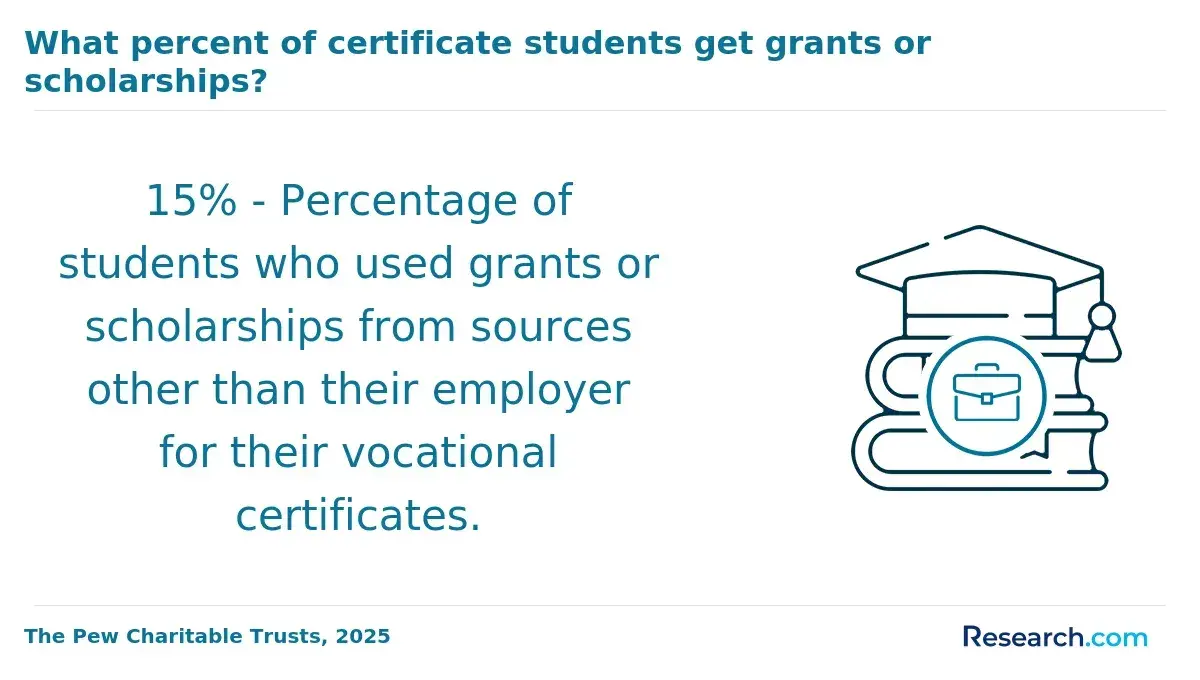
Undergraduate students may qualify for grants, including the Federal Pell Grant, if eligible. Graduate and professional students are generally not eligible for Pell Grants, but may have access to federal Direct Unsubsidized Loans and, when needed and eligible, Direct PLUS Loans. Loan limits, interest rates, and terms can change, so review the current aid offer and federal disclosures before accepting loans.
Financial support may also come from employer education benefits, state programs, university scholarships, workforce-development grants, unions, professional associations, or veterans' education benefits. Ask the financial-aid office whether online enrollment changes aid eligibility and whether part-time enrollment affects the amount offered.
Do not rely on verbal estimates. Compare each aid offer's grants, scholarships, loans, work requirements, net cost, and renewal conditions. A school's financial-aid office should be able to explain whether your intended online program is eligible for each source of aid.
How Long Does an Online Energy Policy Degree With No Letters of Recommendation Take to Complete?
Completion time depends on degree level, credit requirements, transfer credits, course sequencing, capstone expectations, and how many courses a student takes each term. Admissions without recommendations may shorten document collection, but they do not reduce required academic credits or capstone work.
The ranges below are planning estimates, not promises. A university's official curriculum plan controls.
| Program type | Typical completion pattern | Factors that may extend the timeline |
| Graduate certificate | Often completed in less than one year part time or full time | Limited course rotation or prerequisite requirements |
| Master's degree | Often about 18 to 36 months while working | Capstone sequencing, part-time enrollment, and elective availability |
| Bachelor's completion degree | Often about two years after substantial transfer credit | Transfer evaluation, general education gaps, and residency requirements |
| Full bachelor's degree | Often about four years of full-time study | Part-time enrollment, changing majors, and required internships |
Ask whether classes are asynchronous, live at set times, or offered in accelerated terms. Working adults often benefit from asynchronous delivery, but should still estimate weekly reading, research, discussion, and project time honestly. A shorter program is valuable only if its curriculum supports the analytical and communication skills required for the roles you want.
Can You Transfer Credits Into an Online Energy Policy Degree Program With No Recommendation Letters?
Transfer policies are independent of recommendation-letter policies. Many bachelor's completion programs accept prior college coursework, and some master's programs accept a limited number of graduate credits from another accredited institution. Programs usually evaluate course equivalency, grade earned, age of the course, and fit with required curriculum.
Before applying, send unofficial transcripts for a preliminary review if the school offers one, then request an official determination in writing. Ask how transferred courses will appear on your degree plan, whether they reduce total tuition, and whether they affect time to graduation. Do not assume professional certificates, workplace training, military learning, or credits from a different academic field will transfer automatically.
Students changing fields should pay special attention to prerequisites. A transferred environmental-science course may satisfy a science foundation but not a policy-analysis or economics requirement. If your target is a narrowly defined energy-policy career, prioritize a program that preserves the relevant methods courses rather than selecting one solely because it accepts the largest number of credits.
How Should You Compare Online Energy Policy Degree Programs That Do Not Require Letters of Recommendation?
Use the lack of recommendation letters as one application feature, not your main selection criterion. The strongest choice aligns with the work you want to do, provides recognizable academic quality, fits your schedule, and has a transparent net cost.
Compare finalists using the following questions, then keep the answers in one document before submitting applications.
- Does the official checklist state that no letters or references are required for my degree, start term, and applicant type?
- Is the institution accredited by a recognized accreditor, and is the program listed in the current academic catalog?
- Does the curriculum cover the areas I need, such as energy markets, regulation, climate policy, quantitative analysis, public finance, or environmental justice?
- What is the total estimated cost after all mandatory fees, and what aid, scholarships, or employer benefits are realistically available?
- Are courses asynchronous, are there required live meetings or residencies, and can I complete the program while working?
- What applied work, faculty interaction, career services, alumni access, and internship support are available to online students?
Common mistakes include assuming simplified admissions equals guaranteed admission, overlooking a required essay or prerequisite, and accepting an offer before reviewing accreditation and total cost. Also avoid choosing a broad sustainability degree if your goal requires intensive policy, economics, or regulatory training.
Energy Policy is especially suitable for learners who want to influence public programs, organizational energy strategy, utility planning, or climate implementation. It may be less suitable for someone seeking engineering licensure, hands-on technician training, or clinical environmental-health work, which require different education paths.
If your interests lie in therapeutic practice rather than policy analysis, best art therapy programs represent a distinct professional pathway with separate training and credential expectations.
Other Things You Should Know About Energy Policy
Usually, yes. No-recommendation admissions can be particularly useful for returning students without recent faculty contacts. Your transcript, resume, personal statement, and relevant work experience may provide the evidence admissions staff need, although prerequisite coursework and minimum GPA rules may still apply.
No. Employers do not normally know whether recommendation letters were part of your college application. They are more likely to evaluate the institution, credential, relevant coursework, applied projects, professional experience, and demonstrated skills.
Ask whether letters or references are required for your exact program and term, whether the program is fully online, what minimum GPA and prerequisites apply, how transfer credits work, and what the complete tuition and fee estimate will be. Request answers in writing when possible.
It can support policy, planning, regulatory, sustainability, research, and program-management roles in renewable energy. Roles requiring engineering design, electrical work, field installation, or professional licensure generally require different technical training, credentials, or supervised experience.
References
- Opportunity Scholarship - Utah System of Higher Education https://ushe.edu/state-scholarships-aid/opportunity-scholarship/
- Financing Your Degree https://aspph.org/student-journey/financing-your-degree/
- SULI Frequently Asked Questions | U.S. DOE Office of Science (SC) https://science.osti.gov/wdts/suli/Frequently-Asked-Questions
- 2025's Best Online Master's Programs: No GRE Required https://www.onlinemastersdegrees.org/best-programs/no-gre/
- Data Sources for Post-Graduation Outcomes https://www.airweb.org/article/2021/09/30/data-sources-for-post-graduation-outcomes
- Energy Policy Cover Letter: Template and Guide 2026 https://manusights.com/blog/energy-policy-cover-letter
- ASHRAE Society Scholarship Program https://www.ashrae.org/communities/student-zone/scholarships-and-grants/scholarship-program
- Clean Energy https://www.sustainabilitydegrees.com/careers/clean-energy/