
2027 Online Educational Studies Degree Programs That Accept 60, 75, or 90 Transfer Credits

Co-Founder and Chief Data Scientist
If you already have college credits, the biggest question is not whether an online Educational Studies program accepts transfer credit; it is how much of your 60, 75, or 90 credits will actually count toward graduation. The National Student Clearinghouse reported in 2024 that transfer enrollment continued to rebound, especially among upward and continuing transfers. That matters because transfer-friendly online programs can shorten completion time and reduce tuition, but only when credits fit degree requirements. This guide helps transfer and degree-completion students compare policies, avoid common mistakes, and estimate what they still need to finish.
Key Things You Should Know
- Most bachelor's degrees require about 120 credits, so students entering with 60, 75, or 90 applicable transfer credits may have roughly 60, 45, or 30 credits left; however, accepted credits are not always applied credits.
- Many online Educational Studies degree-completion programs allow up to 75 or 90 transfer credits, but residency rules commonly require at least 30 credits to be completed at the degree-granting institution.
- Before enrolling, confirm how prior credits apply to general education, electives, upper-division coursework, and the Educational Studies major; this determines actual completion time and total tuition savings.
How Many Transfer Credits Can You Apply Toward an Online Educational Studies Degree?
An online Educational Studies degree is usually a bachelor's-level program for students interested in learning, child and adolescent development, instructional support, education policy, community education, training, or non-licensure education careers. Unlike a traditional teacher-preparation program, many Educational Studies degrees do not automatically lead to classroom teacher certification, so students should verify licensure expectations if they want to teach in a public school.
In most U.S. bachelor's programs, the degree total is about 120 credits. A school may say it accepts up to 60, 75, or 90 transfer credits, but that number only describes the maximum it may bring in from prior coursework. The more important question is whether those credits satisfy specific degree requirements.
The table below shows how the three common transfer scenarios usually affect a 120-credit online Educational Studies degree. Use it as a planning framework, not as a guarantee, because each school controls its own catalog, residency policy, major requirements, and transfer equivalencies.
| Transfer scenario | Possible credits remaining in a 120-credit degree | Best fit | Main risk to check |
| 60 transfer credits | About 60 credits remaining | Associate degree holders, community college transfers, students who completed lower-division general education | Some credits may come in as electives instead of meeting major prerequisites |
| 75 transfer credits | About 45 credits remaining | Students with an associate degree plus extra courses, prior enrollment at a four-year institution, or multiple schools attended | The student may still need upper-division Educational Studies coursework |
| 90 transfer credits | About 30 credits remaining | Degree-completion students close to finishing a bachelor's degree | Residency, capstone, and major-course minimums may prevent all credits from shortening the degree |
A 90-credit transfer limit can look ideal, but it is not automatically better than a 75-credit policy. If 75 credits fulfill general education, electives, and prerequisites cleanly, that program may be faster than a 90-credit program where many credits do not match the Educational Studies curriculum.
Which Online Educational Studies Degree Programs Accept 60, 75, or 90 Transfer Credits?
Online Educational Studies programs vary widely in how they treat transfer students. Some are designed as bachelor's completion pathways for students with an associate degree, while others are traditional four-year online programs that happen to accept transfer credit. The most transfer-friendly option is usually the one that gives you the clearest degree audit before enrollment.
The comparison below summarizes the types of programs transfer students are most likely to encounter. It focuses on transfer-credit structure rather than ranking individual schools, because the best choice depends on your transcript, state, career goal, and remaining requirements.
| Program type | Typical transfer-credit allowance | Who it usually serves best | What to verify before applying |
| Associate-to-bachelor's completion program | Often around 60 credits, sometimes more | Students with an AA, AS, or AAS who want a structured route into upper-division study | Whether the associate degree satisfies general education as a block or course by course |
| Flexible online Educational Studies major | Often up to 75 or 90 credits | Students with mixed prior credits from several colleges | How many credits apply to the major versus free electives |
| Adult degree-completion program | Frequently designed around 75 to 90 incoming credits | Working adults returning to finish a bachelor's degree | Residency, capstone, and upper-division credit requirements |
| Teacher-preparation-adjacent pathway | Varies, often more restrictive for major courses | Students exploring education careers but not necessarily licensure | Whether the program is non-licensure or meets state teacher certification rules |
When comparing schools, do not stop at the published transfer maximum. A stronger program for transfer students usually offers transparent equivalency tools, accepts regionally accredited coursework, provides a written degree plan, and explains exactly which courses remain after the evaluation.
How Can You Tell Whether Transfer Credits Will Actually Apply Toward Your Educational Studies Degree?
The difference between accepted credits and applied credits is the key to making a smart transfer decision. Accepted credits are credits the institution agrees to place on your record. Applied credits are credits that reduce the exact courses, categories, or credit totals required for the Educational Studies degree.
Before you choose a program, ask the school to show where each transfer course fits. A credit that transfers as a general elective may help you reach 120 total credits, but it may not replace a required course in child development, educational psychology, curriculum design, assessment, diversity in education, or the senior capstone.
Use this sequence to test whether a generous transfer policy will actually help you finish faster and cheaper.
- Request an official or preliminary transfer credit evaluation using transcripts from every college you attended.
- Ask for a degree audit that separates general education, major requirements, upper-division requirements, electives, and institutional residency credits.
- Identify any courses that transferred but did not satisfy a requirement, because these credits may not reduce your remaining timeline.
- Confirm whether you still need prerequisite courses before upper-division Educational Studies classes.
- Ask the advisor to estimate your remaining terms based on the course rotation for online students.
One common mistake is assuming that "90 credits accepted" means "only 30 credits left." That may be true only if the 90 credits align with the program map and the school's residency policy. If 15 of those credits transfer only as excess electives, you may still need more than 30 credits to complete the degree.
What Types of Previous College Credits Can Transfer Into an Online Educational Studies Degree?
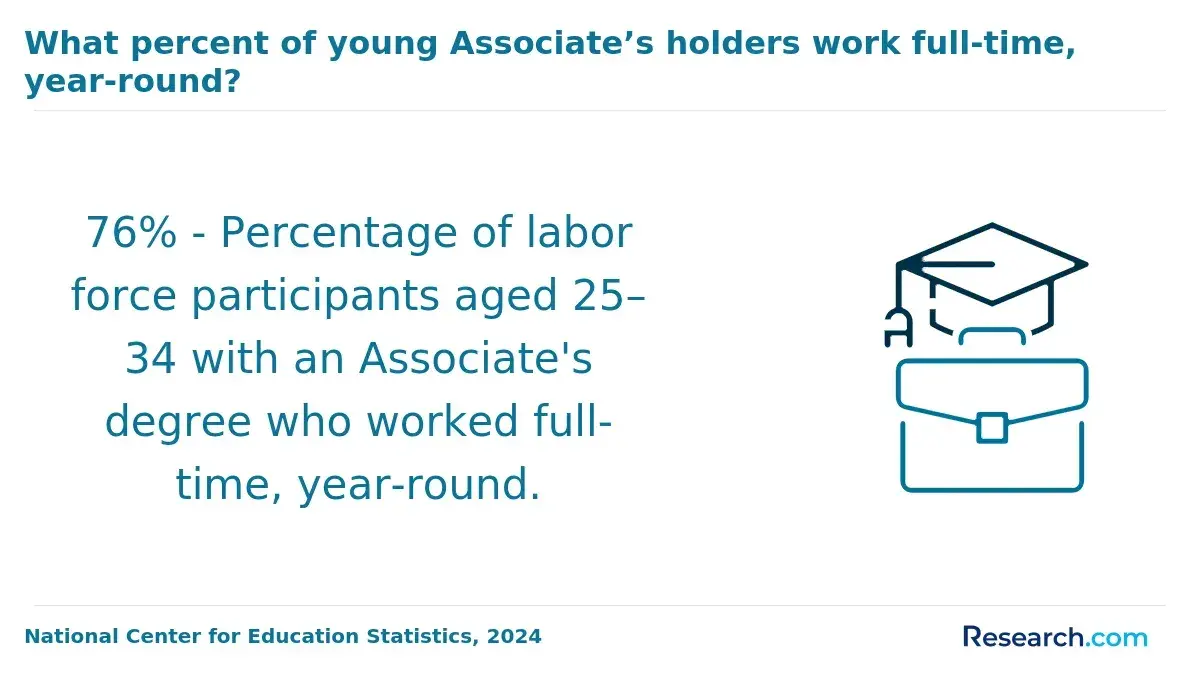
Most online Educational Studies programs review transfer credits by source, accreditation, grade, level, and course content. Regionally accredited college coursework is usually the most straightforward, while alternative credit, vocational coursework, and older professional training may require additional documentation.
The categories below are the most common sources of transfer credit for students entering an online Educational Studies degree. Each can be useful, but each may be limited by institutional policy.
- Community college credits, especially general education courses such as English composition, college algebra, psychology, sociology, biology, history, and public speaking.
- Associate degrees, which may transfer as a block if the school has an articulation agreement or statewide transfer pathway.
- Credits from prior four-year institutions, including education, psychology, human development, social science, and liberal arts coursework.
- Previously completed online college courses, provided the institution and courses meet the receiving school's accreditation and grade requirements.
- Approved exam credit, military credit, workplace learning, or portfolio-based prior learning, when the university permits these credits within bachelor's degree limits.
Minimum grades matter. Many schools require at least a C for transfer, and some require higher grades for major prerequisites. Education-related courses may also be reviewed more closely if they are expected to replace upper-division or methods-oriented coursework.
Educational Studies overlaps with psychology, child development, social services, training, and community programs. If your prior credits are heavily psychology-focused and do not fit the Educational Studies major cleanly, it may be worth comparing an accelerated psychology degree before committing to a transfer plan.
How Do Residency and Upper-Division Requirements Affect Educational Studies Transfer Students?
Residency requirements are the credits you must complete at the institution awarding the degree. They are one of the biggest reasons a student with 90 transfer credits may still need at least 30 credits at the new school. Upper-division requirements also matter because bachelor's degrees typically require a certain number of advanced courses, often at the 300 or 400 level.
The table below explains the main degree rules that can limit how much transfer credit helps you. These policies are especially important if you already have more than 60 credits.
| Requirement | What it means | Why it matters for transfer students |
| Institutional residency | Minimum credits completed at the degree-granting school | May require you to take 30 or more credits even if the school accepts 90 transfer credits |
| Major residency | Minimum Educational Studies major credits completed at the school | Can prevent major courses from transferring in full |
| Upper-division minimum | Required advanced credits, often at junior or senior level | Lower-division community college credits may not satisfy this requirement |
| Capstone or final project | Culminating course completed near graduation | Usually cannot be transferred and may be offered only in certain terms |
| General education distribution | Required categories such as writing, math, science, humanities, and social science | A large number of credits may still leave gaps in specific categories |
For a degree-completion student, the most important question is not simply "How many credits can I transfer?" A better question is "How many credits must I still complete at your institution, and which of those are offered online in the terms I need?"
How Does the Transfer Credit Evaluation Process Work for an Online Educational Studies Degree?
The transfer credit evaluation process determines how your previous coursework maps to the new degree. Some schools provide an unofficial review before admission, while others complete a final evaluation only after receiving official transcripts and admitting you to the program.
The process below shows what usually happens from first inquiry to enrollment. Following these steps can help you avoid enrolling in a program that accepts credits but does not apply them efficiently.
- Collect unofficial transcripts from every college attended so admissions staff can provide an early estimate.
- Submit official transcripts directly from each institution, because most schools will not finalize transfer credit from student-uploaded copies.
- Provide course descriptions or syllabi for courses that do not have obvious equivalents, especially education, training, psychology, or human development courses.
- Review the degree audit carefully and mark credits that apply only as electives.
- Ask an academic advisor to build a term-by-term completion plan based on remaining online course availability.
- Get clarification in writing before committing to enrollment, especially if your decision depends on a 75- or 90-credit transfer estimate.
A red flag is a school that gives only a broad verbal estimate without showing how credits apply. Another red flag is pressure to enroll before you receive a written transfer evaluation or degree plan. Transfer students should be especially cautious if they have credits from multiple colleges, older coursework, quarter-system credits, or nontraditional learning.
How Long Does It Take to Finish an Online Educational Studies Degree With 60, 75, or 90 Transfer Credits?
Completion time depends on remaining credits, course load, term length, course sequencing, and whether the program offers required courses every term. Online programs can be flexible, but flexibility does not always mean faster completion if a required capstone or upper-division course is offered only once or twice per academic year.
The table below gives a practical estimate for students in a 120-credit bachelor's program. It assumes the transferred credits apply efficiently and the student can access required online courses when needed.
| Applicable transfer credits | Approximate remaining credits | Possible full-time pace | Possible part-time pace |
| 60 credits | 60 credits | About 2 academic years | About 3 to 4 years |
| 75 credits | 45 credits | About 1.5 academic years | About 2.5 to 3 years |
| 90 credits | 30 credits | About 1 academic year | About 1.5 to 2 years |
The National Center for Education Statistics reported in 2024 that more than half of U.S. postsecondary students took at least one distance education course in the most recent federal data year. For transfer students, that means online course access is no longer unusual, but students still need to check whether the specific Educational Studies courses they need are offered online and in the right sequence.
Students who are mainly motivated by speed may also compare completion models in other fields, such as an accelerated hospitality degree online, to understand how accelerated terms, transfer caps, and course sequencing can affect a degree-completion timeline.
How Much Can Transfer Credits Reduce the Cost of an Online Educational Studies Degree?
Transfer credits can reduce cost because you generally pay tuition only for the credits you still need to complete. The savings are greatest when transfer credits replace required courses rather than simply appearing as unused electives.
The College Board's 2024 pricing data reported average published tuition and fees of $11,610 for in-state students at public four-year institutions and $43,350 at private nonprofit four-year institutions for a full-time undergraduate year. For transfer students, the takeaway is straightforward: reducing one or more years of required enrollment can significantly change total out-of-pocket cost, but only after institutional aid, fees, and transfer applicability are considered.
The table below illustrates how remaining credits affect tuition exposure using a simple per-credit comparison. Because tuition varies by school, the figures are examples for planning rather than quoted prices from any one institution.
| Applicable transfer credits | Remaining credits | Estimated tuition at $350 per credit | Estimated tuition at $500 per credit |
| 60 credits | 60 credits | $21,000 | $30,000 |
| 75 credits | 45 credits | $15,750 | $22,500 |
| 90 credits | 30 credits | $10,500 | $15,000 |
When comparing costs, include more than tuition. Online students may still pay technology fees, graduation fees, transcript fees, course materials, proctoring fees, and prior-learning assessment fees. Financial aid can also change the net price, so compare the total cost after scholarships, employer tuition assistance, grants, and federal student aid eligibility.
A common mistake is choosing the lowest per-credit tuition without checking how many credits remain. A program charging $500 per credit for 30 required credits may cost less than a program charging $350 per credit for 60 required credits.
Can Prior Learning, Military Training, Exams, or Certifications Count Toward an Online Educational Studies Degree?
Some online Educational Studies programs allow credit for prior learning, but policies vary. Prior learning credit may come from military training, standardized exams, professional certifications, workplace training, or a portfolio that documents college-level learning. These credits are usually reviewed separately from traditional transfer courses.
Students with nontraditional learning should ask whether the school uses recognized credit recommendations, such as ACE or military transcript evaluations, and whether those credits can apply to the degree rather than only to electives. This is especially important for paraprofessionals, childcare workers, trainers, military education specialists, and adults with long work histories.
These questions can help you determine whether alternative credit will actually move you closer to graduation.
- Does the Educational Studies program accept ACE-recommended, military, exam, certification, or portfolio credit?
- Is there a maximum number of nontraditional credits within the overall transfer-credit limit?
- Can prior learning satisfy major requirements, or is it limited to general electives?
- Are there fees for portfolio review, challenge exams, or prior-learning assessment?
- Will prior learning credit affect financial aid eligibility, residency requirements, or graduation honors?
Prior learning is expanding across many online degree areas, but it is not equally useful in every major. For example, portfolio evidence may be more common in applied or creative programs such as game design degrees, while Educational Studies programs may require closer alignment with learning theory, child development, or educational practice outcomes.
Do Older College Credits Expire When Transferring Into an Online Educational Studies Degree?
Older college credits do not always expire automatically, but some may be reviewed differently depending on subject, age, accreditation, and relevance. General education courses such as English, history, or humanities may transfer more easily after many years, while technology, science, statistics, assessment, or education-policy courses may receive closer review.
Educational Studies programs may be more flexible than licensure-heavy teacher-preparation programs, but students should not assume old education courses will meet current requirements. Changes in learning technology, special education law, assessment practices, and state policy can affect whether older coursework is considered current enough for the major.
If your credits are more than several years old, take these steps before enrolling.
- Ask whether the school has time limits for any course categories, especially statistics, technology, child development, or education methods.
- Request a course-by-course evaluation instead of relying only on a transfer-credit estimate.
- Save old syllabi, catalog descriptions, and assignments if course equivalency is unclear.
- Ask whether old credits can apply as electives even if they cannot satisfy major requirements.
- Confirm whether graduate school, licensure, or employer requirements may treat older prerequisites differently.
Students who plan to continue into graduate study should be especially careful. If older psychology or education credits do not meet future prerequisite expectations, comparing pathways such as a masters in psychology can help clarify which undergraduate courses may matter later.
Other Things You Should Know About Educational Studies
No. Many Educational Studies degrees are non-licensure programs focused on learning, education systems, youth development, training, or community education. If you want to become a licensed public school teacher, confirm whether the program includes state-approved teacher preparation, fieldwork, and student teaching.
Yes, community college credits are commonly used for transfer, especially when the student completed an associate degree or general education pathway. The key is whether those credits match the receiving school's bachelor's requirements and whether any articulation agreement applies.
Usually, transfer credits appear on the new transcript without carrying the original grades into the institutional GPA, but policies vary. Graduate schools or employers may still request transcripts from every college attended, so prior grades can remain relevant even if they do not affect the new GPA.
Depending on experience and local employer requirements, graduates may pursue roles in instructional support, childcare administration, youth programs, nonprofit education, corporate training support, education sales, tutoring coordination, or graduate study. The U.S. Bureau of Labor Statistics' 2024 Occupational Outlook Handbook shows education and training roles vary widely by credential, so students should match the degree to their target job before enrolling.
References
- Guide to Online Education Degrees | OEDb.org https://www.oedb.org/rankings/online-education-programs/
- Top Online Schools That Accept Transfer Credits https://www.edvisorly.com/student-guides/online-schools-that-accept-transfer-credits
- Bachelor's Education Programs | ACE https://ace.edu/degree-programs/bachelors-degrees/bachelors-education/


