2027 Online Data Science Master's for Revenue Operations Managers: A Career Transition Guide

Co-Founder and Chief Data Scientist
An online data science master's can help a revenue operations manager move beyond dashboards and forecasting - but it is not the only route to a more technical role. The right choice depends on whether you want to improve RevOps analytics, become a data scientist, or pursue machine learning work.
This guide connects your existing experience to realistic target roles, identifies the skills a degree would need to add, and shows how to evaluate programs before committing your time and money.
Key Things You Should Know
- RevOps experience with CRM data, funnel metrics, and stakeholder decisions transfers well to analytics; statistics, programming, and model evaluation are the gaps to assess.
- An analytics role within your current organization may be a more direct first move than a data scientist role. A master's is most useful when it provides technical depth and substantial project work you cannot obtain more efficiently elsewhere.
- The U.S. Bureau of Labor Statistics projects 35% growth in data scientist employment from 2025 to 2035, but that occupation-wide forecast is not a placement forecast for master's graduates.
What is an online data science master's for revenue operations managers?
It is a graduate data science degree completed primarily online, evaluated through the lens of a RevOps career change. It is generally not a degree designed specifically for revenue operations. Its value lies in teaching methods you can apply to problems you already know: lead scoring, pipeline forecasting, customer retention, territory planning, and measuring the effect of sales or marketing changes.
That distinction matters. Familiarity with a CRM and business intelligence platform helps you frame useful questions, but it does not by itself establish that a forecast is reliable or a campaign caused an observed result. A suitable master's should bridge that gap with statistical reasoning, programming, data engineering, and applied projects - not merely offer more dashboard practice.
How can revenue operations managers transition into data science careers?
Start with the work you already do. Defining funnel stages, questioning data quality, reconciling reports, and explaining findings to sales leaders are transferable skills. The likely gap is the ability to build, test, and communicate reproducible analyses using code and statistical methods. You do not need to discard your commercial expertise; it can make your technical work more useful.
A staged transition lets you test the career goal before paying for a degree. Each step should produce evidence that you can do work beyond your current RevOps remit:
- Choose a target role. Compare actual job descriptions for analytics engineer, product or go-to-market analyst, and data scientist positions; note which methods and programming skills recur.
- Test your technical baseline. Work through a realistic SQL extraction, a Python analysis, and a basic statistical evaluation using data you are permitted to use.
- Build a decision-focused project. For example, compare a simple pipeline forecast with a more complex model, use a time-based test set, and explain which forecast a sales leader should trust.
- Seek an internal stretch assignment. Partner with an analytics team on measurement or forecasting before assuming an external data scientist hire is the only route.
- Consider the master's if a clear gap remains. Favor programs that address the methods required by your target jobs and let you demonstrate them through substantial work.
A master's is not universally required for an analytics move. It becomes a stronger option if your target roles demand deeper statistical or machine learning work, you need structured preparation, or self-study has not given you credible project evidence. Conversely, a narrower course or supervised internal project may be sufficient if your goal is to become more effective in RevOps rather than change occupations.
What career opportunities can a data science master's unlock for RevOps professionals?
The most plausible first destination is often a role that retains your go-to-market knowledge while increasing your technical responsibility. The table separates nearby roles by the work you would need to demonstrate; titles and duties vary by employer.
| Target role | Connection to RevOps | New evidence employers may seek |
| Go-to-market or revenue analyst | Investigates pipeline, conversion, retention, and sales performance | Reproducible SQL and Python analysis; sound measurement choices |
| Analytics engineer | Improves the data models behind revenue reporting | Tested transformations, documentation, and dependable data pipelines |
| Data scientist focused on commercial problems | Develops forecasts, experiments, or predictive models for business decisions | Statistical inference, model validation, and clear treatment of uncertainty |
| Machine learning specialist | May build and maintain more complex predictive systems | Stronger software engineering, deployment, and model-monitoring experience |
A degree can help you qualify to compete for these roles, but the title alone does not establish readiness. A portfolio that shows what decision changed - or why a model was rejected - is particularly persuasive for a RevOps professional. If your actual goal is to leave commercial analytics for clinical applications, AI master's degrees for healthcare careers address a different domain and should not be treated as interchangeable with a RevOps-focused transition.
What do online data science master's programs teach?
Relevant curricula typically combine programming, statistics, machine learning, data management, and communication. For a RevOps manager, the deciding question is not whether those terms appear on a program page; it is whether courses and projects teach you to make defensible decisions with imperfect business data.
Look for substantive work in experimental design or causal inference, forecasting, database systems, and model evaluation. Those subjects help distinguish a campaign's apparent success from a measured effect, prevent leakage when predicting future pipeline, and reveal when a model fails on newer accounts. Review course descriptions and project requirements: a topic mentioned in a syllabus offers less depth than a dedicated course followed by an assessed application.
AI-focused study can be useful if your target role involves building intelligent systems, but it may trade some statistical or business-measurement depth for other technical priorities. An artificial intelligence online degree guide is a useful comparison when AI development - not commercial analysis - is your principal goal.
What are the admission requirements for an online data science master's?
Requirements vary by program, so RevOps experience should be presented as evidence of analytical judgment, not assumed to replace formal prerequisites. Check each school's current admissions policy for its bachelor's-degree rules, expected mathematics and programming preparation, required application materials, and any options for addressing gaps. Professional experience may strengthen an application without formally satisfying a required course.
Before applying, compare the program's stated expectations with your own transcript and work samples. If calculus, linear algebra, probability, or programming is listed and your preparation is unclear, ask admissions whether a specific course would satisfy the requirement. Keep that answer separate from a self-study plan that helps you succeed after admission but may not fulfill an official prerequisite.
If an application essay is a practical barrier, ML master's degree options without a personal essay offer an adjacent comparison. Confirm current requirements directly with each program before relying on an application-materials list.
How long does an online data science master's take and cost?
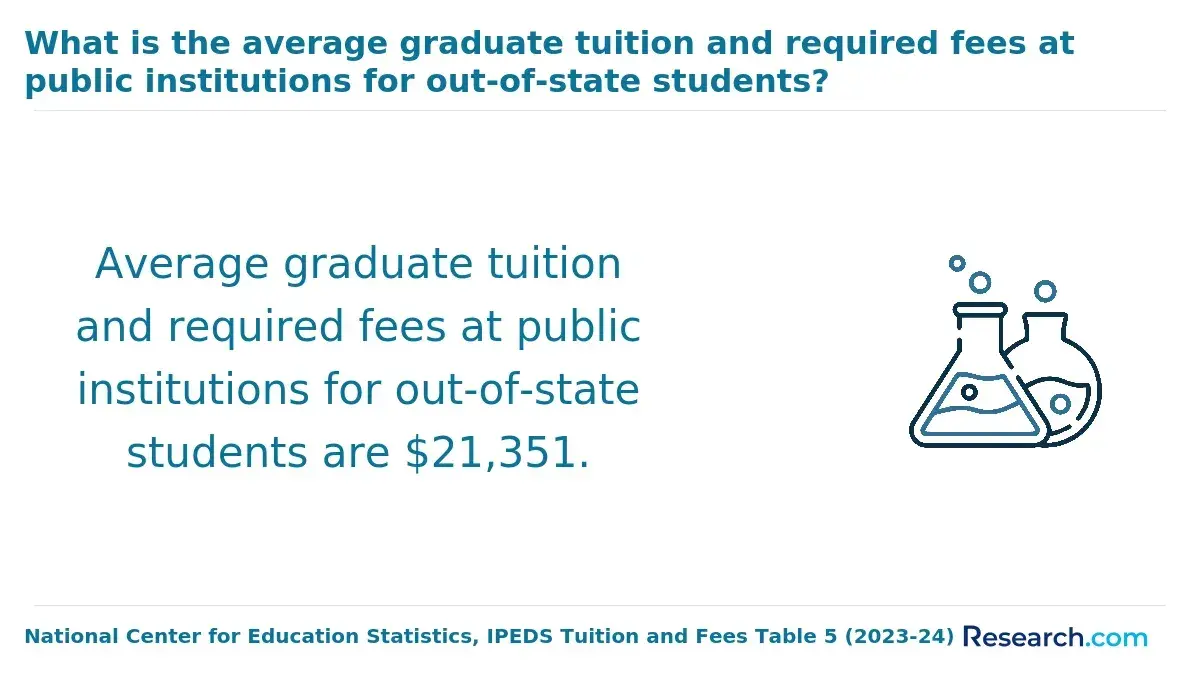
There is no dependable single duration or price for online data science master's programs. Credit requirements, course availability, enrollment pace, tuition schedules, and fees differ by institution. For a working RevOps manager, the useful comparison is the cost and completion schedule at the pace you can actually sustain, not a school's fastest advertised pathway.
Request a current, itemized estimate covering tuition for all required credits, mandatory fees, required materials, and any travel or residency expense. Ask whether tuition differs by state residency or enrollment status, whether courses run often enough for your intended schedule, and how long you may take to finish. Employer tuition assistance may reduce your out-of-pocket cost, but confirm eligibility and any repayment obligation before counting it.
When comparing faster routes, compare data science master's completion times alongside workload and total cost. Avoid the common mistake of treating a shorter published minimum as your likely finish date while working full-time.
Are online data science master's programs accredited?
An online format does not determine accreditation. Check the university's current institutional accreditation through the accreditor or an official institutional record, then confirm that the online degree is awarded by that institution. Do not assume the program itself holds a separate data science accreditation merely because the university is accredited.
Also verify that the school can enroll students residing in your state and whether any in-person activity is required. These are separate questions from accreditation. If a school's marketing uses vague accreditation language or avoids identifying the degree-granting institution, seek clarification before applying or paying a deposit.
How do online and campus-based data science master's programs compare?
Neither format is inherently better for a RevOps career change. Online study can let you keep earning and apply new methods at work; campus study may make scheduled peer interaction, research access, or recruiting events easier to use. The meaningful comparison is between specific programs, not delivery labels.
If you must remain employed, examine recorded versus live classes, meeting times, group-project expectations, and access to instructors. If you are planning a full-time career reset, compare campus recruiting and project opportunities with the online program's actual support for career changers. A flexible online schedule is less valuable if the courses you need are rarely offered; a campus network is less valuable if attending would create unsustainable opportunity costs.
What salaries and job prospects can data science graduates expect?
The U.S. Bureau of Labor Statistics reports a $120,230 median annual wage for data scientists in May 2025. That is a wage for workers across the occupation, not an expected starting salary for someone moving from RevOps or a measure of what a master's adds to pay. Your location, previous experience, employer, and eventual role will affect an offer.
BLS projects data scientist employment to grow 35% from 2025 to 2035. That indicates strong projected demand at the occupation level, but it does not remove competition for individual openings - especially roles asking for production modeling experience. When assessing a program's career claims, look for outcomes specific to its graduates and ask how many responded, what jobs they held before enrollment, and whether reported salaries represent new jobs or existing careers.
How should revenue operations managers choose a reputable data science program?
Begin with your target job, then compare programs against the technical and practical evidence that job requires. This prevents two costly mistakes: buying a degree that repeats your current reporting skills, and choosing an impressive-sounding curriculum with too little support for the statistical or programming gaps you actually have.
Use the following questions when reviewing catalogs and speaking with program staff. Ask for specific courses, policies, and examples rather than general assurances:
- Which required courses teach statistical inference, SQL or data engineering, Python, and evaluation on data collected over time?
- Can a student complete a substantial commercial analytics project, and what permissions govern employer data?
- What preparation must I have before enrollment, and which gaps can I address through approved coursework?
- What is my estimated total cost and feasible completion schedule while working, including course availability?
- What career support and graduate outcomes are documented for experienced professionals changing roles?
Choose a data science master's if its required work closes gaps between your current RevOps practice and your target analytics or data scientist role. If you primarily want to build AI products, AI degree selection by career objective provides a different starting point. If you cannot identify a skill gap that requires graduate study, test a smaller learning plan and an internal project first.
Other Things You Should Know About Data Science
Only with the employer's permission and in compliance with its data policies and the school's requirements. Ask about approved de-identification or synthetic-data alternatives before proposing the project.
No. Platform certifications demonstrate product-specific knowledge; a data science degree develops broader analytical methods. Keep certifications that remain relevant to the jobs you want.
Describe the analytical problem, the data and methods you used, and the decision your work informed. Distinguish reports you maintained from analyses or models you personally developed.
Yes, if it shows a sound test, explains the result, and recommends a sensible decision. Recognizing that a model does not outperform a simpler approach demonstrates judgment.
References
- Cost of Attendance (Budget) | 2025-2026 Federal Student Aid Handbook https://fsapartners.ed.gov/knowledge-center/fsa-handbook/2025-2026/vol3/ch2-cost-attendance-budget
- Types of Financial Aid: Grants, Work-Study, and Loans | studentaid.gov https://studentaid.gov/understand-aid/types
- Qualified Ed expenses | Internal Revenue Service https://www.irs.gov/credits-deductions/individuals/qualified-ed-expenses
- Revenue Operations Analysts: How to Become One | Franklin University https://www.franklin.edu/career-guide/operations-research-analysts/how-to-become-revenue-operations-analysts
- Online Master of Science in Business Analytics and AI | Robert H. Smith School of Business https://www.rhsmith.umd.edu/programs/business-masters/academics/business-analytics-ai-online
- Data Science and Artificial Intelligence Master's Degree Program | Harvard Extension School https://extension.harvard.edu/academics/programs/data-science-artificial-intelligence-graduate-program/
- 7 Data Analytics Careers That Are in High Demand, and How to Stand Out | Bentley University https://www.bentley.edu/news/7-data-analytics-careers-are-high-demand-and-how-stand-out
- A Guide to Choosing Between Data Science vs. Data Analytics | UCLA MSOL Data Science https://www.msol.ucla.edu/data-science-engineering/articles/demystifying-data-guide-choosing-between-data-science-vs-data-analytics/
- What Skills Can You Gain From a Master of Business Analytics and AI Curriculum? | Freeman News https://freemannews.tulane.edu/2025/06/09/what-skills-can-you-gain-from-a-master-of-business-analytics-curriculum
- What Can I Do With a Degree in Data Science? Career Paths & Skills | Harvard SEAS https://seas.harvard.edu/news/what-can-i-do-degree-data-science-career-paths-skills