2027 Online Data Science Master's for Lab Technicians: A Career Transition Guide

Co-Founder and Chief Data Scientist
For a lab technician, an online data science master's may open a path from generating test or research results to analyzing complex datasets. The decision is not simply whether data science is growing: it is whether a program can close your technical gaps without wasting the laboratory expertise you already have. This guide helps clinical, research, and industrial lab technicians assess their readiness, compare programs, and choose between a master's degree and a smaller first step.
Key Things You Should Know
- Laboratory experience with quality control, documentation, and interpreting results can support a move into health, research, or industrial data work; programming and statistical modeling are the likely gaps to assess.
- An online master's is most useful when you need sustained technical training and substantial projects. A targeted course or employer-based analytics project may be a better first step if you have not tested your interest in coding.
- The U.S. Bureau of Labor Statistics (BLS) projects 35% growth in data scientist employment from 2025 to 2035, but that occupation-wide forecast does not predict an individual graduate's job prospects.
What Is an Online Data Science Master's Degree for Lab Technicians?
It is a graduate degree in data analysis, statistics, computing, and related methods completed primarily online - not a special credential reserved for laboratory staff. Its value to a technician lies in applying those methods to familiar problems: detecting measurement errors, studying assay variation, analyzing research results, or improving laboratory operations.
The degree does not replace clinical laboratory certification or licensure where those are required. Nor is it automatically necessary for every analytics job. Choose graduate study when its depth, structured feedback, and project opportunities address gaps that shorter training and work experience cannot adequately close.
Can Lab Technicians Transition Into Data Science Careers?
Yes, but the most credible transition usually builds on existing domain knowledge rather than treating laboratory experience as unrelated work. Technicians may already understand sample handling, instrument limitations, quality controls, and why a clean-looking dataset can contain unreliable results. Those insights are useful when defining an analytical problem and checking whether an answer makes scientific sense.
The gap is often the ability to extract, analyze, and communicate data independently. For example, recording quality-control results in a laboratory information system is different from querying those records with SQL, assessing missing data, and building a reproducible model in Python or R. A sensible first target may be laboratory data analyst, clinical or research data analyst, or quality analytics specialist; a data scientist role may require a stronger modeling portfolio and experience.
Before committing to a degree, try a small, authorized project using public or appropriately approved data. Document the question, data-quality checks, analysis, and limitations. If you enjoy that work but need deeper statistical and computing skills, a master's becomes easier to justify.
What Are the Best Online Data Science Master's Programs?
There is no universal best program for lab technicians. The strongest fit is one that accepts your preparation, teaches the skills needed for your target role, and lets you demonstrate them through relevant work. Established options worth investigating include Georgia Tech's Online Master of Science in Analytics, the University of Texas at Austin's online Master of Science in Data Science, and UC Berkeley's online Master of Information and Data Science. Their current admissions rules, course availability, costs, and schedules should be checked directly before making a comparison.
Start with your target job, not a ranking. For laboratory quality or operations analytics, look for strong statistics, databases, and applied projects. For research-oriented data science, examine the depth of statistical modeling, programming, and experimental analysis. You can also compare affordable data science master's programs, then verify each finalist's current total cost and curriculum with the university.
What Do Online Data Science Master's Programs Teach?
Relevant coursework commonly includes programming, data management, probability and statistics, machine learning, visualization, and communicating results. Course titles alone do not show whether a program gives enough practice: inspect descriptions, prerequisites, assessments, and examples of completed projects.
For a lab technician, a valuable project might combine instrument or assay data with documented cleaning decisions, an appropriate statistical method, validation against a meaningful baseline, and an explanation of measurement limitations. That demonstrates more than producing an accurate-looking chart. If your goal is specifically model development rather than broader laboratory analytics, compare the machine-learning depth of a data science curriculum with ML graduate study with a budget below $20,000; verify current tuition and required fees before relying on a budget category.
What Are the Admission Requirements for Lab Technicians?
Requirements vary by institution. A lab-related bachelor's degree and professional experience may establish scientific preparation, but neither automatically fulfills requirements in calculus, statistics, or programming. Conversely, a non-computing undergraduate major does not automatically rule out admission.
Compare your transcript with each program's published requirements and distinguish formal prerequisites from recommended preparation. If a requirement is unclear, ask admissions whether a graded course, documented professional work, or another form of study is acceptable; do not assume a short course will satisfy a credit-bearing prerequisite. In your application, describe specific analytical responsibilities - such as trend investigations or quality-control analysis - rather than relying on your job title to convey technical readiness.
How Much Do Online Data Science Master's Programs Cost?
There is no reliable single price for this decision. Calculate each school's current tuition across all required credits, then add mandatory fees, required software or equipment, and any travel tied to in-person components. A per-credit price alone can make a longer program look cheaper than it is. Working fewer hours to study, or taking longer than planned, can also change the personal cost.
Ask whether your employer reimburses graduate tuition, what grades or continued employment it requires, and when reimbursement arrives. Compare aid terms and borrowing costs before accepting an offer; how to fund a data science master's provides a starting point for those questions. Avoid treating a prospective data scientist salary as a guaranteed return on tuition: your eventual role, prior experience, location, and time to transition all matter.
How Long Does an Online Data Science Master's Take?
Completion time depends on required credits, course scheduling, and whether you study full-time or part-time. The shortest advertised timeline may assume a course load that is difficult alongside shift work. Ask when required courses are offered, whether classes have live attendance requirements, how group work is scheduled, and how long students may take to finish.
If speed is important, distinguish a genuinely manageable path from an accelerated plan that leaves little room to learn unfamiliar programming. When comparing shorter data science graduate pathways, assess total credits and scheduling together rather than relying on the minimum published completion time.
What Careers Can Lab Technicians Pursue After a Data Science Master's?
Possible directions include laboratory or quality data analyst, research data analyst, clinical data analyst, bioinformatics-focused analyst, and data scientist. These are different targets: a quality analyst may spend more time investigating processes and reporting trends, while a data scientist position may emphasize coding, statistical modeling, and evaluating predictions. Job descriptions - not degree titles - will show the skills a particular employer expects.
Build a portfolio around the transition you want. A project explaining laboratory data provenance, checking for batch effects or missing values, and presenting a defensible result can show both new technical ability and existing domain judgment. When you review online data science programs for data careers, look for projects and career support relevant to your intended role; do not assume a program's general placement claims describe outcomes for former technicians.
How Much Can Data Scientists and Laboratory Technicians Earn?
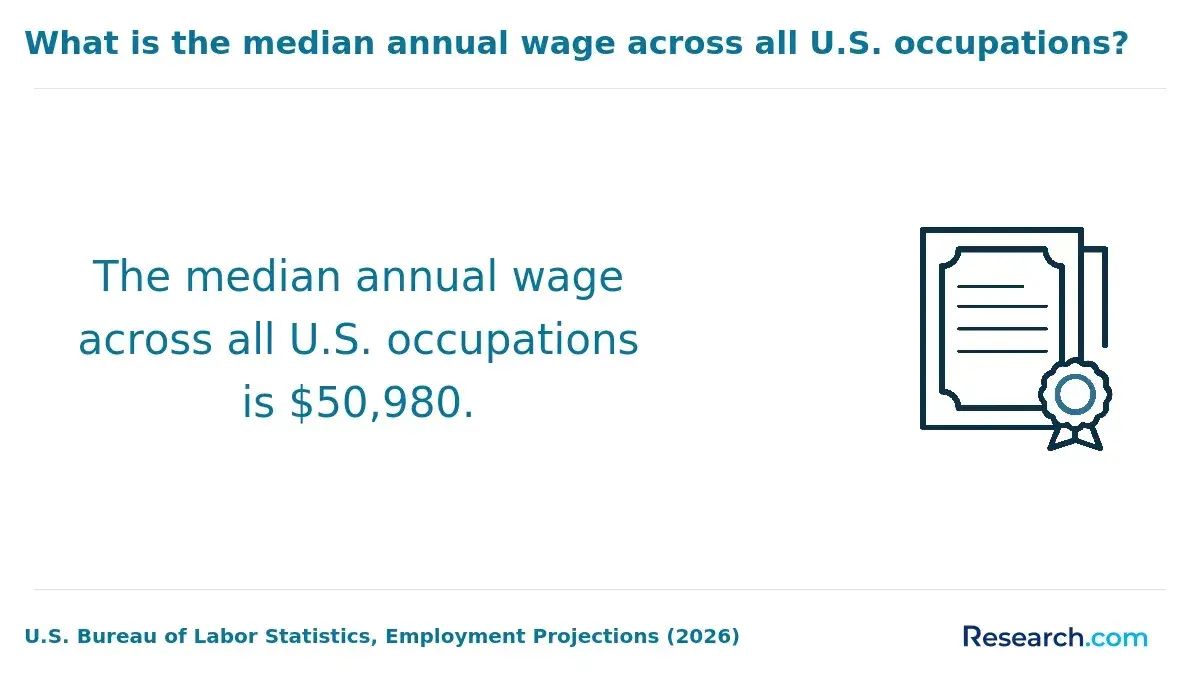
The BLS reports a median annual wage of $120,230 for U.S. data scientists in May 2025. That is an occupation-wide midpoint, not an entry-level offer or an estimate of what a lab technician will earn after graduation.
Laboratory pay depends on the specific occupation: clinical laboratory technicians, research technicians, and industrial technicians should not be treated as one salary category. To make a useful comparison, match your current occupation and location to the relevant BLS category, then examine actual postings for your intended data role. Include tuition and any lost earnings in the comparison; the difference between two occupational medians is not the financial return caused by a degree.
How Should You Choose an Accredited Data Science Master's Program?
First, confirm the university's current institutional accreditation through the institution and its recognized accreditor. Then check that the online program is available to students in your state. Institutional accreditation does not, by itself, establish that a curriculum fits your career goal or satisfies any separate professional licensing requirement.
Use the same questions for every finalist so a familiar school name does not outweigh a poor fit:
- Which published prerequisites must I meet before entry, and which gaps can I address while enrolled?
- Can I complete substantial projects involving scientific, health, or operational data without using confidential workplace records improperly?
- What are the full required cost, realistic part-time schedule, and any live or in-person obligations?
- What evidence does the school provide about career support and outcomes, and does it represent students with backgrounds like mine?
Choose the program that best closes your specific skills gap at a sustainable cost and pace. If you cannot yet name a target role or produce a basic independent analysis, a smaller learning commitment may be the better next decision.
Other Things You Should Know About Data Science
Only with the required employer, institutional, and legal permissions. Removing names alone may not make sensitive data safe to use. Ask the program about public or approved datasets if access is uncertain.
Not automatically. Clinical laboratory requirements vary by state and role; check the relevant licensing authority before treating this degree as a substitute for laboratory-specific education or credentials.
Possibly, if the program permits employer-sponsored projects and your employer approves the data use and publication terms. Confirm both before planning around that project.
Do not assume it will. Ask what career services online students can use and whether any published employment figures distinguish new career changers from experienced analysts.
References
- Types of Financial Aid: Grants, Work-Study, and Loans | studentaid.gov https://studentaid.gov/understand-aid/types
- About Informatics and Data Science | cdc.gov https://www.cdc.gov/laboratory-systems/php/about/informatics-data-science.html
- An Empirical Analysis of Health Informatics Job Postings - PMC https://pmc.ncbi.nlm.nih.gov/articles/PMC8013781/
- Cost of Attendance (Budget) | 2025-2026 Federal Student Aid Handbook https://fsapartners.ed.gov/knowledge-center/fsa-handbook/2025-2026/vol3/ch2-cost-attendance-budget
- Statistical Methods in Data Science | Pace Online https://online.pace.edu/articles/data-science/essential-statistics-and-experimental-design-techniques-for-data-scientists/
- 12 Data Science Skills (+10 Hard-Won Career Lessons) | Syracuse University https://ischool.syracuse.edu/data-science-skills/
- Online Program - UChicago Data Science Institute https://datascience.uchicago.edu/education/masters-programs/online-program/
- What Is Data Science? Definition, Skills, Applications & More | Harvard SEAS https://seas.harvard.edu/news/what-data-science-definition-skills-applications-more
- What preparations do I need for graduate education? | Statistics & Data Science Graduate Interdisciplinary Program https://stat.arizona.edu/what-preparations-do-i-need-graduate-education
- A Guide to Choosing Between Data Science vs. Data Analytics | UCLA MSOL Data Science https://www.msol.ucla.edu/data-science-engineering/articles/demystifying-data-guide-choosing-between-data-science-vs-data-analytics/