2027 Online Data Science Master's for Journalists: A Career Transition Guide

Co-Founder and Chief Data Scientist
Journalists considering an online data science master's need to decide whether graduate study will close the gap between strong reporting skills and the technical evidence employers expect. Investigative reporting, data cleaning, and explaining uncertainty can transfer well; production-quality coding and statistical modeling may require substantial new training. This guide helps working journalists identify realistic target roles, compare programs against those roles, and decide when a master's is worth the time and cost.
Key Things You Should Know
- A master's is most useful when it provides sustained statistics, programming, and project work that a journalist cannot readily gain through shorter training.
- Audience analytics and research roles may offer a closer transition than machine-learning engineering; choose coursework and a portfolio around the role you want.
- The U.S. Bureau of Labor Statistics projects 35% growth in data scientist employment from 2025 to 2035, but that occupation-wide forecast does not predict an individual graduate's job prospects.
What is an online data science master's degree for journalists?
It is a graduate degree in data science completed primarily through online coursework - not usually a journalism degree with a data-science specialization. Programs vary, but the relevant question for a journalist is whether the degree teaches them to acquire data, analyze it rigorously, build and evaluate models, and communicate findings to people making decisions.
There is no single "journalist-to-data-scientist" curriculum. A program centered on statistical inference and applied projects may suit an investigative reporter seeking research or analytics work. One centered on computing systems and machine learning may suit someone targeting a more technical role, provided they can meet its preparation requirements.
Why should journalists pursue an online master's in data science?
Journalists bring useful habits to data work: questioning how a dataset was collected, checking claims against evidence, interviewing subject experts, and explaining consequential findings. Those strengths do not replace probability, statistical modeling, SQL, or software development. A master's can provide structured practice and feedback in those areas while allowing a working reporter to keep their job.
Choose a master's when the target role calls for deeper quantitative work than your current projects demonstrate and you want supervised, progressively harder coursework. Start with individual courses or a smaller credential when you are still testing whether you enjoy coding and statistics. Journalists balancing coursework with deadlines can compare data science master's degrees for employed adults, paying particular attention to fixed meeting times and course load.
What careers can journalists pursue with a data science master's degree?
The best first move often builds on the subject matter or audience a journalist already understands. These roles differ in how much technical depth and production experience employers may expect.
The comparison below separates adjacent transitions from roles that usually require stronger engineering evidence; job titles and requirements vary by employer.
| Target role | Journalism experience that transfers | Evidence to build |
| Audience or product analyst | Understanding readers, editorial goals, and meaningful engagement | SQL analysis, experiment interpretation, and a clear account of metric limitations |
| Research or policy analyst | Investigating claims and explaining public-interest findings | Statistical analysis, reproducible methods, and careful treatment of uncertainty |
| Data scientist | Framing questions and communicating results to stakeholders | Model development, validation, coding, and a defensible choice of methods |
| Machine-learning engineer | Domain knowledge and communication | Substantial software engineering and model-deployment experience beyond analysis alone |
A newsroom analytics job can be a bridge rather than a final destination. By contrast, a degree alone may not make someone competitive for engineering-heavy positions. When comparing postings, look for the actual tasks - not just the title - and build projects that demonstrate those tasks.
What do online data science master's programs teach?
Relevant programs commonly cover programming, database work, statistics, machine learning, and communicating results. For a journalist, the distinction is depth: a course that briefly introduces predictive models is not equivalent to repeated work selecting methods, testing assumptions, evaluating errors, and explaining consequences.
A strong portfolio project could analyze a public dataset, document its missing or biased records, reproduce the analysis in code, and present a finding without overstating causation. If the target job involves building data pipelines, inspect course descriptions and project requirements for substantial engineering work; AI master's programs with data engineering skills offer another curriculum comparison. Do not assume every program permits a journalism-focused capstone or provides access to suitable datasets - confirm both before applying.
What are the admission requirements for online data science master's programs?
Requirements differ by institution. Applicants generally need to examine each program's stated expectations for prior mathematics, programming, academic records, and application materials rather than assuming a journalism degree either qualifies or disqualifies them. Professional reporting experience may show judgment and communication, but it does not automatically fulfill a formal calculus or programming prerequisite.
Before applying, compare the prerequisites with work you can demonstrate. A reproducible analysis can help show readiness; a preparatory course can build missing knowledge. Ask admissions staff whether that course formally satisfies a requirement, whether conditional admission is available, and how the program assesses applicants from nontechnical fields.
How long does an online data science master's take and cost?
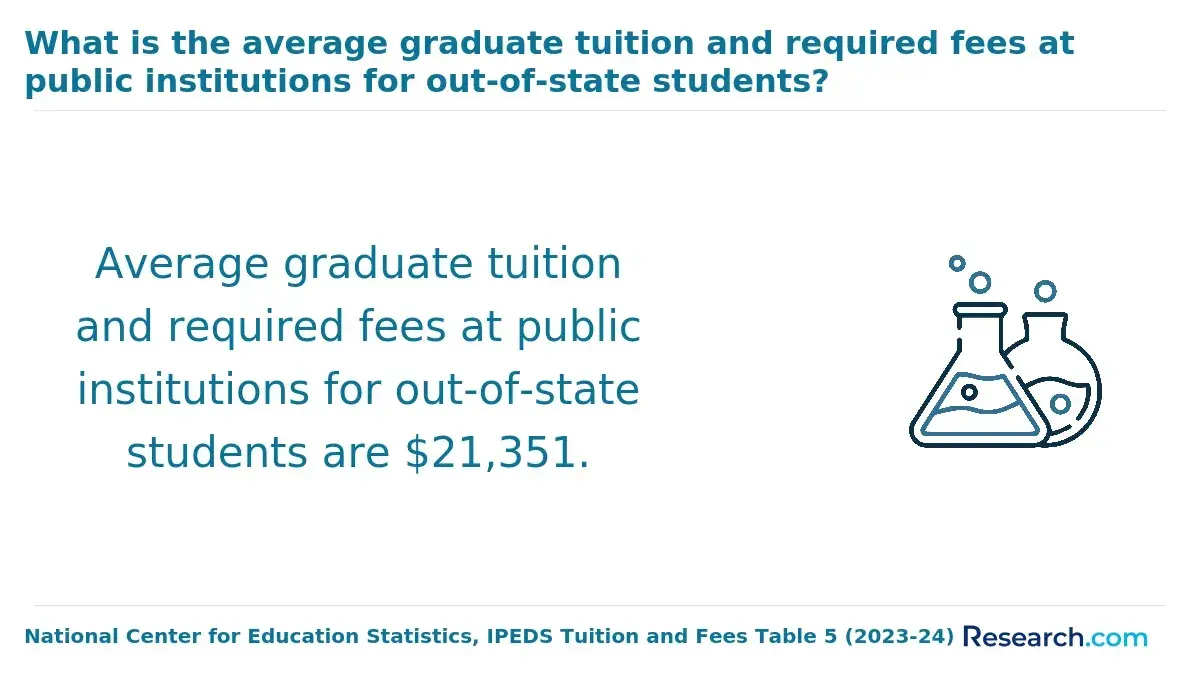
Completion time depends on required credits, course availability, and whether a student enrolls part time. A journalist working unpredictable shifts should check whether required courses run every term and whether there is a maximum time to finish. Published tuition is only one part of the decision: compare mandatory fees, software or computing costs, any travel requirements, financing costs, and income lost if work hours must fall.
For an affordability comparison, request a current, written estimate based on your intended enrollment pace and residency. If $20,000 is your ceiling for tuition and required fees, machine learning graduate programs on a $20,000 budget may provide alternatives to investigate; verify each program's current charges and whether its curriculum fits your target role. Treat a potential salary increase as a scenario to test, not a return the degree promises.
How do online data science programs compare with campus programs?
Online delivery can preserve employment and remove a commute, but it does not necessarily mean self-paced study. Live sessions, group projects, timed assessments, and fixed course sequences may still conflict with reporting assignments. Campus study may be preferable if access to in-person research groups, recruiting events, or a structured daily schedule matters more than location flexibility.
Compare actual degree requirements, faculty access, project support, and career services - not just delivery labels. Also compare the subject of the degree: online degree pathways in artificial intelligence may be a better fit for a defined AI goal, while a broader data science curriculum may better support a journalist exploring analytics and research roles.
How can journalists choose an accredited data science master's program?
Verify the institution's current institutional accreditation with the recognized accreditor and confirm that the particular online degree is offered by that institution. Accreditation establishes an important baseline; it does not show that a curriculum matches your career goal or that graduates obtain particular jobs. Also ask whether the school can enroll students in your state, since online enrollment rules can vary by location.
Once those checks are complete, review the required courses - not only electives - for statistics and coding depth. Ask to see project expectations, the support available to students entering from journalism, and any career-outcome figures the school publishes. A warning sign is a program marketed as a direct route to data scientist work without clear evidence of technical practice or an explanation of how outcomes were measured.
What salaries can journalists earn after transitioning into data science?
The U.S. Bureau of Labor Statistics reports a median annual wage of $120,230 for data scientists in May 2025. That is a benchmark for people employed in the occupation, not an expected starting salary for a journalist completing a master's. Pay for an audience analyst, policy researcher, or other adjacent role may differ, as may pay across locations, industries, and experience levels.
For a personal decision, compare pay ranges in postings for roles you could plausibly qualify for after graduation with your current compensation and total education cost. Data science salaries by industry can add context, but neither an occupational median nor a school's reported graduate salary establishes that the degree caused an increase.
What certifications or credentials help journalists enter data science?
A focused certificate or assessed course can help a journalist test their interest in Python, SQL, or statistics before committing to graduate tuition. A platform certification may show familiarity with a particular tool. Neither substitutes for evidence that you can investigate a question, clean data, choose an appropriate method, and explain its limits.
Choose a credential to address a specific gap visible in your target job postings. Then pair it with a documented project using lawful, shareable data. If that preparation and your existing experience are enough to reach interviews for your desired role, a master's may not be necessary; if the roles consistently call for deeper technical work, graduate study becomes a more defensible investment.
Other Things You Should Know About Data Science
Only if your employer permits it and the project complies with applicable privacy and confidentiality rules. Public or properly authorized data is usually safer for work you hope to share with employers.
Diploma wording is an institution-specific policy. Ask the registrar for the exact wording rather than assuming the online and campus credentials look identical.
Not necessarily. Relevant work projects, freelance analysis, or a rigorous graduate project can also demonstrate skills. Check whether the employers you are targeting explicitly require internship experience.
Ask the program about withdrawal deadlines, leaves, course frequency, and the maximum completion period before enrolling. Flexibility to pause matters most if a required course is offered infrequently.
References
- Essential Skill and Knowledge Required for Health Data Professionals: A Content Analysis of Job Advertisements | nih.gov https://pmc.ncbi.nlm.nih.gov/articles/PMC11605378/
- Cost of Attendance (Budget) | 2025-2026 Federal Student Aid Handbook https://fsapartners.ed.gov/knowledge-center/fsa-handbook/2025-2026/vol3/ch2-cost-attendance-budget
- Admission - Data Science, Analytics and Engineering, MS https://dsae.engineering.asu.edu/admission
- Common Course Scheduling - Policy Library https://www.umkc.edu/provost/policies-and-resources/policies/common-course-scheduling.html
- Key Insights on 7 Data Science Roles, Responsibilities and Skills | University of North Dakota https://und.edu/blog/data-science-roles-and-responsibilities.html
- 4. Statistics & Data Science Major Course Requirements | arizona.edu https://kb.math.arizona.edu/mathcenter/index.php
- Explore 7 exciting careers in data analytics - Penn LPS Online https://lpsonline.sas.upenn.edu/features/interested-data-analytics-explore-7-exciting-careers-field
- Is a Master's in Data Science Worth It Compared to Bootcamps? | NYIT Online https://online.nyit.edu/blog/is-a-masters-in-data-science-worth-it
- Application Instructions | College of Communication | Boston University https://www.bu.edu/com/admissions/graduate/application-instructions/
- A Guide to Choosing Between Data Science vs. Data Analytics | UCLA MSOL Data Science https://www.msol.ucla.edu/data-science-engineering/articles/demystifying-data-guide-choosing-between-data-science-vs-data-analytics/