2027 Online Data Science Master's for Geologists: A Career Transition Guide

Co-Founder and Chief Data Scientist
For geologists considering a move into data science, the choice is not simply whether to earn another degree. It is whether a particular online master's will close their technical gaps while preserving the value of their experience with spatial, environmental, and subsurface data.
This guide explains which roles offer a realistic bridge, what to check in a curriculum, and when a smaller investment in skills and projects may be the better first step.
Key Things You Should Know
- Geologists already work with uncertain, spatially dependent data; the transition usually requires stronger programming, statistics, and reproducible modeling rather than starting over in a new field.
- A master's is most useful when it provides technical depth, feedback, and projects aligned with a target role. It is not a universal requirement for data science jobs.
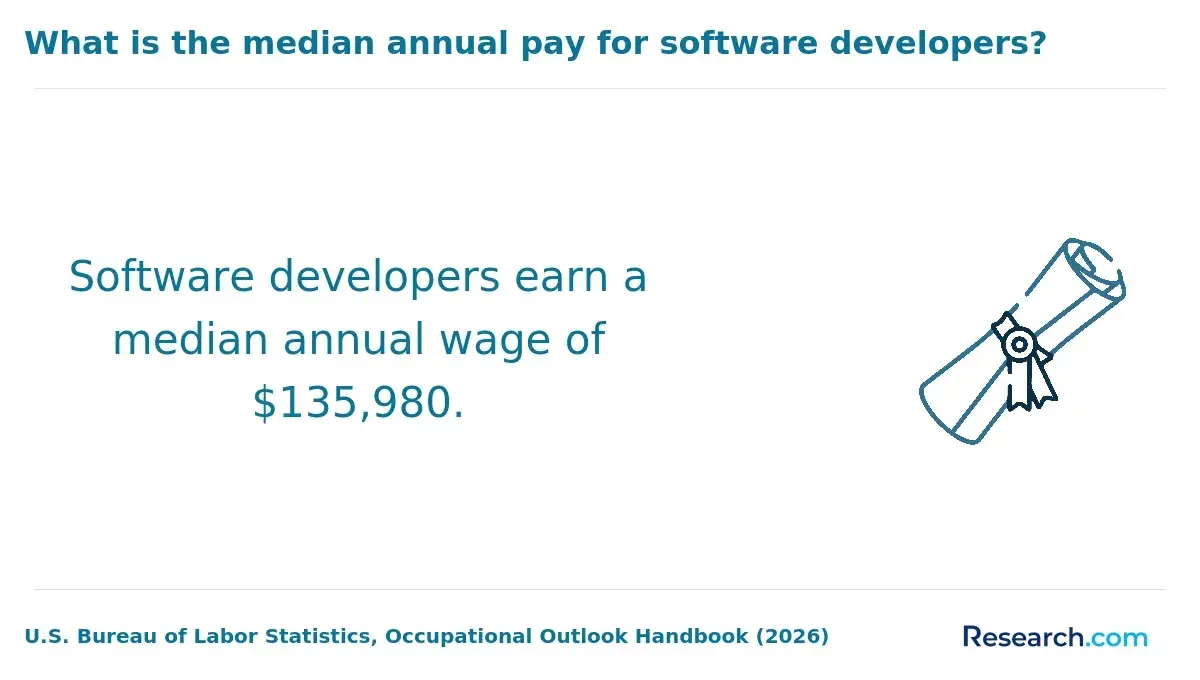
- The U.S. Bureau of Labor Statistics reports a $120,230 median annual wage for data scientists in May 2025. That occupation-wide figure is not a forecast of what a transitioning geologist will earn.
What is an online data science master's degree for geologists?
It is a graduate data science degree completed primarily online by someone bringing geological training to the coursework - not usually a separate credential reserved for geologists. A suitable program combines statistical reasoning, programming, data management, and applied projects. The geologist's task is to connect those methods to a credible career goal, whether that is improving earth-science analysis or moving into a broader analytics role.
Existing expertise can be an advantage. Interpreting incomplete measurements, recognizing spatial relationships, and questioning how field samples were collected are valuable habits in data work. They do not, however, replace experience writing maintainable code or testing whether a model works on genuinely new data.
Is an online data science master's right for a geologist's career transition?
Choose a master's when the roles you want require substantial skills you cannot readily develop through your current job, and when the program offers enough practice and feedback to demonstrate those skills. If you chiefly need to automate an existing geological workflow, a focused course and a well-documented workplace project may be a less costly first test.
The strongest transition usually builds on existing expertise before attempting a move into unrelated sectors. A geologist who can combine sound geological judgment with reliable analysis has a clearer initial case to make to an environmental, energy, or geospatial employer than an applicant relying on a new degree title alone. If the intended work is specifically AI development rather than broader data analysis, compare graduate AI options for career changers without a CS degree against data science curricula before applying.
A useful pre-enrollment test: review several actual job descriptions for one target role. Separate skills you already use from skills you cannot yet demonstrate, then ask whether required courses and a substantial project address the latter. Avoid enrolling solely because a program advertises "AI" or "industry relevance" without showing the work students complete.
What careers can geologists pursue with a data science master's?
The most direct opportunities often use both disciplines: geospatial analyst, environmental data analyst, subsurface or resource analytics specialist, and data scientist working with earth-observation or infrastructure data. A general data scientist role is possible, but the degree alone will not establish proficiency in the tools or business problems of a new industry.
The comparison below shows where geological experience may carry over and what evidence would make a transition more convincing. Job titles and responsibilities vary by employer.
| Target role | Geological experience that transfers | Additional evidence to build |
| Geospatial or earth-observation analyst | Spatial reasoning and interpretation of maps or imagery | Reproducible spatial analysis and defensible validation |
| Environmental data analyst | Sampling context, measurement limits, and uncertainty | Data cleaning, statistical analysis, and clear reporting |
| General data scientist | Problem framing and experience with messy real-world data | Programming, model evaluation, and projects relevant to the new sector |
The Bureau of Labor Statistics projects 35% employment growth for data scientists from 2025 to 2035. That is an occupation-wide projection, not a measure of demand for geologists or a guarantee of entry-level openings. Targeted project evidence matters especially when competing for roles outside geoscience. If the jobs you identify emphasize building AI systems rather than analyzing data, assessing artificial intelligence degree options by career path can help clarify which curriculum matches that different goal.
What do online data science master's programs teach geologists?
Look for meaningful work in Python or another relevant language, probability and statistical inference, databases, machine learning, and communicating results. For a geologist, the difference between a superficial and a useful curriculum often appears in the assignments: Can students work with imperfect data, document their choices, and explain why a result should be trusted?
Spatial data needs particular care. Nearby observations may be too similar for a random training-and-test split to provide a realistic performance estimate. Coursework or a project that addresses spatial validation, sampling bias, and uncertainty can therefore be more valuable for earth-science work than a long list of model names. A strong portfolio project should state the geological question, identify data limitations, compare against a reasonable baseline, and make the analysis reproducible.
If the intended work involves high-stakes predictions about land, water, or environmental risk, examine whether the program teaches responsible model use rather than treating accuracy as the only goal. AI ethics coursework in master's programs offers a related comparison for students who want deeper governance training. Confirm the depth from course descriptions and assignments; a topic's appearance in a catalog is not proof of substantial coverage.
What are the admission requirements for geologists?
Requirements vary by institution. Programs may ask for a bachelor's degree, transcripts, recommendations, a statement of purpose, and evidence of quantitative or programming preparation. A geology degree neither automatically satisfies nor automatically rules out those expectations: applicants' coursework and professional experience differ.
Compare each program's stated prerequisites with your transcript. Calculus, linear algebra, statistics, and programming are especially worth checking where they are explicitly required or recommended. If a gap exists, ask admissions whether a credit-bearing course, professional work, or another form of preparation meets the formal requirement. Self-study can improve readiness, but it does not necessarily fulfill an admissions prerequisite.
In an application, describe specific analytical work: the data you handled, methods you selected, uncertainty you assessed, and decisions your findings informed. That is more persuasive than assuming geological fieldwork speaks for itself.
How long do online data science master's programs take?
Completion time depends on required credits, course availability, prerequisites, and whether you study full- or part-time. An advertised fastest finish may assume consecutive terms and a course load that is impractical alongside field rotations or seasonal work.
Ask for a term-by-term plan based on the number of courses you can actually take. Check when required courses run, whether the capstone can start only after other classes, and whether the school sets a maximum time to finish. Students also comparing a more AI-focused credential can use AI graduate degree options by completion time as a separate comparison, while confirming each program's current schedule directly.
How much does an online data science master's cost?
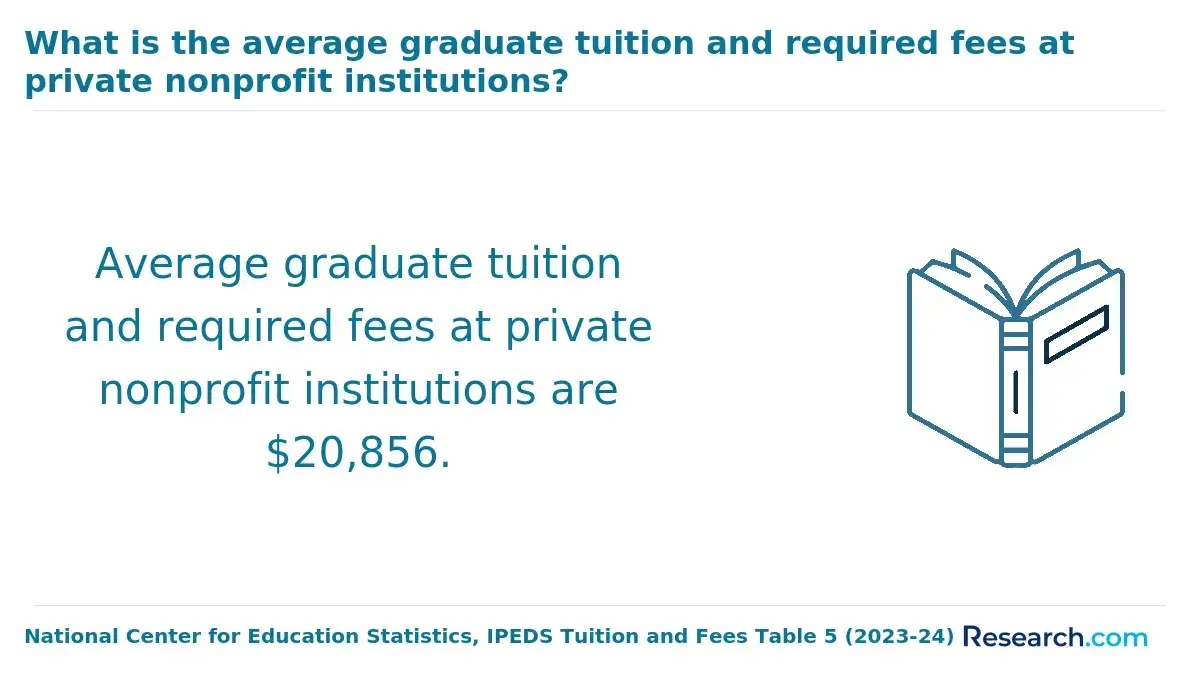
There is no reliable single price for these programs. Build an estimate from the school's current tuition schedule and the credits you must complete, then add mandatory fees, required software or equipment, and any travel or in-person requirements. Check whether tuition differs by residency, enrollment pace, or academic year; also confirm what employer assistance or financial aid you may qualify for.
For a working geologist, the larger trade-off may be time as well as tuition. A program that disrupts paid field assignments can cost more in practice than its advertised tuition suggests. Compare a degree's total expected cost with the narrower courses or projects that could address your specific skill gaps. If AI is your actual target and price is a primary constraint, affordable online artificial intelligence degrees provide a separate set of options to investigate - not a substitute for verifying current charges and curriculum fit.
How do online and campus data science master's programs compare?
An online program can let a geologist continue working and apply new methods to familiar problems. A campus program may be more suitable when access to particular research groups, equipment, or in-person recruiting is central to the transition. Neither format, by itself, establishes the depth of instruction or the quality of student support.
Operational details matter more than the label. Ask whether classes are live or self-paced, when group work and exams occur, and whether field assignments can be accommodated. Also check whether online students receive the same project supervision and career services described for campus students. Choose the format whose actual schedule allows you to complete demanding technical work consistently.
How can geologists choose an accredited data science program?
First verify the institution's accreditation through the accreditor and the U.S. Department of Education's recognized-accreditor information; do not treat a ranking or an "accredited" claim without a named accreditor as sufficient. Then check whether the institution can enroll online students in your state. Institutional accreditation and state authorization answer different questions, and neither alone proves that a curriculum fits your career goal.
After those checks, compare required courses - not just electives - against your target jobs. Ask whether you can complete a substantial geospatial, environmental, or subsurface project with appropriate supervision, and review the published policies for tuition, scheduling, and student support. Be cautious of programs that promise career outcomes without disclosing how those outcomes were measured.
Do geologists need certifications or licenses for data science careers?
A general data scientist role does not have one universal professional license. Employers may value relevant tools, projects, and experience, but a certificate is not a substitute for demonstrating that you can analyze data responsibly. Check individual job postings rather than assuming a particular vendor certification is required.
Geologists moving into data-heavy work should distinguish that question from the rules governing geological practice. If a position involves work that requires a professional geologist license in its state, a data science degree does not replace that license. Confirm the applicable state board's requirements and the employer's description of the role before accepting responsibility for regulated work.
Other Things You Should Know About Data Science
Possibly, if the program approves the scope and you can meet its requirements for supervision, evaluation, and a shareable final product. Get approval before relying on the assignment to satisfy a capstone requirement.
Not without confirming ownership, confidentiality, and permission. If publication is restricted, ask whether you can use an approved, de-identified version or build a separate project with public data.
No, but a recruiter may not recognize the analytical work behind the title. Describe your programming, statistical methods, data scale, and measurable project outputs plainly on your résumé and in interviews.
That depends on the program's transfer-credit policy, the age and content of the courses, and whether they were used toward another credential. Request a written evaluation before assuming earlier credits will shorten the program.
References
- DAPIP | Homepage - Office of Postsecondary Education (OPE) https://ope.ed.gov/dapip/
- MS Admissions FAQ | Department of Statistics https://statistics.stanford.edu/msadmissions/ms-admissions-faq
- Urban Data Science, M.S. - NYU Tandon - New York University https://engineering.nyu.edu/academics/programs/urban-data-science-ms
- What preparations do I need for graduate education? | Statistics & Data Science Graduate Interdisciplinary Program https://stat.arizona.edu/what-preparations-do-i-need-graduate-education
- Computer Science vs Data Science: What is Right for You? | South Dakota Mines https://www.sdsmt.edu/academics/academic-departments/electrical-engineering-and-computer-science/computer-science-vs-data-science.html
- What Can I Do With a Degree in Data Science? Career Paths & Skills | Harvard SEAS https://seas.harvard.edu/news/what-can-i-do-degree-data-science-career-paths-skills
- Policies for Online Teaching | Teaching and Learning Resource Center https://teaching.resources.osu.edu/teaching-topics/policies-online-teaching
- CyberGIS | Online Graduate Programs in CyberGIS & Geospatial Data Science | LAS Online | Illinois https://lasonline.illinois.edu/programs/graduate/cybergis
- Profiling data scientists in the digital labour market | sciencedirect.com https://www.sciencedirect.com/science/article/pii/S0263237322000810
- Apply Now | University of South Florida https://www.usf.edu/engineering/imse/graduate/apply-now.aspx