2027 Online Data Science Master's for Chemical Engineers: A Career Transition Guide

Co-Founder and Chief Data Scientist
Chemical engineers considering a move into data science already know how to model processes, test assumptions, and work with imperfect measurements. The harder decision is whether an online master's will add the computing and statistical skills needed for a specific job - or whether focused training and projects would suffice.
This guide connects chemical engineering experience to realistic roles and shows how to evaluate a program before committing time and money.
Key Things You Should Know
- The most direct transitions often use existing process knowledge: manufacturing analytics, process optimization, and industrial data science are more natural starting points than unrelated data science roles.
- Look for substantial work in programming, statistical learning, data pipelines, and an applied project; a degree title alone does not show whether a program closes your skill gaps.
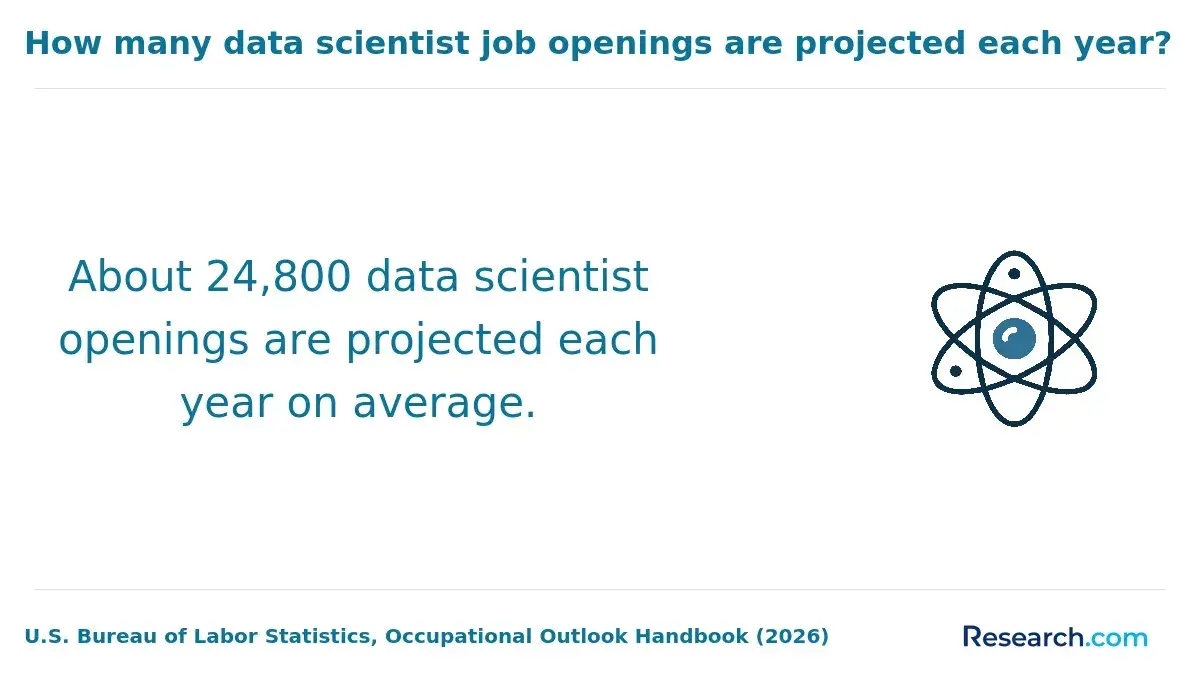
- The U.S. Bureau of Labor Statistics projects 35% growth in data scientist employment from 2025 to 2035, but that occupation-wide forecast does not establish demand for graduates of any particular program.
What is an online data science master's for chemical engineers?
It is a graduate degree in data analysis, statistics, and computing that a chemical engineer completes primarily online. It is not usually a chemical-engineering credential: the value of the combination lies in applying new methods to familiar problems, such as predicting equipment failures, detecting process drift, or analyzing yield variation.
Programs differ substantially. Some emphasize statistical inference and machine learning; others focus on software, databases, or business decision-making. A chemical engineer seeking to build predictive models should check for rigorous modeling and programming coursework. Someone aiming to report operating performance or support decisions may also compare graduate programs in data analytics. Compare required courses and projects rather than assuming the degrees teach identical skills.
Why should chemical engineers earn an online data science master's degree?
A master's can provide a structured route from engineering analysis to production-ready data work. Chemical engineers may bring strengths in mass and energy balances, experimental design, process control, and physical interpretation. Their gaps may be in software development, large-scale data handling, machine learning evaluation, or communicating model limitations to nonengineering teams. Individual preparation varies.
The degree is most compelling when target job postings repeatedly ask for skills you lack, the curriculum teaches those skills in depth, and you can complete relevant projects while employed. It is less compelling if your goal is a narrower analytics responsibility you can reach through workplace projects and targeted courses. Online study can preserve employment, but it does not remove the need to make time for coding practice and group work.
What careers can chemical engineers pursue after a data science master's?
Start with roles where process knowledge helps you frame the problem and judge whether a model's result is physically plausible. A master's may strengthen an application, but projects, experience, and employer requirements also matter. This comparison shows how several target roles use different parts of a chemical engineer's background.
| Target role | Useful chemical engineering experience | Additional evidence to develop |
| Manufacturing or process data scientist | Process variables, yield, quality, and operating constraints | Predictive modeling with sound validation and reproducible code |
| Industrial analytics specialist | Performance metrics and troubleshooting | SQL, clear reporting, and demonstrated operational decisions |
| Reliability or predictive-maintenance analyst | Equipment behavior and failure mechanisms | Time-series analysis and careful handling of rare failures |
| Data engineer for industrial systems | Understanding sensor sources and plant data quality | Database design, pipelines, testing, and access controls |
Adjacent roles are often a better first move than a broad search for "data scientist." If you want to shift toward building the systems that supply models, compare curricula with substantial data engineering; artificial intelligence master's degrees with data systems training offer another route to examine.
What do online data science master's programs teach?
For this transition, the most useful curriculum links statistical reasoning to code and real data. Look for probability and inference; Python or another working programming language; databases and SQL; machine learning; model evaluation; and projects that address missing data, reproducibility, and communication. A course title is not proof of depth: inspect assignments, prerequisites, and whether advanced methods appear in required work or only as electives.
An especially useful project might forecast a process outcome from time-stamped sensor readings, compare the result with a simple baseline, and explain where operating changes make predictions unreliable. Public or synthetic data can demonstrate the method when plant data cannot be shared. Do not mistake a polished dashboard for evidence of sound modeling: a prospective program should teach how to test a model, not just present its output.
What are the admission requirements for chemical engineers?
Requirements vary by program. A chemical engineering degree may provide relevant calculus, quantitative analysis, and problem-solving preparation, but it does not automatically satisfy every computing or statistics prerequisite. Check each program's current admissions page for its degree, coursework, application, and any minimum-grade requirements; ask admissions staff how specific undergraduate courses are evaluated.
If programming is your main gap, demonstrate readiness with documented coursework or a small, well-explained project. If statistics is the gap, refresh probability and inference before starting graduate modeling. Self-study can improve readiness without formally fulfilling a prerequisite.
Programs with preparatory pathways may be worth examining; artificial intelligence master's foundation courses provide a related comparison, but confirm which courses your chosen data science program actually accepts.
How do online and campus-based data science master's programs compare?
Online study can make a transition possible without leaving a chemical engineering job or relocating. Campus study may be preferable if you need regular in-person collaboration, access to particular research facilities, or a locally concentrated recruiting network. Neither format by itself establishes instructional quality or employer value.
The consequential differences are operational: whether lectures are live, when exams and group meetings occur, whether projects require campus visits, and how readily students can get feedback on code. Ask about those details before comparing schedules. A guide to data science master's programs for professionals can help frame the scheduling questions, but confirm the current rules with each institution.
How much do online data science master's programs cost and take?
There is no reliable single price or completion time for this category. Both depend on the school's published rates, required credits, fees, enrollment pace, and course availability. To compare programs fairly, calculate the cost of your planned path rather than comparing one school's tuition rate with another school's estimated total.
Request a current cost estimate that separates tuition, mandatory fees, software or materials, and any required travel. Then map required courses by term, including prerequisites and how often each course runs.
Part-time study may preserve income while extending the period over which you pay and study; an accelerated plan may be harder to sustain alongside shift work. Ask your employer about tuition assistance and its repayment conditions, and use a data science master's tuition funding guide to examine funding options. Do not treat a future data science salary as a guaranteed return on tuition.
How can chemical engineers verify data science program accreditation?
Verify the institution's accreditation through the accreditor's official directory and the school's current disclosures. Do not assume that an institution's accreditation means its data science master's has separate, field-specific accreditation - or that separate accreditation is required for your intended role.
Also confirm that the institution can enroll online students where you live; state authorization is a separate question from accreditation. If your employer offers tuition assistance, ask whether its policy specifies an eligible school or accreditor. These checks matter more than an unsupported claim that a program is simply "accredited."
What salaries can data professionals with chemical engineering backgrounds earn?
The U.S. Bureau of Labor Statistics reports a $120,230 median annual wage for data scientists in May 2025. That is an occupation-wide figure, not a starting offer, a salary specifically for chemical engineers, or evidence of what a master's will add to your pay.
Potential pay depends on the role, location, industry, and your experience before and after the transition. Compare openings that match your intended work with your current compensation, including benefits and any earnings you would give up while studying. If a school publishes graduate salaries, check who responded and whether the figures distinguish new entrants from experienced professionals.
What certifications and skills improve data science job prospects?
Prioritize demonstrable skills over collecting credentials. For industrial analytics roles, useful evidence may include SQL queries, documented Python code, appropriate statistical validation, and an explanation of how process conditions affect data quality. A certification can help document a specific tool, but its value depends on whether target employers use that tool; it is not a substitute for applied work.
Build a small portfolio around a plausible engineering problem. Show the question, data limitations, baseline, method, evaluation, and operational implications. Use public or synthetic data unless you have explicit permission to share employer information. Then compare your work with target job postings: if they consistently require production pipelines rather than modeling, seek projects or courses that address that gap before paying for a broader credential.
Other Things You Should Know About Data Science
Yes. Apply when you can show the skills requested in a particular posting, especially for adjacent roles within your industry. Describe completed coursework and projects accurately; do not list an unfinished degree as completed.
Translate work into the problem, data, method, and decision it supported. For example, explain how you analyzed process variation or tested a change, while distinguishing your own contribution from the team's.
Only with explicit authorization from the data owner. Removing names may not be enough to protect confidential operating information. Public datasets or synthetic examples are safer alternatives.
No. A data science degree does not itself grant a professional engineering license. If a target position involves licensed engineering practice, check the applicable state board's requirements separately.
References
- Cost of Attendance (Budget) | 2025-2026 Federal Student Aid Handbook https://fsapartners.ed.gov/knowledge-center/fsa-handbook/2025-2026/vol3/ch2-cost-attendance-budget
- Tuition and Financial Aid | Cleveland State University Online https://onlinelearning.csuohio.edu/tuition
- Enabling Chemical Engineering with Data Science | UW Chemical Engineering https://www.cheme.washington.edu/content/enabling-chemical-engineering-data-science
- AI in chemical engineering: From promise to practice - Wiley https://aiche.onlinelibrary.wiley.com/doi/10.1002/aic.70358
- Chemical Engineering Master's Degree | columbia.edu https://cvn.columbia.edu/content/chemical-engineering-masters-degree
- What can I do with a chemical engineering degree? | Prospects https://www.prospects.ac.uk/careers-advice/what-can-i-do-with-my-degree/chemical-engineering/
- Admissions Requirements - Chemical Engineering https://che.engin.umich.edu/graduate/prospective-students/admissions-requirements/
- 2025-2026 Tuition and Fees - Student Account Services | University of Kentucky https://studentaccount.uky.edu/tuition-and-fees/past-tuition-and-fees/2025-2026-tuition-and-fees
- Maximizing information from chemical engineering data sets | sciencedirect.com https://www.sciencedirect.com/science/article/pii/S0009250922000537
- Is a Master's in Chemical Engineering Worth It? | Northeastern University Graduate Programs https://graduate.northeastern.edu/knowledge-hub/is-a-masters-in-chemical-engineering-worth-it/