2027 Online Data Science Master's After a Bachelor's in Neuroscience: Prerequisites and Program Fit

Co-Founder and Chief Data Scientist
A neuroscience bachelor's can be a strong starting point for an online data science master's, but the fit depends on what you studied - not the degree title alone. Lab research, statistics, and experience with complex data may transfer well; calculus, programming, or computing fundamentals may still need attention.
This guide helps neuroscience graduates identify those gaps, evaluate programs that will close them, and decide whether a data science master's is the right route to their intended work.
Key Things You Should Know
- A neuroscience bachelor's does not automatically qualify or disqualify you. Compare your transcript and projects with each program's published math, statistics, and programming expectations.
- Choose for the work you want to do: strong computing foundations support a broad data science transition, while relevant electives and projects help preserve your neuroscience expertise.
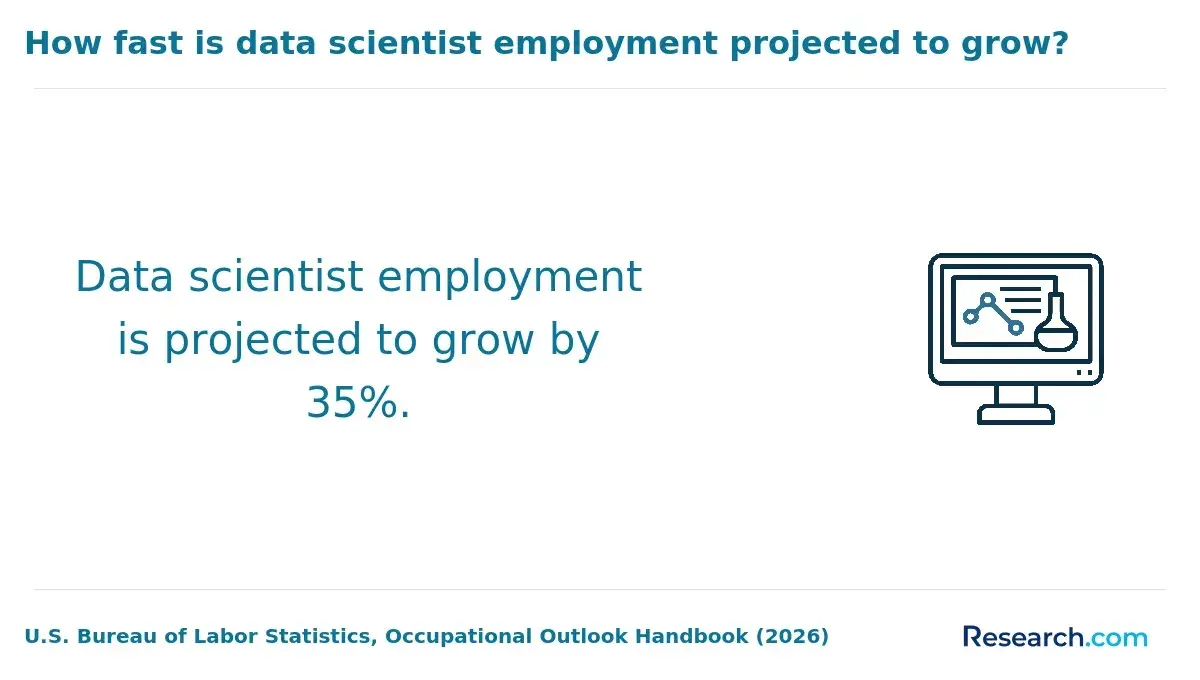
- The U.S. Bureau of Labor Statistics reports a May 2025 median annual wage of $120,230 for data scientists. That is an occupation-wide figure, not a salary prediction for new master's graduates.
Can you pursue an online data science master's after a neuroscience bachelor's?
Yes. Neuroscience graduates may have experience designing experiments, interpreting noisy measurements, working with statistics, and explaining findings. A graduate who analyzed imaging or behavioral data may already have substantial quantitative preparation; another whose coursework emphasized cellular biology may need more math or coding. Neither profile can be judged from the major alone.
The key choice is whether you want to expand beyond neuroscience or deepen a more specialized interest. A broadly technical data science degree is more suitable if you want to work across healthcare, research, or other industries. If your primary goal is developing AI systems, you can compare online AI degrees, then check whether their computing requirements and projects suit your background. A specialized title is not a substitute for the statistical and programming foundations you need.
What prerequisites do online data science master's programs require?
Requirements vary by program. Common areas to check are calculus, linear algebra, probability or statistics, and programming. Some programs expect prior coursework in these subjects; others allow applicants to build foundations before or during the degree. Read the admissions requirements separately from the recommended background for succeeding in advanced courses.
This comparison shows where neuroscience preparation often transfers and where a transcript or project may need closer inspection. It describes possible gaps, not universal requirements.
| Area | Preparation a neuroscience graduate might have | Potential gap to check |
| Statistics | Experimental design and analysis of research results | Probability theory or statistical computing |
| Mathematics | Quantitative methods used in imaging or modeling | Calculus and linear algebra at the level a program specifies |
| Programming | Research scripts in Python, R, or MATLAB | General-purpose coding, debugging, and software practices |
| Data work | Cleaning and interpreting lab or clinical research data | SQL, databases, and work with larger datasets |
Start with your transcript, then add course descriptions and examples of what you actually built. A short online course or self-study may help you prepare, but it does not necessarily fulfill a formal, credit-bearing prerequisite. If a requirement is missing, ask admissions whether an approved course, a placement assessment, or a foundation pathway would count. Students considering a more AI-centered route can also examine AI master's preparatory pathways while confirming each school's own policy.
How do you choose an accredited online data science master's program?
First, verify that the institution holds recognized accreditation through the U.S. Department of Education's or the Council for Higher Education Accreditation's institutional listings. Then check the specific degree in the university's current catalog. Institutional accreditation does not, by itself, establish the technical depth or career fit of a data science curriculum.
For a neuroscience graduate, compare the required computing courses, the level at which statistics begins, access to domain-relevant electives, and whether a substantial project is possible. Ask whether students can use appropriate neuroscience datasets and receive feedback from faculty with relevant expertise. Confirm that the university can enroll students in your state; online availability does not automatically mean availability at every address.
A common mistake is choosing by program title or ranking without reading course descriptions. If the work you want is principally machine-learning engineering, an AI degree may also belong on your shortlist. When you compare affordable AI graduate degrees, apply the same test: compare total required costs and curriculum, not tuition or a projected salary in isolation.
What admission requirements apply to neuroscience graduates?
Expect the school to evaluate your accredited bachelor's degree, academic record, and any program-specific quantitative prerequisites. Application materials may include a statement, résumé, recommendations, or evidence of programming experience; testing and minimum-grade policies vary. A neuroscience degree alone is neither an admissions waiver nor a reason for rejection unless a program states a specific degree restriction.
Make your preparation legible. In your statement or résumé, name the methods you used, the code you wrote, and the decisions your analysis informed. A reproducible project can show more than a vague claim of "data experience," but it cannot replace a required transcript course unless admissions explicitly accepts an alternative. Before paying an application fee, send the program your course list and ask which gaps must be resolved before admission rather than after enrollment.
What courses are included in an online data science master's?
A suitable program should move beyond familiar research statistics into computational work. Depending on the curriculum, required or elective study may cover statistical inference, machine learning, data management, programming, visualization, and a capstone or applied project. Check course descriptions and prerequisites: a machine-learning course title alone does not show how much coding, model evaluation, or mathematical depth it provides.
For neuroscience-focused work, useful project opportunities may involve imaging, neural recordings, behavioral measurements, or health data. Look for training in reproducibility, data privacy, and responsible model evaluation alongside technical methods. If you expect to assess AI in healthcare or research settings, AI governance study at master's level offers another curriculum lens; verify that any program you consider teaches those topics substantively rather than merely mentioning them.
How long does an online data science master's take and cost?
There is no reliable single duration or price for online data science master's degrees. Your timeline depends on required credits, course availability, enrollment pace, and whether foundation courses add work before or alongside graduate study. Ask for a term-by-term plan for someone entering with your prerequisites, including any limit on time to completion.
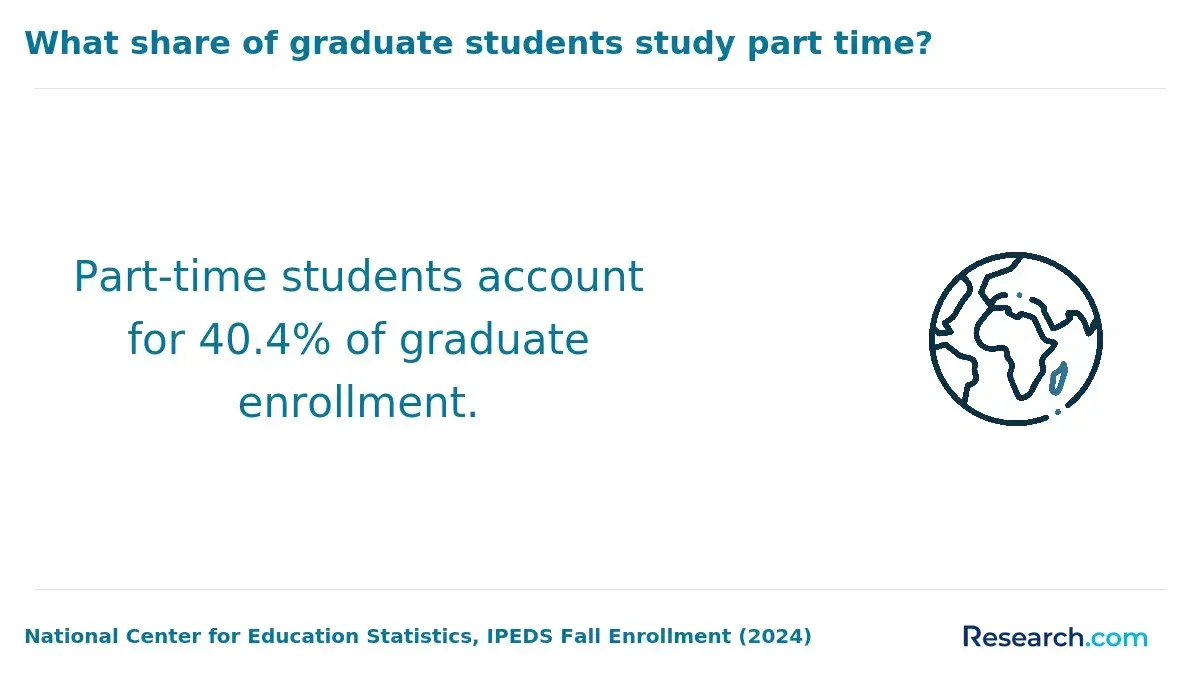
For cost, request an estimate that separates tuition from mandatory fees, prerequisite courses, materials or computing expenses, and any travel requirements. Check whether tuition changes with residency or enrollment pace. Studying part-time may reduce the amount due each term without reducing the total charge, and borrowing can add financing costs.
Before committing, compare the complete estimates and investigate employer assistance, institutional aid, and other funding routes for a master's in data science. Do not treat a prospective data scientist's salary as proof that a particular program will pay for itself.
How do online and campus-based data science master's programs compare?
Delivery format changes how you access instruction and projects, but it does not establish academic quality on its own. Compare programs on the same curriculum, cost, and support criteria before deciding that either format is better.
| Consideration | Online program | Campus-based program |
| Schedule | May offer recorded work, scheduled live sessions, or both | Usually centers on scheduled in-person classes |
| Research access | Remote collaboration and data access depend on program arrangements | On-site labs and faculty interaction may be easier to access |
| Location costs | May avoid relocation, though travel or technology costs can apply | May require commuting or relocation |
| Peer collaboration | Often relies on digital tools and planned meetings | Allows more routine face-to-face contact |
Choose online study if it lets you keep working and the program provides the technical feedback and project access you need. Campus study may be more suitable if your goal depends on hands-on lab facilities or sustained in-person research collaboration. For either format, confirm live-session times, group-work expectations, exam arrangements, and any required campus visits before enrolling.
What careers can a neuroscience graduate pursue with a data science master's?
Possible directions include data scientist, research data analyst, health-data analyst, and computational roles involving neuroscience or biomedical data. Your existing domain knowledge may help you define valid research questions and recognize misleading results. It does not remove the need to demonstrate coding, statistical judgment, and communication skills for the role you seek.
Choose projects that match your target. For research-facing jobs, show a reproducible analysis with clear methods and limitations. For broader data science roles, also show that you can work with data outside a familiar lab setting. A master's may be worthwhile when it supplies substantial missing training and credible project experience; if you already meet the requirements of an adjacent analyst role, applying for work while building targeted skills may be a lower-cost first step.
What salaries can data science master's graduates expect?
The U.S. Bureau of Labor Statistics reports a $120,230 median annual wage for data scientists in May 2025. That figure describes employed people in the occupation across experience levels and educational backgrounds - not the starting salary or expected earnings increase for someone completing an online master's.
Role, location, employer, prior experience, and technical responsibilities all affect an individual offer. When evaluating a program, seek outcomes that identify the graduates surveyed, their prior work experience, and the roles they entered. If comparable program-level results are not published, do not substitute the national median for evidence of that program's return on investment.
What certifications and professional standards apply to data science careers?
There is no single professional license required for data scientist roles generally. Employers may value evidence of particular tools or cloud platforms, but a certification is not a universal substitute for statistical knowledge, sound code, and completed projects. Check job descriptions for the roles you want before paying for an additional credential.
Professional practice matters especially when neuroscience work involves human participants or health information. Learn to document data provenance, protect restricted information, assess model bias, and report uncertainty. If a role involves regulated clinical duties rather than data analysis, verify its separate state licensing and employer requirements; a data science degree does not grant clinical authority.
Other Things You Should Know About Data Science
Only if the data-sharing permissions, participant consent, and applicable institutional rules allow it. When in doubt, use a properly licensed public dataset or synthetic data and describe your methods without exposing restricted records.
Possibly, but the PhD program decides whether to accept prior graduate credit. Ask prospective doctoral programs about transfer limits before treating a master's as a way to shorten PhD study.
No. Clinical practice has separate education, supervised training, and licensing requirements. A data science master's prepares you for analytical work, not independent clinical practice.
Not necessarily. Ask each program about required hardware, software, and access to remote computing before purchasing equipment. Project needs can differ considerably across courses.
References
- Data Science Master's Degree Fellowship | nih.gov https://card.nih.gov/job-training-opportunities/training-opportunities/data-science-masters
- Centering Diversity, Equity, and Inclusion in Graduate... - PMC https://pmc.ncbi.nlm.nih.gov/articles/PMC11396178/
- Degree requirements | School of Mathematical and Statistical Sciences https://math.asu.edu/datascience/degree-requirements
- Data Science Industry Overview | NYU CDS https://cds.nyu.edu/industry-overview/
- Statistics Data Science Curriculum | stanford.edu https://statistics.stanford.edu/academic-programs/graduate-programs/statistics-data-science-curriculum
- Prerequisites, Corequisites, and Recommended Preparation | College of San Mateo https://collegeofsanmateo.edu/welcomecenter/prerequisites.php
- Master of Science in Biomedical Data Science and AI (BDS-AI) | Informatics, Data Science & Biostatistics https://i2db.wustl.edu/educationprograms/master-of-science-in-biomedical-data-science-and-ai/
- What You Can Do with a Master's in Data Science and Artificial Intelligence | Harvard Extension School https://extension.harvard.edu/blog/what-you-can-do-with-a-masters-in-data-science-and-artificial-intelligence/
- Conditional Admission - NYU Tandon - New York University https://engineering.nyu.edu/admissions/graduate/admitted-students/conditional-admission
- Master of Science in Biomedical Data Science and AI | mssm.edu https://icahn.mssm.edu/education/masters/data-science