
2027 Online Case Management Master's Programs Under $20,000: Total Tuition and Required Fees

Co-Founder and Chief Data Scientist
An advertised master's tuition below $20,000 can become more expensive once universities add technology, graduation, course, and residency-based charges. This guide is for working professionals seeking an affordable online path into care coordination, human services, healthcare administration, or community-program leadership.
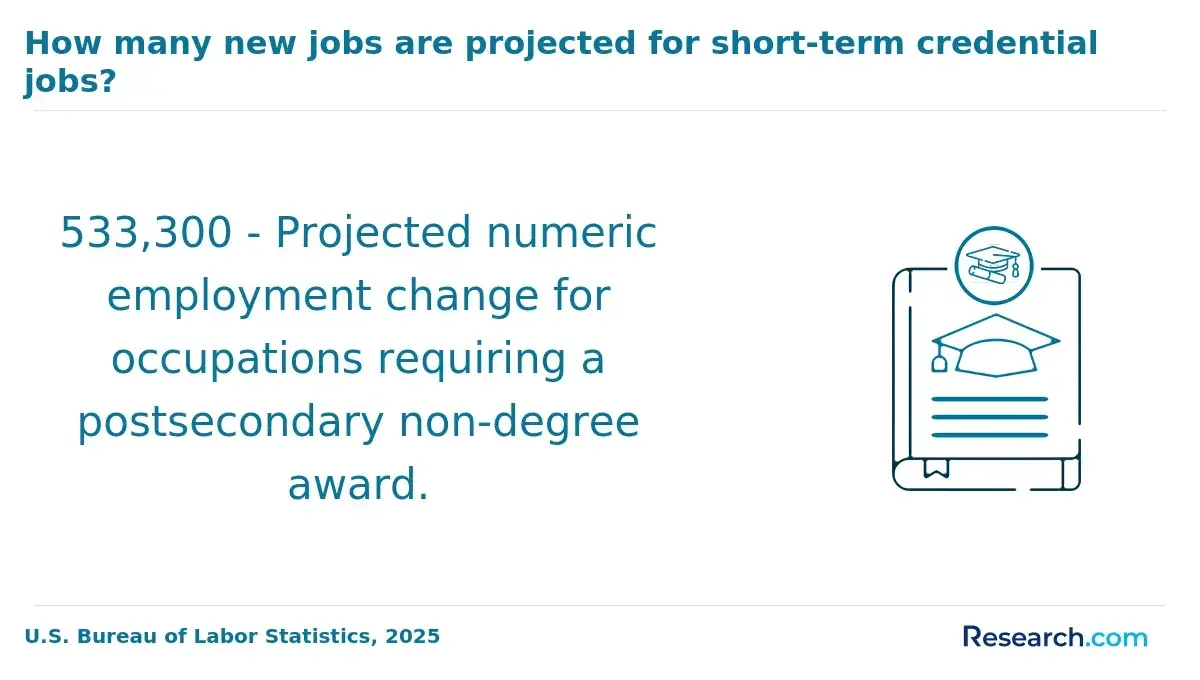
The U.S. Bureau of Labor Statistics projects 8% employment growth for social and community service managers from 2023 to 2033, faster than the average for all occupations. Learn how to calculate a realistic program total, verify quality, and decide whether a low-cost degree fits your career target.
Key Things You Should Know
- An online case management-related master's program is truly under $20,000 only when tuition and mandatory school fees for all required credits stay below the limit; optional travel, books, and personal technology should still be budgeted separately.
- Compare credit count against the published per-credit or flat-rate price: a $500-per-credit program reaches $20,000 at 40 credits before mandatory fees, while a lower sticker price can still cost more if it requires additional credits or prerequisites.
- Low cost is worthwhile when the degree's accreditation, curriculum, field-experience requirements, schedule, and career alignment support your goal; BLS projects 8% growth for social and community service managers from 2023 to 2033, but job requirements vary by employer and role.
How Much Does an Online Case Management Master's Degree Under $20,000 Cost in Total?
The total cost is the amount required to earn the degree, not the tuition figure highlighted in an advertisement. For this guide, an under-$20,000 program has a published tuition-and-required-fee estimate below $20,000 for the full required curriculum. Because "case management" is often a concentration rather than a standalone degree title, relevant programs may be offered as master's degrees in human services, social work, public health, healthcare administration, counseling, or nonprofit leadership.
Use this calculation before treating a program as affordable: (required credits × applicable tuition rate) + mandatory program and institutional fees + required residency or practicum charges = estimated direct program cost. Do not subtract grants or employer reimbursement when deciding whether the school's published price itself is under the threshold; those funds affect your net price, not the program's listed cost.
This comparison framework separates direct costs from expenses that can vary significantly by student. It helps prevent a low tuition quote from being mistaken for a complete degree budget.
| Cost category | Include in under-$20,000 test? | What to confirm |
| Tuition for every required credit | Yes | Whether the stated rate applies through graduation |
| Mandatory online, enrollment, or student-service fees | Yes | Whether charged per term, per credit, or once |
| Required practicum, background-check, or residency charges | Yes | Whether the program requires them and their current amount |
| Books, software, equipment, and commuting | No, but budget for them | Course materials and local placement expectations |
| Optional test preparation or professional memberships | No | Whether they are actually required for completion |
Programs nearest the $20,000 ceiling deserve extra scrutiny. A modest per-term fee, a required intensive weekend, or tuition charged for a noncredit orientation can push the direct total above the limit. Conversely, a program with a slightly higher published total may be better value when it includes advising, placement support, required software, or a curriculum directly relevant to the role you want.
What Required Fees Can Increase the Cost of an Online Case Management Master's Degree Beyond $20,000?
Required fees are charges students must pay to enroll, take courses, access academic services, complete required placements, or graduate. They may appear on a university-wide tuition-and-fee page rather than on the online program page, so applicants should read both. Fees can be fixed, charged each term, or assessed per credit, which means their effect depends on pacing.
The following charges are common items to check because they can alter the total even when online tuition is flat or discounted.
- Application, matriculation, enrollment, and graduation fees.
- Online learning, technology, learning-management-system, proctoring, and distance-education fees.
- Student-service, library, health, activity, or institutional fees that apply to online graduate students.
- Practicum, internship, liability-insurance, fingerprinting, criminal-background-check, and site-placement expenses when experiential learning is required.
- Residency, immersion, laboratory, simulation, or travel charges for programs described as online but not fully remote.
A frequent mistake is assuming that "no campus fee" means "no required fee." Ask the bursar or program representative for a written estimate covering the complete number of terms you expect to attend, including summer terms if applicable. Also ask whether fees can change annually. A school can reasonably update charges, so published figures should be treated as a planning estimate rather than a locked contract unless its written policy says otherwise.
How Does Per-Credit Tuition Affect the Total Cost of an Online Case Management Master's Degree Under $20,000?
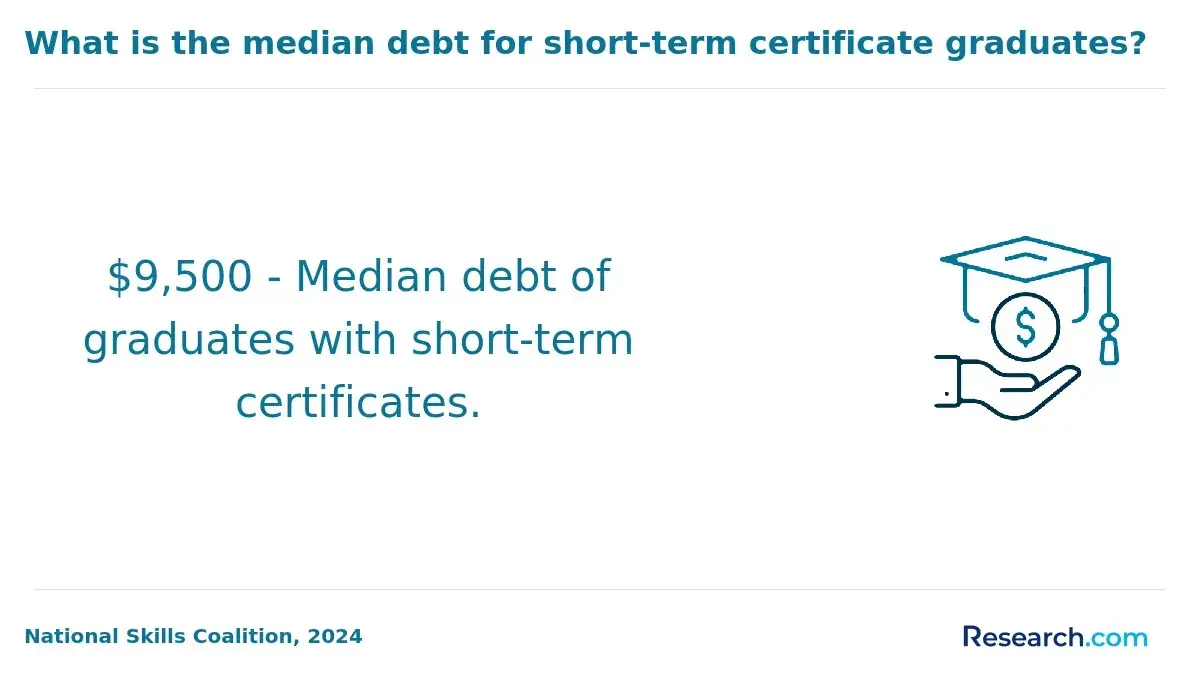
Per-credit tuition makes the credit requirement the central cost driver. Multiply the rate that applies to you by every required graduate credit, then add mandatory fees. A 36-credit curriculum at $450 per credit has tuition of $16,200 before fees; a 42-credit curriculum at the same rate has tuition of $18,900 before fees. The lower-credit option is not automatically better, but it leaves more room below the cap and may reduce the number of terms in which recurring fees apply.
This table shows how the same $20,000 threshold changes as credit requirements rise. It is a planning illustration, not a quote from a specific institution.
| Required credits | Maximum average tuition per credit before fees | Decision implication |
| 30 credits | $666.67 | Reserve room for mandatory fees and materials. |
| 36 credits | $555.56 | Programs priced near this amount may exceed the cap after fees. |
| 42 credits | $476.19 | Verify whether a higher credit count reflects needed specialization or prerequisites. |
| 48 credits | $416.67 | A flat-rate option may be easier to budget than variable per-credit billing. |
Check whether the rate is locked for continuing students, whether part-time and full-time students pay different rates, and whether a course sequence requires more credits than the catalog minimum. Students entering from science-heavy undergraduate backgrounds may already meet some prerequisites; others may need additional coursework. If you need prerequisite science preparation, an accelerated biology degree may be a separate educational investment, not part of the master's tuition total.
How Long Does It Take to Complete an Online Case Management Master's Degree Under $20,000?
Completion time depends on the number of credits, course sequence, transfer-credit approval, term calendar, and whether an internship or capstone must occur during a specific term. Many online master's programs are designed for part-time working adults, while accelerated formats require a heavier weekly workload. A program that looks inexpensive per term can cost more overall if students must repeat courses, pause enrollment, or pay recurring fees over many terms.
Online delivery also affects the practical timeline. Asynchronous courses let students complete weekly work on a flexible schedule; synchronous courses require live attendance; and hybrid programs combine online coursework with in-person experiences. Case management preparation can include supervised practice, so "online" does not always mean that every requirement can be completed from home.
Before applying, map the published course sequence against your work and caregiving schedule. Confirm the expected part-time and full-time completion paths, the maximum time allowed to finish, and whether field placements are arranged by the school or secured by the student. Professionals considering a faster entry-level clinical support route can also compare an accelerated medical assistant program, although it serves a different role and does not replace graduate-level case management preparation.
A common red flag is an accelerated promise that omits required placement hours or assumes uninterrupted enrollment. Choose the shortest path only when you can realistically sustain its workload and meet any daytime practicum obligations without delaying graduation.
How Can Students Verify Accreditation for an Online Case Management Master's Degree Under $20,000?
Start with institutional accreditation, which evaluates the college or university as a whole and can affect federal financial-aid eligibility, credit transfer, and employer confidence. Then determine whether your intended profession needs programmatic accreditation. For example, a social work degree aimed at licensure should meet the applicable social work education standards, while healthcare administration, counseling, public health, and nursing-related paths may have different expectations.
Verification should rely on the accreditor's current institutional listing and the school's official catalog, not only a marketing page. Ask the admissions office to identify the accreditor, the program's exact degree title, any specialized accreditation, and the date of the next review. If the program is pursuing accreditation rather than already holding it, request a clear written explanation of what that status means for students.
These checks are especially important when a role is regulated. A master's in case management, human services, or healthcare administration does not by itself qualify a graduate for every clinical license or credential. Healthcare applicants who are comparing entry requirements across pathways may also find it useful to review what nursing school doesn't require TEAS; nursing admission policies are separate from case management master's admission and credential requirements.
Do not assume accreditation alone proves career fit. Read job postings in your target setting and confirm whether employers seek an MSW, RN, counseling credential, public health degree, healthcare administration degree, professional certification, or relevant experience.
Do Out-Of-State Students Pay More for an Online Case Management Master's Degree Under $20,000?
They may. Some public universities charge online graduate students one nationwide rate, while others apply resident and nonresident tuition rules or charge different rates by program. Private nonprofit and private for-profit institutions may also use a single online price, but institution type alone does not determine affordability, educational quality, or return on investment.
Confirm your classification before comparing totals. Ask whether the online rate applies regardless of residence, whether the school determines residency at admission, and whether moving during enrollment changes billing. Also verify whether the program accepts students in your state; authorization rules, internships, and professional pathways can limit enrollment or placement even when coursework is online.
For an apples-to-apples comparison, obtain the total tuition-and-required-fee estimate as an out-of-state online student, not merely the resident per-credit price shown in a general catalog. A nationwide rate can be valuable for a nonresident, but a lower resident rate may still be the better option if you qualify and the curriculum serves your goals.
Can Transfer Credits Keep the Total Cost of an Online Case Management Master's Degree Under $20,000?
Transfer credits can reduce both tuition and time, but graduate transfer policies are often narrow. Schools commonly limit the number of credits accepted, require a minimum grade, evaluate course equivalency, and set an age limit on prior coursework. Applied components such as practicums, capstones, and program-specific ethics courses may need to be completed at the new institution even when other graduate credits transfer.
Request a preliminary transfer evaluation before paying an enrollment deposit. Provide official transcripts, course descriptions, syllabi, and, when requested, evidence of completed assignments. Then calculate the revised total using only credits the school approves in writing. Do not assume that transfer credit is free: transcript fees, evaluation fees, and replacement courses can reduce the savings.
Students moving between nursing and care-coordination roles should distinguish academic transferability from professional preparation. A comparison such as the Chamberlain vs Capella RN to BSN program can help nurses examine degree pathways, but RN-to-BSN coursework will not necessarily satisfy graduate case management requirements.
The best use of transfer credit is strategic: apply it when it shortens a program without removing coursework you need for a target employer, credential, or license. If the school cannot confirm transfer decisions until after admission, budget using the no-transfer total until you receive the official evaluation.
Can Financial Aid Bring the Cost of an Online Case Management Master's Degree Below $20,000?
Yes, financial aid can reduce what you pay out of pocket, but it does not change the published total price of the degree. Eligible graduate students may use federal Direct Unsubsidized Loans and, subject to eligibility and school cost-of-attendance limits, Direct PLUS Loans. Scholarships, employer tuition assistance, workforce funding, military education benefits, and institutional discounts may also lower net cost.
Complete the FAFSA and request a school-specific aid offer that distinguishes grants and scholarships from loans. Compare the offer against direct program charges and your estimated living, technology, and travel costs. Loans can make enrollment possible, but borrowed funds must generally be repaid with interest, so they should not be treated as a tuition discount.
Take these steps before committing to an aid package.
- Confirm that the institution and your enrollment status are eligible for the aid you expect to use.
- Ask whether scholarships renew automatically or require a minimum enrollment level or GPA.
- Check whether employer assistance must be repaid if you leave the employer before a stated service period.
- Compare the net cost after grants separately from the amount financed through loans.
One common mistake is using the maximum loan amount as a spending target. Borrow only after comparing less expensive accredited options and determining whether the degree is required for your next role.
Is an Online Case Management Master's Degree Under $20,000 Worth the Cost for Career Advancement?
It can be worthwhile when the curriculum matches a specific advancement path, such as care coordination, utilization management, community-program administration, patient navigation, behavioral health services, or nonprofit leadership. Case managers assess needs, coordinate services, document plans, communicate with providers and agencies, advocate for clients, and track outcomes. The work may occur in hospitals, insurers, government agencies, schools, community organizations, or behavioral health settings.
Salary outcomes vary sharply because "case manager" is not one standardized occupation and employers may prioritize prior clinical licensure, an MSW, an RN, a credential, or experience. As broader labor-market context, the U.S. Bureau of Labor Statistics reports a 2023 median annual wage of $74,240 for social and community service managers. That figure applies to the occupation, not to every case management graduate, and should be used to evaluate possible pathways rather than predict an individual salary.
A low-cost master's is strongest value when it fills a documented qualification gap. Review job descriptions for roles you want within the next few years, identify recurring degree and skill requirements, and compare them with required courses. Look for training in care coordination, assessment, ethics, trauma-informed practice, healthcare systems, data documentation, cultural responsiveness, policy, and interdisciplinary communication.
For licensed nurses, a case management master's may complement rather than replace undergraduate nursing advancement. Reviewing the Chamberlain vs Capella RN to BSN program can clarify RN-to-BSN options, but nurses should verify whether a prospective employer values a BSN, specialty certification, clinical experience, or a graduate degree for the intended position.
An under-$20,000 degree may not be the best investment when it does not meet licensure rules, lacks the specialization employers require, or adds little beyond your existing credential. Paying more can make sense only when the additional program offers a necessary accreditation, supervised training, specialty concentration, employer-recognized reputation, or format that enables completion without lost income.
How Should Students Choose the Best-Value Flat-Rate Online Case Management Master's Program?
A flat-rate program charges one published total for the degree or a predictable rate regardless of residency, rather than a different price for every credit or location. It can simplify budgeting, but "flat rate" still requires careful review: confirm which credits, terms, fees, concentrations, and required experiences the price includes.
Use the following sequence to compare best value rather than simply choosing the lowest advertised amount.
- Define the job, population, and setting you want to serve, then identify whether that path requires licensure, a particular degree title, supervised experience, or a professional credential.
- Obtain each school's current written estimate for all required credits and mandatory fees, including any practicum, residency, and graduation charges.
- Compare accreditation, curriculum, concentration choices, faculty support, placement expectations, and asynchronous or live-class requirements alongside the price.
- Check admissions prerequisites, transfer-credit rules, start dates, course sequencing, and the maximum completion period to identify delay risks.
- Calculate your likely net cost after non-loan aid, then assess how the degree supports a realistic advancement plan.
Flat-rate pricing is especially useful for students who need a predictable budget and know they can complete the prescribed sequence. Per-credit pricing may be better for students with approved transfer work or an employer that pays by course. For professionals who may later pursue counseling leadership or advanced clinical study, reviewing a cheapest online PhD in counseling can help clarify the longer academic path, although doctoral counseling requirements are distinct from a case management master's.
Choose the program that delivers the required preparation at the lowest credible total cost, not necessarily the lowest tuition. Keep copies of the catalog, fee schedule, aid offer, transfer evaluation, and written statements about format and accreditation before making a final enrollment decision.
Other Things You Should Know About Case Management
Case management is a function focused on assessing needs, coordinating services, monitoring plans, and connecting clients with resources. Social work is a broader profession that may include case management, counseling, advocacy, policy work, and clinical practice. Some roles require an MSW or social work license, while others do not.
Not always. Certification requirements depend on the employer, setting, state rules, and the population served. Health insurers and hospitals may prefer credentials or clinical backgrounds for certain roles, while community organizations may emphasize experience and a relevant degree. Check target job postings before paying for a certification.
Only if the exact degree, curriculum, supervised experience, and school approvals meet the requirements of the licensing board in the state where you intend to practice. Many case management-related master's degrees are not clinical licensure programs. Verify directly with the relevant state board before enrolling.
Strong case managers combine client assessment, documentation, care planning, resource navigation, communication, cultural responsiveness, ethical judgment, crisis awareness, and collaboration with providers and community agencies. Healthcare-focused roles may also require familiarity with insurance processes, electronic records, utilization review, or discharge planning.
References
- A Guide to Getting Financial Aid for Graduate School | Elmhurst University Elmhurst University Blog https://www.elmhurst.edu/blog/a-guide-to-getting-financial-aid-for-graduate-school/
- Online Master of Social Work | Online MSW Degree https://www.pacificoaks.edu/academic-programs/online-master-of-social-work/
- Estimated Cost of Attendance | Palo Alto University https://paloaltou.edu/financial-aid/tuition-and-costs/estimated-cost-attendance
- Master of Public Health Online https://www.unthealth.edu/tcom/public-health/master-of-public-health-online.html
- Social Work Scholarships https://socialworklicensemap.com/social-work-resources/social-work-scholarships/
- Health and Human Services: Campus & Online Degrees and Careers https://www.publichealthonline.org/human-services/online-degree-programs/
- Scholarships & Financial Aid https://www.aacnnursing.org/students/scholarships-financial-aid
- 2025 Most Affordable Online Master's Programs https://www.onlineu.com/most-affordable-colleges/masters-degrees
- Average Cost of a Master's Degree: 2025 Analysis https://educationdata.org/average-cost-of-a-masters-degree
- Funding Your Online Master's Degree: How to Pay Less with Financial Aid https://www.onlinemastersdegrees.org/financial-aid/


