2027 Online BS in Business Administration vs. a Second Associate Degree: Which Route Fits Your Career Plan?
Audited and Verified:
Our Editorial and Data Verification Process
Research.com uses government datasets, official education statistics and primary institutional information to support its career and degree guides. Our review process checks factual accuracy, occupational definitions, source dates and the requirements associated with the credentials discussed.
How This Article Was Fact-Checked
Our editorial team verifies salary estimates, employment projections, education requirements and program information against original data providers and official organizations. Salary figures are checked against the relevant occupational definitions and reporting periods. Information about licensure, accreditation and required in-person training is reviewed separately.
Fact-checked and verified on:

Co-Founder and Chief Data Scientist
If you already have an associate degree, another two-year credential may look faster and cheaper than finishing a bachelor's. But the better choice depends on the job you want, which of your existing credits will count, and whether you need broad business preparation or a specific technical skill.
This comparison is for returning students and working adults weighing an online BS in Business Administration against a second associate degree. It explains where each route can help, where it may duplicate what you know, and what to confirm before committing time and money.
Key Things You Should Know
- Choose the BS when your target jobs require a bachelor's and a school confirms that enough prior credits apply to its degree requirements - not merely that the credits transfer.
- Choose a second associate degree when it provides a distinct, job-relevant skill or credential that the general business bachelor's does not, and local employers value it. Compare written degree audits and total remaining costs before enrolling.
- The U.S. Bureau of Labor Statistics reports a May 2025 median wage of $75,940 for human resources specialists, but that occupation-wide figure is not an expected salary for either degree's graduates.
What Is an Online BS in Business Administration Versus a Second Associate Degree?
An online BS in Business Administration is a bachelor's program covering several business functions, typically including accounting, management, marketing, finance, and operations. "Online" describes how coursework is delivered; the institution still sets the degree requirements. A student with an associate degree may enter as a transfer student, but graduation depends on how prior courses apply to general education, business-core, elective, and residency requirements.
A second associate degree is a separate undergraduate credential earned after a first associate degree. It might be another broad academic degree or an applied program in a field such as accounting technology or information systems. Its value depends on what new capabilities it teaches. Repeating general education or introductory business courses without meeting a specific career requirement can be a poor use of time.
For a returning student whose goal is already a bachelor's, shorter online business administration degrees with cost details can provide options to investigate. Published completion times are not personal estimates; ask each school for an audit based on your transcripts.
Which Degree Path Better Fits Your Career Goals?
Start with the work you want to do next, not the credential's title. A bachelor's is usually the stronger route when job postings consistently require one, you want flexibility across business functions, or you are preparing for later graduate study. A second associate degree can be more direct when the target role calls for a defined technical skill that your first degree and work history do not provide.
Your experience changes the calculation. A customer service supervisor aiming for operations coordination may be able to pair existing leadership experience with bachelor's-level finance and analytics coursework. Someone moving into bookkeeping may benefit more immediately from focused accounting instruction and supervised practice. Neither credential alone substitutes for evidence that you can perform the target job.
If your actual goal is organizational leadership rather than broad business study, compare the required courses and transfer evaluations of leadership bachelor's degrees with accelerated pacing. The best choice is the one whose remaining coursework addresses your skill gaps and whose graduates meet the qualifications in the jobs you intend to pursue.
What Are the Main Differences Between a Bachelor's and Second Associate Degree?
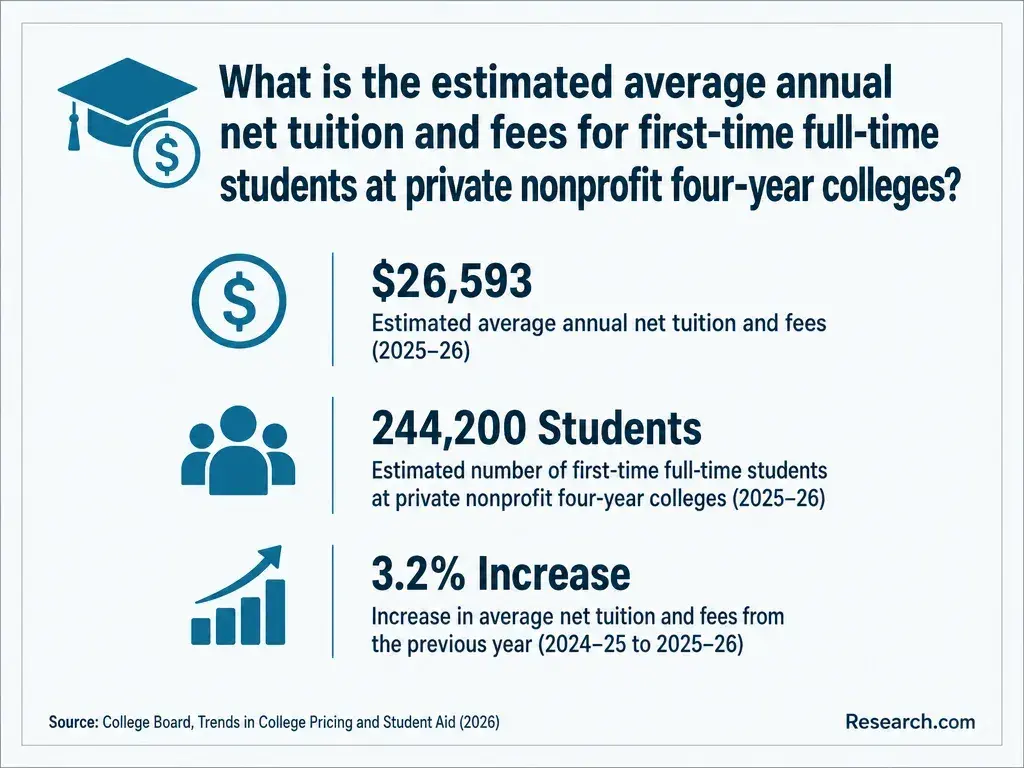
The credentials differ in level and typical breadth, but the decisive comparison is the additional learning and coursework you would need after your first degree. This table highlights what to check rather than assuming either route is automatically shorter.
| Decision factor | Online BS in Business Administration | Second associate degree |
| Credential | Bachelor's degree in general business | Another associate degree, potentially in a specialized field |
| Typical emphasis | Business functions, quantitative work, and upper-division study | Introductory or occupation-focused coursework, depending on the program |
| Credit risk | Accepted credits may not satisfy upper-division, major, or residency rules | Second-degree rules may require new major courses or credits earned at that college |
| Best fit | Jobs requiring a bachelor's or broader business preparation | A specific skill or credential valued for the intended role |
A specialized bachelor's can be a third option when a general BS is too broad and a second associate degree does not go far enough. For example, accelerated undergraduate supply chain programs may merit comparison if logistics is your clear destination. Verify that their required courses, rather than the advertised pace, match your goals.
Online delivery can remove a commute and widen your choice of schools, but it does not necessarily mean self-paced study. Courses may have weekly deadlines, live discussions, proctored exams, group presentations, or scheduled capstone meetings. A campus program may offer easier access to in-person recruiting or study groups, while creating travel and scheduling costs.
If you work or provide care, request sample course schedules and ask whether required classes run every term. Check how often group work requires live attendance, whether internships or campus visits are mandatory, and what happens if you need to reduce your course load. These details matter more than an "accelerated" label.
Delivery format also matters when comparing a specialized alternative. Reviews of online supply chain programs balancing cost and completion time can help you identify programs to examine, but confirm live-session, software, and assessment requirements directly with each institution.
A typical business administration curriculum connects accounting and financial statements with marketing, economics, management, operations, statistics, and business law. Upper-division assignments may ask students to interpret data, evaluate a budget, or recommend an operational change. Some programs offer formal concentrations; others offer only electives. Check the catalog before treating a group of courses as a credential.
Compare the curriculum with your first associate degree. If you already studied introductory business, the bachelor's may add valuable upper-division analysis rather than simply repeat it. If your goal is a defined project role, however, compare the business core with affordable online project management degrees and the experience requirements in relevant job postings. A project management course is useful preparation, not proof that you have managed a project professionally.
Bachelor's-completion applicants generally need transcripts from every prior college; a school may separately assess admission to the institution, admission to the business major, and application of transfer credits. A second-associate program may also require transcripts, placement evidence, prerequisites, or approval under its second-degree policy. Requirements differ by institution and program.
Send official transcripts and course descriptions when requested, then ask for a written evaluation showing which credits satisfy general education, business prerequisites, the major, electives, and residency. If a mathematics or accounting course does not receive the equivalency you expected, ask the transfer office about a review or appeal before building your schedule around it. The business administration degree admissions requirements guide can help you frame questions, but the receiving school makes the credit decision.
Neither credential has a reliable personal timeline until a school identifies your remaining requirements and when those courses are offered. A second associate degree may require fewer advanced courses, yet it can still duplicate previous study or have a minimum number of new credits. A bachelor's may take longer, or it may be closer than expected if prior coursework meets substantial requirements.
Compare cost to finish, not advertised annual tuition. For each option, obtain the remaining required courses and add tuition, mandatory and technology fees, books or software, possible travel, and financing costs. Then account for course availability, your realistic enrollment pace, and any time away from paid work. Ask the financial-aid office how each path affects your eligibility rather than assuming aid will be identical for a second credential.
Lists that help you find inexpensive online business administration colleges are a starting point, not a final price comparison. The least expensive published rate may not produce the lowest total if fewer of your credits satisfy graduation requirements.
Possible entry routes include administrative or operations coordination, sales support, and junior roles in HR, marketing, or procurement. A relevant second associate degree may support a more specific technical or support role. A business bachelor's can meet the educational requirement in more postings, but employers may still want function-specific skills, industry knowledge, internships, or experience. Management positions generally require demonstrated responsibility beyond classroom study.
For context, the U.S. Bureau of Labor Statistics reports a May 2025 median annual wage of $78,760 for market research analysts, with employment projected to grow 7% from 2025 to 2035. Those are occupation-wide figures, not starting pay or a forecast for business administration graduates. An applicant would still need to demonstrate research, data interpretation, and communication skills.
If project coordination is your goal, compare postings and coursework before choosing a broad or specialized degree. Tuition budgeting for an accredited project management degree is relevant only if that program's added specialization helps you qualify for the work you want; lower tuition alone does not establish career value.
General business administration roles do not share one required professional license. Specific activities may be regulated, however: a business degree does not by itself qualify someone for CPA licensure or authorization to perform licensed financial-services work. Voluntary HR or project management certifications have their own eligibility rules and are separate from an academic degree.
Check requirements for the exact occupation and state before paying for education intended to meet a licensing goal. If you are considering a specialized bachelor's partly to prepare for a voluntary credential, confirm both the certifying organization's rules and the school's curriculum. Also compare the full financial commitment: resources on funding an online project management bachelor's degree address degree financing, not automatic funding or eligibility for a separate certification exam.
How Can You Choose an Accredited and Reputable Business Program?
First, verify the institution's accreditation through the accreditor or U.S. Department of Education records. If a school advertises AACSB, ACBSP, or IACBE accreditation, check the accreditor's listing to see its scope and whether the particular business program is covered. Institutional accreditation and business-school or programmatic accreditation answer different questions; neither guarantees a job.
Next, request a written degree audit, the current catalog, a schedule of required online courses, a complete cost estimate, and information on career support. Ask who teaches upper-division courses, how students obtain help remotely, and whether reported completion or employment outcomes describe transfer students like you. As you explore affordable colleges for business study, apply the same checks to a second-associate option. Enroll only after you can explain what new qualification each path delivers and what you must still complete.
Other Things You Should Know About Business Administration
Usually, yes. A non-business background need not bar admission, but you may need introductory business or quantitative courses. The receiving school determines how your credits apply.
It generally will not replace the bachelor's degree required by most MBA programs. Check each graduate program's admission rules if an MBA is part of your plan.
Some schools offer assessed prior-learning credit or approved work-based learning, but employment alone does not award credit. Ask what evidence, fees, limits, and approvals apply before relying on it.
Ask about second-bachelor's rules before starting another undergraduate degree. For some goals, targeted courses, a certificate, or relevant work experience may be more direct than either option discussed here.
- Accreditation in the U.S. | ed.gov http://www.ed.gov/laws-and-policy/higher-education-laws-and-policy/college-accreditation/accreditation-in-the-us
- Associate to Bachelor's Degree Completion | Tiffin University https://go.tiffin.edu/bachelors-programs/associate-to-bachelors-degree-completion/
- Associate Degree vs. Bachelor's Degree | snhu.edu https://www.snhu.edu/about-us/newsroom/education/associate-degree-vs-bachelor-degree
- Online B.B.A. | Brooklyn College https://www.brooklyn.edu/management-marketing-and-entrepreneurship/online-bachelors-of-business-administration-bba/
- 20 U.S. Code § 1015a - Transparency in college tuition for consumers | LII / Legal Information Institute https://www.law.cornell.edu/uscode/text/20/1015a
- Transfer from associate degree to business bachelor's with ease | UW-Madison Online https://online.wisc.edu/blog/transfer-from-associate-degree-to-business-bachelors/
- How Long Are Community College Programs? | Edison State Community College https://www.edisonohio.edu/blog/how-long-are-community-college-programs
- General Transfer Credit Policies | Admissions - UW Tacoma https://www.tacoma.uw.edu/admissions/general-transfer-credit-policies
- Bachelor of Science in Business | CUNY SPS https://sps.cuny.edu/academics/undergraduate/bachelor-science-business-bs
- How Transfer Credits Work | Lackawanna College https://www.lackawanna.edu/college-transfer-credits-guide/