2027 Online BA in Psychology - Addictions: How to Evaluate a Course Substitution Appeal Process

Co-Founder and Chief Data Scientist
A transfer course can appear on your transcript yet leave an addictions concentration requirement unmet. For an online psychology BA student, that distinction can mean repeating material, delaying graduation, or changing a planned course sequence.
This guide is for transfer and returning students deciding whether to request a course substitution. It explains how to judge the strength of an appeal, assemble useful evidence, identify who can approve it, and confirm what an approval actually changes before committing more time or tuition.
Key Things You Should Know
- Check three separate decisions: whether the school accepts the credit, whether it applies to a specific degree requirement, and whether the substitution receives written approval.
- A strong appeal matches documented learning outcomes - not just course titles - and addresses gaps in addiction content, research methods, credits, or required experience.
- Before changing enrollment, obtain an updated degree audit showing the approved requirement, remaining courses, residency rules, and any effect on aid or graduation timing.
What Is an Online BA in Psychology With an Addictions Concentration?
It is a bachelor of arts in psychology with a defined group of addictions-related requirements, if the institution formally offers that concentration. The psychology major may cover research methods, statistics, development, and behavior; concentration courses may examine substance use, prevention, recovery, and service systems. Some schools instead offer only addictions electives or a separate addiction counseling degree. The official catalog and degree audit - not the program's marketing description - determine which requirements a substitution must satisfy.
That distinction matters if you previously studied counseling, social work, public health, or criminal justice. Relevant subject matter may support an appeal, but a course aimed at treatment skills does not automatically replace a psychology research course, or vice versa. Compare the credential and curriculum you are entering with online psychology degree selection guide information, then rely on your chosen school's catalog for the binding requirements.
How Does the Course Substitution Appeal Process Work?
A course substitution is permission to use one course in place of another requirement. It differs from a transfer-credit appeal, which challenges whether the school accepts the credit at all. Institutions set their own forms, deadlines, and approval authority, so obtain the policy for your catalog year and entry term.
A practical sequence keeps the request focused and makes the result usable:
- Read your degree audit and identify the exact unmet requirement, including its course number and concentration status.
- Ask the registrar or transfer-credit office whether the prior course is accepted and how it is currently classified.
- Ask your psychology advisor or department which office decides substitutions and whether a separate concentration director must approve them.
- Submit the required form with a specific proposed replacement and supporting course materials before the applicable deadline.
- Request the written decision and a revised degree audit; if denied, ask whether additional evidence or a formal appeal is permitted.
Do not drop a required class based on an informal email suggesting that approval is likely. Published psychology program transfer policies can help frame questions, but only the receiving institution can approve how a course applies to your degree.
What Grounds Support a Course Substitution Appeal?
The strongest ground is a documented mismatch between the initial degree-audit classification and what you actually learned. A prior course may cover the required concepts and assignments even though its department, number, or title differs. A catalog change or an advisor-approved academic plan may also warrant review, subject to the school's rules.
Other grounds are less decisive. Similar titles, professional experience without an approved prior-learning process, and a desire to graduate sooner do not establish course equivalence. For example, forensic psychology coursework might fit a general psychology elective while failing to cover substance-use prevention or recovery outcomes. If you are comparing online forensic psychology programs and graduate outcomes, do not assume a specialization transfers as a different specialization's requirement.
Financial hardship makes avoiding unnecessary repetition important, but it usually does not replace academic evidence. If the appeal is weak, ask an aid advisor about other funding routes rather than treating a substitution as guaranteed.
Submit evidence from the term when you took the course whenever possible. Current catalog descriptions may not accurately represent an older version. Your goal is to let a reviewer compare the prior learning with the specific requirement, not simply see that the subjects are related.
Assemble a concise packet containing:
- An official transcript or the institution's required record, showing the course, credit, grade, and awarding school.
- The original syllabus, catalog description, learning outcomes, reading topics, and major assignments or assessments.
- A brief outcome-by-outcome explanation identifying where the course covered the required material and acknowledging any gaps.
- Documentation of laboratory, research, or supervised experience only if the requirement includes those components and the school accepts that evidence.
If finances or aid eligibility are also at stake, raise that separately with the financial-aid office. An overview of grants versus loans for substance abuse counseling bachelor's students may help you prepare that conversation, but aid paperwork is not proof of academic equivalence.
Reviewers commonly compare content, academic level, credit value, learning outcomes, assignments, and the role of the course in the degree. They may also apply rules on grades, recency, residency, or whether externally earned credit can fulfill an upper-level concentration requirement. A quarter-credit course may require conversion before its credit value can be compared with a semester-credit requirement.
The table separates decisions that students often mistake for a single transfer ruling. Knowing which decision is unresolved helps you direct the appeal to the right office.
| Decision | What it establishes | What it does not establish |
| Credit accepted | Prior study counts toward the institution's accepted credits. | It fulfills the psychology major or addictions concentration. |
| Course found equivalent | Content and other criteria match a designated course under school policy. | Every degree rule, including residency, is satisfied. |
| Substitution approved | A specified course fulfills a specified requirement. | Other requirements are waived or graduation is guaranteed. |
A useful comparison distinguishes psychological research on addiction from preparation for counseling tasks. Reviewing addiction counseling degree curriculum choices can clarify why overlapping subject matter does not always mean interchangeable learning outcomes.
Verify that the degree-granting institution holds accreditation recognized by the U.S. Department of Education, and confirm that its status covers the institution offering your program. This matters for transfer review and can affect access to federal student aid. Accreditation alone, however, does not compel another school to accept a course or approve a substitution.
Do not require APA program accreditation for a general undergraduate psychology BA: APA's professional accreditation does not serve as a blanket accreditation for psychology bachelor's programs. If your ultimate goal is licensed counseling, check the applicable state board's educational requirements and the recognition relevant to the qualifying graduate program. The distinction is especially important when comparing a BA with clinical mental health counseling course pace and accreditation.
For a substitution appeal, delivery format matters less than the receiving school's documented outcomes and credit rules. An online statistics or addiction-studies course may be suitable if its assessed work meets the requirement; an on-campus course is not automatically equivalent merely because it involved classroom attendance. Ask whether the institution applies distinct transfer rules to any course format you completed.
For the courses still remaining, compare scheduled meetings, exam arrangements, group work, field experiences, and course availability - not just the word "online." An asynchronous lecture may coexist with fixed-time supervision or an in-person placement. Students considering online psychology programs with faster pacing should check whether a delayed appeal decision could force them to miss a short course-registration window.
Requirements vary, but a psychology BA commonly combines introductory psychology, statistics or research methods, upper-level psychology, and general education. An addictions concentration may add substance-use studies, prevention, behavioral health, or related electives. Some programs include a capstone or approved field experience; others do not.
Use those categories to pinpoint the requirement you want replaced. A course on substance-use policy may be persuasive for an addiction elective but not for statistics. A workplace training certificate may demonstrate useful knowledge without carrying academic credit. Even comparisons with shorter forensic psychology BA and BS timelines should focus on how each curriculum sequences major requirements, not assume that differently named concentration courses are interchangeable.
Your remaining time and cost depend on the completed degree audit, not the number of credits on your previous transcript. An approved substitution might eliminate a repeat course, but it may not reduce total credits if the school already accepted that course as an elective. Prerequisite sequencing, course rotation, residency requirements, and enrollment intensity can still control the graduation date.
Compare the financial consequences of both possible appeal outcomes: remaining tuition and fees, books or technology charges, any travel or unpaid field experience, and the cost of an additional term if a required course is unavailable. Ask the financial-aid office how each enrollment plan affects your eligibility before changing your schedule. For a broader cost comparison, undergraduate substance use counseling study on a budget provides context, but another program's advertised price cannot establish your remaining bill.
What Careers, Salaries, and Licensure Paths Follow This Degree?
An addictions-focused psychology BA can support applications for nonclinical roles in outreach, recovery-service support, intake, referrals, or program administration, depending on the employer and your experience. A substitution decision should preserve preparation you need for your intended work: replacing an addiction-specific course with a loosely related elective may satisfy a school rule yet leave a practical knowledge gap.
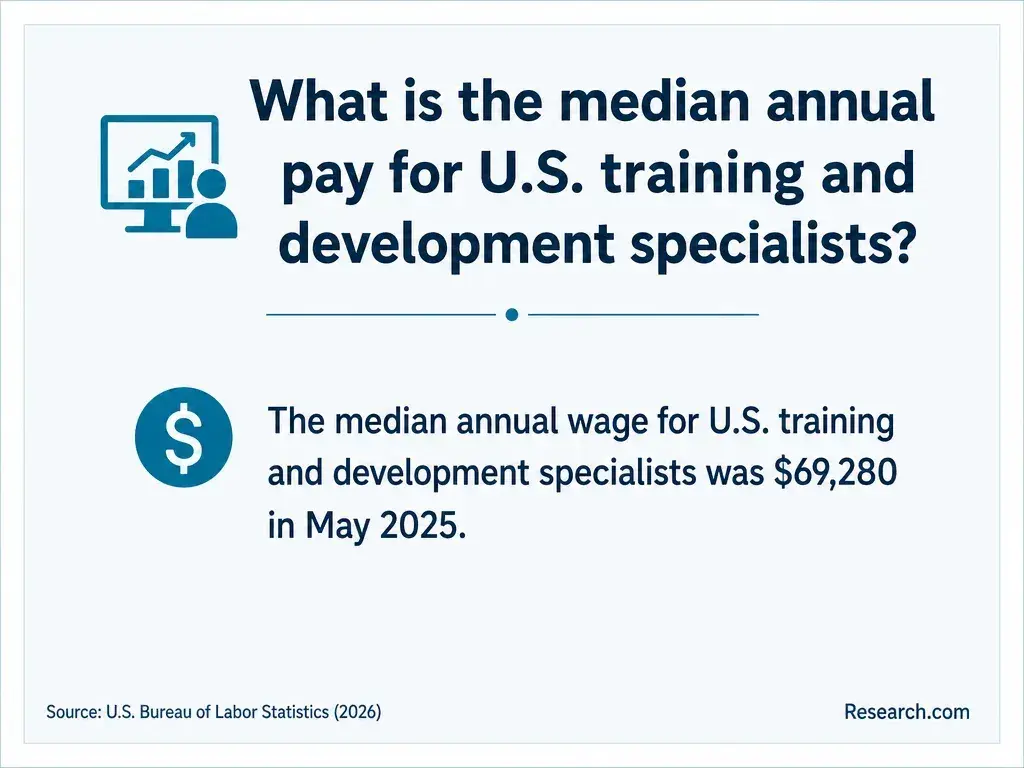
Career and pay claims require care. Occupational wage figures describe workers across an occupation, not the expected salary of graduates from this concentration; duties and credential requirements vary by state and employer. Explore careers in addiction treatment and support settings alongside actual local job postings. The BA does not itself authorize diagnosis, psychotherapy, or independent addiction counseling. For a regulated target role, obtain the state credentialing board's education, supervised-experience, examination, and scope-of-practice rules before assuming a substituted course will count.
Other Things You Should Know About Psychology
Usually the transcript continues to show the course you actually completed. The substitution is generally recorded in the degree audit or another institutional record. Ask the registrar how your school documents it.
Possibly, but double-counting rules differ. Ask whether the course can fulfill both requirements and whether you must still earn the same total credits.
Not necessarily. A graduate program may inspect your transcript and syllabus against its own prerequisites. Keep the written approval and original course materials.
Contact your advisor and the office that records degree exceptions. Provide the written approval and request a corrected audit before relying on it for graduation planning.
- School-Determined Requirements - FSA Partner Connect https://fsapartners.ed.gov/knowledge-center/fsa-handbook/2025-2026/vol1/ch1-school-determined-requirements
- Course Substitution Appeal Process | Massasoit Community College Catalog https://massasoit.edu/student-success/student-rights-responsibilities/appeal-process.html
- Online Bachelor's Degree in Psychology in Addictions | Purdue Global https://www.purdueglobal.edu/degree-programs/psychology/bachelor-psychology-addictions/
- Instructions for Submitting Requests for Course Substitutions & Waivers Online | UTRGV https://www.utrgv.edu/ucentral/registration/couse-substitution/index.htm
- Course Substitutions | College of General Studies | University of Pittsburgh https://www.cgs.pitt.edu/course-substitutions
- Course Substitution Policy | A-State Knowledge Base https://kb.astate.edu/books/grievances-appeals-and-course-substitutions/page/course-substitution-policy-cfa
- Course Substitution Petition Process | The Office Of Undergraduate Curricula https://curricula.unc.edu/course-substitution-petition-process/
- Course Substitution Process-BMCC-Knowledgebase | cuny.edu https://help.bmcc.cuny.edu/37085/kb/article/135691/course-substitution-process
- Applied Psychology: Addictions Studies, B.S. - CPS, CPSO | University of New Hampshire https://www.unh.edu/program/bachelor-science/applied-psychology-addictions-studies