2027 Online Anthropology Degree Programs With No Letters of Recommendation Required

Co-Founder and Chief Data Scientist
Applicants who lack recent professors or supervisors to recommend them can still find online anthropology degrees with streamlined admissions. "No letters required" means recommendation letters are not part of the standard application; it does not mean admission is automatic. This guide helps prospective undergraduate students compare verified program requirements, costs, accreditation, transfer policies, and career fit.
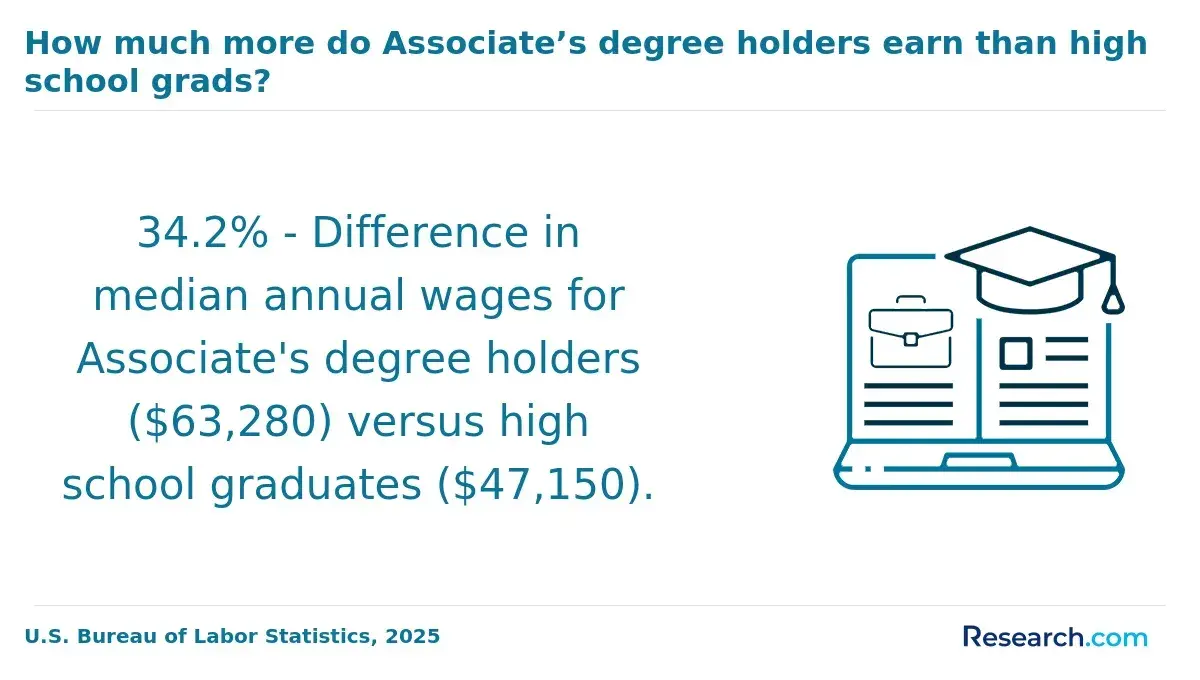
The Bureau of Labor Statistics reports a $64,910 median annual wage for anthropologists and archeologists in May 2024, illustrating the value of choosing a degree plan that supports a clear professional goal.
Key Things You Should Know
- Several regionally accredited universities offer online bachelor's-level anthropology pathways without standard recommendation-letter requirements, but applicants should confirm the requirement for their exact term, applicant type, and major.
- No-recommendation admissions usually still require official transcripts, a minimum GPA or college-preparatory coursework, an application, and sometimes a personal statement, résumé, or proof of English proficiency.
- Compare total tuition, transfer-credit limits, institutional accreditation, course delivery, and career preparation - not just application convenience; the College Board reported average published in-state tuition and fees of $11,610 at public four-year colleges for 2024-25.
Which Online Anthropology Degree Programs Require No Letters of Recommendation?
At the undergraduate level, recommendation letters are commonly absent from standard admissions applications, especially at large public universities using transcript-based review. Policies can differ for first-year, transfer, international, and nondegree applicants, so treat a school's current admissions page and written confirmation from admissions as the final authority.
The following examples represent online anthropology bachelor's options where standard undergraduate admissions materials generally do not include recommendation letters. They are starting points for comparison, not a guarantee that every applicant category will be exempt.
| Institution and online option | Typical admission approach | What to verify before applying |
| Arizona State University Online, BA in Anthropology | Undergraduate admission is generally based on application and academic record rather than recommendation letters. | First-year competency requirements, transfer GPA, residency rules, and any major-specific conditions. |
| Oregon State University Ecampus, Anthropology BA or BS pathway | Applicants typically submit institutional admission materials and transcripts; letters are not ordinarily a standard undergraduate requirement. | Whether the desired anthropology option, concentration, and upper-division courses are fully available online. |
| University of Arizona Online, BA in Anthropology | Online undergraduate admission generally emphasizes transcripts and application information rather than references. | Transfer articulation, general-education completion, and course scheduling for the intended emphasis. |
| University of North Dakota, online anthropology bachelor's pathway | Standard undergraduate admission generally focuses on academic records and application documentation. | Online course rotation, proctored assessments, and requirements for transfer students. |
"No letters required" is different from "letters optional" and from a temporary waiver. Optional letters may help an applicant explain a weak academic record, while a waiver can be limited to a particular entry term or applicant group. Save a copy of the requirement page and ask whether letters are required for scholarships, honors programs, internships, or later graduate-school applications.
Anthropology can overlap with adjacent fields such as psychology, criminal justice, digital design, and business. Students considering a forensic or behavioral direction can also explore what can you do with a forensic psychology degree before choosing electives.
What Are the Admission Requirements for Online Anthropology Degree Programs With No Recommendation Letters?
Most online anthropology bachelor's programs use the same academic admission standards as their campus-based counterparts. A streamlined application removes one document; it does not remove the school's review of preparation for college-level reading, writing, research, and social science coursework.
Applicants commonly need the following materials. Requirements vary by institution and by whether the applicant is entering directly from high school or transferring from another college.
- A completed institutional application and any required application fee or fee-waiver request.
- Official high school transcript for first-year applicants, plus official college transcripts for applicants with prior postsecondary coursework.
- A minimum GPA or evidence of satisfactory academic progress, which may differ for first-year and transfer admission.
- Required secondary-school subjects or transferable general-education courses, when the institution uses prerequisite review.
- Personal statement, residency documentation, or English-language proficiency evidence when applicable.
- Standardized test scores only when the university requires, recommends, or permits them for the applicant's category.
GRE scores are not normally part of undergraduate anthropology admission. They are more relevant to some graduate programs, although many graduate departments have reduced or eliminated test requirements. A student seeking a bachelor's degree should focus first on transcript quality, transferable credits, and whether the online curriculum includes methods, theory, cultural anthropology, biological anthropology, archaeology, and electives aligned with career plans.
If speed matters, distinguish accelerated scheduling from academic shortcuts. Guides to quick degrees that pay well can help students compare shorter credentials, but a bachelor's degree in anthropology usually remains a broader, four-year academic pathway.
Are Online Anthropology Programs With No Letters of Recommendation Easier to Get Into?
Not necessarily. A program without letters of recommendation may be easier to apply to because it removes the time and uncertainty involved in finding references. It is not automatically less selective, less rigorous, or more likely to admit every qualified applicant. Admissions staff can still review GPA, completed coursework, grades in core subjects, transfer record, and required documentation.
No-letter policies can particularly help working adults, military-connected students, career changers, homeschool graduates, and people who have been away from school long enough that faculty references are difficult to obtain. They may be a poor fit for applicants who need a recommender to provide important context about a major GPA decline, extensive fieldwork, or unusual circumstances that are not clearly reflected in a transcript.
Use the school's published minimum requirements as an eligibility threshold rather than as a prediction of admission. Some institutions practice broad access, while others have competitive major entry, limited course capacity, or separate review for transfer applicants. Ask whether admission is to the university, directly to anthropology, or contingent on completing lower-division courses after enrollment.
A common mistake is equating fewer documents with lower quality. Instead, examine whether the degree has coherent learning outcomes, faculty who teach in the discipline, research-methods training, accessible advising, and transparent graduation requirements.
Without recommendation letters, schools generally rely more heavily on evidence that is direct, standardized, and verifiable. The exact weight assigned to each item is rarely public, but applicants can make a stronger case by submitting complete records early and explaining only relevant context clearly.
This comparison shows what common application materials can demonstrate during a transcript-centered review.
| Application material | What it can show | How to use it effectively |
| Official transcripts | Academic performance, course rigor, credits earned, and readiness for college work. | Check that every prior institution sends records and review them for missing grades or incorrect personal details. |
| Personal statement | Interest in anthropology, career direction, and context not visible in grades. | Connect specific academic or professional experiences to realistic learning goals. |
| Résumé | Employment, community engagement, language abilities, research exposure, or leadership. | Use concrete responsibilities and relevant skills rather than a general job history. |
| Transfer-credit evaluation | Progress toward the degree and preparation in related disciplines. | Submit transcripts early enough to compare the preliminary evaluation before committing. |
| Placement or proficiency evidence | Preparation for writing, mathematics, or English-language coursework where required. | Follow the university's current instructions and do not assume a test is waived. |
Anthropology applicants should emphasize transferable skills: ethical research, observation, interviewing, cross-cultural communication, qualitative and quantitative reasoning, writing, and evidence-based analysis. Experience in museums, public health, education, community organizations, heritage work, customer research, or social services can be relevant when the application permits a résumé or statement.
Do not submit unsolicited materials unless the university invites them. An extra letter can be ignored, create processing delays, or conflict with a clearly stated no-supplement policy.
Accreditation is the most important legitimacy check. For an online anthropology degree, start with institutional accreditation recognized by the U.S. Department of Education and the Council for Higher Education Accreditation. Institutional accreditation supports federal-aid eligibility and is commonly expected by employers and graduate schools. Anthropology bachelor's programs generally do not have a single universal programmatic accreditor comparable to those used in some licensed professions.
Use these steps to verify a program before paying an application fee or enrolling.
- Confirm the university's institutional accreditation in official federal or accreditor records, not only in marketing language.
- Verify that the exact anthropology degree appears in the current catalog and that its online delivery format is clearly identified.
- Review faculty biographies, required courses, credit totals, academic calendar, student-support services, and graduation policies.
- Ask whether online students receive the same diploma designation as campus students and whether any in-person fieldwork, laboratory, residency, or proctored exam is required.
- Request the complete tuition-and-fee schedule and the transfer-credit policy in writing before making an enrollment decision.
Red flags include vague accreditation claims, pressure to enroll immediately, unclear faculty information, no published catalog, unusually broad promises about jobs, or a school that will not explain its refund policy. Employers typically focus on the institution, credential, skills, and relevant experience rather than whether admission required letters.
Students pursuing a regulated helping profession should be especially careful: anthropology itself does not lead directly to clinical licensure. For a separate pathway with specific accreditation considerations, compare a cheapest online counseling degree option and confirm state licensure rules independently.
A no-recommendation policy does not determine price. Tuition depends on whether the university is public or private, resident or nonresident pricing, number of transferred credits, online-course fees, technology charges, textbooks, and whether students take part-time or full-time terms. Published tuition is only one part of the total cost.
For context, the College Board reported average published tuition and fees of $11,610 for in-state students at public four-year institutions in 2024-25. Online learners should use that figure only as a broad benchmark: an individual online anthropology program may charge more or less, and online students may face different fee structures.
Before comparing schools, calculate the estimated cost to completion rather than the per-credit headline price. Request a written estimate based on the credits the school expects to accept, then add course materials, required software, travel for any field experiences, and charges that apply each term.
The most useful cost questions are whether tuition is locked after enrollment, whether online students pay separate fees, whether a flat-rate full-time tuition option exists, and what happens financially if a course is dropped or repeated. Lower tuition can be outweighed by weak transfer acceptance or a course sequence that extends time to graduation.
Yes. Online attendance and the absence of recommendation letters do not by themselves prevent eligibility for federal student aid. Students must attend an eligible institution and program, submit the Free Application for Federal Student Aid, meet applicable citizenship or eligible-noncitizen requirements, maintain satisfactory academic progress, and satisfy other federal rules.
Financial aid can include federal grants for eligible students, Direct Loans, work-study opportunities where available, state aid, military or veterans' education benefits, employer tuition assistance, and institutional scholarships. Scholarship applications may have separate materials and deadlines; some may request essays, résumés, or recommendations even when degree admission does not.
Borrow only after comparing the net cost and likely repayment obligations. Anthropology can prepare students for research, community outreach, program coordination, user research, cultural-resource work, education, and graduate study, but many specialized anthropology roles require education beyond a bachelor's degree. Build a plan around the occupation you want, internships or field experience, and the total amount you would need to finance.
Applicants exploring an accelerated business alternative should compare curricular fit rather than choosing solely by admissions speed. A fast-track MBA 6 months online route serves different academic and career goals and generally requires a completed bachelor's degree.
A bachelor's degree typically requires about 120 semester credits. A first-year student studying full time may finish in roughly four years, while a transfer student may complete sooner if a large share of previous coursework applies to general education and major requirements. Part-time enrollment, course availability, prerequisites, and repeated courses can extend the timeline.
Online formats can offer asynchronous coursework, multiple start dates, or accelerated terms, which may help adults fit classes around work. However, compressed courses require the same learning outcomes in less calendar time and can demand substantial weekly reading, writing, discussion, and project work. Ask how often required anthropology courses are offered and whether a delayed course can postpone graduation.
For career planning, distinguish the degree timeline from preparation for advanced roles. The Bureau of Labor Statistics projects 4% employment growth for anthropologists and archeologists from 2023 to 2033, and many positions in that occupation typically require a master's degree or doctorate. A bachelor's program can be a foundation, but it should include career-relevant experiences and advising for students considering graduate school.
Many online anthropology programs accept transfer credits, but admission without letters does not guarantee that all prior credits will count toward graduation. Schools may accept credits toward overall degree hours while applying fewer credits to anthropology major requirements, upper-division requirements, or residency requirements.
Ask for a preliminary transfer evaluation before enrolling whenever possible. The following records can make the review more accurate.
- Official transcripts from every college, university, military-training provider, or recognized credit source attended.
- Course descriptions and syllabi for anthropology, archaeology, social science, methods, statistics, language, or laboratory courses that may need departmental review.
- Documentation for standardized examinations, prior-learning assessments, or military learning if the institution considers those credits.
- A degree audit showing which transferred courses satisfy general education, major, elective, and upper-division categories.
Do not withdraw from a current institution or assume a community-college associate degree will transfer intact until the receiving university provides an evaluation. Also confirm its residency rule, which sets the minimum number of credits that must be completed through that university.
Students considering digital or design-focused elective paths can compare curriculum expectations with a game development online degree. The fields are different, but the comparison can clarify whether a student wants cultural analysis, design production, or a combination of both.
How Should You Compare Online Anthropology Degree Programs That Do Not Require Letters of Recommendation?
Compare programs in the order that affects your outcome most: legitimacy, academic fit, transfer value, affordability, and convenience. The easiest application is not necessarily the best educational or financial choice. A reputable program should make its policies, curriculum, faculty, costs, and student services easy to inspect before enrollment.
This scorecard identifies the main comparison categories and the evidence that can help applicants make a grounded decision.
| Comparison category | What to compare | Why it matters |
| Admission policy | Whether letters are truly not required for your applicant type, plus GPA, transcript, essay, and test requirements. | Prevents an incomplete application or incorrect assumption about eligibility. |
| Accreditation and catalog | Recognized institutional accreditation and a current catalog listing the exact online degree. | Supports legitimacy, aid access, transferability, and graduate-school planning. |
| Curriculum | Coverage of cultural, biological, linguistic, and archaeological anthropology; methods; ethics; and electives. | Determines whether the degree matches your interests and future study plans. |
| Online experience | Live versus asynchronous classes, fieldwork, labs, exams, accessibility, tutoring, and advising. | Shows whether the format fits your schedule and learning needs. |
| Transfer policy | Accepted credits, major-course limits, upper-level rules, and institutional residency requirements. | Can substantially change completion time and total cost. |
| Career preparation | Internships, research opportunities, career advising, alumni outcomes, and graduate-school support. | Helps turn broad analytical training into a realistic next step. |
Before submitting applications, contact each admissions office with the same short set of questions: Are letters required for my applicant category? What is the current minimum GPA? Which of my credits are likely to transfer? Is every required anthropology course available online? What will I pay from enrollment through graduation? Written answers are more useful than general promotional claims.
An online anthropology degree with no recommendation requirement is a strong option for self-directed students who can document academic readiness and want flexible access to a broad social-science education. It may be less suitable for students who need intensive laboratory training, guaranteed local field placements, or a direct route into a licensed profession. Choose it for its curriculum and outcomes, not merely because it asks for fewer application documents.
Other Things You Should Know About Anthropology
They may. Although letters may not be required for degree admission, scholarship competitions, honors programs, research placements, internships, study-abroad opportunities, and graduate-school applications can request them separately. Build relationships with instructors early so you have potential references later.
Work experience may strengthen a résumé or personal statement, but it usually does not replace required academic transcripts or minimum GPA standards. Experience in community work, research support, museums, health services, education, or customer research can demonstrate relevant transferable skills.
Read the current admissions checklist for your exact applicant type, such as first-year, transfer, international, or returning student. Then email or call admissions and ask for confirmation in writing, including whether letters are required for the anthropology major, scholarships, or any supplemental application.
Graduates may pursue entry-level work in community outreach, research assistance, program coordination, museums, cultural organizations, education support, marketing research, public health, or nonprofit administration. Jobs titled anthropologist or archeologist commonly require graduate education, and career outcomes depend on experience, location, additional skills, and employer requirements.
- 2026 Best Online Anthropology Degrees https://www.onlineu.com/degrees/anthropology
- Getting into graduate school in anthropology: What we/I look for in applicants | Savage Minds https://savageminds.org/2009/02/23/getting-into-graduate-school-in-anthropology-what-wei-look-for-in-applicants/
- The #HiddenCurriculum of Applying to Graduate School (for Anthropology) | anthro{dendum} https://anthrodendum.org/2018/07/31/the-hiddencurriculum-of-applying-to-graduate-school-for-anthropology/
- Advantages and Disadvantages of Online Degree Programs - OnlineEducation.com https://www.onlineeducation.com/features/advantages-and-disadvantages-of-online-education