
2027 No-Exam Online Communication Disorders Master's Degrees: Schools, Costs & Outcomes

Co-Founder and Chief Data Scientist

Reviewed by Rhea Paul, PhD
SLP Education & Research Expert
Choosing an online master’s in communication disorders often comes down to two questions: can you qualify without taking a standardized entrance exam, and will the program still prepare you for licensure, certification, and meaningful career growth? No-exam and test-optional programs can remove a major barrier for working adults, career changers, and applicants who have strong academic or clinical backgrounds but do not want to spend months preparing for the GRE or a similar test.
That convenience does not mean the degree is easier or less serious. Strong online communication disorders programs still evaluate transcripts, prerequisites, recommendations, professional experience, writing ability, and readiness for clinical training. Recent data shows that 48% of students in online communication disorders programs choose no-exam options to streamline admission and focus on coursework.
This guide explains how no-exam online communication disorders master’s degrees work, why some schools have dropped entrance tests, what admissions committees review instead, how to compare program quality and cost, and what graduates can expect in terms of timelines, curriculum, financial aid, employer perception, jobs, and salary outcomes.
Key Benefits of No-Exam Online Communication Disorders Master's Degrees
- No-exam online master's in communication disorders offer access to accredited schools nationwide, enabling students to study at top-ranked programs without standardized test barriers.
- Programs typically cost 15-30% less than on-campus alternatives, reducing financial burden while maintaining program quality and flexibility.
- Graduates report employment rates exceeding 85% within a year, benefiting from industry-aligned curricula focused on practical telepractice and assessment skills.
Why Do Some Online Communication Disorders Master's Programs Eliminate Admission Exams?
Some online communication disorders master’s programs eliminate admission exams because standardized tests are not always the best predictor of graduate success, especially for applicants who already have relevant coursework, professional experience, or strong academic records. The broader graduate admissions market is moving in this direction as well: about 60% of online master's programs no longer require GRE or similar exams.
For communication disorders programs, the decision is usually practical rather than lenient. Schools still need students who can handle advanced science-based coursework, clinical expectations, documentation, and client-centered practice. Instead of relying on one test score, many programs review a fuller set of evidence.
- Broader access for qualified applicants: Test requirements can discourage working adults, caregivers, military-affiliated students, and applicants with limited time or money for test preparation. Removing the exam can make graduate study more reachable without reducing academic expectations.
- Stronger emphasis on academic readiness: Transcripts, prerequisite grades, writing samples, and prior coursework often show whether an applicant is prepared for graduate-level study in speech, language, hearing, and swallowing disorders.
- Recognition of professional and volunteer experience: Experience in schools, clinics, hospitals, early intervention programs, or related service settings can demonstrate maturity, communication skill, and commitment to the field.
- Reduced reliance on a potentially biased measure: Standardized tests may reflect access to preparation resources as much as ability. Holistic review can help programs consider applicants from a wider range of socioeconomic, cultural, and educational backgrounds.
- Faster, more applicant-friendly admissions: No-exam admissions can shorten the application timeline, which matters for online students trying to coordinate employment, family responsibilities, prerequisite completion, and clinical placement planning.
The key point for applicants is that “no exam” does not mean “no standards.” A strong application should still show evidence of academic discipline, clear career goals, communication ability, and readiness for the demands of clinical education. Applicants comparing flexible pathways can also review related college programs to understand how different degree routes support long-term career planning.
How Do You Compare Schools Offering No-Test Online Communication Disorders Graduate Programs?
Compare no-test online communication disorders graduate programs the same way you would compare any serious professional degree: start with accreditation, clinical preparation, licensure alignment, cost, and outcomes. The absence of a test requirement may make admission more convenient, but it should never be the main reason to choose a school.
Accredited programs frequently report a 90% or higher pass rate on the Speech-Language Pathology Praxis exam, which can signal strong preparation for professional expectations. When reviewing schools, look beyond marketing language and verify the details that affect graduation, certification, licensure, and employment.
- Accreditation and licensure alignment: Confirm that the program’s accreditation status and curriculum match your state’s licensure requirements and your intended career path. This is especially important if you plan to become a speech-language pathologist.
- Clinical practicum structure: Ask how clinical placements are arranged, whether the school helps secure approved sites, and whether placements can be completed near your location. A flexible online format is less useful if clinical requirements are difficult to complete.
- Praxis, graduation, and employment outcomes: Review published outcomes when available. Strong pass rates, retention rates, and graduate placement information can help you judge whether students are being supported through the full program.
- Faculty expertise: Look for instructors with relevant clinical, research, and supervisory experience in areas such as language disorders, fluency, dysphagia, audiology, neurogenic communication disorders, or pediatric practice.
- Tuition and total cost: Compare per-credit tuition, total required credits, fees, residency rules, clinical placement costs, materials, and travel requirements. The lowest advertised tuition is not always the lowest total cost.
- Online learning format: Determine whether courses are synchronous, asynchronous, or blended. Live class meetings may offer more interaction, while asynchronous courses may work better for students with demanding work schedules.
- Student support: Prioritize programs with advising, clinical placement support, technology help, writing assistance, and clear communication about licensure steps.
A useful comparison strategy is to create a short list of programs, then contact each admissions office with the same questions. Ask about prerequisites, clinical placement support, state authorization, cohort size, faculty access, and recent student outcomes. Students comparing accelerated or flexible online models in adjacent fields may also find it useful to review a 2-year psychology degree online to see how structure, pacing, and credentialing can differ across related disciplines.
What Are the Admission Requirements for No-Exam Online Communication Disorders Master's Programs?
No-exam online communication disorders master’s programs usually replace standardized test scores with a broader application review. Applicants should expect to prove academic readiness, professional motivation, and preparation for clinical training through transcripts, prerequisite coursework, recommendations, essays, and experience.
Requirements vary by institution, but the following components are common:
- Bachelor’s degree from an accredited institution: Most programs require a completed bachelor’s degree. Some prefer or require a background in communication sciences and disorders, speech-language pathology, linguistics, psychology, education, or a related field.
- Prerequisite coursework: Applicants may need prior courses in areas such as anatomy, phonetics, linguistics, speech and hearing science, language development, statistics, or related foundational subjects. Students without the right background may need leveling courses before or during the program.
- Minimum GPA expectations: Even when no exam is required, programs commonly review cumulative GPA, major GPA, and grades in prerequisite courses to judge whether the applicant can handle graduate-level work.
- Professional, clinical, or volunteer experience: Relevant work in schools, clinics, healthcare settings, early childhood programs, disability services, or community organizations can strengthen an application, even when it is not formally required.
- Letters of recommendation: Programs often request two or three recommendations from faculty, supervisors, clinicians, or mentors who can speak to the applicant’s academic ability, reliability, communication skills, and professional judgment.
- Personal statement or essay: This is often one of the most important parts of a no-exam application. Use it to explain your goals, your understanding of the field, relevant experiences, and why the program fits your plans.
- Resume or portfolio: A current resume can document employment, volunteer work, certifications, research, observation hours, leadership, and other preparation.
- Background checks or clinical documentation: Programs with practicum components may require background checks, immunization records, liability insurance, drug screening, or other documentation before clinical placement.
The strongest applications are specific rather than generic. Instead of simply saying you want to help people communicate, explain the populations you hope to serve, the experiences that shaped your goals, and how you have prepared for the academic and clinical demands of the degree. Applicants evaluating holistic admissions models in related counseling fields can also compare requirements in cheapest online school counseling programs (CACREP-accredited), where schools often weigh academic background, fit, and professional readiness instead of standardized tests alone.
What Is the Average Tuition for No-Exam Online Communication Disorders Master's Degrees?
No-exam admission usually does not make an online communication disorders master’s degree cheaper or more expensive by itself. Tuition is mainly shaped by the institution, number of credits, residency policy, program length, clinical requirements, and student fees. Across the U.S., tuition typically ranges between $20,000 and $50,000 total, with per-credit costs averaging between $500 and $900.
When comparing programs, focus on total cost rather than the headline tuition rate. A program with a lower per-credit cost may still be expensive if it requires more credits, charges significant fees, or requires travel for campus visits or clinical experiences.
- Cost per credit: This is the starting point for estimating tuition, but it should be multiplied by the full number of required credits.
- Total program credits: Programs with more required credits can cost more even when the per-credit rate looks affordable.
- Public vs. private pricing: Public universities may offer lower rates for residents, while private institutions often use one tuition rate for all online students.
- In-state vs. out-of-state tuition: Some public schools charge online out-of-state students more, while others offer a separate online rate. Confirm the policy before applying.
- International student rates: International students may face different tuition structures, added documentation costs, or additional fees.
- Online and technology fees: These may include learning platform fees, software, online course fees, proctoring charges, or technology support costs.
- Clinical and fieldwork costs: Budget for background checks, health records, transportation to practicum sites, professional attire, materials, and possible travel.
Students focused on affordability should compare total program cost, aid options, and clinical placement expenses alongside rankings or convenience; reviewing cheapest online slp programs can help identify lower-cost pathways in closely related graduate preparation.
One graduate of a no-exam online communication disorders master’s program described encountering unexpected expenses beyond tuition, including mandatory software purchases and online proctoring fees despite the absence of entrance exams.
He noted, "The flexibility helped me balance work and study, but I wasn't fully prepared for the extra costs that came with technology requirements." His experience underscores an important budgeting lesson: tuition is only one part of the total price of an online graduate degree.
Can You Get Financial Aid for No-Exam Online Communication Disorders Master's Programs?
Yes. A no-exam admissions policy generally does not prevent students from receiving federal, institutional, employer-based, or private financial aid. Financial aid eligibility is usually tied to the school’s participation in aid programs, the student’s enrollment status, citizenship or residency status, satisfactory academic progress, and the specific rules of each funding source. Around 60% of graduate students benefit from some form of financial assistance.
Common funding options include:
- Federal student loans: Graduate students may borrow up to $20,500 annually through unsubsidized federal loans regardless of exam submission policies. Students should review borrowing limits, interest, repayment options, and long-term debt before accepting the full amount.
- Graduate scholarships: Schools, professional organizations, and foundations may offer scholarships based on merit, financial need, field of study, background, or service commitment. Standardized test scores are not always required.
- Institutional grants and fellowships: Some colleges provide funding for online learners, graduate students, or candidates in high-need fields. Availability can vary widely by institution and application cycle.
- Employer tuition assistance: Working professionals may qualify for reimbursement or tuition support through school districts, healthcare employers, clinics, or other organizations. Ask whether you must remain employed for a certain period after receiving assistance.
- Payment plans: Monthly payment plans can help students spread costs across a term, though they are not the same as financial aid and may include fees.
- Assistantships or service-based aid: Online students may have fewer assistantship options than campus students, but some programs still offer remote research, teaching, or administrative roles.
Before enrolling, ask the financial aid office whether the program is aid-eligible, what enrollment level is required, whether summer courses qualify, and how aid works during clinical placements. Also compare estimated debt with realistic salary expectations and licensure timelines so the degree supports your career goals without creating unnecessary financial strain.
How Long Does It Take to Complete a No-Exam Online Communication Disorders Master's Degree?
No-exam admission does not usually shorten the degree itself. Most online communication disorders master’s programs still require substantial coursework, clinical preparation, applied projects, and program milestones. Completion typically requires between 40 and 60 credit hours, which translates to roughly two to three years for students attending full-time.
Your actual timeline depends on enrollment pace, prerequisite needs, clinical placement timing, and whether the program uses a cohort model or flexible course sequencing.
- Full-time vs. part-time enrollment: Full-time study can shorten the calendar timeline but may be difficult for students working full time. Part-time study offers more flexibility but extends graduation.
- Prerequisite or leveling coursework: Students without an undergraduate background in communication sciences and disorders may need additional courses, which can add time before or during the master’s program.
- Accelerated course options: Some schools use shorter terms, year-round enrollment, or intensive courses that help students progress more quickly.
- Clinical placement availability: Delays in securing approved practicum sites or supervisors can affect completion time, particularly for students in areas with limited placement options.
- Transfer credit opportunities: Some programs allow prior graduate-level coursework to transfer, though policies are usually strict and credits must be recent and relevant.
- Capstone or thesis requirements: A capstone, thesis, or applied research project can extend the timeline if it requires data collection, faculty approval, revisions, or clinical coordination.
A professional who recently completed a no-exam online communication disorders master’s described balancing full-time work with courses spread over nearly three years. She appreciated the part-time flexibility but found that research-related components, including her capstone, required more planning and sustained effort than she expected.
She noted, "The absence of entrance exams removed one barrier upfront, but successfully managing deadlines and project milestones required ongoing dedication." Her experience shows that no-exam admission can simplify entry, but graduation still depends on time management, clinical scheduling, academic support, and the design of the program.
What Courses Are Included in a No-Exam Communication Disorders Master's Curriculum?
A no-exam communication disorders master’s curriculum is generally the same type of curriculum students encounter in test-required programs. The admissions policy may be different, but the academic and clinical expectations remain rigorous. Typically, these programs demand around 30 to 40 credit hours, usually comprising 10 to 12 courses that include both core and elective classes.
Course names vary by school, but students commonly study the science, assessment, diagnosis, and treatment of communication and swallowing disorders across the lifespan.
- Speech and hearing science: Courses may cover acoustics, speech production, hearing mechanisms, and the biological systems involved in communication.
- Anatomy and physiology: Students learn the structures and functions involved in speech, language, swallowing, respiration, and hearing.
- Language development and disorders: Coursework often examines typical and atypical language development in children and adults, including assessment and intervention strategies.
- Phonetics and articulation: Students study speech sounds, transcription, articulation disorders, and evidence-based treatment planning.
- Assessment and diagnosis: These courses train students to select, administer, interpret, and document formal and informal assessment methods.
- Clinical methods and intervention: Students learn how to design treatment plans, measure progress, communicate with clients and families, and apply ethical clinical practices.
- Audiology or hearing-related coursework: Some programs include foundational study in hearing assessment, hearing disorders, and related service delivery.
- Electives or specialization options: Electives may focus on augmentative and alternative communication, neurogenic disorders, fluency, voice, dysphagia, autism-related communication needs, or pediatric therapy.
- Capstone or applied project: Many programs require a culminating project that connects research, clinical reasoning, and professional practice.
When reviewing a curriculum, check whether the program includes the content and supervised experiences required for your intended credential or license. Also ask how online courses connect to clinical practice, because communication disorders training must develop both knowledge and applied skill. Students comparing costs across related behavioral and health-oriented degrees may find it useful to review how much is a psychology degree as part of broader graduate school budgeting.
Do Employers Care If Your Communication Disorders Master's Degree Has No Entrance Exam?
Employers generally care far more about your degree quality, accreditation, licensure eligibility, clinical competence, and professional references than whether your program required an entrance exam. Research shows that about 65% of employers consider the reputation and accreditation of graduate programs more important than standardized test requirements.
In most hiring situations, the employer is unlikely to focus on the admissions process unless it raises concerns about program quality. What matters is whether the program prepared you to perform the work safely, ethically, and effectively.
- Accreditation: Graduates from programs accredited by recognized bodies, such as the Council on Academic Accreditation in Audiology and Speech-Language Pathology, are generally viewed as better prepared and more credible, regardless of exam policies.
- Licensure and certification readiness: Employers want to know whether you meet or are on track to meet state licensure, certification, or supervised practice requirements.
- Clinical experience: Strong practicum placements, supervised hours, and documented work with relevant populations can matter more than the admissions format.
- Program reputation: Established programs with strong faculty, clear outcomes, and reliable clinical training may carry more weight in competitive hiring markets.
- Demonstrated skills: Employers look for assessment ability, documentation quality, treatment planning, collaboration, cultural responsiveness, and communication skills.
- References and professionalism: Supervisors and faculty who can speak to your clinical judgment, dependability, and client interaction can strengthen your candidacy.
Students should avoid assuming that all no-exam programs are equal. A reputable no-exam program can be a sound choice, while a weak program with poor outcomes can create problems even if admission is easy. Focus on evidence: accreditation, clinical placement support, graduate outcomes, faculty expertise, and licensure alignment.
For a broader look at how online program affordability and employer recognition can vary across disciplines, students may compare models in fields such as bachelors construction management, where accreditation, curriculum relevance, and applied experience also affect career value.
What Jobs Can You Get With a No-Exam Online Communication Disorders Master's Degree?
A no-exam online communication disorders master’s degree can lead to the same types of roles as a comparable test-required program, provided the degree meets licensure, certification, and clinical preparation requirements for the position. The admissions policy does not determine job eligibility; the program’s quality, accreditation, curriculum, and supervised experience do.
According to the U.S. Bureau of Labor Statistics, speech-language pathologists-one of the primary career options-have a median entry-level salary of about $62,900 and an expected job growth rate of 17% through 2035, much faster than average.
- Speech-Language Pathologist: Speech-language pathologists assess, diagnose, and treat speech, language, social communication, cognitive-communication, voice, fluency, and swallowing disorders. They may work in schools, hospitals, rehabilitation centers, private practices, skilled nursing facilities, early intervention programs, or telepractice settings.
- Audiologist (with Additional Credentials): Audiologists evaluate and manage hearing and balance disorders. This path often requires further certification or additional graduate preparation, so students should verify requirements before choosing a program.
- Rehabilitation Specialist: Rehabilitation specialists support individuals recovering communication abilities after illness, injury, neurological events, or developmental challenges. The role may involve collaboration with speech-language pathologists, occupational therapists, physical therapists, physicians, and families.
- Educational Therapist: Educational therapists work with students who have speech, language, learning, or communication challenges. They may collaborate with teachers, school-based service providers, and families to support academic and developmental progress.
Before choosing a program, match the degree to the job you want. If your goal is licensed clinical practice, confirm that the program satisfies all educational and supervised training requirements in the state where you plan to work. If your goal is a related support, education, research, or administrative role, evaluate whether the curriculum and field experiences align with that path.
What Is the Average Salary After Earning a No-Exam Online Communication Disorders Master's Degree?
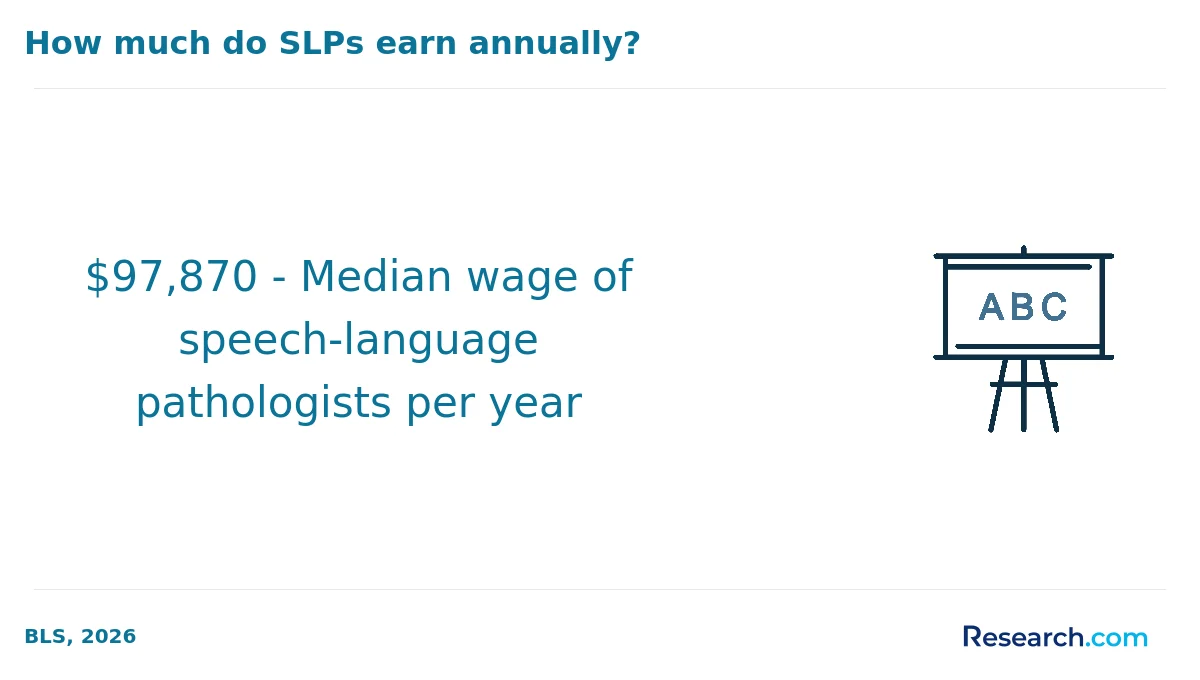
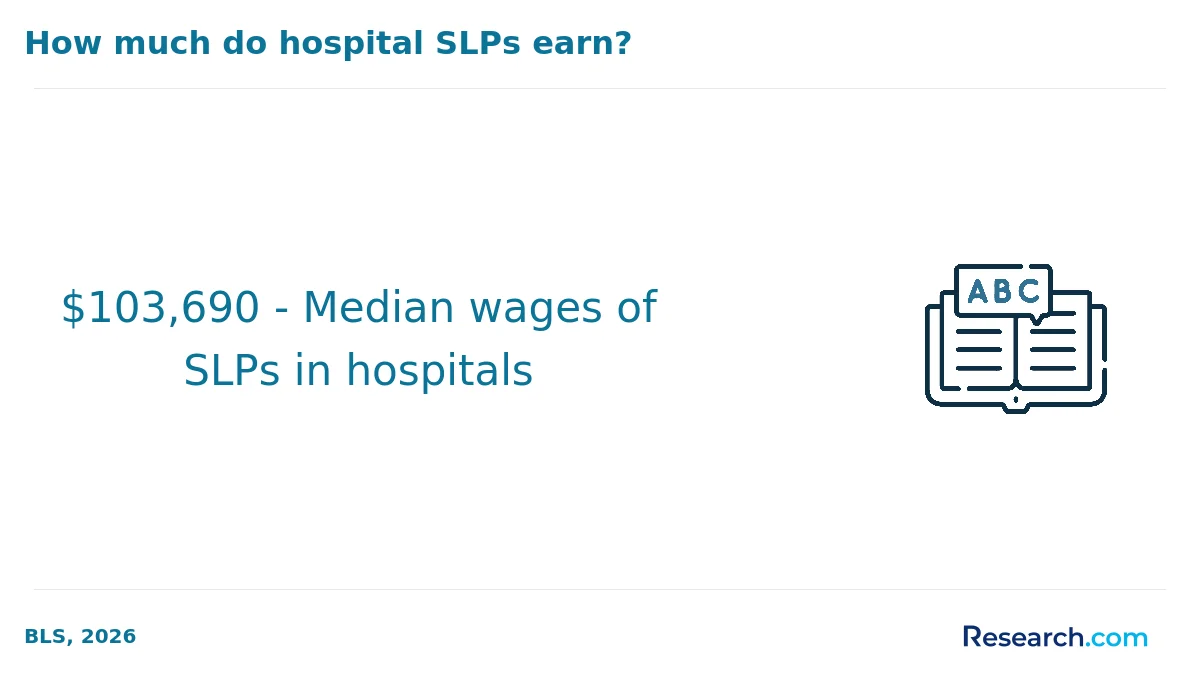
Salary after earning a no-exam online communication disorders master’s degree depends on the role, location, employer, licensure status, experience, and specialization. The no-exam admissions format itself is not usually a salary factor. Recent data from the U.S. Bureau of Labor Statistics reports that speech-language pathologists earn a median annual wage of about $97,870.
Several factors can affect earnings:
- Geographic location: Salaries vary by state, city, demand, cost of living, and availability of qualified professionals.
- Work environment: Hospitals, specialized clinics, rehabilitation facilities, schools, private practice, and telepractice settings may offer different pay structures and benefits.
- Experience level: Entry-level professionals generally earn less than clinicians with several years of experience, advanced responsibilities, or supervisory roles.
- Credentials and licensure: Meeting state licensure requirements and earning relevant professional credentials can affect eligibility for certain positions and compensation levels.
- Specialization: Expertise in areas such as dysphagia, neurogenic communication disorders, augmentative and alternative communication, early intervention, or bilingual service delivery may influence demand.
- Employment status: Full-time, part-time, contract, school-year, and private practice arrangements can differ significantly in annual income, benefits, and stability.
Students should compare salary expectations with total program cost, expected borrowing, clinical placement requirements, and the time needed to become licensed or certified. A no-exam program can be a strong investment when it provides credible preparation for the role you want and keeps debt manageable.
What Graduates Say About Their No-Exam Online Communication Disorders Master's Degrees
- : "Choosing the right program was overwhelming at first, but the no-exam format of the online communication disorders master's degree made the decision easier. I found several schools that offered flexibility and affordability, which really mattered since I was balancing work and study. Graduating opened new doors professionally, giving me the confidence to advance in my career without the stress of entrance exams. — Richard"
- : "Cost was a major factor in my decision to pursue a no-exam online communication disorders master's degree, and I was pleasantly surprised by the range of affordable options available. Reflecting back, the investment was well worth it because it provided practical skills that directly impacted my work with clients. This degree truly enhanced my career prospects in ways I hadn't initially anticipated. — Janine"
- : "From a professional standpoint, completing an online communication disorders master's program without exams streamlined my educational path. It allowed me to focus more on learning content that matters and less on testing anxiety. Choosing among programs, I prioritized schools with strong reputations and solid outcomes, and it paid off in securing a fulfilling role in my field. — Olivia"
Other Things You Should Know About Communication Disorders Degrees
Yes, many no-exam online communication disorders master's programs hold accreditation from recognized bodies such as the Council on Academic Accreditation in Audiology and Speech-Language Pathology (CAA). Accreditation ensures that the program meets professional standards required for licensure and certification in the field. It is crucial for students to verify accreditation status before enrolling to guarantee their degree will be accepted by employers and certification boards.
While coursework can be completed fully online, students in communication disorders master's programs must fulfill in-person clinical practicum hours to gain hands-on experience. Most programs arrange clinical placements at sites local to the student to comply with licensing and certification requirements. Clinical training cannot be completed entirely remotely due to the need for supervised, direct client interaction.
The curriculum of a 2027 no-exam online Communication Disorders master’s program emphasizes evidence-based practices, ensuring quality education through diverse learning modules and virtual simulations. Accredited by national bodies, these programs are designed to meet professional standards while providing flexibility and accessibility for students.
The 2027 no-exam online Communication Disorders master's programs are designed with flexibility in mind for working professionals. They typically offer asynchronous courses, allowing students to manage their studies alongside professional commitments, with access to remote internships or placements aligning with their schedules.
References
- U.S. Bureau of Labor Statistics - Speech-Language Pathologists https://www.bls.gov/ooh/healthcare/speech-language-pathologists.htm
- ASHA EdFind - Accredited Speech-Language Pathology Programs https://find.asha.org/ed/
- ETS Praxis - Speech-Language Pathology (5331) https://praxis.ets.org/test/speech-language-pathology-5331.html
- Pennsylvania Western University - Master of Science in Speech-Language Pathology https://online.pennwest.edu/programs/speech-language-pathology-grad/index.php
- Maryville University - Master of Science in Speech-Language Pathology https://www.maryville.edu/masters/speech-language-pathology/
- University of Scranton - Master of Science (M.S.) in Speech-Language Pathology https://www.scranton.edu/academics/pcps/health-and-human-performance/programs/speech-language-pathology/index.shtml
- University of North Carolina at Greensboro - Speech-Language Pathology, M.A. (Online) https://csd.uncg.edu/graduate/masters-of-arts-online/
- California State University-East Bay - Online Master of Science in Speech-Language Pathology https://ce.csueastbay.edu/programs/speech-language-pathology/


