
2027 Most Recession-Resistant Careers You Can Pursue With a Physics Degree

Co-Founder and Chief Data Scientist
Physics graduates often face the challenge of identifying careers that withstand economic downturns. As industries shift, many roles become vulnerable, but certain fields employing physics skills show resilience-medical physics, renewable energy engineering, and data analytics remain stable. According to a 2025 labor report, employment in physics-related healthcare sectors grew 7% despite broader job market contractions.
Staying competitive requires specialized certifications and interdisciplinary knowledge, especially in computational and applied physics. This article explores the most recession-resistant careers for physics graduates and provides guidance on how to leverage skills to secure stable positions in fluctuating economic climates.
Key Points About Recession-Resistant Physics Careers
- Physics graduates excel in data analysis roles within finance and technology sectors-fields shown to maintain 5% growth during recessions due to constant demand for analytical skills.
- Advanced skills in Physics enable careers in renewable energy and hardware engineering, industries buffered from economic downturns by long-term infrastructure investment.
- Government and defense research positions employ Physics degree holders in stable, well-funded projects, providing job security through sustained public sector budgets.
What is the employment outlook for graduates of Physics?
Graduates holding a physics degree face a robust employment landscape, with physics-related occupations expected to grow by about 8% over the next decade-faster than the average for all occupations. This positive job growth and opportunities for physics majors during economic downturns are driven by diverse demand in research, technology, and applied sciences. Key factors underpinning this outlook include the following:
- Technological Innovation: Physics plays an essential role in pioneering new technologies such as quantum computing and renewable energy, creating continuous demand for skilled professionals.
- Sustained Research Funding: Federal and private investment in scientific research ensures stable roles in both academia and industry, contributing to consistent employment opportunities for physics graduates.
- Versatile Skillset: The analytical and problem-solving skills gained through physics education allow graduates to adapt across varied fields including data analysis, engineering, and finance, supporting resilience during economic fluctuations.
Unemployment rates for physics degree holders consistently remain below the national average, indicating strong job stability even during recessions. Employers value the rigorous training and critical thinking abilities that physics graduates bring to the workforce. For students aiming for careers that withstand economic challenges, pursuing a physics degree can offer access to some of the most recession-resistant careers. Those interested in exploring further may find insights on the best college majors for the future.
What are the most recession-resistant careers for Physics degree graduates?
Certain roles within physics and adjacent industries naturally withstand economic volatility due to their essential or regulatory nature. Employment in recession-resistant STEM fields such as physics-related roles grows about 1.8% annually despite economic downturns, highlighting their resilience. Here are some top recession-proof careers for physics graduates to consider.
- Medical Physicist: This role involves ensuring the safe and effective use of radiation in medical treatments and diagnostics. Because healthcare is an essential sector, demand for medical physicists remains steady even during economic downturns. The critical nature of patient safety and government regulations protect these positions from cuts.
- Data Scientist in Energy Sector: Data scientists analyze large datasets to optimize energy production and consumption. As energy remains fundamental to all industries and daily life, companies prioritize this role to improve efficiency and reduce costs regardless of economic conditions.
- Metrology Specialist: These experts focus on precise measurement standards crucial for manufacturing and quality assurance across many sectors, including aerospace and defense. Given that product reliability directly impacts safety and compliance, their roles are structurally protected during recessions.
- Research Scientist in Government Laboratories: Working in public research institutions, these scientists contribute to national security, environmental monitoring, and public health. Funding for government science can be more stable due to its strategic importance and legislative support.
- Quantitative Analyst in Finance: Also called "quants," these professionals apply physics-based modeling techniques to optimize trading strategies and risk management. Financial firms depend on their expertise to protect assets during market volatility, insulating such jobs from typical recession cuts.
Students interested in recession-resistant job options with a physics degree should especially note how these careers benefit from systemic demand safety nets. Pursuing physics prepares graduates with analytical skills valued across these sectors.
For those exploring the best degrees to make money, physics stands out due to its alignment with many industries that maintain stable employment levels even during economic uncertainty. More detailed insights can be found at best degrees to make money.
In which industries can Physics degree holders find work?
Graduates with a physics degree often find opportunities beyond traditional physics fields, adapting their skills to various sectors that remain stable during economic downturns. Studies indicate that STEM-related jobs, including those for physics graduates, have about 15% higher retention through recessions compared to the average workforce. Below are key industries where physics skills translate into resilient career paths.
- Healthcare and Medical Technology: Physics graduates play a vital role in developing and managing sophisticated diagnostic equipment like MRI and CT scanners. Positions include medical physicist and radiological technologist, essential for maintaining healthcare services even in challenging economic environments.
- Energy and Utilities: Expertise in physics supports renewable energy projects such as solar, wind, and nuclear power by analyzing energy transfer and material behavior. Careers like energy analyst and nuclear technician contribute to the ongoing shift toward sustainable energy, which is less affected by recessions.
- Aerospace and Defense: The sector values physics graduates for their understanding of mechanics and electromagnetism in designing and testing aircraft and defense systems. Roles such as systems engineer and research scientist are critical due to sustained national security and space exploration priorities.
- Information Technology and Data Science: Physicists leverage their quantitative and analytical skills in data analysis, software development, and machine learning, supporting industries undergoing digital transformation and continuous growth.
- Financial Services: Applying their strong modeling and analytical abilities, physics graduates work in risk management and quantitative analysis to develop predictive financial tools that help navigate volatile markets.
I spoke with a professional who completed a physics bachelor's degree online about their career journey. They described the initial transition as "a challenging pivot," requiring adaptability to industries that didn't always clearly advertise physics skills. "I found that the analytical mindset developed through the physics program helped me quickly learn new domain-specific knowledge," they explained. The process involved continuous self-education and networking, which eventually opened doors in finance and tech. Despite uncertainties at first, the flexibility gained from their background turned into an advantage, allowing them to thrive in diverse roles beyond pure physics research.
Physics roles in the public sector generally offer greater job security during economic downturns due to steady funding sources such as government grants and public institutions. Positions in government research labs, academia, and nonprofit scientific organizations are less prone to layoffs compared to private companies, as their budgets aren't as tied to market cycles. For example, physicists employed in defense or energy sectors under government contracts typically face fewer risks of job cuts.
Conversely, private sector opportunities-found in technology firms, aerospace, and startups-tend to be more vulnerable to market volatility. Companies may reduce research funding when profits decline, impacting employment stability. However, these roles frequently allow for faster career progression and higher earnings for physics graduates who thrive in innovation-focused settings. About 68% of physics graduates in public roles reported stable employment during recessions, while only 45% in private industry felt similarly secure.
Choosing between public and private sector careers often depends on personal priorities. Public sector jobs favor those seeking long-term stability and structured environments with union protections or tenure options, while private sector roles may appeal to graduates eager for entrepreneurship and rapid advancement despite increased risk. Aligning one's risk tolerance with career goals ensures a better fit-prioritizing job security or growth potential based on individual preferences.
Where you choose to build your career can significantly affect your job stability as a physics graduate. Specific states serve as hubs for industries that heavily rely on physics expertise. Here are three locations that stand out for offering strong, recession-resistant employment opportunities:
- California: Known for its concentration of technology firms, aerospace companies, and major research facilities, California provides abundant roles in applied research and development. The demand for physics professionals here is about 40% higher than the national average due to this vibrant high-tech ecosystem.
- Texas: With a diverse economy centered around energy-including renewables-defense, and aerospace, Texas maintains steady growth in physics-related jobs. The balance between traditional oil and gas sectors and emerging green technologies fosters resilience in physics employment.
- Massachusetts: Featuring a dense network of prestigious universities, biomedical companies, and defense contractors, Massachusetts benefits from strong innovation-driven demand. Its physics-related job concentration exceeds 1.5 times the national average, offering stable opportunities for graduates.
Employment in physics fields across these states is projected to rise by approximately 6%, outpacing many other STEM areas. This growth, combined with diverse industrial support, makes them excellent options for students seeking durable career paths with a physics degree.
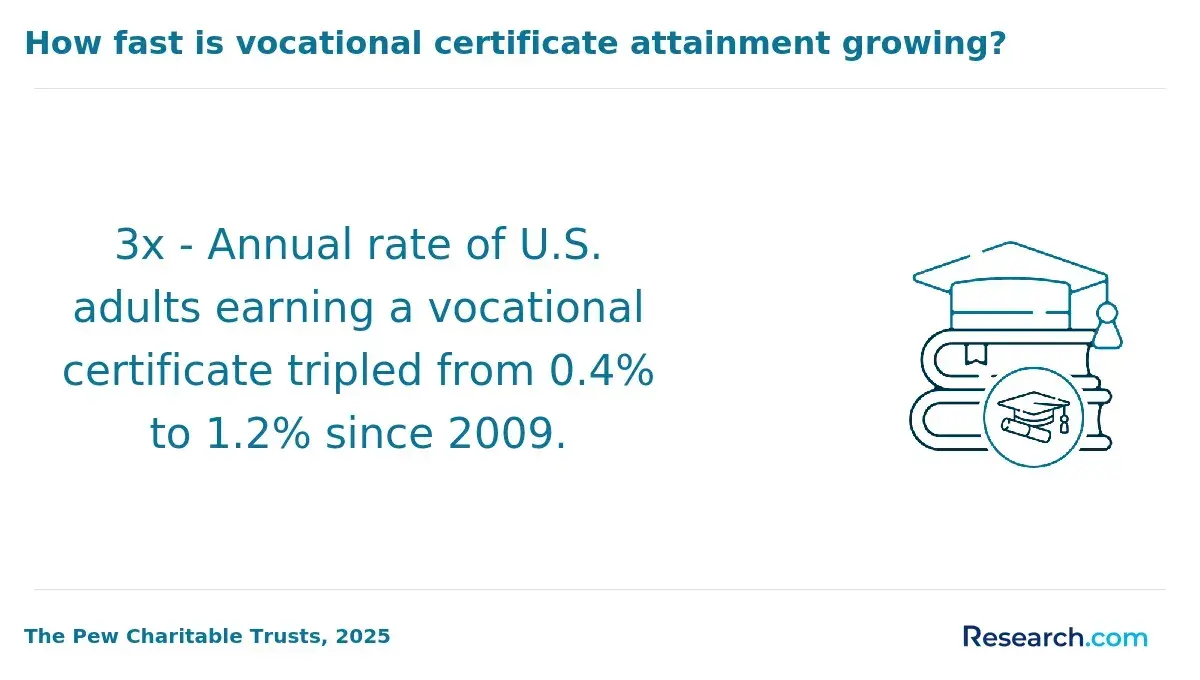
Post-graduate credentials and continuing education serve as a powerful layoff shield by validating specialized, high-demand expertise-according to the Bureau of Labor Statistics, data science and analytics roles are projected to grow by 23%, showcasing the value of targeted skills during economic uncertainty. The following certifications enhance the recession-proof nature of careers for physics graduates by aligning them with resilient industries and roles.
- Certified Manufacturing Engineer (CMfgE): Offered by the Society of Manufacturing Engineers, this certification sharpens skills in process optimization critical for manufacturing, quality control, and materials science positions, areas where physics graduates can thrive and find stability.
- Project Management Professional (PMP): This credential equips physicists with leadership skills to manage large-scale projects across STEM sectors like aerospace, energy, and defense-industries known for stronger job security during downturns.
- Certified Energy Manager (CEM): Increasingly vital in the renewable energy sector, this certification supports physics professionals working in environmental technology and sustainable engineering, fields less vulnerable to recession pressures.
- Certified Data Scientist: Leveraging the strong quantitative background of physics graduates, this certification opens doors to data-intensive roles that remain in high demand regardless of economic cycles, thus boosting job security.
- Radiation Safety Officer (RSO): Key in medical physics, nuclear energy, and research institutions, this certification ensures compliance with safety regulations, offering protection even in challenging economic conditions.
These recession-proof certifications for physics graduates not only increase employability but also expand the range of resilient career paths. For those seeking to complement their physics degree with additional qualifications, reliable options include technical certificates and online paralegal certificate programs, which can also add versatility and job security in dynamic employment markets.
Regularly updating skills can make physics professionals less vulnerable during economic downturns and company restructurings. Below are key competencies that strengthen job security in various physics-related careers.
- Data Analysis and Computational Modeling: Proficiency in programming languages like Python, MATLAB, or R enables physics graduates to manage and interpret large datasets. These abilities are crucial for roles in research, finance, and engineering where data-driven solutions are vital.
- Machine Learning and Artificial Intelligence: Applying AI techniques alongside physics fundamentals unlocks opportunities in tech development, simulation, and automation fields. This expertise supports careers that remain stable by driving innovation even amid market fluctuations.
- Advanced Instrumentation and Experimental Design: Skills in creating and operating complex instruments are highly sought after in aerospace, healthcare, and renewable energy sectors. Mastery here ensures accuracy and reliability, which are indispensable in high-precision environments.
- Technical Communication and Interdisciplinary Teamwork: Clearly explaining technical concepts and collaborating across departments enhances employability. These soft skills are valuable for physics professionals involved in multidisciplinary projects and research settings.
- Project Management and Business Acumen: Familiarity with managing timelines, budgets, and strategic planning allows physics graduates to contribute beyond technical tasks. This knowledge is critical for leading initiatives that align with organizational objectives in diverse industries.
Integrating essential technical skills for physics graduates with certifications to enhance job security in physics careers equips individuals to withstand volatile job markets. Industry data show physics roles combining computational and cross-functional skills enjoy a notably higher retention rate during recessions. For those interested in expanding their qualifications, exploring programs such as the most affordable online accounting degree may also offer complementary knowledge that broadens career flexibility.
In the competitive field of physics, the reputation of the institution you graduate from can influence job stability. Employers often associate prestigious schools with higher academic rigor and stronger training, which may open doors to more recession-resistant positions. While this doesn't guarantee success, school prestige can act as an initial filter in hiring decisions.
Graduates from highly regarded physics programs also benefit from enhanced networking opportunities. Alumni networks, on-campus recruiting, and connections with leading researchers can provide access to exclusive job openings and internships. This advantage often translates into better early-career prospects and long-term professional growth, helping graduates navigate volatile job markets.
However, graduates from any accredited physics program can remain competitive by demonstrating proven performance and relevant skills. Success in research, internships, and practical experience typically weighs heavily alongside institutional prestige. In today's evolving physics job market, measurable achievements and continual learning are crucial to securing stable, resilient careers.
Proactive career preparation is crucial for aligning academic learning with the evolving demands of the physics industry, enhancing employability and job stability. Below are effective strategies students can adopt to better position themselves in the job market.
- Practical Experience: Seek internships or research roles focused on data analysis, computational modeling, or experiment design. Hands-on involvement develops problem-solving skills that employers highly value.
- Interdisciplinary Collaboration: Engage in projects that combine physics with computer science, engineering, or data science. Such integration expands versatility and meets the growing demand for hybrid skill sets.
- Professional Networking: Join relevant organizations and attend industry events to connect with professionals, stay updated on innovations, and uncover job opportunities.
- Technical Skills Development: Master programming languages like Python, MATLAB, or R which are often required in physics-related careers, improving your adaptability and technical proficiency.
- Communication Skills: Practice conveying complex research or technical topics clearly to audiences without specialized knowledge, strengthening your ability to collaborate and influence diverse teams.
When asked how physics students can ensure they meet current job market expectations, a professional who earned a bachelor's degree in physics online shared, "Balancing coursework with real-world experience was tough, especially while managing work and family. I often felt uncertain about which skills would be most relevant until I took a chance on internships and networking. It wasn't just about knowledge-it was about proving adaptability." He also mentioned the emotional challenge of staying motivated amid job market changes, emphasizing that resilience and continuous learning became key to navigating early career demands.
Careers in physics that are recession-resistant tend to offer average salaries around $100,000 annually, which is significantly above the national average salary of about $60,000. This higher pay reflects both the specialized skill set and the steady demand for physics expertise in key industries. The average salary for recession-resistant physics careers also benefits from projected annual salary growth of approximately 3%, supporting long-term financial stability for professionals in the field.
Among the most lucrative recession-resistant physics careers are those in government research, aerospace, and data science-fields known for competitive compensation and ongoing investment in technology. While some roles may not reach the highest salary brackets, such as positions in academic or certain industrial sectors, they still provide stable employment and protect against economic downturns. Specialized certifications, like computational modeling, can also enhance income potential, offering bonuses or premium pay based on technical expertise.
Do physics careers offer high pay during recessions? It varies; income depends on factors including industry, company size, location, and academic credentials earned. Physics professionals with advanced degrees or certifications typically command better salaries and benefits. For those interested in a related but distinct field with strong income prospects, exploring a forensic psychology degree may be worthwhile, blending scientific knowledge with practical applications in recession-resistant professions.
What Graduates Say About Their Career After Getting a Degree in Physics
- Eddie: "Choosing to study physics was driven by my curiosity about how the universe works, but it ended up equipping me with more than just knowledge of fundamental principles. The analytical and problem-solving skills I developed helped me seamlessly transition into software engineering, a field known for its resilience during economic downturns. My degree truly gave me a versatile foundation that employers respect across various industries."
- Sage: "Reflecting on my journey, the rigorous training in physics sharpened my ability to think critically under pressure, which is invaluable in my role as a data analyst. Despite economic uncertainty, the demand for professionals who can interpret complex datasets remains strong, and my degree continues to open doors. The depth of understanding and discipline I gained was essential in building a steady and recession-resistant career."
- John: "My motivation to pursue physics was rooted in a passion for discovery, but it also prepared me practically for a career in renewable energy consultancy. The quantitative skills and scientific mindset I acquired make me confident in offering solutions that stand the test of time, even amidst market fluctuations. This background not only secured my employment but allows me to contribute meaningfully to a growing, stable industry."
Other Things You Should Know About Physics Degrees
Professional certifications can improve hiring chances in areas like data analysis, quality engineering, and project management. Examples include Six Sigma, PMP, and vendor-specific data or cloud credentials. These are not required for all physics jobs, but they signal practical skills employers often keep hiring for during downturns.
Interdisciplinary knowledge significantly enhances job security for physics graduates. Physics professionals who combine their core expertise with skills in computer science, engineering, or data analysis can adapt to a wider range of industries. This flexibility allows them to navigate market fluctuations better and access recession-resistant sectors like technology or healthcare.
Continuous professional development is crucial to maintaining recession-resistant careers in physics. Engaging in ongoing training and staying updated on emerging technologies increases a physicist's adaptability and value to employers. Pursuing certifications or advanced skills in data science, machine learning, or specialized instrumentation helps professionals respond effectively to changing industry demands.
- University prestige: how much of a factor? https://www.physicsforums.com/threads/university-prestige-how-much-of-a-factor.764497/
- Career fields that virtually guarantee a job https://www.theglobeandmail.com/report-on-business/careers/career-fields-that-virtually-guarantee-a-job/article4246934/
- Physics Employment Facts https://www.compadre.org/careers/facts.cfm
- Physics Careers: BLS Insights On Jobs & Salaries https://ftp.bills.com.au/lunar-tips/physics-careers-bls-insights-on-jobs-and-salaries-1767647330
- Career Paths for MSc Physics Graduates: Government & Private Sector Options - Elysian Inspires https://www.elysianinspires.com/career-paths-for-msc-physics-graduates-government-private-sector-options/
- How to Recession-Proof Your Engineering Career https://www.structuremag.org/article/how-to-recession-proof-your-engineering-career/
- Public vs. Private Sector Jobs: Choosing a Career Path https://tsengcollege.csun.edu/blog/public-vs-private-sector-jobs-choosing-a-career-path
- Does School Prestige Affect Earnings Potential? https://vault.com/blogs/salary-and-benefits/does-school-prestige-affect-earnings-potential
- Physics Teacher Shortage? Not so Sure https://physicsteachermomma.com/2018/03/16/physics-teacher-shortage-not-so-sure/
- Public vs Private Sector Careers: Salary, Stability, Benefits, and How to Choose https://www.crawljobs.com/blog/public-vs-private-sector-jobs-career-guide/


