2027 Most In-Demand Environmental Management Master's Specializations

Co-Founder and Chief Data Scientist
Shifts in regulatory frameworks, technology adoption, and evolving sustainability standards increasingly influence how prospective graduate students assess environmental management master's specializations. Demand varies by region, sector, and employer expectations, distinguishing transient hiring surges from durable career pathways. Evaluating a specialization's labor-market relevance requires analysis of curriculum rigor, applied skill development, certification alignment, and alumni career trajectories rather than reliance on simple salary or vacancy counts.
Specializations linked to emerging industry needs and interdisciplinary learning often enable adaptability amid shifting employer requirements. This article offers a practical examination of leading environmental management master's concentrations, highlighting factors essential for aligning specialization choices with both immediate opportunities and long-term professional resilience.
Key Things to Know About the Most In-Demand Environmental Management Master's Specializations
- Specializations focused on climate adaptation show strong employer demand, reflecting a 22% projected job growth through 2030; this emphasizes resilience planning skills critical for emerging regulatory frameworks but requires accepting slower initial career progression due to evolving industry standards.
- Resource management expertise aligns tightly with current corporate sustainability targets, yet employers prioritize candidates with interdisciplinary data analysis capabilities, signaling a competitive skill gap that drives workforce selection toward multifaceted graduates.
- Programs emphasizing environmental policy and compliance often incur longer durations and higher costs, influencing accessibility and timing for working professionals, which can delay workforce reentry and require strategic financial planning.
What makes an environmental management master's specialization "in demand"?
What makes an environmental management master's specialization truly "in demand" is often a nuanced combination of labor-market need, specialized skill development, and alignment with emerging or durable professional functions within environmental management fields. Demand can differ significantly across regions, types of employers, industry sectors, and the pace of technology adoption or evolving regulatory requirements.
Specializations that prepare students for roles with sustained need-such as those focused on environmental risk assessment or sustainability analytics-typically reflect more strategic value than those responding to short-term hiring spikes. This perspective requires prospective students to consider how a given specialization maps to established workforce gaps and projected occupational growth, rather than relying solely on popularity metrics.
Using demand as the primary selection criterion has limitations that warrant careful examination. Job-posting volume or enrollment popularity, for instance, may reflect transient trends rather than substantive workforce transformation. Broad claims about salary levels or generic marketing appeals can also mask differences in curriculum depth, practical learning opportunities, and the relevance of certification preparation.
Evaluating programs with attention to faculty expertise, alumni outcomes, and transferable skills across related roles provides a better lens for assessing whether a specialization supports meaningful and sustained environmental management career growth opportunities. This approach helps avoid misalignment between graduate study and actual employer expectations.
Those who benefit most from strategically choosing a high-demand specialization include working professionals, career changers, and advancement-focused learners seeking clearer alignment between graduate studies and evolving labor-market dynamics. These learners must prioritize specializations that not only reflect current hiring patterns but also anticipate shifts driven by regulatory changes, technology integration, and industry transformation.
Programs integrated with recognized credentials or offering experiential learning aligned with employer needs position graduates for stronger career leverage over time. For individuals balancing professional experience with further education, understanding these complexities is critical to selecting a specialization that delivers lasting career impact beyond initial enrollment trends or marketing claims, especially when exploring options like one year masters programs online.
The 10 Most In-Demand Environmental Management Master's Specializations
Selecting a master's specialization in environmental management requires assessing both immediate job market demands and evolving sector dynamics. Specializations vary widely in how they align with regulatory frameworks, technological advances, and employer expectations across private, public, and nonprofit sectors. Instead of focusing solely on projected growth rates, it's critical to consider how skill sets fit operational realities, certification pathways, and interdisciplinary collaboration essential to sustained employment.
Sustainability and Corporate Environmental Management: Firms face mounting pressure for transparent sustainability practices, driving demand for professionals who can integrate environmental goals with corporate strategy. This role requires cross-functional communication and compliance skills amid tightening regulations and investor scrutiny.
Environmental Policy and Regulation: Navigating complex legal frameworks places policy specialists in steady demand, especially within government and advocacy groups. Candidates often need deep understanding of multi-level governance and regulatory impact analysis to remain relevant.
Natural Resource Management: Managing land, forest, and water resources is critical amid climate stress and resource depletion. Practical knowledge of ecological systems and stakeholder engagement positions graduates for roles in federal agencies and conservation organizations.
Environmental Risk Assessment and Remediation: Federal investment in contaminated site cleanup sustains demand for specialists adept at hazard analysis and remediation technologies. This field balances technical aptitude with regulatory compliance and community relations.
Climate Change Science and Adaptation: As climate-related disruptions intensify, expertise in modeling and adaptive strategies is sought across sectors. Professionals must interpret complex data for actionable resilience planning under uncertainty.
Energy and Environmental Systems: Linking renewable energy development with environmental management requires interdisciplinary skills, combining engineering knowledge and sustainability principles. This specialization aligns closely with green infrastructure initiatives.
Environmental Data Science and GIS: The rise of big data has created robust demand for environmental managers proficient in GIS and data analytics. Mastery of these tools supports evidence-based decision-making throughout the environmental sector.
Waste Management and Circular Economy: Regulatory shifts toward waste reduction and resource recirculation call for experts in circular economic models. This area intersects policy, innovation, and operations within industrial and municipal contexts.
Water Resource Engineering and Management: Addressing water scarcity and infrastructure integrity necessitates engineering-focused environmental skills. Demand stems from aging water systems and increasing quality regulations.
Biodiversity and Conservation Management: Preservation efforts backed by international funding fuel opportunities in habitat protection and species recovery programs. Graduates here often combine field expertise with data interpretation and policy advocacy.
A prospective student recalled their decision-making process when comparing sustainability-oriented and data science-driven specializations. They initially favored sustainability due to visible corporate demand but hesitated after reviewing curriculum rigor and alumni outcomes. Concerned about rapid tech evolution and long-term adaptability, they ultimately chose the data science track, valuing its quantitative focus and versatility despite its steeper learning curve. This deliberation highlighted how balancing market trends with personal aptitude and program strengths shapes more informed specialization choices.
Which environmental management master's specializations lead to the highest-paying careers?
Master's specializations in corporate sustainability management, environmental health and safety (EHS) executive leadership, renewable energy project management, and environmental data analytics generally lead to the highest-paying careers in environmental management. While standard concentrations focusing on field conservation or grassroots environmental education provide immense ecological value, the highest compensation ceilings belong to tracks that directly integrate environmental policy with corporate compliance, risk mitigation, and private energy capital.
Corporate Sustainability and ESG Strategy
Graduates who focus their master's degree on corporate sustainability and Environmental, Social, and Governance (ESG) strategy secure some of the most lucrative positions in the private sector. This specialization trains advanced managers to audit corporate carbon footprints, optimize supply chain sustainability, and align corporate operations with global climate goals. Because enterprise organizations face intense investor and regulatory pressure to meet climate-neutral milestones, graduates are aggressively recruited as Corporate Sustainability Directors and Chief Sustainability Officers, where compensation mirrors executive corporate pay scales.
Environmental Health, Safety (EHS), and Compliance Management
Specializing in industrial environmental compliance and occupational safety shifts a graduate's career path directly into high-risk, heavily regulated sectors like manufacturing, pharmaceuticals, and technology infrastructure. This track heavily covers environmental law, waste management protocols, toxicological risk assessment, and OSHA compliance. Companies pay an immense financial premium to EHS Managers and Regional Directors of Compliance who can design operational frameworks that protect workforces, eliminate hazardous liabilities, and prevent multi-million dollar regulatory fines.
Renewable Energy Development and Infrastructure Management
This commercial, forward-looking specialization merges environmental science with energy economics, clean tech project development, and natural resource management. Students train extensively in evaluating the commercial viability of wind, solar, and geothermal infrastructure projects while managing environmental impact assessments. Graduates find high-paying placement as Renewable Energy Project Managers or Environmental Advisors for major energy corporations, utility networks, and infrastructure investment firms aiming to deploy large-scale clean energy assets.
Environmental Data Analytics and Ecological Modeling
Focusing on the highly quantitative side of environmental engineering and resource management, this concentration bridges climate science with advanced data modeling, geographic information systems (GIS), and predictive risk analytics. Rather than conducting manual localized field testing, specialists in this track build the predictive software backends and computational models used to forecast resource depletion, rising sea levels, or supply chain exposure to severe weather events. Because this data directly informs multinational insurance models and state-level infrastructure budgets, graduates command premium salaries as Senior Climate Risk Analysts and Data Architecture Directors.
Which environmental management master's specializations offer the best job growth?
Evaluating the top environmental management concentrations with highest employment demand requires careful consideration beyond surface-level popularity. Job growth should be analyzed through employment projections, shifting employer priorities, and the introduction of new technologies or regulations that create skill shortages. Specializations tied to climate resilience, renewable energy, and environmental data analytics reflect these trends, as organizations seek expertise that can adapt to evolving sustainability mandates and digital transformation.
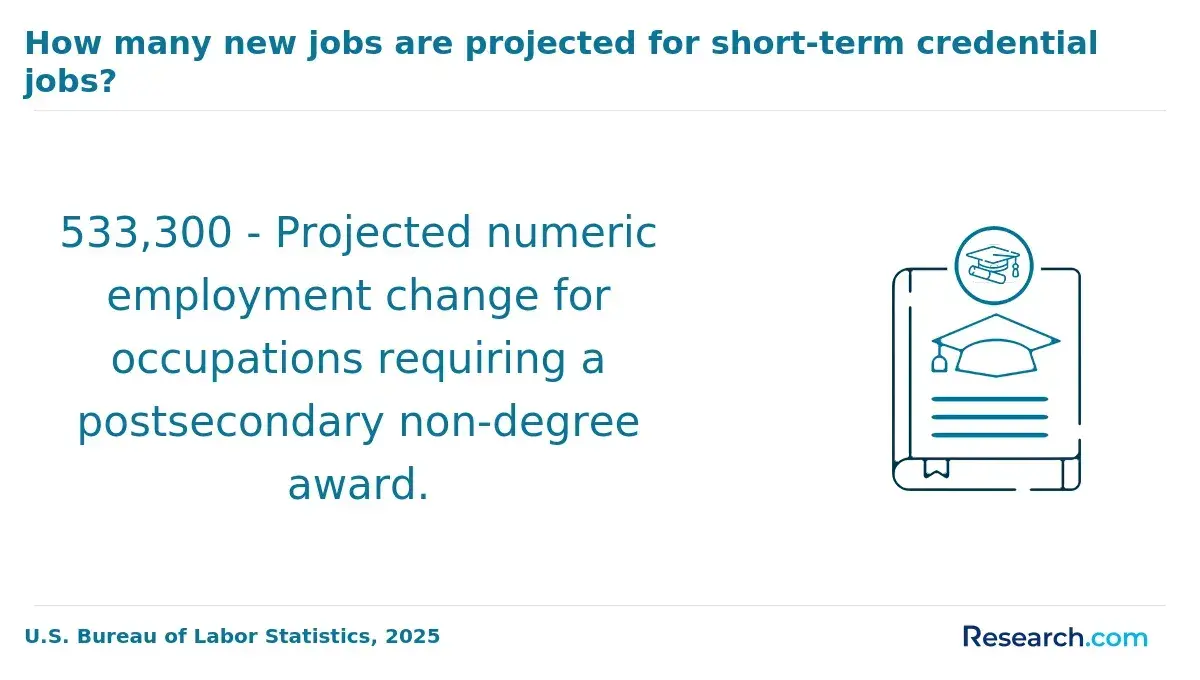
The U.S. Bureau of Labor Statistics projects notably faster expansion in these areas, underscoring how transferable competencies-such as risk assessment, policy navigation, and GIS proficiency-enhance employability across multiple sectors.
However, relying solely on projected job growth neglects important practical factors influencing career trajectories. Regional differences, cyclical funding for environmental projects, and saturation in certain specializations can limit opportunities. Additionally, some roles demand specific certifications or internship experiences that part-time students must plan around to remain competitive.
Prospective graduates should also consider whether their chosen specialization supports both immediate employment and long-term advancement. Those weighing options can benefit from comparing programs with other fields, such as a criminal justice online degree, to assess fit relative to their professional and personal commitments before committing to a path.
Which environmental management master's specializations are best for career changers?
Specializations in environmental policy, sustainable development, and environmental data analysis often present more attainable entry points for career changers due to their reliance on transferable analytical and interdisciplinary skills rather than deep technical prerequisites. Programs structured with bridge coursework and applied components such as internships or capstone projects enhance the practical readiness of students transitioning from fields like business or social sciences.
Employers increasingly prioritize demonstrated project-based experience, with a 2024 report from the National Association of Environmental Professionals noting that over 60% of hiring managers favor candidates holding relevant certifications or experiential learning credentials. Aligning specialization choices with areas that offer defined pathways for entry-level or mid-career transitions can reduce barriers related to foundational knowledge while meeting market demands.
However, selecting a specialization solely because it appears in demand entails risks including steep learning curves, particularly in technical domains like environmental engineering or ecosystem science where prerequisite knowledge in natural sciences is substantial. Candidates lacking direct industry background may face credentialing challenges, networking limitations, and stiff competition from professionals with aligned academic and practical experience.
Without strategic evaluation, candidates risk extended time to competency or limited employability despite coursework investment. Balancing the lure of market trends against realistic skill acquisition and employer expectations is critical to avoid misaligned specialization choices that hinder rather than help career transition.
A recent graduate who shifted from a marketing role into environmental management initially grappled with selecting between data analysis and environmental policy specializations. Although their quantitative skills favored data management, the candidate hesitated due to gaps in statistical foundations and the prospect of intensive prerequisite courses.
Engaging closely with program advisors and alumni, they elected a policy specialization with integrated capstone projects and internship options, capitalizing on existing communication strengths. This approach provided credible work samples and networking opportunities, ultimately smoothing their transition into a regulatory compliance role despite early uncertainty about immediate technical fit.
Which environmental management master's specializations are best for working professionals?
Working professionals assessing environmental management master's specializations must prioritize employer relevance, schedule compatibility, applied skill development, and realistic advancement opportunities within their current roles. Specializations focusing on sustainability leadership, environmental policy, and natural resources management align well with existing job functions while meeting the 2024 Labor Market Insights report showing 68% of employers prioritize candidates familiar with sustainability systems and regulatory compliance.
Evaluating which concentrations offer the best environmental management concentrations for career advancement involves weighing how quickly new competencies can be applied on the job without disrupting full-time employment, especially when balancing work and family commitments.
Some environmental management specializations better suit working professionals due to flexible delivery formats like online or hybrid courses and asynchronous learning options. Programs integrating project-based coursework connected to current employment and offering practicums or internships with adaptable schedules enhance learning relevance and retention.
Specializations aligned with certifications or licensure also help build marketable expertise without requiring career interruption. Those pursuing the best environmental management specializations for experienced professionals often select tracks with these operational advantages to maintain continuous workforce engagement while advancing expertise.
Trade-offs arise when considering highly technical, research-intensive, or field-placement-heavy specializations that may improve labor market value but impose intensive scheduling and workload demands. While these paths attract certain segments of the workforce, they pose challenges for those needing curriculum flexibility and manageable time commitments.
Consequently, professionals must balance specialization depth against practical learning conditions. For working professionals seeking accessible options, exploring programs like the most affordable online MBA programs can provide a comparative framework for evaluating flexible, career-compatible graduate education offerings.
How do online and flexible environmental management master's specializations compare?
Online and flexible master's specializations in environmental management differ substantially in academic design and student engagement. Fully online programs often emphasize asynchronous coursework, minimizing real-time interaction and typically lacking cohort-based progression or frequent faculty contact.
Hybrid formats provide a blend of virtual and scheduled synchronous or in-person components, enabling not only richer faculty and peer exchange but also more consistent access to applied learning opportunities such as internships or practicums, which are crucial for fields demanding hands-on expertise. These structural differences influence how well programs align with evolving employer needs, particularly in sectors valuing experiential skill application and networking capability within environmental management careers.
Flexibility in delivery alone does not guarantee program rigor or employer recognition. Critical considerations include curriculum comprehensiveness, accreditation status, and the extent of experiential learning integrated into the program. While some fully online tracks incorporate virtual simulations, these may not substitute adequately for real-world problem-solving experiences prized in the job market.
According to a 2024 National Graduate Education Council report, hybrid and flexible programs generally deliver stronger academic advising and career support, enhancing graduate outcomes. Prospective students should assess whether the program's technological demands and support services realistically enable acquisition of the competencies most sought after in contemporary environmental management roles.
For working professionals and career changers, flexible master's options offer the practical advantage of balancing employment with study but require vigilance regarding workload pacing, networking limitations, and the tangible value of the specialization post-graduation.
Part-time or accelerated tracks can aid in maintaining income streams and reducing time to credential, yet these pathways demand disciplined time management and may limit opportunities for immersive peer collaboration or field experience. Ultimately, selecting a specialization involves weighing immediate flexibility against long-term career positioning and the quality of experiential learning embedded within the program structure.
What skills do students learn in in-demand environmental management master's specializations?
In-demand environmental management master's specializations are designed to develop targeted competencies shaped by evolving labor-market needs, regulatory landscapes, and professional expectations. These programs extend well beyond nominal concentrations, focusing instead on cultivating actionable skill sets that align with employer demands in both public and private sectors.
Understanding the nuanced skills taught can clarify how graduates fit varied roles within areas like sustainability, policy advising, or resource management.
- Technical Proficiency: Mastery of geographic information systems (GIS), pollution control technologies, and environmental impact assessment is fundamental. Through labs, fieldwork, and applied projects, students learn to interpret complex environmental datasets and implement compliance strategies, which directly support roles requiring data-driven decision-making and operational adjustments in organizations.
- Analytical and Risk Assessment Skills: Coursework focusing on environmental modeling and cost-benefit analysis sharpens students' ability to evaluate ecological and economic tradeoffs. This skill set is critical in balancing regulatory compliance with organizational priorities, enhancing graduates' capacity to contribute effectively in policy development or consultancy roles.
- Leadership and Stakeholder Management: Programs often integrate project management and collaborative exercises that simulate real-world multidisciplinary teamwork. These experiences prepare students to lead initiatives and navigate stakeholder dynamics, a necessity given growing employer emphasis on cross-sector collaboration and sustainable project execution.
- Research and Evidence-Based Strategy: Students develop rigorous research capabilities, including designing studies and synthesizing scientific literature. This foundation promotes adaptability in emerging career paths focused on environmental innovation and policy driven by advancing regulatory frameworks.
- Communication and Interdisciplinary Fluency: Effective translation of complex environmental information to diverse audiences-community groups, regulators, or corporate clients-is practiced through presentations and reporting assignments. This skill enhances employability by addressing a frequently cited employer priority: clear, strategic communication that bridges technical and non-technical stakeholders.
A 2024 workforce projection from the U.S. Bureau of Labor Statistics indicates a 12% growth in environmental specialist roles, reflecting the increasing importance of these integrated skill sets in responding to expanded regulatory and corporate sustainability demands.
What are the admissions requirements for popular environmental management master's specializations?
Admissions requirements for popular environmental management master's specializations function both as an eligibility screen and a forecast of the career or technical skills expected in each focus area. These prerequisites reveal how closely programs align with specific professional trajectories, advanced technical competencies, or leadership demands within environmental management.
Understanding these nuances is essential since programs may weigh academic background, work experience, and analytical readiness differently depending on specialization emphasis and market relevance.
- Academic Background and Prerequisites: Most programs require a bachelor's degree in environmental science, biology, engineering, policy, or related fields, but some specializations, particularly in environmental policy or sustainability management, accept candidates from social sciences or business disciplines if foundational knowledge is demonstrated. This ensures applicants have the baseline understanding needed to tackle advanced, often interdisciplinary, content effectively.
- Work Experience Requirements: Increasingly, environmental management master's admissions emphasize professional or field experience, typically two to three years. This preference reflects employer demand for graduates who can translate academic knowledge into practical solutions, especially for programs focused on applied research, compliance, or project management, areas where readiness impacts initial job performance.
- Standardized Testing Policies: GRE requirements have softened significantly, with over 60% of programs removing or making it optional as of 2024, according to recent educational research. However, technically demanding specializations still value strong quantitative scores to demonstrate analytical skills critical for modeling, data analysis, and environmental systems evaluation.
- Supplementary Materials and Interviews: Letters of recommendation and statements of purpose remain critical in assessing candidate fit, motivation, and potential for leadership or research. Portfolios or project summaries are often requested for specializations involving GIS, environmental design, or applied research, serving as direct evidence of relevant skill sets and past accomplishments.
- Licensure and Technical Competencies: While not typically required for admission, certain concentrations-especially those engaging with environmental health or regulatory compliance-may expect licensure eligibility or demonstrated proficiency in technical tools like GIS software. These criteria influence employability by aligning educational outcomes with sector-specific certification or operational needs.
Prospective students considering requirements for environmental management graduate programs should also assess additional technical skill demands and be aware of evolving admissions trends that reflect shifting workforce expectations. Applicants can benefit from advice commonly shared in related fields, such as graphic design programs, where portfolio articulation often plays a decisive role.
How should students compare cost, financial aid, and ROI by environmental management specialization?
When comparing online environmental management master's programs, students should prioritize curriculum criteria that directly influence career outcomes and skill relevance. First, specialization alignment matters: programs must offer concentrations that match high-growth sectors like sustainable resource management, climate policy, or environmental data analytics. These focus areas provide targeted expertise employers seek today.
Course sequencing is another critical factor. Cohesive progression from foundational theories to applied skills ensures learners build valuable competencies systematically. Programs that integrate case studies, simulations, or project-based modules often enhance practical understanding beyond traditional lectures.
Applied learning opportunities-such as virtual labs, internships, or capstone projects-are vital for bridging theory and real-world challenges. According to a 2024 survey by the Environmental Workforce Institute, 68% of employers favored candidates with demonstrated experiential learning when hiring for mid-level environmental roles.
Faculty expertise also significantly impacts curriculum quality. Instructors with current industry or research experience can provide contemporary insights, mentoring, and networking advantages that static textbook approaches lack.
Accreditation and adherence to professional standards should be non-negotiable criteria. Programs aligned with recognized environmental credentialing bodies better prepare students for licensure and certification pathways, essential in environmental management careers.
Finally, students should assess how well curricula reflect evolving employer expectations and emerging skills, including data analytics, environmental law, or sustainability reporting. Long-term career adaptability depends on programs that balance core principles with flexibility to pivot as industry demands change.
Choosing a specialization within environmental management requires careful cost comparison for environmental management master's specializations, as financial aid options and ROI vary widely depending on program design and field of focus. Cost should be viewed not only in tuition terms but also through specialized fees, course sequencing, and career-stage alignment.
- Tuition Structures and Ancillary Fees: Different specializations may have variable tuition rates or additional fees for lab access, software, or certifications, affecting overall affordability and requiring scrutiny beyond sticker price.
- Fieldwork and Internship Costs: Programs demanding extensive practical training or off-campus internships can introduce hidden expenses such as travel or equipment, influencing total debt and affecting the opportunity cost of time invested.
- Financial Aid and Employer Sponsorship: Access to scholarships or employer tuition reimbursement often depends on specialization relevance to the employer's needs, so eligibility can differ, impacting net program cost and debt exposure.
- Certification Preparation and Licensing Expenses: Specializations aligned with professional credentials may require additional test fees or preparatory courses not covered by tuition, altering expected ROI and timeline to workforce impact.
- Time-To-Completion Variation: Some focus areas may demand longer completion due to prerequisites or capstone projects, extending living expenses and delaying earning potential; this nuanced timeline should be factored into financial evaluations.
For programs with technical emphases like Geographic Information Systems (GIS), which is increasingly integrated within environmental management, students may benefit from exploring specialized degrees such as a GIS degree for targeted expertise and potentially better alignment with environmental data analytics roles. Considering financial aid and ROI considerations in environmental management graduate programs is critical for making sustainable decisions about education investment aligned with career trajectories.
What Do Graduates Say About Their Environmental Management Master's Specializations?
- Ramon: "After specializing in sustainable resource management, I quickly realized that having a strong portfolio of internships was far more valuable to employers than formal licensure. Many job listings emphasized hands-on experience with environmental impact assessments and remote sensing tools over certifications. This drove me to prioritize gaining practical experience, which ultimately opened doors for remote consulting roles that I hadn't initially considered."
- Marcos: "Graduating with a focus on environmental policy analysis, I found the career path both promising and challenging. Entry-level salaries were decent but plateaued unless I pursued additional licensure or pivoted towards public sector roles. The program equipped me with a solid analytical framework, but I had to be proactive about networking and acquiring specific software skills to stand out in a competitive job market."
- Silas: "Transitioning into environmental management through the program, I had to be realistic about the hiring landscape. Many employers preferred candidates who could demonstrate flexibility, particularly for fieldwork and community engagement projects. Although the coursework was rigorous, it was the internships and the professional relationships I built that made the biggest difference in navigating my post-graduation job search."
Other Things You Should Know About Environmental Management Degrees
The curriculum focus directly affects the sectors where graduates are most competitive. For example, a specialization heavy on regulatory policy and compliance tends to prepare students for government and consultancy roles, whereas one centered on technological solutions and data analysis aligns better with private sector and research jobs. Choosing a program with strong practical components like fieldwork or internships often enhances employability by providing real-world experience that employers value. Therefore, aligning your specialization's teaching approach with the industry's expectations is critical for smoother entry into targeted job markets.
Specializations with deep technical courses-such as environmental engineering modules-may limit exposure to broader social or economic factors influencing environmental issues, which can narrow career options but cultivate expertise in high-demand technical roles. Conversely, programs emphasizing interdisciplinary breadth provide skills in policy, management, and sustainability but might lack the detailed technical rigor some employers prefer. Prospective students should prioritize based on whether they aim for specialized technical roles or managerial and advisory positions, as this choice significantly affects daily responsibilities, workload, and long-term career flexibility.
Specializations leaning toward research prepare students for careers in academia, environmental science, and policy development but often involve heavier workloads with complex data analysis and theory. Programs that emphasize applied skills typically offer more project-based learning and collaboration with industry partners, which can improve job readiness for consulting, conservation, or sustainability roles. Students intending to enter direct practice or consultancy should prioritize applied programs, while those considering doctoral studies or policy research may find research-intensive specializations more advantageous.
References
- Online Master's Degrees in Environmental Science: Compare Programs https://www.degreesforgood.org/online-degrees/environmental-science/masters/
- Master of Science in Environmental Management https://yesbud.online/master-of-science-in-environmental-management/
- University of South Africa https://www.unisa.ac.za/sites/corporate/default/Apply-for-admission/Master%27s-&-doctoral-degrees/Qualifications/All-qualifications/Master-of-Science-in-Environmental-Management-(98001)
- College ROI: How to Compare Costs, Outcomes and Fit Counselor Guide: Which Students Thrive in Small Colleges https://oglethorpe.edu/post/college-roi-costs-outcomes-fit/
- Ranking of the Best Masters, MS & MBA 2025 https://www.best-masters.com/master-sustainable-development-and-environmental-management-ranking.html
- Online MBA Specializations Comparison: Key Differences https://www.onlinecu.in/blog/cu/how-do-online-mba-specializations-compare.php
- MSc Environmental Management: Where It Excels—And When to Choose a Management Route - S U M A S https://sumas.ch/msc-environmental-management-where-it-excels-and-when-to-choose-a-management-route/
- Master of Environmental Management – MEnvMgmt https://www.massey.ac.nz/study/all-qualifications-and-degrees/master-of-environmental-management-PMENM/
- Online MBAs in Environmental Management Degree Info | OnlineMBA.com https://www.onlinemba.com/rankings/best-online-mba/environmental-management/
- The 8 Most In-Demand Sustainability Jobs https://www.sustainabilitydegrees.com/blog/most-in-demand-sustainability-jobs/