
2027 Most Affordable Associate Degrees for Specialist Roles

Co-Founder and Chief Data Scientist
A low-cost associate degree is only a bargain if it leads toward the role you actually want. College Board reported average public two-year, in-district tuition and fees of $4,050 for 2024-25, but books, clinical supplies, commuting, and residency rates can change the final bill.
This guide is for U.S. students comparing specialist-focused fields rather than individual colleges. It explains which paths can prepare you for work, which require further credentials, and how to compare the full cost of reaching your career goal.
Key Things You Should Know
- Start with your target job: an affordable associate degree in accounting, IT support, or allied health serves a different purpose from a transfer-focused degree in psychology.
- College Board's 2024-25 public two-year, in-district tuition-and-fee average was $4,050 annually; that is a starting benchmark, not a complete program price.
- Check licensing and hands-on requirements before comparing prices: nursing and many allied-health roles require clinical training and a separate license or credential.
Top 10 Most Affordable Associate Degrees for Specialist Roles
Business Programs
Accounting and business administration are useful low-cost options when a nearby public college offers in-district rates. A career-oriented accounting AAS can prepare students for bookkeeping, payroll, or accounts-receivable work; an AA or AS in business may make more sense for a planned bachelor's transfer. Compare software training, internship access, and whether required courses transfer into the intended major. An associate degree does not qualify someone to become a certified public accountant. If that is the goal, price the entire education and licensing pathway, not just the first credential.
Healthcare Programs
Health information and medical laboratory technician programs can offer distinct specialist paths: one emphasizes records and data, while the other requires substantial laboratory practice. Dental hygiene and radiologic technology may also begin with associate degrees, but selective admission, clinical placements, equipment, and examination fees can make them costlier than tuition suggests. Compare programmatic accreditation and eligibility for the credential required in your state. An inexpensive general healthcare degree is not interchangeable with a program designed to meet a regulated occupation's requirements.
Information Technology Programs
IT support, networking, and cybersecurity associate programs can prepare students for entry-level technical work without the clinical expenses common in healthcare. Compare required hardware, lab access, included certification vouchers, and whether courses teach current operating systems and security practices. An AAS may prioritize job skills; an AS may better support transfer into a computing bachelor's degree. Cybersecurity specialist titles often call for experience beyond an associate degree, so look for a realistic first role, such as help desk or junior network support, and a path to advance.
Nursing / Pre-Nursing Programs
An associate degree in nursing (ADN) can provide a route to registered-nurse licensure after graduation and the required examination, subject to state rules. A pre-nursing AS usually covers prerequisites and does not itself qualify a student for RN licensure. ADN admission may be selective even at an open-admission college. Budget for prerequisites, clinical travel, immunizations, background checks, supplies, and examination fees. If you may later pursue a BSN, ask which courses apply to a documented RN-to-BSN agreement before choosing the cheapest offer.
Criminal Justice Programs
A criminal justice AA or AS may suit students planning to transfer, while a career-focused AAS can emphasize report writing, evidence procedures, or corrections. The lowest-cost choice depends on the intended employer: some public-safety jobs use an academy or employer training pathway rather than requiring an associate degree. Compare local hiring standards, physical and background requirements, and whether the college awards credit for completed academy training. Do not pay for a degree on the assumption that it alone confers police authority or guarantees an investigator role.
Psychology / Counseling Programs
An AA or AS in psychology is usually most valuable as an affordable transfer pathway, not a stand-alone qualification for licensed counseling. Some graduates may seek entry-level support roles, but duties and employer requirements vary. Compare transfer agreements, statistics and science requirements, and the cost of completing a bachelor's and any required graduate degree. A low-priced associate program can become an expensive detour if its credits count only as electives at the intended transfer school.
What Are the Most Affordable Associate Degrees for Specialist Careers?
The most affordable associate degree for a specialist career is the lowest-total-cost pathway that meets the requirements of a specific job. In-district community college programs are a strong place to start, but there is no defensible single "cheapest" field: residency, prerequisites, equipment, clinical placements, and additional credentials change the comparison. The options below are degree types to investigate, not a ranking of colleges or a claim that every program is low-cost.
This comparison shows where common costs arise and which career goal makes each option worth considering.
| Associate degree path | Potential cost advantage or expense | Best fit |
| Accounting or business | Often limited specialized equipment; transfer can add later costs | Office accounting entry roles or a planned business bachelor's |
| IT support or networking | May avoid clinical costs; check technology and certification fees | Entry-level technical support with room to build experience |
| Health information | May offer online coursework; verify practicum and credential expenses | Medical-records work rather than direct patient care |
| Nursing or allied health | Clinical, screening, and examination costs can raise the total | A specific licensed or credentialed healthcare role |
| Psychology or criminal justice transfer | Lower-cost first stage when credits apply to a planned bachelor's | A career goal that requires further education or training |
For a broader major comparison, consider good degrees to get alongside local tuition and your target employer's requirements. A certificate or apprenticeship may cost less than an associate degree when a job does not require college coursework.
Which Specialist Jobs Require an Associate Degree or Professional License?
Some specialist roles have a genuine associate-degree entry pathway; others require a license, examination, employer training, or substantially more education. Verify requirements with the relevant state board, credentialing organization, or employer before enrolling.
The distinctions below help prevent an inexpensive degree from becoming an expensive mismatch.
| Target role | How an associate degree fits | What else to verify |
| Registered nurse | An approved ADN can be an educational route | State board approval, clinical requirements, and NCLEX-RN eligibility |
| Dental hygienist | An accredited associate program is a common entry route | Required examinations and state licensure |
| Radiologic technologist | A qualifying associate program can provide occupational preparation | Program accreditation, certification eligibility, and state rules |
| IT support specialist | An associate degree can build relevant skills | Employer skill expectations; a degree or license is not universally required |
| Licensed mental health counselor | A psychology associate degree is an early transfer step | Required graduate education, supervised experience, and state licensure |
Do not confuse an advanced academic credential with the credential a regulated job actually requires. Even the easiest PhD without dissertation is not a substitute for checking a state's specific counseling-license rules.
How Much Do Affordable Associate Degree Programs Cost and How Long Do They Take?
Many associate programs require around 60 semester credits, but healthcare prerequisites or tightly sequenced courses can add time. Two academic years is possible with a sufficient full-time course load; part-time study, unavailable classes, or clinical scheduling may extend completion. Request a term-by-term plan rather than relying on an advertised duration.
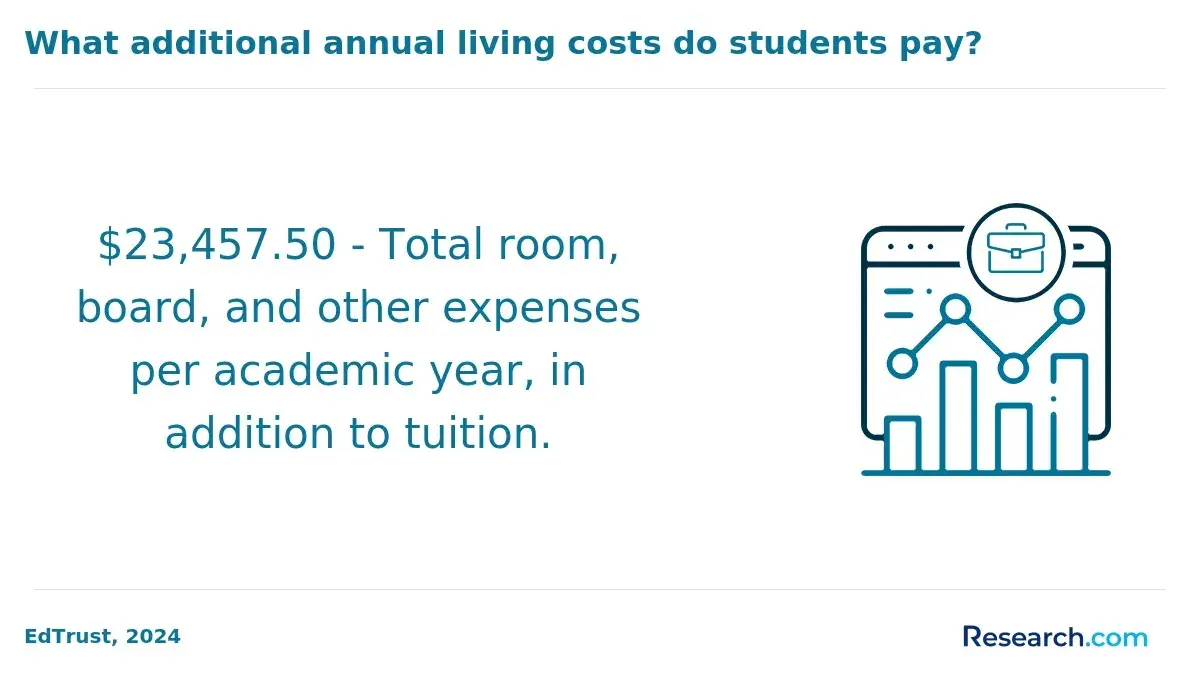
College Board's 2024-25 average of $4,050 in annual public two-year, in-district tuition and fees offers a national benchmark, not a quote for your program. Published tuition is the course charge; tuition and mandatory fees are a broader sticker price; net price reflects grants and scholarships; and total completion cost also includes required supplies, transportation, and any remaining coursework. Out-of-district and out-of-state rates may differ substantially.
Before accepting an offer, ask for a cost estimate covering these expenses so you can compare the same finish line at each school:
- All required credits, prerequisites, mandatory fees, books, software, and equipment.
- Clinical travel, screenings, uniforms, certification examinations, or campus visits where applicable.
- Your residency rate, expected grant aid, payment options, and the cost of courses that will not transfer.
Complete the FAFSA and check school, state, and employer assistance where eligible. Aid can lower what you pay, but borrowing still has to be repaid.
Are Online Associate Degrees as Valuable as Campus-Based Programs?
An accredited online associate degree can be a valuable choice when its courses, outcomes, and required credentials match your goal. Online delivery does not remove programmatic accreditation or licensing requirements. Nursing and allied-health programs commonly require in-person clinical work; an online IT program may still require scheduled labs, proctored assessments, or particular equipment.
Compare total cost as well as convenience. A nearby campus program with in-district tuition may cost less than an out-of-state online option, while online study may reduce commuting expenses. Check whether classes are asynchronous, whether deadlines are fixed, and where hands-on requirements take place. Lists of the best online colleges can help you discover options, but confirm each associate program's format and costs with the school.
What Accreditation Should You Look for in an Associate Degree Program?
Start with institutional accreditation recognized by the U.S. Department of Education. It matters for federal aid eligibility and often affects transfer decisions, though receiving schools decide which credits apply to a particular degree. Do not assume accreditation alone makes every course transferable.
For a regulated healthcare role, also check the programmatic accreditation, state board approval, or both that the occupation requires. Ask the school to identify the accreditor, the exact program covered, and the states in which its graduates can seek the intended credential. A cheaper program is not a saving if it leaves you ineligible for the examination or license you need.
What Courses Do Specialist-Focused Associate Degree Programs Include?
Most programs combine general education - such as writing, mathematics, and communication - with major courses. An accounting program might include financial accounting and payroll; IT may include networking and troubleshooting; nursing includes science prerequisites, nursing courses, and supervised clinical practice. Psychology transfer programs commonly emphasize introductory psychology and research-related coursework.
Read the required course sequence, not just the catalog description. A course offered only once a year, a prerequisite that must be completed before application, or a practicum with daytime hours can affect both time to completion and earnings you must give up while studying. If transfer is the goal, ask the destination college which courses satisfy major requirements rather than merely count as electives.
What Are the Admission Requirements for Affordable Associate Degree Programs?
Community colleges commonly require a high school diploma or equivalent and an application; placement measures, transcripts, or prerequisites may determine which courses you can start. Admission to the college is not necessarily admission to a selective nursing or allied-health program. Those majors may have separate science-course, grade, screening, or application requirements that vary by school.
Ask admissions for both the college's policy and the major's current checklist. If you have previous college credit, request an evaluation showing which credits satisfy requirements and how many must still be completed at the institution. That written estimate is more useful for comparing affordability than an assumption that every prior course will count.
What Salaries and Job Outlook Can Graduates Expect in Specialist Roles?
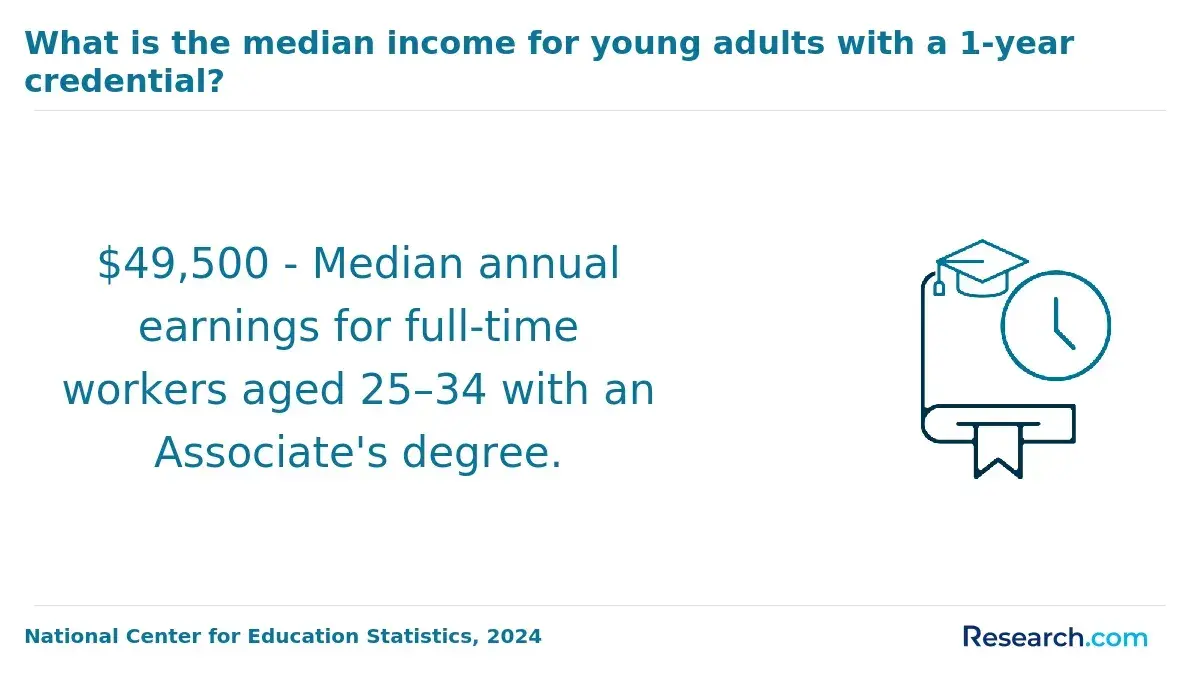
Career returns depend on the occupation and the qualifications needed to enter it, not simply on holding an associate degree. The U.S. Bureau of Labor Statistics reported a 2024 median annual wage of $93,600 for registered nurses. That figure describes employed nurses across education and experience levels; it is not the expected starting salary of an ADN graduate. RN employment is projected to grow 5% from 2024 to 2034, which signals demand but does not guarantee a local opening.
Business and IT graduates may enter support roles and progress with experience or additional credentials. Psychology graduates generally need further education for licensed counseling, and criminal justice graduates should check local public-safety hiring routes. To judge value, compare the full cost and time to meet a job's requirements with local postings - not a national wage figure alone.
How Can You Compare Schools, Certifications, and Career Pathways?
Compare at least two schools offering the same intended pathway. Otherwise, a low-cost transfer degree may appear cheaper than an occupational program even though it cannot qualify you for the target role. Use this sequence to make a practical decision:
- Name the entry-level job and verify its education, certification, examination, and state licensing requirements.
- Request each school's credit-by-credit degree plan and total-cost estimate at your actual residency rate.
- Confirm institutional accreditation, any necessary program approval, clinical or lab locations, and online attendance rules.
- Ask a prospective transfer school which credits apply to the intended bachelor's major; compare certificate or apprenticeship routes if the job does not require a degree.
If a bachelor's degree is the end goal, compare the complete transfer pathway with direct-entry and online accelerated bachelor's degree options. An accelerated label does not establish a lower total price or a shorter timeline for someone starting without transferable credits. The strongest choice is the affordable path that you can complete and that actually meets the next career requirement.
Other Things You Should Know About
There is no universal winner. Compare in-district accounting, IT, and health-information programs first, then add required fees and credentials. Clinical programs may cost more but prepare students for different roles.
Sometimes. Some support roles accept associate-level preparation, while licensed healthcare roles require additional approval or examinations. Counseling typically requires education beyond an associate degree.
No. An AAS often emphasizes workforce preparation; an AA or AS often emphasizes transfer. Choose according to the job or bachelor's program you intend to pursue, and verify the actual curriculum.
Get a written degree audit or transfer evaluation before enrolling. Confirm that prior and future credits satisfy specific requirements, not merely that another school will accept them.
References
- Associate's degree: Career Outlook | bls.gov https://www.bls.gov/careeroutlook/subject/associates_degree.htm
- Fast Facts: Tuition costs of colleges and universities (76) | ed.gov https://nces.ed.gov/fastfacts/display.asp
- Cost of Attendance (Budget) | 2025-2026 Federal Student Aid Handbook https://fsapartners.ed.gov/knowledge-center/fsa-handbook/2025-2026/vol3/ch2-cost-attendance-budget
- What Financial Aid Offers Don't Tell You About the Cost of College | U.S. GAO https://www.gao.gov/blog/what-financial-aid-offers-dont-tell-you-about-cost-college
- Tuition & Fees - Lehigh Carbon Community College https://www.lccc.edu/paying-for-college/tuition-and-fees/
- Tuition & Other Costs - Paying for College | Montgomery County Community College https://www.mc3.edu/paying-for-college/tuition-and-other-costs
- Our Online Campus | CHCP https://www.chcp.edu/locations/online-school/
- College Price - AACC https://www.aacc.nche.edu/category/news/datapoints/college-price/
- [PDF] Labor Market Returns to Sub-Baccalaureate Credentials | columbia.edu https://academiccommons.columbia.edu/doi/10.7916/D8DN4D6G/download
- College Costs | Community College of Philadelphia https://www.ccp.edu/college-catalog/college-costs





