
2027 How Long Does It Take to Earn an Online Health Education Doctorate? Timelines, Credits, and Dissertation Options

Co-Founder and Chief Data Scientist
If you are comparing online Health Education doctorate programs, the hardest question is usually not whether the degree sounds valuable, but whether the timeline fits your work, family, and budget. NCES data published in 2024 show average annual graduate tuition and required fees of $12,596 at public institutions and $29,931 at private nonprofit institutions, so extra semesters matter.
This guide explains typical completion times, credits, dissertation and capstone paths, transfer policies, and delay risks so you can estimate the real time investment before enrolling.
Key Things to Know About Online Health Education Doctorate Program Timelines
- Most online Health Education doctorates take about 3 to 5 years after a master's degree, but research-focused PhD-style paths can take longer if the dissertation, data collection, or committee review process slows down.
- Typical post-master's programs require roughly 45 to 75 graduate credits, while post-bachelor's routes or programs that include MPH-style foundations may require more coursework before doctoral research begins.
- A traditional dissertation is common in PhD and some EdD or DrPH programs, but many professional doctorates now offer an applied dissertation, doctoral project, capstone, portfolio, or manuscript option that may better fit working health education professionals.
What is the typical completion time for online Health Education doctorate programs?
The typical completion time for an online Health Education doctorate is 3 to 5 years for students entering with a relevant master's degree. A full-time student in a structured cohort may finish closer to 3 years, while a part-time student balancing employment, family responsibilities, and dissertation work should plan for 4 to 6 years. Programs that admit students with only a bachelor's degree, require extensive public health foundations, or follow a research-heavy PhD model can take longer.
The most important distinction is between coursework time and doctoral completion time. Coursework may be finished in 18 to 30 months, but qualifying exams, proposal approval, institutional review board approval, data collection, writing, revisions, and final defense can add several terms. The NCSES Survey of Earned Doctorates 2023, released in 2024, reported a median time from graduate school entry to doctorate completion of about 7.3 years across U.S. research doctorate recipients. Online professional doctorates are often designed to be shorter than that, but the figure is a useful reminder that doctoral research often takes longer than the course schedule suggests.
This table summarizes realistic timeline ranges by common online Health Education doctorate structure. Use it to compare whether a program's advertised timeline is feasible for your enrollment pace and research plan.
| Program structure | Common student profile | Typical timeline | What usually controls the timeline |
| Post-master's online EdD in Health Education or Health Promotion | Working educators, public health professionals, program directors | 3 to 4 years | Cohort sequence, applied research project, continuous enrollment |
| Post-master's online DrPH with health education or health promotion focus | Public health leaders and practitioners | 3 to 5 years | Leadership core, applied practice experience, doctoral project or dissertation |
| Online PhD in Health Education, Health Promotion, or related public health field | Future researchers, faculty, policy analysts | 4 to 7 years | Research methods depth, dissertation design, data collection, publication expectations |
| Part-time professional doctorate | Full-time employees taking 1 to 2 courses per term | 4 to 6 years | Course load, summer enrollment, dissertation momentum |
| Post-bachelor's doctorate pathway | Students without a master's degree | 5 to 7 years or more | Master's-level bridge coursework plus doctoral requirements |
A shorter advertised timeline is most realistic when the program has locked course sequencing, year-round terms, early dissertation advising, and a clearly defined applied research model. It is less realistic if the program expects independent dissertation development without structured milestones.
How many total credit hours are required for an online Health Education doctorate?
Most online Health Education doctorate programs require about 45 to 75 post-master's credits. The exact number depends on whether the degree is an EdD, DrPH, PhD, or interdisciplinary doctorate in health education, health promotion, public health education, community health, or health behavior. Some programs count dissertation credits inside the total; others require additional continuous dissertation enrollment after coursework is finished.
Credit totals matter because they determine not only tuition but also calendar time. At 6 credits per term, a 60-credit program usually requires at least 10 terms before accounting for breaks, dissertation revisions, or practicum scheduling. Students still comparing graduate pathways may also want to review lower-cost stepping-stone options such as the cheapest online master's in nutrition before committing to a doctorate-level time and cost investment.
The table below shows how credits are usually distributed. It is not a substitute for a school's catalog, but it can help you read a curriculum plan and identify where extra semesters may appear.
| Credit category | Typical range | What it usually includes | Timeline implication |
| Doctoral core | 12 to 24 credits | Health education theory, leadership, health promotion planning, ethics, policy | Usually completed in the first year or first half of the program |
| Research and statistics | 9 to 18 credits | Quantitative methods, qualitative methods, evaluation, epidemiology, data analysis | Often must be completed before proposal approval |
| Specialization or electives | 9 to 18 credits | Community health, behavioral health, nutrition education, school health, global health, health communication | Can sometimes be customized around dissertation or capstone interests |
| Practicum, internship, or applied experience | 3 to 9 credits | Field-based leadership, program evaluation, applied practice, community intervention | May require employer coordination or approved field sites |
| Dissertation, doctoral project, or capstone | 9 to 18 credits | Proposal, research or applied project, final manuscript, defense or presentation | Most common source of timeline extensions |
A common mistake is assuming that a 48-credit doctorate is automatically faster than a 60-credit doctorate. A well-structured 60-credit cohort with built-in dissertation milestones can sometimes be more predictable than a lower-credit program that leaves students to find a topic, committee, and research site on their own.
Is a dissertation required for an online Health Education doctorate?
A dissertation is required in many online Health Education doctorate programs, especially PhD programs and some EdD or DrPH programs. However, "dissertation" does not always mean the same thing across schools. In a research doctorate, the dissertation usually requires an original study that contributes to scholarly knowledge. In a professional doctorate, it may be an applied dissertation focused on solving a real health education, health promotion, or public health practice problem.
The dissertation can be the fastest route only when the student enters with a focused research question, access to data or a study site, strong methods preparation, and steady faculty feedback. It can become the longest route when the topic is too broad, the research depends on hard-to-reach participants, or the student waits until coursework is finished to begin planning.
Before enrolling, compare the dissertation process in concrete terms rather than relying on the degree name alone. These are the details that most strongly affect time to completion:
- Whether dissertation planning begins in the first year or only after comprehensive exams.
- Whether the program assigns a chair early or requires students to find one independently.
- Whether the program accepts applied, program-evaluation, mixed-methods, or secondary-data studies.
- Whether institutional review board approval is required and how long it typically takes at that university.
- Whether students must defend a proposal and final dissertation live, virtually, or during a residency.
- Whether dissertation credits are capped or require additional registration if the project extends beyond the planned term.
The red flag is not the dissertation itself; it is an unclear dissertation process. A school that can show milestone expectations, sample timelines, faculty research areas, and recent completion patterns is usually easier to evaluate than one that only says "dissertation required."
Are there alternatives to completing a dissertation for online Health Education doctorate programs?
The table below compares common dissertation alternatives. The best option depends on whether your goal is academic research, leadership advancement, program evaluation, consulting, or applied public health practice.
| Completion option | Best fit | Typical output | Potential timeline effect |
| Applied dissertation | Practitioners solving a field-based health education problem | Research study tied to a workplace, community, school, or public health setting | May be faster if the site and data are accessible |
| Doctoral capstone | Students focused on implementation or program improvement | Intervention plan, evaluation, toolkit, curriculum, policy proposal, or implementation report | Often more predictable than open-ended research, but still rigorous |
| Doctoral project | Leadership-focused EdD or DrPH students | Practice-based project with measurable outcomes | Can align well with current employment if approved |
| Three-article or manuscript dissertation | Students planning academic or research careers | Publishable papers organized around a coherent research agenda | Can be efficient for strong writers, but publication expectations may extend time |
| Portfolio model | Competency-based or practitioner-oriented programs | Evidence of mastery across leadership, research, teaching, and practice competencies | Can be flexible, but expectations must be clearly documented |
A capstone or doctoral project is not automatically easier. It may still require literature review, stakeholder analysis, data collection, implementation evidence, and a formal defense. It makes the most sense when you already work in a setting where you can ethically and realistically examine a health education problem. It makes less sense if your career goal is a tenure-track research role, where a traditional dissertation and publication record may carry more weight.
How do practicums or clinical hours affect the online Health Education doctorate timeline?
Practicums, internships, applied practice experiences, and clinical-style hours can affect the timeline because they depend on scheduling outside the online classroom. Health Education doctorates usually do not involve clinical licensure hours in the same way as nursing, counseling, or physical therapy doctorates, but DrPH and applied health education programs may require field-based leadership, program evaluation, community intervention, or supervised practice experiences.
These requirements can be manageable for working professionals when the program allows students to use their current workplace as an approved site. They can cause delays when students must secure a new site, obtain background checks, coordinate supervisor approvals, or complete hours during business times that conflict with employment. If you are exploring adjacent health and nutrition pathways, comparing best online registered dietitian programs can also clarify the difference between doctoral applied practice and licensure-oriented experiential training.
Practicum requirements usually delay graduation for one of four reasons. Review these early so you can ask the school how it supports online students in your state or region:
- The school requires approval of the practicum site before registration, and site review takes longer than expected.
- The student's employer supports coursework but will not allow work projects to be used for academic credit.
- The field project requires community partner participation, and the partner's calendar does not align with the academic term.
- The program requires synchronous supervision, residency participation, or presentations that must be scheduled around work travel or family obligations.
The safest approach is to ask whether practicum hours can begin before dissertation credits, whether remote supervision is permitted, and whether the university has placement support. Online delivery does not always mean every applied requirement can be completed on your preferred schedule.
What factors determine how fast you can finish an online Health Education doctoral degree?
The fastest students are not always the ones taking the most credits. They are usually the ones who choose a program structure that matches their available weekly time, research readiness, employer flexibility, and career goal. A student working 50 hours per week may finish faster in a 4-year structured part-time program than in a "flexible" program that lacks deadlines.
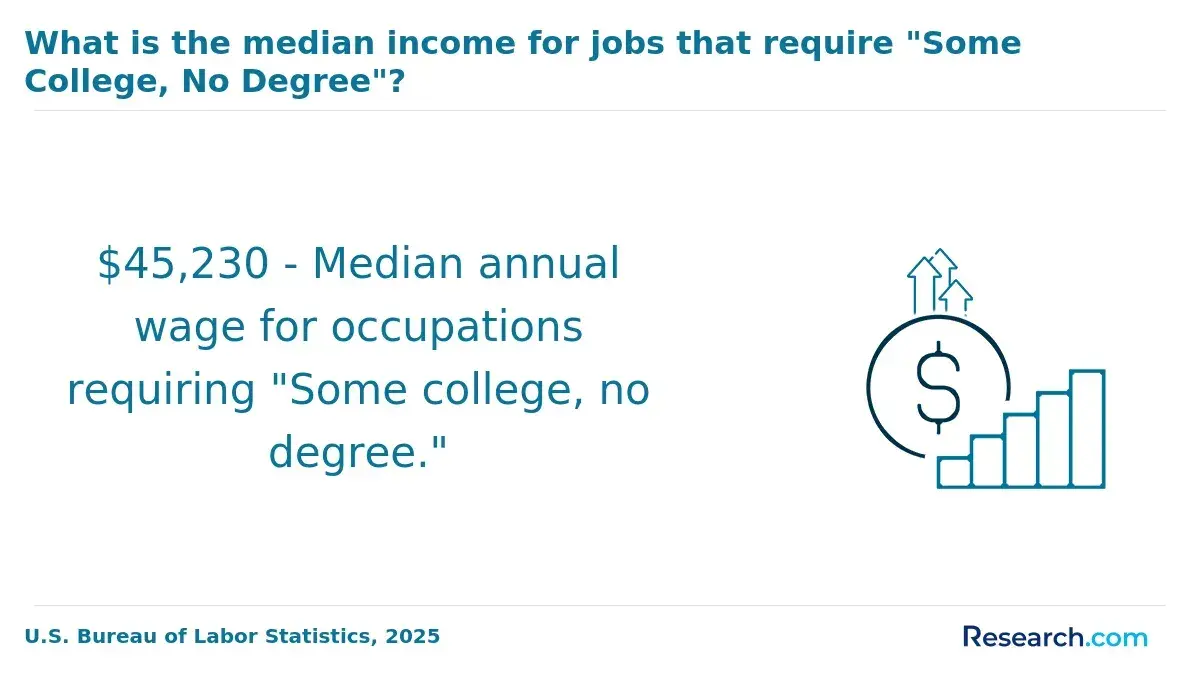
ROI should also be evaluated against time. The BLS Occupational Employment and Wage Statistics program reported a May 2024 median annual wage of $62,860 for health education specialists and $117,960 for medical and health services managers. Those figures do not prove that a doctorate will increase earnings, but they help frame whether a doctoral timeline supports your target role, such as university teaching, public health leadership, senior program evaluation, or executive administration. If your goal is clinical nutrition or dietetics rather than doctoral-level health education leadership, an online dietitian degree may be a more direct credential path.
Use the factors below as a decision checklist. They explain when a faster path is realistic and when a slower path may be the better academic or professional choice:
- Enrollment load: Full-time study can shorten the calendar, but it may not be sustainable if your job involves travel, shift work, grant deadlines, or leadership responsibilities.
- Term structure: Programs with 8-week terms and summer enrollment can accelerate coursework, but compressed courses require consistent weekly study time.
- Research preparation: Students with recent statistics, evaluation, or research methods experience often move through proposal development faster.
- Topic scope: A focused, feasible topic usually beats a broad topic that requires multiple sites, hard-to-access populations, or complex approvals.
- Faculty fit: Completion is easier when faculty expertise aligns with your interests in health behavior, community health, school health, nutrition education, or public health promotion.
- Residency expectations: Virtual residencies may reduce travel time, while in-person intensives can add scheduling friction even in an online program.
- Employer support: Tuition assistance, flexible scheduling, research site access, and protected writing time can reduce delays.
Who should invest in the degree? It is usually most appropriate for professionals seeking senior health education leadership, university teaching, research, policy, consulting, curriculum design, or advanced public health program evaluation. Who should avoid it? It may not be the right next step if your target role only requires a master's degree, if you cannot protect weekly study time, or if you are primarily seeking a credential that leads to immediate licensure.
Are there fast-track or accelerated online Health Education doctorate options available?
Fast-track and accelerated online Health Education doctorate options do exist, but they are usually accelerated by structure rather than by reducing rigor. Common accelerators include year-round enrollment, shorter academic terms, cohort sequencing, embedded dissertation milestones, generous transfer credit policies, and applied capstone models that let students work on a real organizational problem.
Accelerated programs are best for students who already have a relevant master's degree, a clear research or practice focus, recent graduate coursework, and predictable weekly availability. They are riskier for students changing fields, returning to school after a long break, or working in roles with unpredictable hours. If you are still building public health foundations, comparing entry-friendly options such as the easiest MPH online programs to get into may be more practical before pursuing a doctorate.
This comparison shows what acceleration usually changes. It can help you separate meaningful time savings from marketing language.
| Format | Typical pace | What makes it faster or slower | Best fit |
| Accelerated cohort | About 3 years | Locked sequence, continuous enrollment, early project planning | Students with stable schedules and clear goals |
| Standard full-time | 3 to 4 years | Heavier course load with some flexibility | Students who can reduce work hours or manage intensive study weeks |
| Structured part-time | 4 to 5 years | Predictable 1 to 2 courses per term | Working professionals who need sustainability |
| Self-paced or highly flexible | Varies widely | Progress depends on student discipline, faculty access, and milestone deadlines | Independent students with strong time management |
Before choosing an accelerated option, ask whether the program requires summer enrollment, whether dissertation credits begin while coursework is still underway, and what happens if you need to slow down for one term. A program that allows temporary part-time pacing may be safer than one that removes students from the cohort if they miss a milestone.
Can you transfer graduate credits into an online Health Education doctorate program?
Yes, many online Health Education doctorate programs allow graduate transfer credits, but the rules are highly school-specific. Transfer credit can shorten the timeline when credits match required doctoral coursework and were earned recently from an accredited institution. It may not help if your prior courses are too old, were applied to a completed degree in a way the school does not permit, duplicate content, or do not meet doctoral-level rigor expectations.
Common transfer limits range from a small number of elective credits to a substantial block of post-master's credits. Some institutions allow transfer only for coursework, not dissertation, practicum, residency, or doctoral seminar credits. Others require a grade threshold, syllabus review, faculty approval, and official transcript evaluation before the first term begins.
To maximize transfer credit without delaying admission, follow this sequence before you enroll:
- Request official transcripts from every graduate institution you attended.
- Collect syllabi, catalog descriptions, course objectives, reading lists, and major assignments for relevant courses.
- Map each prior course to a specific course in the doctorate curriculum rather than asking for general credit.
- Ask whether transferred credits reduce tuition, reduce course load, reduce time to candidacy, or only satisfy elective requirements.
- Get the transfer decision in writing before committing to a start date when possible.
The biggest mistake is assuming that a master's degree automatically removes one or two years from the doctorate. Many post-master's doctorates are already designed around the assumption that you have completed graduate foundations, so transfer credit may reduce cost more than it reduces calendar time.
Is there a maximum time limit to complete an online Health Education doctorate?
Most universities set a maximum time limit for doctoral completion, often in the range of 7 to 10 years from initial enrollment or admission to candidacy. The exact rule may depend on the school, degree type, catalog year, transfer credits, leaves of absence, and whether the student has advanced to candidacy.
Maximum time limits matter because doctoral work can stretch when students pause for employment changes, caregiving, health issues, research site problems, or committee changes. If the limit expires, a student may need to petition for an extension, repeat courses, update a proposal, or complete additional requirements under a newer catalog.
When reviewing time-limit policies, focus on the terms that directly affect your risk of delay:
- Whether the clock starts at admission, first registration, completion of coursework, or candidacy.
- Whether transfer credits shorten the allowed time window because they are older credits.
- Whether leaves of absence pause the clock or simply keep the student in good standing.
- Whether dissertation continuation credits are required every term until final defense.
- Whether students who exceed the limit must retake comprehensive exams or update research methods coursework.
A maximum time limit should not scare you away from a program, but it should shape your planning. If your work schedule is likely to change, choose a program with clear leave policies, reentry procedures, and dissertation advising support.
How can students avoid delays in their online Health Education doctorate timeline?
Students avoid delays by treating the doctorate as a multi-year project, not a series of unrelated courses. The goal is to make every course, elective, practicum, and research assignment move toward the final dissertation or capstone. This is especially important because doctoral completion problems often accumulate slowly: one missed summer term, one unfocused research topic, one delayed committee meeting, and one unresolved site approval can add a full year.
A practical timeline plan should include academic, work, and research milestones. Use these steps before and during enrollment to keep progress measurable:
- Build a term-by-term credit map that includes coursework, exams, residencies, practicum hours, dissertation credits, and expected defense dates.
- Ask the program for recent cohort completion patterns, not just the fastest advertised completion time.
- Choose a research or capstone topic by the first year and test whether it is feasible with available data, participants, permissions, and faculty expertise.
- Schedule standing monthly meetings with your advisor or chair once doctoral research begins.
- Protect weekly writing time before you feel ready to write; literature review, instrument selection, and methods drafts can begin early.
- Clarify employer support, including tuition assistance, flexible hours, use of workplace data, and permission to conduct an applied project.
- Confirm accreditation, state authorization, residency expectations, and any certification or employer-recognition requirements before enrollment.
- Keep a dissertation risk log that tracks approvals, committee feedback, data access, analysis support, and revision deadlines.
Common red flags include vague dissertation language, no published faculty research interests, unclear transfer credit rules, required residencies that are hard to schedule, and a program culture that treats "online" as self-service. Strong programs make expectations visible early and provide structured support through the final defense or capstone presentation.
Finally, compare the doctorate against your actual career goal. If the degree is needed for university faculty roles, senior public health leadership, research credibility, or high-level program evaluation, the time investment may be justified. If your goal is a near-term promotion that only requires a master's degree or certification, a shorter graduate certificate, MPH, or specialized master's may offer a better time-to-benefit ratio.
Other Things You Should Know About Health Education
Yes, many students do. The safest plan is usually part-time or structured cohort enrollment with predictable weekly study blocks. Full-time doctoral study while working full time is possible for some students, but it becomes difficult during research, practicum, proposal, and defense stages.
It can, especially when the institution is properly accredited, the curriculum is rigorous, faculty are active in the field, and the dissertation or capstone expectations are clear. Employers typically care more about accreditation, reputation, skills, and relevance than whether every course met on campus.
Not always. Some programs accept applicants with master's degrees in education, health promotion, nutrition, nursing, public health, community health, or related fields. However, applicants without public health foundations may need prerequisite or bridge coursework.
Ask about average time to completion, transfer credit approval, dissertation or capstone format, residency requirements, practicum expectations, faculty availability, cohort size, continuation fees, and what support is available if your research timeline changes.
References
- 90+ Online Ed.D. Programs With No Dissertation in 2026 https://www.eddprograms.org/schools/no-dissertation/
- How to Create a Dissertation Timeline (With Examples + Tempate) https://mydissertationeditor.com/dissertation-timeline/
- How Long Does It Take to Get a PhD? Complete Timeline Guide https://streamlinedai.app/blog/how-long-does-it-take-to-get-a-phd
- How to Get a Doctorate Degree in Education: A Complete Guide https://henryharvin.ae/blog/doctorate-degree-in-education/
- What Happens When Your Dissertation Timeline Falls Apart? | Recovery Guide https://assignmentcart.com/blog/what-happens-when-your-dissertation-timeline-falls-apart
- A Comprehensive Guide to Ed.D. Dissertations | ACE Blog https://ace.edu/blog/a-comprehensive-guide-to-ed-d-dissertations/
- Thesis Timeline: Plan Your Dissertation Step by Step | Epic Essay https://www.epic-essay.com/blogs/thesis-timeline-guide-how-to-plan-your-dissertation-from-start-to-submission/
- Doctor of Philosophy (PhD) in Health Sciences https://www.rushu.rush.edu/college-health-sciences/academic-programs/doctor-philosophy-health-sciences
- Planning the timeline and progress of your doctoral dissertation (or Masters/undergraduate thesis) https://www.raulpacheco.org/2018/10/planningtheses/
- Accelerated Degree Pros and Cons| University of Bridgeport https://www.bridgeport.edu/news/accelerated-degree-pros-and-cons/



