
2027 Misinformation Detection Capstones: What to Look for in a Data Science Master's

Co-Founder and Chief Data Scientist
A misinformation detection capstone can be a compelling reason to choose a data science master's program - but only if the program lets you pursue the topic and supports the work it requires. Prospective students should look beyond a course title or a sample project: data access, faculty guidance, rigorous evaluation, and publication rules will shape what they can actually produce. This guide helps you assess whether a program can support a credible capstone and a useful portfolio piece.
Key Things You Should Know
- Confirm that students may propose a misinformation detection project; a general capstone requirement does not establish topic approval or access to a suitable advisor.
- Favor projects that define what is being detected, document their labels and data rights, and test performance across changing claims and sources - not just a single headline dataset.
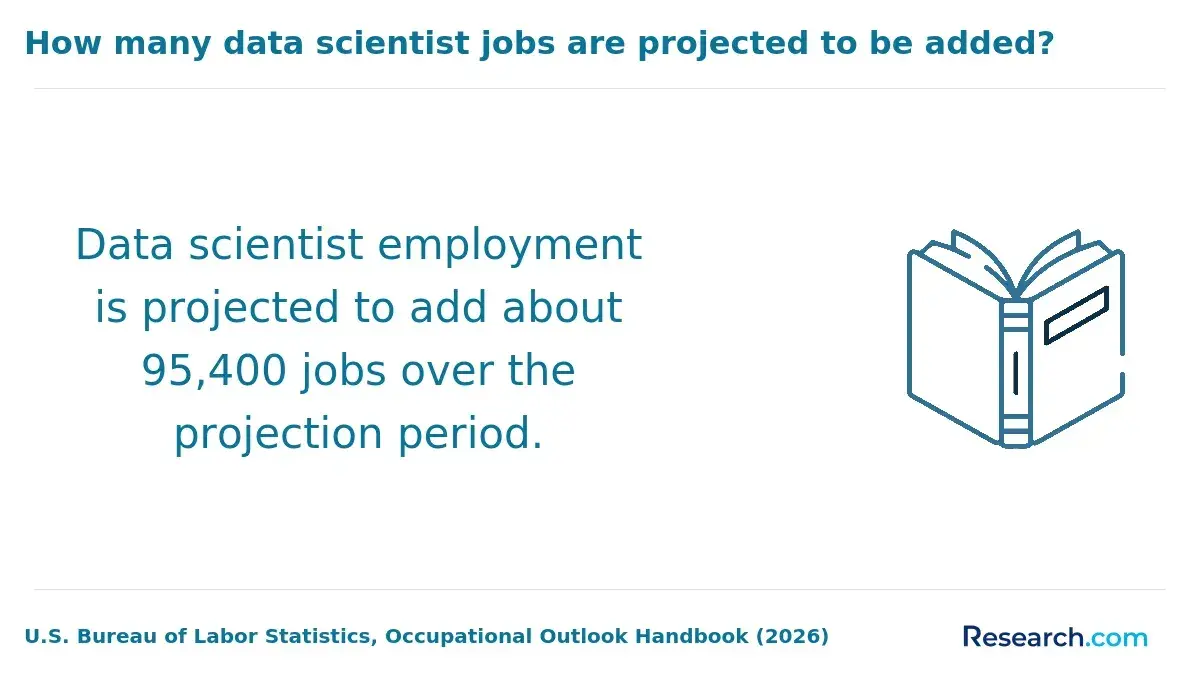
- Use career statistics as context, not a capstone outcome: the U.S. Bureau of Labor Statistics projects 35% growth in data scientist employment from 2025 to 2035.
What is a misinformation detection capstone in a data science master's program?
It is a supervised final project that applies data science to a defined information-integrity problem. A student might classify claims for review, identify coordinated sharing patterns, or build a retrieval system that presents relevant evidence to a human fact-checker. Those are different tasks: predicting whether text resembles previously labeled examples is not the same as establishing whether a new claim is true.
A strong proposal names the intended user and decision. For example, a newsroom triage tool could prioritize claims for review, while a research project could study how performance changes when a model encounters unfamiliar events. The final work should explain its data, methods, limitations, and results in enough detail for an advisor to assess it. Deployment is useful when it serves the project, but a carefully evaluated research study can be equally substantial.
Which data science master's programs offer misinformation detection capstone projects?
A program offering a data science capstone does not necessarily offer - or permit - a misinformation detection capstone. Without a current program catalog, project policy, or written confirmation from an academic advisor, no specific school should be treated as a verified option for this topic. Published examples of past student work are encouraging, but they do not guarantee that the same advisor, dataset, or project arrangement remains available.
Shortlist programs by checking their current capstone rules, faculty interests in natural language processing or information integrity, and any requirements for an external sponsor. Before applying, ask the program whether a student-proposed project is eligible, who approves its scope, whether suitable supervision is available, and what happens if a proposed dataset cannot be used. Written answers are more useful than a general assurance that students can "choose their own topic."
What skills should a misinformation detection capstone demonstrate?
The strongest portfolio piece shows judgment across the full workflow, not merely a high model score. The table separates core evidence from weaker signals that can make a project look more conclusive than it is.
| Project component | Convincing evidence | Warning sign |
| Problem and labels | A defined task, documented labeling rules, and treatment of disputed or uncertain cases | Calling every prediction a verified fact-check |
| Data and methods | Documented provenance, lawful access, a baseline, and a justified model choice | An unexplained dataset or a complex model without a comparison point |
| Evaluation | Relevant error measures, leakage checks, and tests on unfamiliar sources or later events when feasible | One accuracy figure from a convenient random split |
| Human use | Clear uncertainty, review pathways, and an account of potential harms from false flags | Automatic removal recommendations without examining errors |
A project involving retrieval, large-scale collection, or a usable review interface may also need data pipelines and monitoring. AI graduate programs with data infrastructure training may be worth comparing if building a reliable system - not just analyzing a fixed dataset - is central to your goal.
What coursework prepares students for misinformation detection research?
Look for a combination of statistics, machine learning, natural language processing, and responsible data practice. Statistics and experimental design help students interpret errors; NLP supports work with claims and evidence; and data management matters when records come from multiple sources or change over time. Courses touching on human-computer interaction, security, or social networks can add depth when they match the proposed project.
Inspect syllabi and past assignments, not just course titles. A passing mention of transformers in a survey course offers less preparation than an NLP elective with substantial evaluation work; neither substitutes for a capstone advisor who can guide the specific question. Applicants without a computer science degree can use AI master's degrees for non-CS graduates as a comparison point, while confirming each data science program's actual prerequisites.
How do online and campus-based data science capstones compare?
Neither format determines capstone quality. Online study may suit a student who needs to remain employed or work with a remote project partner; campus study may make in-person meetings or university-based research activities easier. In either format, the decisive questions are how often students meet their advisor, how team projects are coordinated, and whether data and computing resources are accessible off campus.
For an online option, confirm meeting times, time-zone expectations, any required visits, and whether capstone work can be completed independently. For a campus option, confirm whether desired faculty actually supervise master's projects. Students balancing a job and a sensitive-data project should also check scheduling and access rules; data science master's degrees for employed adults provide a useful format comparison.
What admission requirements apply to data science master's programs?
Requirements vary by institution, so check each program's current admissions page for degree, mathematics, programming, testing, and application-material requirements. Preparation for this particular capstone may demand more than the minimum needed for admission: a student should be ready to clean text data, write reproducible code, and explain how a model will be evaluated.
If your background is stronger in journalism, social science, or policy than in programming, that domain knowledge can help you frame a meaningful question. Identify any technical gaps before enrollment, then ask whether preparatory coursework is recommended or formally required. Self-study may improve readiness, but it does not automatically satisfy an admissions prerequisite.
How much do data science master's programs cost and how long do they take?
There is no defensible single price or duration for a misinformation-focused master's: schools set different credit requirements, tuition rates, fees, and pacing rules, and the capstone topic usually does not define a separate degree price. Obtain the current tuition schedule and degree plan for each program you are considering. Compare the cost of completing the required credits at your intended pace, including mandatory fees, software or computing charges, and any travel - not tuition alone.
Time matters when a project depends on collecting or obtaining permission to use data. Ask when capstone proposals must be approved, how long students have to complete the project, and whether extending into another term adds tuition or fees. Compare affordable data science master's programs only after confirming that each lower-cost option offers the supervision and project flexibility you need.
How can accreditation verify a reputable data science master's program?
Verify the institution's current accreditation through the accreditor or an official government directory, and check that it applies to the institution awarding the degree. Accreditation is a baseline institutional check; it does not certify the quality of a particular misinformation detection capstone or guarantee that a proposed topic will be approved.
For this decision, follow that check with program-level evidence: current capstone policies, accessible faculty, published course descriptions, and clear data-use rules. A ranking or an attractive project gallery should not replace those checks.
What careers can misinformation detection capstones lead to?
A well-executed capstone can provide portfolio evidence for data scientist, NLP-focused analyst, trust-and-safety analyst, or information-integrity research roles. The fit depends on what the work demonstrates. A carefully audited classifier highlights modeling and evaluation; an evidence-retrieval interface also shows system design and attention to a reviewer's workflow.
Do not assume employers treat every misinformation project as equivalent. In interviews, be prepared to explain the decision your work supported, the errors that mattered most, and what you would change before real-world use. A master's degree or capstone does not guarantee entry to these roles, and relevant experience or a strong independent project may also matter.
What salaries and job outlook apply to data science graduates?
The U.S. Bureau of Labor Statistics reports a median annual wage of $120,230 for data scientists in May 2025. That is an occupation-wide figure, not an entry-level salary or an outcome attributable to a particular master's program or capstone. The BLS projects about 24,800 data scientist openings annually, on average, from 2025 to 2035; openings include replacements as well as growth.
Use those figures to understand the broader occupation, then evaluate a prospective degree against your current earnings, total cost, experience, and target role. Pay also varies across employers and industries; data science graduate earnings across the economy can help frame that comparison without treating a national median as a personal forecast.
Other Things You Should Know About Data Science
Often, but permission depends on the dataset's terms and your institution's rules. Ask whether you can publish code, documentation, synthetic examples, and aggregate results without exposing restricted records.
No. A project can prioritize claims for human review or retrieve relevant evidence. Describe that narrower task accurately rather than presenting a model score as proof of truth.
Only when it serves the defined task and you can evaluate its errors. For evidence-based outputs, check whether generated claims remain faithful to the underlying sources and whether reviewers can inspect them.
Possibly. Approval deadlines and change procedures vary by program. Ask about them before enrolling if access to your intended data or project partner is uncertain.
References
- On evaluation metrics for medical applications of artificial intelligence - PMC https://pmc.ncbi.nlm.nih.gov/articles/PMC8993826/
- Thesis/Capstone for Master's in Data Science | Northwestern University https://sps.northwestern.edu/masters/data-science/thesis-capstone.html
- Master's in Data Science: Capstone Project | NYU CDS https://cds.nyu.edu/masters-in-data-science-capstone/
- MSDS Capstone Projects - College of Information Science https://infosci.arizona.edu/ms-data-science/capstone-projects
- Capstones - DSI https://www.vanderbilt.edu/datascience/capstones/
- What is a Dataset? | IBM https://www.ibm.com/think/topics/dataset
- Task agreement in Label Studio Enterprise | humansignal.com https://docs.humansignal.com/guide/stats.html
- Natural Language Processing Research | athena-publishing.com https://www.athena-publishing.com/journals/nlpre/articles/68/view
- Label Studio - How to Measure Inter-Annotator Agreement and Build Human Consensus with Label Studio https://labelstud.io/tutorials/how_to_measure_inter_annotator_agreement_and_build_human_consensus
- Data and Databases: Scoping a Database | DARIAH-Campus https://campus.dariah.eu/resources/hosted/data-and-databases-scoping-a-database


